In this article(7 sections)
The first meeting is the easy part. Most of the trouble with a new puppy and a resident older dog shows up later: in the second week, when the novelty is gone and the puppy will not leave the older dog alone, and again around puberty. The plan below is built around those later moments, not just the introduction.
Not veterinary advice: Health and behavior questions about your own dog belong with your vet. Where this guide mentions pain or illness, that is the person to ask.
Is your older dog ready for a puppy?
Start with the older dog, not the puppy. AKC's chief veterinarian points out that a puppy can tower over or tug at a senior dog with heart, joint or spine problems, which can cause physical harm or real anxiety. A board-certified veterinary behaviorist quoted by AKC suggests a vet visit for the older dog first, because pain can make a dog more reactive and conflict more likely.
A visiting puppy is very different from one that is there around the clock. If you are unsure whether your dog counts as a senior, see when a dog is a senior and our overview of the senior stage.
- Think twice if the older dog has significant pain, mobility problems, anxiety, cognitive decline, or simply dislikes other dogs.
- Plan for a settling-in stretch. One trainer quoted by AKC treats a couple of months to get along as very different from a dog who is miserable for years.
- Check vaccines. Blue Cross advises that the adult dog be fully vaccinated before a puppy comes home.
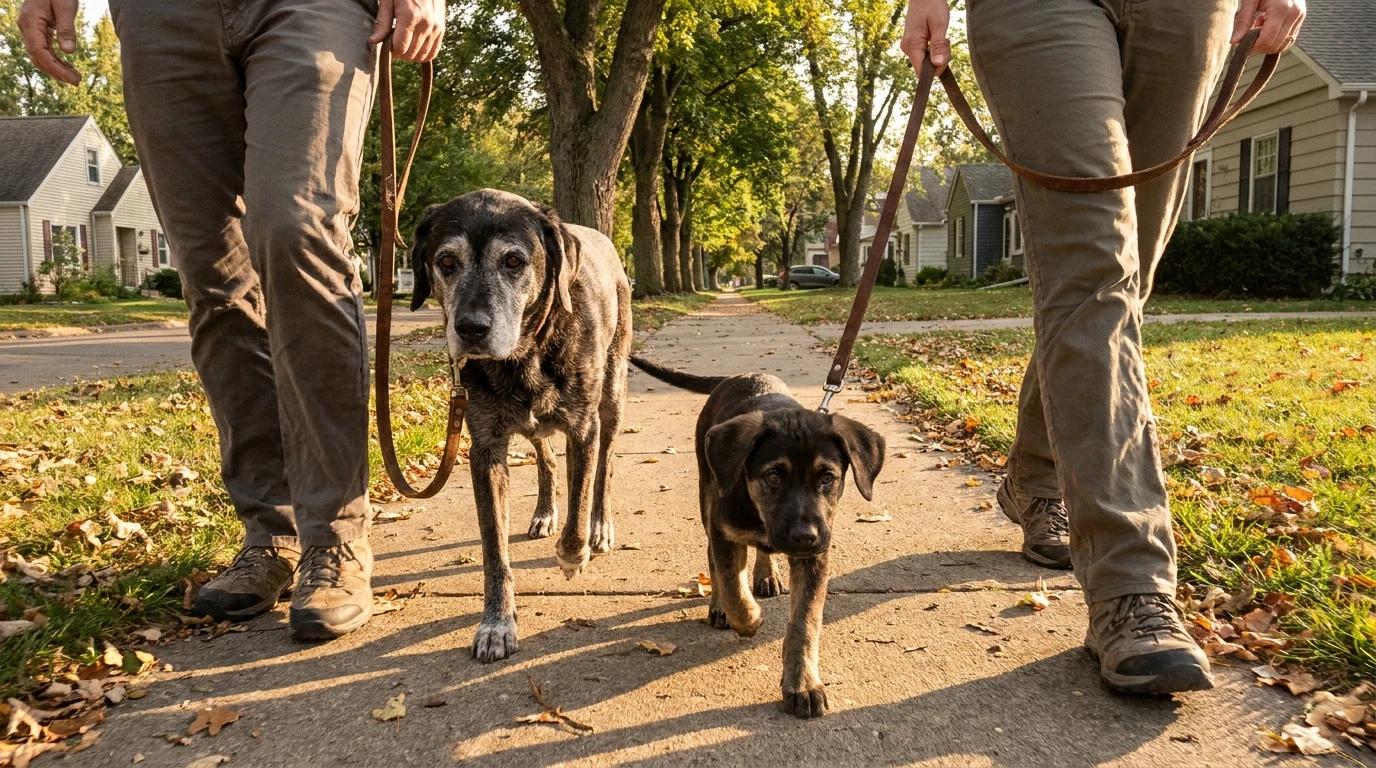
Where should they meet the first time?
The sources do not say quite the same thing, so here they are side by side.
| Source | Where they say to meet | Why |
|---|---|---|
| AKC (trainer Rachel Lane) | Somewhere neutral, walking side by side, ideally one handler per dog | Low-pressure way to get acquainted |
| Eukanuba NZ | A park, a training centre or a neighbour's garden | Neutral ground suits an older dog |
| Blue Cross | The garden or a short walk close to home, in a low dog-traffic area | Limits infection risk for the puppy |
| AKC (Dr. Chyrle Bonk) | Not dog parks or off-leash areas until the vaccine series is done | A puppy is not fully protected until then |
Our reconciliation: This is our reading, not a source's rule. Pick ground that is neutral and also quiet: a neighbour's yard or a quiet street. Skip the dog park until your vet gives the go-ahead.
First impressions matter to a young dog. One trainer cited by AKC warns that a bad encounter with an unfamiliar dog can leave lasting fear, which is part of why the socialization window deserves care.
How do you bring the puppy home?
- Prepare the house first. Put toys and food out of reach, and set up a gate for time out. Blue Cross suggests separate beds and water bowls in separate spots.
- Meet outside on the neutral, quiet ground above, with one handler per dog.
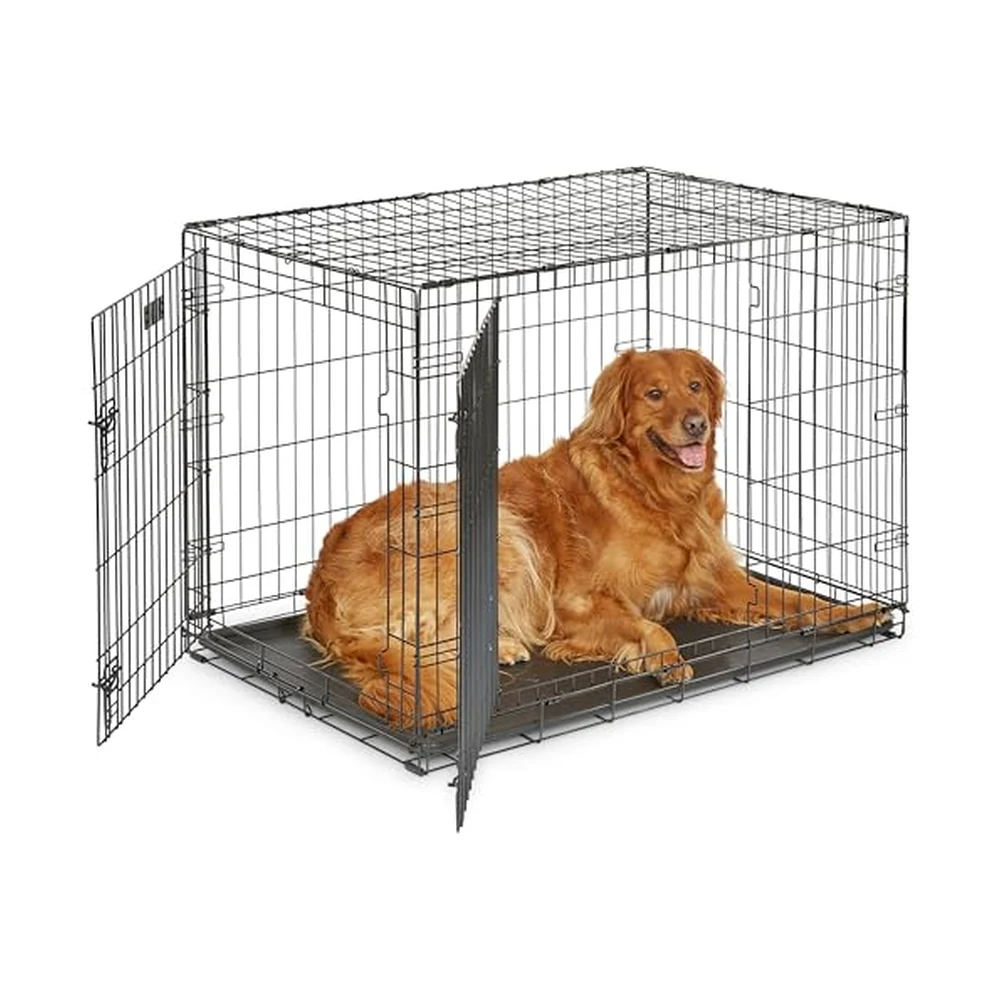
- Walk in together. AKC notes that an unknown puppy barging in can feel like an invasion even to a mellow dog. If the older dog can come along to pick the puppy up, travel in separate crates, such as the MidWest iCrate double-door crate.
- Trail light house lines on both dogs indoors so you can separate them without grabbing.
What does a good first week look like?
 Breaks several times a day are part of the plan, not a sign it is failing.
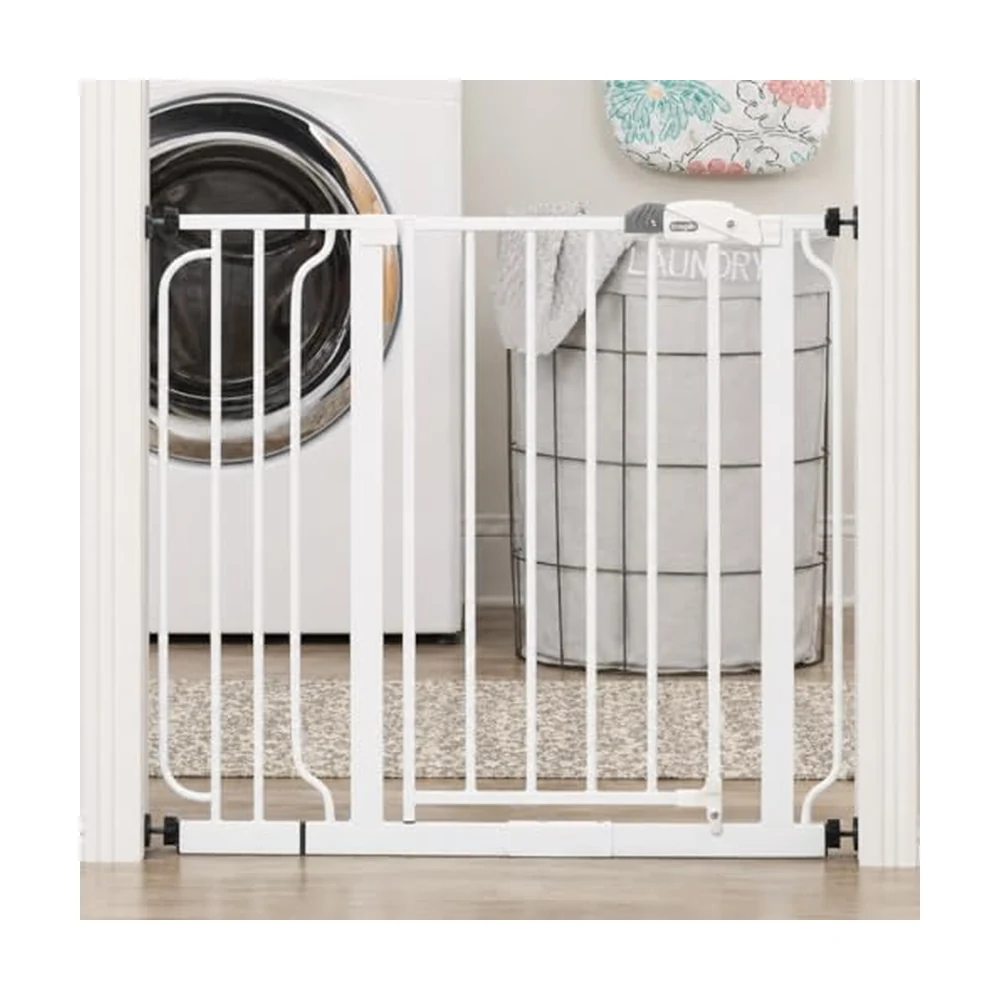
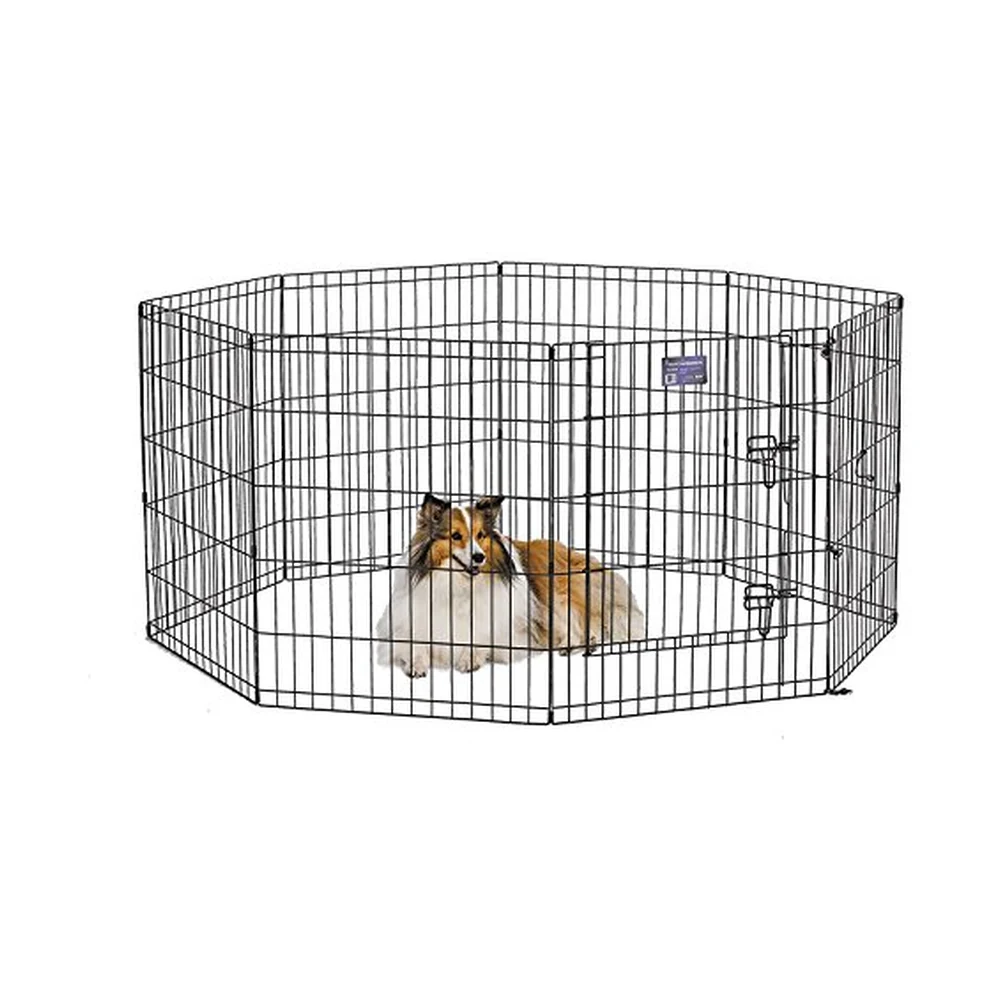
Plan for separation as much as togetherness. AKC advises giving the older dog a break from the puppy several times a day, and putting the puppy behind a gate whenever you cannot supervise. A walk-through gate like the Regalo Easy Step lets the older dog keep its usual spaces, and a pen such as the MidWest 30-inch exercise pen gives the puppy its own zone. See crate vs playpen for choosing the puppy's zone, or browse playpens and gates.
- Keep the older dog's routine. Keep its one-on-one time too, which the AKC veterinarian says makes a big difference to its attitude.
- Mind the order. Greet the older dog first, leash it first and feed it first.
- Feed apart. Give each dog its own bowls, such as the Amazon Basics stainless bowls, and never leave them unattended at meals, especially early on.
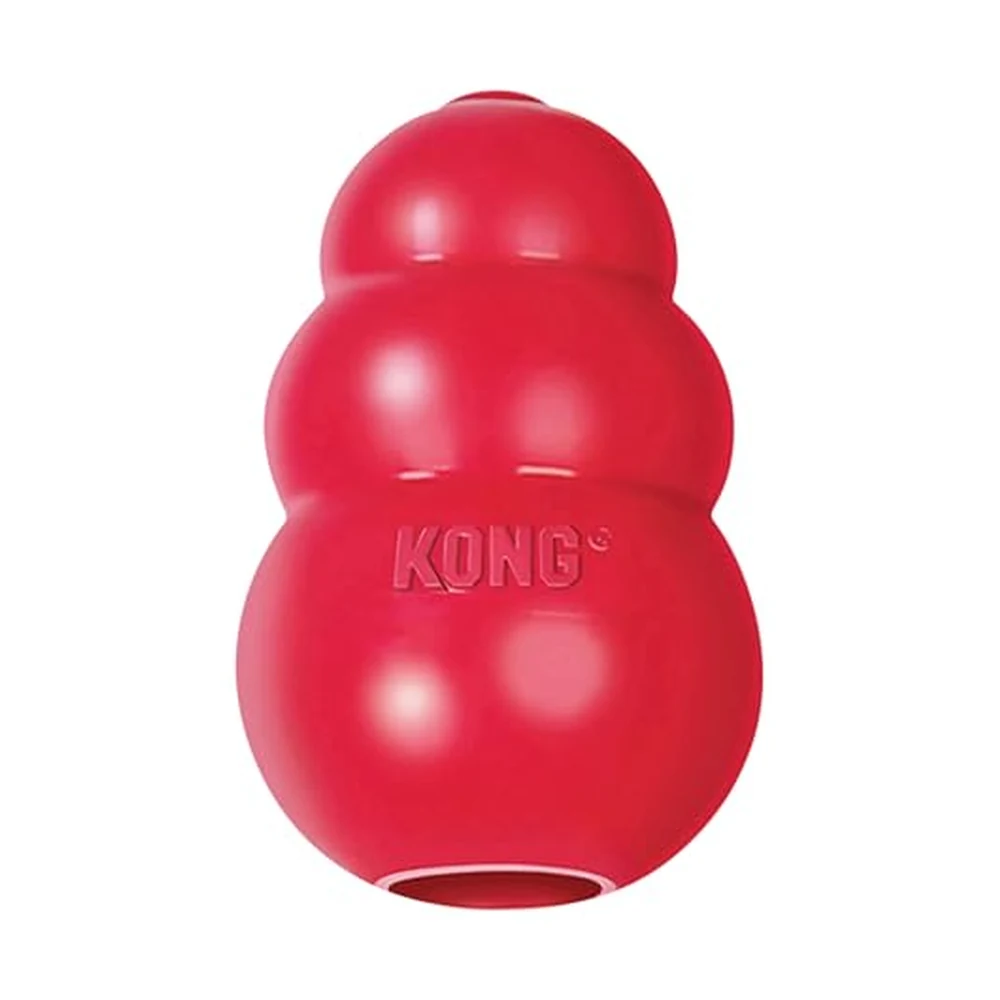
- Give the puppy something to do behind the gate, like a KONG Classic, so the break is not a fight.
- Practice calm on opposite sides of the gate. Reward both dogs with small treats like Zuke's Mini Naturals. Our settle guide shows the skill itself.
The puppy's own first days are covered in your first week with a new puppy.
How do you tell play from tolerance?
Dogs that get along show loose, wiggly bodies, play bows and lots of pauses. One-sided play looks different, and the behaviorist cited by AKC cautions that two dogs playing does not mean both are comfortable: an older dog may play defensively just to get it over with.
| Signs it is going well | Signs the older dog needs out |
|---|---|
| Loose, wiggly bodies on both dogs | Turning or moving away when the puppy tries to play |
| Play bows | One dog crouched or pinned on its back the whole time |
| Pauses in the play | Growling that escalates or contact that is not gentle |
| The older dog comes back for more | The older dog does not return after a break |
Growling deserves a straight answer. AKC describes it as a dog's way of saying it is unhappy, and fine as long as the older dog makes no inappropriate contact. Do not scold it for growling, because that removes the warning.
Consent test: Let the puppy drag a leash. Every minute or two, move it away and give the other dog a break. If the less playful dog does not come back, the session is over.
Do not leave the dogs to work it out. The trainer quoted by AKC is blunt that both dogs deserve a safe, happy home, and puppies are often not savvy enough to notice when an older dog has had enough. The idea that an older dog will reliably teach a puppy manners is treated by the behaviorist as a myth.
When does it get harder?
This is our arrangement of the sources' points, not a published schedule. None of them put a number of days on when dogs bond, so treat any such promise with suspicion.
| Stage | What to expect | What to do |
|---|---|---|
| Day one | Neutral meeting, walking in together | Handler per dog, calm and short |
| The first weeks | Short supervised sessions, breaks several times a day | Gate, separate feeding, read the signals |
| Puberty | Older dog may be less tolerant | Reset the rules, add more breaks |
Ignored signals are the trap in the middle row. AKC's behaviorist describes owners copying the TV version of dog introductions, missing the discomfort signs, and then seeing the older dog snap later, which feels like it came out of nowhere. It did not.
At puberty, which that same expert places between six months and a year, an older dog may become less tolerant. Our guides to the adolescent stage and adolescent regression help you recognise it.
When should you get help?
Seek professional support sooner rather than later if you see steady avoidance or aggression. Serious cases may go to a veterinary behaviorist. If the older dog seems miserable rather than merely grumpy, the honest answer may be a slower plan, or a different timing for the puppy.
Key takeaways
What to remember
- Vet the older dog before the puppy arrives, because pain makes conflict more likely.
- Meet on ground that is both neutral and quiet, never a dog park before your vet says the puppy is protected.
- Give the older dog a break from the puppy several times a day and use a gate whenever you cannot supervise.
- Growling is communication; do not punish it, and do not leave the dogs to work it out alone.
- Avoidance and defensive play are signs the older dog needs out, even when the dogs look like they are playing.
- Expect the relationship to be tested again at puberty, and get professional help early if avoidance or aggression shows up.
Questions people ask
- Should I let my older dog correct my puppy?
- Not as a plan. A trainer quoted by AKC says dogs should not be left to work it out themselves, and a veterinary behaviorist notes that older dogs can overcorrect while puppies are often not savvy enough to know when to stop. Step in with a break or a gate.
- How long does it take an older dog to accept a puppy?
- No source we read gives a timeline. One trainer quoted by AKC treats a couple of months of adjustment as acceptable, and the difference is whether the older dog is coping or miserable. If it is not improving, ask a professional.
- Is it normal for my older dog to growl at the new puppy?
- Often, yes. AKC describes growling as a dog's way of saying it is unhappy, and it is acceptable as long as the older dog does not make inappropriate contact. Do not reprimand it, since that removes a useful warning.
- Where should a puppy meet an older dog for the first time?
- Sources point to neutral ground, and Blue Cross adds a low dog-traffic area to limit infection risk. A neighbour's yard or a quiet street fits both, and dog parks are out until your vet confirms the puppy's vaccines are complete.
- When is getting a puppy a bad idea for a senior dog?
- AKC says it is not a good idea if the senior has significant pain, mobility problems, anxiety or cognitive decline, or dislikes other dogs. Talk it through with your vet before deciding.
Gear
The gear this guide assumes
Our shelves and product pages, so you can see the options without leaving mid-session. No buy buttons here — this is a training guide.
$44.98 Owner rating 4.4 out of 5 · 175,093
A wide doorway at the bottom of the stairs
$30.39 Owner rating 4.6 out of 5 · 46,346
The default puppy pen — 16 square feet, a step-through door
$84.99 Owner rating 4.7 out of 5 · 70,262
The one crate you buy at eight weeks and still use at eight years
$11 Owner rating 4.7 out of 5 · 37,205
The everyday water and food bowls — stainless, dishwasher safe, non-skid base, two in the box.
$13.96 Owner rating 4.6 out of 5 · 93,737
The stuffed-and-frozen standby
Owner rating 4.6 out of 5 · 16,053
The everyday training treat — small


Sources
- AKC, How to Introduce Puppies Into Homes With Senior Dogs — Neutral meeting, consent test, routine and feeding order, signs of good and unbalanced play, when not to get a puppy.
- AKC, Adult Dogs and New Puppies — Vetting the older dog, defensive play, ignored signals, and the puberty re-test.
- AKC, How to Introduce a New Dog to Your Current Dog — Walking in together, separate crates on the way home, growling, and breaks for the older dog.
- Blue Cross, Introducing puppy to older dog — Low dog-traffic meeting place, vaccination, house lines, gate and separate resources.
- Eukanuba NZ, How To Prepare Your Senior Dog For A New Puppy — Neutral meeting places and separate bowls, toys and beds.
- AKC, When Can Puppies Meet Other Dogs? — Why dog parks are out before the vaccine series is complete, and why first impressions matter.
Not veterinary advice — for anything medical, ask your vet.
Next step
Regalo Easy Step walk-through gate
Every source here leans on a gate for breaks and for calm side-by-side practice, so it is the first piece of gear to sort out.