The best enrichment & puzzles, compared.
A dog who has thought hard is as settled as a dog who has run hard, and for a senior or a rainy week it is the only version available.
Amazon links earn us a commission; it doesn’t change what we recommend.
Start here
Which one is right for you?
Three different dogs, three different answers. Each one names what it is good at and what it costs you.
A dog who inhales dinner and needs the brain used as well as the bowl slowed
It turns the meal itself into the puzzle, which is the cheapest enrichment there is because you were feeding them anyway.
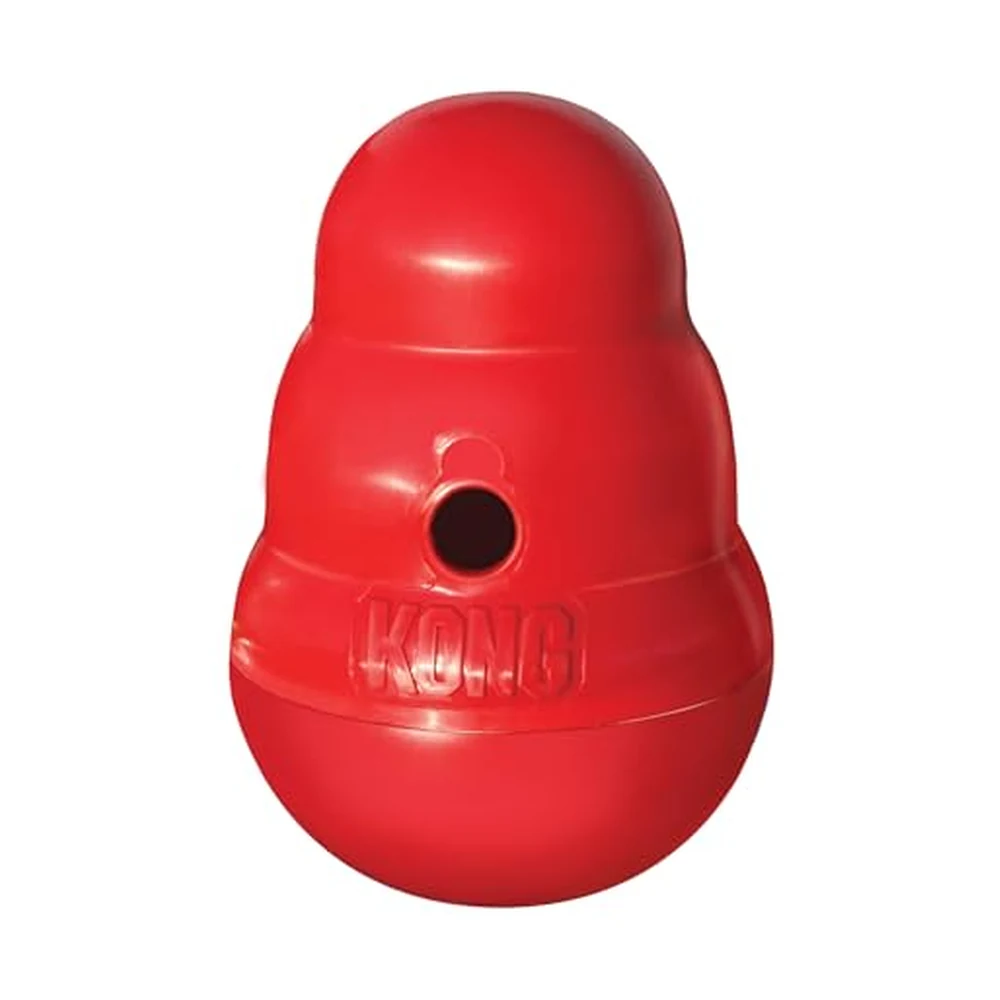
Our pick for this: KONG Wobbler · $17.91
A second puzzle to rotate in once the first one is solved
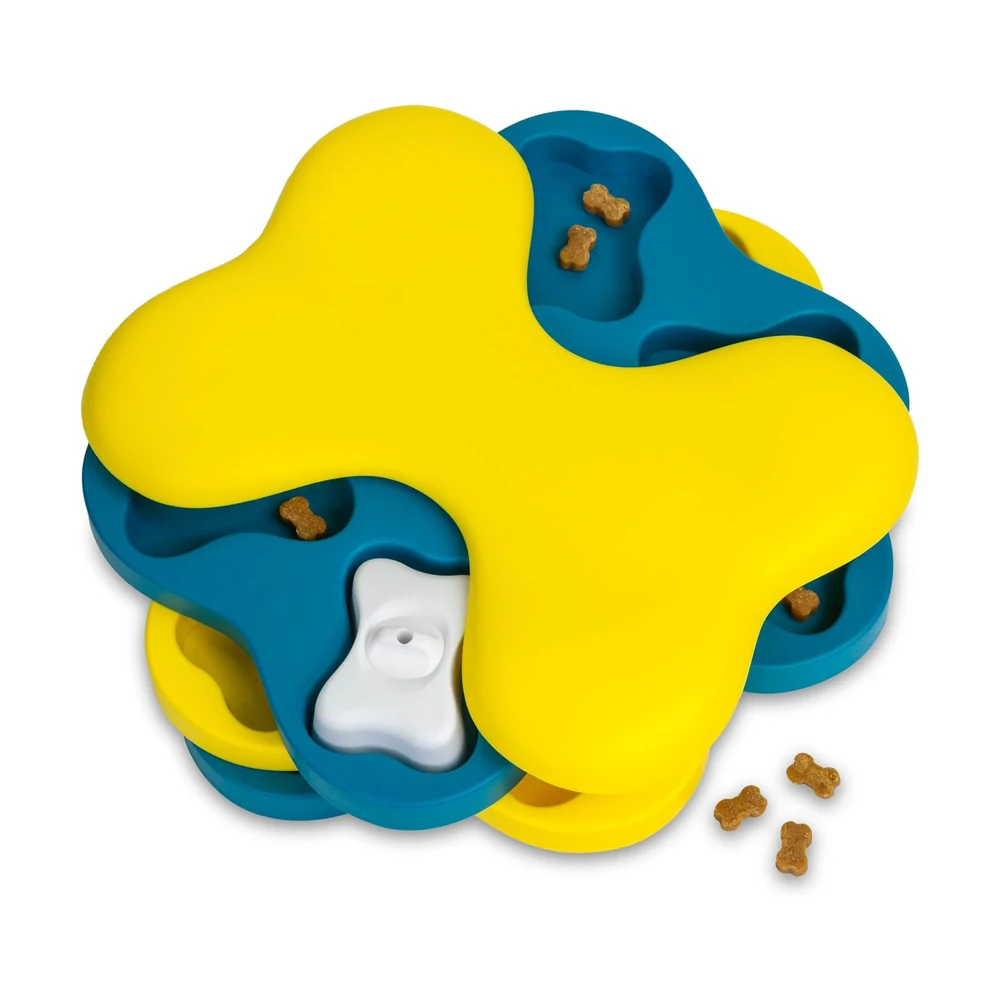
Novelty does most of the work. Spinning layers ask for a different action than a lift-the-lid board, so the rotation feels new to the dog.
Our pick for this: Nina Ottosson Dog Tornado · $16.95
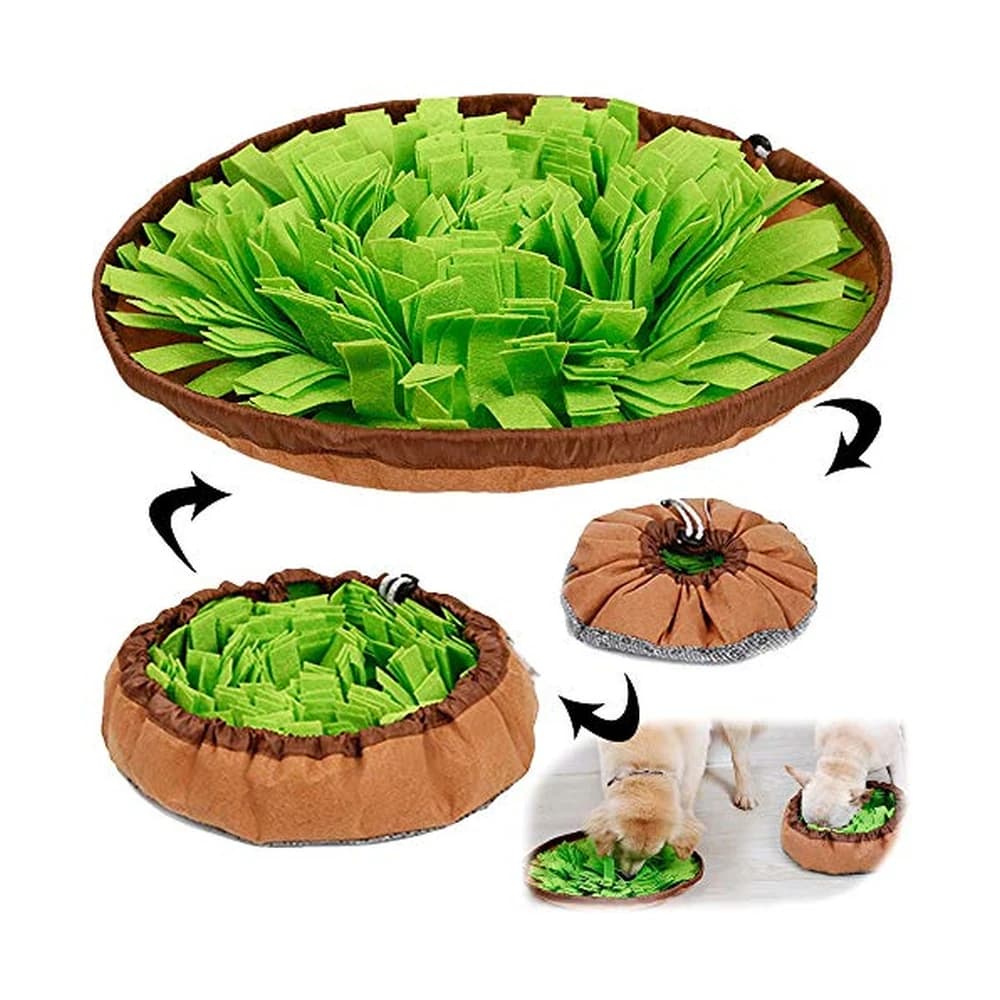
Twenty minutes of nose work with no learning curve
Scatter the food and let them find it. Machine washable, which matters more than it sounds.
Our pick for this: AWOOF Snuffle Mat · $11.98
If none of these is your dog: nothing on this shelf is the right answer for every household, and we would rather you bought nothing than the wrong thing. Start from the stage your dog is actually in, or browse the other shelves.
Filter picks6 of 6
Showing 6 of 6 picks — no filters applied
Showing 6 of 6 picks — no filters applied
The picks, feature by feature
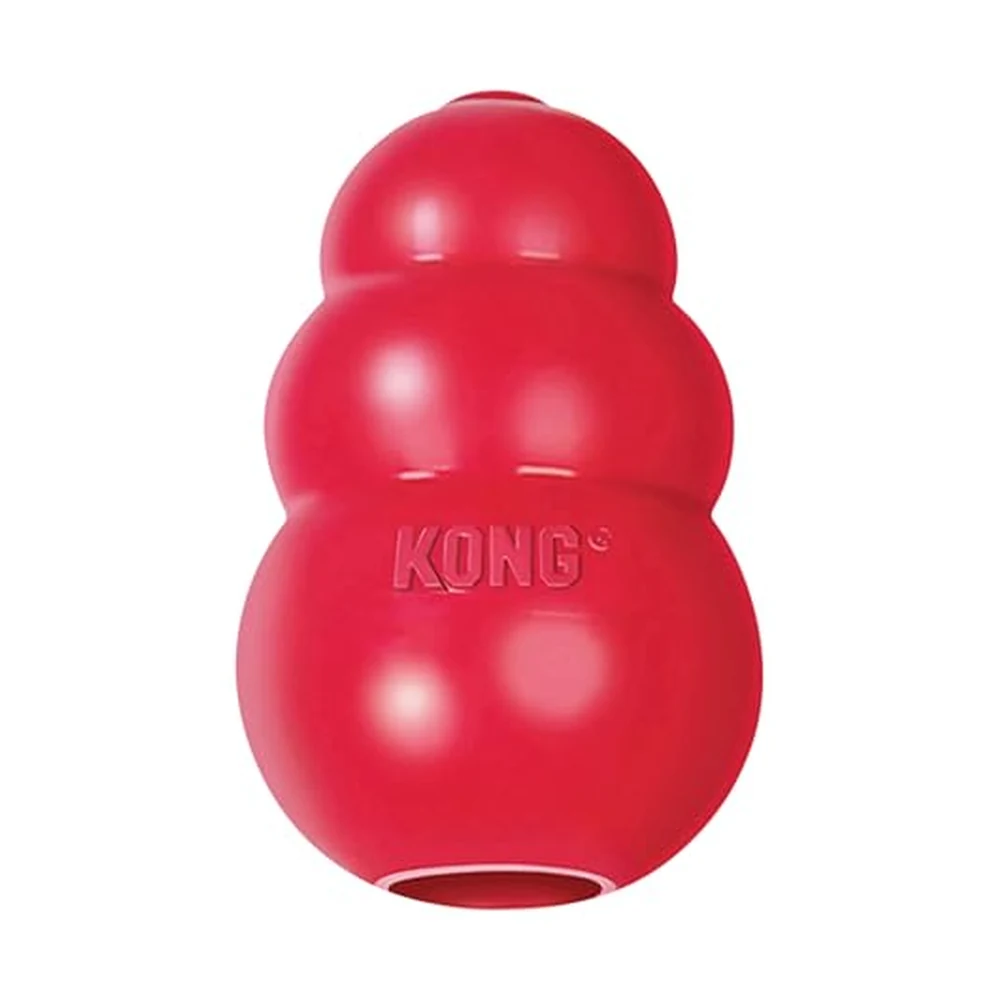
The stuffed-and-frozen standby — the toy that covers crate time, alone time and the first hour of any rainy day
- Size
- Not stated
- Material
- Natural Rubber
- Dimensions (H × W × D)
- Not stated
- Weight
- Not stated
- Skip if
- You want a puzzle with steps to solve. This is a single-chamber toy, not a multi-stage one.
$16.99 4.6 out of 5 stars · 53,367 ratingsbest rated
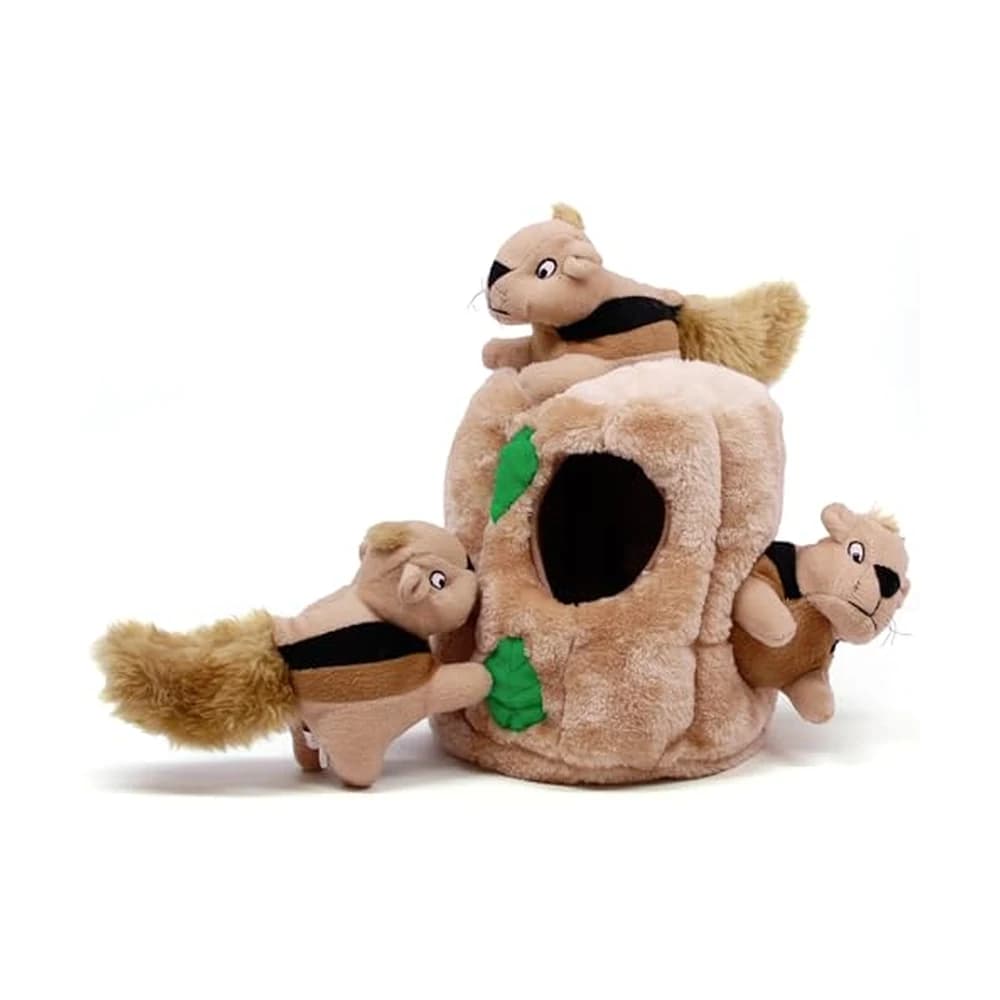
The dog who wants to hunt rather than solve — three squeaky squirrels to pull out of a plush trunk, over and over
- Size
- Large (log fits 4 squirrels)
- Material
- Soft plush with squeakers
- Dimensions (H × W × D)
- Not stated
- Weight
- Not stated
- Skip if
- Your dog destroys plush. This is soft, and the squeakers are the hazard once it opens.
The variant we link: Large · 10.5" x 7.5"
Feeding a whole meal as a game — it wobbles and drops kibble as the dog nudges it, and it unscrews to fill
- Size
- Not stated
- Material
- Durable Rubber (KONG)
- Dimensions (H × W × D)
- Not stated
- Weight
- Not stated
- Skip if
- You have downstairs neighbours or hate noise. It is loud on hard floors.
The variant we link: Medium
$14.30 4.4 out of 5 stars · 78,207 ratings
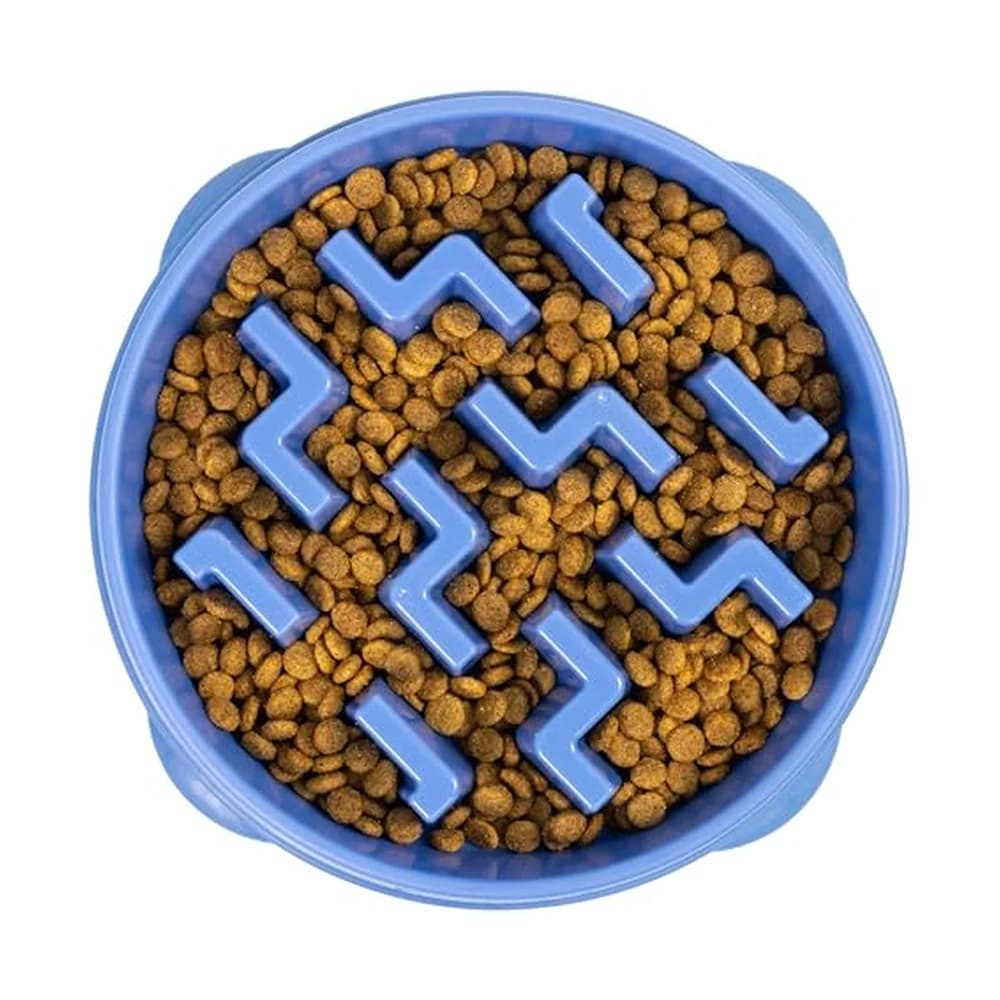
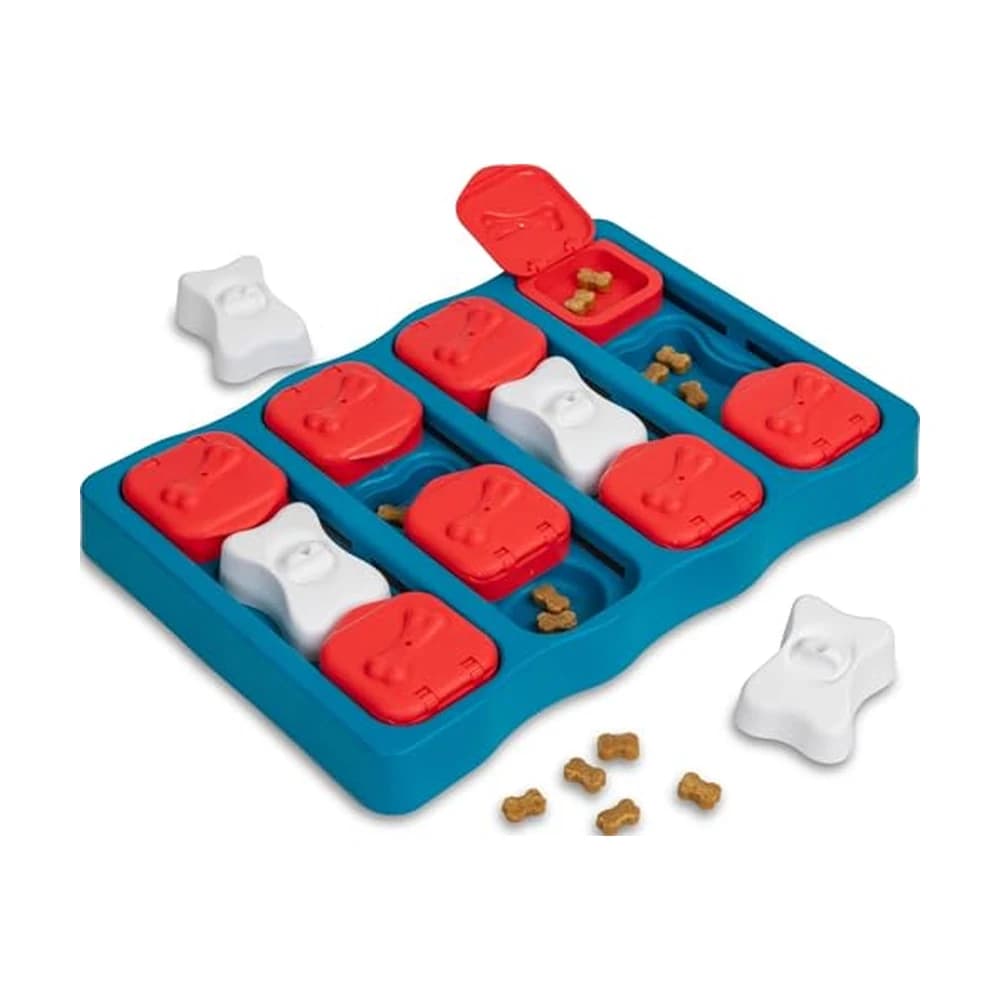
A first real puzzle — three difficulty levels in one board, so it grows with the dog instead of being solved once
- Size
- Not stated
- Material
- Plastic; BPA, PVC and phthalate-free (manufacturer)
- Dimensions (H × W × D)
- Not stated
- Weight
- Not stated
- Skip if
- Your dog chews rather than solves. Outward Hound says no toy is indestructible and not to leave a dog alone with a treat puzzle.
The variant we link: 12.8"
A second puzzle to rotate in — three stacked layers that spin apart, so the dog has to move one to reach the next
- Size
- Not stated
- Material
- Plastic
- Dimensions (H × W × D)
- 3.07 in × 7.25 in × 9.75 in
- Weight
- 1.2 lb
- Skip if
- Your dog chews rather than solves. The lift-out bone pieces are loose plastic, so this is a toy you put away after the session.
The variant we link: 9.8" · Intermediate
The cheapest way to tire a dog out with their nose — scatter kibble in the fleece and let them forage for it
- Size
- Not stated
- Material
- Fleece strips
- Dimensions (H × W × D)
- Not stated
- Weight
- Not stated
- Skip if
- Your dog pulls fabric apart. Owners are split on how long the fleece strips survive.
Each pick below carries its own specs, and the tags mark the best of these picks on that point. Specs come from manufacturer listings; ratings are the Amazon aggregate rating and count, refreshed periodically — we don't test products.
How winners are decided: ✓ marks the lowest price, the highest owner rating, the largest stated weight capacity and the longest warranty. Rows where more is not better — size, dimensions, weight, material — and the editorial rows get no ✓ at all. A blank is unknown, never a loss, and a row needs at least two known, differing values before anything can win. How the best-of-these tags are decided: the lowest price, the highest owner rating, the largest stated weight capacity and the longest warranty. Points where more is not better — size, dimensions, weight, material — and the editorial notes carry no tag at all. A blank is unknown, never a loss, and a point needs at least two known, differing values before anything can lead. As an Amazon Associate we earn from qualifying purchases. Specs are the manufacturer's claims and owner-reported data — we research and analyse; we don't test products on dogs.
Why enrichment & puzzles matter at this stage
Physical exercise is only half of what tires a dog out, and for a lot of the dog's life it is the half that is hardest to supply. An adolescent who cannot be walked far enough to be tired, an adult stuck indoors for a week of rain, a senior whose joints have retired them from the long walk — all of them still have a working nose and a brain that wants a job.
Sniffing is the highest-value version of that job. It is a dog's dominant sense, it is self-rewarding, and it is genuinely tiring in a way that looks like nothing from the outside. A snuffle mat with a handful of kibble scattered through it can occupy a dog for fifteen minutes and settle them for an hour. Puzzle feeders work the same lever with an added problem-solving component.
The stage-specific use is what makes this category worth planning rather than buying at random. For a puppy, enrichment is how you build the ability to be alone. For an adolescent, it is the pressure valve that keeps the sofa intact. For a senior, it is cognitive work — mental stimulation is one of the levers discussed in canine cognitive dysfunction, and a dog who cannot walk far can still work out a puzzle sitting down.
Start easy. A puzzle a dog cannot solve teaches them to give up, which is the opposite of enrichment. And supervise: every manufacturer here says these are not chew toys.
What owners keep saying
The pattern owners report is that enrichment gear buys time only if the difficulty matches the dog, and most complaints are about puzzles being solved in a minute or two rather than about build quality. Nina Ottosson style plastic puzzles get described as a good first introduction that fast learners outgrow, so owners rotate several toys, move up difficulty levels, and smear something sticky into the compartments to slow things down. Snuffle mats and lick mats come up as the cheap, reliable end of the shelf, valued for feeding a normal kibble portion more slowly and for occupying a dog during crate time or grooming, with thrashing and chewing the main durability worry. Stuffed KONGs are the most-discussed item, and the repeated advice is to start with a loose, easy fill and only progress to frozen once the dog has figured the toy out, since a rock-hard frozen KONG makes beginners give up. The recurring mistakes: leaving a dog unsupervised with any of it, and forgetting the filling is food that should come out of the daily ration.
we read 44 threads across r/puppy101, r/dogs, r/Dogtraining, r/reactivedogs, r/DogAdvice
Paraphrased from public discussion, never quoted and never counted into a statistic we did not measure. Owners are not a controlled study — they are the only long-term use data anybody has.
What we didn’t pick
Things that look like they belong on this shelf and are not on it, with the reason.
Puzzles as a substitute for a walk
Enrichment is an addition to exercise, not a replacement for it. A shelf that implied otherwise would sell more puzzles and help fewer dogs.
Wooden puzzles with small loose pegs for an unsupervised dog
They are designed for a session with you in the room. We rank them for that, and we do not carry the ones whose pieces are the smallest.
Automatic treat-dispensing cameras
They are a monitoring product with an enrichment feature attached, priced accordingly. Ranking one against a fourteen-dollar puzzle would be comparing two different purchases.
How to choose an enrichment toy
Start below your dog's ability, use meals rather than extra treats, and match the physical demand to the stage.
Start one level too easy
A dog who fails at a puzzle disengages and does not come back to it. Beginning easy and increasing difficulty is how you build a dog who keeps trying.
Feed meals through it, not extra treats
Enrichment can be calorie-neutral if the food comes out of the bowl. Otherwise a daily puzzle quietly becomes a weight problem.
Sniffing over solving for seniors
A snuffle mat needs a nose and no joints. A puzzle that requires standing and pawing does not suit an arthritic dog — match the physical demand to the stage.
Washable, because food goes in it
Anything that holds wet food or peanut butter needs to be cleanable. Check whether it is dishwasher-safe or hand-wash before you buy.
Supervised, always
Puzzle toys are not chew toys, and every brand here says so. A dog who starts chewing the puzzle instead of solving it needs it taken away.
Common questions
- How much does mental exercise really tire a dog?
- Enough to be worth planning around. Several puzzle makers repeat the rule of thumb that fifteen minutes of brain work is worth roughly thirty minutes of physical exercise; treat that as a rough industry heuristic rather than a measured fact, but the underlying observation — that dogs settle after concentrated sniffing and problem-solving — is one nearly every owner confirms.
- What is the best enrichment for a senior dog?
- Anything nose-led that needs no jumping or standing. Snuffle mats, scattered food in grass, and stuffed rubber toys they can work on lying down. Keep the sessions short and put the puzzle where they already lie rather than making them travel to it.
- My dog solves every puzzle in thirty seconds. Now what?
- Make the food harder to get rather than buying a harder puzzle: freeze wet food inside a stuffable toy, use bigger kibble in a mat so it wedges, or combine two toys. Rotating toys in and out of storage also restores novelty at no cost.
Gear
Pairs with
Shelves that go with enrichment & puzzles — hand-picked adjacencies, not "customers also bought".
$10.35 4.7 out of 5 stars · 72,835
Both solve the same problem — a meal that lasts more than nine seconds — from opposite ends.
$19.43 4.5 out of 5 stars · 107,592
Puzzles are for the head; chews are for the jaw. A bored strong dog needs both.
$16.97 4.2 out of 5 stars · 2,650
Mental work is the first thing to try for a dog that cannot settle, before anything is added to its food.