Washable puppy beds and crate pads
A washable bed for the crate and a second one for the room you actually sit in. Buy for the wash cycle, not for the photograph.
Amazon links earn us a commission; it doesn’t change what we recommend.
Start here
Which one is right for you?
Three different dogs, three different answers. Each one names what it is good at and what it costs you.
Something washable for the crate that survives the chewing months
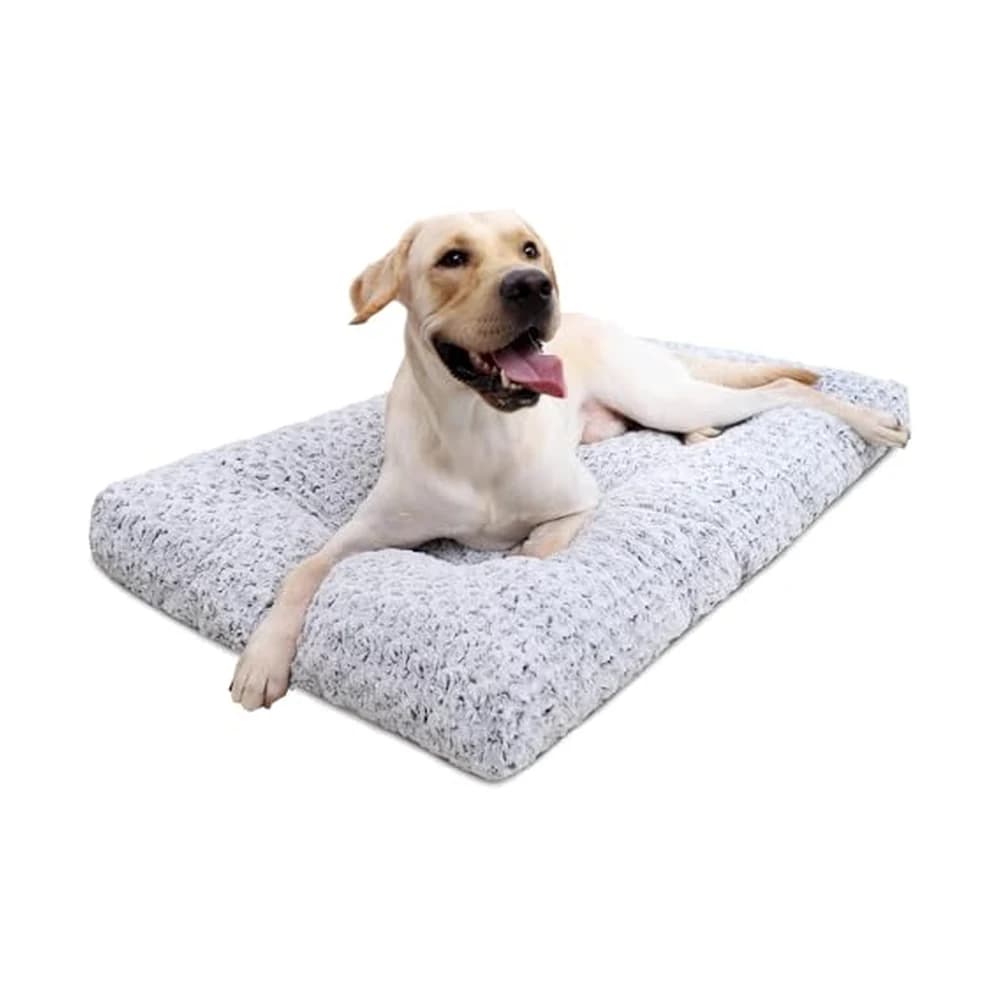
Thin, washable and cheap enough to own two. Owners consistently describe ending up here after losing two or three softer beds.
Our pick for this: KSIIA Washable Crate Bed · $19.99
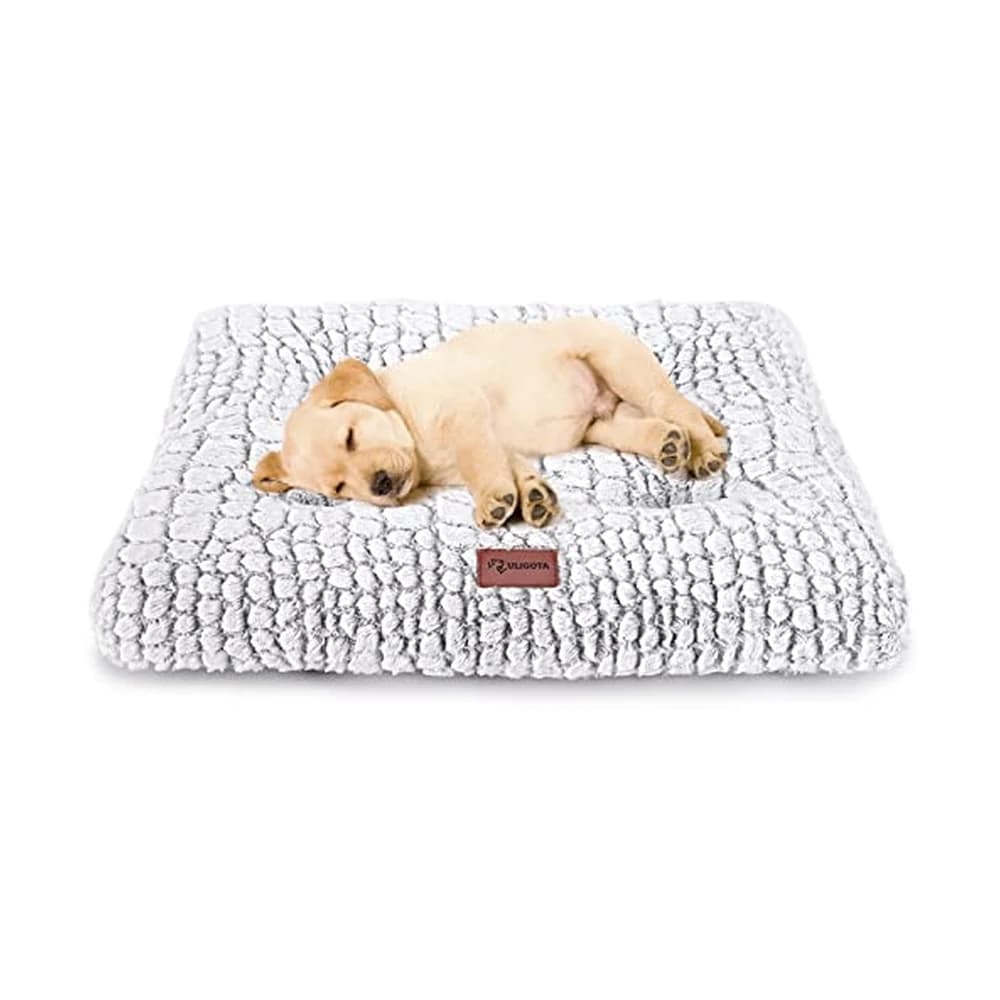
A crate pad for a small puppy who is still having accidents
Waterproof matters more than plush at this stage: a pad that soaks up an accident takes the crate out of service until it is dry.
Our pick for this: ULIGOTA Crate Pad, 24 x 18 in · $20.99
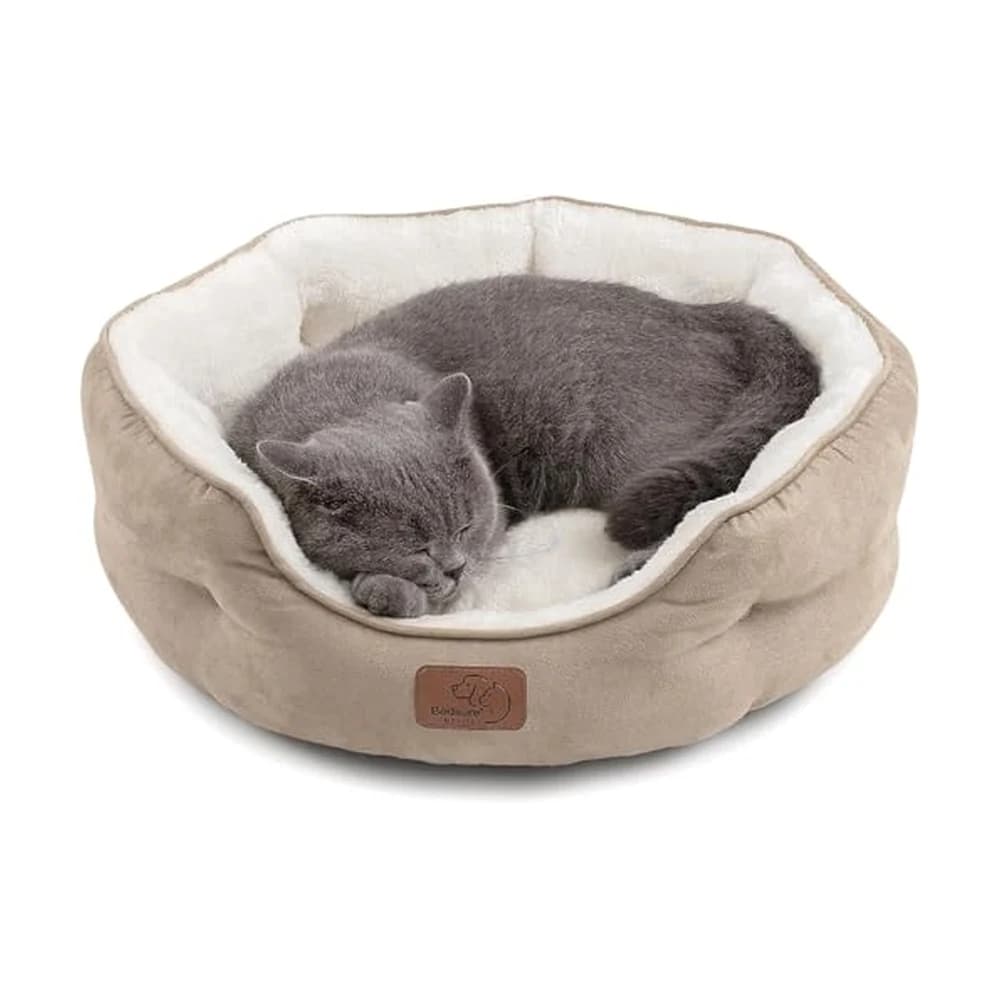
A bed outside the crate, for a puppy who curls up
Sides to nest against, and machine washable. Introduce bedding gradually rather than on the first night.
Our pick for this: Bedsure Round Washable Puppy Bed · $18.99
If none of these is your dog: nothing on this shelf is the right answer for every household, and we would rather you bought nothing than the wrong thing. Start from the stage your dog is actually in, or browse the other shelves.
Filter picks3 of 3
Showing 3 of 3 picks — no filters applied
Showing 3 of 3 picks — no filters applied
The washable beds, feature by feature
The crate pad you can strip and wash whole, sized to a mid-size crate floor
- Size
- 35.0"L x 23.0"W x 3.5"Th
- Colour
- Grey
- Dimensions (H × W × D)
- 3.5 in × 23.0 in × 35.0 in
- Weight
- 4.0 lb
- Skip if
- Your puppy is already opening seams — a plush top is the first thing a teething mouth finds.
The variant we link: 35"x23" · Gray
A small crate in the accident weeks — a plush top over a waterproof bottom, washable whole
- Size
- Small 24"x18"
- Colour
- White
- Dimensions (H × W × D)
- 3.5 in × 18.0 in × 24.0 in
- Weight
- 1.63 lb
- Skip if
- Your crate floor is bigger than 24 by 18 inches; a pad that rides up the sides collects everything.
The variant we link: 24"x18" · White
The second bed — the one in the room the family actually sits in, so the puppy is not choosing between the crate and your feet
- Size
- 20"L x 19"W x 6"Th
- Colour
- Camel
- Dimensions (H × W × D)
- 6.0 in × 19.0 in × 20.0 in
- Weight
- 2.07 lb
- Skip if
- You want this for the crate. A bolstered round bed eats the floor space the crate divider was creating.
The variant we link: 20in
Each pick below carries its own specs, and the tags mark the best of these picks on that point. Specs come from manufacturer listings; ratings are the Amazon aggregate rating and count, refreshed periodically — we don't test products.
How winners are decided: ✓ marks the lowest price, the highest owner rating, the largest stated weight capacity and the longest warranty. Rows where more is not better — size, dimensions, weight, material — and the editorial rows get no ✓ at all. A blank is unknown, never a loss, and a row needs at least two known, differing values before anything can win. How the best-of-these tags are decided: the lowest price, the highest owner rating, the largest stated weight capacity and the longest warranty. Points where more is not better — size, dimensions, weight, material — and the editorial notes carry no tag at all. A blank is unknown, never a loss, and a point needs at least two known, differing values before anything can lead. As an Amazon Associate we earn from qualifying purchases. Specs are the manufacturer's claims and owner-reported data — we research and analyse; we don't test products on dogs.
Why puppy beds matter at this stage
A puppy's first bed has one job and it is not comfort. It is to survive being washed, repeatedly, at short notice, and to come back the same shape. Accidents are part of the stage rather than a failure of it, and the bed that gets thrown out in week three is almost always the plush one bought for the photograph.
There are two beds here, not one. The crate pad is flat, thin and sized to the crate's floor — it lines the place the puppy sleeps at night, and it is the one that gets washed. The second bed goes wherever the household actually sits, because a puppy who has to choose between the crate and the hard floor will choose your feet. Neither needs to be orthopedic. Joint support is a real requirement much later; a sixteen-week-old is not carrying the years that make foam density matter.
Buy the bed you can strip in thirty seconds and wash on a normal cycle, check that the cover comes off before you check anything else, and expect to replace it once. The bed that lasts a decade is the one you buy when the chewing stops.
What owners keep saying
Owners in these threads almost never treat a puppy bed as a comfort purchase — they treat it as a consumable that has to survive two things at once, chewing and urine. The pattern that repeats is buying soft and expensive early, losing two or three beds, and ending up on a thin washable pad or a bare crate tray until the chewing phase passes. People who put a plush bed in a crate overnight describe stuffing pulled out, beds flipped and dragged, and a pad that soaks up an accident and then has to be washed before the crate is usable again, which is why so many recommend two cheap washable pads on rotation rather than one good one. The other recurring note is that chew-proof marketing does not hold: owners report holes in beds sold as chew-resistant within days. Several point out that beds get earned — a puppy who is supervised and exercised destroys less, and bedding gets reintroduced gradually rather than on day one.
we read 42 threads across r/puppy101, r/dogs, r/Dogtraining, r/DogAdvice
Paraphrased from public discussion, never quoted and never counted into a statistic we did not measure. Owners are not a controlled study — they are the only long-term use data anybody has.
What we didn’t pick
Things that look like they belong on this shelf and are not on it, with the reason.
A plush bed in the crate during the chewing phase
The pattern owners describe over and over is buying soft and expensive early, losing two or three beds to chewing and accidents, and ending up on a thin washable pad anyway. Starting there costs less and washes faster.
Chew-proof claims
Owners in these threads report holes in beds sold as chew-resistant within days, including expensive ones. Nothing on this shelf is sold here as chew-proof — it is sold as cheap enough to replace and quick enough to wash.
Orthopedic memory foam for a puppy
Joint support is a purchase for an older dog and a different shelf. A puppy needs something washable that can be pulled out of a crate at two in the morning.
How to choose a puppy bed
Everything here is downstream of one question: how fast can you get this into a washing machine at six in the morning?
Machine washable, whole
A removable cover is good. A bed that goes in whole is better, because the accident does not stop at the cover. Check the maker's own washing instruction before you buy, not after.
Flat for the crate, bolstered for the room
A crate pad has to lie flat and leave the puppy floor space to stretch out and cool down. A bed for the living room can have a rim to lean on. They are different objects and it is worth owning both.
A non-slip base
A pad that slides is a pad the puppy bunches into a corner, and a bunched pad is bare crate tray by 3 a.m.
Sized to the crate, not to the dog
A crate pad wider than the tray rides up the sides and collects everything. Measure the tray.
Cheap enough to replace once
Most puppies destroy or ruin their first bed. Buying the good bed at eight weeks is buying it twice.
Common questions
- Should a puppy have a bed in the crate?
- A flat washable pad is enough, and it is what most of these are. A thick plush bed fills the space the crate divider was carefully creating, and it is the first thing a teething puppy will open. If your puppy chews bedding, an empty crate tray for a few weeks is safer than a shredded bed.
- Do puppies need an orthopedic bed?
- No. Orthopedic foam answers a joint problem an older dog has and a puppy does not. Spend the money on washability now and on foam density when your dog is grey around the muzzle.
- How many beds does a puppy need?
- Two is the usual honest answer: one in the crate and one in the room where the family actually spends the evening. A puppy with nowhere comfortable outside the crate will pick your sofa or your feet.
- My puppy keeps having accidents on the bed. What do I do?
- Wash it, and treat the accident as information about the schedule rather than about the bed. If a housetrained puppy suddenly starts wetting where they sleep, that is a question for a vet rather than for a shop.