The Years
Puppy
Your next chapter
Teething, growing, and learning what the world is for.
The building months. House-training gets reliable, adult teeth come through and everything gets chewed, the body grows faster than the brain, and the food and neutering conversations both arrive. This is the stage where the training you do is cheapest and lasts longest — and it is also the last calm stretch before adolescence.
Approximate. AAHA gives no fixed ages: it defines life stages by development, not by birthdays, and publishes no inclusive ages at all for mature adult or senior. These windows are ours, built so you can find the right page. A dog a month either side of a line is the same dog.
Where you are
This stage's checkpoints
Things to check rather than tasks with a deadline — the full list is further down the page.
- Vaccine series completed, and you know what boosters come next and when
- Two weeks without an indoor accident
- Adult teeth are through and you have found the chew this dog actually prefers
Nothing here is a test, and none of it has a deadline attached. The full list, and the questions worth asking your vet, are further down the page.
You are here if…
- You are finding tiny teeth on the carpet
- House-training is mostly solved and then randomly is not
- The puppy has grown out of a harness you bought six weeks ago
- Your vet has raised spaying or neutering and you are not sure what to say
- Something structural has been chewed: skirting board, chair leg, a door frame
- They can hold a sit for a few seconds now and it feels like a genuine achievement
- You have been told to switch to adult food and you do not know when
The numbers to know
Rules of thumb, not diagnoses — your vet knows your dog.
What is changing
The mouth. Adult teeth push through from around four months and the discomfort runs for weeks. Chewing at this age is analgesic, not naughty — the dog is doing something about a sore jaw. The job is not to stop the chewing but to aim it, which means having the right chew in your hand before the table leg is in their mouth.
The body. Growth is fast and uneven, and it lasts far longer in a big dog than a small one. Very small dogs are close to adult size somewhere between eight and twelve months; large breeds can take up to twenty-four months to finish. That single fact drives most of what differs between a Chihuahua's first year and a Great Dane's: how long they eat puppy food, when their joints can take real exercise, and when they stop being a puppy at all.
The brain. Coordination improves, attention span grows, and confidence swings. A second wary period is common somewhere in here — a puppy who was fine with the bin lorry last month and is not this month. Do not force it, do not fuss it, just let them watch from further away and pay them for being calm.
The conversations. Spay and neuter timing is now a real decision with real trade-offs, and the answer differs by breed, size and household. It is your vet's call to make with you.
The six needs, this stage
What changes, and the one thing worth getting for it.
Nourish
A slow feeder, if meals disappear in ten seconds
Slows eating and adds a small puzzle to a moment that was otherwise over instantly.
Why nourish changes now +Why nourish changes now −
Meals usually drop from four a day to three, and then toward two as they get older. Puppy food is formulated for growth, and when a dog moves off it depends on when that dog finishes growing — which is months earlier for a terrier than for a mastiff. Do not guess this from a bag; ask your vet at a weigh-in. When the switch does come, do it over seven to ten days by mixing an increasing proportion of the new food. Treats are still food: if training is going well, they can be a real share of the day's calories, so take them off the meal.
Rest
A second bed wherever the household actually sits
Settling near people rather than on them is a trained skill. It needs a place to happen.
Why rest changes now +Why rest changes now −
Sleep needs are still high but the naps consolidate. The crate can move out of the bedroom if you want it to, gradually rather than overnight. The bed bought at eight weeks is probably now too small, and teething makes anything with stuffing a genuine risk — a dog who swallows bed filling is a dog having an unpleasant scan. Washable and hard to disembowel beats plush at this stage. Keep enforcing naps: an overtired six-month-old looks exactly like a badly behaved one.
Move
A long line for open-space recall
Fifteen to thirty feet. It buys you real recall practice with a safety net, which is exactly what you want before adolescence.
Why move changes now +Why move changes now −
Walks become real, but growth plates are still open and the joints of a large-breed puppy in particular are not built for repetitive impact. Short, frequent and varied beats long and hard: sniffing walks, different surfaces, gentle play with suitable dogs. Avoid long forced jogs, repeated jumping in and out of a car boot, and endless stair work — ask your vet what is sensible for your dog's size and build. The harness will need replacing at least once. Growth is not a straight line, so check the fit monthly rather than at the point it is obviously wrong.
Think
A mid-difficulty puzzle feeder
Step up one level from the sliding-lid puzzle. Watch the first attempt and help if they stall.
Why think changes now +Why think changes now −
This is the peak chewing stage of a dog's life and the single biggest driver of household damage. Aim it rather than fight it: several chews of different hardness, available where the dog actually is, plus a frozen stuffed toy for the periods when you cannot supervise. Enrichment also gets harder now — a puzzle that was right at twelve weeks is boring at six months, and a bored, clever puppy invents work. Rotate toys out of sight for a fortnight and they come back new. A stretch of sniffing or problem-solving usually settles a puppy better than the same time spent running, which is why a chase game rarely produces the quiet evening it promises.
Train
A fifteen-to-thirty-foot long line
Recall gets built on this, in a field, before it ever gets tested off-leash.
Why train changes now +Why train changes now −
The most valuable months you will ever have. Recall, a settle on a mat, loose-leash walking and a reliable leave-it are all much easier to build now than to repair at fourteen months, because your puppy still wants to be near you and has not yet discovered that the rest of the world is interesting. Keep sessions short and frequent, reward generously, and practise in more than one room and more than one park — dogs do not generalise well, and a sit that only works in the kitchen is a kitchen trick. A positive-reinforcement class is worth the money at this stage more than at any other.
Protect
Brush and comb suited to the coat
Start before the adult coat comes in. A dog who tolerates grooming at six months tolerates it at ten years.
Why protect changes now +Why protect changes now −
The vaccine series finishes somewhere in here and the world opens up, which means parasite exposure goes up too — different regions, different seasons, different products, all of it a prescription conversation rather than a shelf decision. This is also when spay and neuter timing gets discussed, and it is genuinely not a one-size question: it interacts with breed, adult size and joint development, and the evidence differs across those. Meanwhile the dog is now big enough and fast enough to get out of a gap that used to hold them, so recheck the fence and the gate latch.
Slow Feeders & Bowls, 6 picks side by side
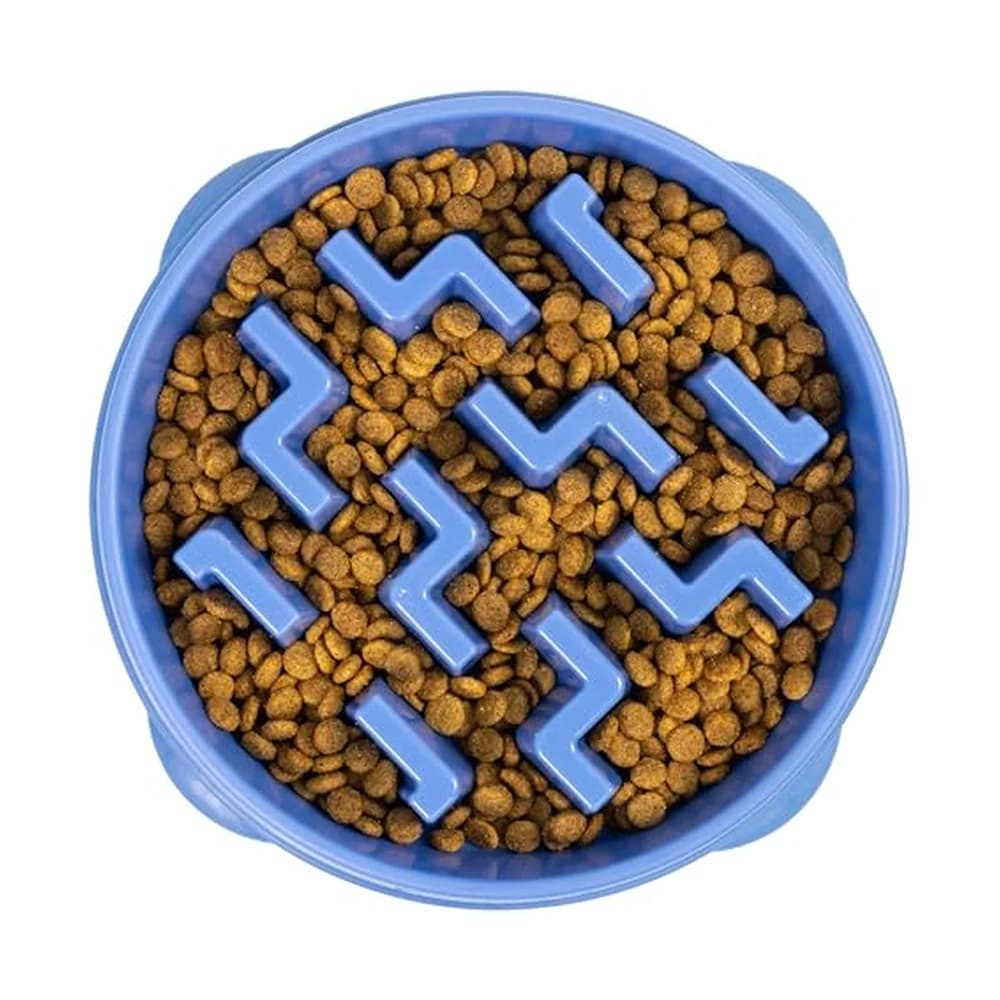
The fast eater — a four-cup maze bowl that stretches a ninety-second meal into several minutes, for about ten dollars
- Size
- Not stated
- Material
- BPA/PVC/Phthalate-free plastic
- Colour
- Not stated
- Dimensions (H × W × D)
- Not stated
- Weight
- Not stated
- Skip if
- You have a flat-faced breed. Deep maze channels are hard work for a short muzzle.
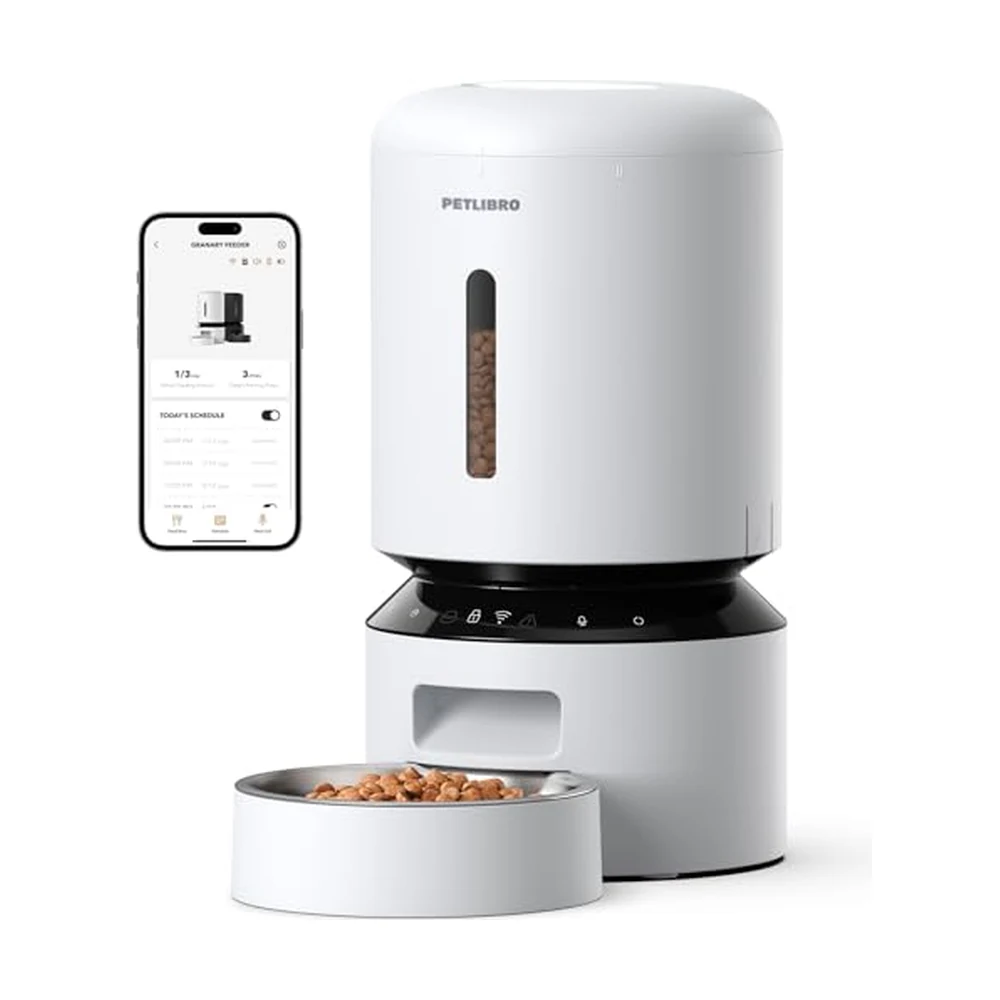
- Automatic feeder
PETLIBRO Granary 5L Wi-Fi Automatic Feeder
$89.99 4.1 out of 5 stars · 10,246 ratings
An adult dog whose mealtimes fall while you are at work, or a senior on smaller, more frequent meals that a person cannot always be home to serve
- Size
- 5L-with WiFi
- Material
- Not stated
- Colour
- White
- Dimensions (H × W × D)
- 11.0 in × 7.5 in × 7.5 in
- Weight
- 4.41 lb
- Skip if
- Your dog eats a large or irregular kibble (owners report jams), your Wi-Fi is unreliable, or the puppy is still young enough that every meal is also a potty-timing cue you want to see.
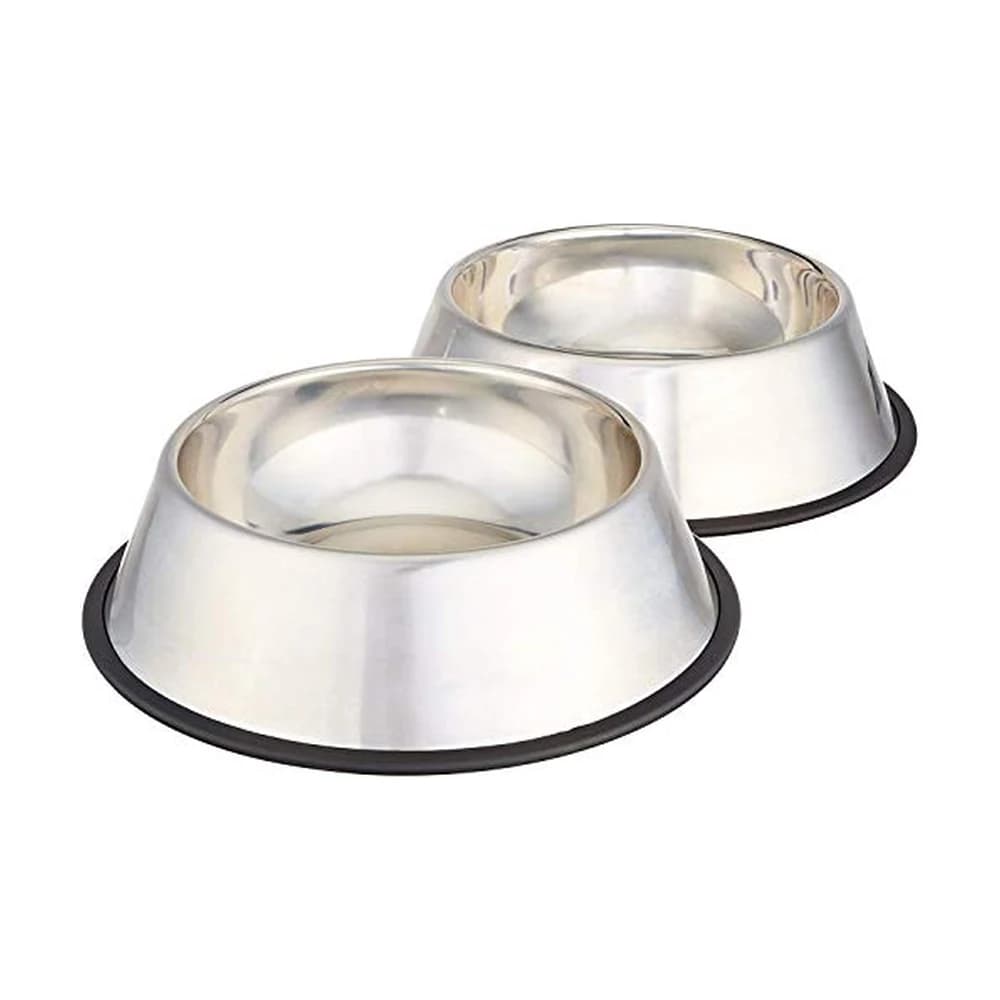
The everyday water and food bowls — stainless, dishwasher safe, non-skid base, two in the box
- Size
- Not stated
- Material
- Stainless steel
- Colour
- Not stated
- Dimensions (H × W × D)
- Not stated
- Weight
- Not stated
- Skip if
- Your dog needs slowing down at meals. These are plain bowls with no maze.
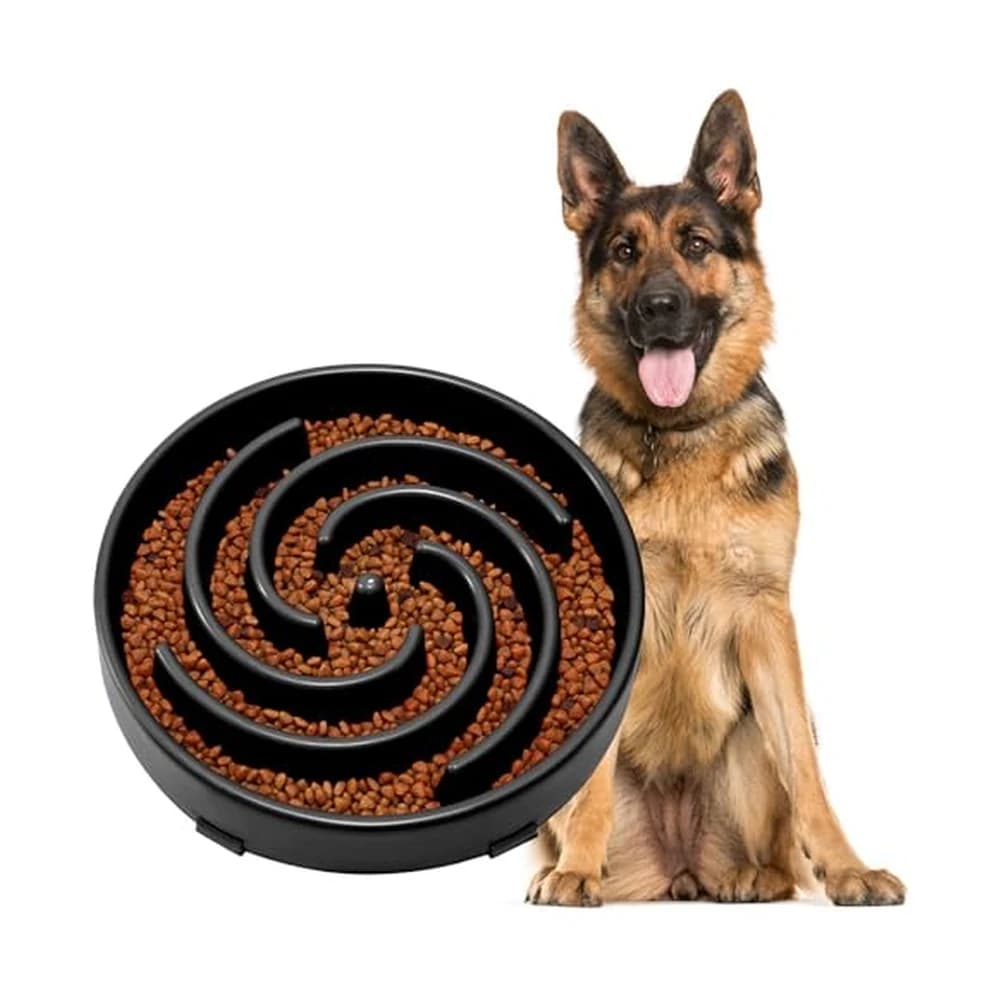
A slightly gentler maze — a spiral pattern that slows a dog down without frustrating them, with a silicone anti-slip ring
- Size
- Not stated
- Material
- Food-grade PP plastic
- Colour
- Not stated
- Dimensions (H × W × D)
- Not stated
- Weight
- Not stated
- Skip if
- You have a giant-breed dog. Owners report it being too small for the largest breeds.
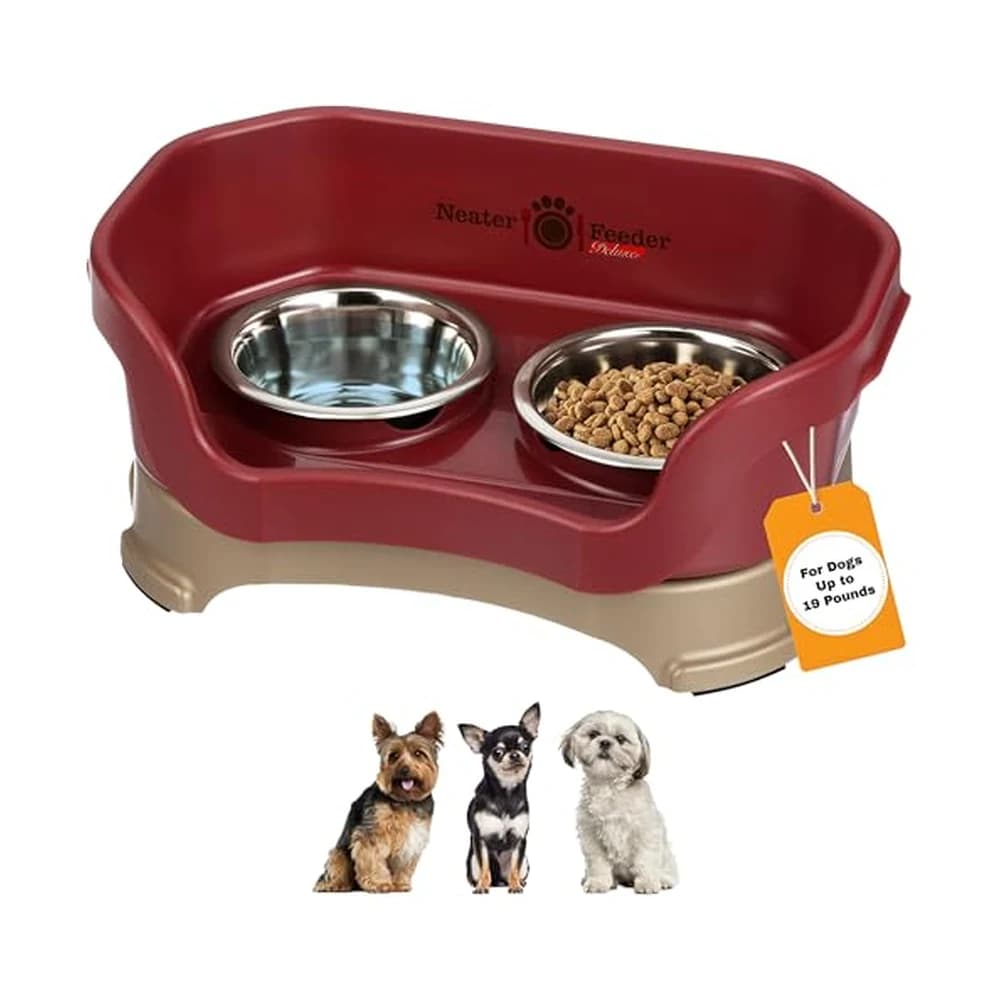
The messy eater and the arthritic neck — raised stainless bowls in a frame that catches spilled food and drains spilled water
- Size
- Not stated
- Material
- Plastic frame + stainless steel bowls
- Colour
- Not stated
- Dimensions (H × W × D)
- Not stated
- Weight
- Not stated
- Skip if
- You have a large deep-chested dog. Raised feeding and bloat risk is a live debate — ask your vet first.
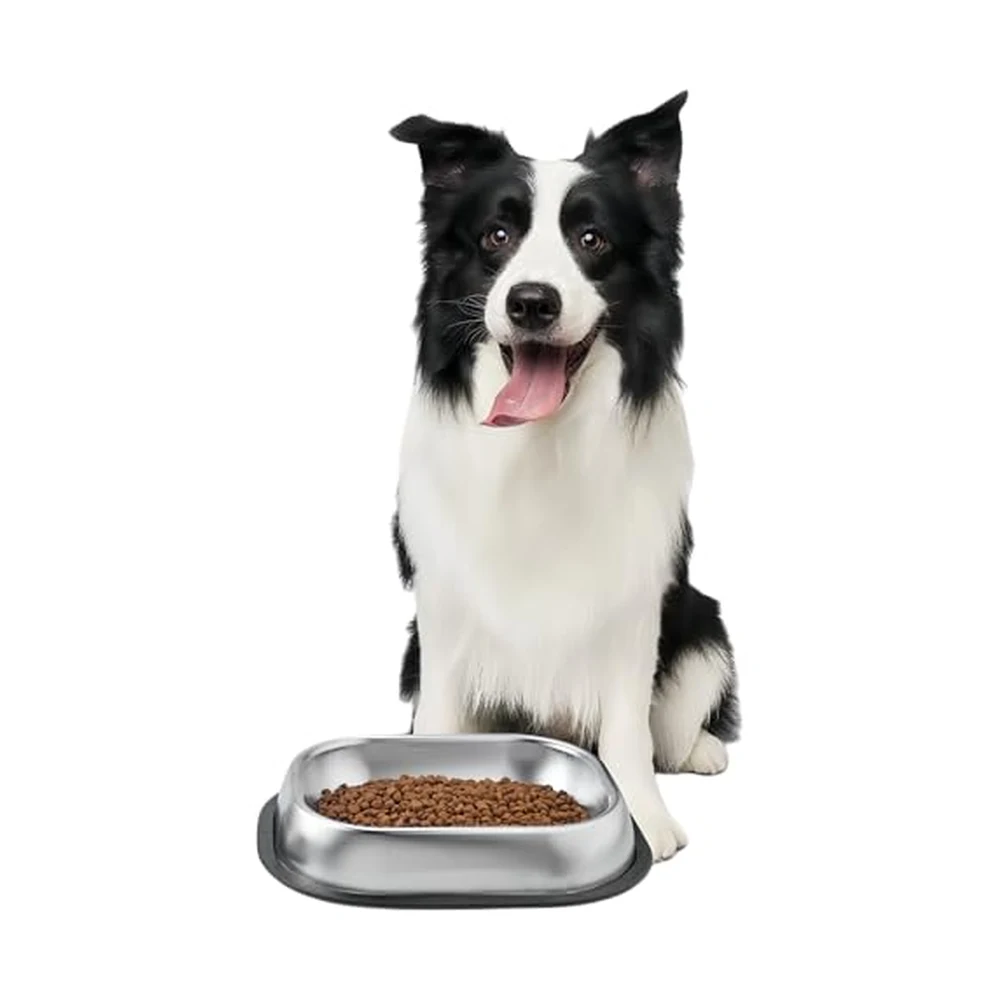
A puppy meeting their first bowl, and a small older dog whose neck no longer wants to reach down into a well
- Size
- 1 Bowl 8.2 inch
- Material
- Not stated
- Colour
- Not stated
- Dimensions (H × W × D)
- 1.0 in × 9.0 in × 9.0 in
- Weight
- 0.62 lb
- Skip if
- You have a large-breed dog — the maker sizes this for small and medium animals, and a big dog will push it around.
Each pick below carries its own specs, and the tags mark the best of these picks on that point. Specs come from manufacturer listings; ratings are the Amazon aggregate rating and count, refreshed periodically — we don't test products.
How winners are decided: ✓ marks the lowest price, the highest owner rating, the largest stated weight capacity and the longest warranty. Rows where more is not better — size, dimensions, weight, material — and the editorial rows get no ✓ at all. A blank is unknown, never a loss, and a row needs at least two known, differing values before anything can win. How the best-of-these tags are decided: the lowest price, the highest owner rating, the largest stated weight capacity and the longest warranty. Points where more is not better — size, dimensions, weight, material — and the editorial notes carry no tag at all. A blank is unknown, never a loss, and a point needs at least two known, differing values before anything can lead. As an Amazon Associate we earn from qualifying purchases. Specs are the manufacturer's claims and owner-reported data — we research and analyse; we don't test products on dogs.
This stage is done when
Puppy milestones
- Vaccine series completed, and you know what boosters come next and when
- Two weeks without an indoor accident
- Adult teeth are through and you have found the chew this dog actually prefers
- Recall works on a long line, in a field, with a distraction present
- A settle on a mat holds for ten minutes somewhere that is not home
- You have had the spay or neuter conversation with your vet and know the plan and the timing
- The dog has been weighed at the vet at least twice and you know the growth curve
- Nails trimmed and coat brushed weekly without a struggle
- A positive-reinforcement class attended, or a good trainer identified
- You know from your vet whether and when this dog moves off puppy food
Off by default. Turn it on and the ticks are stored in this browser only. They are not sent to us, we cannot read them, there is no account and there is nothing to sign up for. Clearing your browser data, or switching it off again, deletes them. If your browser blocks site storage the page still works, it just will not remember.
Untick this for a blank sheet to put on the fridge, whatever is ticked on screen.
Take these to the vet
Questions to ask
- Discuss spay or neuter timing with your vet for your dog's breed and size — it interacts with joint development, behaviour and cancer risk differently in different dogs, and we do not publish a schedule.
- Ask your vet if a limp lasts more than a day or two, or if your puppy is reluctant to use stairs or jump. Growing joints are worth checking early rather than watching.
- Ask your vet whether a retained puppy tooth beside a new adult tooth needs removing, rather than waiting to see whether it falls out.
- Ask your vet before starting any supplement, including joint supplements, in a growing dog. Growth is one of the few periods where extra is not neutral.
- Ask your vet, or a credentialled behaviour professional, if your puppy is guarding food, toys or a space with a hard stare, a freeze or a growl. This is much easier to change now than at two years old.
We research; we are not your vet and we do not examine your dog. Anything here that touches health is a question to ask, not an answer to act on. Take it with you — a written list is easier than remembering in the room.
Train at home, this stage
- Potty Training Schedule for a New PuppyA timetable built around a puppy's real day: after waking, after eating, after play, and every hour in between. Reward-based only.
- How to Teach Recall at Home, Step by StepRecall is a paid behavior, built indoors first, then on a long line. Never call a dog to something he will not enjoy.
- Loose Leash Walking: A Plan That Actually HoldsPulling is rewarded by the walk itself. Fix it by changing what pulling produces, not by making pulling hurt.
Learn more
- Puppy Sleep Schedule: How Much, and WhenPuppies sleep 18 to 20 hours a day. Most of what looks like a behavior problem in week one is an overtired puppy who cannot stop.
- Dog Life Stages Explained (And Who Decides)Four clinical stages, six practical ones. What AAHA actually defines, where adolescence fits, and why the stage changes what your dog needs.
- The Puppy Socialization Window, and What to DoThe first three months are the most important socialization period. AVSAB calls socializing before full vaccination the standard of care.
Is one of these your evening?
Sources
- AAHA 2019 Canine Life Stage Guidelines - definitions — That the puppy stage ends at the cessation of rapid growth, roughly six to nine months, varying with breed and size.
- Salt C, Morris PJ, German AJ, et al. Growth standard charts for monitoring bodyweight in dogs of different sizes. PLoS ONE (2017) — That very small dogs reach maturity at between eight and twelve months while larger breeds can require up to twenty-four months to reach adult body weight.
- AKC - How to Calculate Dog Years to Human Years — That dogs age fastest in their first two years, and that size and breed significantly affect aging rate.
We are not your vet, and this site does not diagnose anything. Everything medical here ends with the question to ask at your next appointment, because the person who has examined your dog knows things a website cannot. If something has changed suddenly, call them rather than reading on.