Some links below are Amazon affiliate links — if you buy through one we may earn a commission, at no extra cost to you. It does not change what we recommend. Full disclosure. Researched, not tested — how we research.
In this article(8 sections)
There is no study-backed number of minutes for a puppy. The popular "five minutes per month of age" rule is the UK Kennel Club's rule of thumb, and veterinary writers still debate whether research supports it. What evidence exists points at the type of exercise more than the amount: the evidence associates off-leash exercise on soft ground with lower hip dysplasia risk in four large and giant breeds, while stairs, jumping down from heights and long runs on hard surfaces are the things to hold back until the growth plates close. This guide belongs to the puppy stage; everything below is guidance, not a prescription.
Where the five-minute rule comes from
The Royal Kennel Club's walking advice calls it "a good rule of thumb": five minutes of formal exercise per month of age, up to twice a day, until the puppy is fully grown. So fifteen minutes at three months, twenty at four. It separates formal exercise, meaning walks, from informal play, which it calls one of the most important kinds of exercise for puppies.
A 2024 review for veterinary professionals, published by Improve Veterinary Education and sponsored by the Association of Pet Behaviour Counsellors, opens by asking whether the rule is right. It says the guideline is promoted by some UK professional bodies, but that debate remains over whether research adequately supports it. We could not find a study that tested it.
Rule of thumb: Treat the five-minute figure as a cap on structured walks, not a daily target, and never as a limit on free play.
What the research does say
The evidence is thinner than the confident charts suggest, but it exists.
- Stairs before three months. A Norwegian study of 501 Newfoundlands, Labradors, Leonbergers and Irish Wolfhounds, Krontveit and colleagues (2012), found puppies using stairs from birth to three months had a higher risk of hip dysplasia.
- Off-leash exercise before three months. The same observational study associated off-leash exercise in that window with lower hip dysplasia risk; it does not establish that exercise caused the difference. Its authors recommended outdoor exercise on soft ground in moderately rough terrain.
- Impact and repetition. That 2024 review lists repeated ball and stick chasing, running beside a bike, jumping off high surfaces and uncontrolled stair use among suggested risk factors for later joint disease, drawing on Krontveit, Sallander and others.
Two limits matter. The Norwegian study covered four large and giant breeds, so it says little about a Chihuahua. And, as the review points out, the research to date looks at joints, not behaviour.
Why growth plates set the timeline
The long bones grow from growth plates, and once they close the bone is at its final length. How long that takes depends on adult size, which is why a single rule for all puppies cannot be right. Our growth timeline has the sourced detail. In short, from AKC and VCA:
| Adult size | Roughly when growth stops |
|---|---|
| Small | Six to eight months, per AKC |
| Medium | Around twelve months |
| Large | Twelve to eighteen months, per VCA |
| Giant | Up to about two years |
AKC's chief veterinarian, Dr. Jerry Klein, says road work or jogging is never recommended for a dog under fourteen to eighteen months, especially in large and giant breeds, until the growth plates have fused.
 Puppies tend to stop and rest when they have had enough, which is exactly what a forced walk overrides.
Puppy exercise by age: practical guidance
This is how we would apply the sources above. It is guidance built from them, not a tested schedule.
| Age | What exercise looks like | Hold back on |
|---|---|---|
| Eight to twelve weeks | Free play at home and in the garden on grass; short outings for new sights | Stairs, jumping off furniture |
| Three to six months | Short walks within the five-minute cap, sniffing, off-leash play on soft ground in safe places | Long hikes, repeated fetch, hard pavement for distance |
| Six to twelve months | Longer walks built up gradually, training games, varied terrain | Jogging, bike runs, agility jumps |
| Until growth stops | Build distance slowly as your vet advises | Road work before fourteen to eighteen months (AKC) |
A small breed moves down this table faster than a giant one. Use your puppy's expected adult size, not the calendar alone.
The three things to hold back on
The Kennel Club names the same three that turn up in the research:
- Jumping from heights, or being taught to jump.
- Sharp, sudden turns, such as chasing a thrown ball.
- Stairs, until at least twelve weeks, and longer for some larger breeds.
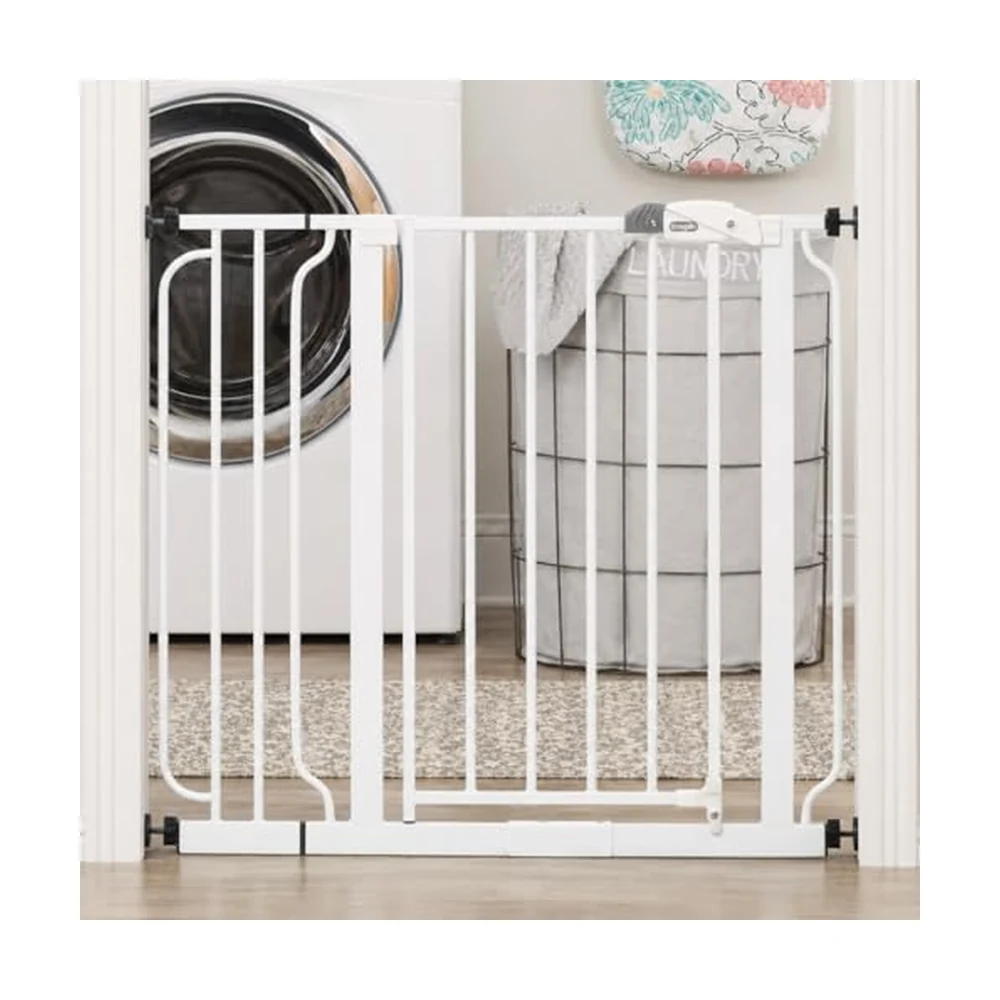
A baby gate across the stairs, like the Regalo walk-through gate, handles the third. Carry a young large-breed puppy up and down instead.
It also warns against exercising a puppy on a full stomach, because of the risk of bloat.
Better ways to tire a puppy out
A tired puppy is often an overstimulated one rather than an exercised one. The 2024 review notes that behaviour professionals report more mouthing, more noise and trouble settling in over-walked puppies, and that puppies need a lot of rest and sleep.
What tires a puppy well:
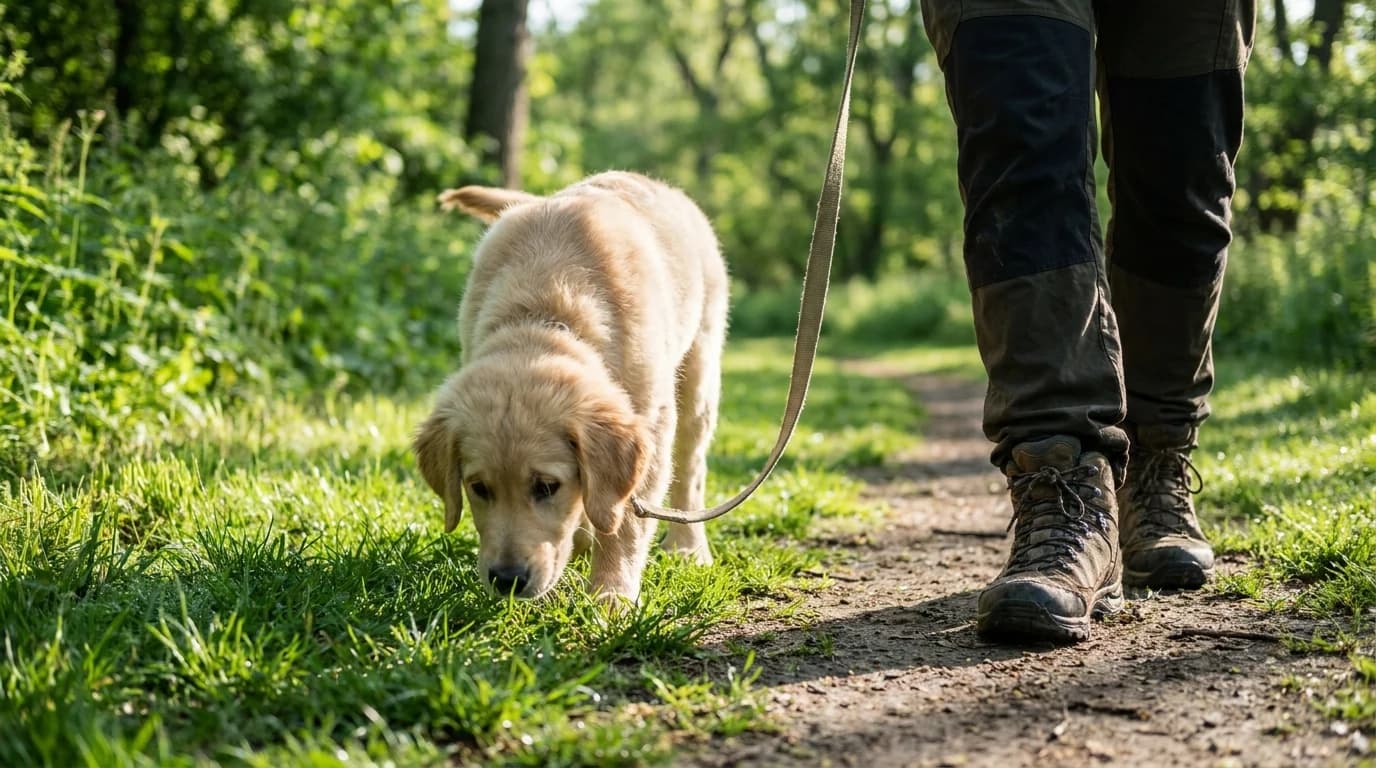
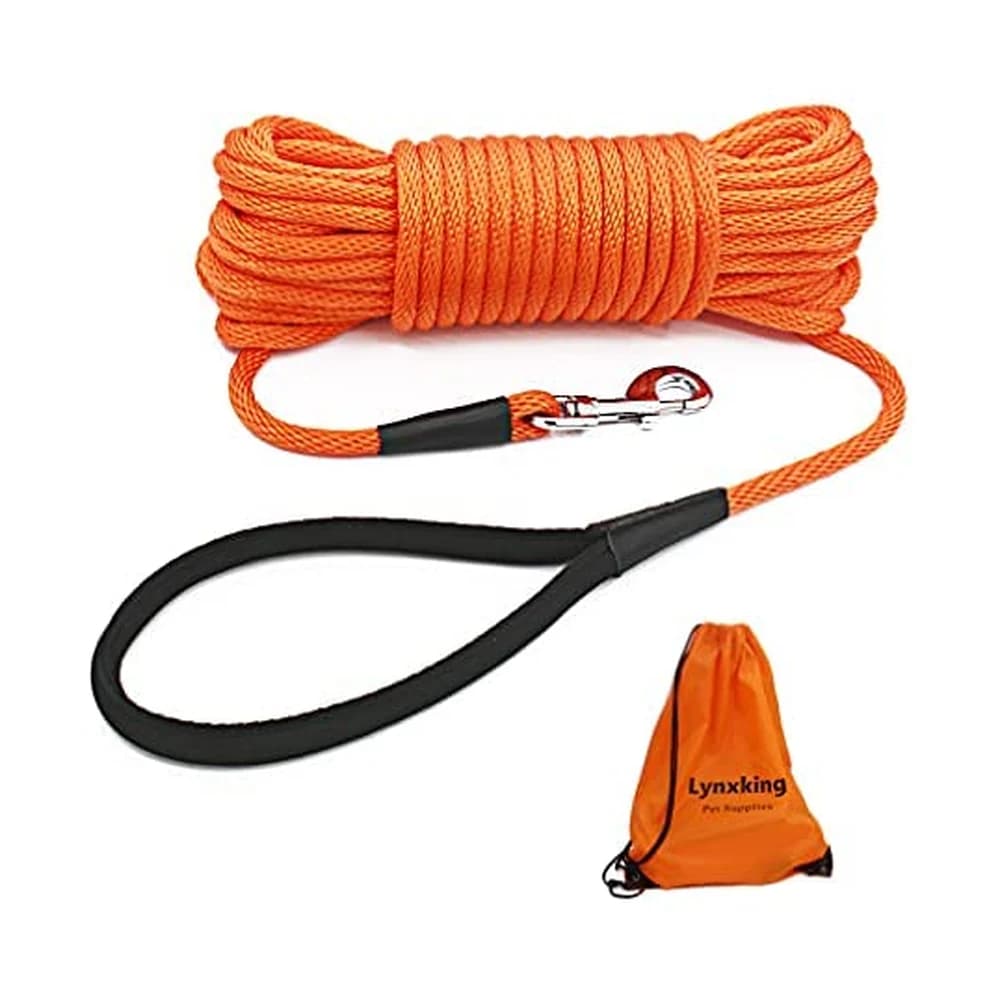
- Sniffing. A long line gives freedom on grass where off-leash is not safe.
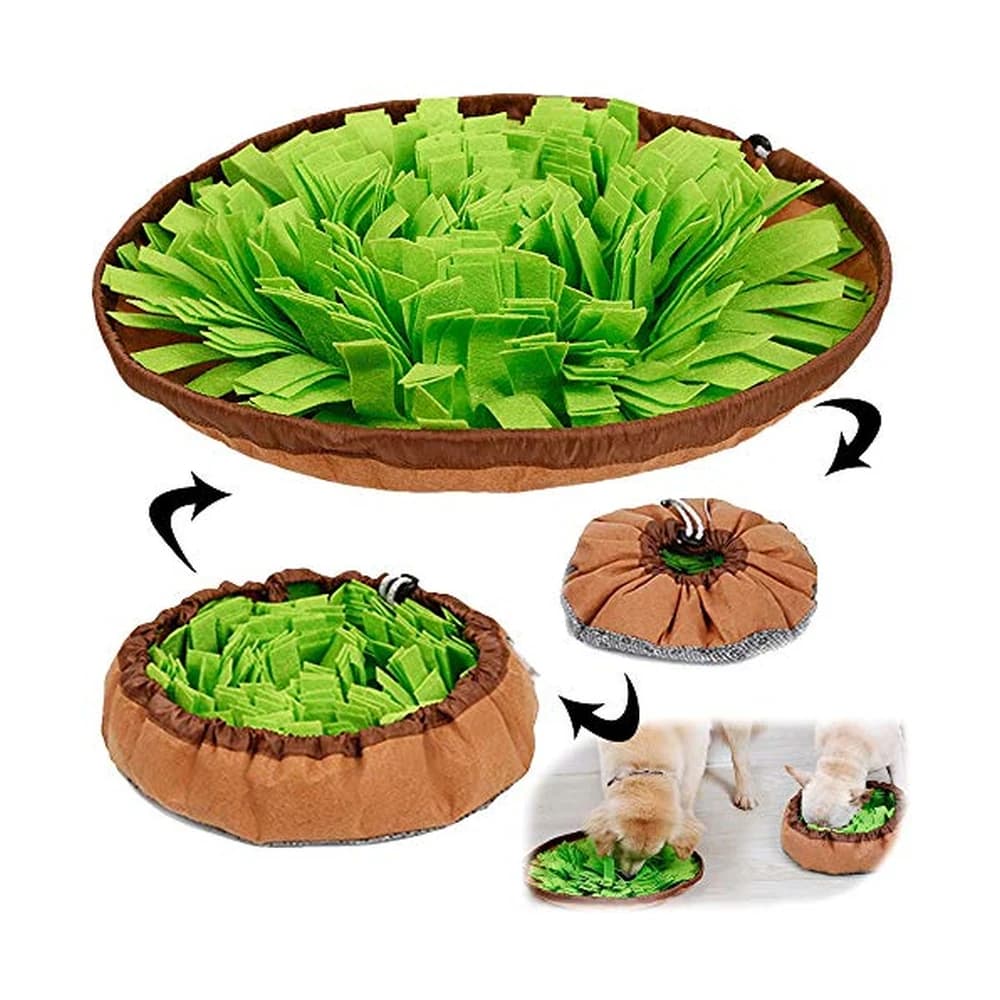
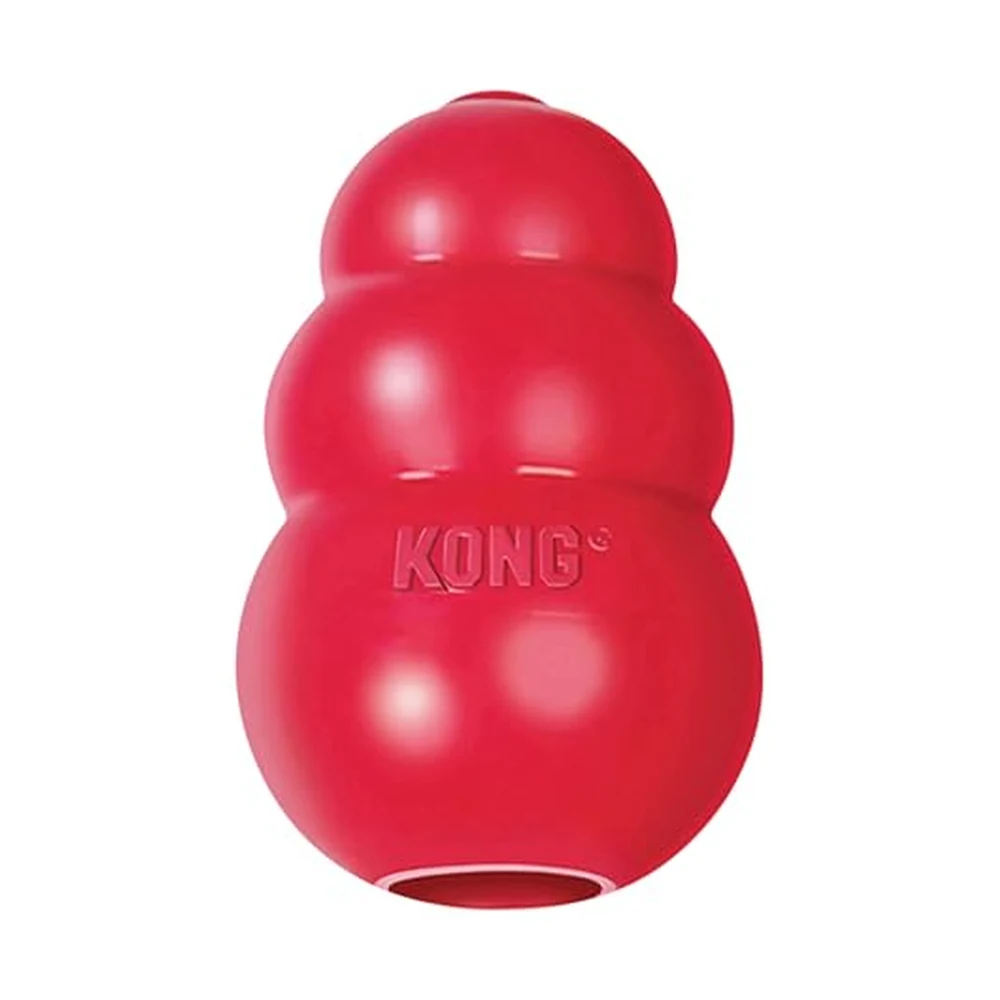
- Food puzzles, such as a snuffle mat or a stuffed KONG Classic.
- Short training sessions paid with small soft treats.
What tires a puppy badly:
- Long walks on pavement to wear them out.
- Endless fetch.
- Busy, noisy places before they are ready for them.
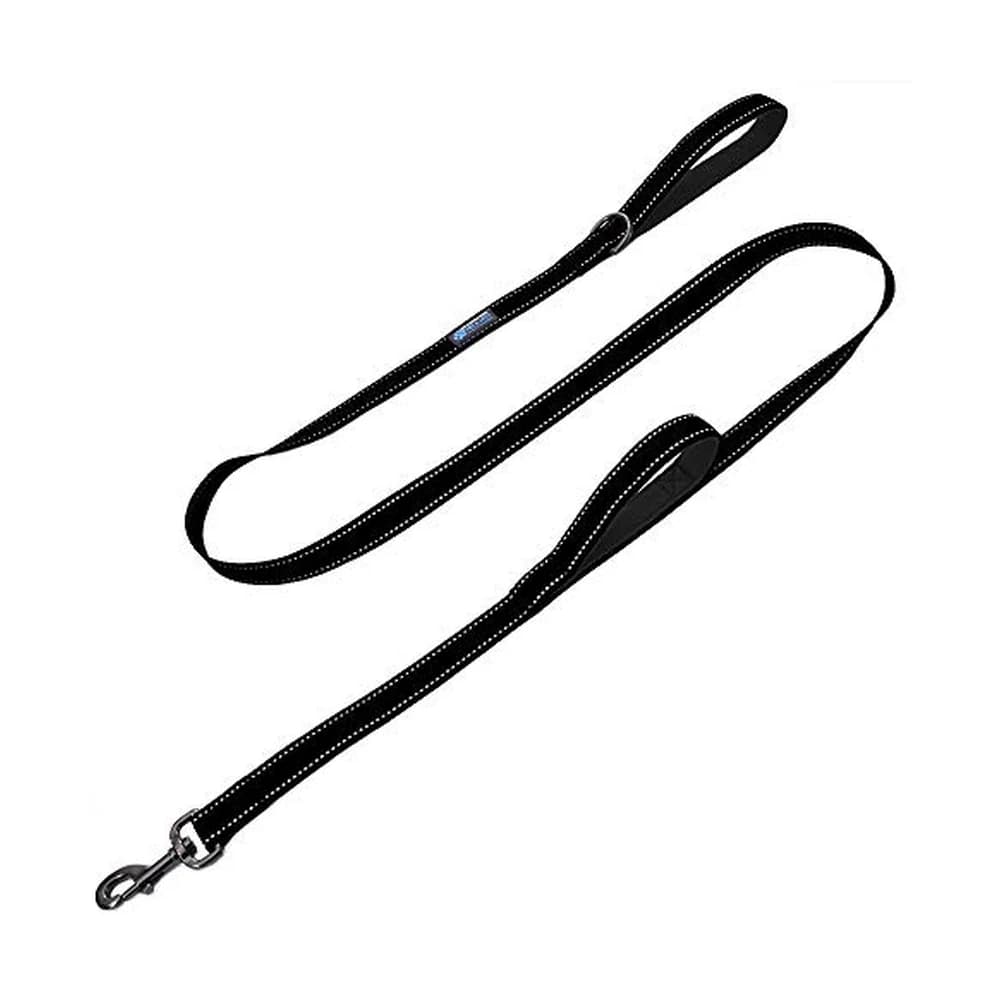
For walks themselves, a comfortable lead such as the Max and Neo double-handle leash from our puppy harness and leash shelf is enough; a puppy on a short, sniffy walk does not need anything fancy.
Rule of thumb: Choose soft ground, free play and sniffing over miles. Distance can wait for the growth plates.
Walks in the early weeks double as socialisation; our guide to the puppy socialization window covers how to do those safely before vaccines finish.
Reading your own puppy
Because no number is proven, your puppy is the better gauge. Signs a walk or game has gone on long enough:
- He lies down, sits and refuses to move, or lags behind you.
- He gets more bitey, jumpy or noisy rather than calmer.
- He is stiff or slow getting up after a rest later that day.
Stop there, head home, and make the next outing shorter. The Kennel Club's own advice makes the same point: the amount a puppy can manage varies between breeds and between individual dogs, and you know your dog best. A growing puppy who is tired is doing it right; one who is pushed past tired is not learning anything useful from the walk.
When to ask your vet
- Your puppy limps, is stiff after rest, or is reluctant to move.
- You have a large or giant breed and want to plan running, agility or hiking.
- You are unsure what adult size to plan for.
Tools for this
- Puppy Weight Calculator
Estimate an adult size range for the growth discussion with your vet; the estimate does not set an exercise limit.
Key takeaways
What to remember
- The Kennel Club calls five minutes of formal exercise per month of age, up to twice a day, a rule of thumb, and it does not limit free play.
- We could not find a study that tested the five-minute rule, and a 2024 veterinary review says its research support is still debated.
- In a Norwegian study of 501 large-breed puppies, stairs before three months raised hip dysplasia risk and off-leash exercise on soft terrain lowered it.
- Growth plates close later in bigger dogs, so exercise limits relax sooner for a small breed than a giant one.
- Hold back on jumping from heights, sharp turns after a ball, stairs, and jogging before fourteen to eighteen months.
- Sniffing, food puzzles and short training games tire a puppy without the impact.
Questions people ask
- Is the five-minute rule for puppies true?
- It is a rule of thumb from the UK Kennel Club, not a research finding. A 2024 review for veterinary professionals says debate remains over whether research supports it, and we could not find a study that tested it. It is a reasonable cap on structured walks, not a limit on play.
- How long should I walk a four-month-old puppy?
- The Kennel Club's rule of thumb gives about twenty minutes of formal walking, up to twice a day, at four months. Free play at home and in the garden is on top of that. Watch your puppy and stop sooner if he lags, lies down or gets overexcited.
- Can puppies go up and down stairs?
- Hold off while they are young. In a Norwegian study of four large breeds, puppies using stairs before three months had a higher risk of hip dysplasia. The Kennel Club advises avoiding stairs until at least twelve weeks, and longer for some larger breeds.
- When can my puppy go running with me?
- Not until the growth plates close. AKC's chief veterinarian says road work or jogging is never recommended for a dog under fourteen to eighteen months, especially large and giant breeds. Ask your vet before starting.
- Is playing with other dogs too much exercise for a puppy?
- Play is an important part of socialisation. The 2024 review suggests the risk lies in boisterous, overly physical or competitive play, so keep sessions short, well matched and on soft ground, and let your puppy take breaks.
Gear
Gear for this stage
The products this piece assumes, in the order we would get them. Prices move; check before you buy.
$44.98 Owner rating 4.4 out of 5 · 175,093
A wide doorway at the bottom of the stairs
Lynxking 30 ft Check Cord Long Line
$14.99 Owner rating 4.6 out of 5 · 2,235
Recall practice in open space
$11.98 Owner rating 4.2 out of 5 · 21,909
The cheapest way to tire a dog out with their nose
$13.96 Owner rating 4.6 out of 5 · 93,737
The stuffed-and-frozen standby
$16.99 Owner rating 4.8 out of 5 · 9,068
The first leash — a six-foot walking length plus a traffic handle 18 inches from the clip
Sources
- The Royal Kennel Club: Puppy and dog walking tips — The rule of thumb of five minutes of formal exercise per month of age up to twice a day, informal play as one of the most important forms of exercise, puppies self-limiting play, avoiding jumping from heights, sharp turns and stairs until at least 12 weeks, and not exercising on a full stomach.
- Improve Veterinary Education: When enough is enough - what is the appropriate amount of exercise for puppies? (2024) — That the five-minute guideline is promoted by some UK bodies while debate remains over its research support, the suggested risk factors from Krontveit, Sallander and others, that research has focused on joints not behaviour, that play risk lies in boisterous play, and the reported signs of overstimulation.
- Krontveit et al. (2012), Housing- and exercise-related risk factors associated with the development of hip dysplasia, American Journal of Veterinary Research — The cohort of 501 Newfoundlands, Labrador Retrievers, Leonbergers and Irish Wolfhounds, increased risk with stairs from birth to 3 months, decreased risk with off-leash exercise in that period, and the recommendation of soft ground in moderately rough terrain.
- American Kennel Club: Puppy Growth Chart: When Does My Puppy Finish Growing? — Growth plates closing at the end of bone growth, small breeds done by 6 to 8 months and medium around 12, and Dr. Jerry Klein's advice against road work or jogging under 14 to 18 months.
- VCA Animal Hospitals: Puppy Growth and Maturity — Most large breeds reaching adult size between 12 and 18 months and giants such as Mastiffs growing to about two years.
Not veterinary advice — for anything medical, ask your vet.
Next step
Find out when your puppy's growth plates close
Every limit on this page relaxes when growth stops, and adult size decides when that is.