We research gear rather than testing it, and some links below are Amazon affiliate links — if you buy through one we may earn a commission, at no extra cost to you. It does not change what we recommend. Full disclosure.
In this article(6 sections)
There is a period early in a puppy's life when new things are easiest to accept, and afterwards they take more time, more patience and more care. It is a sensitive period rather than a deadline: no door slams at fourteen weeks, and dogs go on learning for the rest of their lives. What changes is the exchange rate, not the possibility.
The American Veterinary Society of Animal Behavior puts it plainly in its position statement on puppy socialization: the first three months is the most important socialization period in a puppy's life.
Which produces an awkward collision, because most puppies come home at eight or nine weeks, and the vaccine series is not finished by twelve.
The vaccination question, answered by the people who set the standard
This is the part that stalls families for a month they cannot spare.
AVSAB's position is unambiguous: it believes it should be the standard of care for puppies to receive socialization before they are fully vaccinated, and it recommends owners take advantage of every safe opportunity to expose young puppies to the variety of stimuli they will encounter in life.
AAHA's life stage guidelines say the same from the clinical side: there is no medical reason to delay puppy classes or social exposure until the vaccination series is completed, as long as exposure to sick animals is prohibited, basic hygiene is practised and diets are high in quality.
Choose where, not whether
So the answer is not wait. The answer is choose where.
AVSAB is specific about the conditions: puppies in class should have up-to-date vaccinations for their age and be free of disease and parasites, classes should where possible be held indoors on surfaces that are easily cleaned and disinfected, and dog parks or other areas that are not sanitised or are highly trafficked by dogs of unknown vaccination or disease status should be avoided.
Ask your own vet how they want this handled locally; disease risk varies.
Rule of thumb: Do not wait for the last vaccine. Choose where: indoor floors that can be disinfected, dogs whose status you know, and no dog park yet.
Quality of exposure beats quantity
You will see socialization checklists promising a set number of new experiences. Treat any specific count as decoration. What the sources support is a standard, not a tally.
AVSAB frames it as exposing puppies to as much as can be achieved safely and without causing overstimulation manifested as excessive fear, withdrawal or avoidance behavior.
That last clause is the whole method: the measure of a good outing is how your puppy was while it happened, not how much happened.
AAHA sharpens the point: exposure without evaluation of the puppy's response may result in increased problem behaviors through sensitisation instead of positive socialization. Carrying a frightened puppy through a busy market is not socialization. It is rehearsal for being frightened in busy places.
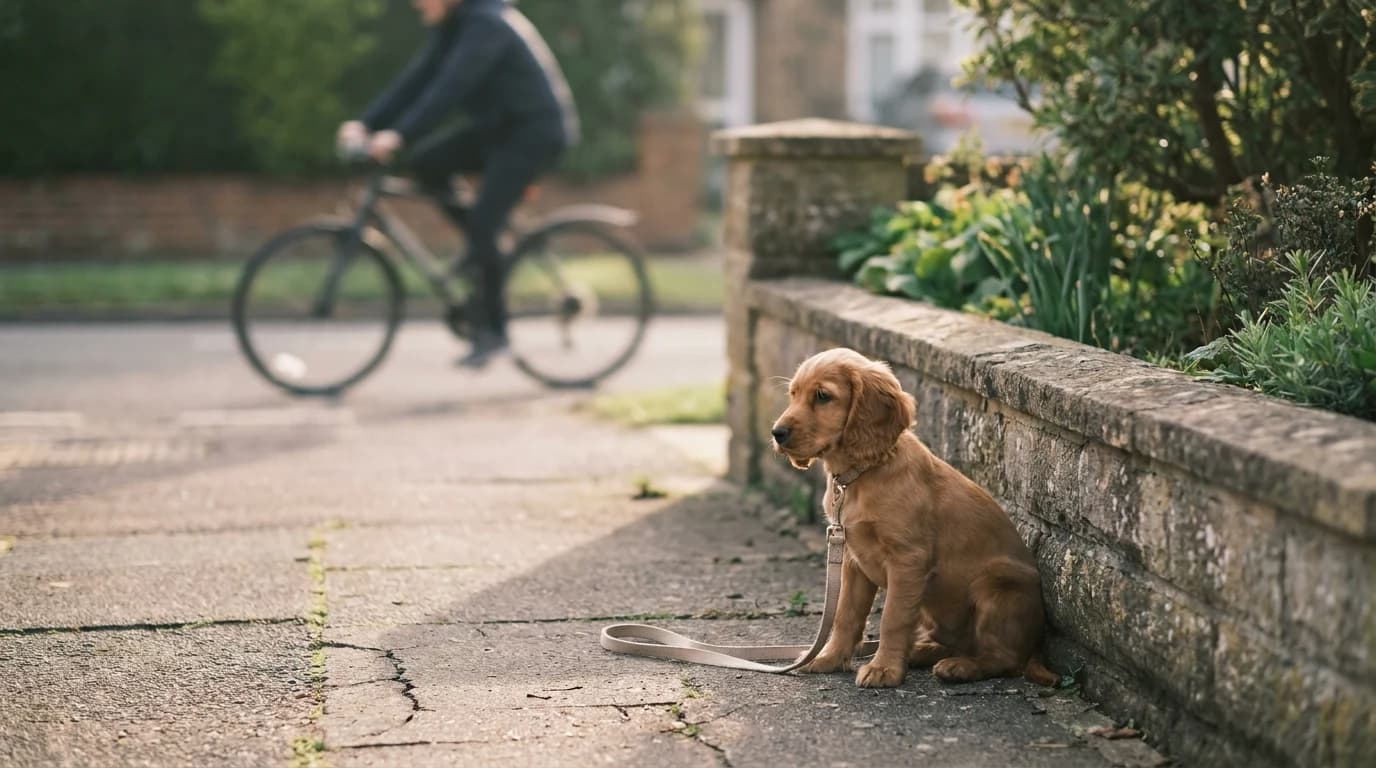
 Far enough away that he notices the thing and is still eating: that distance is the whole session.
What a good session looks like
Short, boring, and at a distance the puppy chooses.
- Pick one thing. A skateboard, a man in a hat, a wheelie bin.
- Start far enough away that he notices it and is still eating. If food is refused, you are too close.
- Let him look. Watching is the work; he does not have to greet or approach anything.
- Pay the noticing. Puppy looks at the thing, you feed. This is the reward-based mechanism AVSAB describes for training, applied to the world instead of a cue.
- Leave while it is still going well. Two minutes is a good session.
The distance test
| Your puppy is | You are |
|---|---|
| Noticing the thing and still taking food | At the right distance; stay and pay |
| Refusing food | Too close; add distance until he eats again |
| Withdrawing, avoiding or showing fear | Too close for today; leave while it can still end well |
You can do this from a doorstep or a bench outside a supermarket. Some of the most valuable early sessions involve your puppy's feet never touching public ground.
Handling belongs in here too: ears, paws, mouth, collar hold, being lifted, standing on a towel while you look him over. Every one of those is something a vet or groomer will need to do to a dog much heavier than he is now.
The kit that makes it ordinary
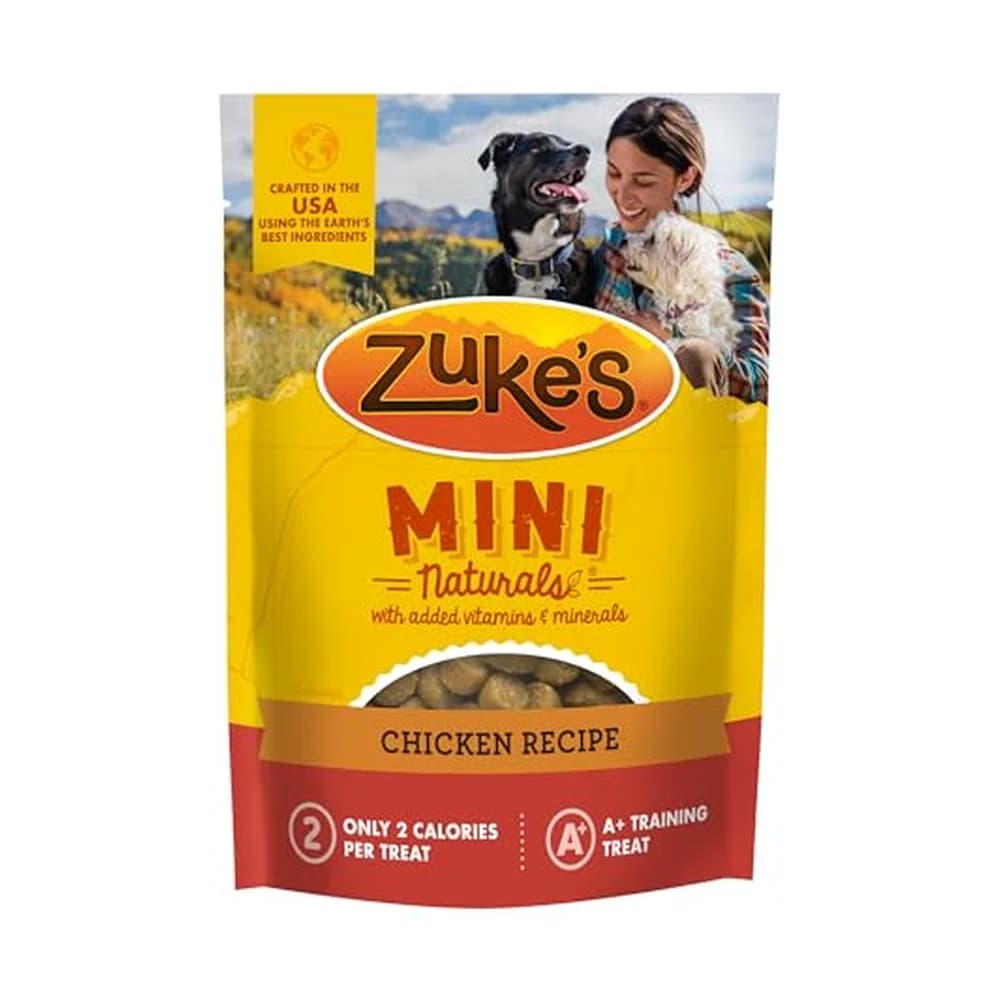
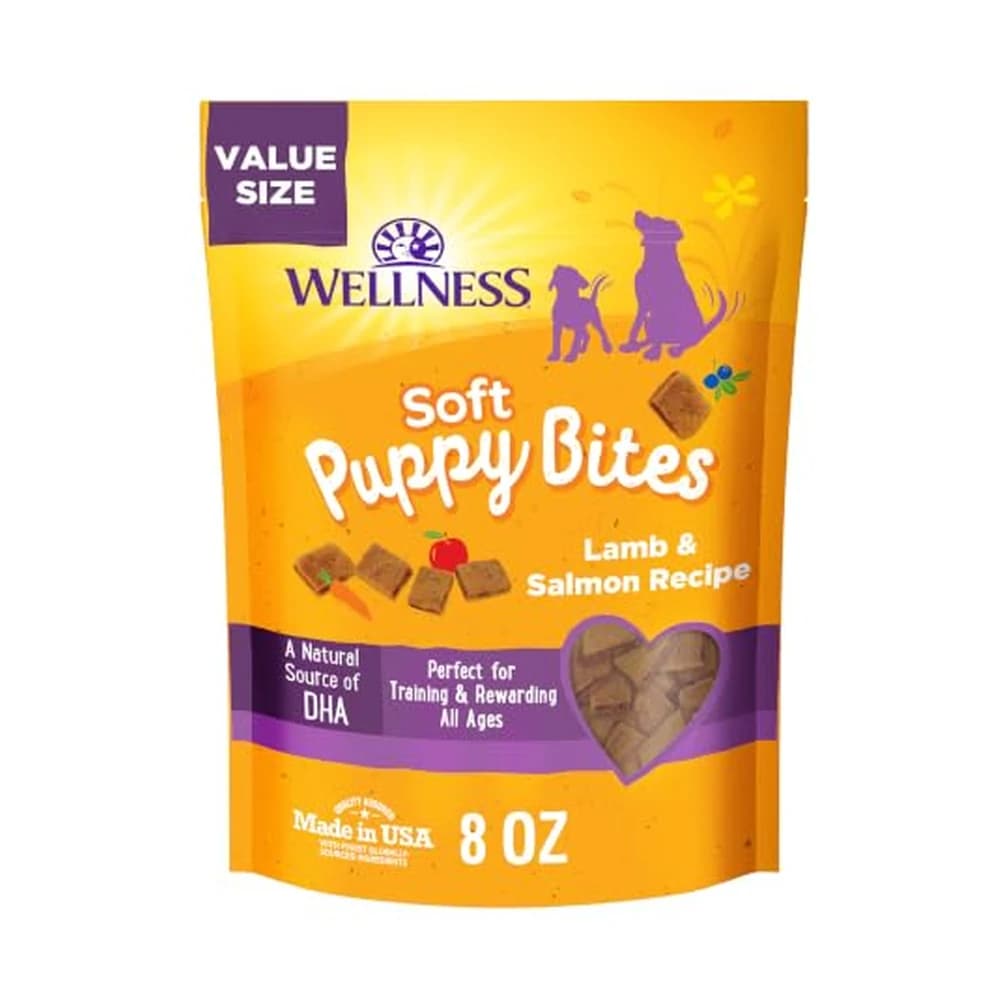
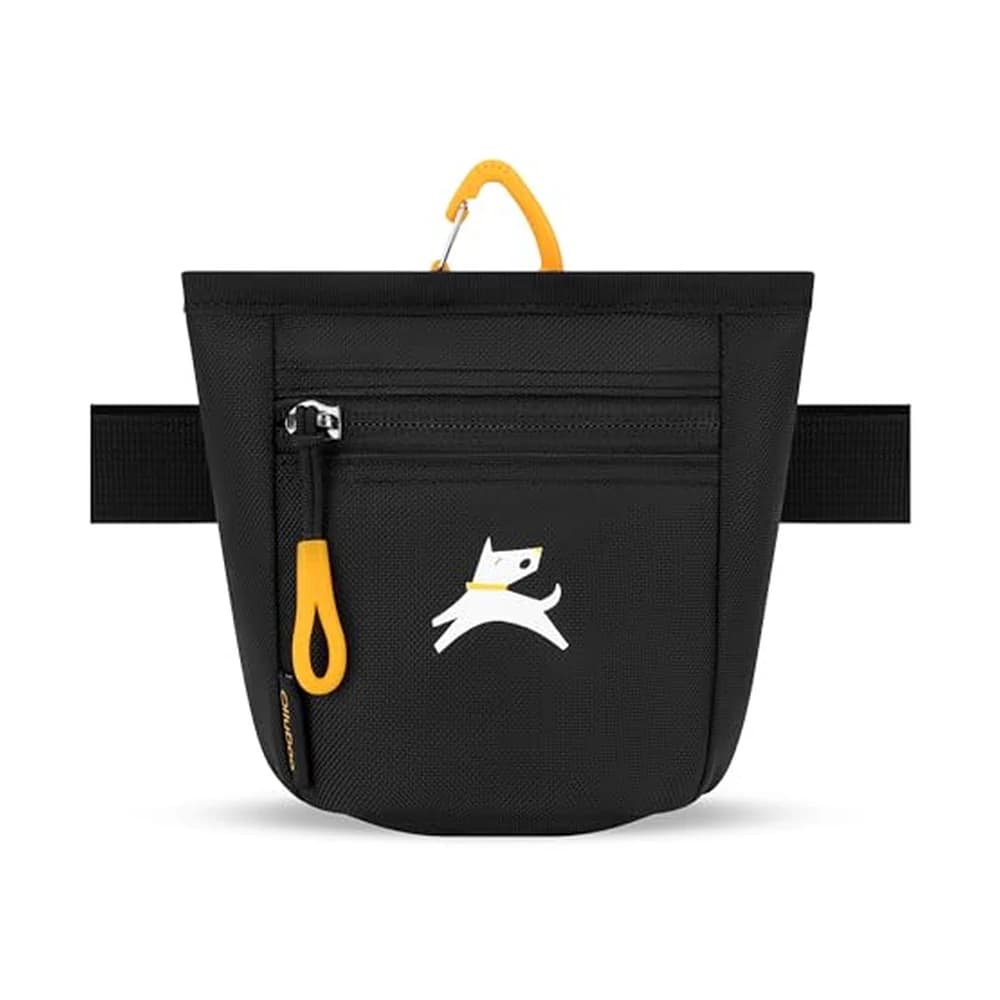
A treat pouch and a long line make this ordinary. Pay the noticing with something small and soft enough to eat twenty of, which is what Zuke's Mini Naturals are for, or Wellness Soft Puppy Bites if sore teething gums have him refusing anything firmer. Keep them in a pouch you can open one-handed, which is the case for the OllyDog Goodie bag and its magnetic mouth: a reward three seconds late has paid for something else.
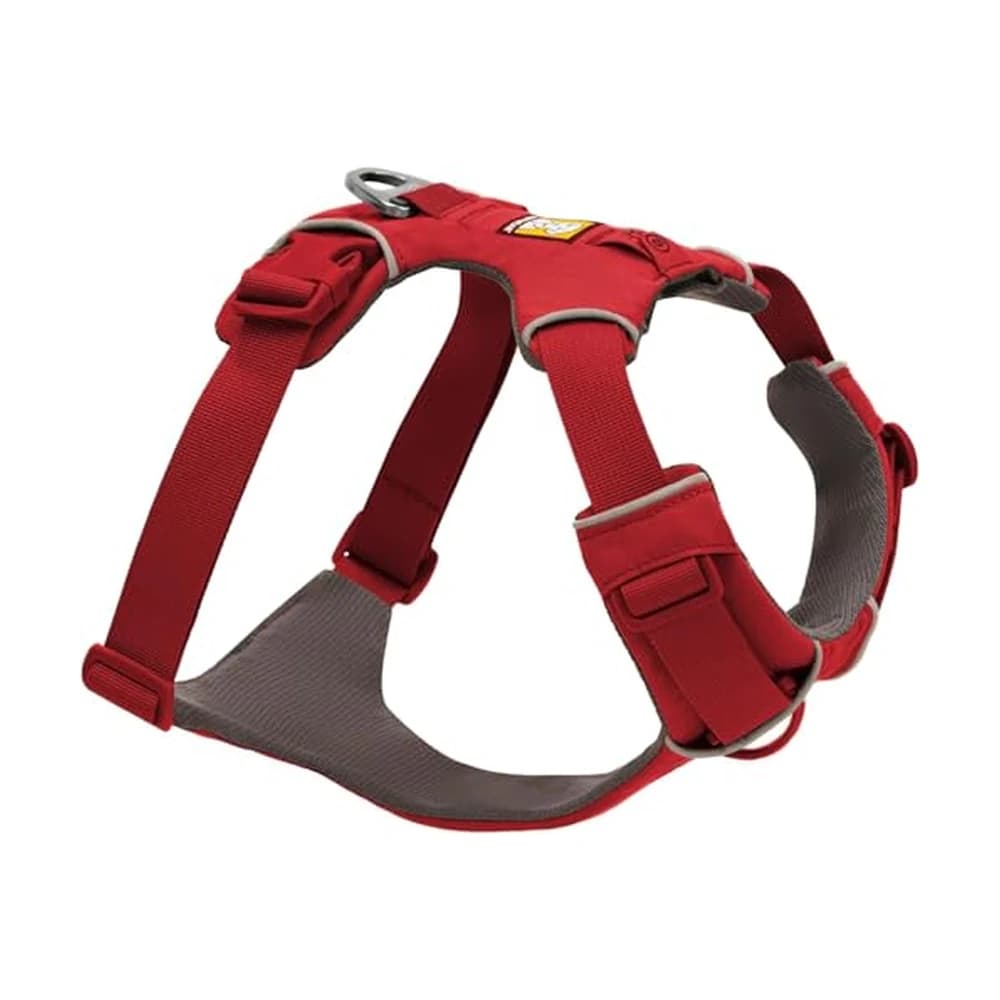
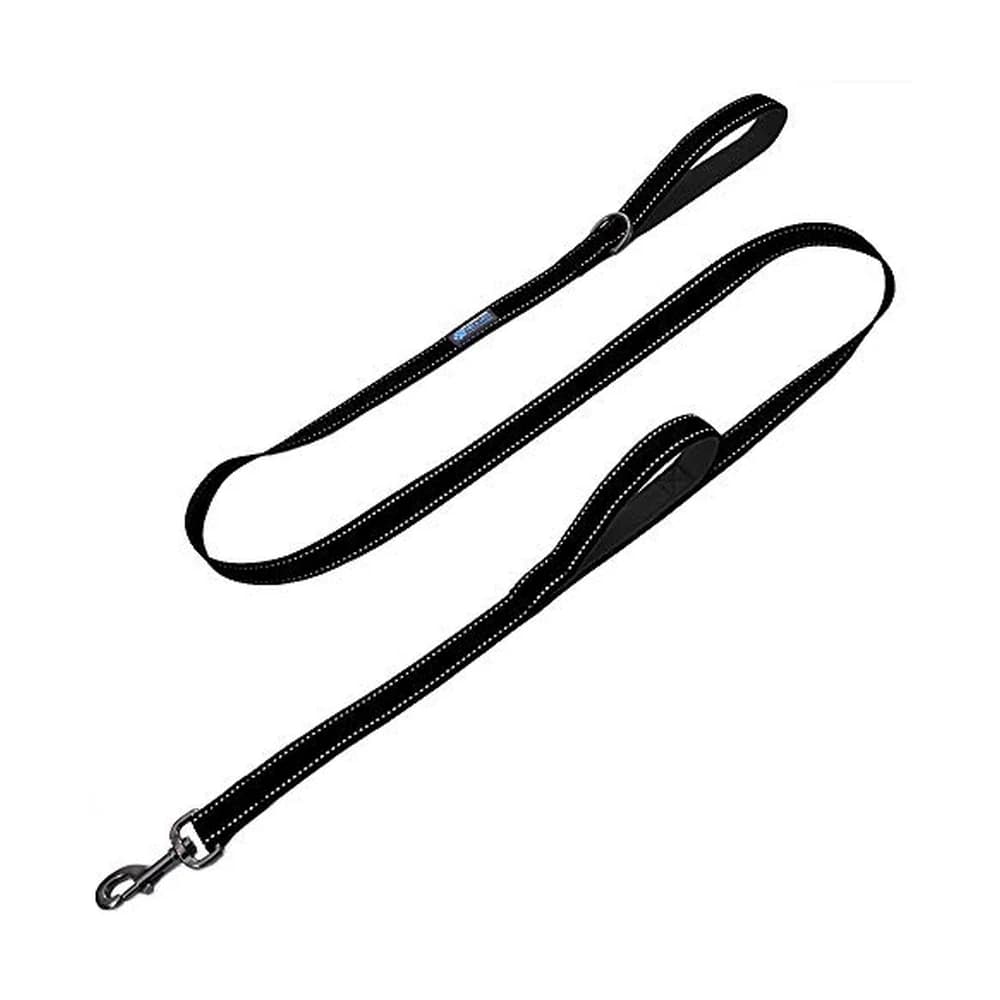
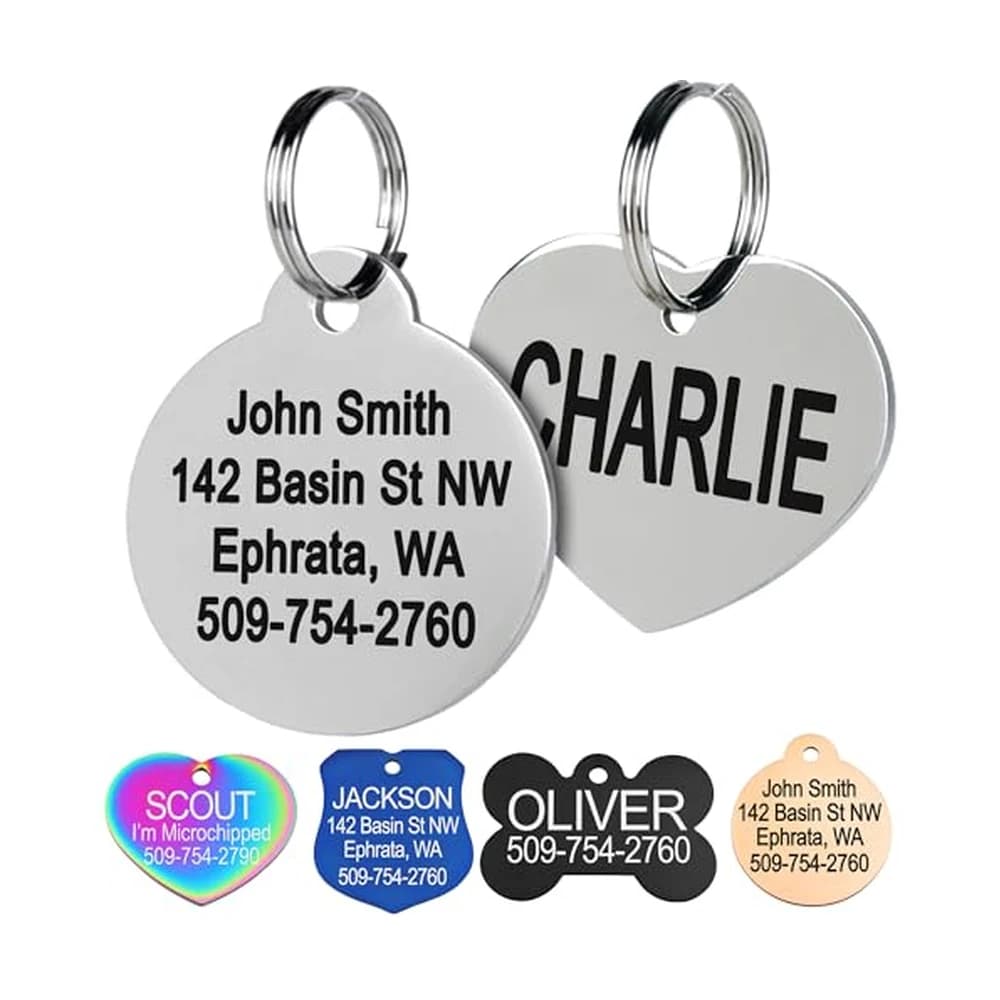
A well-fitted puppy harness and lead matters more here than at any other stage, because a puppy who slips a collar mid-experience learns the wrong lesson twice. The Ruffwear Front Range starts at XXS with four adjustment points, so it fits a puppy rather than merely going on one, and a double-handled leash brings him in close when a cyclist appears. Before the first outing an engraved ID tag goes on the collar; a puppy at this age is at his highest-ever risk of bolting through a door.
What not to do
- Do not flood. AVSAB's training position statement lists flooding, meaning forced exposure, among the techniques to avoid; the learner must always feel safe and be able to opt out.
- Do not use fear or pain on a nervous puppy. AVSAB recommends only reward-based methods and names choke chains, prong collars, shock collars, shouting, staring and alpha rolls among the tools to avoid.
- Do not assume he will grow out of it. AAHA notes puppies generally do not outgrow their problems; AVSAB encourages owners of fearful puppies to seek veterinary guidance.
- Do not fill the awake hours. An exhausted puppy learns badly; the puppy sleep schedule shows how to slot socialization into the cycles rather than on top of them.
What actually counts as socialization:
- Watching one new thing from a distance where he still eats
- Two-minute sessions that end while they are going well
- Handling: ears, paws, mouth, collar, being lifted
What people do that isn't:
- Carrying a frightened puppy through a busy market
- The dog park, before the series is finished
- Making him greet everything he sees
After three months
The end of that period is not a door shutting, nor a verdict on the dog. Older puppies and adult dogs learn about new things all the time; it takes more repetitions, more distance and more patience than it would have at nine weeks. AVSAB is explicit that owners of puppies past that milestone are strongly encouraged to continue socializing to as many people, pets and locations as is practical, and that a wide variety of experiences through the first year of life helps prevent separation-related behavior.
Remember: It is a sensitive period, not a deadline. After three months the exchange rate changes; the possibility does not.
It also flags something families skip: time must be scheduled for puppies to play alone with a favourite toy or nap in a safe place such as a crate or pen. Being comfortable alone is a skill, learned in the same weeks as everything else.
Everything else about this stage sits on the new puppy stage page, and the training that follows starts with recall at home, easiest to build while your puppy still wants to be near you.
What to ask your vet
- Given local disease risk, where would you be comfortable with him going before the series is finished?
- Do you know a puppy class you would send your own dog to?
- Here is a video of how he reacted to X. Is that normal caution or something we should get help with now?
Key takeaways
What to remember
- AVSAB puts the most important socialization period in the first three months of life, and says socialization before full vaccination should be the standard of care. It is a sensitive period, not a cut-off.
- AAHA states there is no medical reason to delay puppy classes or social exposure until the vaccine series is complete, provided exposure to sick animals is prevented and basic hygiene is practised.
- Exposure without watching the puppy's response can make things worse. AAHA warns it can sensitise rather than socialise.
- Skip dog parks and other unsanitised, high traffic areas during this period. AVSAB names them specifically.
- Puppies generally do not outgrow their problems, so a fearful response now is a reason to ask for help rather than to wait.
Questions people ask
- When is the puppy socialization window?
- AVSAB describes the first three months of life as the most important socialization period, and encourages owners of older puppies to keep socializing to as many people, pets and locations as is practical after that milestone. Treat it as a sensitive period rather than a deadline — an older puppy or an adult dog still learns, it just takes more repetitions and more care.
- Can I socialize my puppy before all his vaccines?
- AVSAB says it should be the standard of care for puppies to receive socialization before they are fully vaccinated, and AAHA states there is no medical reason to delay classes as long as exposure to sick animals is prohibited, basic hygiene is practised and diets are high in quality. Ask your own vet how they want this managed locally.
- Are dog parks a good place to socialize a puppy?
- No, not during this period. AVSAB advises avoiding visits to dog parks or other areas that are not sanitized or are highly trafficked by dogs of unknown vaccination or disease status.
- How many new things does a puppy need to meet?
- There is no verified number, and any specific count you see is someone's invention. What the sources support is that exposure should be as varied as can be achieved safely and without causing overstimulation shown as excessive fear, withdrawal or avoidance.
- My puppy is scared of a lot of things. Will he grow out of it?
- AAHA's guidance is to be alert for signs that a puppy needs more help, and notes that puppies generally do not outgrow their problems. Fearful responses are a reason to seek veterinary guidance now rather than to wait.
Gear
Gear for this stage
The products this piece assumes, in the order we would get them. Prices move; check before you buy.
$14.94 4.6 out of 5 stars · 18,587
The everyday training treat — small, soft and low enough in calories to reward fifty times in…
$9.99 4.6 out of 5 stars · 50,763
The first months of training — soft enough for baby teeth, with lamb and salmon and added DHA…
$19.95
Getting a reward out in under a second, which is the only thing a treat pouch is actually for.
$59.99 4.6 out of 5 stars · 18,114
The everyday harness you buy once — two leash points, foam-padded panels and four adjustment…
$16.99 4.7 out of 5 stars · 8,989
The first leash — a six-foot walking length plus a traffic handle 18 inches from the clip,…
$8.95 4.7 out of 5 stars · 103,018
The first thing you put on a puppy — deep laser engraving on stainless steel, on the collar…
Sources
- AVSAB Position Statement on Puppy Socialization — That the first three months is the most important socialization period, that AVSAB considers socialization before full vaccination the standard of care, and that unsanitized high-traffic areas such as dog parks should be avoided.
- AAHA 2019 Canine Life Stage Guidelines: Behavior — That roughly six months to three years is the period owners find most challenging, that there is no medical reason to delay puppy classes until the vaccine series is finished if hygiene is managed, and that puppies generally do not outgrow behavior problems.
- AVSAB Position Statement on Humane Dog Training (2021) — That AVSAB recommends only reward-based methods, that tools relying on pain or intimidation should be avoided, that training works best when it teaches the dog what to do, and that the learner should be able to opt out.
We research and analyse — specs, manufacturer documentation and large-scale owner feedback. We do not test products on dogs, and we are not your vet.
Next step
Start recall while he still wants to be near you
The socialisation weeks are also the cheapest weeks to build recall, and adolescence takes some of it back if you wait.