The Years
Senior
Your next chapter
Slower, stiffer, and often the best years you will have together.
Senior is not a birthday. AAHA defines it as the last quarter of a dog's expected lifespan, which means a Great Dane gets there years before a Chihuahua does. What changes is mobility, sleep, senses and sometimes memory — and almost all of it responds to adjustments that cost less than you would think. This is also the stage where the difference between old and unwell has to be checked rather than assumed.
Approximate. AAHA gives no fixed ages: it defines life stages by development, not by birthdays, and publishes no inclusive ages at all for mature adult or senior. These windows are ours, built so you can find the right page. A dog a month either side of a line is the same dog.
Start here
Start with these three
The first three steps of this stage's plan, in the order they usually happen.
- Walk their route, not yours
- Take the slips out of the route
- Then cover what is left
Nothing here is a test, and none of it has a deadline attached. A room-by-room walk of the house has the rest of it, and the questions worth asking your vet are further down the page.
You are here if…
- Getting up from lying down takes a moment longer than it used to
- The stairs, the car boot or the sofa have started getting a pause before the jump
- They sleep more deeply and are harder to wake, or they are up and unsettled at three in the morning
- The walk is the same length but the pace has quietly dropped
- There is grey around the muzzle and the eyes have taken on a slight haze
- They occasionally stand in a doorway looking like they have forgotten why
- Somebody has suggested a senior blood panel and you have not booked it yet
The numbers to know
Rules of thumb, not diagnoses — your vet knows your dog.
What is changing
The definition first. AAHA calls a dog senior in the last 25% of their estimated lifespan, and explicitly declines to give an age, because expected lifespan varies so much by breed and size. The AVMA's current working thresholds, by weight, are eight to eleven years under 20 pounds, eight to ten at 20 to 50, eight to nine at 50 to 90, and six to seven over 90 pounds. So senior is a size question, not a calendar one.
The body. Joints stiffen, muscle mass drops, and traction becomes a real problem — a dog who has always managed a wooden floor may start slipping on it. Dental disease that has been building for years starts to hurt. Hearing and sight fade gradually, so a dog who has started ignoring you may not be ignoring you. Weight goes either way: some dogs put it on as they slow, some lose it, and unexplained loss is a same-week vet question rather than a normal part of aging.
The brain. Cognitive change is real in older dogs and shows up as disturbed nights, staring, getting stuck behind furniture, or house-training slipping. It is not something to wait out, because there are things a vet can do, and the earlier the conversation the more of them are available.
What helps. Warmth, traction, softer beds, shorter and more frequent walks, ramps instead of jumps, and mental work in place of distance.
The six needs, this stage
What changes, and the one thing worth getting for it.
Nourish
A joint supplement, on your vet's advice
Nutramax Cosequin Chews · $15.87
Ask which ingredient and which dose your vet actually rates. Animal supplements do not sit under the human dietary-supplement framework — FDA regulates them as food or, where they claim to treat something, as drugs — so a label claim is not a review. This is a crowded shelf with wide quality variation.
Why nourish changes now +Why nourish changes now −
Appetite and metabolism both shift, and they do not shift the same way in every dog. Some seniors gain because they move less; some lose muscle and need more protein, not less. That makes senior food a conversation rather than a shelf decision — ask your vet what your dog's body condition and bloodwork actually call for before switching. Practically: raise the bowl if your dog struggles to lower their head, soften or warm food if teeth are sore, and split the day into more, smaller meals if a big one is uncomfortable. Any change in appetite or water intake is worth reporting rather than adjusting around.
Rest
A second orthopedic bed where the household sits
A dog who has to choose between comfort and company will pick company and lie on the floor.
Why rest changes now +Why rest changes now −
Sleep becomes the centre of the day and its quality decides how the rest of it goes. A thin bed on a hard floor is genuinely painful for a stiff dog: solid supportive foam, low enough to step onto without a hop, in a warm draught-free spot away from through-traffic. Old dogs feel cold more, so move the bed away from the door in winter. Night-time restlessness is common and is worth a vet conversation rather than a resigned shrug, because pain, needing to urinate more often and cognitive change all cause it and all have different answers.
Move
A ramp for the car
PetSafe Happy Ride Ramp · $59.99
Non-slip surface, long enough to be a gentle angle. Introduce it flat on the ground with treats before it is ever a slope.
Why move changes now +Why move changes now −
Shorter and more often beats one long walk. Two or three gentle outings keep joints moving without the day-after stiffness a single big effort causes. Remove the jumps: a ramp into the car and steps onto the sofa or bed take the impact out of the two or three moments a day that hurt the most. Traction indoors matters more than most people realise — runners across slippery floors and toe-grips or non-slip socks turn a frightening surface back into an ordinary one. Keep the nails short and the fur between the pads trimmed, because both change grip. A lift harness with a handle helps you help them without hurting either of you.
Think
Easier puzzle feeders
Step back down a level. Success keeps an old dog engaged; failure teaches them to stop trying.
Why think changes now +Why think changes now −
As the body does less, the brain has to do more, and this is the substitution that keeps an old dog happy rather than merely comfortable. Scent games are the answer for almost every senior dog: they cost nothing, need no space, work with poor sight and poor hearing, and tire a dog properly. Puzzles should get easier rather than harder — an old dog who fails at a puzzle stops trying. Chews need to be softer now, because old teeth crack. Keep routines predictable, keep furniture where it is if sight is going, and light the route to the water bowl at night.
Train
Grooming tools for cooperative-care practice
Short, paid sessions with the clippers where nothing is actually cut. It is the practice that makes the real trim easy.
Why train changes now +Why train changes now −
Old dogs learn perfectly well; they just need shorter sessions and more forgiveness. What is worth teaching now is different: cooperative care, so that being examined, having ears cleaned and having nails trimmed does not become a fight in the years when it happens most; hand signals, before hearing goes entirely; a touch or targeting cue, so you can guide a dog whose sight is fading without grabbing them. If house-training slips, treat it as a medical question first and a training question second. Never punish an accident in an old dog — you will get anxiety on top of whatever caused it.
Protect
A cooling mat for summer
Old dogs manage heat badly. Somewhere cool to lie is a real intervention.
Why protect changes now +Why protect changes now −
Check-ups usually move to twice a year, because things change faster now and six months is a long time in an old dog. Bloodwork stops being optional: it is how kidney, liver and thyroid changes are caught while there is still something useful to do. Temperature regulation gets worse in both directions — old dogs overheat sooner and get cold faster, so a coat in winter and a cool mat in summer are practical rather than sentimental. Keep the nails short, the pads trimmed and the floors non-slip. And ask your vet, early rather than late, how they assess quality of life, so that if the conversation ever becomes necessary you already share a language for it.
Dental Care, 4 picks side by side
Starting properly — a dual-enzyme poultry toothpaste with both a fingerbrush and a long-handled brush in the box
- Size
- Not stated
- Skip if
- Your dog will not tolerate anything in their mouth yet. Start with a gel on a finger and work up.
$9.53lowest here 4.5 out of 5 stars · 30,909 ratings
A dog who will not accept a brush yet — an enzymatic gel you can apply with a finger while you build tolerance
- Size
- Not stated
- Skip if
- Your dog accepts brushing. Mechanical brushing does more than any gel applied alone.
A daily chew that also cleans — plant-based, grain-free and VOHC-sealed for plaque and tartar
- Size
- Small (15–25 lb dogs), 56 count
- Skip if
- Your dog gulps chews whole. A swallowed chew cleans nothing and is a choking risk — size up and supervise.
Dogs who will not let you near their mouth at all — a flavourless capful in the water bowl, and VOHC recognised
- Size
- Not stated
- Skip if
- Your dog is fussy about water. A dog who drinks less because of an additive is a worse outcome than plaque.
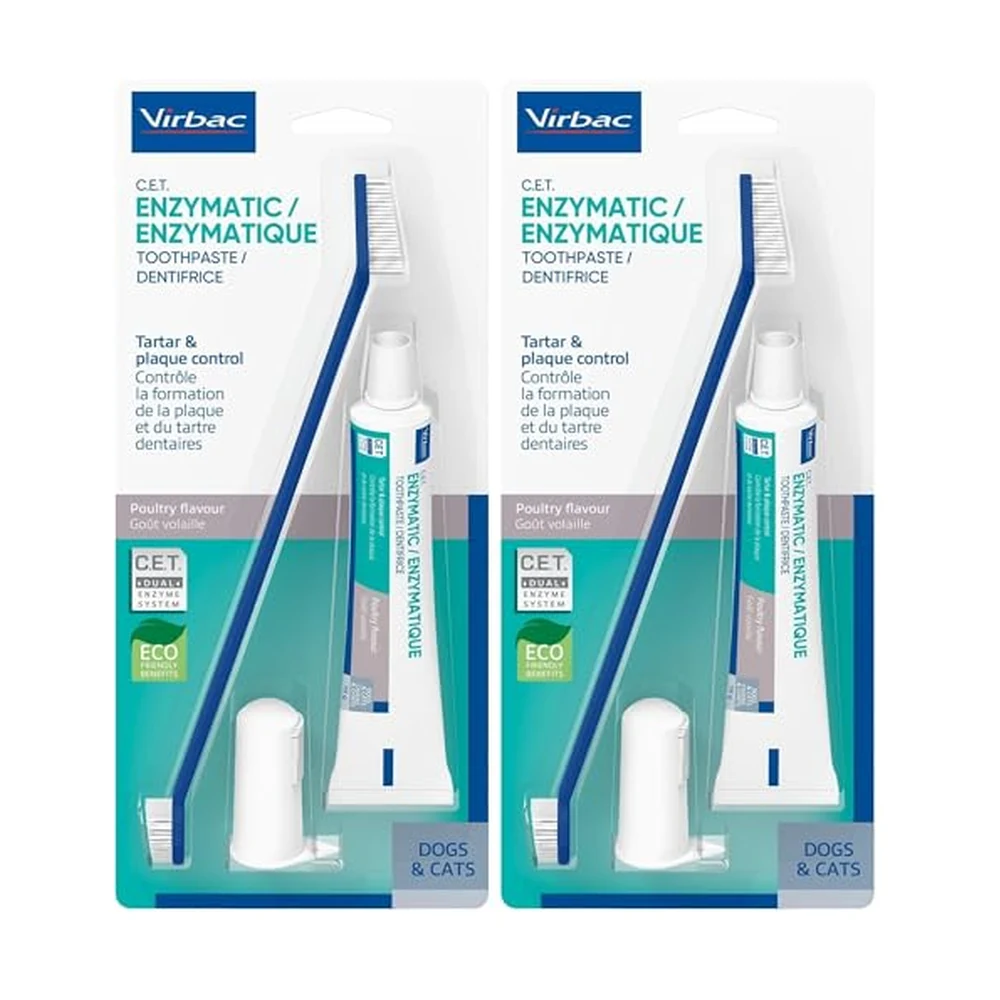
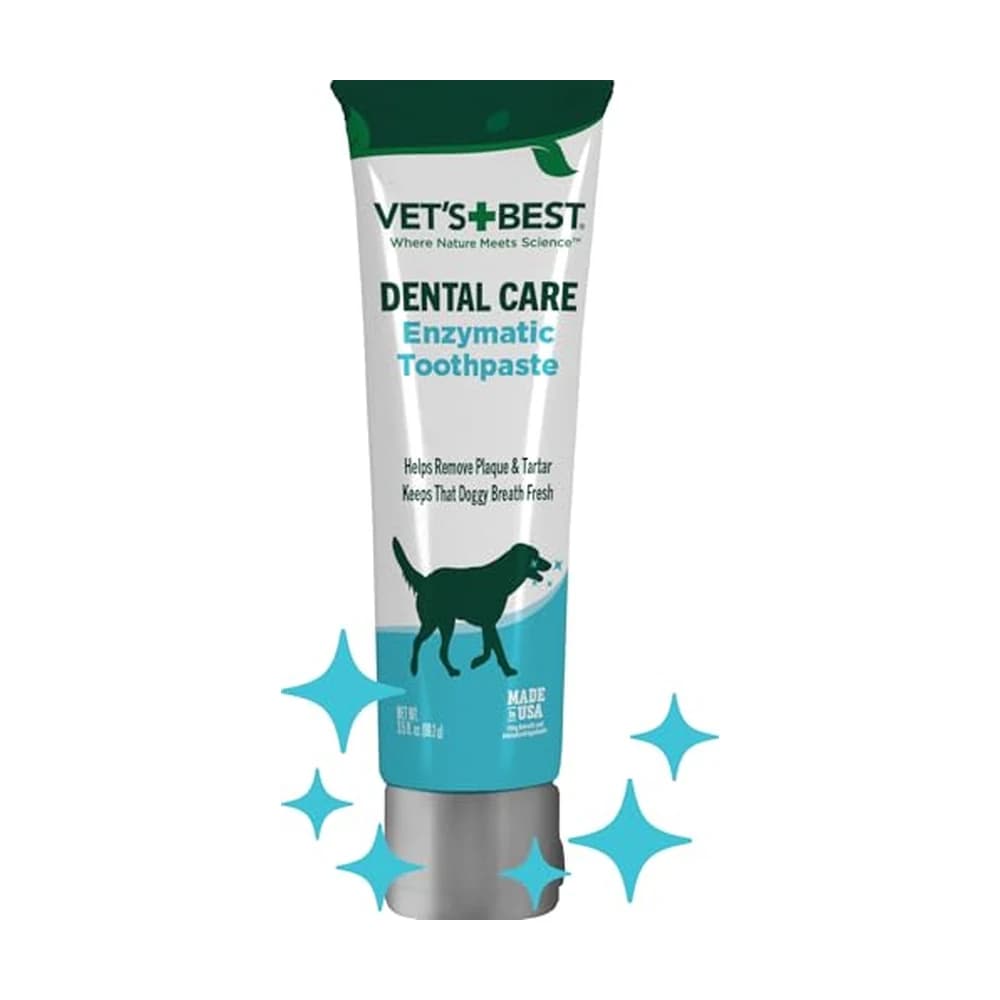
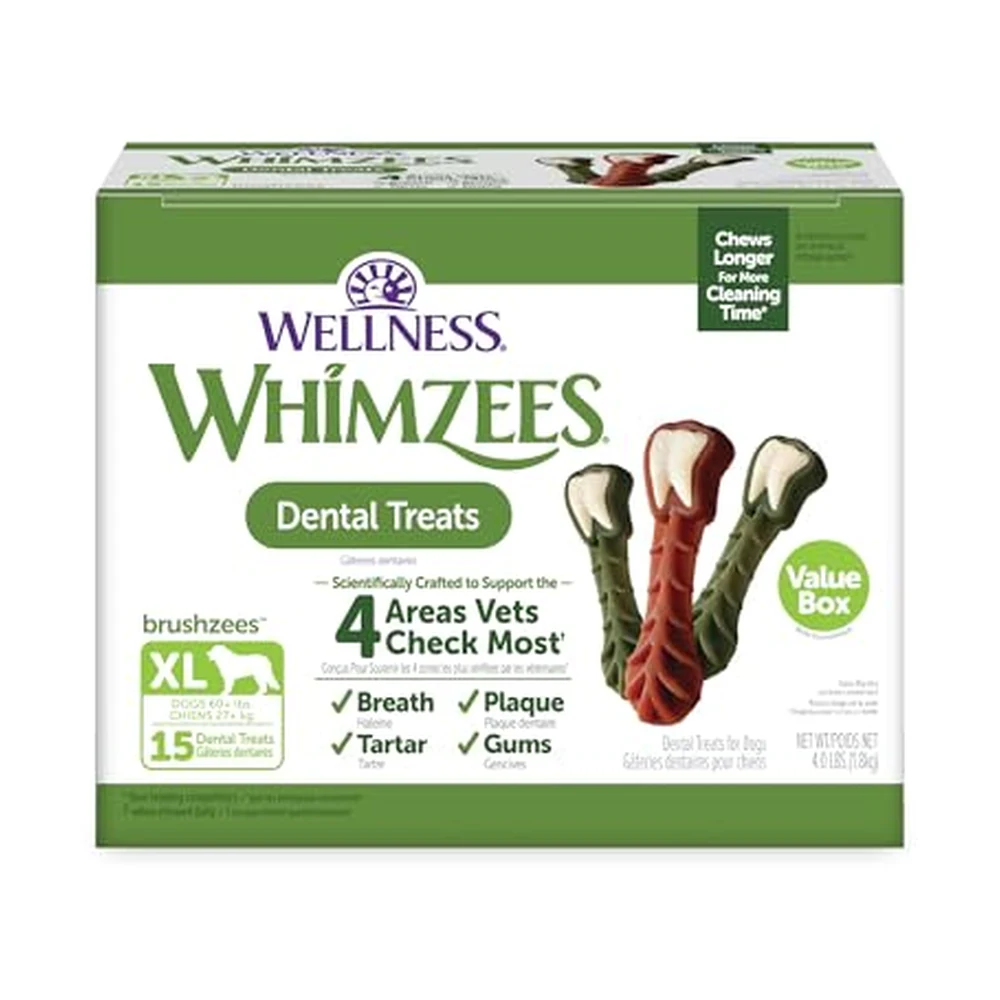
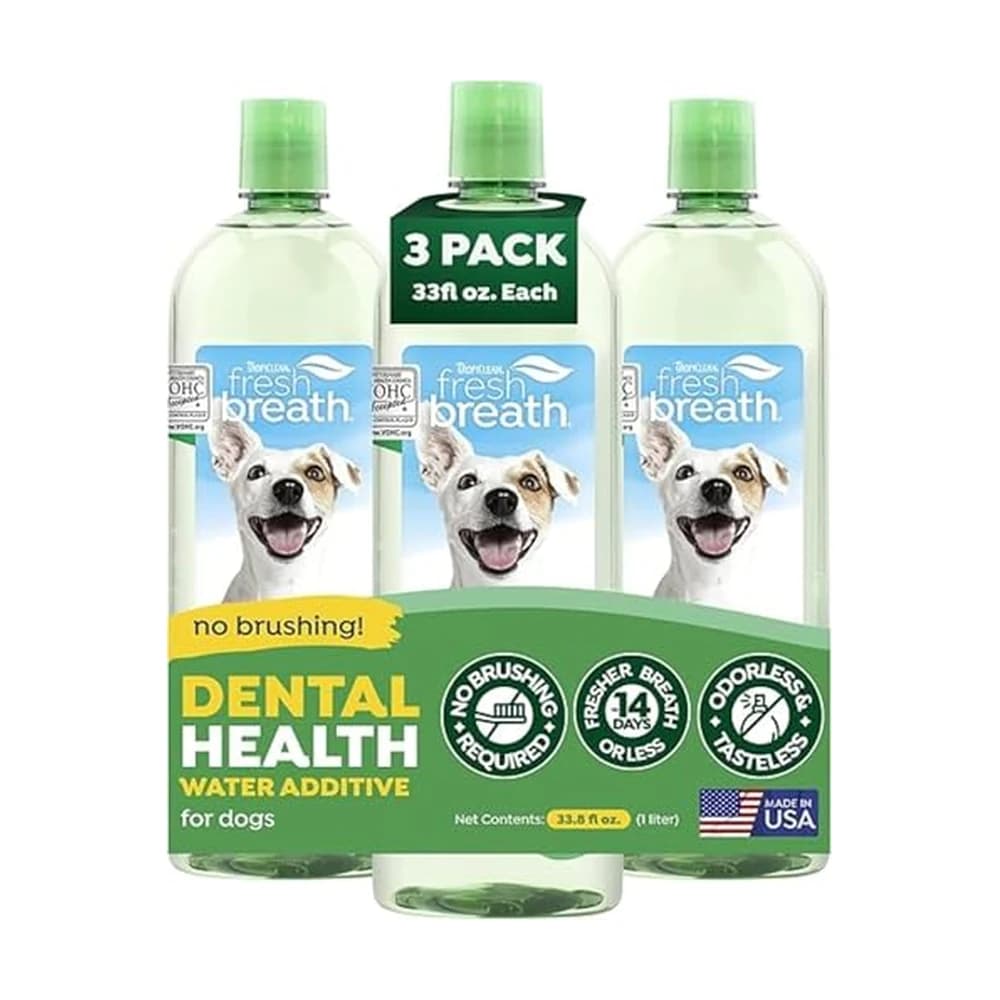
Each pick below carries its own specs, and the tags mark the best of these picks on that point. Specs come from manufacturer listings; ratings are the Amazon aggregate rating and count, refreshed periodically — we don't test products.
How winners are decided: ✓ marks the lowest price, the highest owner rating, the largest stated weight capacity and the longest warranty. Rows where more is not better — size, dimensions, weight, material — and the editorial rows get no ✓ at all. A blank is unknown, never a loss, and a row needs at least two known, differing values before anything can win. How the best-of-these tags are decided: the lowest price, the highest owner rating, the largest stated weight capacity and the longest warranty. Points where more is not better — size, dimensions, weight, material — and the editorial notes carry no tag at all. A blank is unknown, never a loss, and a point needs at least two known, differing values before anything can lead. As an Amazon Associate we earn from qualifying purchases. Specs are the manufacturer's claims and owner-reported data — we research and analyse; we don't test products on dogs.
A room-by-room walk of the house
Do this once, with the dog, on an ordinary evening. Almost everything that makes an old dog's life better is a rearrangement rather than a purchase, and the rearrangements come first here for that reason. Where something does need buying, it is because a step above it named the problem.
- Costs nothing
Walk their route, not yours
Follow the path your dog actually takes: bed, water, door, their spot on the rug, wherever they go at night. That line through the house is the only part of it that matters, and it is usually four or five short stretches rather than the whole floor plan. Everything below applies to that line.
- Costs nothing
Take the slips out of the route
Traction indoors matters more than most people realise: a dog who has always managed a wooden floor may start slipping on it. Before buying anything, try the free version - move the water bowl off the slippery stretch, prop open the door they scrabble at, and put the rug you already own where the turn is rather than where it looks best.
- Worth buying
Then cover what is left
If a stretch of the route is still slick after the free rearrangements, that is what a runner or a set of toe grips is for. Keep the nails short and the fur between the pads trimmed as well, because both change grip and neither costs anything.
- Costs nothing
Water and a resting place on every floor they use
An old dog who has to negotiate a staircase for a drink will often just not drink. A second bowl upstairs and a second soft place to lie down are free if you already own them, and they remove two trips a day from stiff joints. Light the route to the water bowl at night.
- Costs nothing
Move the bed before you replace it
Old dogs feel the cold, so a bed in a draught or a doorway is the wrong bed wherever it came from. Try it away from the door, out of the through-traffic, somewhere warm, and see whether the sleeping changes before you spend anything.
- Worth buying
Then replace it, if the floor is winning
A thin bed on a hard floor is genuinely painful for a stiff dog. Solid supportive foam rather than shredded filling, and low enough to step onto without a hop. If your dog has started choosing the hard floor over their own bed, that is the signal.
- Costs nothing
Count the jumps in an ordinary day
The sofa, the bed, the car boot, the step into the garden. Two or three of those a day are usually the moments that hurt most, and the free fix is to stop them happening: a chair moved to break the height, a door left open so the route avoids the step, a hand under the chest for the car.
- Worth buying
Then remove the ones you cannot design away
A ramp into the car and steps onto the sofa or bed take the impact out of the jumps that are left. A lift harness with a handle helps you help them without hurting either of you.
- Costs nothing
Keep the furniture where it is
If sight is going, a predictable house is worth more than an optimised one. This is the one step where the answer is to do nothing, and it is genuinely a step: an old dog who has learned the room does not want it rearranged around them.
- Ask your vet
Separate routine adaptation from a new symptom
Everything above is for a dog who is simply getting older. A change that arrived suddenly is a different thing and does not belong on this list.
Ask your vet the same week about weight loss you cannot explain, a dog who is up and unsettled at night, house-training that has slipped, or getting stuck behind furniture. Cognitive change is real in older dogs and there are things a vet can do, and the earlier the conversation the more of them are available.
None of this is about spending more on an old dog. Most households find the traction and the resting places do more than anything on a shelf, which is the order this list is in.
This stage is done when
Senior milestones
- Check-ups moved to twice a year, and you asked what a senior visit should include
- A baseline blood panel done, and you know what was normal so a change can be spotted
- Weight and body condition recorded at every visit, with any loss reported rather than assumed
- Slippery floors covered on the two or three routes your dog actually uses
- Jumps removed: a ramp for the car, steps for the sofa or bed
- A supportive bed in a warm, quiet, low-traffic spot, and a second one where the family sits
- Nails and the fur between the pads kept short, because both change grip
- Ten minutes of scent work most days, replacing distance rather than adding to it
- You have asked your vet how they assess quality of life, before you need the answer
- Somebody other than you knows the medication routine, in case you are away
Off by default. Turn it on and the ticks are stored in this browser only. They are not sent to us, we cannot read them, there is no account and there is nothing to sign up for. Clearing your browser data, or switching it off again, deletes them. If your browser blocks site storage the page still works, it just will not remember.
Untick this for a blank sheet to put on the fridge, whatever is ticked on screen.
Take these to the vet
Questions to ask
- Ask your vet the same week if your dog loses weight without a diet change, or starts drinking and urinating noticeably more. In an older dog these are the two changes least worth waiting on.
- Ask your vet whether stiffness, slowing down or reluctance to jump is arthritis rather than just age, because arthritis is treatable and age is not a diagnosis.
- Ask your vet about night-time pacing, staring, getting stuck in corners or house-training slipping. Canine cognitive change has real management options and they work better started early.
- Ask your vet about any new lump, any lump that has changed, and any sore that is not healing, rather than watching it for another month.
- Ask your vet whether your dog's teeth are causing pain, particularly if they have gone quiet about food, chew on one side, or drop kibble.
- Ask your vet how they assess quality of life and what scale they use, well before you think you need it. Having the conversation early is kinder to everyone, including you.
We research; we are not your vet and we do not examine your dog. Anything here that touches health is a question to ask, not an answer to act on. Take it with you — a written list is easier than remembering in the room.
Train at home, this stage
- Brain Games for Senior Dogs (Low Impact)When the walks get shorter, the mental work matters more. Nose games and food puzzles a stiff old dog can do lying down.
- How to Teach Recall at Home, Step by StepRecall is a paid behavior, built indoors first, then on a long line. Never call a dog to something he will not enjoy.
Learn more
- When Is a Dog a Senior? What Vets Actually SayThere is no senior birthday. The veterinary framework uses a share of expected lifespan, and the number most articles repeat is out of date.
- Signs of Aging in Dogs: What to Watch ForGrey muzzles are cosmetic. The changes that matter are in how your dog stands up, what he stops doing, and how he sleeps.
- Dog Life Stages Explained (And Who Decides)Four clinical stages, six practical ones. What AAHA actually defines, where adolescence fits, and why the stage changes what your dog needs.
Is one of these your evening?
Sources
- AAHA 2019 Canine Life Stage Guidelines - definitions — That senior is defined as the last 25% of estimated lifespan through end of life, that end of life is a separate stage, and that AAHA proposes no fixed ages for either.
- AVMA, Senior Pets (current weight bands; opened 2026-09-07) — Senior onset by weight: under 20 lb, eight to eleven years; 20 to 50 lb, eight to ten; 50 to 90 lb, eight to nine; over 90 lb, six to seven.
- AVMA senior thresholds, as published by AKC — The older AVMA restatement of senior thresholds; the current AVMA weight bands are cited separately.
- UC Davis Veterinary Medicine - Calculating Your Dog's Age — Independent restatement of the AVMA size-based senior thresholds, and the milestone alignment table from the UCSD study.
- FDA - FDA's Regulation of Pet Food (opened 2026-09-07) — That the Dietary Supplement Health and Education Act covers dietary supplements for PEOPLE, so animal products are regulated as food or, where they claim to treat or prevent disease, as drugs — which is why we do not describe a joint or calming product as “regulated as a supplement”.
- AKC - 6 Ways to Care for Your Senior Dog — The commonly recommended senior adjustments: comfortable resting places, staying mentally and physically active, stairs and ramps, temperature sensitivity, diet adjustment and regular check-ups.
We are not your vet, and this site does not diagnose anything. Everything medical here ends with the question to ask at your next appointment, because the person who has examined your dog knows things a website cannot. If something has changed suddenly, call them rather than reading on.