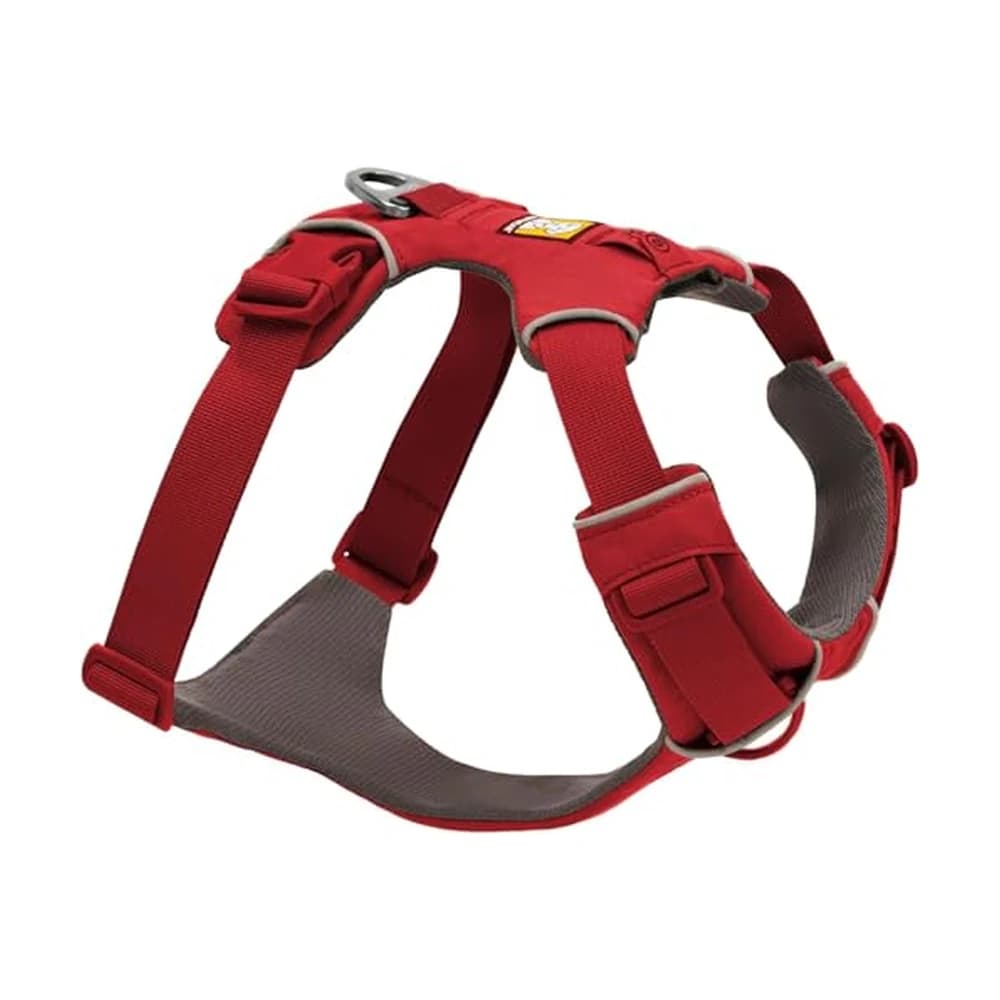
Puppy collar, leash and harness
The first walking kit does one job: teach a puppy that a leash means good things happen. Buy light, buy adjustable, and put ID on it from day one.
Amazon links earn us a commission; it doesn’t change what we recommend.
Start here
Which one is right for you?
Three different dogs, three different answers. Each one names what it is good at and what it costs you.
The first walking kit, bought light and adjustable
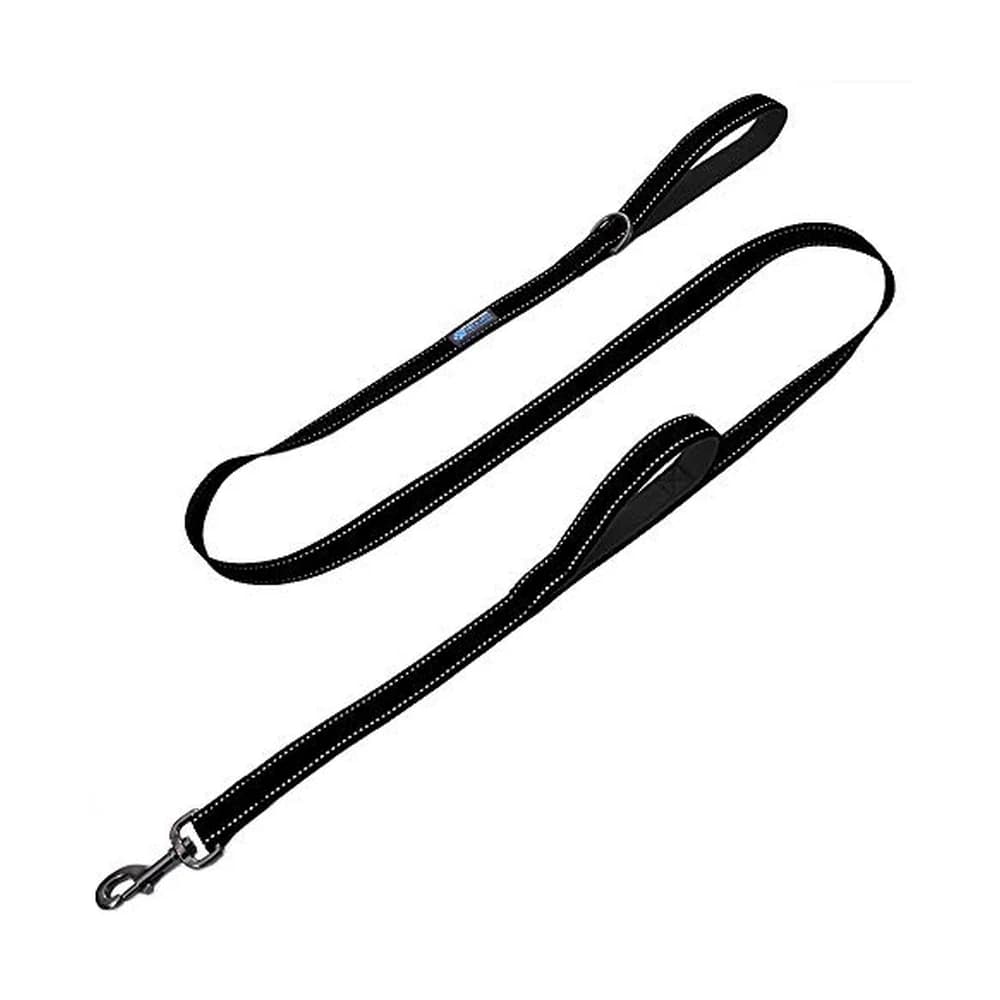
The traffic handle near the clip is what lets you gather a puppy close at a kerb without hauling on their neck.
Our pick for this: Max & Neo Double Handle Leash · $16.99
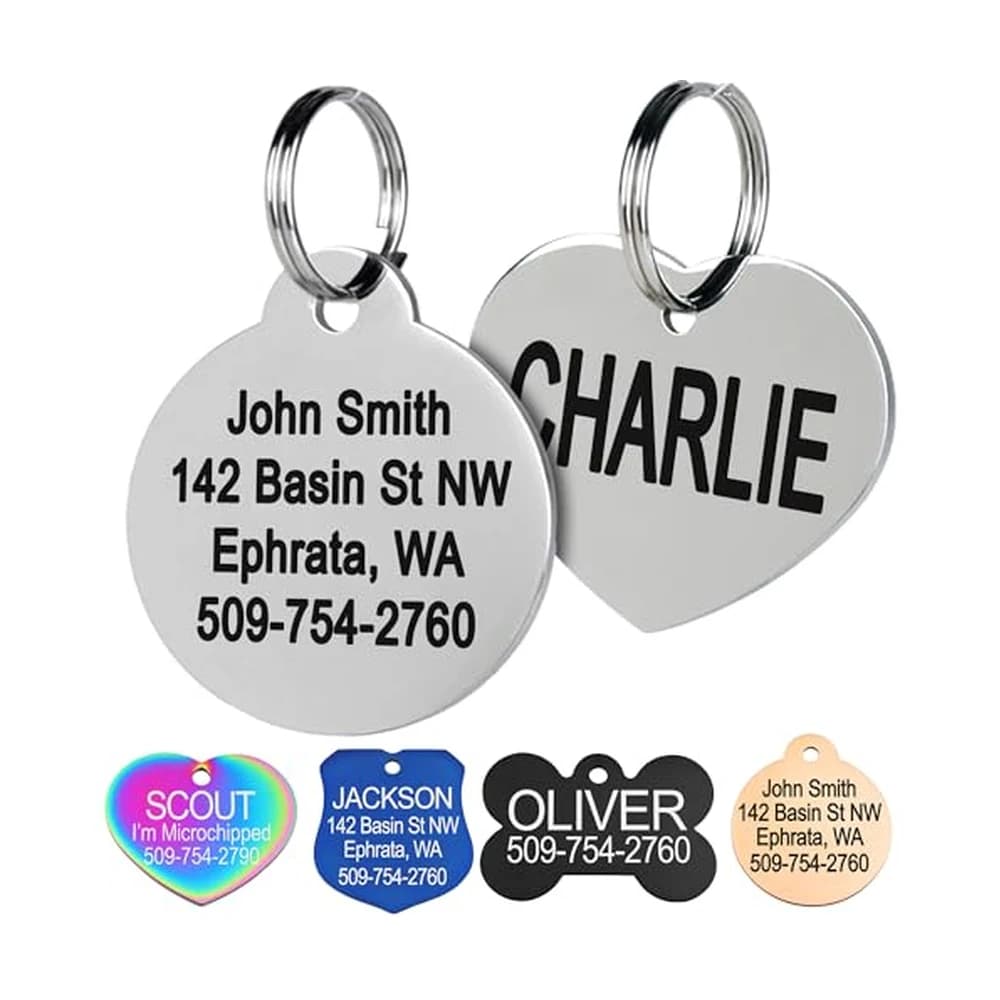
Identification from the first day home
A microchip only works once someone gets the dog to a scanner. In the Ohio State shelter study behind the microchip numbers, the commonest reason a chip failed was an out-of-date phone number — a tag is what works for whoever picks your dog up on the street.
Our pick for this: GoTags Engraved ID Tag · $8.95
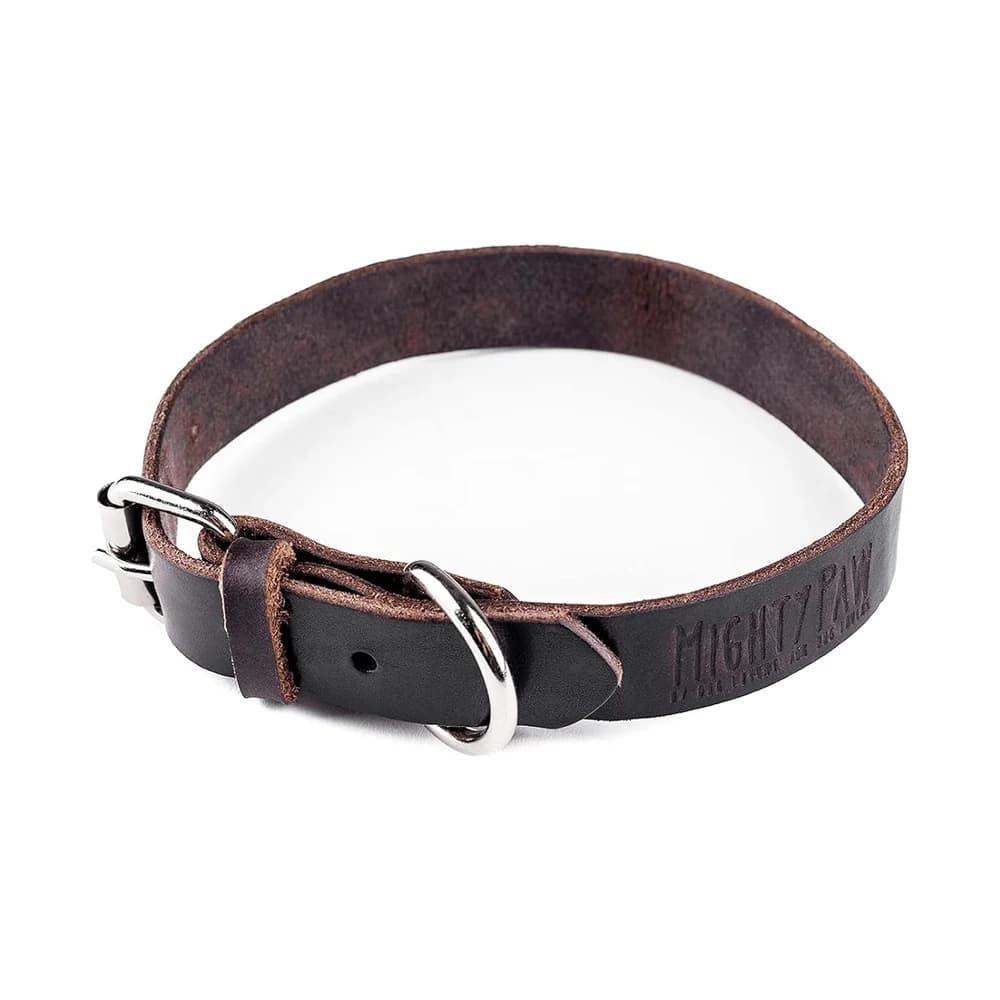
A collar you would rather buy once than three times
Leather with real adjustment range outlasts the first growth spurt. Everything on this shelf is temporary; this is the least temporary part of it.
Our pick for this: Mighty Paw Leather Collar · $14.99
If none of these is your dog: nothing on this shelf is the right answer for every household, and we would rather you bought nothing than the wrong thing. Start from the stage your dog is actually in, or browse the other shelves.
Filter picks5 of 5
Showing 5 of 5 picks — no filters applied
Showing 5 of 5 picks — no filters applied
The picks, feature by feature
$8.95lowest here 4.7 out of 5 stars · 103,018 ratingsbest rated
The first thing you put on a puppy — deep laser engraving on stainless steel, on the collar before they ever go outside
- Size
- Not stated
- Material
- Military-grade stainless steel
- Colour
- Not stated
- Dimensions (H × W × D)
- Not stated
- Weight
- Not stated
- Skip if
- Your dog's collar jingles you awake. Consider the slide-on version instead of a hanging tag.
The first leash — a six-foot walking length plus a traffic handle 18 inches from the clip, for kerbs and passing dogs
- Size
- Not stated
- Material
- Heavy-duty nylon with neoprene-padded handles
- Colour
- Not stated
- Dimensions (H × W × D)
- Not stated
- Weight
- Not stated
- Skip if
- You want something featherweight for a toy breed. This is a one-inch webbing leash built for larger dogs.
The variant we link: Black · 6 FT
$14.99 4.6 out of 5 stars · 3,486 ratings
A soft first collar that grows a little — five adjustment settings, genuine leather that softens rather than stiffens
- Size
- Not stated
- Material
- Full-grain leather
- Colour
- Not stated
- Dimensions (H × W × D)
- Not stated
- Weight
- Not stated
- Skip if
- Your puppy is going to be swimming or rolling in mud daily. Nylon washes; leather does not.
The variant we link: Medium · Brown
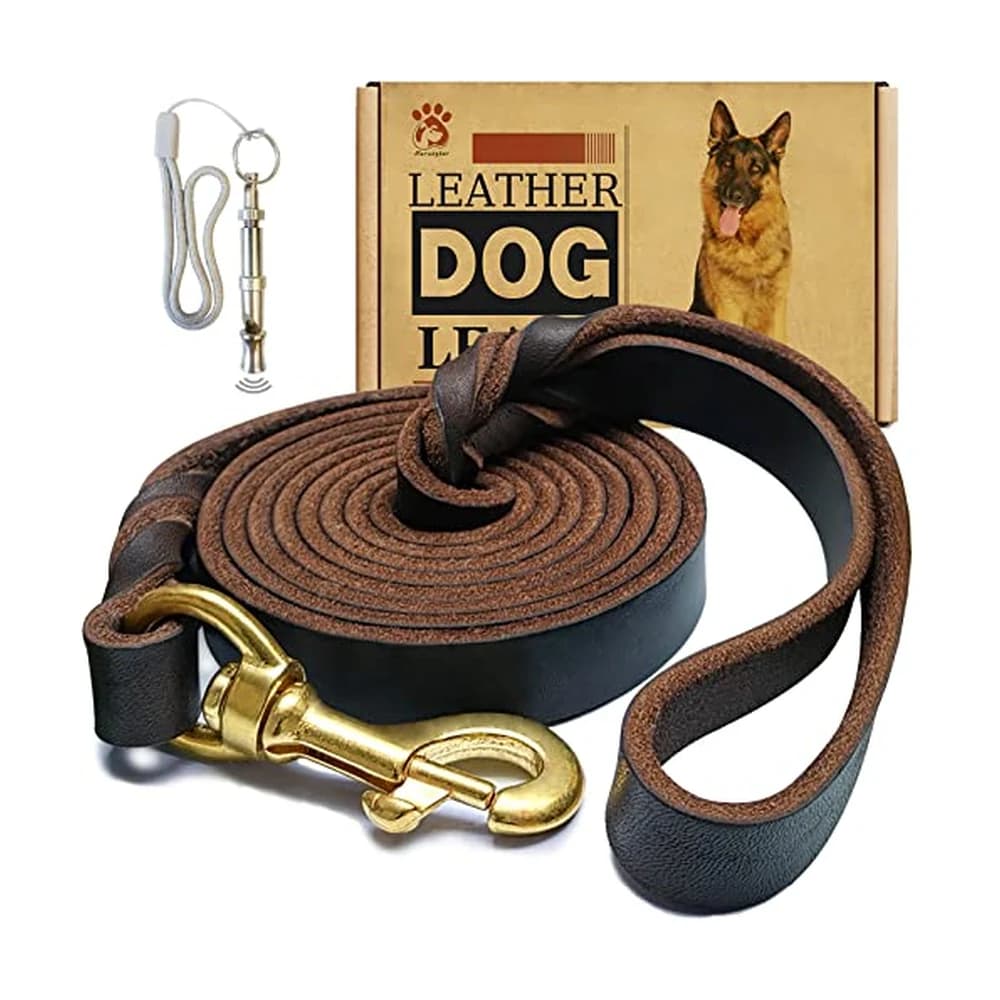
A softer second leash — braided leather absorbs the shock of a sudden lunge better than flat webbing does on your hand
- Size
- 6FT*3/4in
- Material
- Not stated
- Colour
- Brown
- Dimensions (H × W × D)
- 0.04 in × 0.75 in × 72.0 in
- Weight
- 0.55 lb
- Skip if
- You want a traffic handle. This is a single-handle six-foot leash.
The variant we link: 6ft x 3 · 4 inch · Medium · Brown
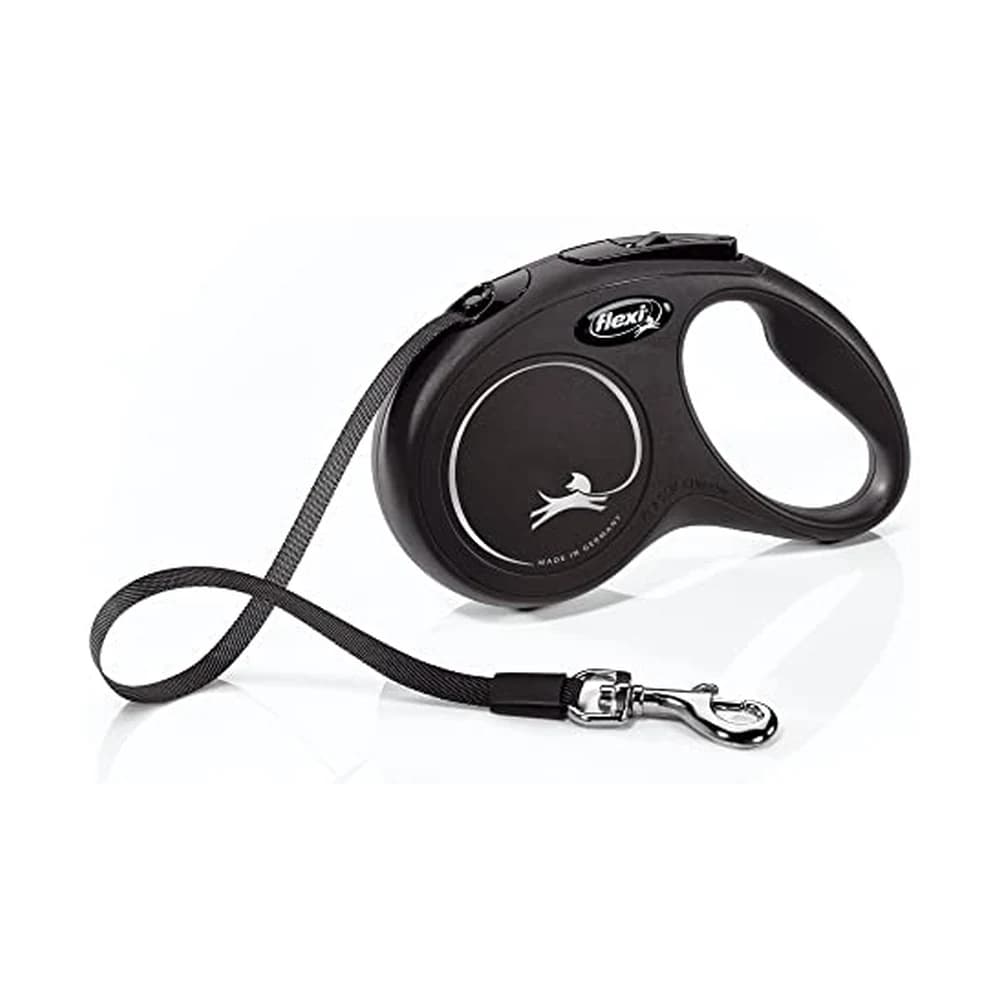
A small dog past the pulling stage, on quiet paths where sniffing room matters more than heel position
- Size
- Small - 16 Feet (Tape)
- Material
- Not stated
- Colour
- Black
- Dimensions (H × W × D)
- 3.94 in × 1.34 in × 6.5 in
- Weight
- 0.41 lb
- Skip if
- You are still teaching loose-leash walking (a retractable leash rewards pulling) or your dog is over the small size limit.
The variant we link: Small · 16 ft · Black
Each pick below carries its own specs, and the tags mark the best of these picks on that point. Specs come from manufacturer listings; ratings are the Amazon aggregate rating and count, refreshed periodically — we don't test products.
How winners are decided: ✓ marks the lowest price, the highest owner rating, the largest stated weight capacity and the longest warranty. Rows where more is not better — size, dimensions, weight, material — and the editorial rows get no ✓ at all. A blank is unknown, never a loss, and a row needs at least two known, differing values before anything can win. How the best-of-these tags are decided: the lowest price, the highest owner rating, the largest stated weight capacity and the longest warranty. Points where more is not better — size, dimensions, weight, material — and the editorial notes carry no tag at all. A blank is unknown, never a loss, and a point needs at least two known, differing values before anything can lead. As an Amazon Associate we earn from qualifying purchases. Specs are the manufacturer's claims and owner-reported data — we research and analyse; we don't test products on dogs.
Why puppy harness & leash matters at this stage
A puppy's first walking kit is temporary by design. They will outgrow it, probably twice, so the goal is not the best gear — it is the lightest gear that fits today and can be adjusted as they grow. A heavy collar or a stiff harness on an eight-week-old teaches them that equipment is uncomfortable, and that lesson is expensive to undo.
What matters most at this stage is the ID tag, and it matters immediately. A new puppy in an unfamiliar house is at their highest-ever risk of slipping out of a door, and a microchip only works once someone gets them to a scanner. A tag works for whoever picks them up on the street.
The second thing is a leash with two handles. Loose-leash walking is not a skill a puppy has yet, and a short traffic handle near the clip lets you gather your dog close at a kerb or when another dog appears, without hauling on their neck. That is the difference between managing a moment and having a fight with your dog in public.
Hold off on the expensive harness until the growth slows. Around adolescence, when pulling becomes a real force rather than an enthusiasm, you move to a properly fitted front-clip harness — that is a different category, and a different purchase.
The thing most owners don’t know
One surprising thing about puppy harness & leash
In the Ohio State University shelter study behind the microchip figures, owners were found for 72.7 percent of microchipped animals, and the biggest reason a chip failed was an incorrect or disconnected phone number in the registry.
Source: Microchips Result In Higher Rate Of Return Of Shelter Animals To Owners - Ohio State News
What owners keep saying
The setup owners describe most often is both pieces at once: a flat collar worn for the ID tag and as something to grab, and a harness clipped for walks, so the tag is never on the thing that comes off at the door. Slipping is the recurring scare, in both directions, and the fixes people report are a harness with a third strap behind the ribs, a properly fitted martingale, or clipping leash to both collar and harness as a backup. Fit gets flagged as the real variable rather than brand, and owners repeatedly note buying an inexpensive harness first because a puppy outgrows two or three before adult size. On leashes the pattern is near-unanimous against retractables for a young dog, on the grounds of no control at distance and thin line that cannot be grabbed, with a plain six-foot leash for walks and a separate long line for sniffing. On tags, the repeated complaint is engraving that wears illegible within months.
we read 80 threads across r/puppy101, r/dogs, r/Dogtraining
Paraphrased from public discussion, never quoted and never counted into a statistic we did not measure. Owners are not a controlled study — they are the only long-term use data anybody has.
What we didn’t pick
Things that look like they belong on this shelf and are not on it, with the reason.
A good front-clip harness bought at eight weeks
It will be outgrown before pulling is a real force, and a stiff harness on a small puppy teaches that equipment is uncomfortable. That purchase belongs on the everyday harness shelf, at adolescence.
Retractable leashes for loose-leash training
We carry one, deliberately, for open-space pottering — and it is the wrong tool for teaching a puppy that the leash has a fixed length, because the length keeps changing. It sits low on this shelf for that reason, not because the product is poor.
A collar with no adjustment range
A puppy collar is temporary by design and outgrown at least twice. Anything that only fits today is a purchase you make three times.
How to choose a first leash and collar
Light, adjustable, and carrying your phone number before the first trip outside.
Adjustable range, not a fixed size
A puppy's neck changes monthly. Collars with several size settings postpone the replacement; anything fitted exactly today is wrong in six weeks.
Two fingers under the collar
The standard fit check. Loose enough to slip two fingers under, tight enough that it cannot pass over the ears — and worth re-checking weekly during growth spurts.
A second handle near the clip
A traffic handle lets you shorten the leash instantly at a kerb, a doorway or a passing dog, without yanking. It is the single most useful leash feature for a young dog.
An engraved tag from day one
Microchips need a scanner and a trip to a vet. A tag with your phone number works for the neighbour who finds your dog in the road.
Skip retractable leashes for now
A retractable teaches a puppy that pulling extends the leash, which is the exact opposite of the lesson you are working on. Save them, if ever, for open space with a trained adult dog.
Common questions
- Collar or harness for a puppy?
- Most trainers put a flat collar on for ID and use a harness for actual walking, because a young dog that lunges on a neck collar is putting force on their trachea. A light adjustable harness is fine at this stage; the well-fitted no-pull harness becomes worth the money once they are big enough to genuinely pull.
- When can a puppy go for their first walk?
- Ask your vet — it depends on their vaccination schedule and on local disease risk, and the timing is a genuine medical judgement rather than a rule. In the meantime you can do all the leash learning you need indoors, in your own garden, and by carrying your puppy out to see the world.
- How long should a puppy leash be?
- Six feet is the standard and it is the right starting point — long enough for a loose leash, short enough to keep them out of the road. A long line for recall practice is a separate tool for a later stage.
Gear
Pairs with
Shelves that go with puppy harness & leash — hand-picked adjacencies, not "customers also bought".
$14.94 4.6 out of 5 stars · 18,587
A harness stops the pulling from hurting; the training is what stops the pulling.
$59.99 4.6 out of 5 stars · 18,114
A puppy harness is outgrown, usually inside six months. This is what it is replaced with.
$55.30 4.2 out of 5 stars · 4,925
The riskiest weeks are the ones where recall is not reliable yet.