Dog dental chews, toothbrushes and water additives
Dental disease is one of the most common findings in adult dogs, and it hurts quietly. Brushing is the gold standard; everything else is a supplement.
Amazon links earn us a commission; it doesn’t change what we recommend.
Start here
Which one is right for you?
Three different dogs, three different answers. Each one names what it is good at and what it costs you.
You are starting home dental care properly
Cornell's canine health centre is direct that brushing is the most effective home care for preventing dental disease. Flavour, not technique, is what usually ends a routine, so pick one your dog tolerates.
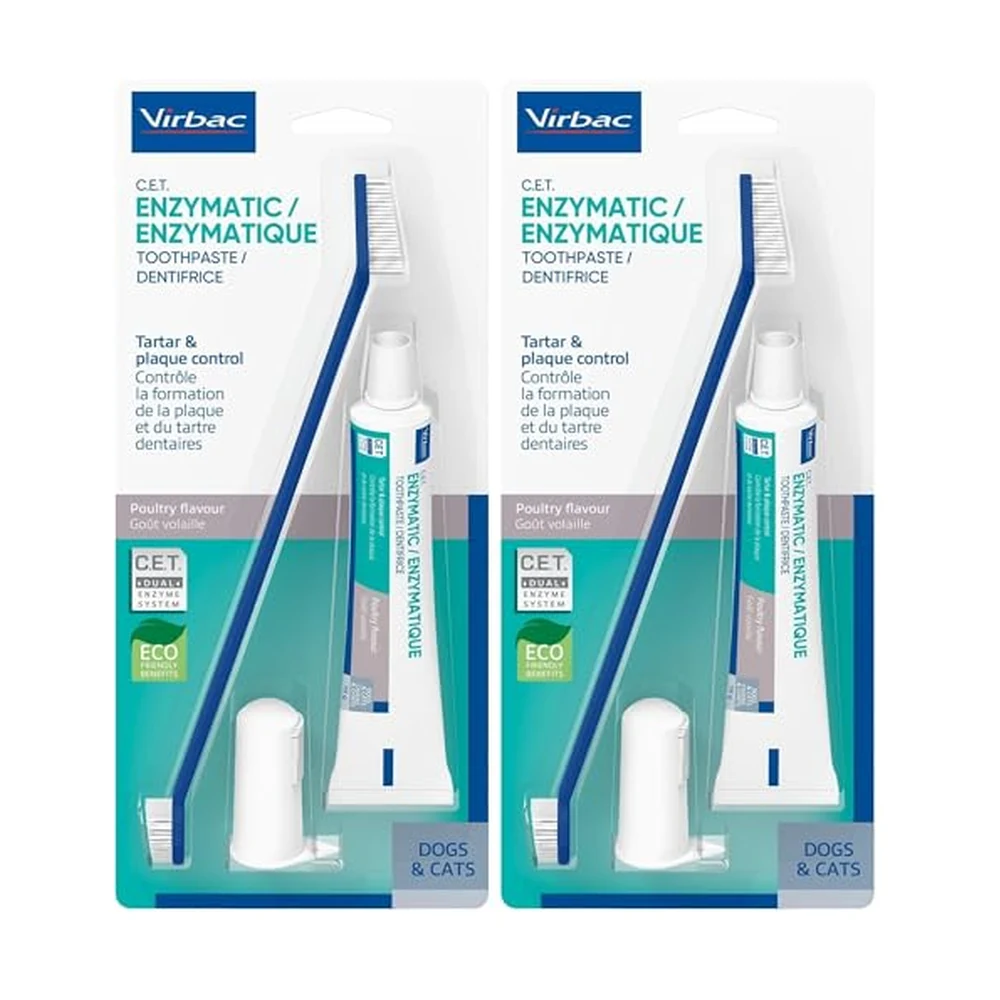
Our pick for this: Virbac C.E.T. Hygiene Kit · $27.52
A dog who will not accept a brush
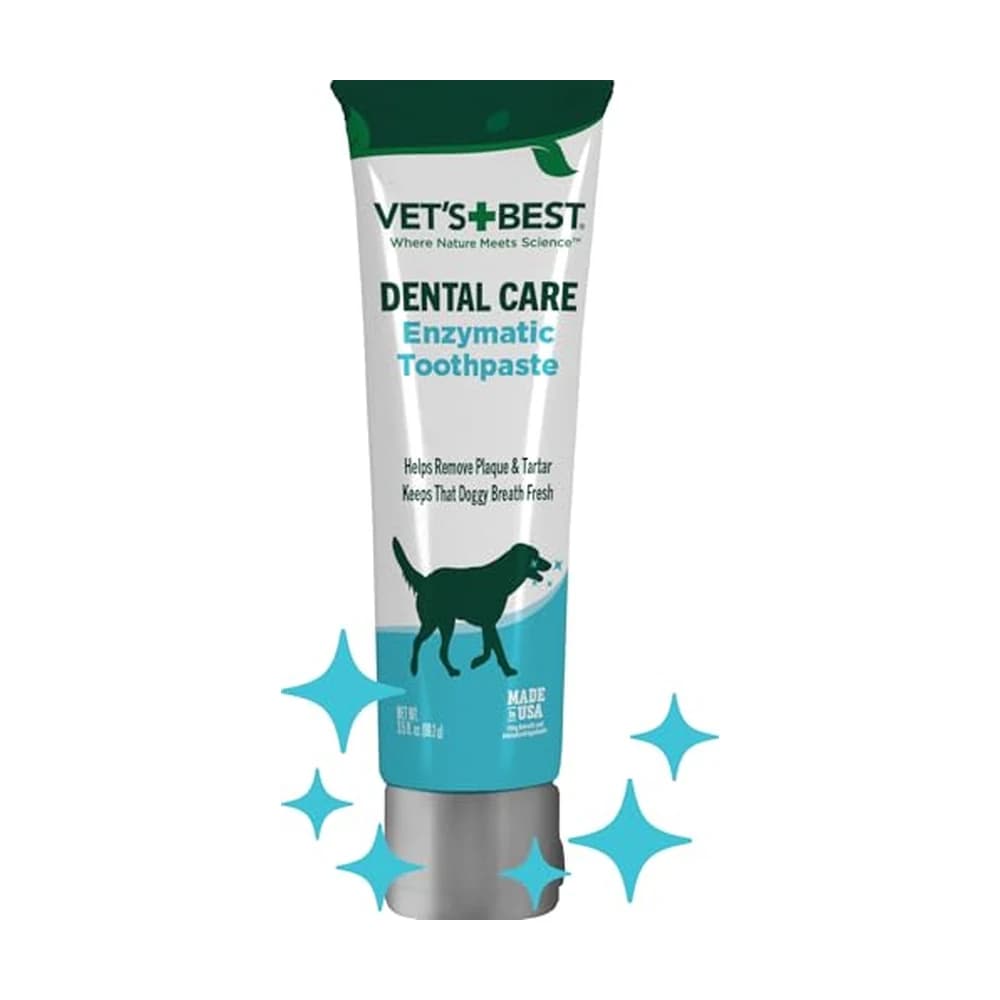
A gel you can apply with a finger is the realistic version of daily care for some dogs. Better than the brushing that does not happen.
Our pick for this: Vet's Best Dental Gel · $9.53
Something between brushings that reaches the back teeth
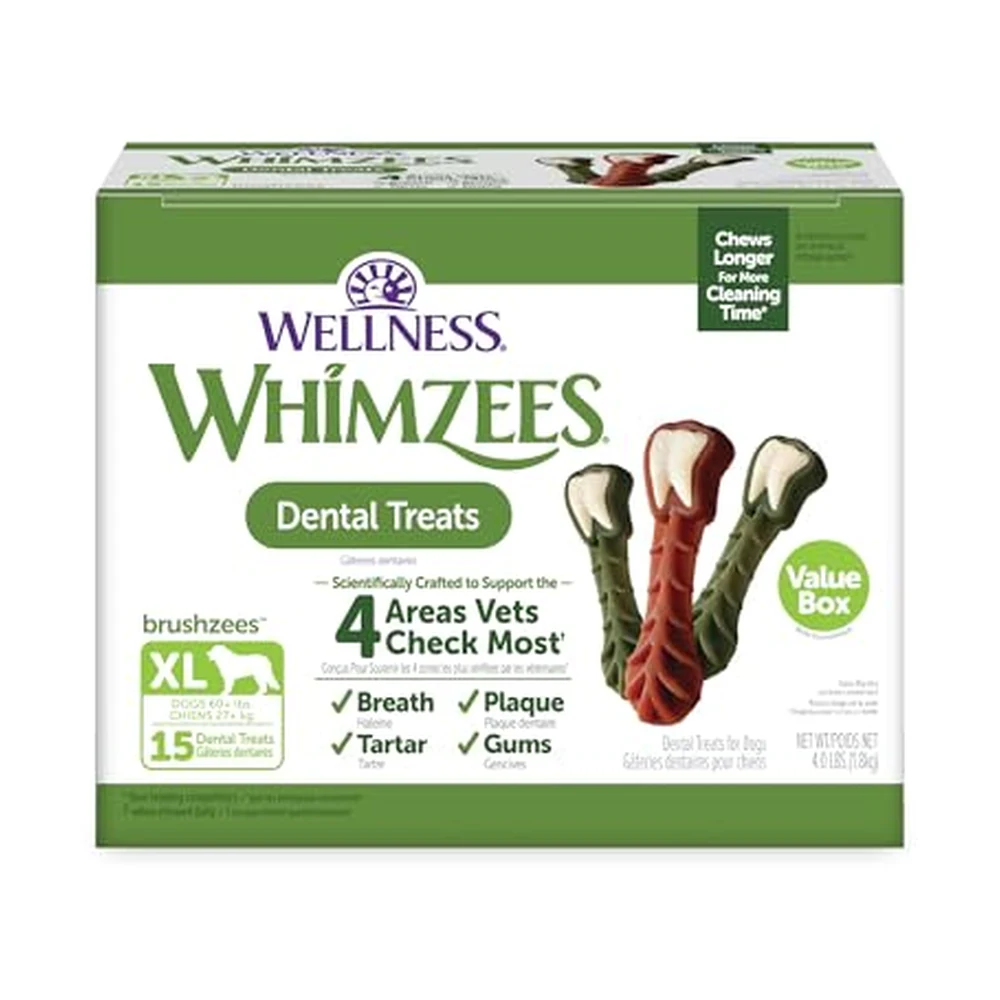
Chews get to the molars better than the incisors. Check the Veterinary Oral Health Council's accepted list rather than the packet wording.
Our pick for this: WHIMZEES Dental Chews · $37.31
If none of these is your dog: nothing on this shelf is the right answer for every household, and we would rather you bought nothing than the wrong thing. Start from the stage your dog is actually in, or browse the other shelves.
Filter picks4 of 4
Showing 4 of 4 picks — no filters applied
Showing 4 of 4 picks — no filters applied
The picks, feature by feature
Starting properly — a dual-enzyme poultry toothpaste with both a fingerbrush and a long-handled brush in the box
- Size
- Not stated
- Skip if
- Your dog will not tolerate anything in their mouth yet. Start with a gel on a finger and work up.
$9.53lowest here 4.5 out of 5 stars · 30,909 ratings
A dog who will not accept a brush yet — an enzymatic gel you can apply with a finger while you build tolerance
- Size
- Not stated
- Skip if
- Your dog accepts brushing. Mechanical brushing does more than any gel applied alone.
The variant we link: 3.5 oz
A daily chew that also cleans — plant-based, grain-free and VOHC-sealed for plaque and tartar
- Size
- Small (15–25 lb dogs), 56 count
- Skip if
- Your dog gulps chews whole. A swallowed chew cleans nothing and is a choking risk — size up and supervise.
The variant we link: 64 oz · 15 Count
Each pick below carries its own specs, and the tags mark the best of these picks on that point. Specs come from manufacturer listings; ratings are the Amazon aggregate rating and count, refreshed periodically — we don't test products.
How winners are decided: ✓ marks the lowest price, the highest owner rating, the largest stated weight capacity and the longest warranty. Rows where more is not better — size, dimensions, weight, material — and the editorial rows get no ✓ at all. A blank is unknown, never a loss, and a row needs at least two known, differing values before anything can win. How the best-of-these tags are decided: the lowest price, the highest owner rating, the largest stated weight capacity and the longest warranty. Points where more is not better — size, dimensions, weight, material — and the editorial notes carry no tag at all. A blank is unknown, never a loss, and a point needs at least two known, differing values before anything can lead. As an Amazon Associate we earn from qualifying purchases. Specs are the manufacturer's claims and owner-reported data — we research and analyse; we don't test products on dogs.
Accessories
These go with the picks above, not instead of one, so they are not ranked against them and their prices are not part of the range above.
Water additive
Dogs who will not let you near their mouth at all — a flavourless capful in the water bowl,… · $64.99
The variant we link: 33.8oz · 3 Pack
Why dental care matters at this stage
Periodontal disease is among the most commonly diagnosed problems in adult dogs, and it is easy to miss because dogs do not complain about toothache. They keep eating, they keep greeting you at the door, and the pain shows up as a dog who is a bit quieter, chews on one side, or has breath you have stopped noticing because it crept up slowly.
The order of effectiveness is not controversial. Daily brushing with a dog toothpaste is the gold standard, because plaque mineralises into tartar within days and mechanical disruption is what removes it. Dental chews and water additives are supplements that help between brushings — useful, and not a replacement. Professional cleaning under anaesthetic is the only way to address tartar below the gumline, and that is a veterinary decision.
One product rule worth carrying: the Veterinary Oral Health Council awards a seal to products shown to meet a standard for reducing plaque or tartar. It is not a guarantee, but a VOHC-accepted product has cleared a bar that most of the shelf has not.
Never use human toothpaste — fluoride and xylitol are both dangerous to dogs. And treat a dog who suddenly drops food, chews on one side, paws at their mouth or develops a bad smell as a vet visit, not a shopping trip. This section belongs to the adult and senior stages because that is when the accumulated cost of skipping it arrives.
The thing most owners don’t know
One surprising thing about dental care
Cornell's Riney Canine Health Center says brushing is the most effective home care for preventing dental disease, and points owners to the Veterinary Oral Health Council's list of accepted products — so vet recommended is checkable.
Source: Dental disease and home dental care - Cornell University College of Veterinary Medicine
What owners keep saying
Owners describe brushing as the part that actually changes what they see in their dog's mouth, with enzymatic pastes in poultry or malt flavors chosen mainly because the dog tolerates them; flavor refusal, not technique, is what usually ends a routine. Water additives draw the most mixed reports, ranging from fresher breath to no visible difference to loose stool, and the recurring advice is to treat them as an addition to brushing rather than a replacement. Owners repeatedly point each other to the VOHC accepted list when choosing chews rather than trusting package wording, and note that chews reach the back teeth better than the front. Threads about tartar that has already hardened, painful mouths, or a senior facing anesthesia consistently turn into a conversation about bloodwork and a vet exam first, not a product purchase.
we read 77 threads across r/dogs, r/AskVet, r/DogAdvice, r/seniordogs
Paraphrased from public discussion, never quoted and never counted into a statistic we did not measure. Owners are not a controlled study — they are the only long-term use data anybody has.
What we didn’t pick
Things that look like they belong on this shelf and are not on it, with the reason.
Water additives as a replacement for brushing
Cornell's canine health centre is direct that brushing is the most effective home care for preventing dental disease, and lists additives among the options for when brushing is not possible. We carry one on those terms and rank the brushing kit first.
Bones, antlers, hooves and hard manufactured chews
The same Cornell page names those as items to avoid, and adds that some can present a gastrointestinal hazard as well as a dental one. It is the reason the chew on this shelf is a soft dental chew.
Anaesthesia-free dental cleaning
It addresses what you can see. A mouth that already has tartar, pain or a broken tooth is a veterinary examination, and this shelf is about prevention before that point.
How to choose dental products
Brushing first, VOHC-accepted supplements second, and never human toothpaste.
A brush and dog toothpaste before anything else
Daily mechanical brushing is the gold standard because plaque hardens within days. Everything else in this category is a supplement to it.
Enzymatic and swallow-safe
Dogs cannot rinse and spit, so dog toothpastes are formulated to be swallowed. Human toothpaste contains fluoride and sometimes xylitol, both dangerous.
Look for the VOHC seal
The Veterinary Oral Health Council seal means a product has met a standard for reducing plaque or tartar. It is the only independent shortcut on a shelf full of claims.
A flavour your dog wants
Poultry and malt flavours exist because compliance is the whole game. A toothpaste your dog licks off the brush is one you will use daily.
Chew size matched to the dog
Dental chews only clean if they are chewed rather than swallowed. Buy the size band for your dog's weight, and supervise.
Common questions
- How do I start brushing a dog's teeth?
- In stages, over a week or two. Let them lick the paste off your finger. Then run a finger along the gumline for two seconds. Then a fingerbrush on a few front teeth. Then the brush, a few more teeth at a time, always stopping while they are still happy. Aim for daily eventually — even every other day is far better than nothing.
- Do dental chews work as well as brushing?
- No, and the products themselves generally do not claim it. Chews and additives reduce plaque and tartar buildup between brushings, and VOHC-accepted ones have met a defined standard for doing so — but nothing substitutes for mechanical brushing along the gumline, and nothing at all reaches tartar below it.
- When does a dog need a professional dental cleaning?
- Your vet decides, based on an examination — not on a schedule and not on how the teeth look from the front. Tartar below the gumline can only be removed under anaesthetic. Ask directly: "do you see disease below the gumline, and what would a cleaning change?"
Gear
Pairs with
Shelves that go with dental care — hand-picked adjacencies, not "customers also bought".
$33 4.7 out of 5 stars · 6,716
One weekly ten minutes covers both, and neither habit survives on its own.
$39.97 4.6 out of 5 stars · 3,940
A sore mouth changes what a dog is willing to eat long before anyone notices the teeth.
$19.43 4.5 out of 5 stars · 107,592
Chewing does real mechanical cleaning — it does not replace brushing, but it is not nothing.