Dog training treats, pouches and clickers
Training is mostly timing and repetition. The gear that helps is the gear that makes the reward arrive fast — small treats, and something to deliver them.
Top pick
Amazon links earn us a commission; it doesn’t change what we recommend.
Start here
Which one is right for you?
Three different dogs, three different answers. Each one names what it is good at and what it costs you.
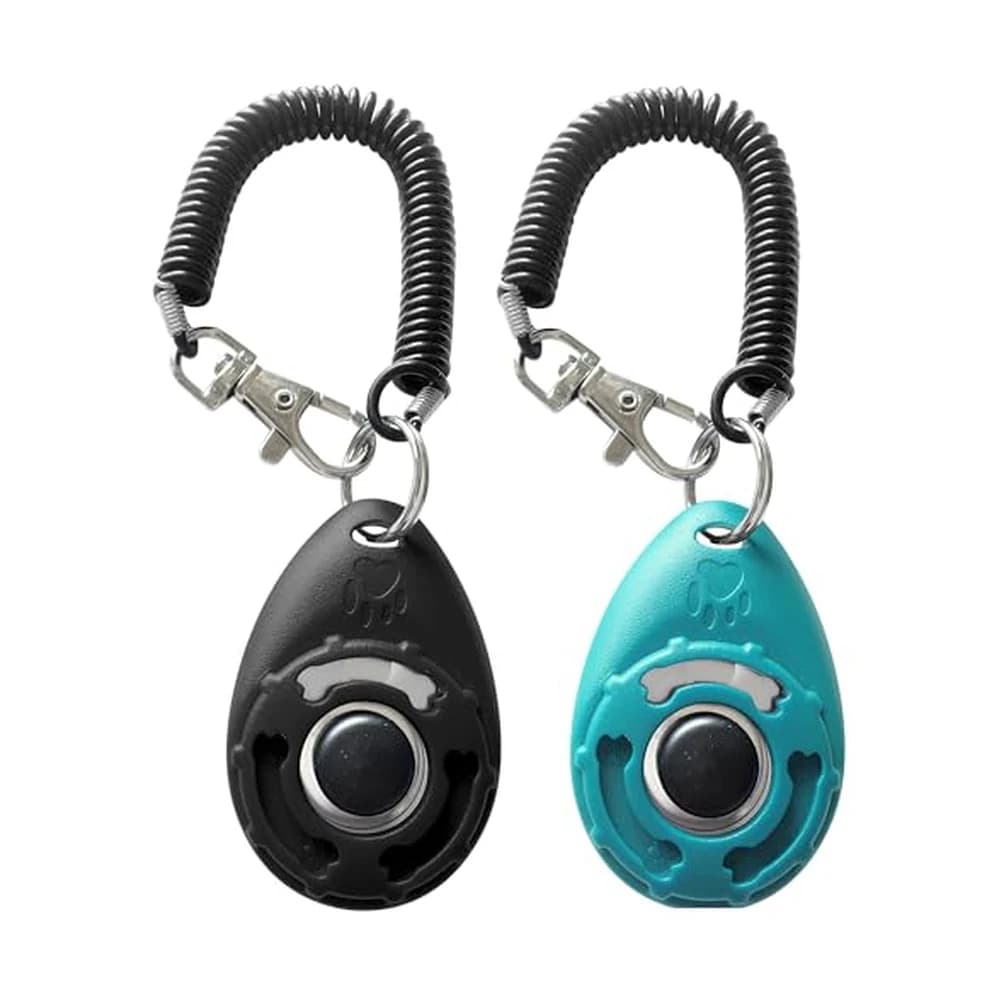
You are starting marker training and want the timing to be identical every time
A clicker is a stopwatch, not a method. Cheap on purpose — they get dropped in mud and lost in coat pockets.
Our pick for this: HoAoOo Training Clicker, 2-Pack · $4.99
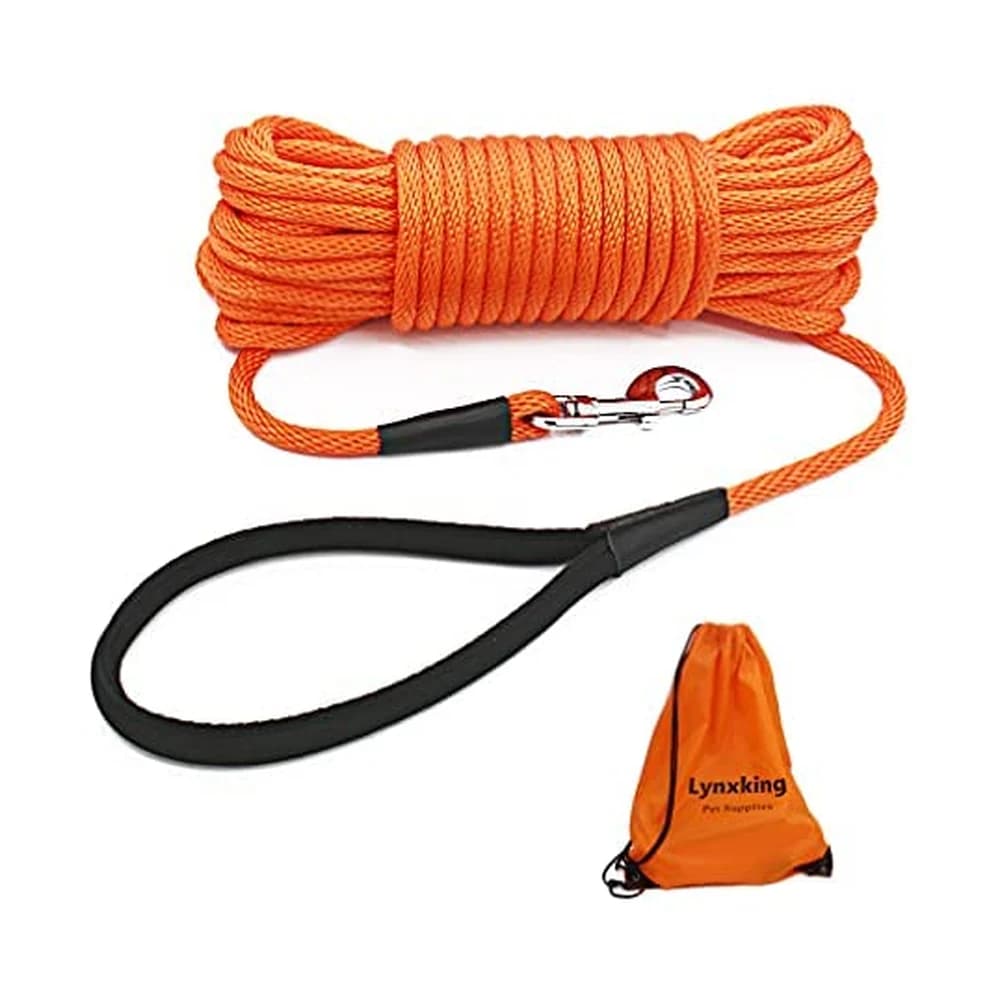
Recall practice where a six-foot leash makes the decision for the dog
Thirty feet is enough distance for coming back to be a real choice and still recoverable. Gloves for the first few sessions, and clip it to a harness rather than a flat collar.
Our pick for this: Lynxking 30 ft Check Cord Long Line · $18.49
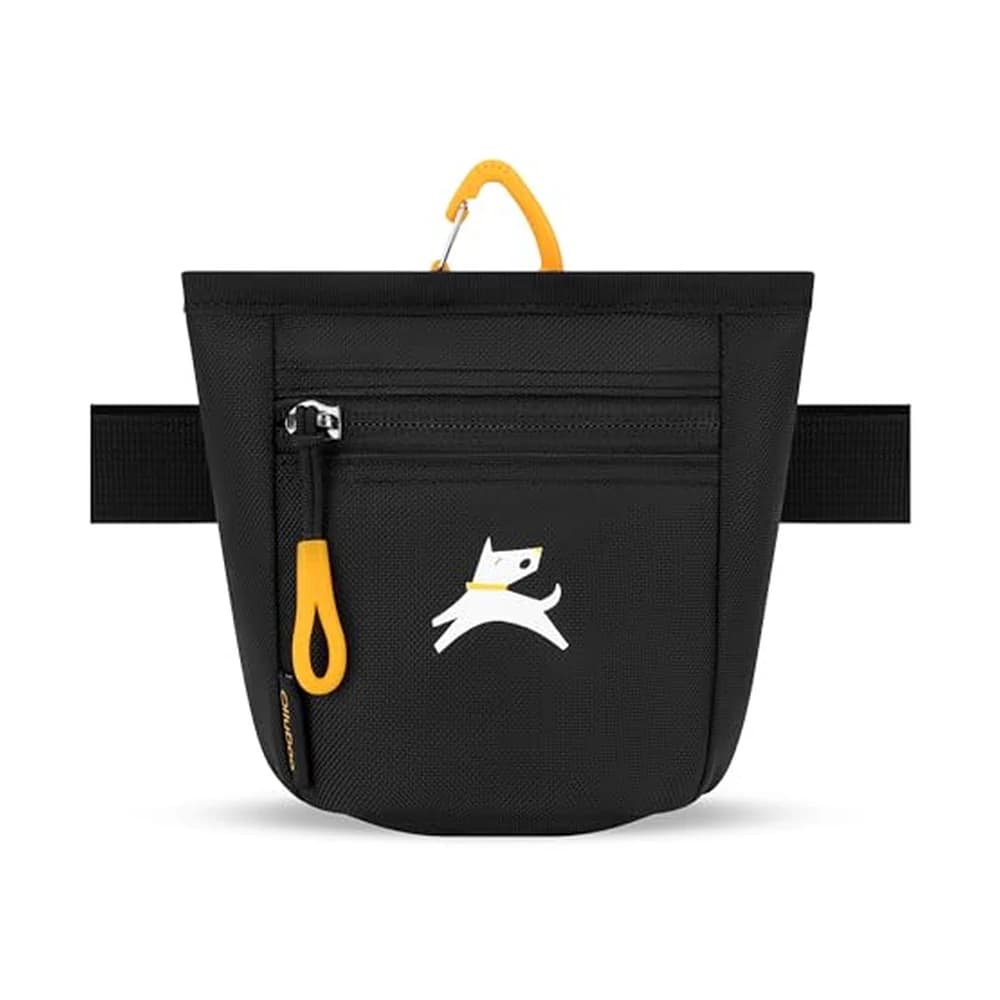
Getting a reward out in under a second, hands free
Reward speed is the whole point of a pouch. A treat that arrives five seconds late has marked something else.
Our pick for this: OllyDog Goodie Treat Bag · $19.95
If none of these is your dog: nothing on this shelf is the right answer for every household, and we would rather you bought nothing than the wrong thing. Start from the stage your dog is actually in, or browse the other shelves.
Filter picks7 of 7
Showing 7 of 7 picks — no filters applied
Showing 7 of 7 picks — no filters applied
The picks, feature by feature
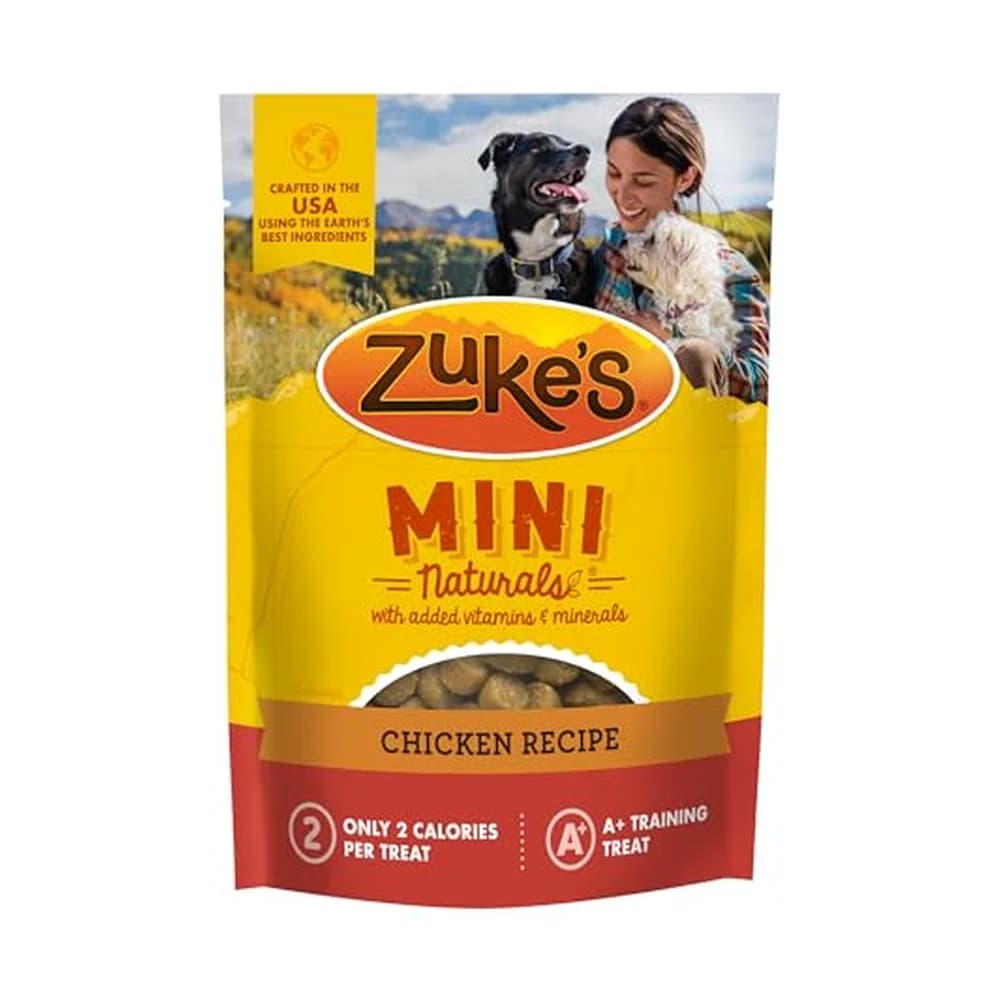
The everyday training treat — small, soft and low enough in calories to reward fifty times in a session
- Size
- 16 oz pouch
- Material
- Not stated
- Colour
- Not stated
- Dimensions (H × W × D)
- Not stated
- Weight
- Not stated
- Skip if
- Your dog needs a limited-ingredient diet, or you want a treat that keeps for months once opened.
The variant we link: Mini · 16 oz
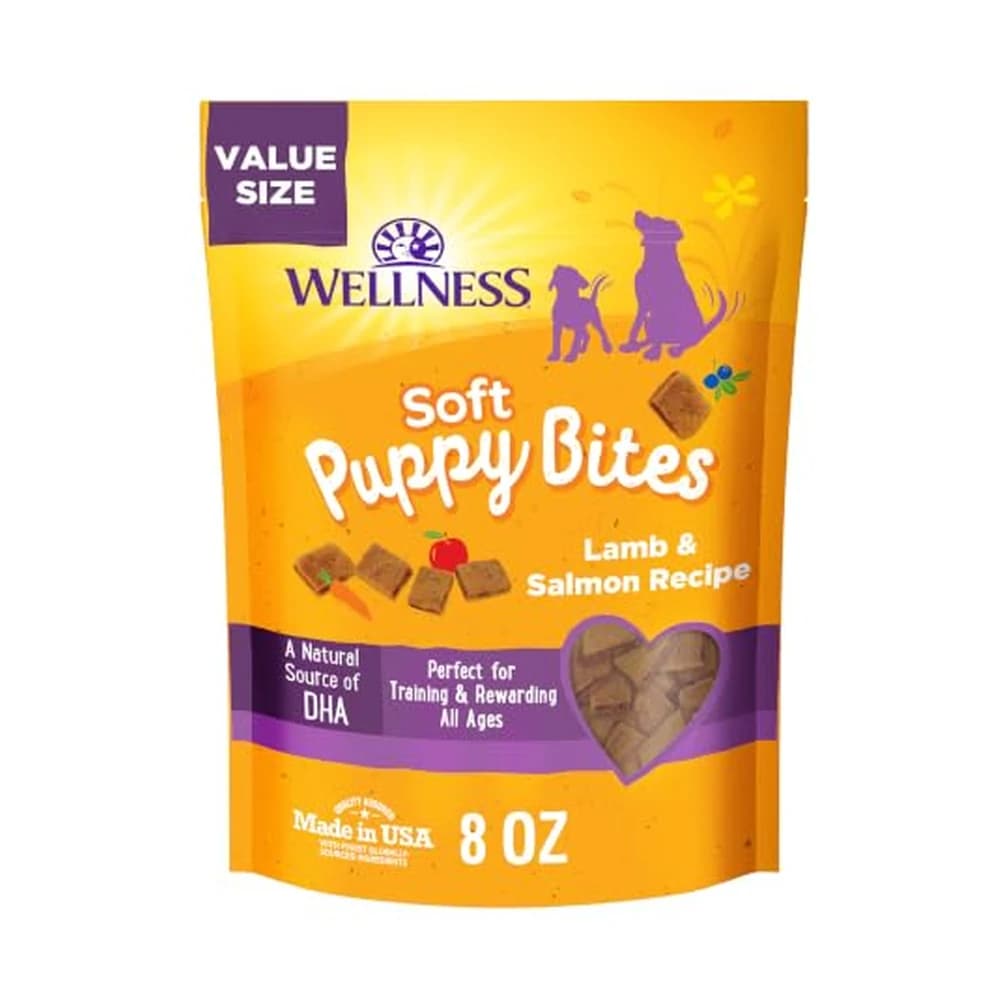
The first months of training — soft enough for baby teeth, with lamb and salmon and added DHA for a developing brain
- Size
- 8 oz bag
- Material
- Not stated
- Colour
- Not stated
- Dimensions (H × W × D)
- Not stated
- Weight
- Not stated
- Skip if
- You need the cheapest bulk treat. An 8 oz bag disappears quickly at puppy training frequency.
The variant we link: 8 oz
The marker itself — a sound a dog can learn in one session, at a price that means losing one does not matter
- Size
- Not stated
- Material
- Not stated
- Colour
- Not stated
- Dimensions (H × W × D)
- 1.97 in × 1.97 in × 5.91 in
- Weight
- 0.09 lb
- Skip if
- A sharp click startles your dog, or you already mark reliably with a spoken word.
Getting a reward out in under a second, which is the only thing a treat pouch is actually for
- Size
- 4 1/4" x 5 1/4" x 3"
- Material
- Not stated
- Colour
- Not stated
- Dimensions (H × W × D)
- 5.25 in × 4.25 in × 4.25 in
- Weight
- 0.22 lb
- Skip if
- You need it to hold a day's food, or it will be thrown into a bag mouth-down.
Recall practice in open space, where a six-foot leash makes the dog's choice for them and off-leash makes a wrong choice unrecoverable
- Size
- rope3/8"x30'
- Material
- Not stated
- Colour
- Orange
- Dimensions (H × W × D)
- 0.38 in × 0.38 in × 360.0 in
- Weight
- Not stated
- Skip if
- You want it for ordinary walks — thirty feet of line on a pavement is a hazard to your dog and to strangers.
The variant we link: 30ft
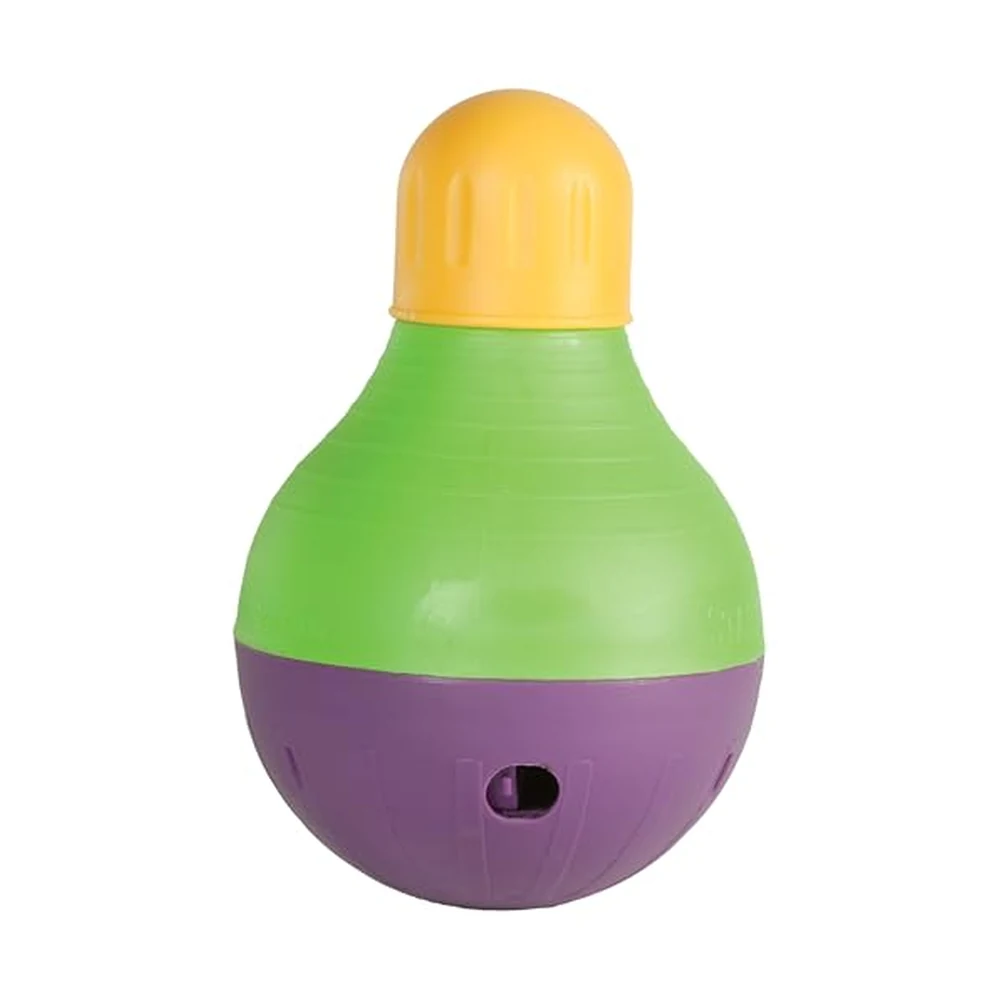
Turning a whole meal into work — the large chamber holds up to three cups, with adjustable difficulty at both openings
- Size
- Not stated
- Material
- BPA-Free Plastic
- Colour
- Not stated
- Dimensions (H × W × D)
- Not stated
- Weight
- Not stated
- Skip if
- Your dog is a serious chewer. It is not chew-proof and owners report it failing under real chewing.
Each pick below carries its own specs, and the tags mark the best of these picks on that point. Specs come from manufacturer listings; ratings are the Amazon aggregate rating and count, refreshed periodically — we don't test products.
How winners are decided: ✓ marks the lowest price, the highest owner rating, the largest stated weight capacity and the longest warranty. Rows where more is not better — size, dimensions, weight, material — and the editorial rows get no ✓ at all. A blank is unknown, never a loss, and a row needs at least two known, differing values before anything can win. How the best-of-these tags are decided: the lowest price, the highest owner rating, the largest stated weight capacity and the longest warranty. Points where more is not better — size, dimensions, weight, material — and the editorial notes carry no tag at all. A blank is unknown, never a loss, and a point needs at least two known, differing values before anything can lead. As an Amazon Associate we earn from qualifying purchases. Specs are the manufacturer's claims and owner-reported data — we research and analyse; we don't test products on dogs.
Also on this shelf
The table above compares 6; these are the rest of our current picks, in rank order.
Rewarding at a distance — separation and settle work where you need the treat to arrive… · $190.99
Why training tools matter at this stage
Almost every home training problem is a timing problem. A dog learns from what happens in the second or so after they do something, so the practical constraint is how fast you can mark and deliver a reward — not what the reward is. That is why treat size matters more than treat brand: a pea-sized morsel you can hand over instantly, forty times in a session, teaches faster than a biscuit your dog spends ten seconds chewing.
What changes across the stages is what you are working on. A new puppy is learning their name, a hand target and that a crate is fine. A puppy is learning sit, down and the beginning of loose-leash walking. An adolescent is relearning all of it, badly, because the brain is rewiring — this is the stage where owners think their dog has "forgotten" everything, and the answer is shorter sessions, higher-value rewards and lower expectations for a few months. Adults maintain. Seniors keep working, but with the sessions shortened and the physical demands dropped: a nose game beats a sit-stay when the hips hurt.
Everything in this category is reward-based. We do not recommend aversive tools, and the position of the major veterinary behaviour organisations is that reward-based methods should be the standard. Count the treats into the day's food allowance so training does not quietly become a weight problem.
The thing most owners don’t know
One surprising thing about training tools
The American Veterinary Society of Animal Behavior states that based on current scientific evidence it recommends only reward-based training methods for all dog training, including the treatment of behavior problems.
Source: What are Reward-Based Training Methods for Dogs (and Cats)? - AVSAB
What owners keep saying
On treats the repeated advice is size and smell over brand: pea-sized, soft and stinky, so the dog swallows fast and stays in the session, with owners keeping a tier of ordinary treats for known cues and something richer for hard environments. Freeze-dried liver and sliced meat rolls come up often precisely because they can be broken down small. A pouch that stays open one-handed and shuts on its own is what people say matters, and magnetic or hinged closures get named repeatedly, with plenty of owners using a plain fanny pack or a hardware-store pouch instead of a dog-branded one. On clickers the consensus is that a marker is essential and the clicker is one form of it: trainers in these threads reach for the clicker when shaping or timing a new behaviour and a verbal marker for everyday work, since a clicker occupies a hand already holding leash and treats. Puzzle feeders and snuffle mats are widely reported as a way to feed the daily ration rather than add calories, with the standing caveat that they are supervised items because destroyers eat the pieces.
we read 80 threads across r/Dogtraining, r/dogs, r/OpenDogTraining, r/puppy101
Paraphrased from public discussion, never quoted and never counted into a statistic we did not measure. Owners are not a controlled study — they are the only long-term use data anybody has.
What we didn’t pick
Things that look like they belong on this shelf and are not on it, with the reason.
Shock collars, prong collars and ultrasonic bark devices
The American Veterinary Society of Animal Behavior's position statement recommends only reward-based methods for all dog training, including behaviour problems. That is the shelf's whole selection rule, and it is a position we are quoting rather than one we invented.
Treats a dog has to stop and chew
A marker only works if the reward arrives within a second or two. Anything that takes ten seconds to eat breaks the timing the clicker exists to protect, which is why the treats here are small and soft.
The remote treat dispenser as a starting point
We carry one as an upgrade because it does a real job for distance work, but it is the most expensive thing on the shelf and the least likely to be what a first-time trainer needs. It is ranked as an upgrade, not hidden.
How to choose training gear
Small, soft, fast to deliver, and low enough in calories to use a hundred times a week.
Pea-sized and soft
A treat that is chewed in one gulp keeps the session moving. Anything crunchy or large slows the rate of reinforcement, which is the thing doing the teaching.
Low calories per piece
Training treats should stay within roughly a tenth of the day's calories. Two or three calories per piece is what makes a fifty-repetition session possible.
Two tiers of value
Keep an everyday treat and a high-value one. The high-value option is what you spend on recall and on distractions, and it only works if it is genuinely rarer.
Something that occupies without you
Food-dispensing toys buy back the hours you cannot spend training, and they turn a meal into fifteen minutes of work rather than ninety seconds of inhalation.
Reward-based only
We only list reward-based tools. Aversive equipment carries welfare and fallout risks, and reward-based training is what the major veterinary behaviour bodies recommend.
Common questions
- How many treats can I use in a training session?
- As many as you like within about ten per cent of the dog's daily calories, and then subtract them from meals. That is why the calorie count per piece matters — a two-calorie treat lets a small dog do fifty repetitions, and a biscuit lets them do four.
- My adolescent dog has forgotten everything he learned. What do I do?
- Nothing dramatic. Adolescence brings a genuine dip in reliability, and the answer is to go back a step: shorter sessions, easier versions of each cue, better treats and fewer distractions. Punishing the regression makes a dog less willing to offer behaviour at all, which is the opposite of what you need.
- Can you train an old dog?
- Yes, and it is one of the best things you can do for a senior. Keep sessions short, drop the physical difficulty — nose work and scent games instead of sits and downs on sore joints — and account for hearing loss by pairing or replacing verbal cues with hand signals.
Gear
Pairs with
Shelves that go with training tools — hand-picked adjacencies, not "customers also bought".
$59.99 4.6 out of 5 stars · 18,114
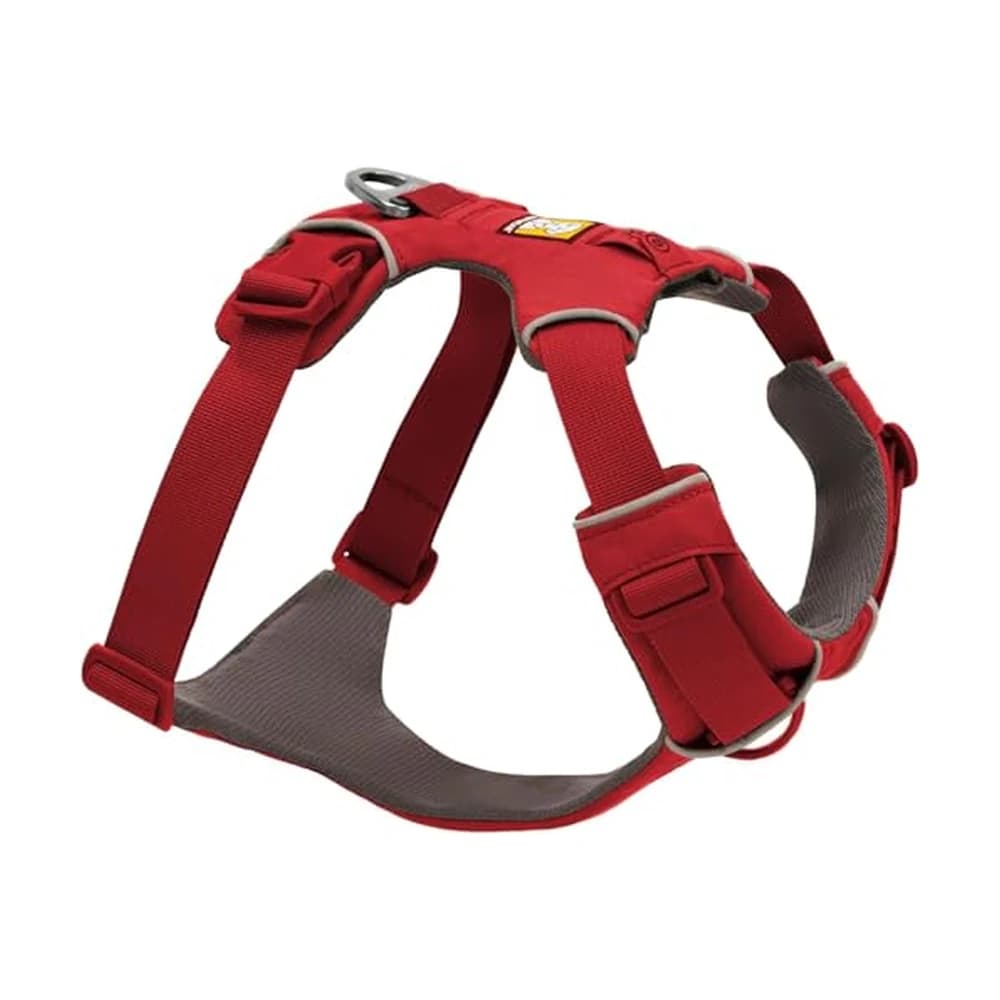
Reward mechanics and equipment are one system: the treat marks the behaviour, the harness makes it survivable meanwhile.
$8.95 4.7 out of 5 stars · 103,018
Most training questions start on a lead, and the lead is where the pulling shows up.
$13.96 4.6 out of 5 stars · 91,774
A dog that has done nothing all day trains badly. Enrichment is what makes a session possible.