In this article(7 sections)
Every walk your dog pulls on is a training session in pulling. That is the uncomfortable center of this problem. The leash goes tight, the world keeps arriving, and the behavior gets paid several hundred times before anyone decides to do something about it.
Which is also the good news, because it means the fix is not about willpower or dominance. It is about changing what a tight leash produces.
The rule, and it is only one rule
Rule of thumb: Tight leash, the world stops. Loose leash, the world moves.
That is the whole method. Everything below is about applying it consistently enough that your dog can work out the pattern.
In practice:
- Walk. The moment the leash goes tight, stop dead. Say nothing.
- Wait. Do not pull back, do not reel him in. Just be a tree.
- The instant there is slack, whether because he looked back, stepped back or shifted his weight, say yes and move off.
- If slack does not come within a few seconds, take two steps backwards and start again from there.
Your dog does not need to understand it. He needs to experience it about forty times in a row without exception, and the classic exception is being late for something.
Set it up so you can be consistent
Pick a boring route. A parking lot, a quiet stretch of sidewalk, the same fifty meters up and down. A dog cannot learn a new habit in the most stimulating place he knows.
Five to ten minutes. Short enough that you do not get sloppy. A dog who has been asked for twenty minutes of self-control gets worse, not better.
Do it before the walk, not as the walk. Ten minutes of leash work at the top of the road, then clip on the long line and let him be a dog.
Two kinds of walk, kept apart
A sniffing walk, on a longer line, where the route is his and pulling rules are relaxed, is not a failure of training. It is the thing your dog actually needs from going outside. Mixing the two into one confusing hybrid is why so many walks are miserable for both parties.
| Training walk | Decompression walk | |
|---|---|---|
| Length | Five to ten minutes | As long as you both like |
| Route | Boring, the same fifty meters | His choice, as far as the line allows |
| Leash | A fixed six-foot leash | A long line, dragging or held loosely |
| The rule | Tight means stop, loose means go | Relaxed; he is here to sniff |
Equipment, honestly
Equipment does not train a dog. It makes a dog manageable while you train him, which is a legitimate and separate job. AVSAB is clear that management strategies, including arranging the antecedents, have a vital role in dog training and should be considered in all training plans.
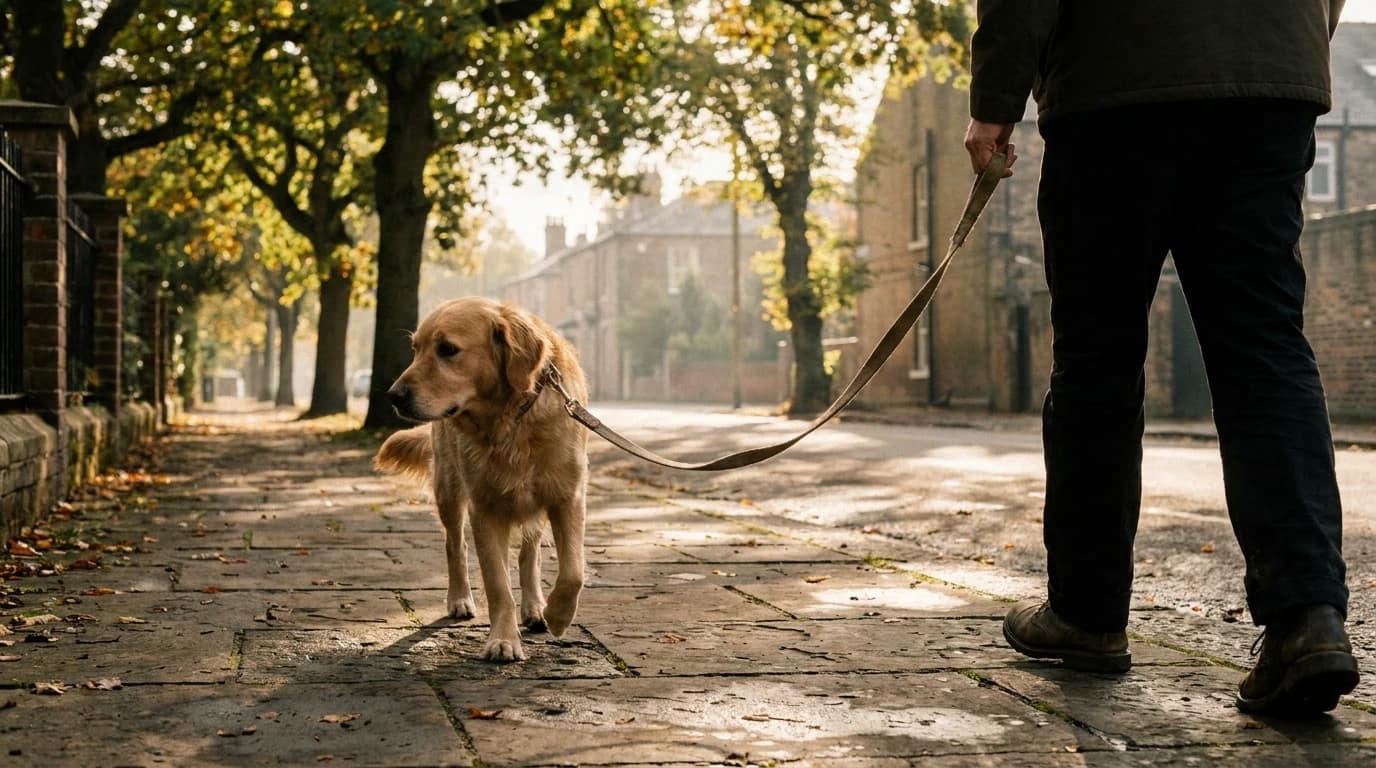
 The loose curve is the whole goal. The clip is at the chest, so a pull turns him back toward you instead of gaining ground.
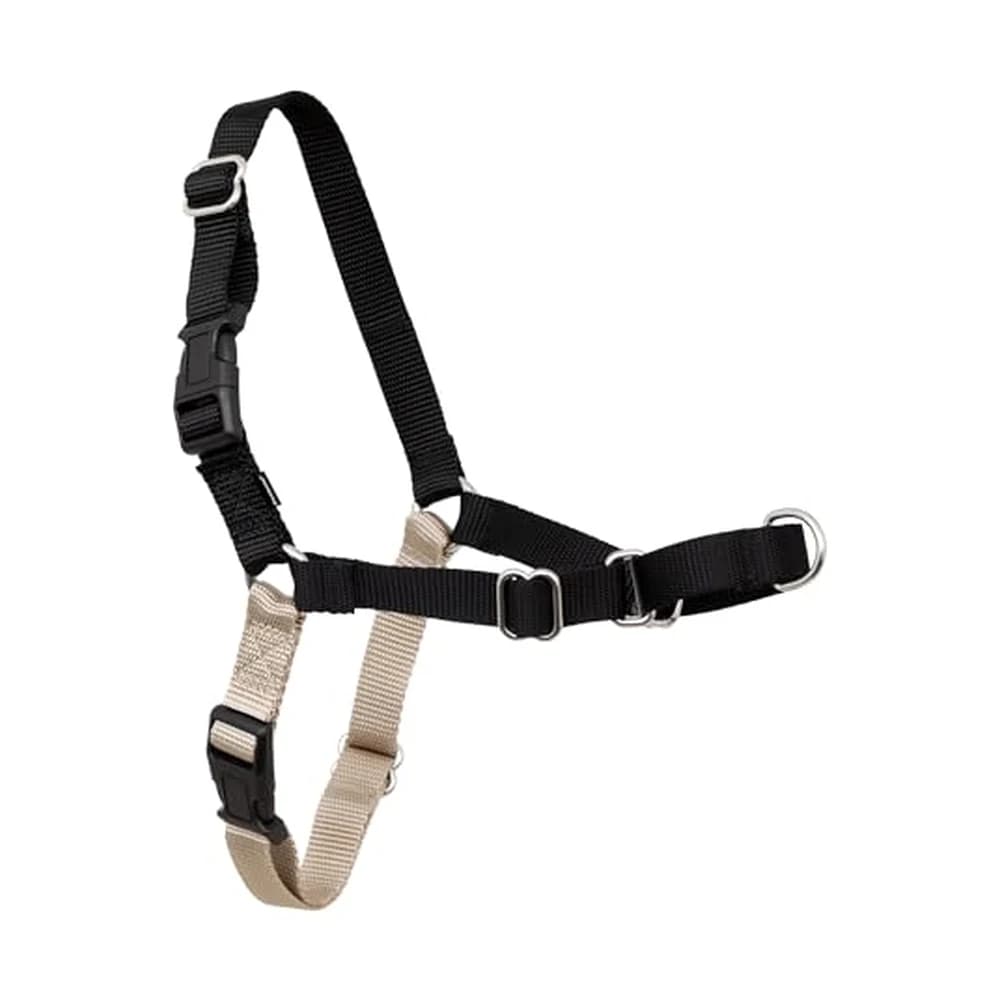
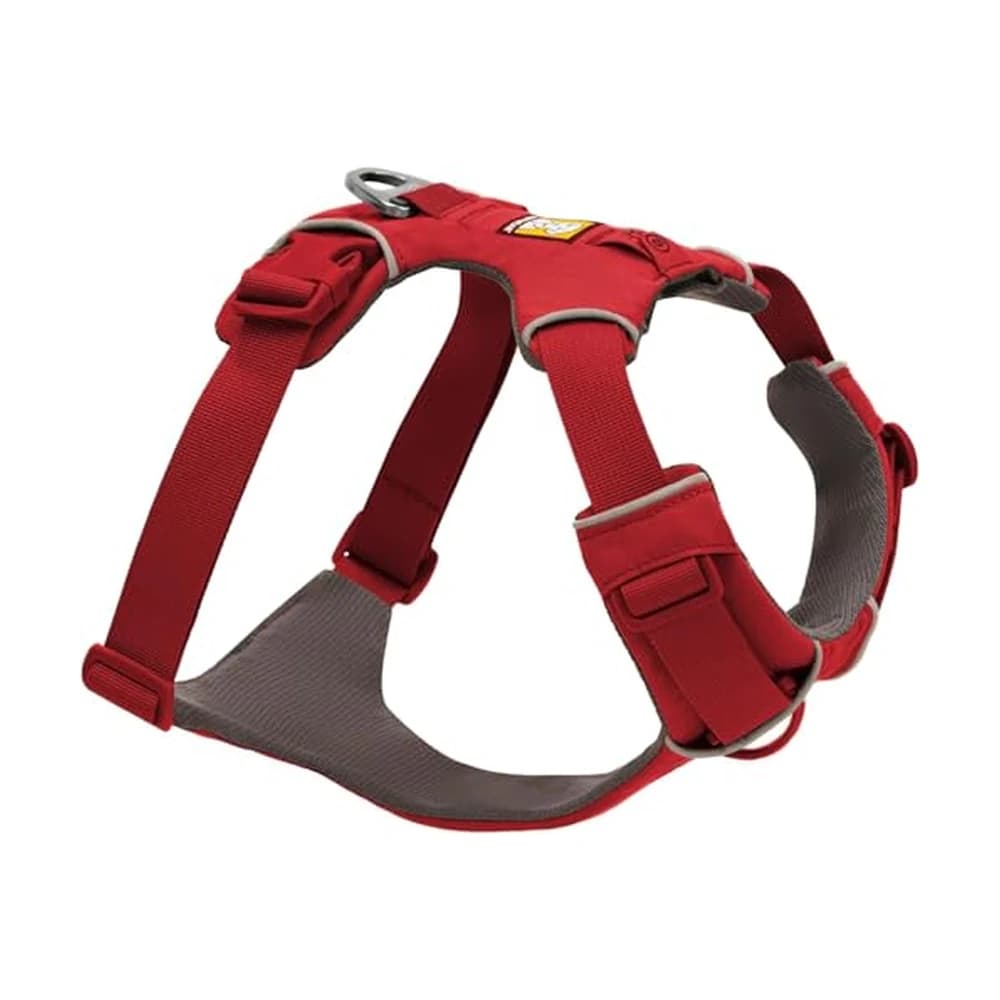
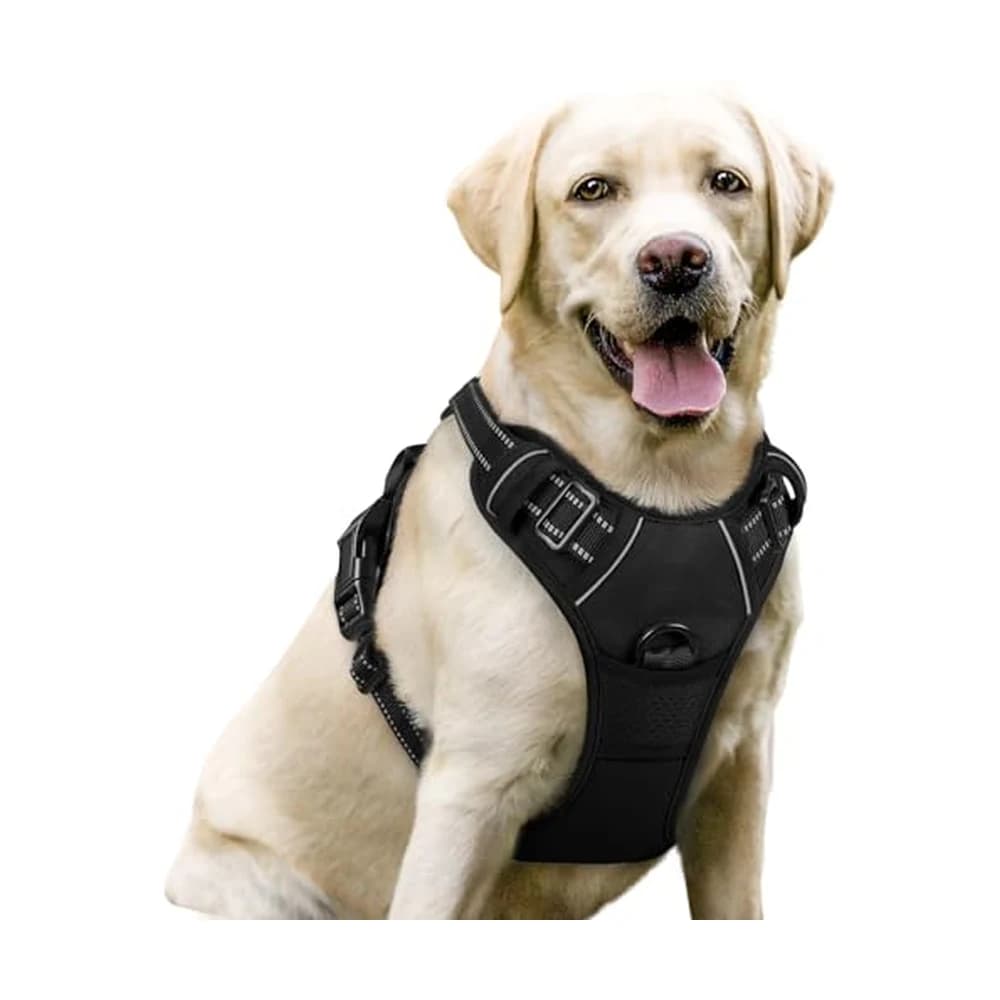
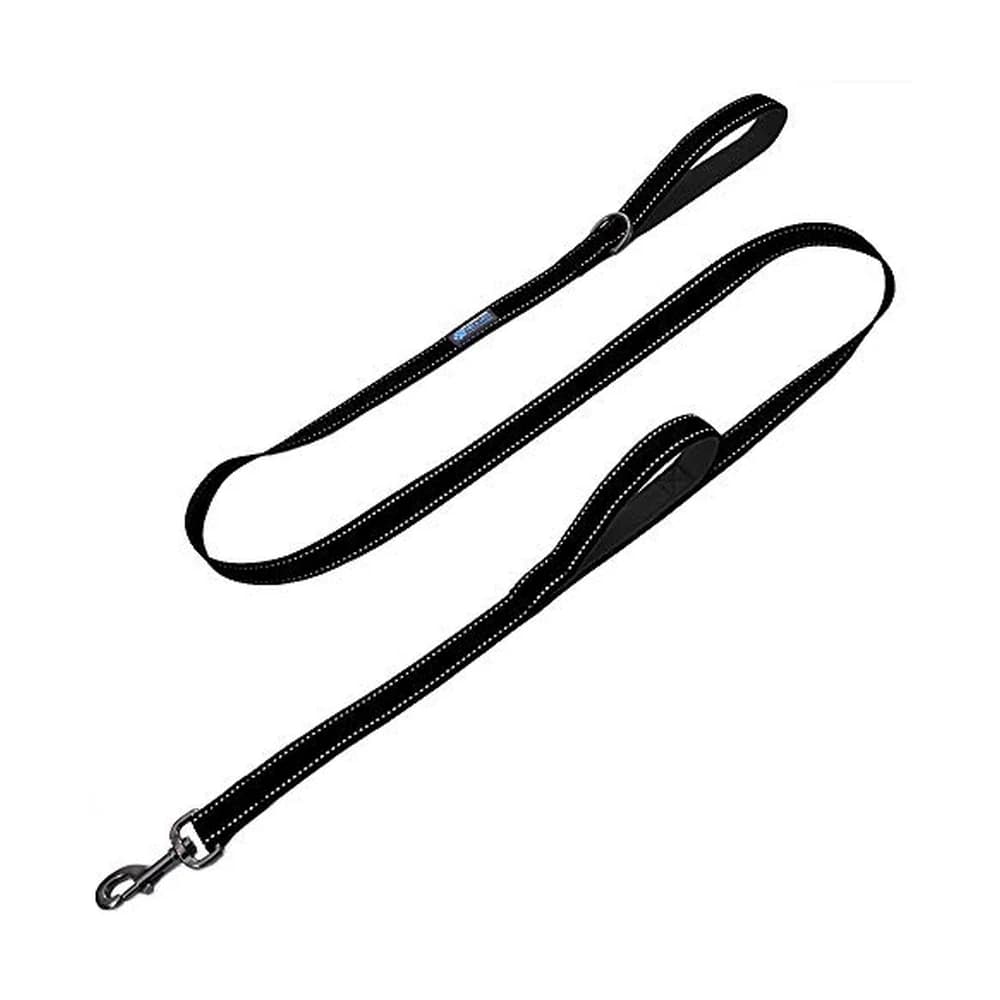
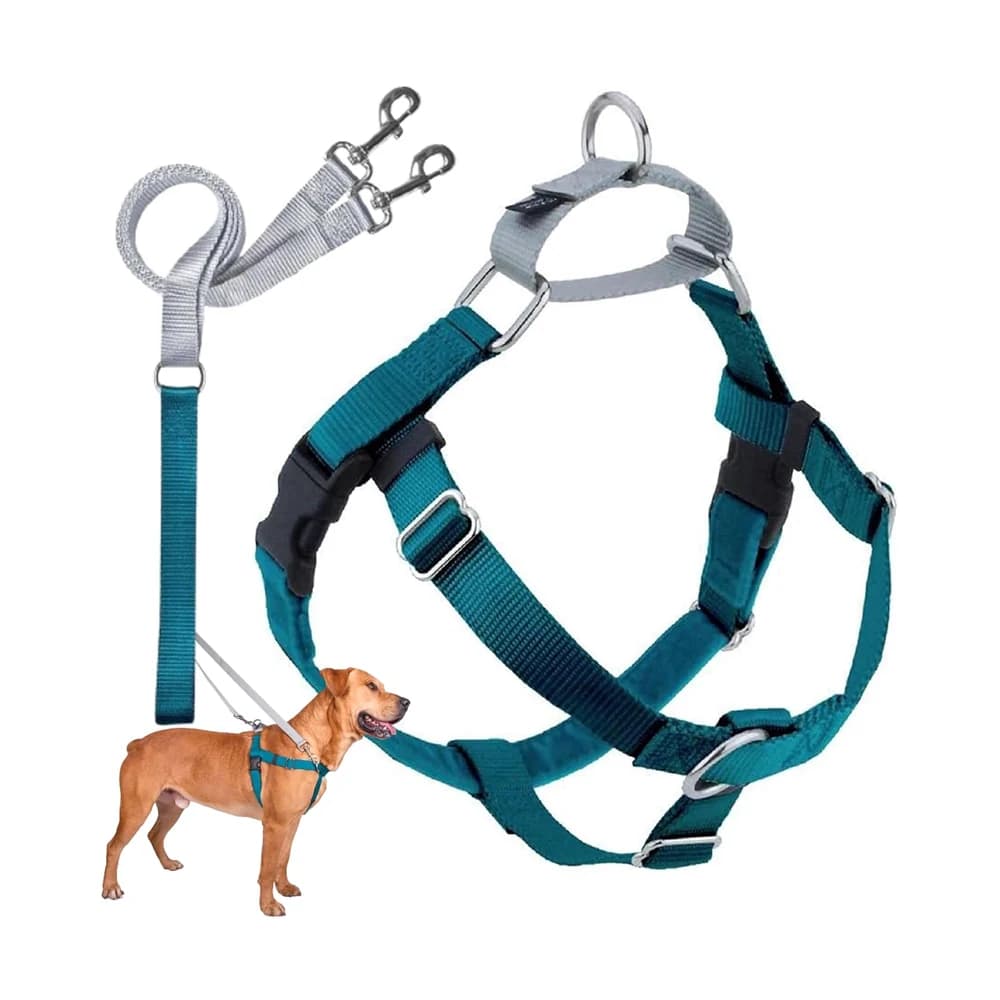
A well-fitted harness with a front clip or a dual clip gives you steering and takes pressure off the neck, which matters on a strong adolescent who will hit the end of the leash a hundred times while he learns. Our everyday harness picks are chosen for fit range and chafe points. The PetSafe Easy Walk changes a walk immediately, because its chest loop tightens gently as he pulls and releases when he stops, which buys calm walks while the training takes its months. The Ruffwear Front Range has a chest and a back clip, so one harness covers both kinds of walk, and the rabbitgoo gives you the same two clips at a third of the price, with room to grow. The 2 Hounds Freedom is the one that does both jobs at once: a martingale loop across the back that tightens gently and a front ring to steer from, with a double-ended leash in the box to connect to both. It costs about twice the Easy Walk. The puppy harness and leash shelf is sized for a shape still changing; the Max & Neo double-handle leash there is the fixed six-foot leash this guide assumes, with a traffic handle 18 inches from the clip for curbs.
What we will not point you at: choke chains and prong collars. AVSAB states that an appropriate trainer should avoid any use of training tools that involve pain, naming choke chains, prong collars and electronic shock collars specifically, along with intimidation tactics and leash jerking. It also notes that reward-based methods produced the highest obedience levels in the studies it reviews, and that so-called balanced training produced lower obedience than reward-based alone.
What actually helps:
- A front-clip or dual-clip harness that fits.
- A fixed-length leash for the training walk, a long line for the other one.
- A treat pouch that opens one-handed, and tiny treats.
What people try that doesn't:
- Choke chains, prong collars, and leash jerks.
- A retractable leash, which pays out ground the moment he pulls.
- Twenty-minute sessions on the most exciting route he knows.
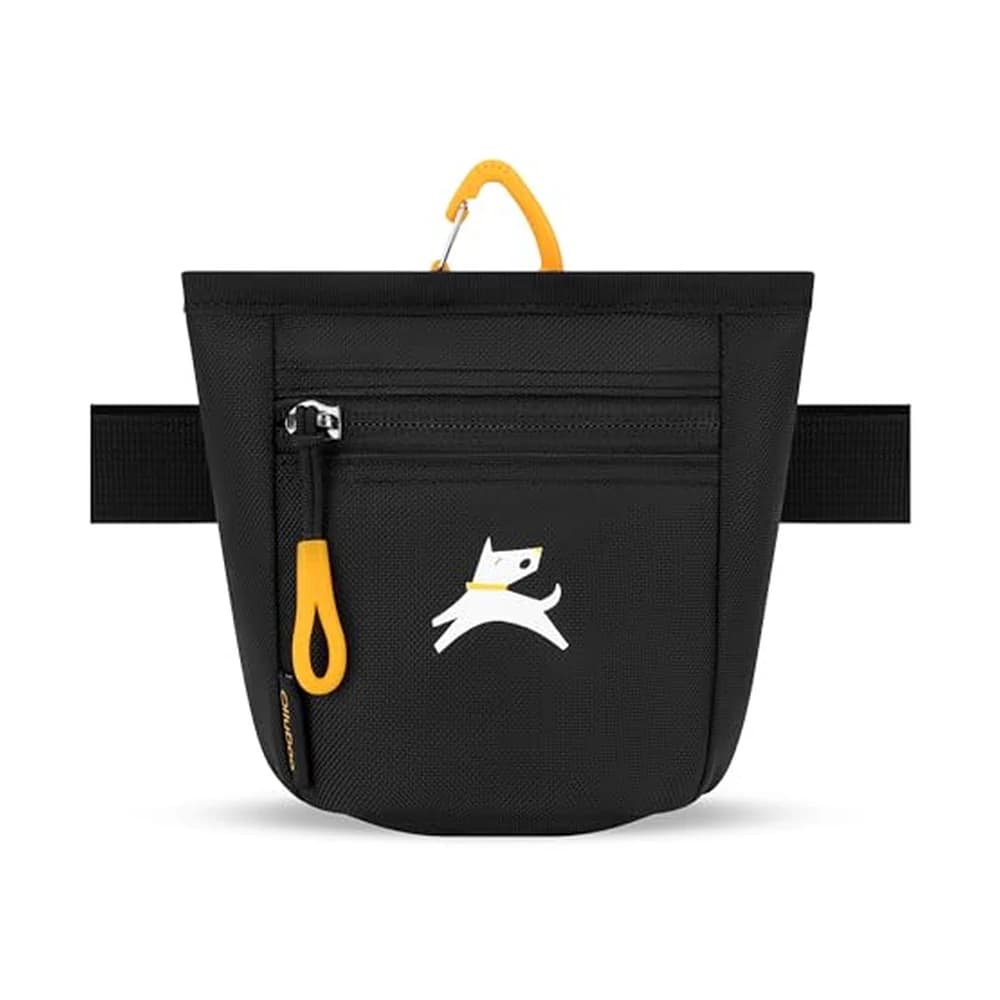
A treat pouch is the item that actually changes outcomes here, because it is the difference between rewarding thirty loose-leash moments a walk and rewarding none. This guide assumes one like the OllyDog Goodie bag, which opens in one motion, filled with pea-sized Zuke's Mini Naturals so thirty rewards do not add up to a meal. Both are on the training tools shelf.
Pay the position, not just the absence of pulling
Stopping when the leash tightens tells your dog what does not work. You still have to tell him what does.
So while the leash is loose and he is anywhere near your leg, food arrives, delivered at your trouser seam rather than out in front of you. Feed at your side and you build a dog who drifts back to your side. Feed in front and you build a dog who cuts across your knees.
Do that ten or fifteen times in a five-minute session and the position starts paying better than the pulling does.
Remember: Where you feed is where he will hover. Deliver the food at your seam, not out in front.
The adolescent asterisk
If your dog is somewhere between six months and three years and the walking has fallen apart, you have not wasted the previous six months. AAHA notes that this period can be the most challenging for owners as the dog matures socially and behaviorally, and lists pulling on the leash among the behaviors to be addressed at all life stages, which tells you how normal and how persistent it is.
Go back to the boring route, shorten the sessions, and raise the value of the food. It comes back faster the second time. The wider picture is in adolescent dog regression and on the adolescent stage page.
When it is not a leash problem
Some pulling is arousal, and some is fear. A dog who walks nicely until another dog appears and then hits the end of the leash like a train is not failing at leash skills. He is over threshold.
That work happens at a distance where he can still take food, and it is worth getting help with. AAHA lists aggression, profound fears and cases that have not responded to treatment among the reasons to refer to a veterinary behaviorist, and AVSAB advises against trainers who discuss dominance, pack leadership or alpha theories.
What to ask your vet
- Could any of this pulling or reluctance be pain related, particularly for an older or heavy dog?
- Can you recommend a reward-based trainer or a veterinary behaviorist locally?
Recall and leash work reinforce each other, so it is worth running recall at home alongside this rather than after it.
Key takeaways
What to remember
- The walk itself is what rewards pulling. Any plan that ignores that will not hold.
- Tight leash means the world stops. Loose leash means the world moves. Be boringly consistent about it.
- Train on a dull route first. A dog cannot learn a new habit in the most exciting place he knows.
- AAHA lists pulling on the leash among the behaviors that should be addressed at every life stage, and AVSAB names choke and prong collars among tools to avoid.
- Separate the training walk from the sniffing walk. Your dog needs both, and mixing them frustrates everyone.
Questions people ask
- Why does my dog pull even though he knows better?
- Because pulling works. Every time a tight leash is followed by forward movement, the behavior gets paid. Knowing is not the issue, the consequence is.
- Are no-pull harnesses cheating?
- No. AVSAB describes management and antecedent arrangement as having a vital role in training plans. A well-fitted harness makes the dog easier to handle while you train the behavior, which is different from a tool that works by causing discomfort.
- What about a prong or choke collar for a strong dog?
- AVSAB advises avoiding training tools that involve pain, naming choke chains, prong collars and electronic shock collars. For a strong dog, a properly fitted front-clip or dual-clip harness plus real training is the route we cover.
- How long are training sessions?
- Five to ten minutes. A twenty-minute leash-training walk with a young dog usually ends worse than it started, because both of you get tired and standards slip.
- My dog walks beautifully then pulls hard the moment he sees another dog. What now?
- That is a different problem wearing the same coat. It is arousal or reactivity rather than leash skills, and it is worth working at a distance where he can still eat, or asking a reward-based trainer for help.
Gear
The gear this guide assumes
Our shelves and product pages, so you can see the options without leaving mid-session. No buy buttons here — this is a training guide.
$22.99 4.3 out of 5 stars · 48,509
A dog who pulls hard right now — the martingale chest loop tightens gently as they pull and…
$59.99 4.6 out of 5 stars · 18,114
The everyday harness you buy once — two leash points, foam-padded panels and four adjustment…
$15.98 4.5 out of 5 stars · 194,711
Two leash clips and a top handle at a budget price — the sensible first harness for an…
$16.99 4.7 out of 5 stars · 8,989
The first leash — a six-foot walking length plus a traffic handle 18 inches from the clip,…
$19.95
Getting a reward out in under a second, which is the only thing a treat pouch is actually for.
$14.94 4.6 out of 5 stars · 18,587
The everyday training treat — small, soft and low enough in calories to reward fifty times in…
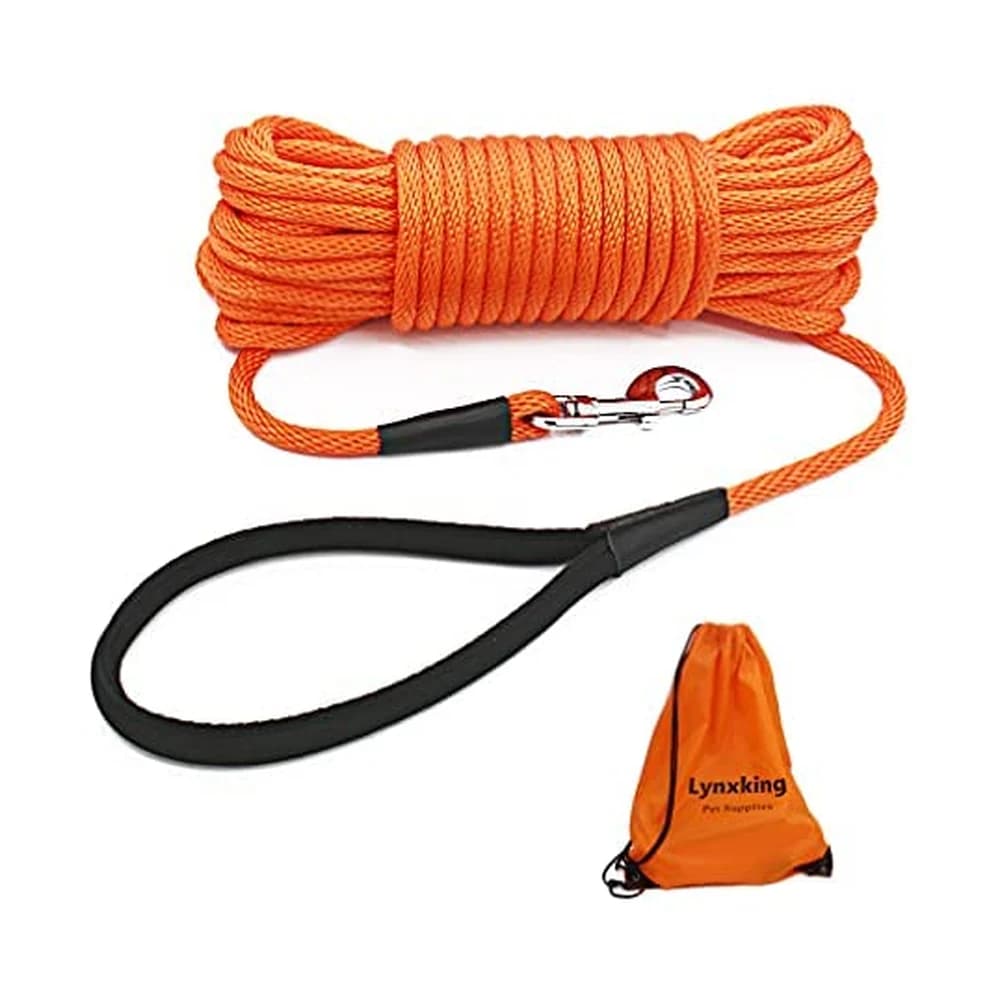
Lynxking 30 ft Check Cord Long Line
$18.49
Recall practice in open space, where a six-foot leash makes the dog's choice for them and…
2 Hounds Design Freedom No-Pull Harness
$45.96 4.3 out of 5 stars · 13,345
A strong puller you want to redirect rather than restrain — a martingale loop across the back…

Sources
- AVSAB Position Statement on Humane Dog Training (2021) — That AVSAB recommends only reward-based methods for all dog training, that tools relying on pain or intimidation should not be used, that training is most effective when it teaches the dog what to do, that management and antecedent arrangement belong in every plan, and that the learner must be able to opt out.
- AAHA 2019 Canine Life Stage Guidelines: Behavior — That roughly six months to three years can be the most challenging period for owners, the named unruly behaviors of that age, the guidance on fear periods and chronic stress, the note that puppies do not outgrow problems, and the referral criteria for a veterinary behaviorist.
We research and analyse — specs, manufacturer documentation and large-scale owner feedback. We do not test products on dogs, and we are not your vet.
Next step
The everyday harnesses shelf
A front-clip harness does not train the dog, but it stops you rehearsing the pull while you teach the position.
A harness moves the force off the neck and onto the chest. For a dog strong enough to pull, that is a health decision, not a comfort one.