Dog ramps and dog stairs
The first thing an arthritic dog gives up is usually jumping into the car or onto the sofa. A ramp gives it back without you lifting 70 pounds.
Amazon links earn us a commission; it doesn’t change what we recommend.
Start here
Which one is right for you?
Three different dogs, three different answers. Each one names what it is good at and what it costs you.
A big dog getting into a car
Width and the angle against your boot decide whether a ramp gets used. Teach it on flat ground before the car.
Our pick for this: PetSafe Happy Ride Ramp · $59.99
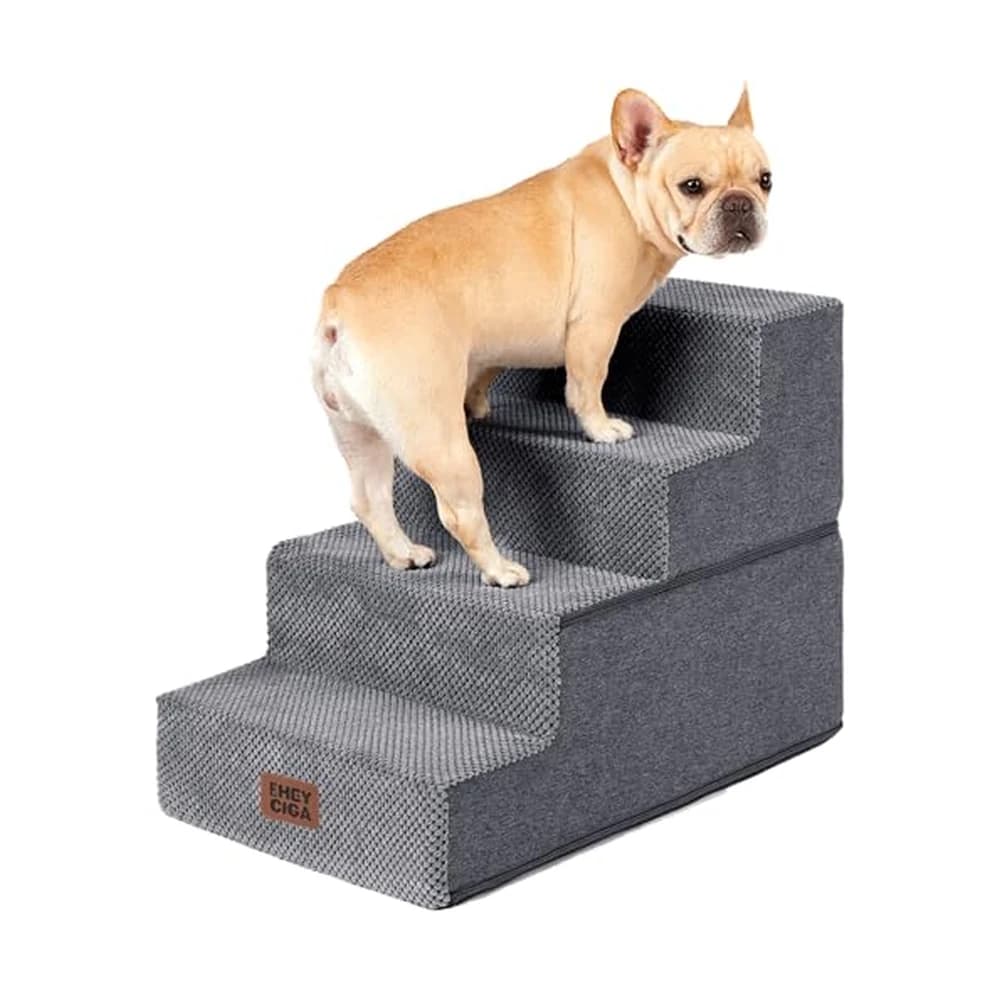
A small or medium dog getting onto a sofa or bed
Foam steps are light, quiet and easy to reposition. Going down is the hard half — watch the first few descents.
Our pick for this: EHEYCIGA 4-Step Foam Stairs · $32.29
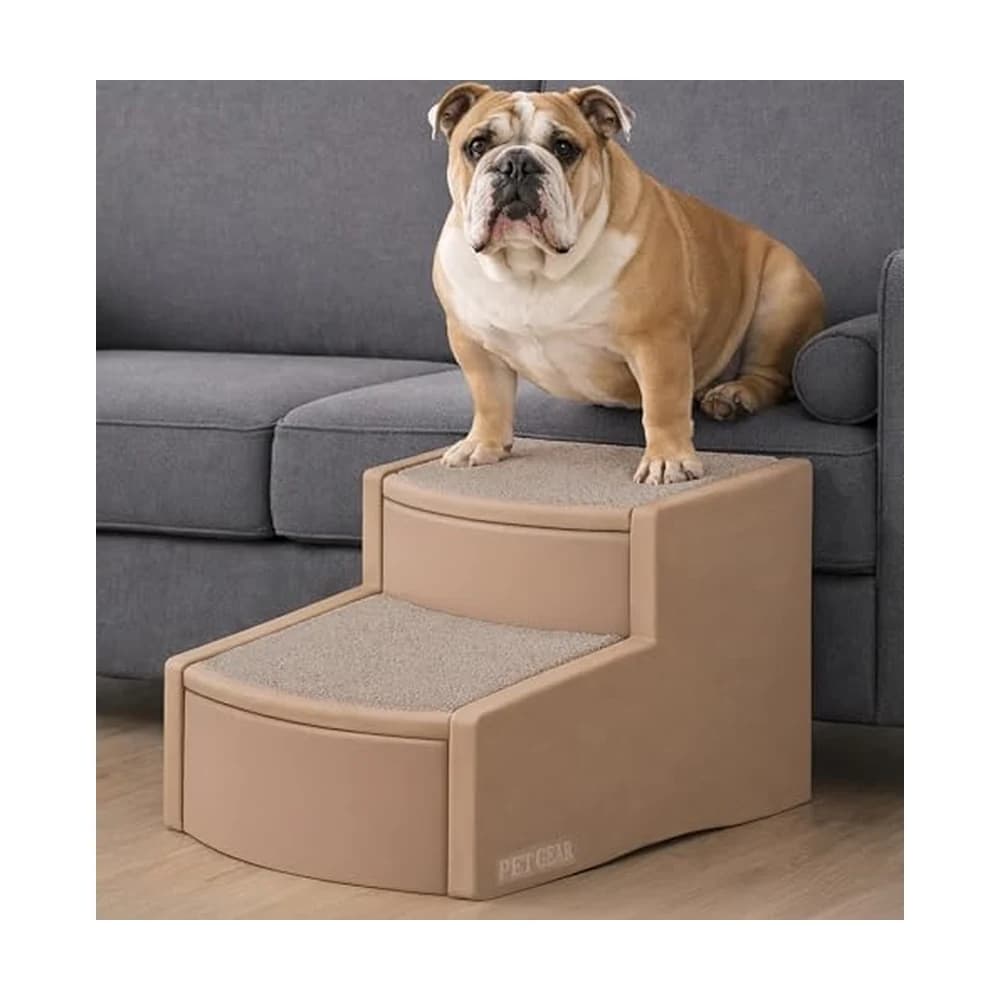
A dog who needs a wide, shallow tread
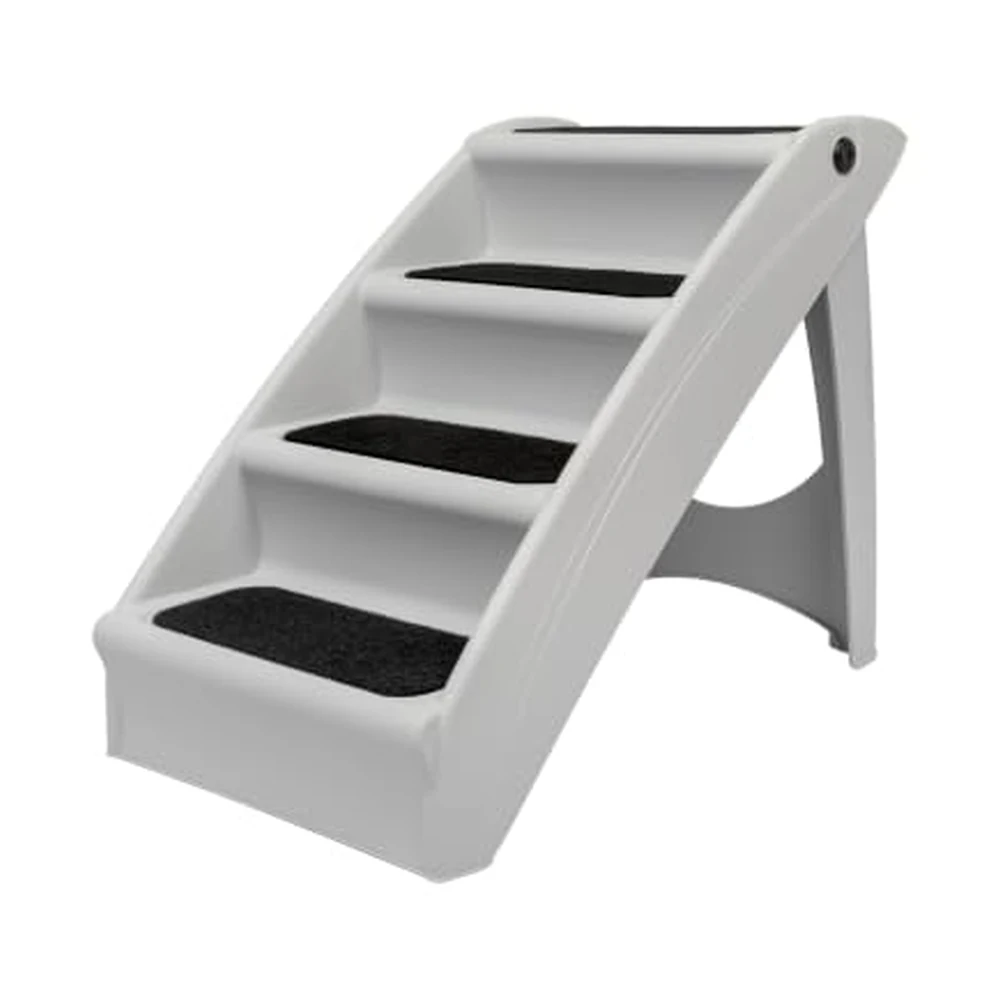
Deeper treads and a frame that folds. The middle answer between foam steps and a full ramp.
Our pick for this: PetSafe CozyUp Folding Steps · $59.99
If none of these is your dog: nothing on this shelf is the right answer for every household, and we would rather you bought nothing than the wrong thing. Start from the stage your dog is actually in, or browse the other shelves.
Filter picks5 of 5
Showing 5 of 5 picks — no filters applied
Showing 5 of 5 picks — no filters applied
The picks, feature by feature
Bedside steps for a small or ageing dog — 18 inches over four soft foam steps, with a washable cover
- Material
- Not stated
- Weight capacity
- Not stated
- Skip if
- Your dog is over about 35 lb. That is the stated support limit, and foam steps flex under weight.
The variant we link: 18" · Grey
A low sofa and a wide dog — two extra-deep 16-inch-wide steps at a six-inch rise, rated to 200 lb
- Material
- Heavy-duty plastic
- Weight capacity
- 200 lbs
- Skip if
- You need to reach a tall bed. At 16 inches total, this is a sofa-height product.
The variant we link: Sand Dune
A bigger dog who needs steps rather than a ramp — 25 inches tall with wide carpeted treads and side rails
- Material
- Not stated
- Weight capacity
- 150 lbs
- Skip if
- Your floors are polished hardwood. Owners report them sliding on slick surfaces.
The variant we link: Grey · 25 Inch
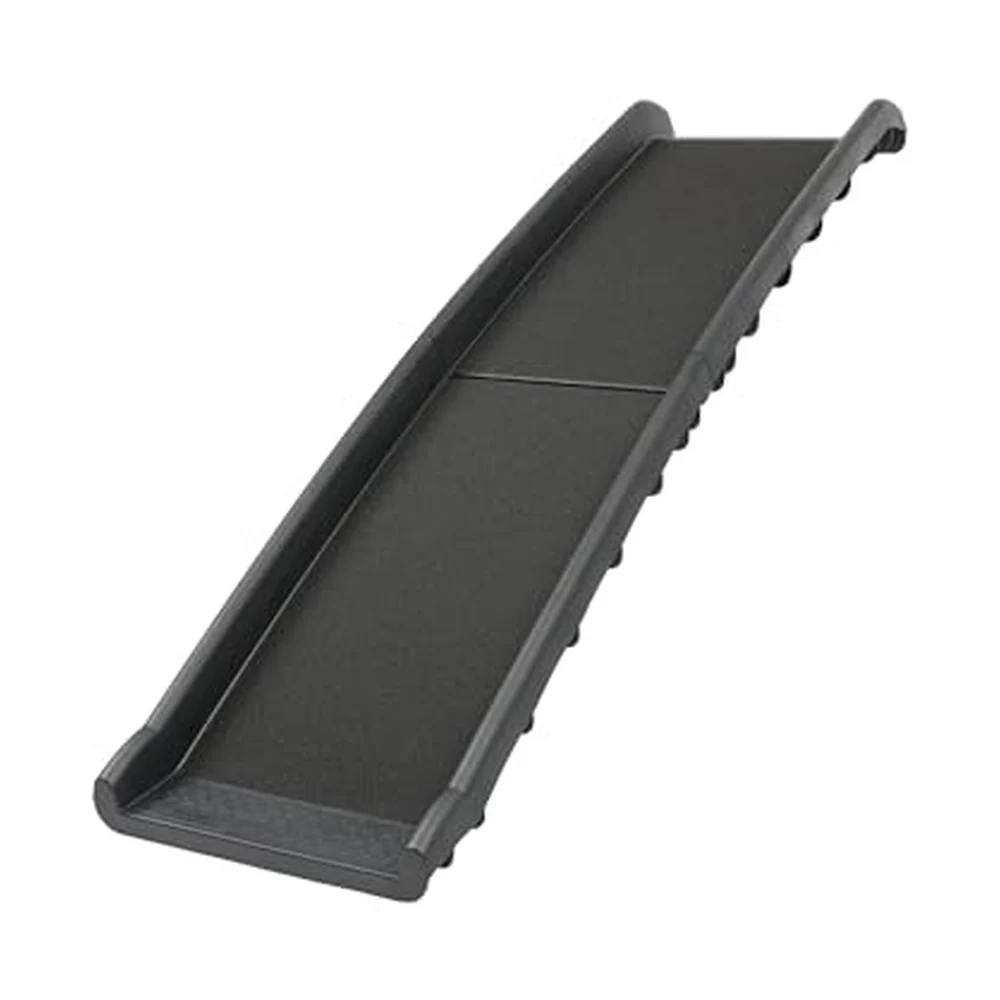
Getting a stiff dog into an SUV or estate — 62 inches, folding to 31, rated to 150 lb and weighing only ten
- Material
- Plastic with textured non-slip surface
- Weight capacity
- Up to 150 lb
- Skip if
- Your dog is broad or nervous. Several owners find it too narrow for larger dogs.
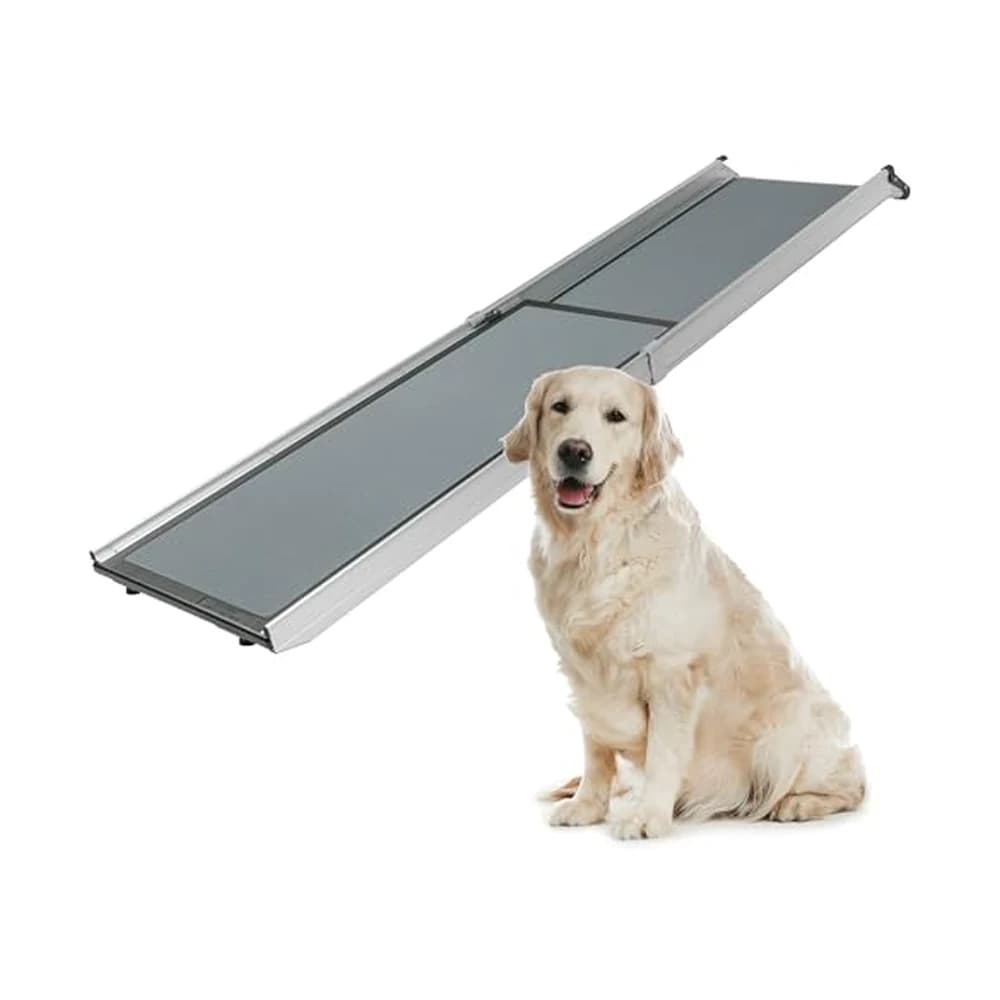
A tall truck or SUV and a big dog — it extends to 87 inches for a gentler slope, with a 300 lb rating
- Material
- Not stated
- Weight capacity
- 300 lbsbest of these
- Skip if
- You have a low car. The extra length and weight buy you nothing on a hatchback.
Each pick below carries its own specs, and the tags mark the best of these picks on that point. Specs come from manufacturer listings; ratings are the Amazon aggregate rating and count, refreshed periodically — we don't test products.
How winners are decided: ✓ marks the lowest price, the highest owner rating, the largest stated weight capacity and the longest warranty. Rows where more is not better — size, dimensions, weight, material — and the editorial rows get no ✓ at all. A blank is unknown, never a loss, and a row needs at least two known, differing values before anything can win. How the best-of-these tags are decided: the lowest price, the highest owner rating, the largest stated weight capacity and the longest warranty. Points where more is not better — size, dimensions, weight, material — and the editorial notes carry no tag at all. A blank is unknown, never a loss, and a point needs at least two known, differing values before anything can lead. As an Amazon Associate we earn from qualifying purchases. Specs are the manufacturer's claims and owner-reported data — we research and analyse; we don't test products on dogs.
Why ramps & stairs matter at this stage
Watch an ageing dog and you will usually see the same sequence. First they hesitate before jumping into the car. Then they take a run at it. Then they stop trying, and wait to be lifted. That progression is worth catching early, because the repeated impact of jumping down from a car or a sofa is precisely the load an arthritic joint handles worst, and because a dog who has been dropped or has slipped once will remember it.
Ramps and steps do the same job differently. A ramp is a continuous slope — better for dogs with real hind-limb weakness, because there is no lifting of the body at all, and the only option for a heavy dog and a high tailgate. Steps ask a dog to lift, which many dogs find more intuitive and less frightening than walking down a narrow incline, and they take up far less room next to a bed.
The part people skip is the training. A ramp introduced on a rainy night at a vet car park will not be used. Lay it flat on the ground first, walk the dog over it for treats, then raise one end slightly, over several sessions. Ten minutes a day for a week buys you years of use.
Width and surface matter more than length. A ramp too narrow for a wide dog to feel stable on is a ramp they will refuse.
What owners keep saying
Owners of stiff and long-backed dogs lean toward ramps over steps because a ramp removes the impact of stepping down, but the reports are blunt that the ramp only works if it is long enough to be shallow, wide, and completely rigid underfoot. Slipping is the failure that kills adoption: a smooth or carpeted surface that shifts under an unsteady dog turns into a refusal, and owners fix it with grippy tread and by bracing the ramp so it cannot wobble. Foam steps get praise for being soft and quiet and criticism for squishing under a heavy dog; plastic steps get the opposite complaint of wobbling and being too narrow and too steep. The mistake owners describe most is expecting the dog to just use it, when the threads that end well involve treats, a flat-on-the-floor introduction, and blocking the old jumping route while the dog learns.
we read 65 threads across r/seniordogs, r/dogs, r/olddogs
Paraphrased from public discussion, never quoted and never counted into a statistic we did not measure. Owners are not a controlled study — they are the only long-term use data anybody has.
What we didn’t pick
Things that look like they belong on this shelf and are not on it, with the reason.
Stairs for a dog who cannot control a descent
Going down is the harder half, and a dog with weak hind legs meets it every time. Where the descent is the problem, a ramp is the honest answer even though it costs more and stores worse.
Narrow or steep ramps
The two numbers that decide whether a ramp is usable are its width and the angle it makes against your car, and both are on the product pages here. A ramp that is technically long enough at an angle your dog will not walk is a purchase that gets returned.
Assuming a ramp works without training
Every ramp on this shelf needs teaching on flat ground first. We would rather say that than rank one as the easy one.
How to choose a ramp or steps
Match the format to the dog's confidence, then check the weight rating, the width and the grip.
Ramp for weak hindquarters, steps for confidence
A ramp requires no lifting at all, which suits real hind-limb weakness. Steps ask for a small lift but feel more natural to many dogs and take less floor space.
Width over length
A narrow ramp feels precarious to a broad dog and gets refused. Width is what makes a ramp feel safe to walk on, and refusal is the most common failure.
The weight rating with margin
Ratings assume even, static load. A dog scrambling puts more through the middle than standing still — buy well above your dog's weight.
High-traction surface
One slip is enough to make a dog refuse forever. Sandpaper-style grip, textured treads or carpeted surfaces all work; smooth plastic does not.
Storage that suits your life
Folding and telescoping ramps live in a boot; foam steps live by a bed. Something you have to move twice a day gets abandoned by week three.
Common questions
- Ramp or steps for a senior dog?
- A ramp if the hind legs are genuinely weak, because there is no lifting involved. Steps if your dog is still reasonably strong but hesitant, or if floor space is tight — many dogs find climbing more intuitive than walking down a narrow slope. If you can, watch which one your dog volunteers for.
- How do I train a dog to use a ramp?
- Flat on the ground first. Walk them across it for treats until it is boring, then raise one end a few inches and repeat, then a little higher over several sessions. Never lure a frightened dog onto a raised ramp — one bad slip creates a refusal that takes far longer to undo than the training would have.
- Should I stop my old dog jumping on the sofa?
- Ideally you replace the jump rather than the habit — steps beside the sofa let them keep the spot they love without the impact of jumping down, which is the harder direction on sore joints. If jumping has become genuinely difficult or they have started to yelp, that is a vet conversation about pain management too.
Gear
Pairs with
Shelves that go with ramps & stairs — hand-picked adjacencies, not "customers also bought".
$69.95 4.3 out of 5 stars · 3,798
Ramps handle the slopes a dog can still walk; a lift handle covers the day it cannot.
$289.95 4.7 out of 5 stars · 5,902
Both exist to take load off the same joints, at opposite ends of the day.
$15.87 4.7 out of 5 stars · 78,319
The mechanical fix and the metabolic one are usually started in the same month.