We research gear rather than testing it, and some links below are Amazon affiliate links — if you buy through one we may earn a commission, at no extra cost to you. It does not change what we recommend. Full disclosure.
6 picks compared
A dedicated car harness from the brand best known for crash testing its restraints, rather than a walking harness with a tether
- Skip if
- You want one harness for walking and driving. This is a car-first design and costs accordingly.
- Car restraint harness
$55.99lowest here 4.2 out of 5 stars · 1,063 ratings
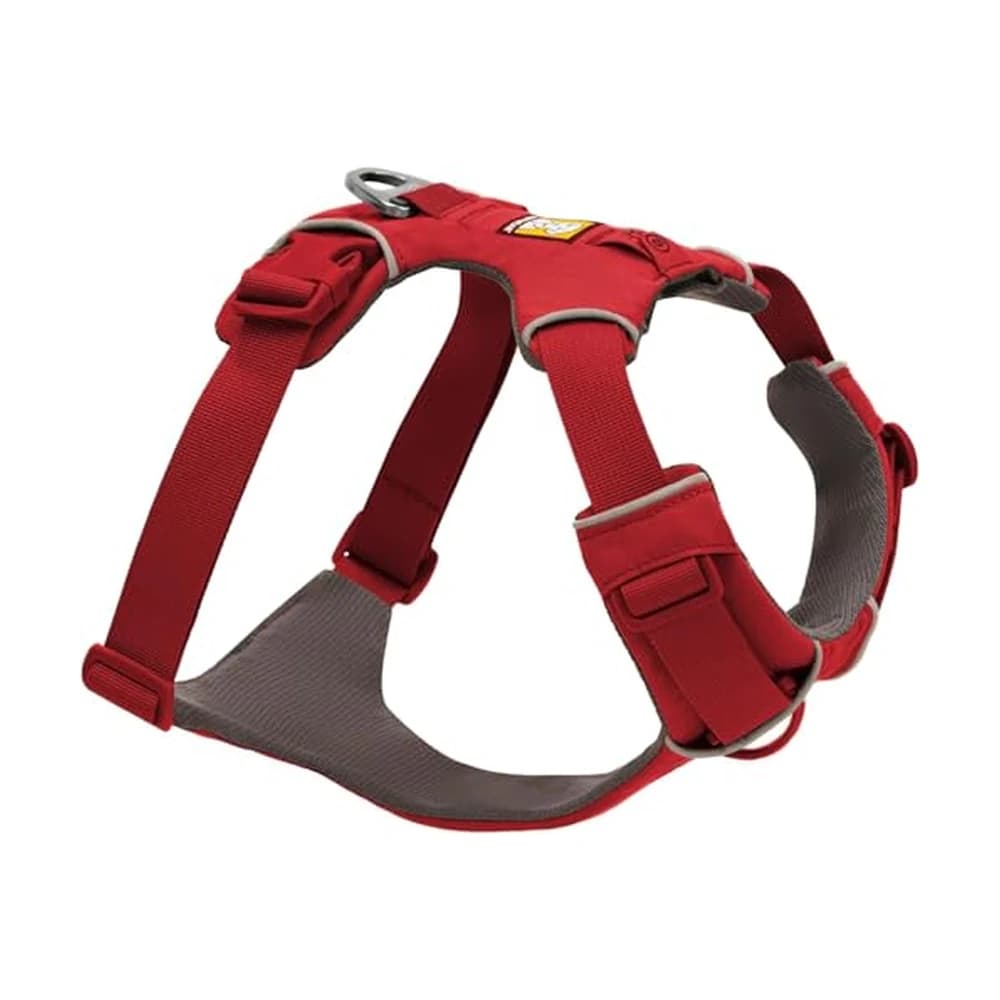
A dual-purpose harness under $60 — the maker states crash testing up to 32 kg / 70 lb, and it has walking clips too
- Skip if
- Your dog is over 70 lb. The stated rating does not extend past it, and neither should you.
A small dog under 15 lb who travels often — a carrier, a car seat and an everyday bed in one object they already sleep in
- Skip if
- Your dog is over 15 lb. The stated capacity is firm, and it is expensive for occasional use.
A small dog who flies in the cabin — a flexible-frame soft carrier that compresses to fit under an aircraft seat
- Skip if
- Your dog is over about 16 lb, or you need a rigid carrier for cargo. Different product entirely.
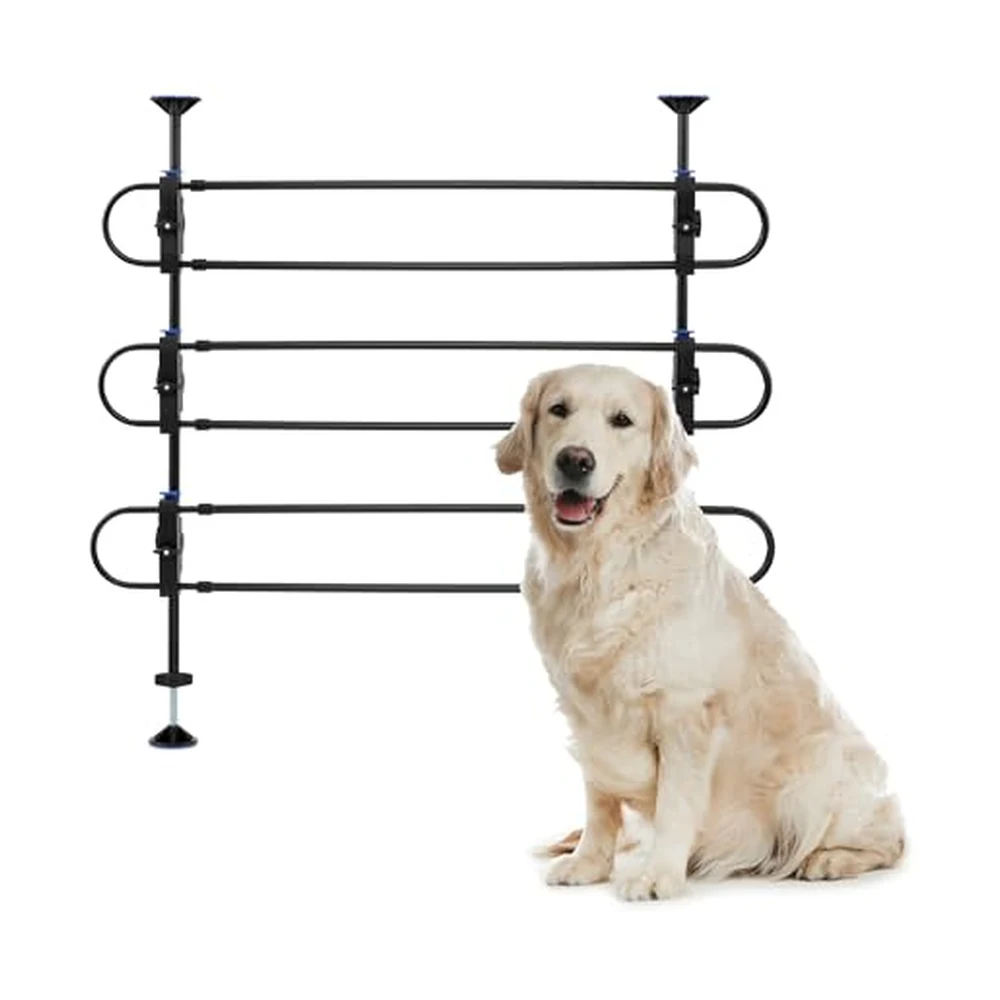
Keeping a big dog in the boot of an SUV or estate — a tension-mounted see-through barrier with no drilling required
- Skip if
- You want actual crash protection. A barrier is containment, not restraint — pair it with a harness.
An adult dog who rides in the back seat weekly and an owner who also needs the seat to fold down for people or cargo
- Skip if
- Your dog rides in a crate in the cargo area, or you want a hammock that blocks the footwell entirely.
Each pick below carries its own specs, and the tags mark the best of these picks on that point. Specs come from manufacturer listings; ratings are the Amazon aggregate rating and count, refreshed periodically — we don't test products.
How winners are decided: ✓ marks the lowest price, the highest owner rating, the largest stated weight capacity and the longest warranty. Rows where more is not better — size, dimensions, weight, material — and the editorial rows get no ✓ at all. A blank is unknown, never a loss, and a row needs at least two known, differing values before anything can win. How the best-of-these tags are decided: the lowest price, the highest owner rating, the largest stated weight capacity and the longest warranty. Points where more is not better — size, dimensions, weight, material — and the editorial notes carry no tag at all. A blank is unknown, never a loss, and a point needs at least two known, differing values before anything can lead. As an Amazon Associate we earn from qualifying purchases. Specs are the manufacturer's claims and owner-reported data — we research and analyse; we don't test products on dogs.
In this article(6 sections)
A loose dog in a moving car is a distraction before anything goes wrong and a projectile the moment it does. The fix is one of three different products that people treat as interchangeable. A seat cover protects upholstery. A barrier keeps the dog out of the cabin. Only a harness or a belted carrier holds the dog in place. This guide sorts the three jobs, then matches them to your dog, from a 70-pound adolescent who launches across the back seat to a small senior who would rather ride in a bed.
Restraint, containment or upholstery: three different jobs
Every product on our car travel shelf does exactly one job, so name the job first.
- Decide whether you need restraint, containment or both.
- Check the stated weight band against your dog's weight.
- Read who made the crash-test claim.
| Job | Product type | Which dog |
|---|---|---|
| Restraint | Crash-tested car harness that threads the seatbelt | Medium and large dogs on the back seat |
| Containment plus restraint | Carrier or car seat belted to the seat | Small dogs, roughly 15-16 lb and under |
| Containment only | Tension-mounted cargo barrier | Big dogs in the cargo area of an SUV or wagon |
| Upholstery | Waterproof seat cover | Any dog; pair it with one of the above |
Only the first two rows protect the dog. The barrier protects the driver from a dog climbing forward; the seat cover protects the car and is not a safety product at all.
Rule of thumb: name the job before the product. Restraint holds the dog; containment keeps the dog out of your lap; a seat cover only keeps mud off the seat.
What "crash-tested" actually means
There is no mandatory US government standard for pet restraints. Testing is voluntary, so the phrase on a box can mean almost anything. The one independent body that publishes its protocols and results is the Center for Pet Safety (CPS), a nonprofit that states it does not accept funding from pet product manufacturers. A product on its certified list has passed a published standard at a stated test-dog weight.
Two products here are on CPS's own pages. CPS lists the Sleepypod Clickit Sport as passed with a five-star rating under standard CPS-001-014.01, certified in July 2014, with the Medium, Large and X-Large sizes rated to 90 pounds. CPS also lists the Sleepypod Mobile Pet Bed as passed, five stars, at a 15-pound test-dog weight under CPS-001-016.02 in August 2024.
Everything else is the manufacturer's claim: CarSafe's listing says certified up to 32 kg / 70 lb, and we did not find it on CPS's pages.
A tether is not a restraint
Many walking harnesses ship with a seatbelt tether. That is a convenience connector on a harness never designed for crash loads. It stops a dog wandering, and nothing on our everyday harnesses shelf should be read as more than that.
The weight band is the whole claim
A harness rated to 70 pounds says nothing about a 90-pound dog, and a carrier rated to 15 pounds is not "roughly fine" for an 18-pound one.
 Whether the harness itself was crash tested is what matters, not how neatly it attaches to the belt.
Which one your dog needs, by size and age
The 70-pound adolescent: a harness, and practice
Between roughly six and eighteen months a dog is full size with none of the settling, and tries the front seat. A crash-tested harness on the back seat is the answer, and fitting is half the job. AVMA's travel guidance is to help a dog get used to a harness or carrier before the trip, so the first drive is to the end of the street.
The settled adult: whatever the car dictates
For an adult dog the choice follows the vehicle: a harness on the back seat, or a barrier in the cargo area plus a harness if crash protection is the point.
The small senior: a carrier that is also a bed
An older small dog does best in a belted carrier they already sleep in at home, because a carrier that only appears on vet days becomes a warning sign. A senior who can no longer jump in needs a ramp from our ramps and steps shelf first.
AVMA's guidance for all three: keep dogs out of the passenger seat if the car has airbags, never on the driver's lap, head inside the window, and never left unattended in the car.
The six picks, and why the harness wins
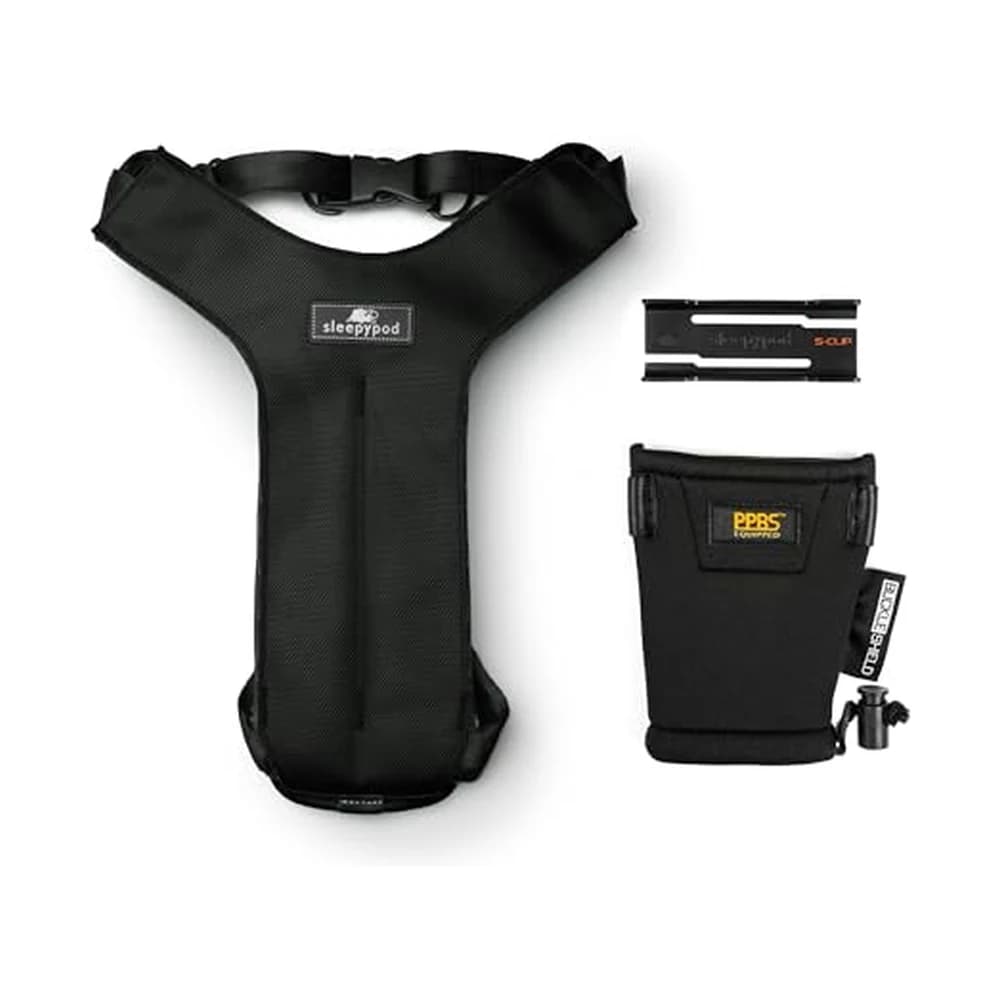
Sleepypod Clickit Sport, our pick for the safety question
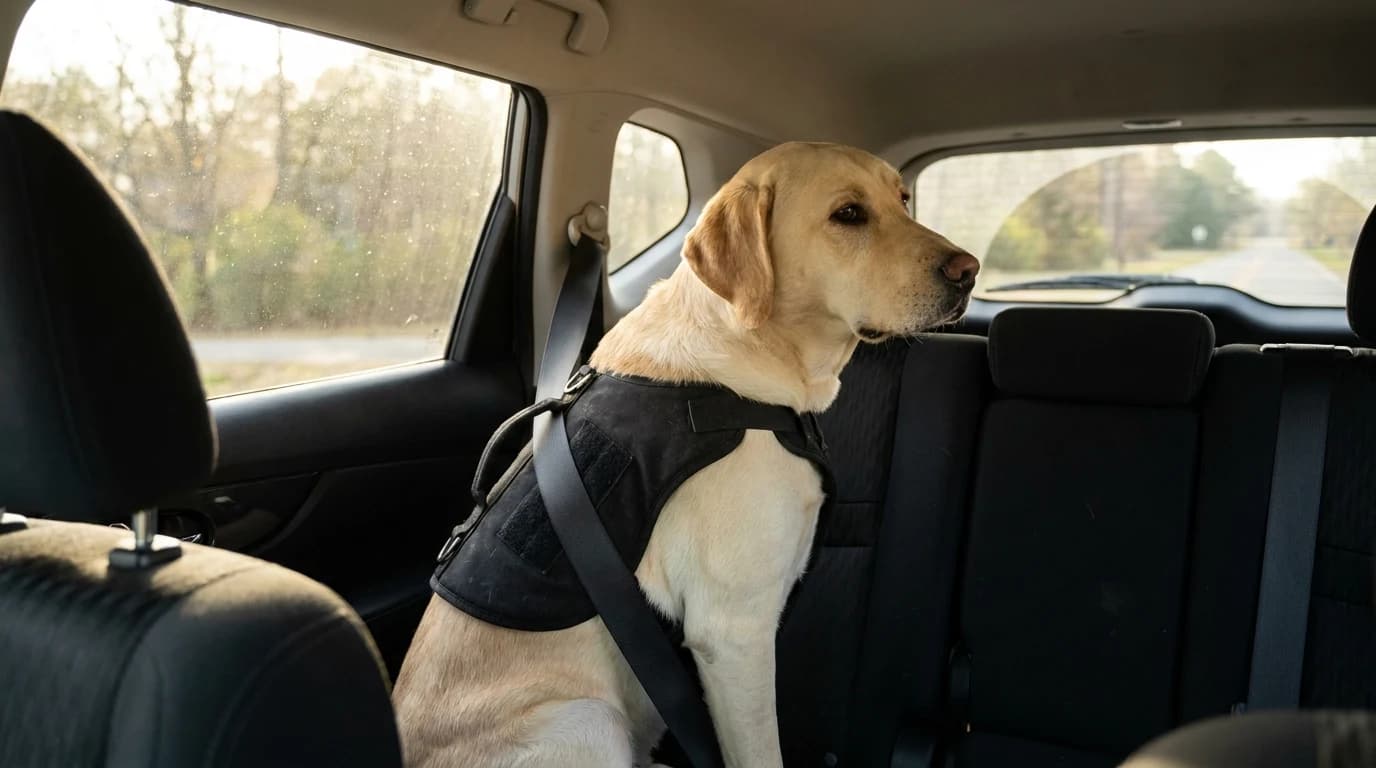
A car harness first, not a walking harness with an accessory. The vest spreads load across the chest and the seatbelt threads through the back rather than clipping to one ring. It is the only harness here on CPS's certified pages. The Amazon review base is thin; weigh the published testing over the stars. See the Sleepypod Clickit Sport.
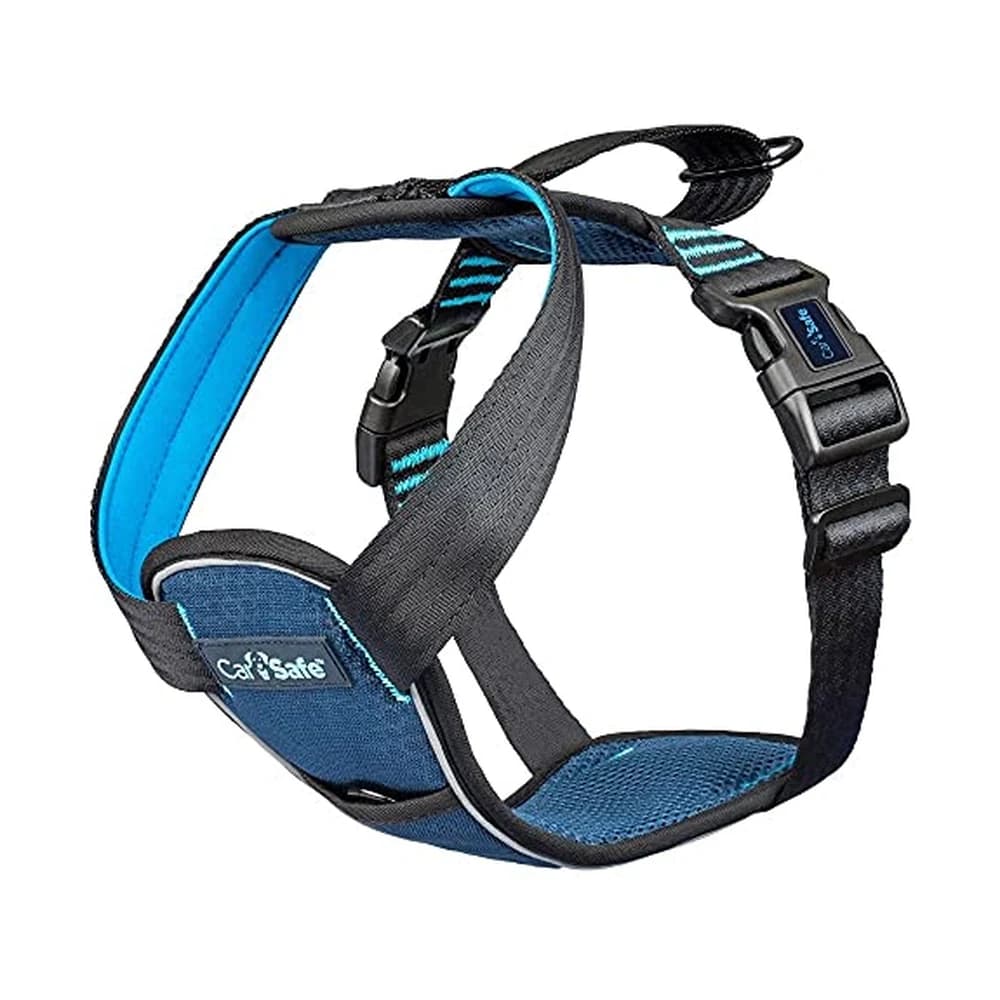
CarSafe Crash Tested Harness, the dual-purpose value
The CarSafe harness makes a bounded claim, crash testing to 70 lb per the maker, and adds front and back leash rings so it doubles for walks. Owners note the neck strap does not adjust and sizing runs small.
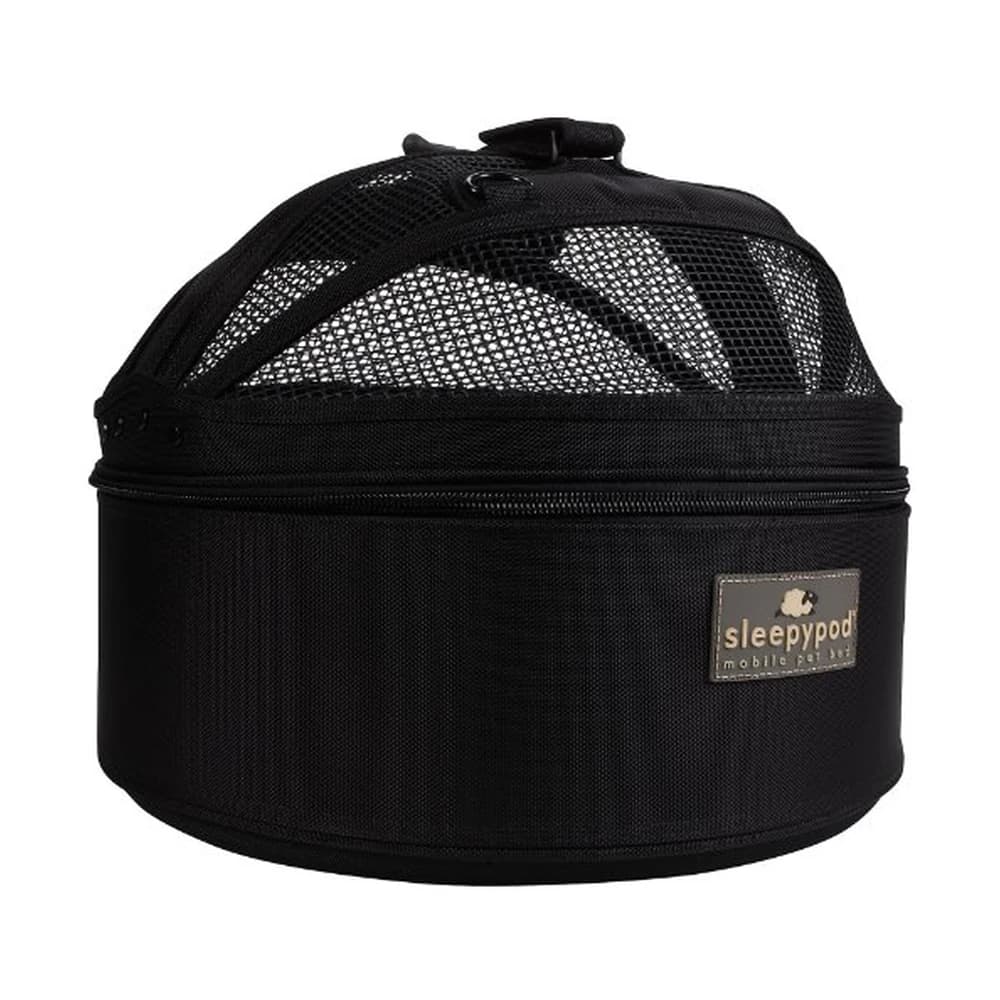
Sleepypod Mobile Pet Bed, the small-dog upgrade
A bed at home with the dome off, a CPS-listed carrier and car seat with it on. Sleepypod rates it to 15 pounds, and that limit is firm. See the Mobile Pet Bed.
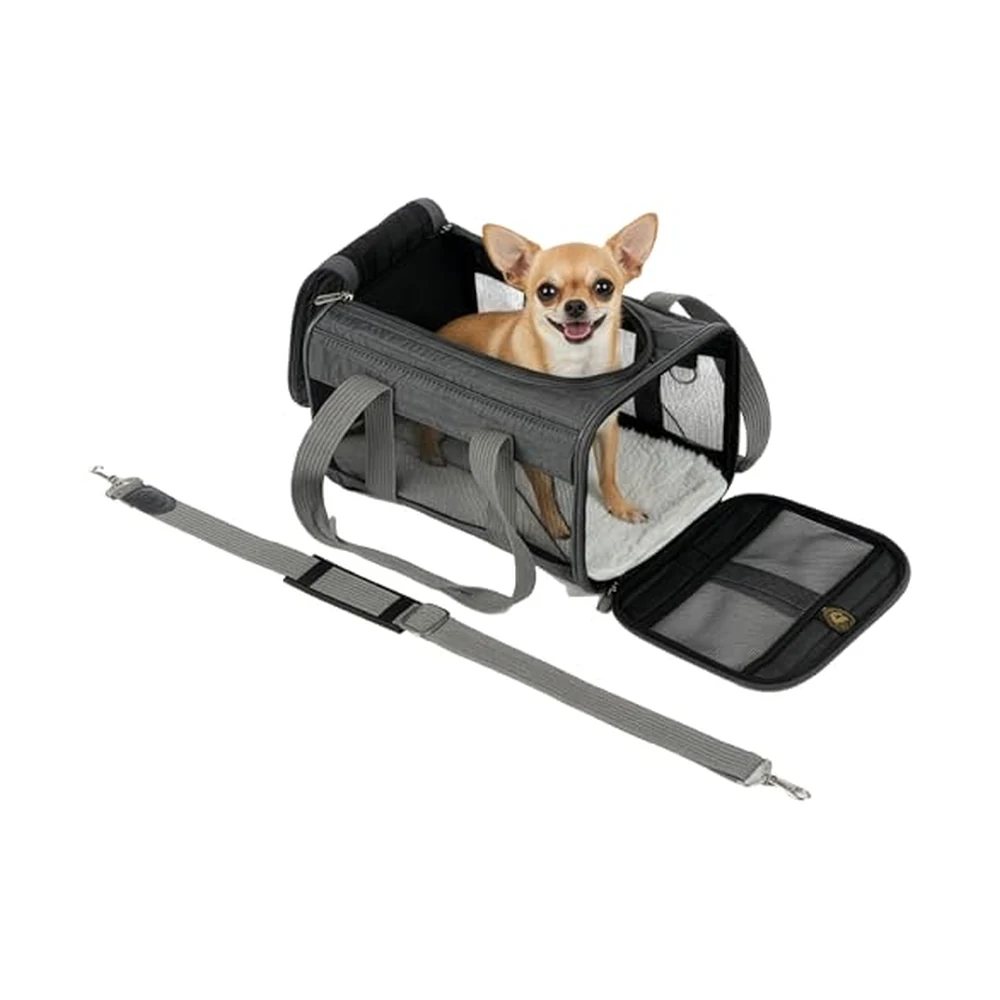
Sherpa Original Deluxe Carrier, the flight-first carrier
The Sherpa Deluxe is a flight carrier: a spring-wire frame that compresses under an aircraft seat, rated to about 16 pounds, with a strap that doubles as a seatbelt pass-through. It belts in; it is not a crash-tested car seat.
PetSafe Happy Ride Barrier, containment for the cargo area
The listing states the PetSafe barrier adjusts from 34 to 59 inches wide, and mounts under tension with no tools. It is not a restraint, and owners report fit and rattle vary by vehicle.
4Knines Rear Seat Cover, the one that is not a safety product
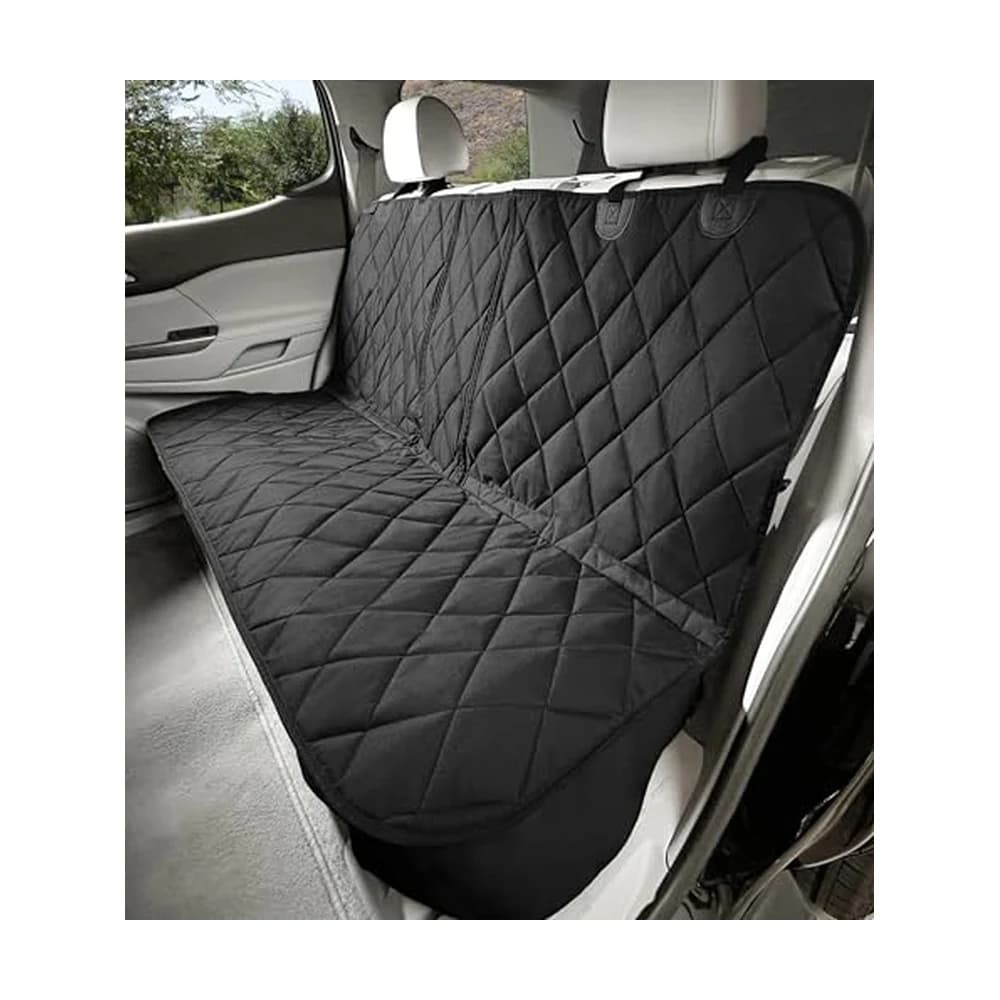
The 4Knines cover stays on while the seat folds, with a waterproof non-slip backing per the maker. Buy it with a harness, not instead of one.
Sizing from the listings
| Product | Stated limit or range | Claim from |
|---|---|---|
| Sleepypod Clickit Sport | Small to 25 lb; Medium, Large, X-Large to 90 lb | CPS page |
| CarSafe harness | Up to 32 kg / 70 lb | Maker's listing |
| Sleepypod Mobile Pet Bed | Up to 15 lb; 17 by 13.5 inches | Maker's listing |
| Sherpa Deluxe (Medium) | Up to 16 lb; 17 x 11 x 10.5 inches | Maker's listing |
| PetSafe Happy Ride Barrier | 34-59 inches wide, 22.5 inches tall | Maker's listing |
Measure the dog, not the breed:
- Harness: chest girth, sizing up between sizes
- Carrier: neck to tail base, plus standing height
- Barrier: the cargo opening of your actual car
Before every trip
What actually helps:
- Restraint on the back seat, or a belted carrier, every trip including the short ones
- Introduce the harness or carrier at home days before the first long drive
- Front seat off limits if the car has airbags, per AVMA
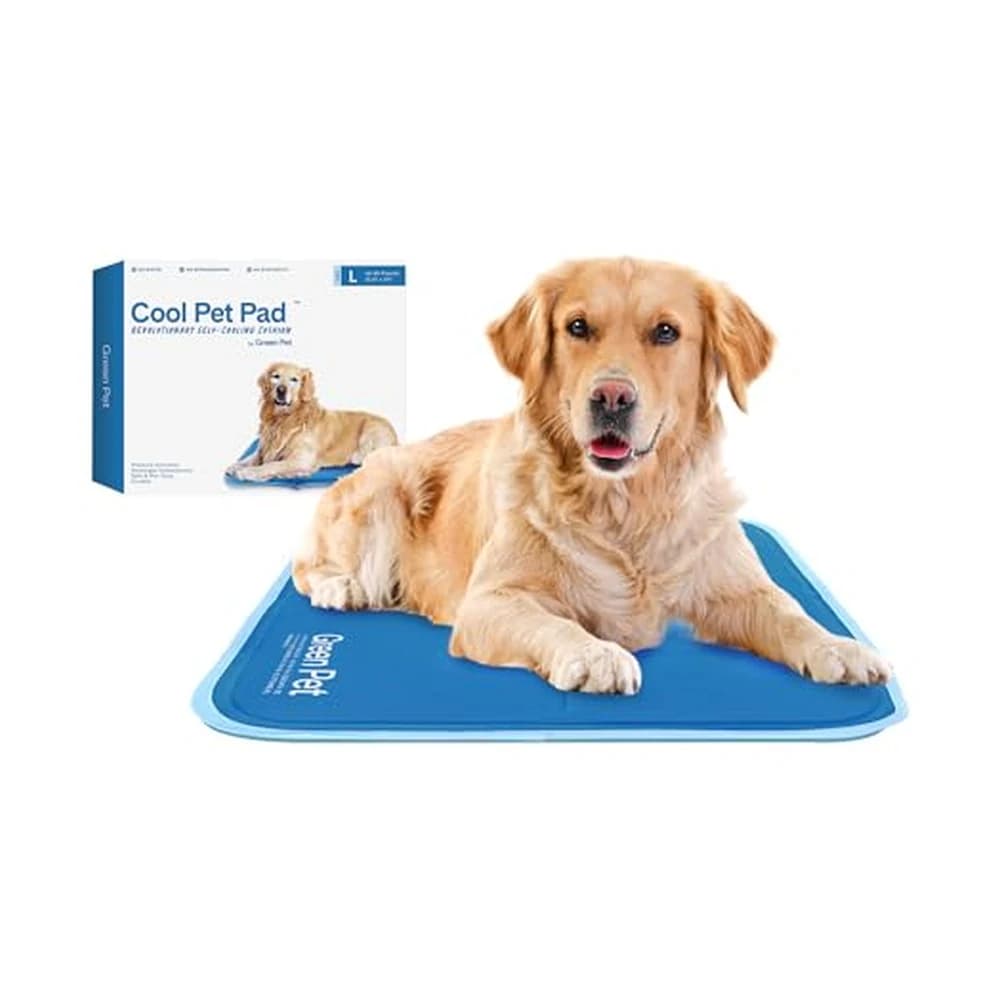
- In summer, the pressure-activated Green Pet Shop Cool Pet Pad on the seat; it needs no water or power (more in our cooling mats guide)
What people try that doesn't:
- A walking harness with a clip-in tether, read as a restraint
- A seat cover alone, because the dog "stays put anyway"
- A barrier alone when crash protection is the actual goal
- A carrier rated to 15 pounds for an 18-pound dog
Before you pull out: harness threaded or carrier belted, back seat not front, head inside, and never a dog left in the parked car.
If your dog pants heavily or drools every trip, that is a conversation with your vet before it is a gear purchase.
Key takeaways
What to remember
- A car harness restrains, a secured carrier contains and restrains, a barrier only keeps the dog out of the cabin, and a seat cover protects the upholstery.
- There is no mandatory US standard for pet restraints; only the Center for Pet Safety publishes an independent test standard and a certified list.
- The Sleepypod Clickit Sport and Mobile Pet Bed are the two products here on CPS's own certified pages; every other rating is the manufacturer's claim.
- A seatbelt tether sold with a walking harness is a convenience connector, not a tested restraint.
- A stated weight band is the whole claim: a harness rated to 70 pounds says nothing about a 90-pound dog.
- AVMA's guidance is back seat not front if the car has airbags, head inside the window, and never a dog left unattended in a car.
Questions people ask
- What is the safest way for a dog to ride in a car?
- On the back seat in a crash-tested harness threaded through the seatbelt, or in a carrier belted to the seat for a small dog. AVMA advises keeping dogs out of the passenger seat if the car has airbags and never on the driver's lap. A barrier or seat cover on its own is not a restraint.
- Which dog car harnesses are actually crash tested?
- The only independent list is the Center for Pet Safety's certified products, which publishes the test standard and the weight it tested at. The Sleepypod Clickit Sport appears there with a five-star rating. Other harnesses, including the CarSafe, carry the manufacturer's own crash-test claim under the manufacturer's own protocol.
- Is a dog car seat better than a harness?
- For a small dog, usually yes. A carrier or car seat that belts in contains and restrains at the same time, and a dog who already sleeps in it at home treats it as furniture rather than a warning sign. Above about 15 to 16 pounds the carriers here have no rating, and a harness becomes the answer.
- Does a dog seat cover keep my dog safe?
- No. A seat cover protects the upholstery and gives the dog a non-slip surface, which helps a senior dog stay steady. It does nothing in a collision. Use it under a harness or a belted carrier, not instead of one.
- Can I use my dog's walking harness with a seatbelt clip?
- You can, but treat it as a way to stop the dog wandering rather than as crash protection. A walking harness was never designed for crash loads, and the tether is a convenience connector. If safety is the reason you are shopping, buy a harness built for the car.
Gear
Also worth a look
The products this piece assumes, in the order we would get them. Prices move; check before you buy.
$54.99 4.3 out of 5 stars · 12,440
An adult or senior dog who overheats indoors in summer and needs a cool surface with no…
Sources
- Sleepypod Clickit Sport - CPS Certified - Center for Pet Safety — That the Clickit Sport passed with a five-star rating under CPS-001-014.01, certified July 2014, Small rated to 25 lb and Medium, Large and X-Large rated to 90 lb
- Sleepypod Mobile Pet Bed - CPS Certified - Center for Pet Safety — That the Mobile Pet Bed passed with a five-star rating at a 15 lb test dog weight under CPS-001-016.02, tested August 2024
- CPS Certified products - Center for Pet Safety — What the certified program requires of manufacturers and that CPS states it does not accept funding from pet product manufacturers
- Traveling with your dog or cat - American Veterinary Medical Association — Acclimating a pet to its carrier or harness before travel, keeping dogs out of the passenger seat if the car has airbags, no riding on the driver's lap, head inside the window, and never leaving a pet unattended in a car
We research and analyse — specs, manufacturer documentation and large-scale owner feedback. We do not test products on dogs, and we are not your vet.
Next step
Sleepypod Clickit Sport
It is the one harness here on the Center for Pet Safety's certified pages, and the product page carries the sizing and the fitting caveats owners report.