Jump to the comparison table →
We research gear rather than testing it, and some links below are Amazon affiliate links — if you buy through one we may earn a commission, at no extra cost to you. It does not change what we recommend. Full disclosure.
4 picks compared
An adult or senior dog who overheats indoors in summer and needs a cool surface with no water, power or fridge
- Skip if
- Your dog chews bedding, or you need something that stays cold for hours of continuous use.
The cheap version of the same idea — a 49-inch raised mesh cot for the patio, the porch or beside the pool
- Skip if
- You want a padded bed. This is a bare mesh cot with nothing soft about it.
A raised mesh bed that converts — bolster cushion on for cool weather, off for a breathable cooling deck in summer
- Skip if
- You need it to survive weather unattended year-round. Owners report the frame and cover degrading outdoors.
A 25 to 50 pound dog who wants a cheaper cool spot for the crate or the kitchen floor
- Skip if
- Your dog is over 50 pounds (buy the size up) or scratches at bedding.
Each pick below carries its own specs, and the tags mark the best of these picks on that point. Specs come from manufacturer listings; ratings are the Amazon aggregate rating and count, refreshed periodically — we don't test products.
How winners are decided: ✓ marks the lowest price, the highest owner rating, the largest stated weight capacity and the longest warranty. Rows where more is not better — size, dimensions, weight, material — and the editorial rows get no ✓ at all. A blank is unknown, never a loss, and a row needs at least two known, differing values before anything can win. How the best-of-these tags are decided: the lowest price, the highest owner rating, the largest stated weight capacity and the longest warranty. Points where more is not better — size, dimensions, weight, material — and the editorial notes carry no tag at all. A blank is unknown, never a loss, and a point needs at least two known, differing values before anything can lead. As an Amazon Associate we earn from qualifying purchases. Specs are the manufacturer's claims and owner-reported data — we research and analyse; we don't test products on dogs.

In this article(4 sections)
A cooling mat is a small purchase that people make for the wrong dog. The dog who most needs help in July is usually not the one panting most dramatically on the patio — it is a particular shape of dog, at a particular point in life, doing a particular thing. The research on this is unusually clear, and almost nobody quotes the part about age.
This one spans the adult stage and the senior years, because that is where the risk actually sits.
Which dogs overheat, and at what age
The largest study of its kind on canine heat-related illness came out of the Royal Veterinary College's VetCompass programme, which examined the anonymised clinical records of more than 900,000 UK dogs. Comparing against Labrador Retrievers, it found these breeds at greatest risk:
| Breed | Risk relative to a Labrador, per VetCompass |
|---|---|
| Chow Chow | about seventeen times |
| Bulldog | fourteen times |
| French Bulldog | six times |
| Dogue de Bordeaux | five times |
| Greyhound | four times |
| Cavalier King Charles Spaniel, Pug, Golden Retriever, Springer Spaniel | about three times each |
Many of those are brachycephalic — flat-faced, short-muzzled dogs whose airways make panting a less efficient radiator. One in seven of the dogs in that study who developed heat stroke died of it.
The findings about the individual dog, not the breed
Two findings in that work are about the dog in front of you. Dogs above average weight for their breed had close to one and a half times the risk of those below it, and dogs over two years old were at higher risk than younger ones.
A more recent RVC study, of 167,751 UK emergency-care records from 2022, sharpened the age picture: dogs aged four to six and eight to ten had a significantly greater risk of heat-related illness than dogs under two. It also found that flat-faced breeds were four times more likely to develop heatstroke, that they made up nearly half of all cases, and that the trigger, by a wide margin, was exercise:
- Exercise — 51% of cases
- A hot environment — 31%
- Hot vehicles — 12%
So the shopping conclusion is not "buy a mat for summer." It is that a middle-aged, slightly heavy, flat-faced or thick-coated dog is the one who needs the walk moved to dawn, and the mat is what helps them recover afterwards. Separately, the American Kennel Club notes that senior dogs, regardless of breed, become more sensitive to outside conditions and more susceptible to both hot and cold weather as they age.
Keep in mind: These are UK datasets. The pattern of who is at risk travels; the incidence numbers belong to that climate.
Gel mat or elevated cot? They solve different problems
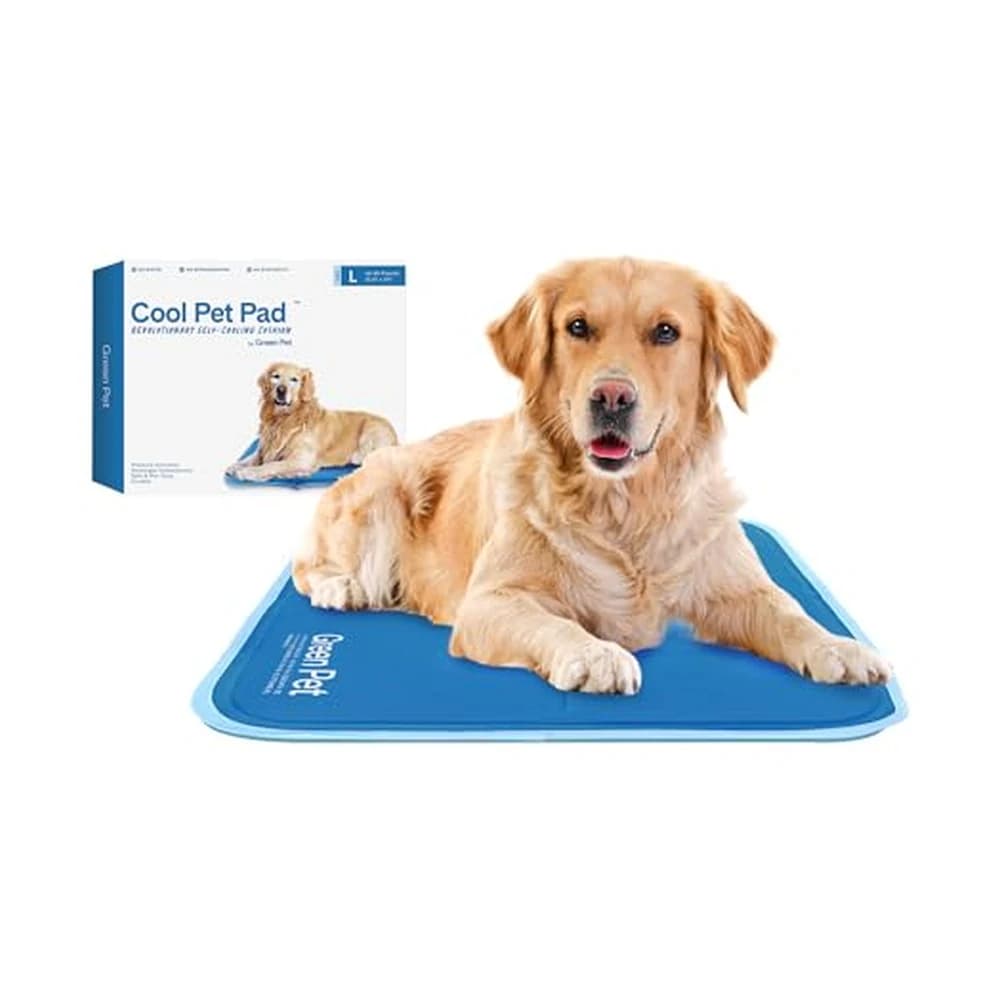
Pressure-activated gel works by conduction: the dog lies on it, their heat moves into the gel, and the surface feels cold. The Green Pet Shop listings say their pads need no water, electricity or refrigeration, and tell you to keep them out of direct sunlight because sun defeats them.
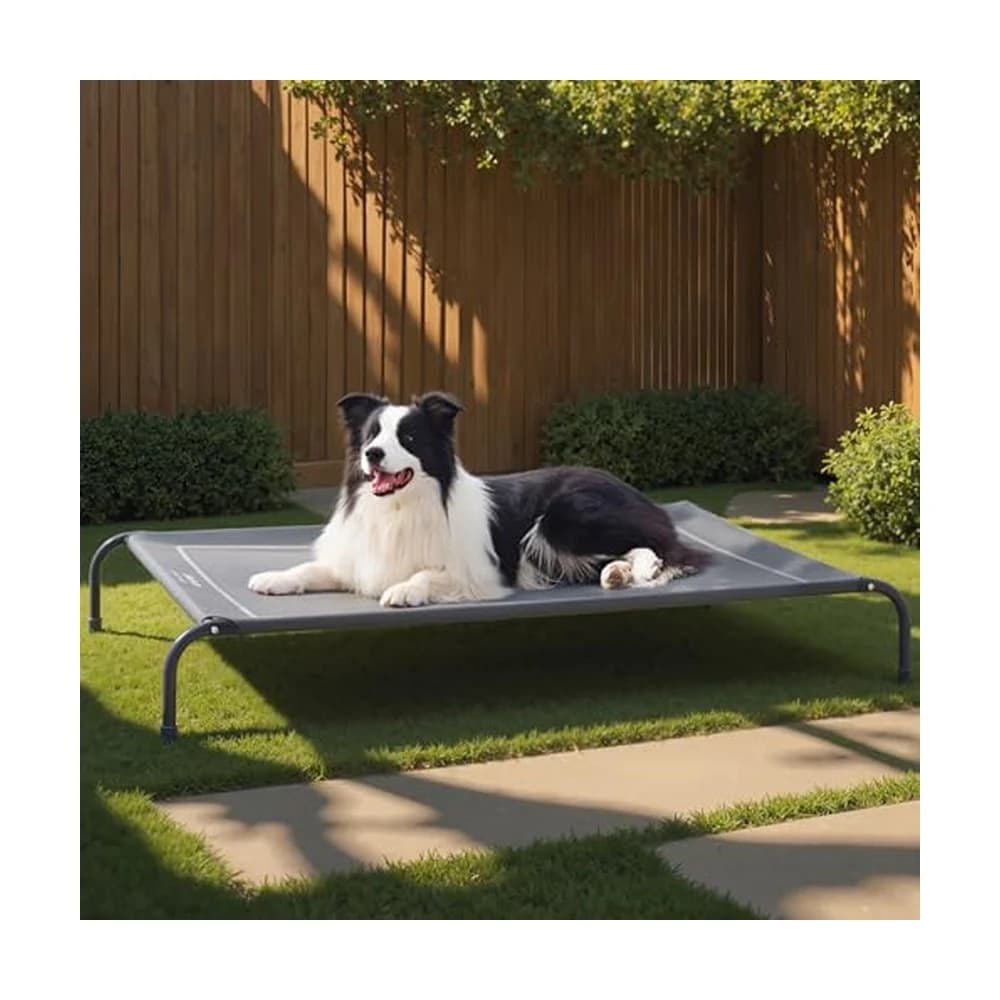
An elevated cot works by convection. Mesh stretched over a frame lets air move under the dog and lifts them off warm ground, with no finite thermal load to absorb.
| Gel mat | Elevated cot | |
|---|---|---|
| How it cools | Conduction — heat moves into the gel | Convection — air moves under the dog |
| Where it works | Indoors, crate, sofa, car | Outdoors, in the shade |
| Its limit | Recharges after 15-20 minutes off it; sun defeats it | Needs shade to work at all |
| Buy it for | A dog who overheats after walks | A dog who spends afternoons in the yard |
 An elevated cot cools by moving air underneath the dog, which is why it belongs in the shade rather than the sun.
Heat is a training and timing problem before it is a gear problem
No mat prevents heat stroke. Given that exercise was the trigger in half of the cases in the 2022 data, what matters comes before any purchase. Cooling gear sits under the protect need in our cooling gear category precisely because it is a comfort and recovery aid, not a safety device.
What actually helps:
- Walks moved to the coolest hours, and cut short on hot days
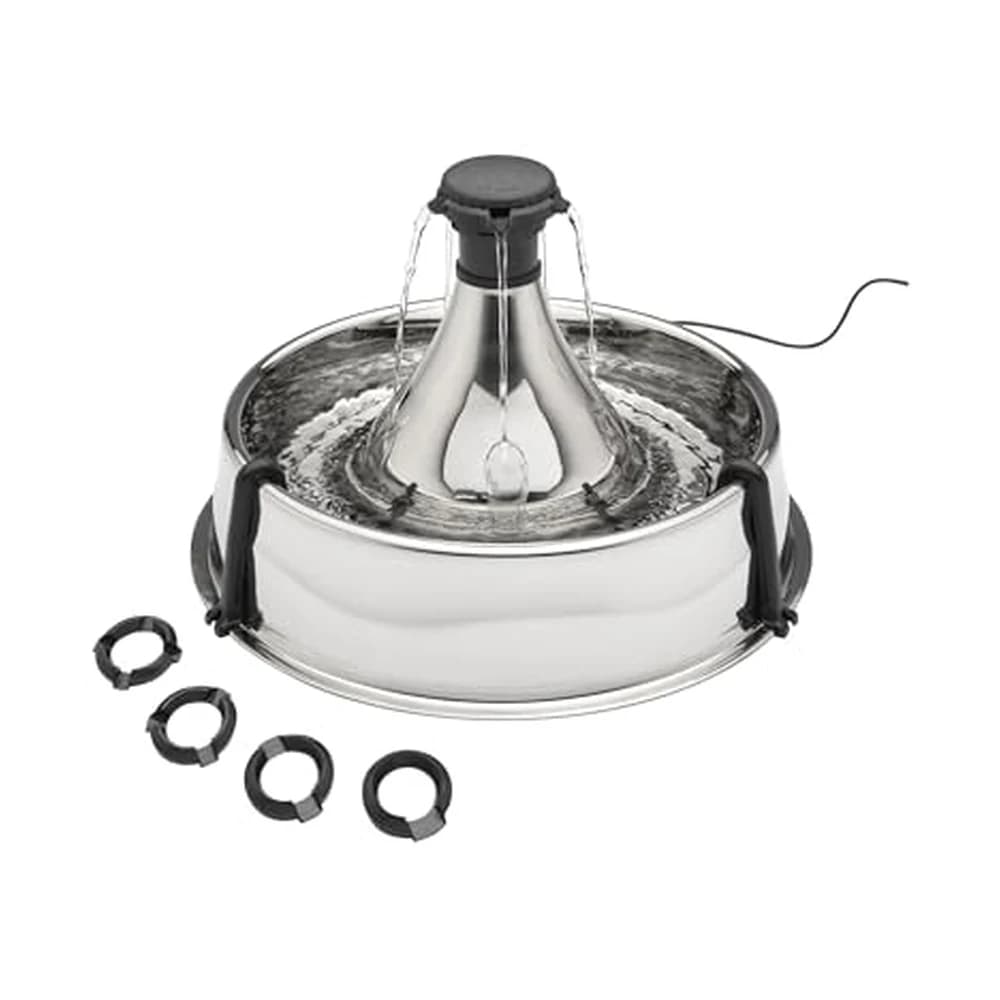
- Shade, and water the dog will actually drink — the PetSafe Drinkwell stainless fountain keeps a gallon moving, which the maker pitches at dogs who do not drink enough
- Never leaving a dog in a car
What people try that doesn't:
- Buying a mat for the summer and keeping the midday walk
- Treating a gel pad as a safety device rather than a recovery aid
- Leaving a gel mat in direct sun, which the listing says undoes the effect
If your dog is panting hard and cannot settle, is unsteady, or is bright red in the gums, that is an emergency call to a vet, not a purchase. We research gear; we are not your vet.
The four picks
Green Pet Shop Cool Pet Pad, Large — best overall
The original of the type. The listing specifies a patented pressure-activated gel with no water or electricity needed, self-recharging after 15-20 minutes of rest, sized for pets from 46-80 lb, and foldable enough to move between a crate, a sofa and a car. It explicitly names senior animals and pets with medical conditions as the group it suits. Owner feedback is positive on cooling effect and ease of cleaning, and divided on two points: some report it tearing sooner than expected, and opinion on size splits between "fine for one dog" and "too small for a big one."
Bedsure Elevated Cooling Cot, 49 inch — best for airflow
Eight inches of clearance under heavy-duty Teslin mesh, weather resistant, hose-washable and assembled in minutes. The listing frames the height as suitable across ages from puppies to seniors. Owner feedback is consistent on the airiness and the easy cleaning and splits on stability — some describe it as sturdy, others as wobbly.
Veehoo Elevated Bed with bolster — the convertible
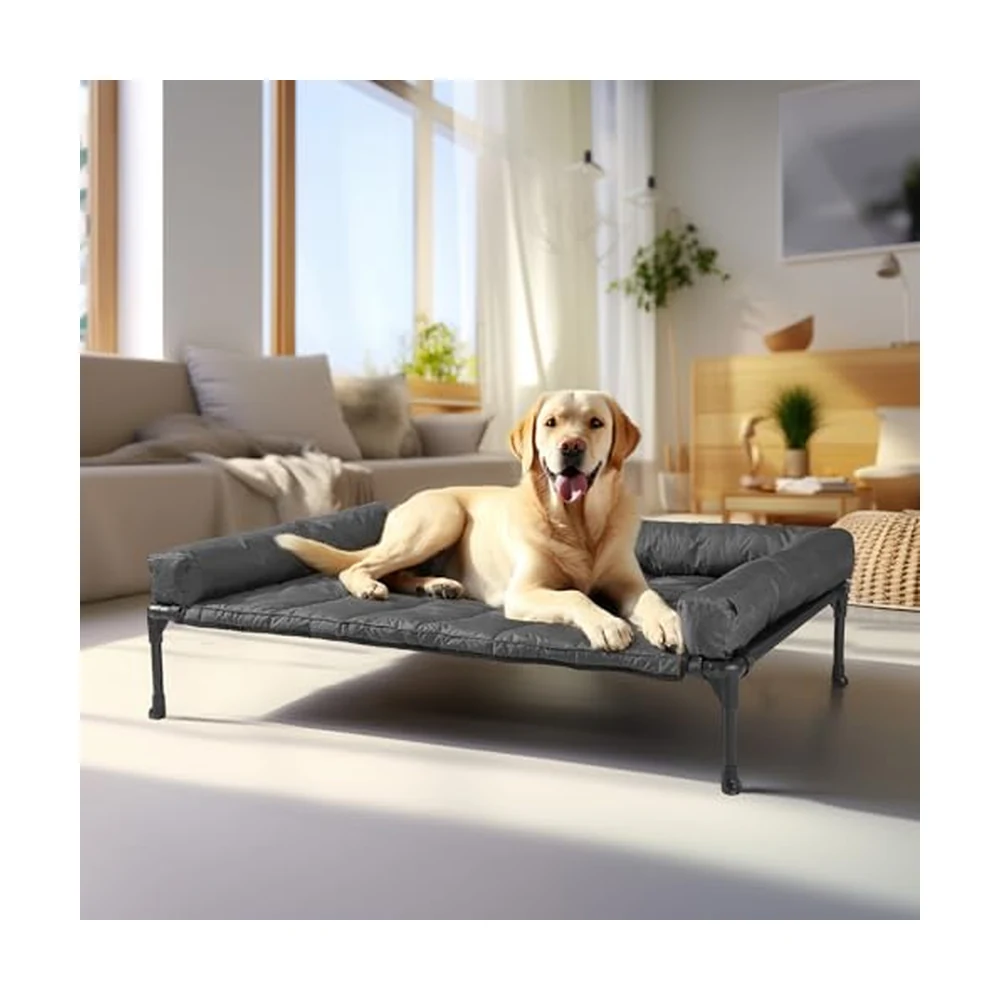
A 42 x 30 x 7-inch powder-coated steel frame rated to 110 lb, with a three-sided waterproof bolster mat that snaps off to turn the bed into a plain mesh cot for summer. Owner feedback praises the size and the assembly; the recurring complaint is the frame twisting out of true under heavy use.
Green Pet Shop Chillz Gel Mat, Large — the budget option, with a caveat
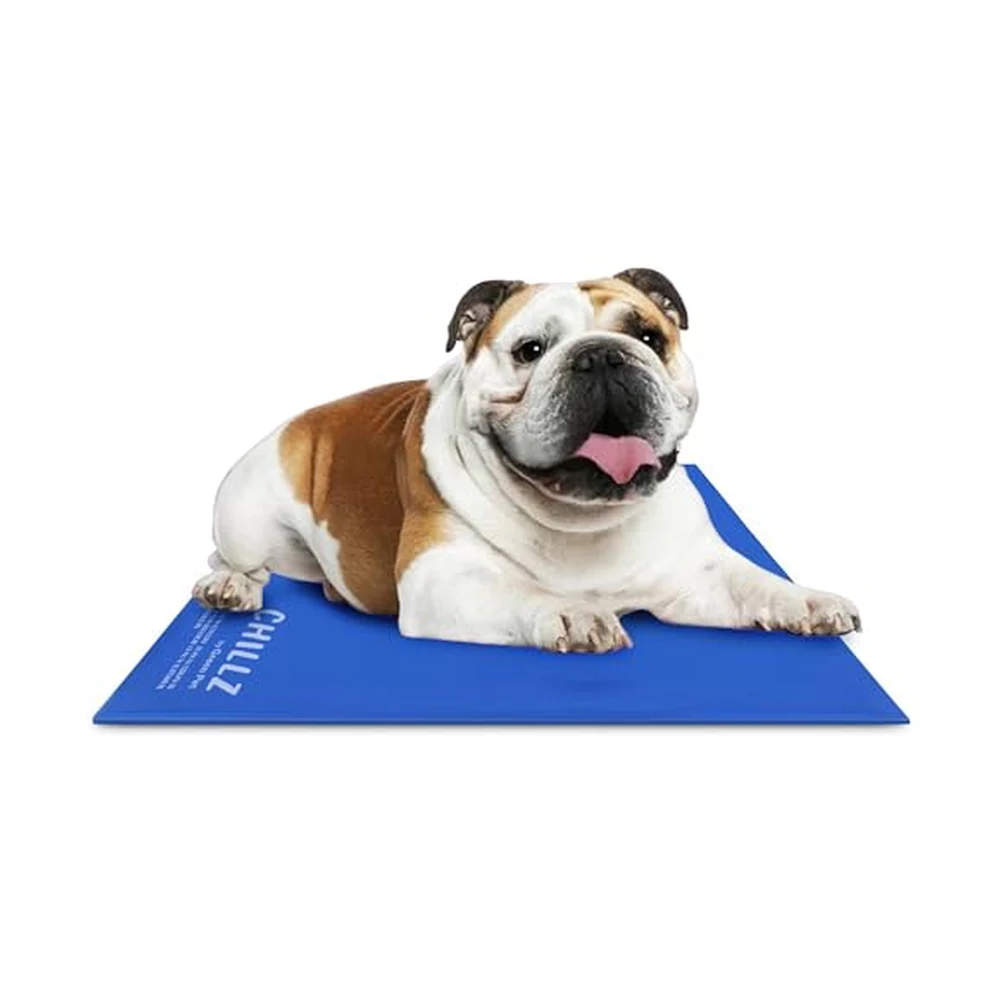
Same pressure-activated principle, 36 by 20 inches, specified for pets from 25-50 lb, and the listing says the cooling sensation lasts up to three hours. It is the cheapest thing here and it has the lowest rating here, because owner feedback repeatedly reports tearing, punctures from nails, and gel leaking. It is non-toxic per the listing, but a chewed mat is a mat you replace.
Rule of thumb: If your dog scratches at bedding, skip the gel and spend the extra on the cot — there is nothing in a mesh cot to puncture.
Key takeaways
What to remember
- Flat-faced breeds were four times more likely to develop heatstroke than normal-faced dogs in UK emergency-care data, and made up nearly half of all cases.
- Age matters and is rarely mentioned: dogs aged four to six and eight to ten had significantly greater risk than dogs under two.
- Dogs above average weight for their breed carried close to one and a half times the risk of lighter ones.
- Exercise was the most common trigger at about 51% of cases, ahead of hot environments and hot vehicles.
- Gel mats cool by conduction and suit indoor, crate and car use. Elevated mesh cots cool by convection and suit shaded outdoor use.
- The cheapest gel mat here has the lowest rating for a specific reason: owners repeatedly report tearing, punctures and leaking gel.
Questions people ask
- Do dog cooling mats actually work?
- A pressure-activated gel pad genuinely draws heat out of a dog lying on it, and an elevated mesh cot genuinely moves air underneath one. Both are comfort and recovery aids. Neither is a safety device, and neither replaces shade, water and walking at cooler hours.
- Which dogs are most at risk of overheating?
- In the Royal Veterinary College's VetCompass work, flat-faced breeds such as the Bulldog, French Bulldog and Pug stood out, along with the Chow Chow and thick-coated and heavy breeds. Being above average weight for the breed and being over two years old both raised risk, with dogs aged four to six and eight to ten at significantly greater risk than dogs under two.
- Do cooling mats need to go in the freezer?
- Not these. Both Green Pet Shop pads are pressure-activated: the listings state they work without water, electricity or refrigeration and recharge on their own after 15-20 minutes of non-use. The listing also warns against leaving them in direct sunlight, which undoes the effect.
- Is a cooling mat safe if my dog chews things?
- Treat it as a risk. Owner feedback on the cheaper Chillz mat repeatedly reports tearing, nail punctures and gel leaking out. The gel is described as non-toxic on the listing, but a dog who works at bedding is better served by an elevated mesh cot, which has nothing to puncture.
- What are the signs my dog is overheating?
- Heavy, frantic panting that does not settle, unsteadiness, drooling, vomiting, and very red gums. Heat stroke is a veterinary emergency - in the VetCompass data, one in seven affected dogs died. Get to a vet rather than trying to manage it at home, and cool the dog on the way if you can.
Gear
Also worth a look
The products this piece assumes, in the order we would get them. Prices move; check before you buy.
PetSafe Drinkwell Steel Fountain
$75.99 4.2 out of 5 stars · 6,212
The dog who does not drink enough — a gallon of filtered, moving water in a stainless basin…
Sources
- Flat-faced dogs such as bulldogs, French bulldogs and pugs at increased risk of heat stroke - RVC VetCompass — Breed risk multipliers against Labradors, the above-average-weight and over-two-years findings, and that one in seven affected dogs died
- Incidence and risk factors for heat-related illness (heatstroke) in UK dogs under primary veterinary care in 2016 - Scientific Reports — The open-access paper behind those figures, including the study population of over 900,000 dogs
- New research from the RVC suggests human heat-health alerts could help prevent heatstroke in dogs - Royal Veterinary College — The 2022 emergency-care study: ages 4-6 and 8-10 at greater risk than under-twos, flat-faced dogs four times more likely and nearly half of cases, and exercise as the trigger in 51% of cases
- 6 Ways to Care for Your Senior Dog - American Kennel Club — That senior dogs, regardless of breed, become more susceptible to hot and cold weather
We research and analyse — specs, manufacturer documentation and large-scale owner feedback. We do not test products on dogs, and we are not your vet.
Next step
Green Pet Shop Cool Pet Pad, Large
It is our pick here, and the product page carries the sizes, the recharge behaviour and the caveats owners report.