Jump to the comparison table →
We research gear rather than testing it, and some links below are Amazon affiliate links — if you buy through one we may earn a commission, at no extra cost to you. It does not change what we recommend. Full disclosure.
5 picks compared
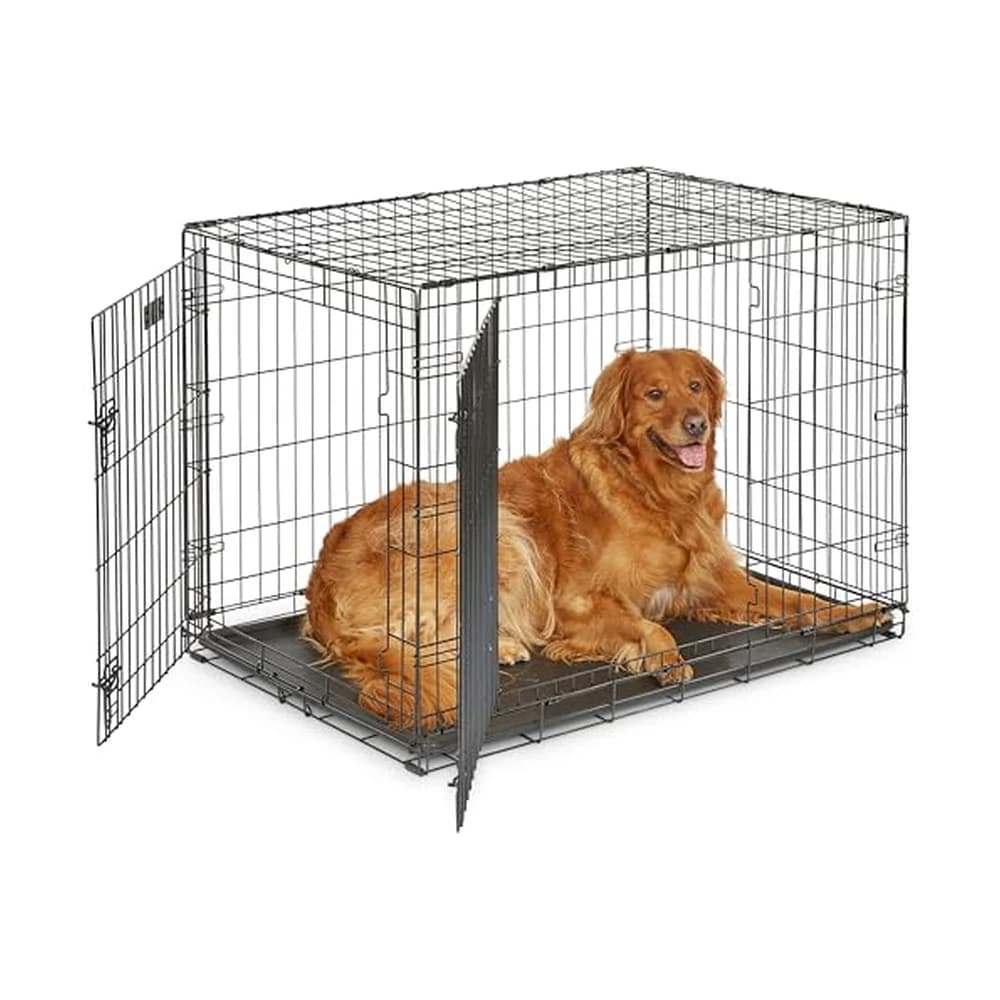
The one crate you buy at eight weeks and still use at eight years — the included divider grows with the dog
- Skip if
- You need something for airline cargo, or a determined escape artist has already bent a wire crate.
$46.99 4.6 out of 5 stars · 46,189 ratings
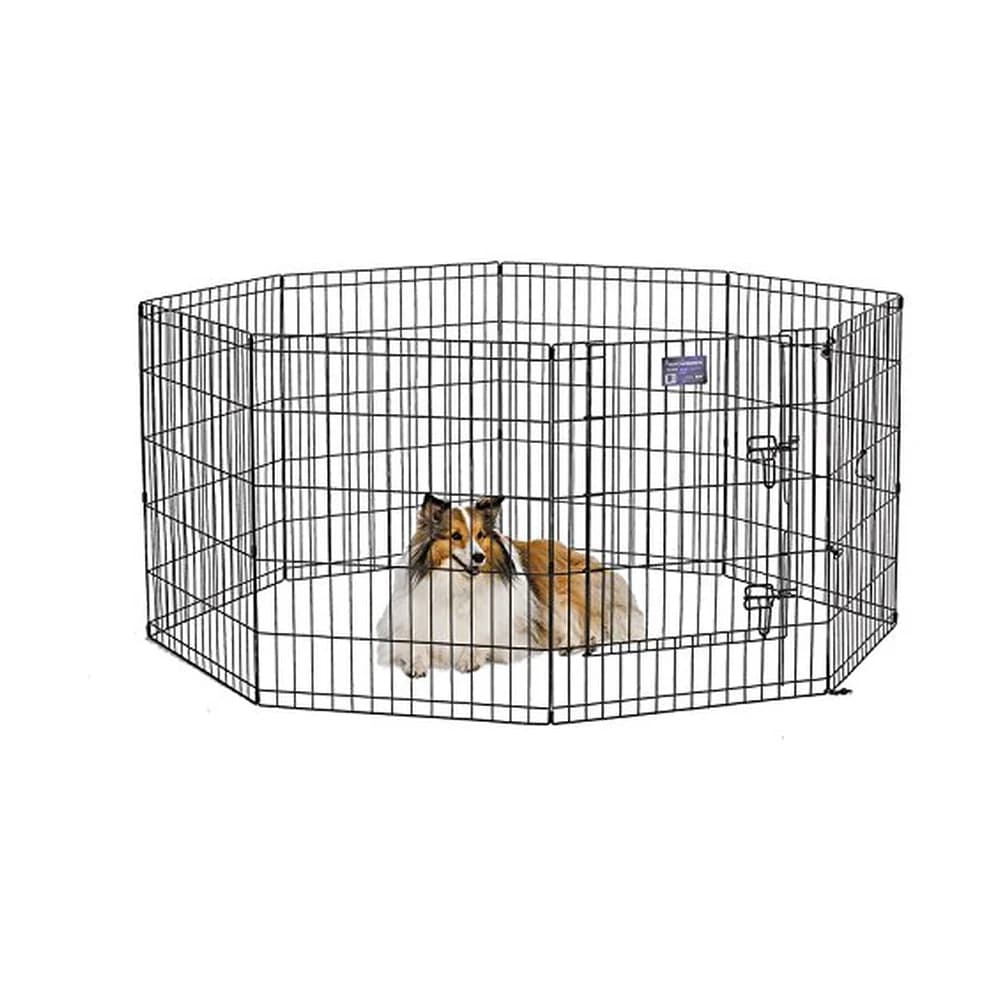
The default puppy pen — 16 square feet, a step-through door, and it clips onto a wire crate to make one bigger space
- Skip if
- Your puppy is already jumping 30 inches, or you need a barrier a determined adolescent cannot lean over.
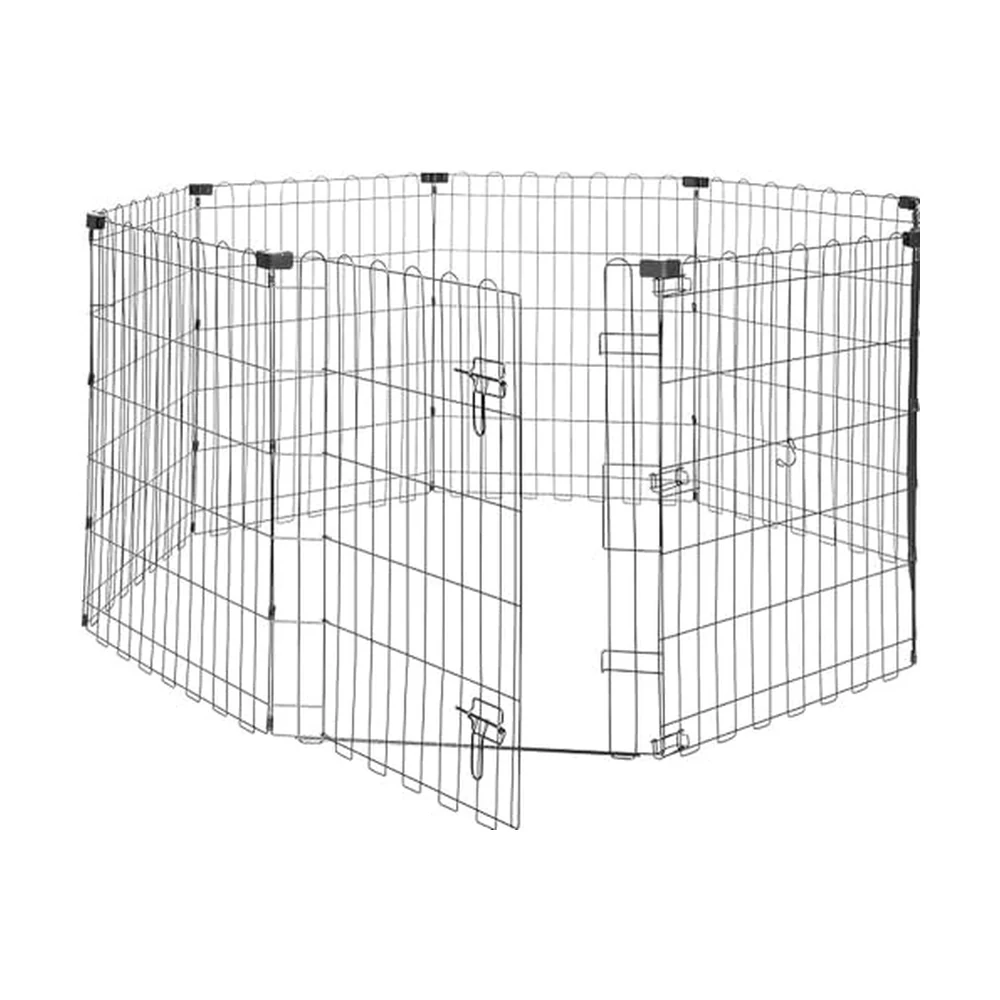
A cheap, reconfigurable second pen — octagon, square or rectangle, or opened flat to block a room off
- Skip if
- You have a bigger dog. Owners are clear this is a small-dog and puppy pen, not a barrier for 50 pounds of adolescent.
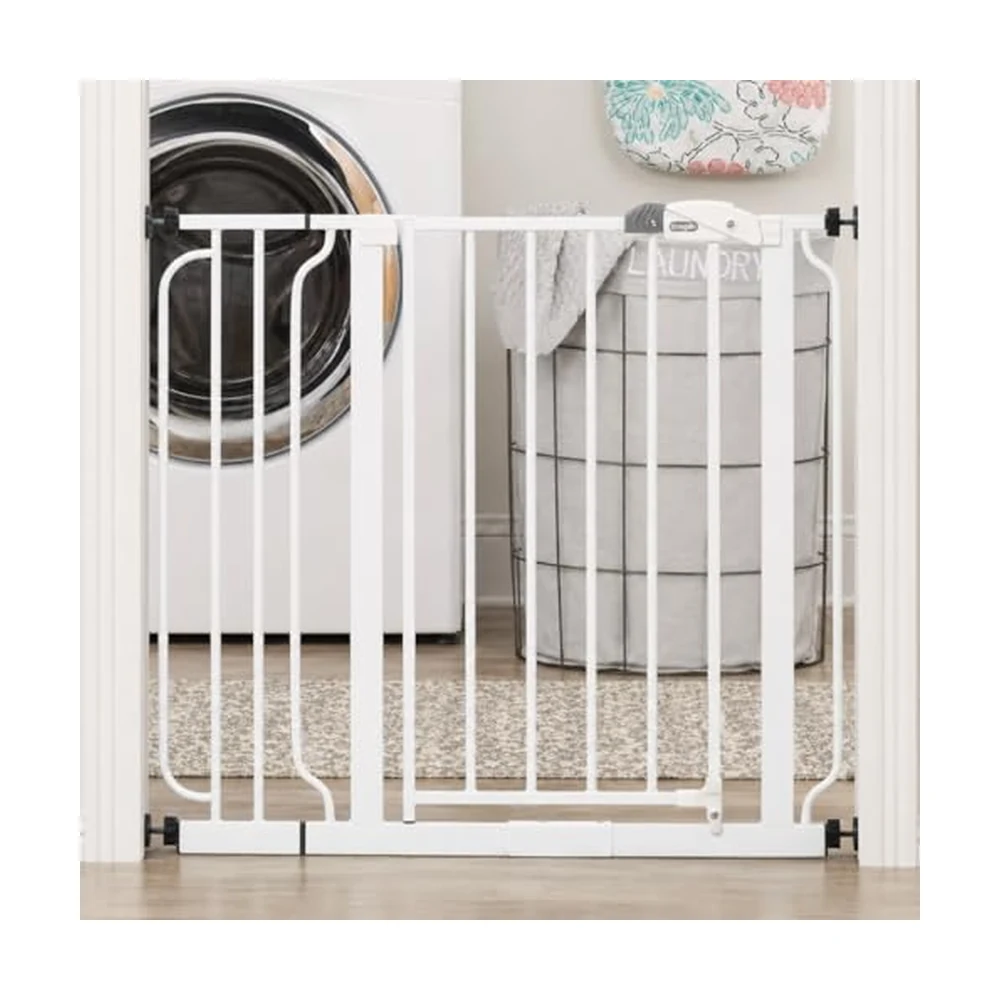
A wide doorway at the bottom of the stairs — it spans 29 to 38.5 inches and stands 30 inches tall
- Skip if
- You need it at the top of a staircase, or you want a latch you can work one-handed every time.
The adolescent who has learned to clear a 30-inch pen — 40 inches high, with a door panel and ball-topped posts
- Skip if
- You need this indoors on a hard floor. It is an outdoor-shaped pen and owners report the latch being stiff.
Each pick below carries its own specs, and the tags mark the best of these picks on that point. Specs come from manufacturer listings; ratings are the Amazon aggregate rating and count, refreshed periodically — we don't test products.
How winners are decided: ✓ marks the lowest price, the highest owner rating, the largest stated weight capacity and the longest warranty. Rows where more is not better — size, dimensions, weight, material — and the editorial rows get no ✓ at all. A blank is unknown, never a loss, and a row needs at least two known, differing values before anything can win. How the best-of-these tags are decided: the lowest price, the highest owner rating, the largest stated weight capacity and the longest warranty. Points where more is not better — size, dimensions, weight, material — and the editorial notes carry no tag at all. A blank is unknown, never a loss, and a point needs at least two known, differing values before anything can lead. As an Amazon Associate we earn from qualifying purchases. Specs are the manufacturer's claims and owner-reported data — we research and analyse; we don't test products on dogs.
In this article(5 sections)
Almost every version of this question online answers a different one. "Which is better" has no answer, because a crate and a playpen are not two brands of the same object — they solve two different problems that happen to occur in the same week. The crate is where a puppy sleeps and settles. The pen is where a puppy is awake and unsupervised. Most households need both, and the useful question is which one you buy first, and how big.
This is the new puppy stage — homecoming through about sixteen weeks — and containment is the piece of it that decides how much of the rest goes well.
The one distinction that settles most of it
VCA's crate-training overview is unusually direct about what confinement is for: crating or planned confinement is a management tool for times when your dog cannot be supervised or needs a quiet rest period, and extended periods of confinement are not healthy for animals. It splits the question cleanly.
A crate is a bed with a door. It is small on purpose — VCA's sizing rule is enough floor space to lie down and stretch and enough height to stand without hitting the head — and small is what makes it work, both as a place a dog settles and as the mechanism behind house training, because a dog who cannot walk away from a mess will ask to go out instead.
A pen is a room with no doors. VCA lists exercise pens and play yards among the crate alternatives, noting that many are expandable to provide space for toys, potty pads and a bed. That is the tell: a pen is sized so a puppy can be awake in it, move around, chew something, and go to the toilet somewhere that is not where he sleeps. What a pen is not is a settling aid. A puppy with sixteen square feet has a horizon to patrol.
Rule of thumb: If the problem is night-time, buy the crate. If the problem is the two hours between the school run and lunch, buy the pen.
Match it to the actual hour of the day
| The hour you cannot cover | What actually fits | Why |
|---|---|---|
| Overnight | Crate, beside your bed | Small space plus proximity shortens the noisy phase, and the toilet trip stays a toilet trip |
| Twenty minutes while you cook | Crate or pen, whichever he already likes | Short enough that either is a rest, not a shift |
| Two or three hours while you work | Pen, with water and a toilet area | He will need to move and probably to go, and a crate offers neither |
| A whole room, unattended | Gate, on a room you have proofed | A gate does not proof the room it encloses; the floor sweep still has to happen |
| Car journeys | Neither of the above | A wire crate is not built for a car, and VCA is explicit that wire crates are not sturdy enough to protect a dog during car travel |
The row people get wrong is the third. A crate is the wrong tool for a long absence not because it is cruel but because it is too small to be anything but a bed, and a bed used for four hours is a bed a puppy stops liking.
Two other things a pen decides that a crate does not
Where the toilet goes. VCA's note on gated rooms is to provide an area for elimination such as a litter box or potty pads, and the same applies inside a pen. That is the whole reason a pen and a crate are not interchangeable during house training: the crate works because there is nowhere to go, and the pen works because there is somewhere to go that is not the bed — in practice a training pad in the far corner, with an enzyme cleaner from the potty training shelf to hand, because a spot he can still smell is a spot he will use again.
Whether he can get out. Pen ratings are real. VCA notes that some pens include a ceiling panel to prevent dogs climbing out — a designed feature, not an accessory.
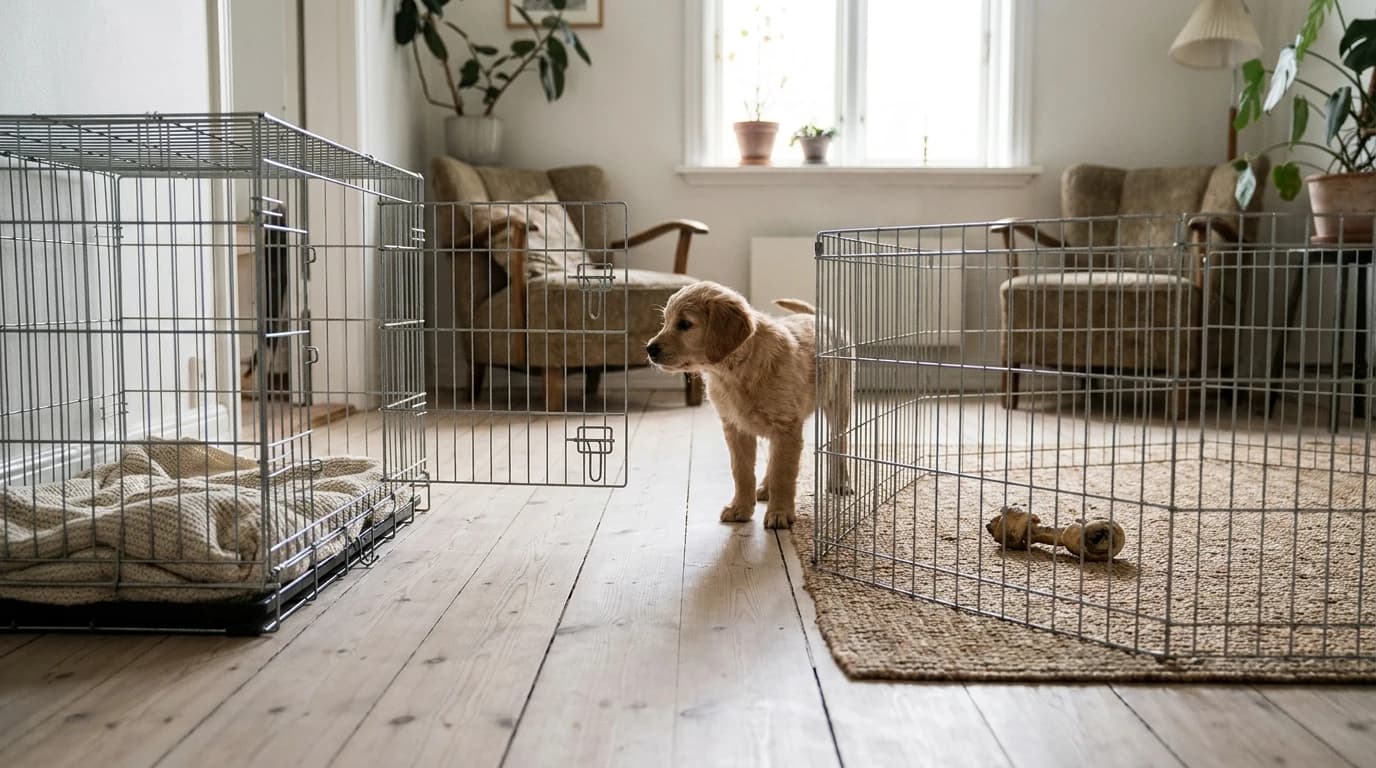
 The crate-inside-pen arrangement: the box is the bedroom and the pen is everything else.
What we would actually put in a first-month house
Our whole shortlist lives on the puppy crates and playpens and gates shelves.
MidWest iCrate Double Door — the crate half of the answer
The default, and the reason is the divider panel: you buy for the adult dog and wall off the rest, which is how one crate is the correct size at ten weeks and still correct at three years. Six sizes from 18 to 48 inches, two doors, folds flat. Owner feedback is mostly about tool-free assembly and the divider doing its job in house training; the recurring complaints are bent wires under a strong adolescent and a fussy side-door latch. Not accepted for airline cargo, and per VCA a wire crate is not the thing to put in a car.
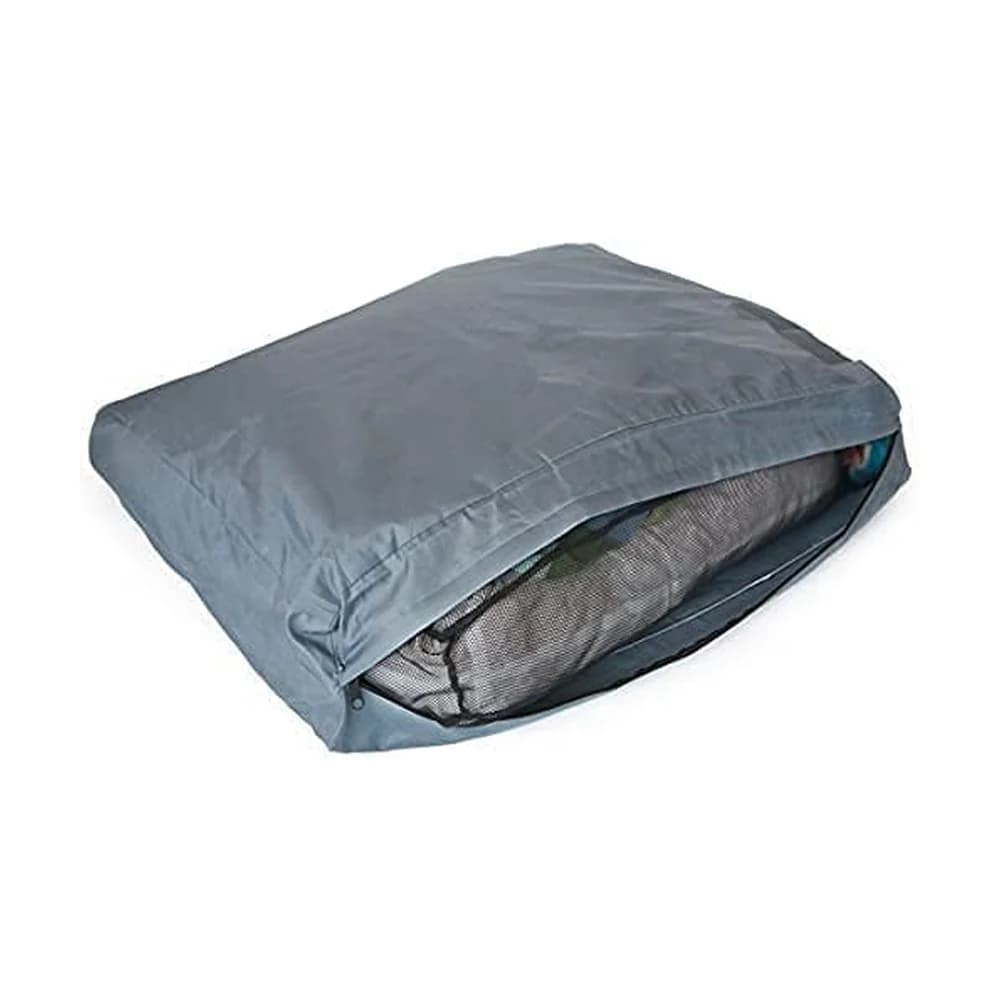
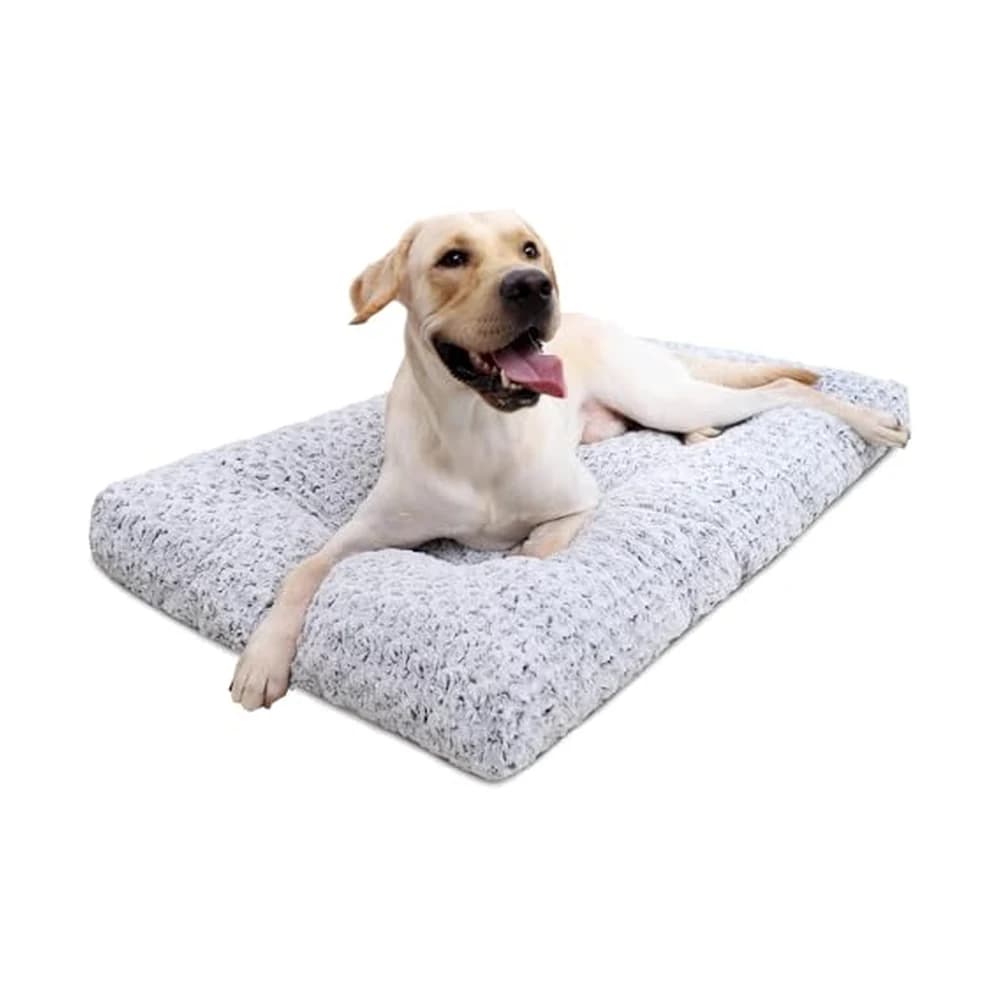
On the floor of it: a KSIIA crate pad, shaped for a crate tray and washable whole, over a zippered Molly Mutt waterproof liner, which turns a 3 a.m. accident into laundry rather than a replacement bed.
MidWest 30-Inch Exercise Pen — the pen half
Eight 24-inch panels, 30 inches tall, making a sixteen-square-foot square, with a step-through door and four ground anchors. The feature that matters most in month one is that it clips onto a wire crate, which turns the crate into a bedroom with a floor attached — the puppy sleeps in the box and is awake in the room, and neither space has to do the other's job. Owner feedback splits by dog size, and both halves are right: sturdy for a puppy, flimsy under a leaning adolescent.
Amazon Basics Octagonal Pen — the cheap second pen
Eight panels, two door latches, ground anchors, configurable as an octagon, square or rectangle, and folded flat it blocks a doorway instead. The listing is upfront that it is for dogs up to 20 inches tall. Owners report the latches working loose.
Regalo Easy Step Gate — when the room is the answer
Spans 29 to 38.5 inches with the included extension and stands 30 inches tall. Regalo is emphatic on two points and both are worth obeying: use the wall cups, and never fit it at the top of stairs. The common complaint is a latch that takes two hands. This is the graduation from a pen — one proofed room instead of one enclosure.
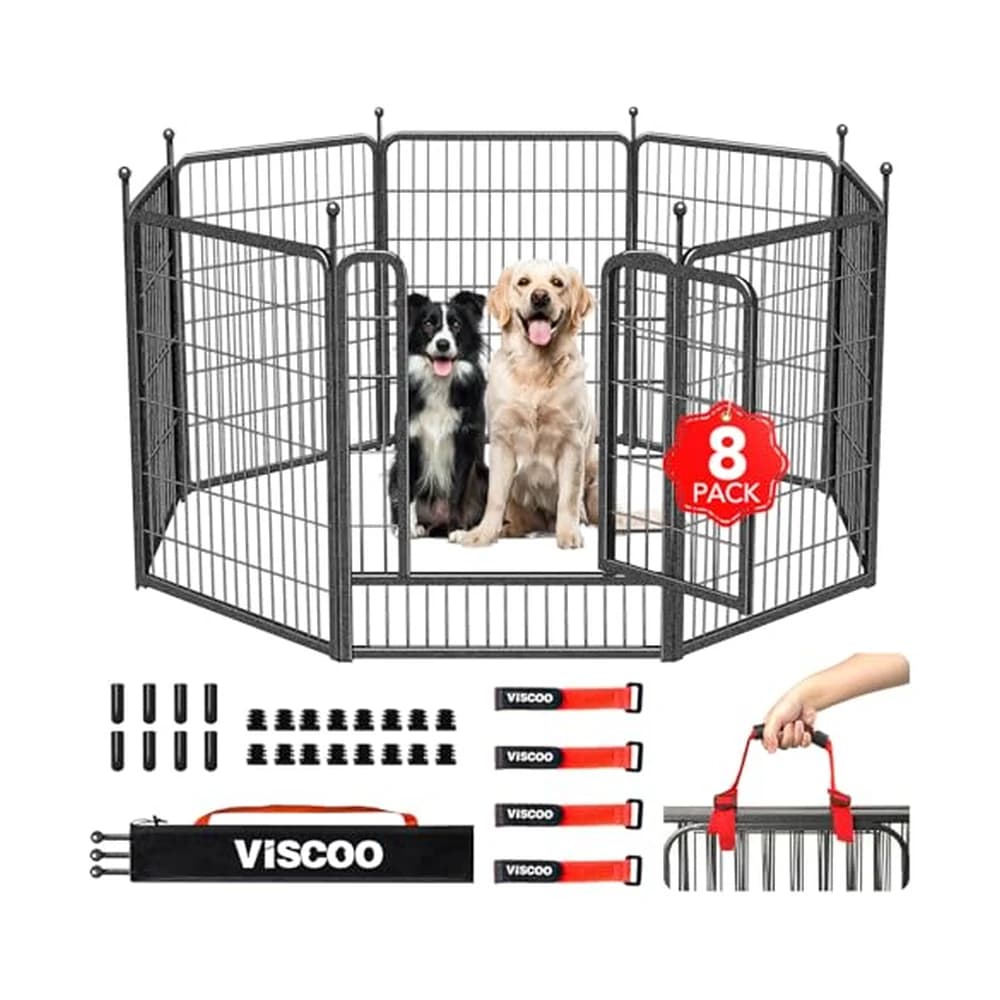
VISCOO 40-Inch Playpen — for the dog who already jumped
Forty inches instead of the usual thirty, eight panels with one door, ball-topped posts the manufacturer says protect paws. Owner reviews on build quality are mixed and several call the latch stiff, so treat it as a supervised daytime enclosure, not a fence you leave a dog in.
Buy in this order
- Crate first, sized to the adult dog, with the divider set for now. It is the one that solves nights, and nights are what breaks people in week one.
- Pen second, within a fortnight. This is the purchase almost everyone says they wish they had made sooner.
- Gate third, when the pen stops being big enough. Usually around four to six months, and it is a promotion rather than a replacement.
One last thing that is not a purchase. VCA's warning signs for confinement are specific — speak to your vet before continuing with the plan if your dog:
- salivates
- vocalises persistently
- tries to escape
- does not settle
Remember: Brief grumbling that does not escalate is normal and worth a few minutes; real distress is not a training problem to push through.
Getting the introduction right is the whole of crate training a puppy, and it matters more than which box you bought.
Key takeaways
What to remember
- Crate for sleeping and settling; pen for being awake and unsupervised. The distinction is the hour of the day, not the price.
- VCA describes planned confinement as a management tool for times a dog cannot be supervised, and says extended confinement is not healthy - so a crate is the wrong tool for a long absence.
- A pen is the piece that holds a toilet area away from the bed, which is why it and the crate are not interchangeable during house training.
- Size the crate for the adult dog and use the divider panel to shrink it, rather than buying twice.
- A gate is the graduation from a pen, but it does not proof the room it encloses - that room still needs the floor sweep.
- Salivating, persistent vocalising, escape attempts or a dog who never settles are a call to your vet, not a training problem to push through.
Questions people ask
- Can I use a playpen instead of a crate at night?
- You can, and some puppies sleep fine in one, but you lose the two things a crate is doing. A pen is large enough that a puppy can move away from where he wets, which removes the mechanism house training relies on, and it gives a puppy a space to patrol rather than a space to settle in. If a pen is what your puppy already likes, put a covered crate inside it with the door open and let him choose.
- Is a crate cruel if a playpen gives him more room?
- Neither is cruel and neither is kind on its own; what matters is how long and how it was introduced. VCA describes confinement as a management tool for periods when a dog cannot be supervised, and warns that extended confinement is not healthy for animals. A crate used for eight hours is a welfare problem. A crate a dog walks into by himself to sleep is a bedroom.
- Do I need both a crate and a playpen?
- Most households end up with both, and the pen is the one people say they wish they had bought sooner. If the budget only stretches to one right now, buy the crate first: nights are what breaks people in week one, and a gated, proofed room can stand in for the pen during the day.
- At what height does a playpen stop working?
- It depends on the dog rather than the age. Thirty inches is the common height and it holds most puppies; an athletic adolescent will clear it, which is the point at which people move to a taller pen or, better, to a gated room. VCA notes some pens include a ceiling panel to stop dogs climbing out, which tells you the problem is common enough to design around.
- What about a crate inside a playpen?
- It is a genuinely good arrangement and several pens are designed for it - the MidWest exercise pen clips directly onto a wire crate. The crate door stays open, the crate is the bed, and the pen is everything else. It also gets a puppy choosing the crate on his own, which is the whole aim of crate training.
Gear
Also worth a look
The products this piece assumes, in the order we would get them. Prices move; check before you buy.
$20.00 4.4 out of 5 stars · 136
The layer between a puppy and their bedding — strip it, wash it, and the crate does not…
$19.99
The crate pad you can strip and wash whole, sized to a mid-size crate floor.
$8.99 4.5 out of 5 stars · 222,168
Apartment puppies, unvaccinated puppies and older dogs losing continence — 22-inch pads with…

Sources
- VCA Animal Hospitals: Crate Training Your Dog - An Overview — That confinement is a management tool for unsupervised periods and that extended confinement is not healthy; the crate sizing rule; the crate-alternatives list naming exercise pens, play yards and baby gates; that pens may include a ceiling panel and are often expandable for toys, potty pads and a bed; that a gated room needs an elimination area; that wire crates are not sturdy enough to protect a dog in a car and are not approved for airline travel; and the distress signs that mean stopping and calling a vet.
- Midwest 42-Inch Double Door iCrate listing - Amazon — The divider panel, the two doors, the folding design, and that the crate is sold in six sizes from 18 to 48 inches
- What Size Crate Should I Get? - MidWest Homes for Pets — Buying the crate for the puppy's expected adult size and using the divider panel to make it the right size while they grow
- MidWest 30-Inch Exercise Pen listing - Amazon — The eight 24-inch panels, the 30-inch height, the sixteen square feet, the step-through door, the ground anchors, and that the pen attaches to a wire crate to extend it
- Regalo Easy Step Walk Through Gate listing - Amazon — The 29 to 38.5-inch span with the included extension, the 30-inch height, and the manufacturer's instructions to use the wall cups and never fit it at the top of stairs
We research and analyse — specs, manufacturer documentation and large-scale owner feedback. We do not test products on dogs, and we are not your vet.
Next step
MidWest iCrate Double Door
It is the crate half of the answer and our pick here, and the product page carries the sizes, the divider details and what owners complain about.