In this article(8 sections)
A crate is either the best piece of equipment in the house or a box your puppy screams in, and which one you get is decided in the first week.
The whole method is one sentence: the crate predicts good things, and never predicts anything bad. Everything below is a way of protecting that sentence.
Why bother at all
AVSAB's puppy socialization statement makes the case. It says time must be scheduled for puppies to play alone with their favourite toys or take naps in safe places such as crates or puppy pens, that this teaches puppies to amuse themselves, and that it may help prevent problems of over attachment to the owners.
So the crate is not storage. It is where a puppy practises being content by himself, a skill that does not develop by accident in a house where someone is always available. It also solves practical problems: somewhere safe while you cook, distance from the cables, and the house-training structure a puppy's instinct not to soil his bed provides.
Get the size right first
Stand, turn, lie flat
Stand up, turn around, lie down flat. That is the whole specification. A crate a puppy can walk to the far end of becomes a bedroom at one end and a toilet at the other.
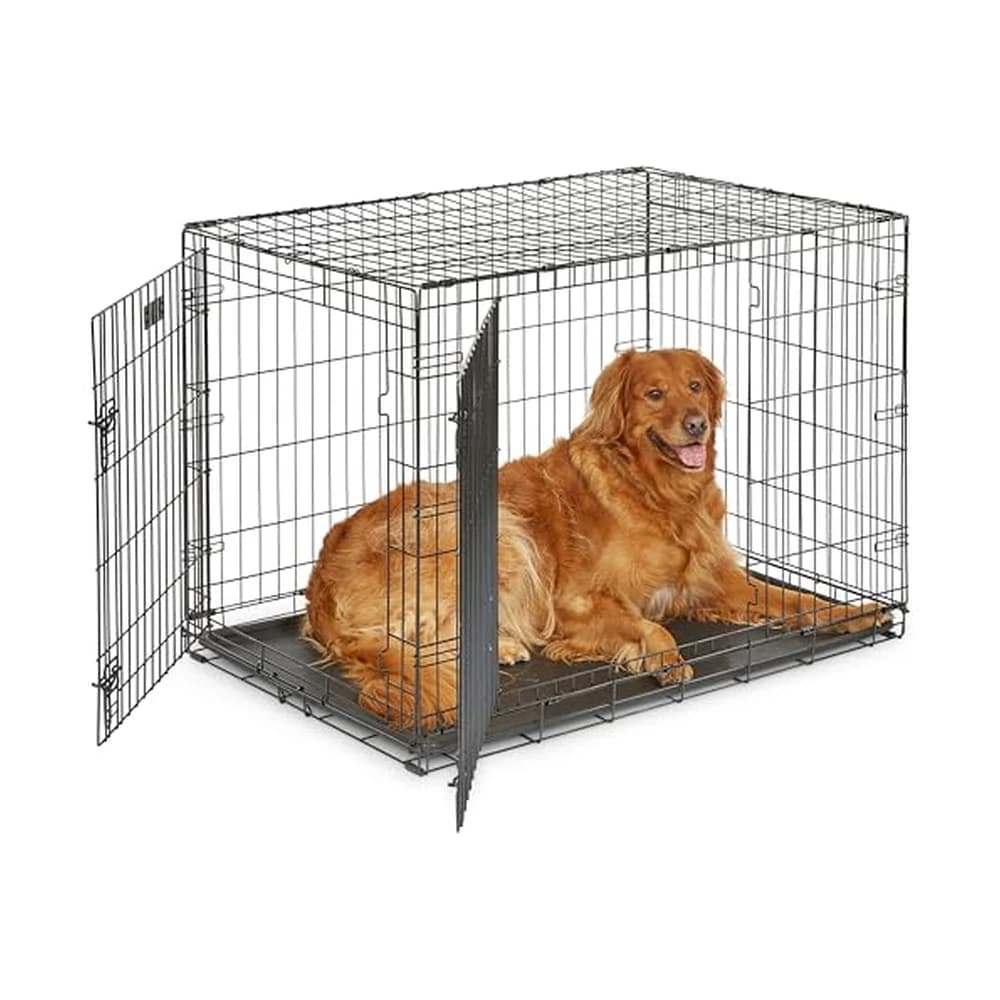
Buy for the adult dog and use the divider panel. Our crate size tool works it out from expected adult weight, and the puppy crate picks are chosen for divider quality and an easy-clean tray. This guide assumes a wire crate with a divider, which in practice means the MidWest iCrate: six sizes from 18 to 48 inches, with the divider in the box.
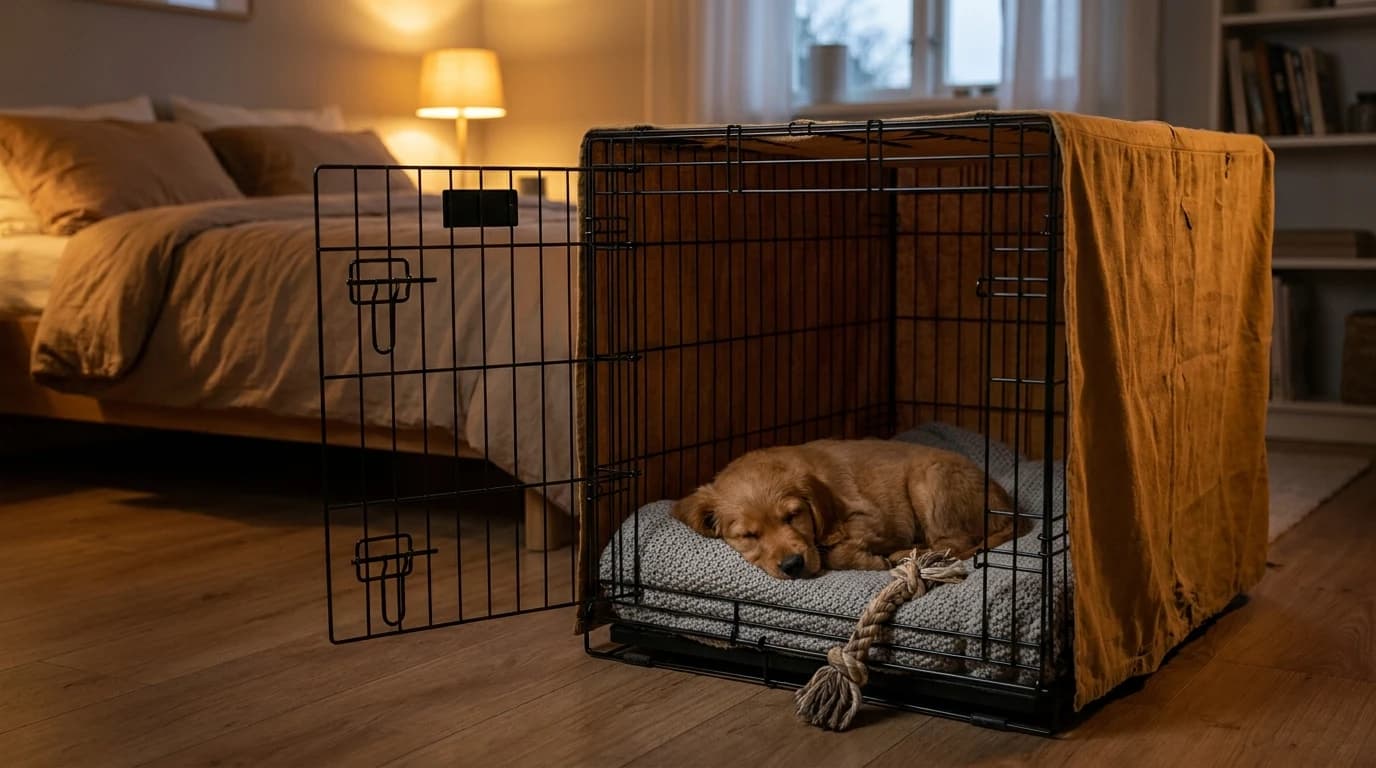
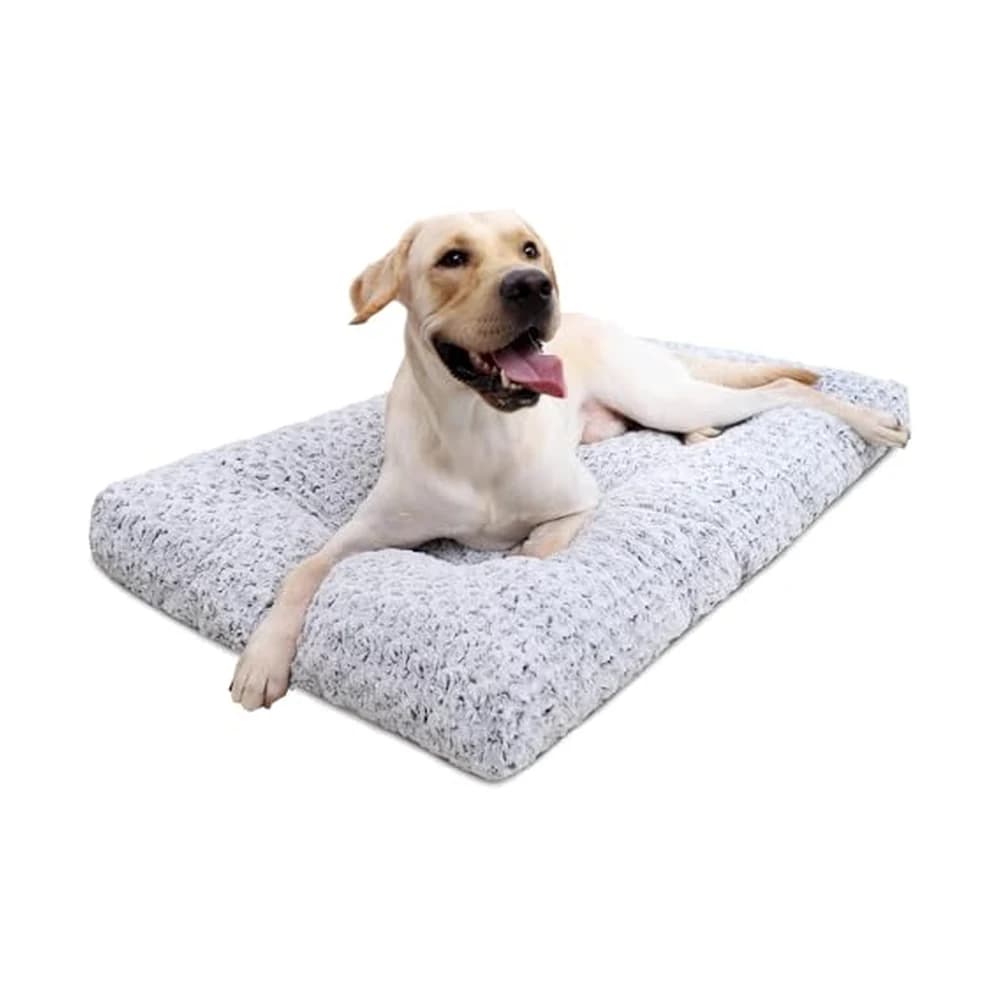
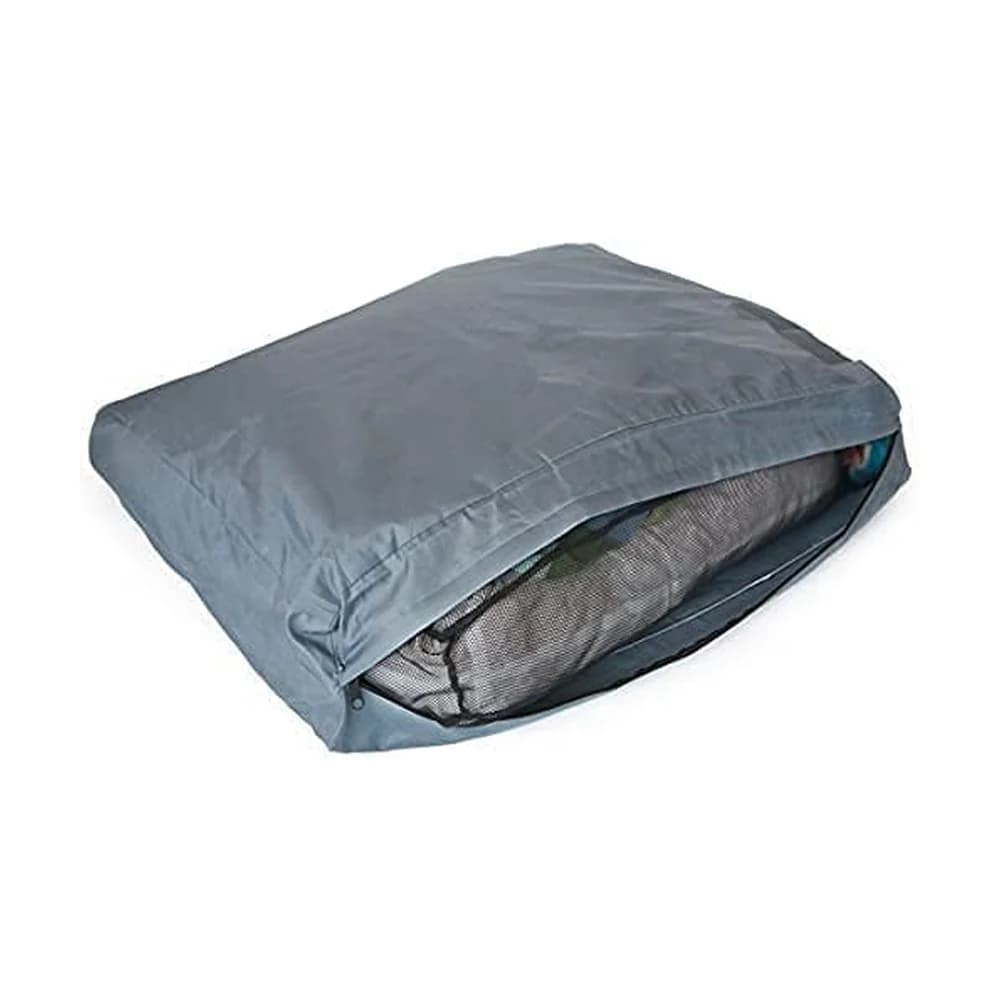
Put a washable bed in, not a good one, and drape a blanket over three sides. Less to look at is more restful. A flat crate pad like the KSIIA, which goes in the machine whole, is the right shape for a divided crate, and a waterproof liner under it turns an accident into laundry.
Stage one: the door stays open
The door does not move until your puppy walks into the crate on his own and settles there unasked. For most puppies that is a few days; for some longer, and there is no prize for beating it. Readiness is the gate, not the calendar.
- Every meal goes in the crate. Bowl at the back, door open, walk away. Two or three days of this does more than any amount of coaxing.
- Scatter something good in it during the day, with no ceremony, so he finds food there unasked.
- Feed him for choosing it. When he wanders in on his own, a piece of food lands in there; the guide assumes something pea-sized like Zuke's Mini Naturals, because you will be paying this many times a day. When he wanders out, nothing happens.
- Nap him in it when he crashes. Puppies sleep 18 to 20 hours a day, and the AKC describes naps every hour or so lasting from 30 minutes to two hours. You do not need to create sleepiness, only to catch it.
 Stage one in one picture: the bowl at the back, the door open, and nobody asking him to go in.
Stage two: seconds, not minutes
Once he goes in by himself and settles, the door starts to move.
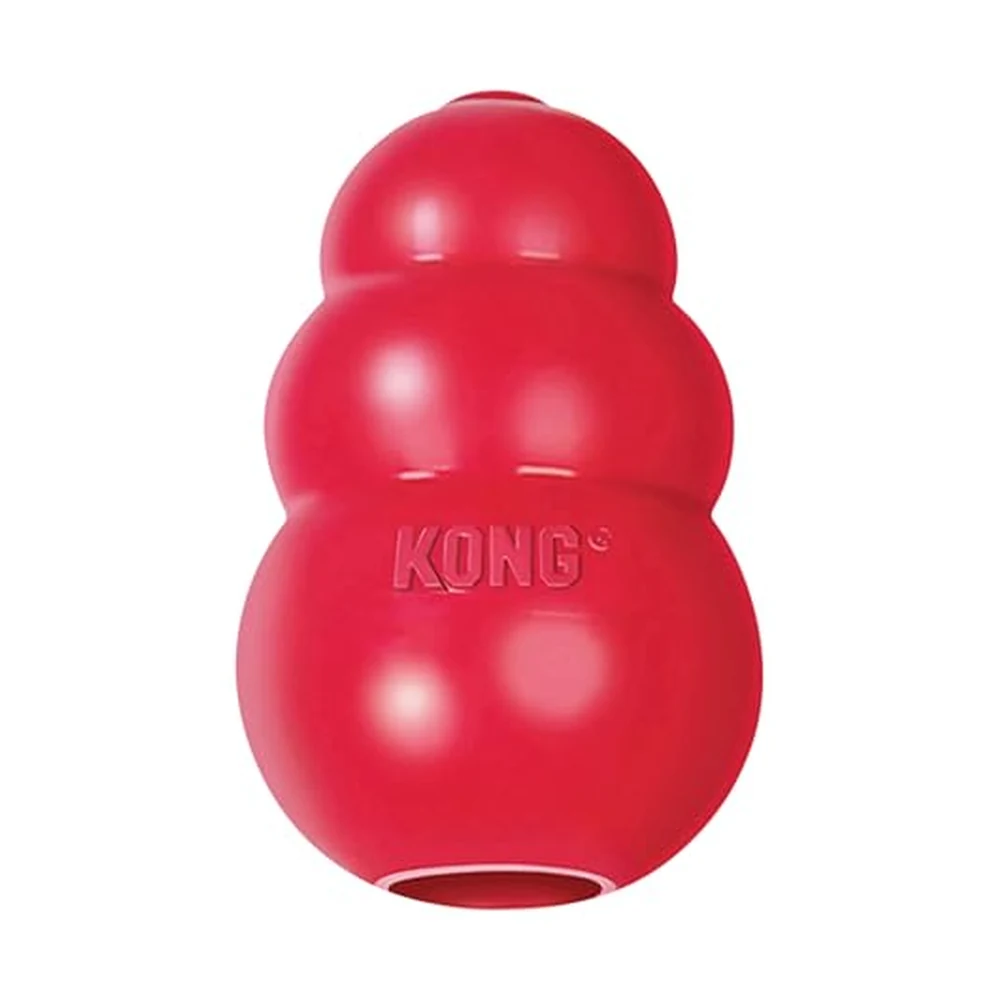
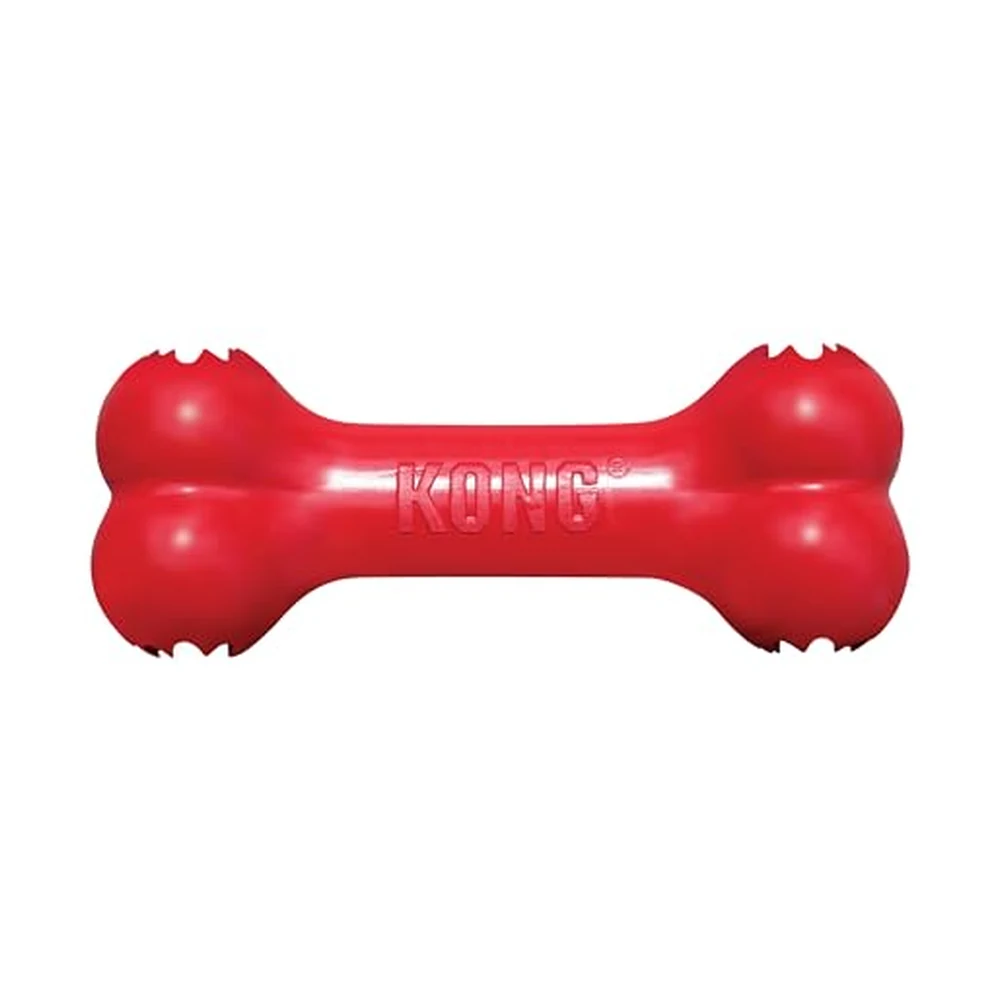
- Give him something worth staying for, a stuffed food toy or a long chew from the enrichment shelf. A KONG Classic stuffed and frozen, or a KONG Goodie Bone filled at both ends, outlasts the session.
- Close the door for two seconds while he chews. Open it. Do not make a speech.
- Four seconds. Ten. Thirty. Sit beside it the whole time.
- Once thirty seconds is boring, stand up, then one step away, then out of the room for three seconds.
Come back before he asks
If you are opening the door because he started to complain, the complaint is what opened the door. Return while he is still calm, and you never have to un-teach it. If he panics, you moved too fast; go back to open-door meals for two days.
The one rule: Come back before he asks. If the complaint opens the door, the complaint is what you taught.
What earns the closed door:
- He walks in on his own and settles, unasked
- Every meal eaten inside it
- Something to chew that outlasts the session
- Seconds first, door open before he asks
What people try that doesn't:
- Shutting the door on day one and waiting it out
- A calendar that says the door closes on day three
- Opening the door when the crying starts
Nights
Put the crate beside your bed for the first weeks. It shortens the noisy phase: you catch the stirring early, the toilet trip is thirty seconds instead of a production, and your puppy is not also learning that being alone is frightening.
Keep the night trip boring. No lights, no chat, out, wait, back in. Then move it across the room, to the doorway, then to wherever it will live, over a few weeks.
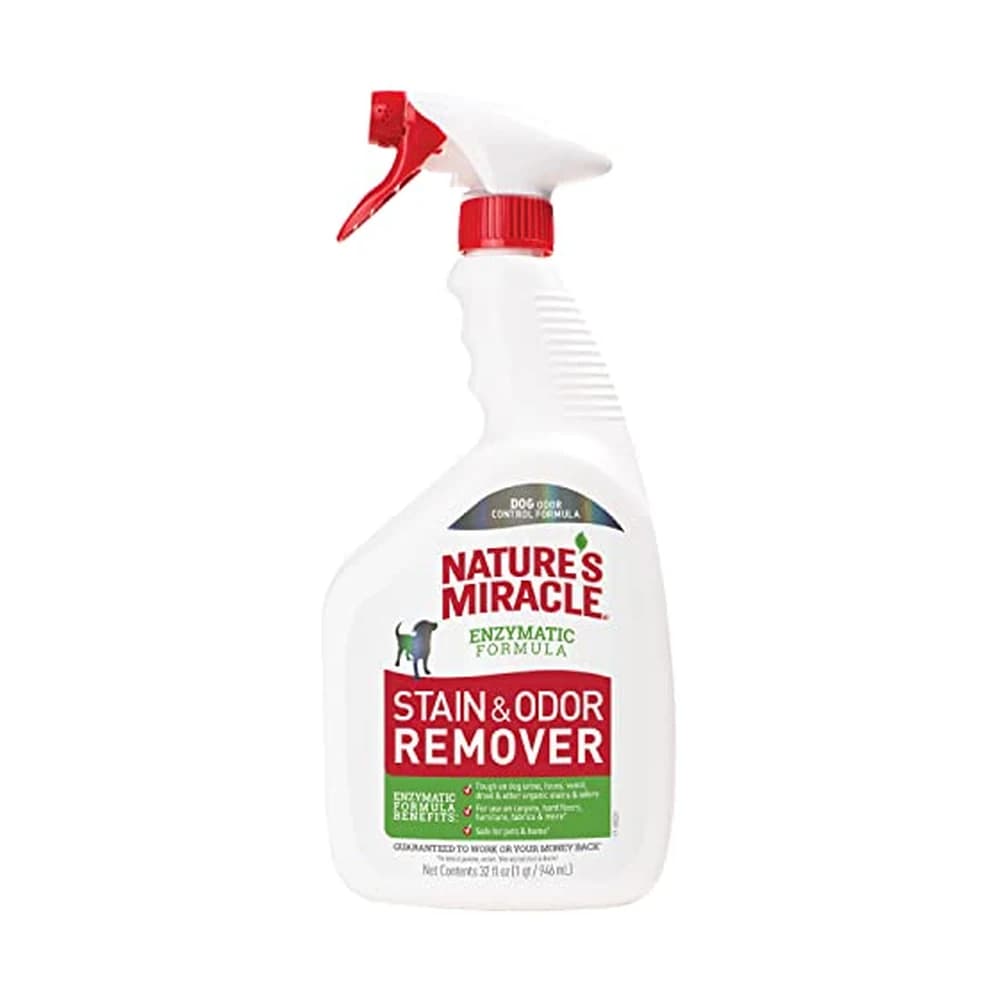
Accidents in the crate happen, and how you clean them decides whether they repeat. The guide assumes an enzyme cleaner from the potty training shelf, in practice Nature's Miracle, because it breaks down what a household cleaner only masks; a puppy who can still smell the last accident uses the same corner again.
Night and day are one problem, so read this alongside the potty training schedule and the puppy sleep schedule.
The rules that keep it working
- Never send him there as a consequence, and never pull him out of it to tell him off. AVSAB recommends only reward-based methods, with boundaries taught without fear, intimidation or pain. A crate used as a punishment stops being a bed the first time.
- Let him leave. AVSAB says the learner must always feel safe and be able to opt out; in the training phase the open door matters more than the closed one.
- Nothing that can be swallowed goes in unsupervised. No collar tags catching on wire, no soft toy he can dismantle.
Protest or panic
VCA's crate-training overview describes a dog who vocalises briefly, paws at the door or fidgets during early sessions: if it is short and does not escalate, give him a few minutes to settle, and open on a pause rather than on the noise. VCA is equally clear that a very distressed dog is not learning: release him, end the session, and run no more until you have spoken to your vet or a veterinary behaviorist.
Protest or panic: Brief grumbling that fades gets a few minutes, and the door opens on the pause. Screaming that escalates means out, stop, and a call to the vet.
Common problems
| What happens | What it usually is | Try first |
|---|---|---|
| Fine by day, screams at night | A location problem, not a crate problem | Move it beside your bed |
| Settles, then howls at four every morning | A toilet need, or you arriving too reliably at the first sound | Check the toilet; then beat him to it by a few minutes |
| Goes in happily, will not lie down | Too big, too bright, or too much going on | Divide it down, cover more of it, move it out of the traffic |
| Weeks in and still awful | Something a slow plan is not fixing | Stop grinding and get help |
On that last one: AAHA notes puppies generally do not outgrow their problems, and lists profound fears among the reasons to refer to a veterinary behaviorist.
Crate work is one strand of the arrival weeks; the rest sits on the new puppy stage page.
What to ask your vet
- Given his age and size, how long is reasonable between toilet breaks during the day?
- He is distressed when confined even after two weeks of slow work. Is that worth a behavior referral?
Key takeaways
What to remember
- The crate has one job: to be the place where good, boring things happen. Everything else follows from protecting that.
- Feed meals in it with the door open until he walks in and settles on his own. That readiness, not a day count, is what earns the closed door.
- Build duration in seconds, not minutes, and return before your puppy asks you to.
- Crate beside your bed for the first weeks. It shortens the noisy phase rather than prolonging it.
- Brief grumbling that does not escalate can be given a few minutes; genuine distress means letting him out and asking your vet. VCA draws that line explicitly.
- AVSAB recommends only reward-based methods. A crate used as a punishment stops being a bed and becomes a consequence.
Questions people ask
- Is crate training cruel?
- Not when the crate is introduced properly and used as a resting place rather than a correction. AVSAB notes that time should be scheduled for puppies to nap in safe places such as crates or puppy pens, and that this helps them learn to amuse themselves. A crate used to punish is a different thing entirely, and it does not work.
- How long can a puppy be left in a crate?
- For a young puppy, much less time than people expect, and the limit is set by his bladder and his need for company rather than by a chart. Daytime stretches should be naps between activity, not storage. Ask your vet what is reasonable for your puppy's age and size.
- My puppy screams when I close the door. What now?
- You have moved too fast. Go back to feeding with the door open, then to closing it for two seconds while he eats. Brief grumbling that fades within a minute or two is worth waiting out, and you open on the pause rather than on the noise. Screaming that escalates is distress, not protest: VCA says to let the dog out, end the session, and talk to your vet or a veterinary behaviorist before running another one.
- Should the crate be in the bedroom?
- For the first weeks, yes, for most families. You hear the stirring before it becomes a shriek, the overnight toilet trip is short, and your puppy is not learning to panic about being alone at the same time as everything else.
- What size crate does a puppy need?
- Big enough to stand, turn around and lie flat, and no bigger, or the far corner becomes a toilet. A divider lets one crate follow a growing puppy. Our crate size tool sizes it from expected adult weight.
Gear
The gear this guide assumes
Our shelves and product pages, so you can see the options without leaving mid-session. No buy buttons here — this is a training guide.
$100.99 4.7 out of 5 stars · 80,183
The one crate you buy at eight weeks and still use at eight years — the included divider…
$19.99
The crate pad you can strip and wash whole, sized to a mid-size crate floor.
$20.00 4.4 out of 5 stars · 136
The layer between a puppy and their bedding — strip it, wash it, and the crate does not…
$14.94 4.6 out of 5 stars · 18,587
The everyday training treat — small, soft and low enough in calories to reward fifty times in…
$13.96 4.6 out of 5 stars · 91,774
The stuffed-and-frozen standby — the toy that covers crate time, alone time and the first…
$11.96 4.5 out of 5 stars · 17,607
A stuffable chew that survives the teething stage — freeze it filled and it occupies a puppy…
Nature's Miracle Stain & Odour
$10.79 4.6 out of 5 stars · 23,459
The bottle you keep on the counter all through house training — enzymatic, cheap, and stocked…

Sources
- AVSAB Position Statement on Humane Dog Training (2021) — That AVSAB recommends only reward-based methods for all dog training, that tools relying on pain or intimidation should not be used, that training is most effective when it teaches the dog what to do, that management and antecedent arrangement belong in every plan, and that the learner must be able to opt out.
- AVSAB Position Statement on Puppy Socialization — That time must be scheduled for puppies to play alone or nap in safe places such as crates or pens, that this teaches puppies to amuse themselves, and that varied experience through the first year helps prevent separation-related behavior.
- American Kennel Club: How Much Do Puppies Sleep? — That puppies sleep 18 to 20 hours a day in naps of 30 minutes to two hours, and that active time should be followed by quiet time.
- VCA Animal Hospitals: Crate Training Your Dog — An Overview — That the door is closed only after several successful open-door sessions and while the dog is busy with a food toy, that brief non-escalating vocalising, pawing or fidgeting can be given a few minutes to settle, and that a very distressed dog should be released and the sessions stopped until a veterinarian or veterinary behaviorist is consulted.
We research and analyse — specs, manufacturer documentation and large-scale owner feedback. We do not test products on dogs, and we are not your vet.
Next step
The puppy crates shelf
Half the problems on this page are sizing problems, and the divider panel is what fixes them.
A crate is where a puppy learns that sleep is safe and that being alone is survivable. Buy the adult size once, and use the divider to shrink it down.