In this article(9 sections)
- Before the puppy comes home
- The week at a glance
- Day 1: arrival and the first night
- Days 2 and 3: the toilet and crate routines
- Day 3 onwards: handling, a few seconds at a time
- Day 4: the first vet visit
- Days 5 to 7: the socialisation window is open
- Day 7: review the week
- What to ask yourself before week two
The first week with a new puppy comes down to four routines, started on day one and repeated every day: toilet trips after every sleep, meal and play; a crate or pen that means rest; a vet visit within the week; and a little calm new experience every day. Everything else can wait. This plan belongs to the new puppy stage, and it links out to the full guides for each routine rather than repeating them.
Before the puppy comes home
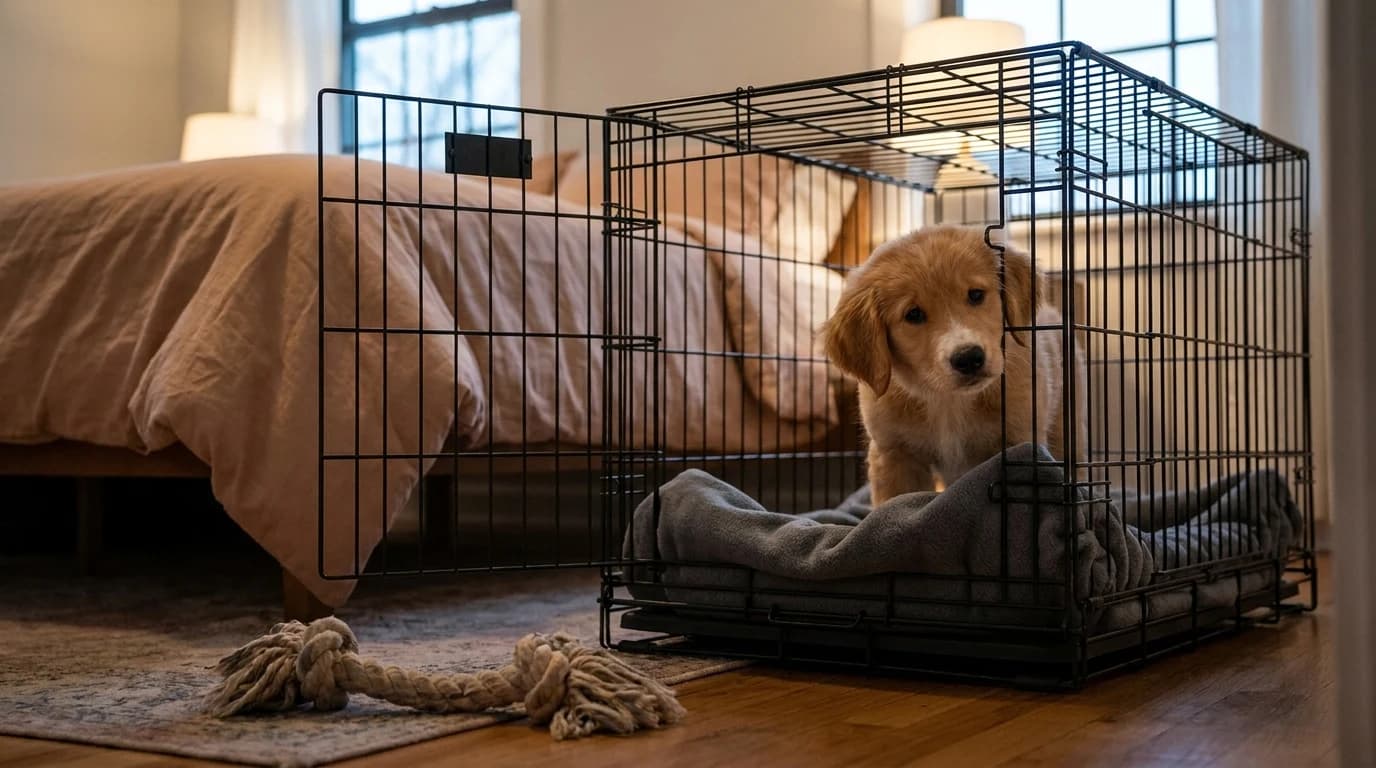
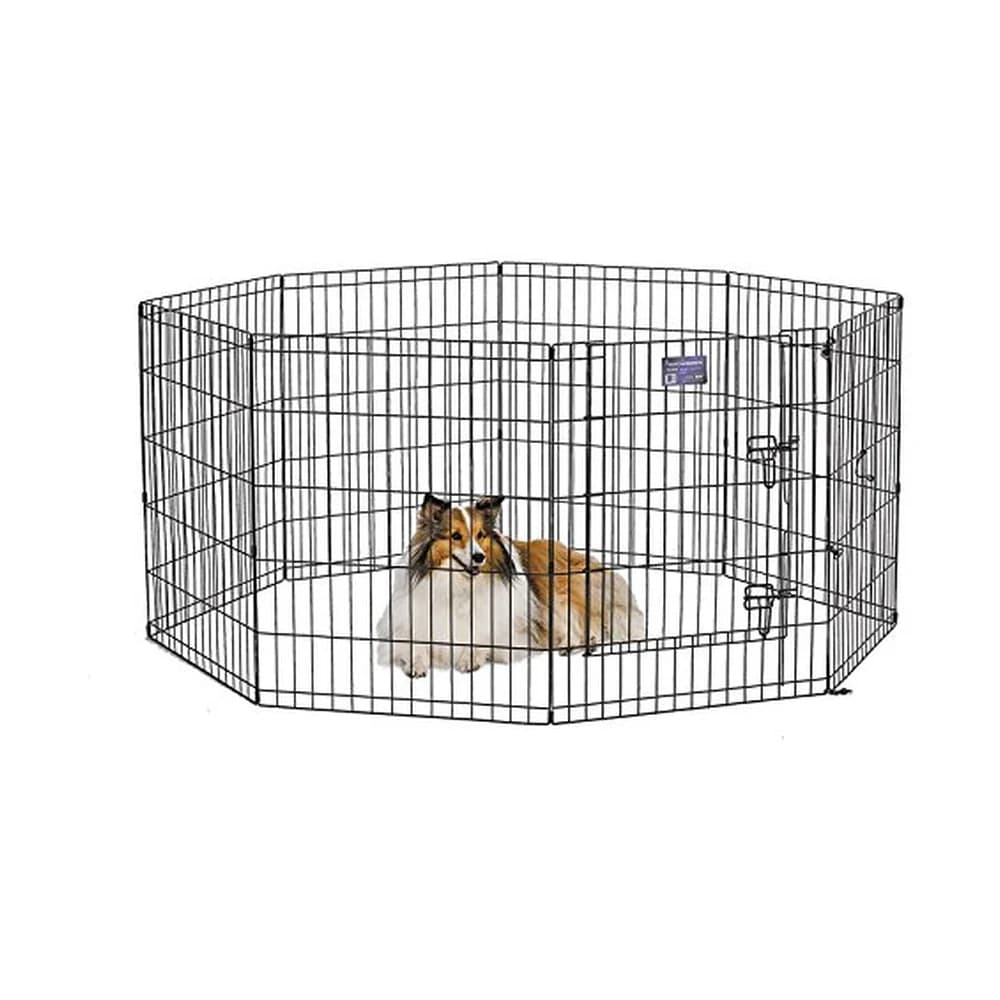
Set up one small area, not the whole house. A crate for sleep inside a pen, like the MidWest 30-inch exercise pen, or a gated kitchen gives your puppy a place to rest and you a place to put him when you cannot watch.
Have ready:
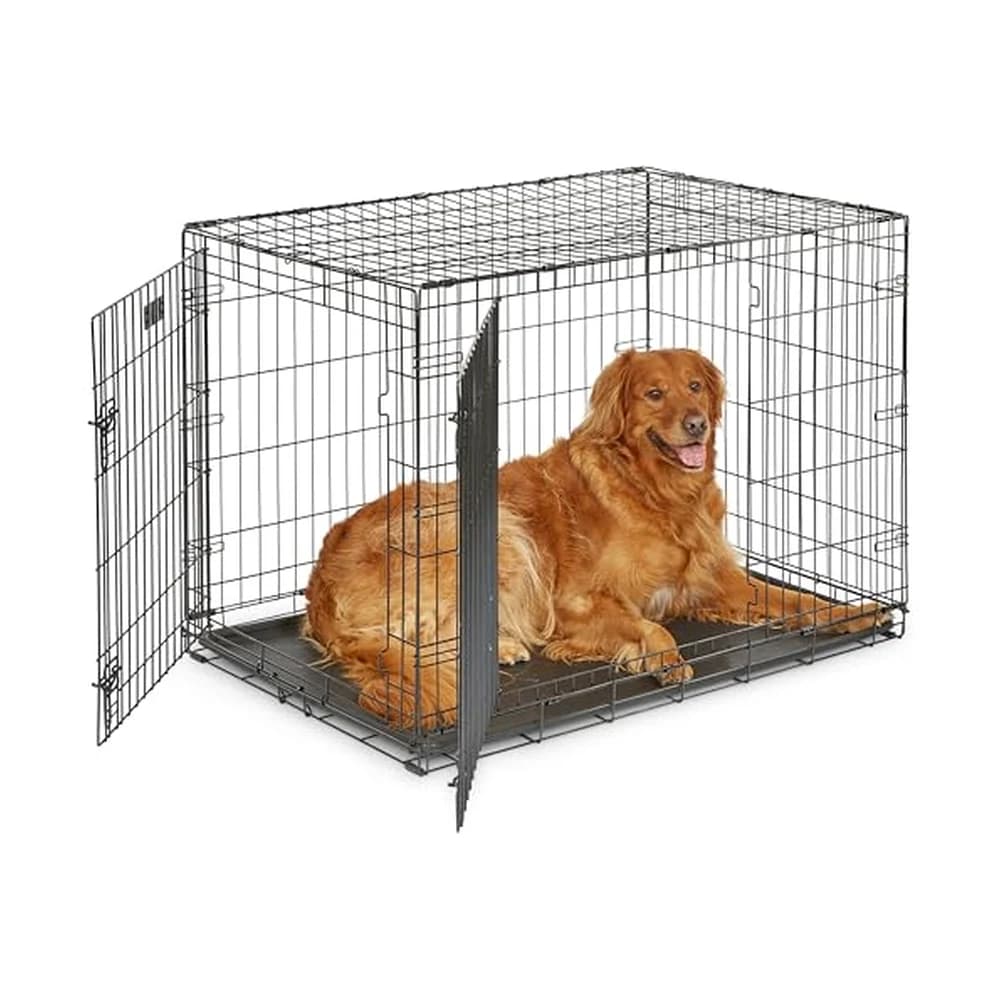
- A crate sized for the adult dog with a divider, such as the MidWest iCrate.
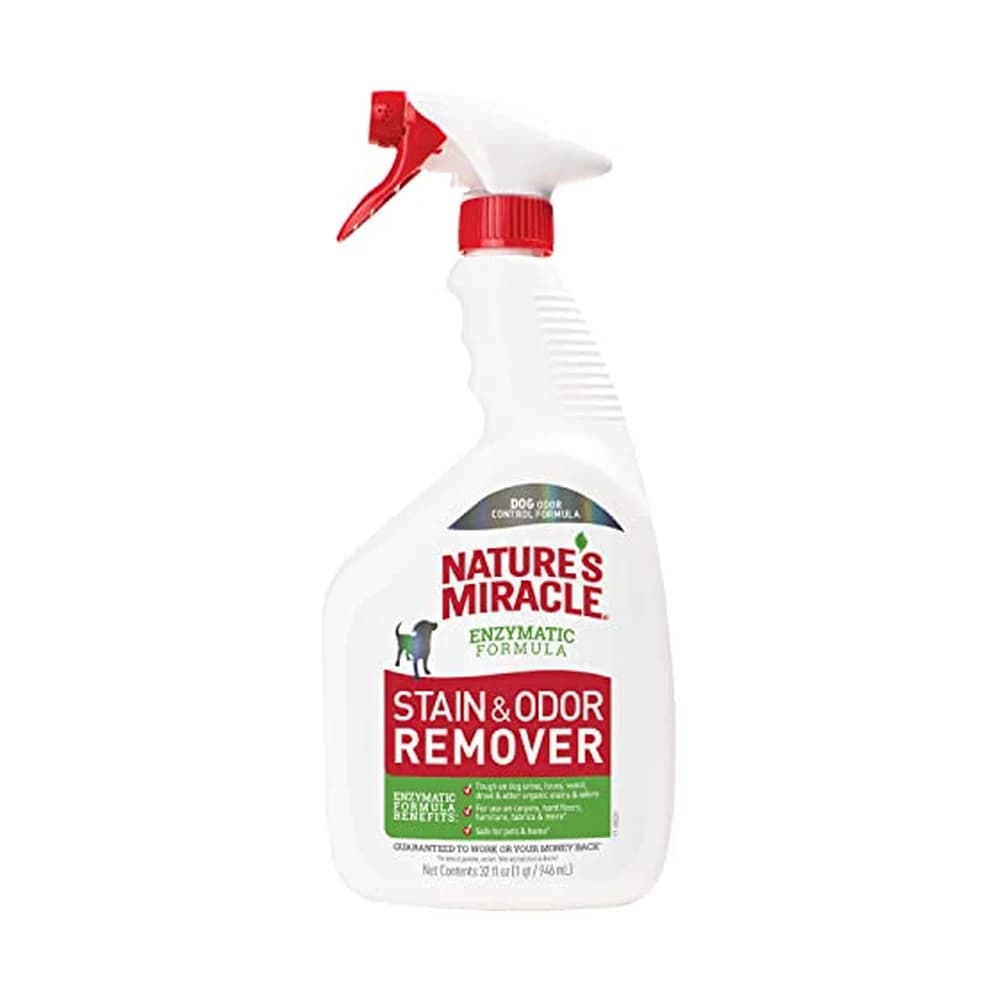
- An enzyme cleaner for accidents, like Nature's Miracle, from our potty training shelf.
- Soft, small treats for rewarding outside, like Wellness Soft Puppy Bites.
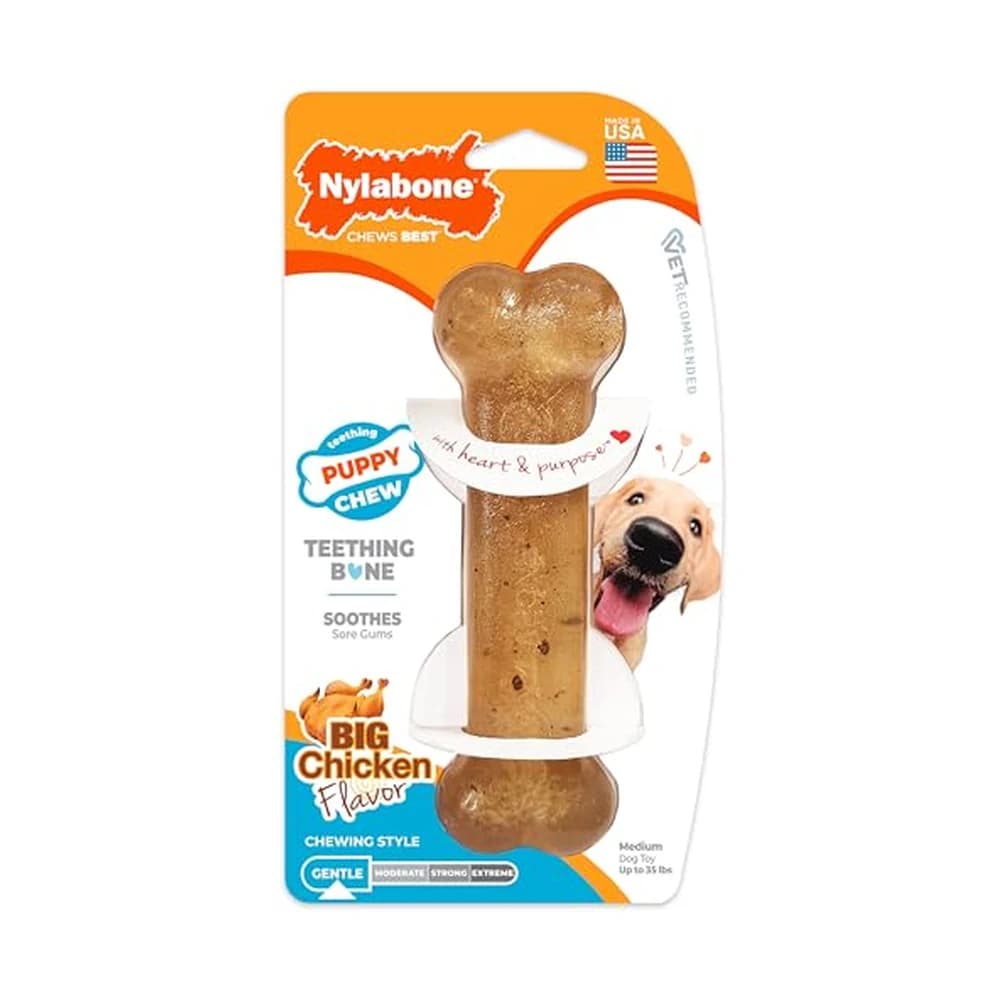
- Two or three chew toys that bend, such as a Nylabone puppy chew.
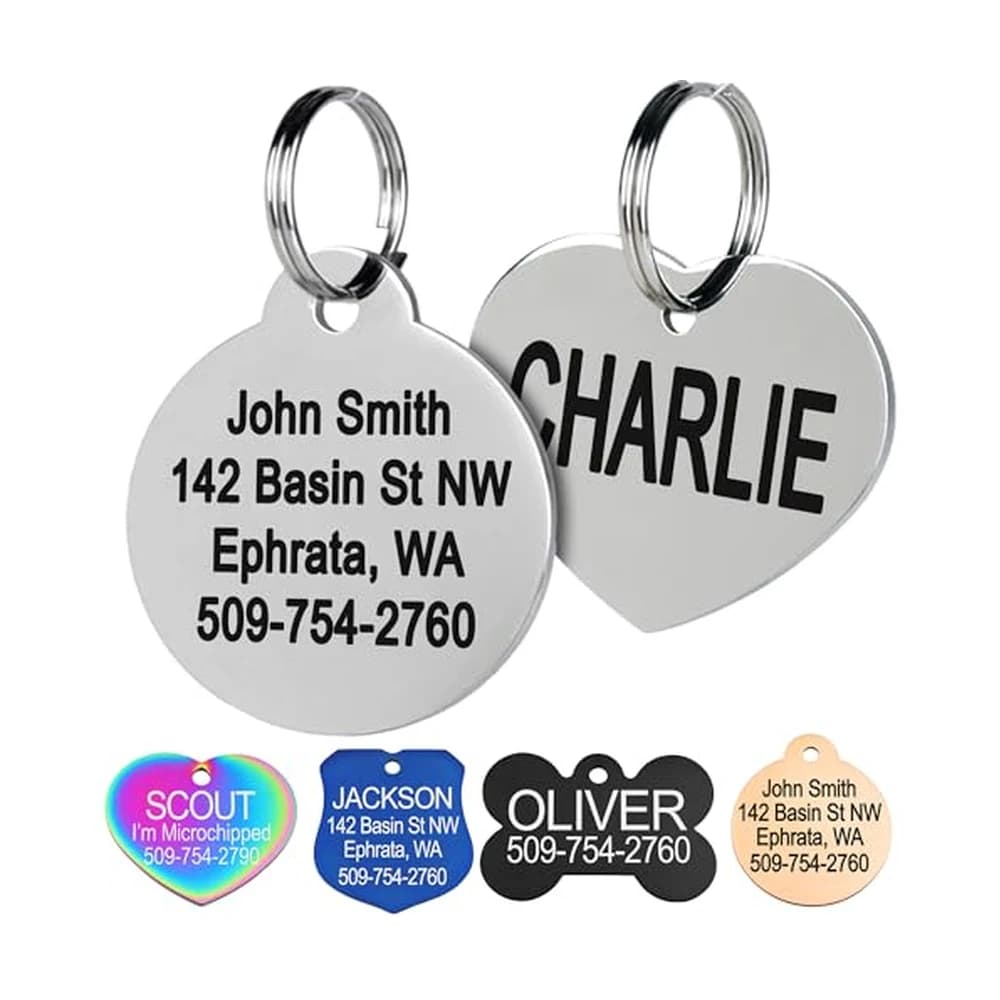
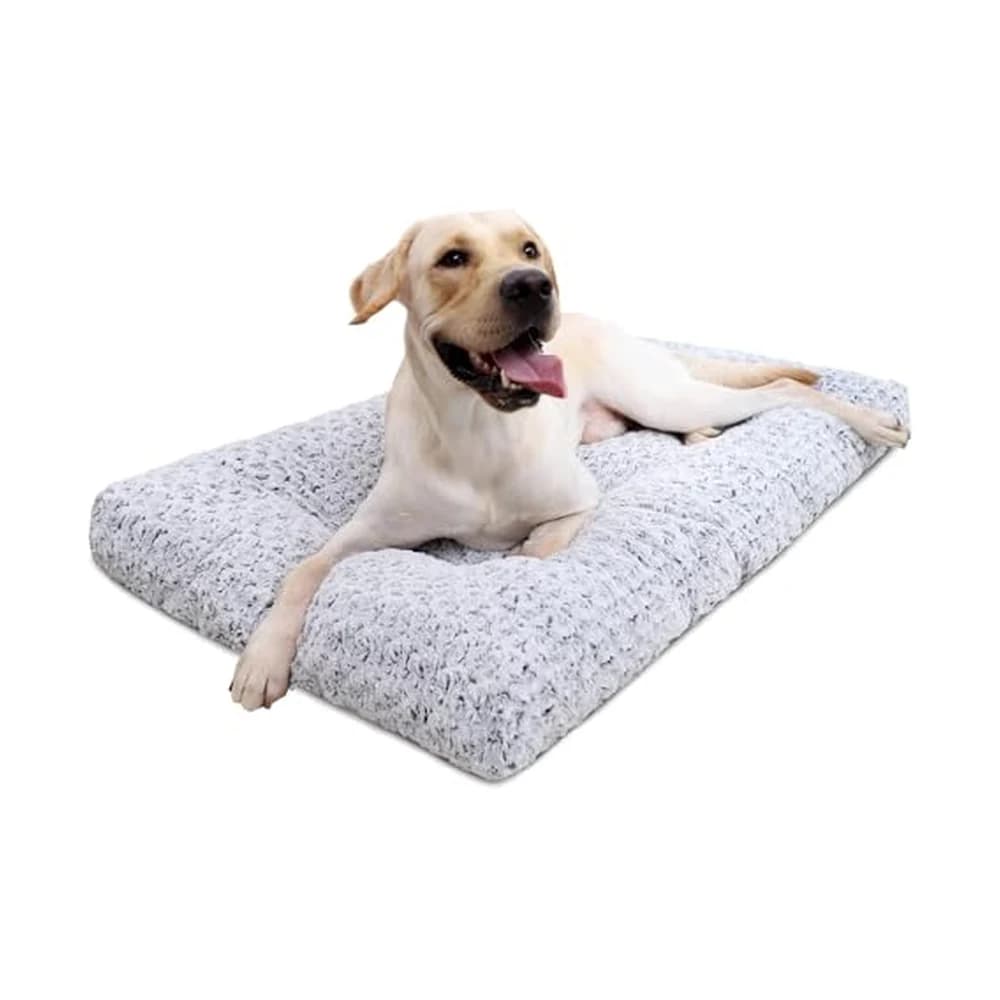
- A washable bed for the crate, and an engraved ID tag for his collar.
- The breeder's or shelter's vaccination and worming record.
Our puppy-proofing guide covers the room itself.
For an hour-by-hour version of this week, the puppy schedule planner builds naps, potty breaks and meals around your own wake-up and bedtime.
The week at a glance
| Day | Main job | Also |
|---|---|---|
| Day 1 | Arrival: toilet spot first, then a quiet first evening | Crate beside your bed for the night |
| Day 2 | Start the toilet routine in earnest | Meals in the crate, door open |
| Day 3 | Short crate sessions, door closed, while he chews | First handling practice |
| Day 4 | First vet visit, if not already booked | Note his sleep and toilet times |
| Day 5 | A few new sounds, surfaces and people at home | Keep sessions short |
| Day 6 | Short trips out, carried or in a car | Still no dog parks |
| Day 7 | Review: what is working, what is not | Book puppy class |
Treat the days as an order, not a deadline. If day three's crate work is not ready, day three lasts longer.
Day 1: arrival and the first night
Carry him straight from the car to the spot you want him to toilet, and wait. Reward the moment he finishes. Then go inside and keep the first evening quiet: his area, some food, a chew, and sleep. Visitors can come next week.
For the first night, put the crate beside your bed. A puppy who can hear and smell you settles faster, and you will hear him when he needs to go out. Expect at least one night-time toilet trip; keep it dark, quiet and brief.
Rule of thumb: The first night is not a training session. Keep him close, take him out when he wakes, and put him straight back.
Days 2 and 3: the toilet and crate routines
The toilet routine runs on events, not the clock: out after every wake-up, every meal, every play session and every hour or so in between. Our potty training schedule has the full routine, including what to do in the two seconds after he finishes.
For the crate, feed every meal in it with the door open. VCA's crate-training guidance is to close the door only after several good open-door sessions, and while the puppy is busy with a food toy. Our crate training guide takes it step by step.
 Handling practice is a few seconds at a time, paid with food, so a paw held in your hand predicts something good.
Sleep is part of the plan
AKC puts puppy sleep at 18 to 20 hours a day, in naps of roughly thirty minutes to two hours. A puppy who is awake, bitey and frantic has often simply missed a nap. Put him in his crate or pen with a chew and let him sleep. Our puppy sleep schedule explains the pattern.
Day 3 onwards: handling, a few seconds at a time
Every puppy will need his paws, ears, mouth and collar handled for the rest of his life, by you, a groomer and a vet. AAHA's life-stage guidelines note research showing that gentle handling in a puppy's first weeks brings benefits later. You are picking that up where the breeder left off.
- Touch one paw for a second, then give a treat.
- Do the same with an ear, then his collar, then a gentle look at his mouth.
- Stop while he is still relaxed. Two or three touches is a session.
If he pulls away or freezes, you went too fast. Go back a step.
Day 4: the first vet visit
Book the first check-up for the first week and bring every record you were given. Your vet will set the vaccine schedule. AAHA's 2022 canine vaccination guidelines call for at least three doses of the core combination vaccine between six and sixteen weeks, two to four weeks apart, so most puppies arrive partway through.
Questions worth asking:
- When is the next vaccine due, and what else does he need for where we live?
- Which worming and parasite products are right for him?
- When can he go to puppy class, and where is safe to walk him?
- Is his weight on track?
Days 5 to 7: the socialisation window is open
AVSAB says the first three months of life are the most important socialisation period, and that puppies should get socialisation before they are fully vaccinated. AAHA agrees there is no medical reason to delay puppy classes as long as sick animals are avoided and basic hygiene is practised. Our guide to the puppy socialization window covers the detail.
What good exposure looks like this week:
- New surfaces at home: a doormat, tiles, a towel.
- Household sounds at a distance: the vacuum, the washing machine.
- A calm visitor who sits on the floor and offers a treat.
- A short car ride, carried or crated.
What to skip for now:
- Dog parks and other busy, unsanitised places, which AVSAB names.
- Crowds or loud events.
- Forcing him towards something he backs away from.
Rule of thumb: A little, often, and on his terms. A puppy who hides has had enough, and the answer is distance, not more.
Day 7: review the week
At the end of the week, look at your notes. Are accidents falling? Is he settling in the crate for short spells? Is he sleeping well? Pick the one routine that is slipping and give it next week's attention. Throughout, use rewards rather than punishment: AVSAB's position on humane training recommends reward-based methods only, and a scolded puppy learns to hide accidents, not to stop having them.
Expect the week to feel slower than you planned. Most of the progress in these first days is invisible: a puppy learning where the door is, what the crate means and who you are.
What to ask yourself before week two
- Is someone always responsible for watching him when he is loose?
- Does he have a place to rest that nobody disturbs?
- Is puppy class booked?
Tools for this
- Puppy Schedule Planner
Naps, toilet trips and meals laid out around your own wake-up and bedtime.
- Puppy Potty Schedule Maker
Every trip out for the first days, printable for the fridge so the whole household follows one plan.
- Puppy Feeding Calculator
Cups a day and meals a day from the calories printed on the food bag you came home with.
- Dog Name Generator
Use the name from the first hour, in a happy voice. No name yet? Shortlist some with their meanings.
Key takeaways
What to remember
- Set up one small area before the puppy arrives, with a crate for sleep inside a pen or gated room.
- The toilet routine runs on events: after every wake-up, meal and play session, and roughly hourly in between.
- Crate beside your bed for the first nights, and keep night-time toilet trips dark, quiet and brief.
- Book the first vet visit for the first week. AAHA's guidelines call for core puppy vaccines two to four weeks apart until sixteen weeks.
- AVSAB says socialisation should start before vaccinations finish, in safe places and at the puppy's pace.
- Handle paws, ears and mouth for a few seconds at a time, paid with food, so handling predicts something good.
Questions people ask
- Where should a new puppy sleep on the first night?
- In a crate beside your bed. He can hear and smell you, and you will hear him when he wakes and needs to go out. Take him out, keep it dark and quiet, and put him straight back.
- When should a new puppy first see the vet?
- Within the first week, bringing every record the breeder or shelter gave you. Your vet sets the vaccine schedule. AAHA's guidelines call for at least three doses of the core vaccine between six and sixteen weeks, two to four weeks apart.
- Can I take my puppy out before his vaccinations are finished?
- Yes, carefully. AVSAB says socialisation should begin before vaccination is complete, and AAHA sees no medical reason to delay puppy classes if sick animals are avoided and hygiene is good. Skip dog parks and busy, unsanitised places until your vet says otherwise.
- How much should a new puppy sleep?
- A lot. AKC puts it at 18 to 20 hours a day, in naps of roughly thirty minutes to two hours. A puppy who is frantic and bitey has often missed a nap, and the fix is quiet time in his crate or pen.
- What should I not do in the first week with a puppy?
- Do not give him the run of the house, invite a crowd of visitors, or visit dog parks. Do not punish accidents: AVSAB recommends reward-based training only. Clean accidents with an enzyme cleaner and take him out more often.
Gear
The gear this guide assumes
Our shelves and product pages, so you can see the options without leaving mid-session. No buy buttons here — this is a training guide.
$84.99 Owner rating 4.7 out of 5 · 70,262
The one crate you buy at eight weeks and still use at eight years
$46.99 Owner rating 4.6 out of 5 · 46,346
The default puppy pen — 16 square feet, a step-through door
Nature's Miracle Stain & Odour
$10.79 Owner rating 4.6 out of 5 · 23,883
The bottle you keep on the counter all through house training
$9.99 Owner rating 4.6 out of 5 · 51,071
The first months of training
$6.69 Owner rating 4.3 out of 5 · 16,579
A small, gentle chewer, under supervision — and only after you've read the vet caution below.
$8.95 Owner rating 4.7 out of 5 · 105,343
The first thing you put on a puppy
$19.99 Owner rating 4.6 out of 5 · 34,176
The crate pad you can strip and wash whole, sized to a mid-size crate floor.

Sources
- AAHA 2022 Canine Vaccination Guidelines, Table 2: Core and Noncore Vaccines for Dogs (PDF) — At least three doses of the distemper, adenovirus and parvovirus combination vaccine between 6 and 16 weeks, 2 to 4 weeks apart.
- AVSAB Position Statement on Puppy Socialization — That the first three months is the most important socialization period, that socialization before full vaccination should be the standard of care, and that unsanitized high-traffic areas such as dog parks should be avoided.
- AAHA 2019 Canine Life Stage Guidelines: Behavior — Research showing benefits of gentle handling in a puppy's first weeks, and that there is no medical reason to delay puppy classes if sick animals are avoided and hygiene is practised.
- VCA Animal Hospitals: Crate Training Your Dog - An Overview — Closing the crate door only after several successful open-door sessions and while the puppy is busy with a food toy.
- American Kennel Club: How Much Do Puppies Sleep? — That puppies sleep 18 to 20 hours a day in naps of 30 minutes to two hours.
- AVSAB Position Statement on Humane Dog Training (2021) — That AVSAB recommends only reward-based methods for all dog training.
Not veterinary advice — for anything medical, ask your vet.
Next step
The puppy crates shelf
The crate is the one thing this week leans on every day and every night, and buying it adult-sized with a divider means you buy it once.
Buy the crate your puppy will need as an adult and use the divider to shrink it: room to stand, turn and lie flat, and no spare end to use as a toilet. The crate is where a puppy learns that sleep is safe.