In this article(7 sections)
- What does a successful settle actually look like?
- How should you prepare the room and rewards?
- How do you teach the first calm pauses?
- How do you increase duration without creating frustration?
- When can you add distractions or move the mat?
- What if treats make your dog more excited?
- When should you stop training and ask for help?
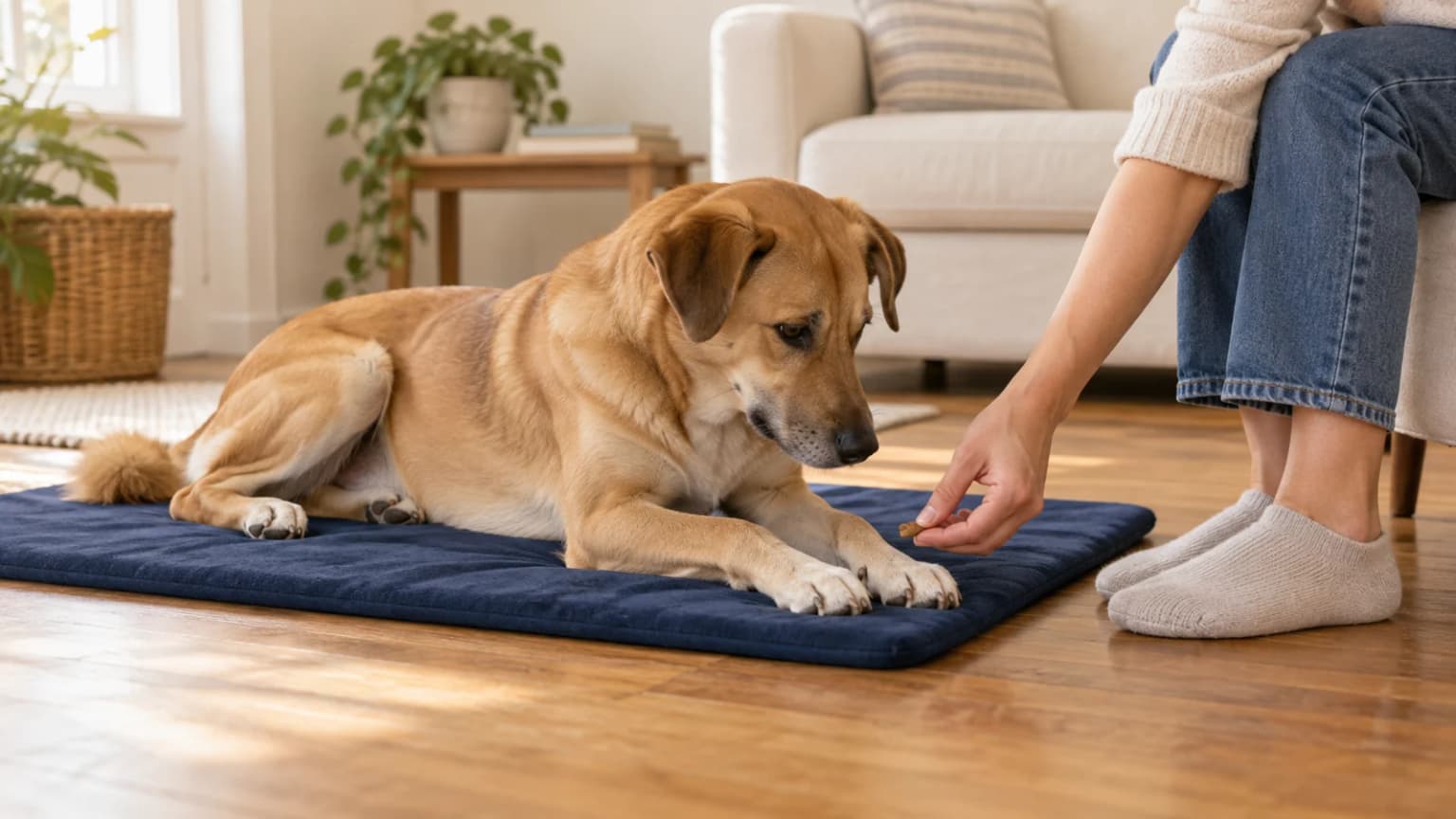
To teach a dog to settle, begin in a quiet room and reward small moments of comfortable stillness on a mat. Build the wait between rewards before adding movement or a new place. The dog should be free to get up; this is practice for choosing to relax, not restraint until struggling stops. It is especially useful in the adolescent stage, when everyday distractions can make quiet company harder.
What does a successful settle actually look like?
A settle is comfortable rest while ordinary life continues nearby. A dog holding a down with tense muscles and eyes fixed on your treat hand may be performing an obedience exercise, rather than relaxing. Dogs Trust's settle guide recommends rewarding progressively more relaxed behavior, including weight shifts and a resting head.
Use these checkpoints for your first sessions. They are practical observation points, not a clinical measure of stress or a fixed training timetable.
- Meet toilet, water, food and appropriate activity needs first.
- Sit near a comfortable mat in a quiet room.
- Reward a brief calm pause without asking for a pose.
- Gradually reward comfortable lying and longer pauses.
- Add one small distraction only while that easy version works.
Start with a calm behavior you can observe without pressure, rather than insisting every dog begins at the same rung.
Remember: Position is not the whole goal. Look for a comfortable dog who can disengage from you, not just a dog who remains down.
How should you prepare the room and rewards?
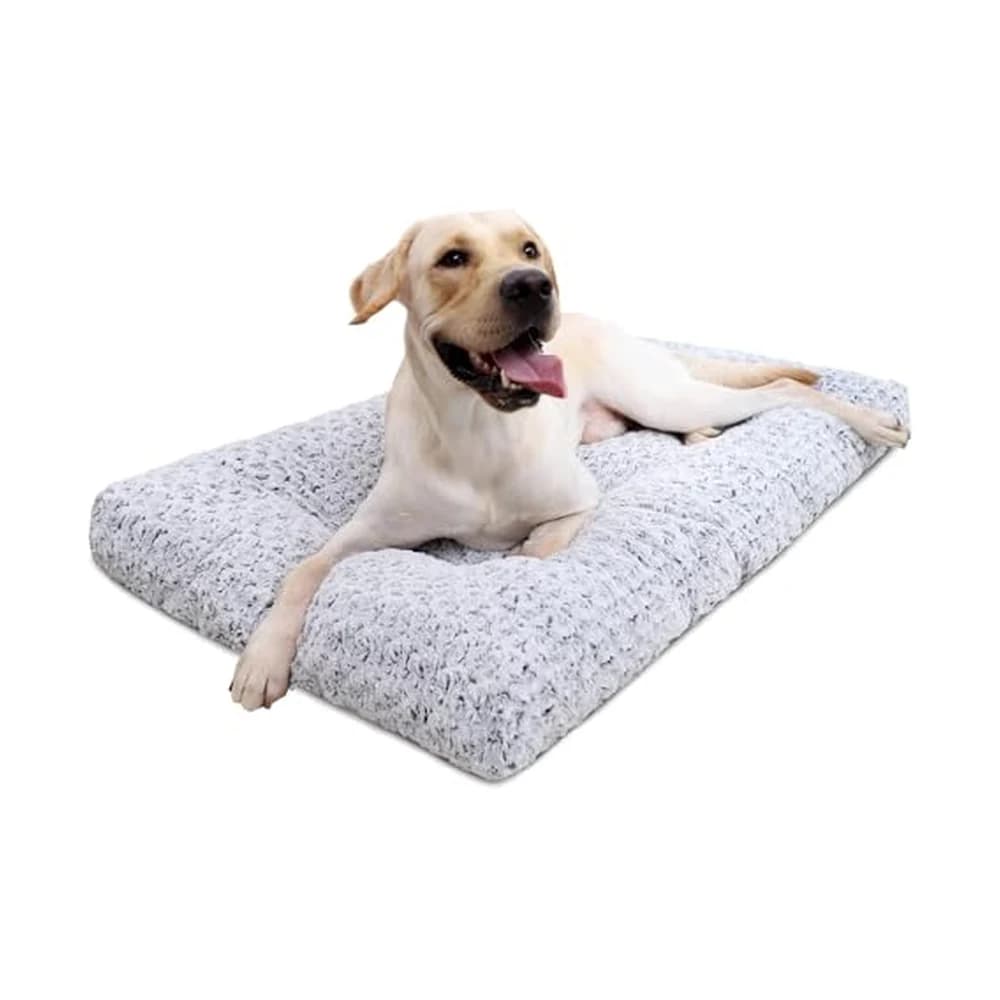
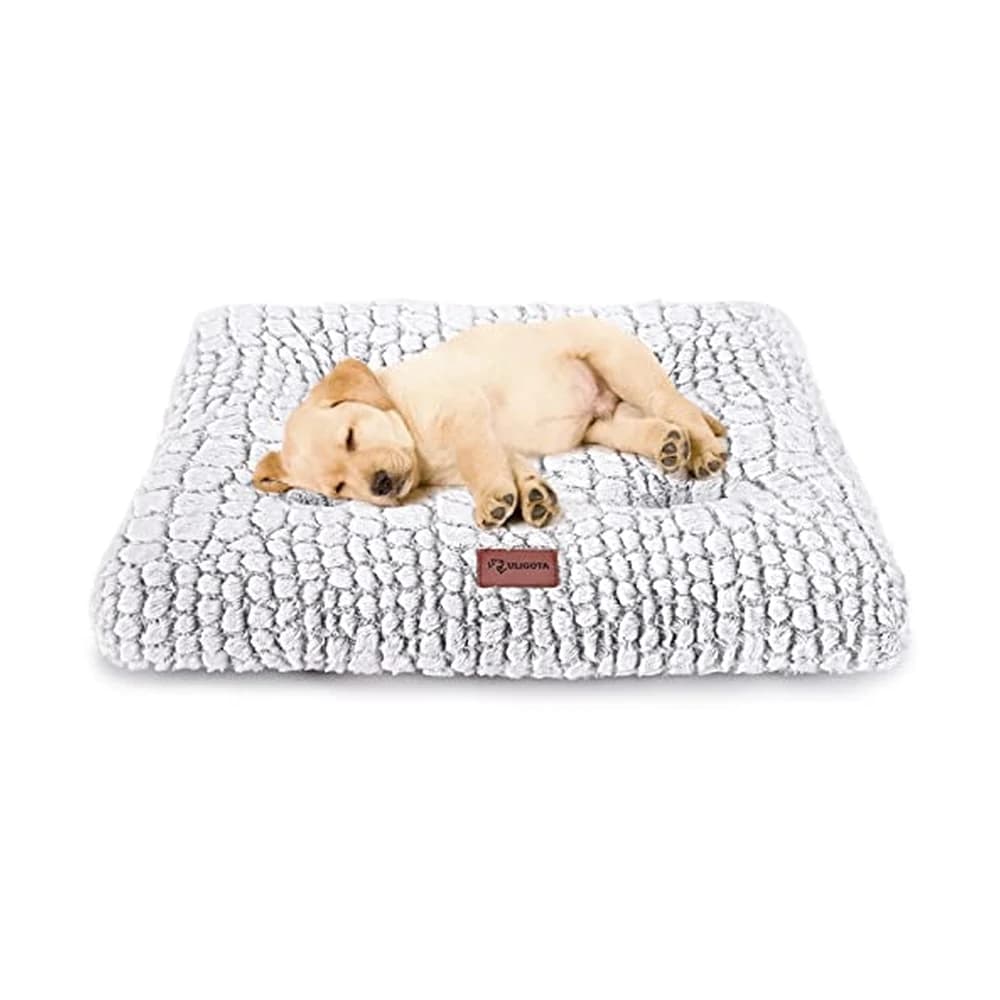
Pick a time when the dog is comfortable, with no visitors arriving or dinner being prepared. Put the mat beside your chair, away from the busiest walkway. A familiar blanket may be enough. The KSIIA washable crate bed and ULIGOTA crate pad are catalog options if their dimensions suit your dog; neither is a required training purchase. Choose a surface the dog already likes.
Use tiny pieces of appropriate food, delivered low and quietly. Zuke's Mini Naturals and Wellness Soft Puppy Bites are two existing shelf options, not foods every dog can tolerate. Account for rewards within the day's intake and follow any veterinary diet restrictions.
Before sitting down:
- Put rewards within reach so searching does not interrupt you.
- Move noisy toys away from the practice spot.
- Give the dog enough floor space to leave the mat.
- Keep other pets out if their presence changes the task.
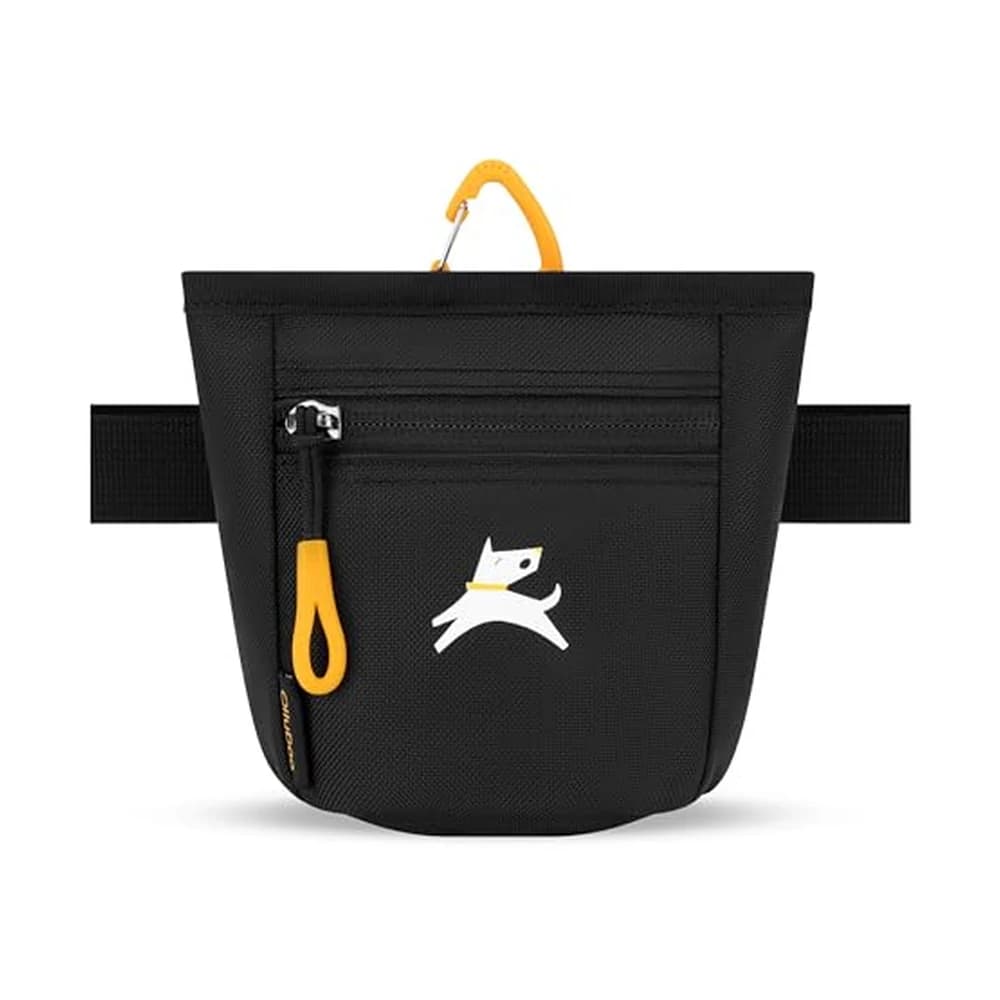
An OllyDog treat bag keeps rewards accessible without holding a tempting handful in front of the dog's nose. The training tools shelf contains these options; a pocket and ordinary blanket work too.
How do you teach the first calm pauses?
Sit quietly and watch. Reward a moment your dog pauses, looks away from you or chooses to investigate the mat without frantic movement. Place the food within easy reach. Avoid excited praise if it makes the dog jump up, and do not keep repeating a settle cue that has no meaning yet.
Dogs Trust advises starting with easy relaxed behavior and making progress gradually. Our implementation is to pick one observable target for the session, rather than reward every movement and hope the pattern becomes clear.
| Starting behavior | Reasonable next target | Make it easier when |
|---|---|---|
| Stares at your hands | Briefly looks away | Food presentation increases excitement |
| Stands quietly near the mat | Chooses a comfortable sit or lie | Repeatedly leaves to investigate the room |
| Lies down but stays alert | Shifts into a more comfortable position | Every reward triggers a jump up |
| Rests comfortably | Waits a little longer between rewards | Starts vocalizing or searching for food |
If no easy pause appears, stop trying to outwait the dog. Choose a quieter time or room, check comfort and needs, or reward an easier behavior. One short success is a better place to finish than a long argument about staying on a mat.
How do you increase duration without creating frustration?
Increase the gap between rewards only while the dog remains comfortable. Dogs Trust suggests adding a couple of seconds over multiple sessions. There is no requirement to reach a particular number by tonight; keep the previous successful version available.
For example, if calm pauses are easy while you sit silently, wait a little longer before the next reward while keeping everything else the same. If the dog gets up, let them. Restart at the easier gap when they choose to return, or finish if their needs have changed.
 Illustration: transfer comfortable mat practice to another quiet setting before adding busier distractions.
Keep a tiny session note: location, what you rewarded and what caused the dog to get up. This prevents mistaking a harder setting for lost learning. A harder room needs easier practice.
End before the dog has to fail
Finish a useful session while the target is still easy. Put the food away and return to an ordinary activity. Do not abruptly demand a long unreinforced wait because the dog managed several short ones. Natural rest between formal sessions is part of the goal, so notice those ordinary moments too.
When can you add distractions or move the mat?
Add one change at a time: duration, your movement or the setting. If you lengthen the pause, stand up and move to a busy doorway together, you cannot tell which change made the exercise too difficult.
Start with ordinary, low-interest movements:
- Shift your weight in the chair.
- Reach for a book or a mug.
- Have a familiar person walk past at a distance.
- Try the mat in another quiet part of the house.
Dogs Trust recommends reducing a distraction or increasing distance if the dog cannot settle. At home, that may simply mean practising farther from the kitchen counter. Outside, pick a quiet location with space to retreat; do not start in a packed café because that is where you eventually want the skill.
Progress rule: Change one thing and watch the dog. Getting up is feedback to make the next attempt easier, not a reason to hold the dog down.
A leash outdoors is for ordinary safety and local requirements. Keep it comfortable and avoid tethering the dog so tightly that stillness is the only possible option. Indoor practice can happen without a leash in a secure room.
What if treats make your dog more excited?
Change reward delivery before deciding the dog cannot learn. Smaller pieces, a quieter hand movement or using part of the normal meal may make the session less eventful. If the dog is comfortable resting without food, you do not need to interrupt every quiet moment to pay it.
What helps:
- Rewarding at floor level without asking the dog to stand.
- Practising when the dog's ordinary needs are met.
- Tracking relaxed behavior instead of counting perfect downs.
What makes settling harder:
- Clicking or cheering when those sounds restart excitement.
- Treating barking as a reason to demand an even longer wait.
- Expecting a mat to cancel fear, pain or a missed toilet break.
AVSAB recommends reward-based training and environmental management. Do not ignore discomfort to keep practising. Our adolescent regression guide covers rebuilding other skills in easier settings.
When should you stop training and ask for help?
New restlessness, difficulty lying down or standing up, persistent panting, pacing or distress deserves a veterinary conversation. A mat exercise cannot determine whether the problem is physical discomfort or anxiety. If the dog becomes distressed when you move away, seek qualified behavior help rather than stretching a settle into unsupported alone-time training.
Record what happens, in which rooms and at what times, without staging a stressful demonstration. Meanwhile, make the resting space comfortable and reduce avoidable disturbance. Your useful success measure is whether the dog increasingly chooses comfortable rest in ordinary life, with fewer prompts and manageable distractions. A still dog is not automatically a settled dog.
Key takeaways
What to remember
- Meet ordinary needs before asking a dog to practise quiet rest.
- Start with an easy calm behavior rather than demanding a perfect down.
- Reward comfortable rest and disengagement, not only a fixed position.
- Build duration and distractions separately so you can identify what became too hard.
- Let the dog leave the mat and restart an easier version without restraint.
- New restlessness, discomfort or separation distress needs professional advice.
Questions people ask
- Is settle training the same as teaching a down-stay?
- A down-stay teaches a dog to remain in a position until released. Settle training rewards comfortable rest and the ability to disengage from activity nearby. A tense dog watching your hand may be staying down without relaxing.
- Do I need a special dog mat for settle training?
- A comfortable familiar blanket can work. Choose a surface your dog already likes that provides enough room to rest. A particular bed, mat brand or treat pouch is not necessary to begin.
- What should I do when my dog gets up during settle training?
- Let the dog get up and check what changed: reward gap, your movement, the setting or an ordinary need. Restart an easier version if the dog returns comfortably, or end the session. Do not hold the dog down to complete a time target.
- Can I teach my dog to settle without a leash?
- You can practise without a leash in a secure indoor space. Outside, use a leash for ordinary safety and local rules, while keeping it comfortable. Restraining the dog until movement stops does not demonstrate relaxation.
- How long does it take to teach a dog to settle?
- There is no universal timetable. Track whether your dog chooses comfortable rest with gradually longer pauses and manageable distractions across ordinary settings. If the dog remains distressed or develops new restlessness, seek veterinary or qualified behavior advice rather than extending sessions.
Gear
The gear this guide assumes
Our shelves and product pages, so you can see the options without leaving mid-session. No buy buttons here — this is a training guide.
$19.99 Owner rating 4.6 out of 5 · 34,176
The crate pad you can strip and wash whole, sized to a mid-size crate floor.
$20.99 Owner rating 4.6 out of 5 · 1,385
A small crate in the accident weeks — a plush top over a waterproof bottom, washable whole.
$14.98 Owner rating 4.6 out of 5 · 16,053
The everyday training treat — small
$9.99 Owner rating 4.6 out of 5 · 51,071
The first months of training
$19.95 Owner rating 4.6 out of 5 · 2,279
Getting a reward out in under a second, which is the only thing a treat pouch is actually for.


Sources
- How to train your dog to be calm, relax and settle — Dogs Trust — Quiet initial setting, rewarding increasingly relaxed behavior, gradual duration and distractions, and making the setting easier when the dog cannot settle.
- AVSAB Position Statement on Humane Dog Training (2021) — Reward-based methods for ordinary training and unwanted behaviors, environmental management, and professional treatment for fear or anxiety.
Not veterinary advice — for anything medical, ask your vet.
Next step
Rebuild skills during adolescent regression
Use easier settings and clear rewards for the other everyday skills that became harder.