The best joint supplements, compared.
Joint supplements are a long game with modest, uncertain effects. They are worth discussing with your vet — and they are not pain relief.
Amazon links earn us a commission; it doesn’t change what we recommend.
Start here
Which one is right for you?
Three different dogs, three different answers. Each one names what it is good at and what it costs you.
A vet has suggested starting a joint supplement
The name that comes up most often in veterinary threads, at a price that survives daily use. Expect weeks before any change, if there is one.
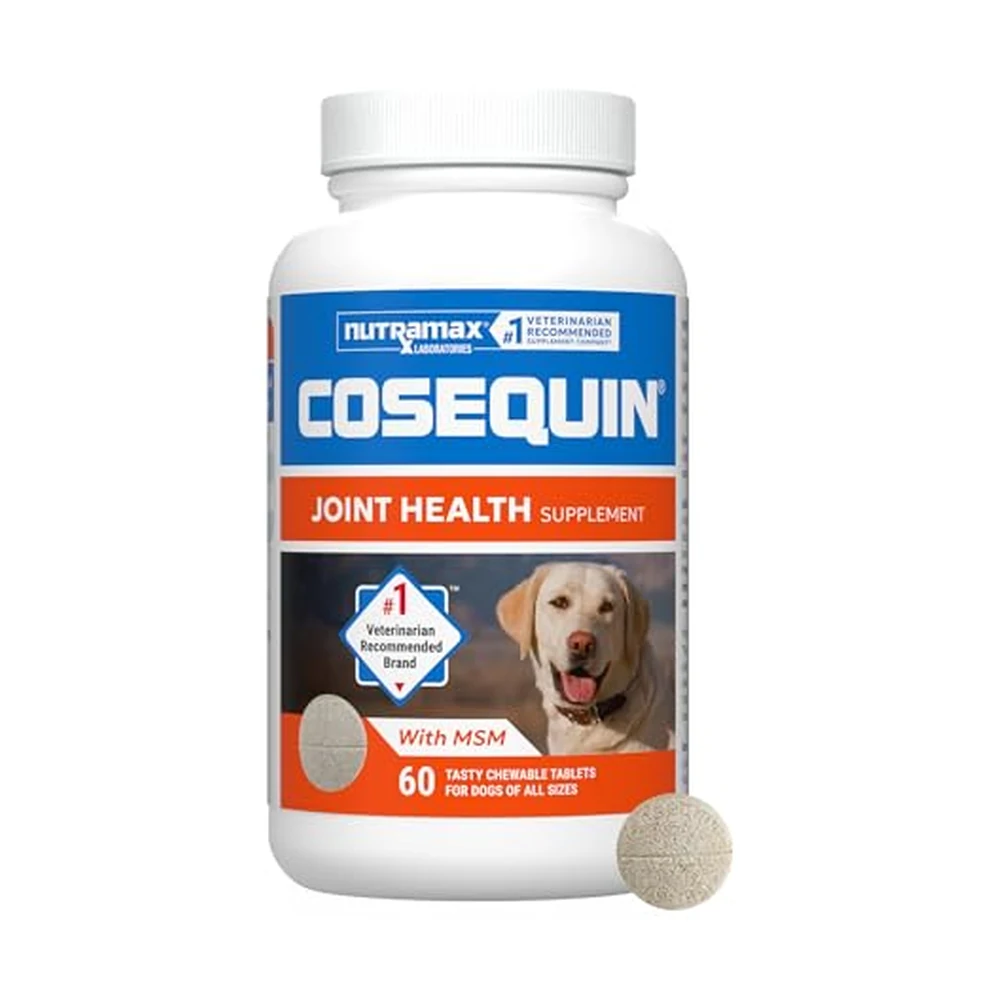
Our pick for this: Nutramax Cosequin Chews · $15.87
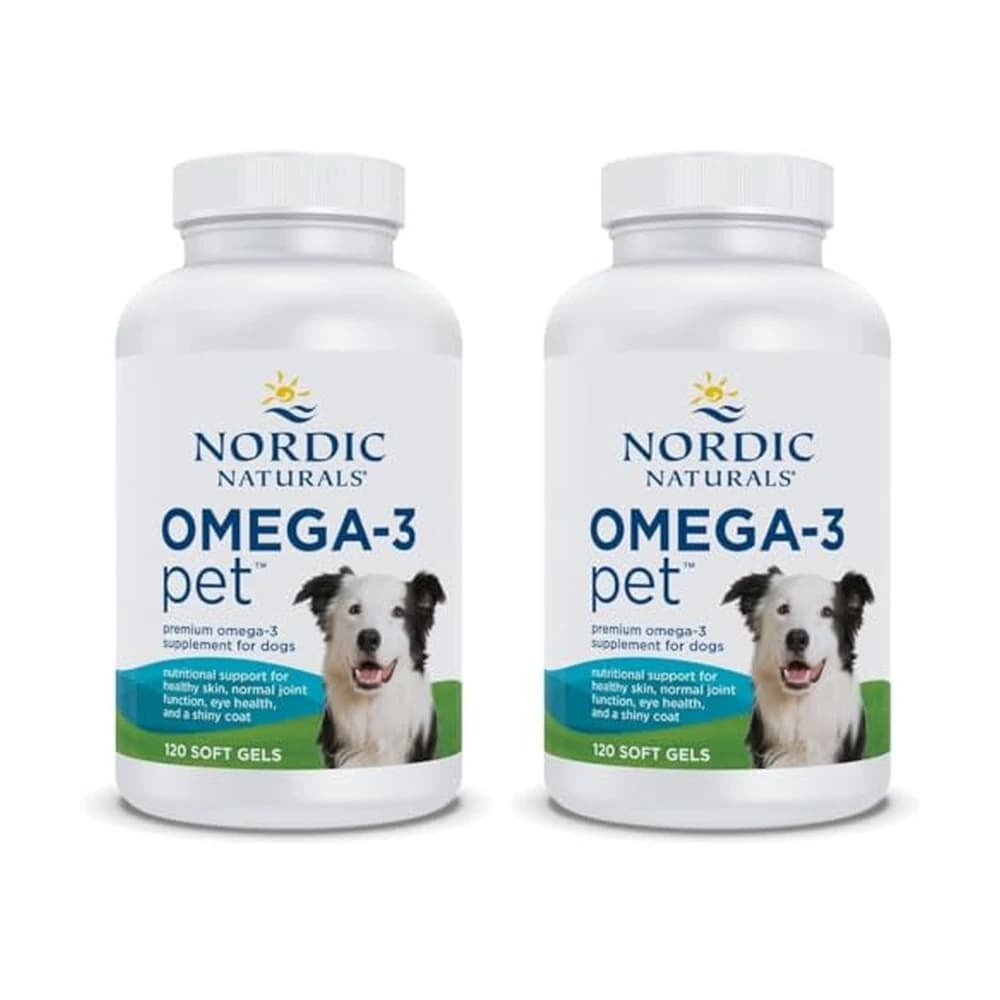
You would rather start with omega-3s
A different mechanism from glucosamine and a different evidence base. Note that the FDA does not recognise pet supplements as a regulated category at all, so every claim on every tub here is the maker's.
Our pick for this: Nordic Naturals Omega-3 Pet · $50.92
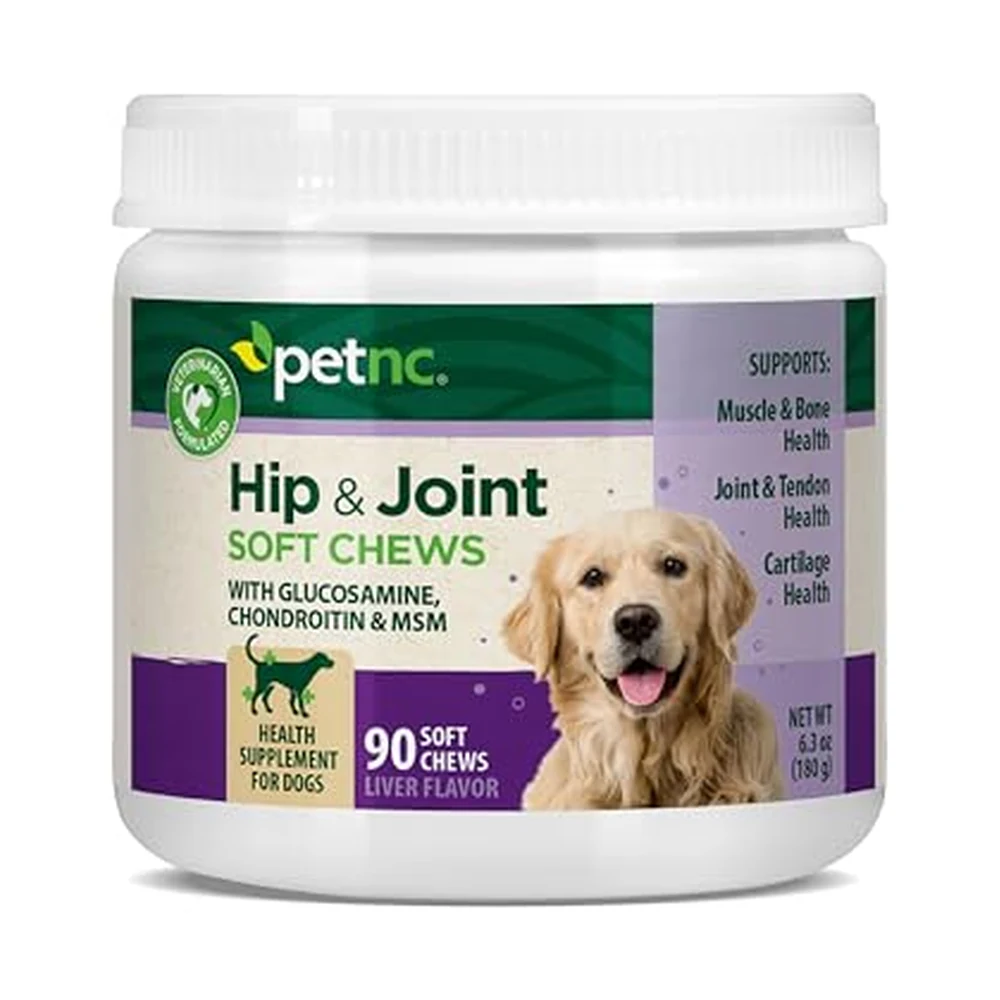
You want to try one without committing much
Cheap enough to find out whether your dog will eat them before you buy a month of something expensive.
Our pick for this: PetNC Hip & Joint Chews · $9.99
If none of these is your dog: nothing on this shelf is the right answer for every household, and we would rather you bought nothing than the wrong thing. Start from the stage your dog is actually in, or browse the other shelves.
Filter picks5 of 5
Showing 5 of 5 picks — no filters applied
Showing 5 of 5 picks — no filters applied
The picks, feature by feature
The mainstream starting point — glucosamine, chondroitin and MSM from an NASC-certified maker, at a low price per dose
- Size
- Not stated
- Colour
- Not stated
- Dimensions (H × W × D)
- Not stated
- Weight
- Not stated
- Warranty
- Not stated
- Model
- Not stated
- Manufacturer
- Not stated
- Skip if
- Your dog is already on a prescription joint medication. Check with your vet before adding anything.
The variant we link: 60ct
$50.92 4.6 out of 5 stars · 4,657 ratings
The active with the firmer evidence — 330 mg of EPA and DHA per gel, third-party tested, in triglyceride form
- Size
- Not stated
- Colour
- Not stated
- Dimensions (H × W × D)
- Not stated
- Weight
- Not stated
- Warranty
- Not stated
- Model
- Not stated
- Manufacturer
- Not stated
- Skip if
- Your dog is on a fish-oil-containing diet already, or on anticoagulants. Ask your vet about dosing first.
The variant we link: 120 Soft Gels
A cheap first trial — glucosamine, chondroitin, MSM and hyaluronic acid in 90 liver-flavoured chews for under $10
- Size
- Not stated
- Colour
- Not stated
- Dimensions (H × W × D)
- Not stated
- Weight
- Not stated
- Warranty
- Not stated
- Model
- Not stated
- Manufacturer
- Not stated
- Skip if
- You want stated quantities per active. The listing names four ingredients without amounts.
The variant we link: 90 Count
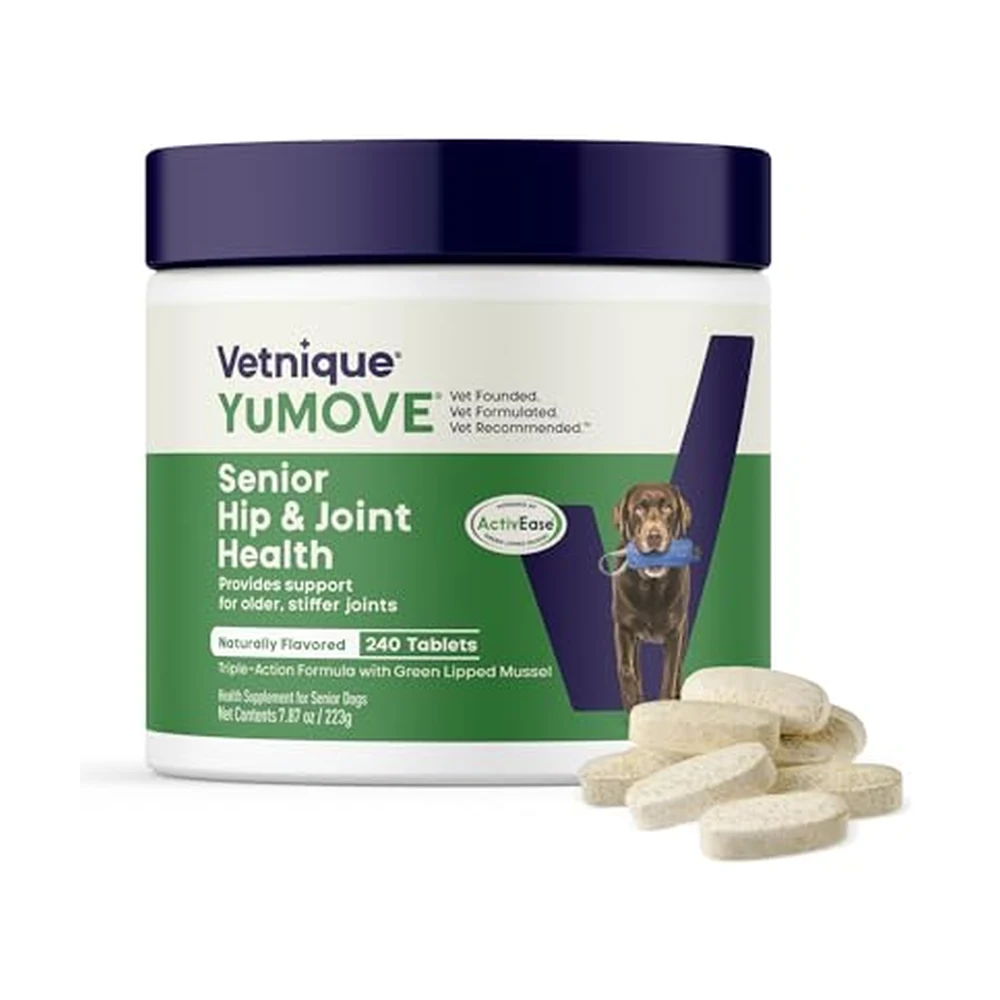
A dog aged seven and up with stiff mornings — green-lipped mussel and hyaluronic acid, in a senior-specific formula
- Size
- 240 Tablets
- Colour
- White
- Dimensions (H × W × D)
- 4.49 in × 2.56 in × 2.44 in
- Weight
- 0.55 lb
- Warranty
- 90 Day Manufacturer Warranty
- Model
- YMS240
- Manufacturer
- YuMOVE
- Skip if
- Cost per month matters most. This is at the expensive end and needs a loading period at double dose.
The variant we link: Green · 240ct
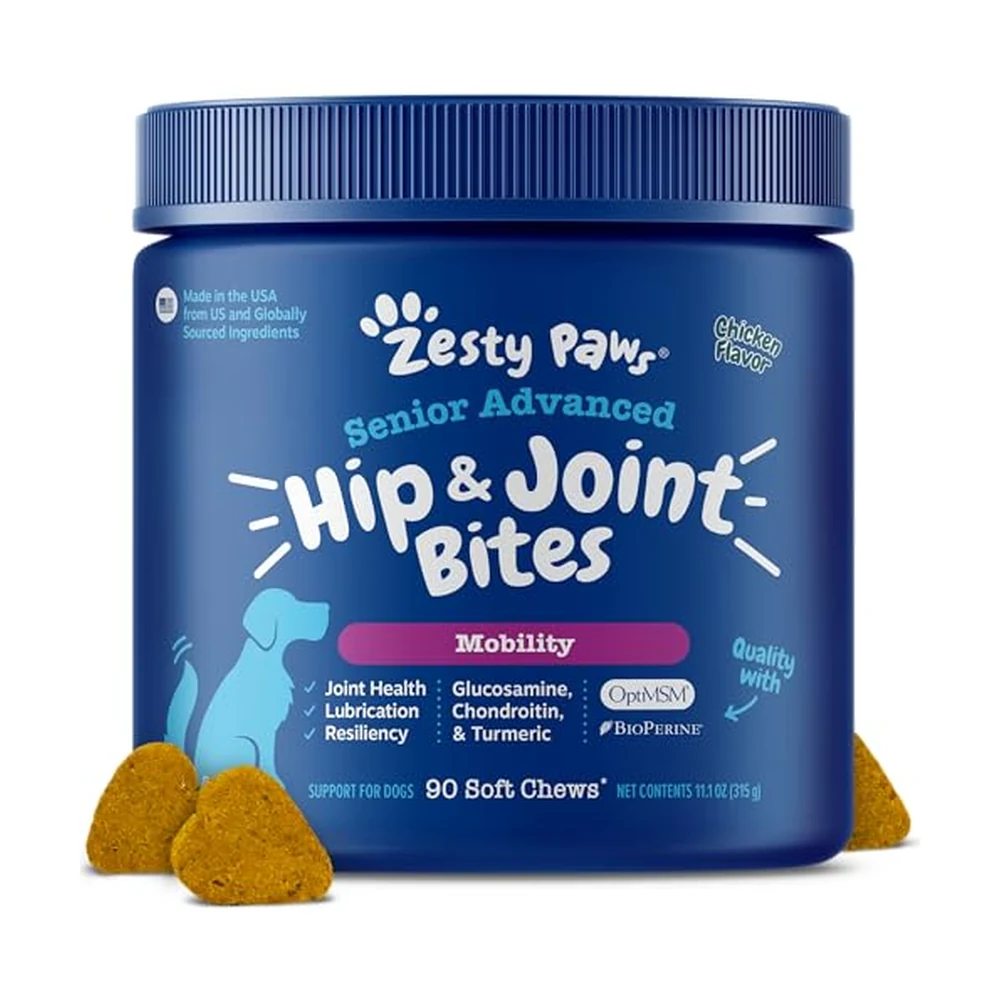
A dog who refuses tablets — a soft chew with glucosamine, OptiMSM, green-lipped mussel and turmeric
- Size
- Not stated
- Colour
- Not stated
- Dimensions (H × W × D)
- Not stated
- Weight
- Not stated
- Warranty
- Not stated
- Model
- Not stated
- Manufacturer
- Not stated
- Skip if
- Your dog has food sensitivities. Soft chews carry more binders and flavourings than tablets do.
The variant we link: 90ct
Each pick below carries its own specs, and the tags mark the best of these picks on that point. Specs come from manufacturer listings; ratings are the Amazon aggregate rating and count, refreshed periodically — we don't test products.
How winners are decided: ✓ marks the lowest price, the highest owner rating, the largest stated weight capacity and the longest warranty. Rows where more is not better — size, dimensions, weight, material — and the editorial rows get no ✓ at all. A blank is unknown, never a loss, and a row needs at least two known, differing values before anything can win. How the best-of-these tags are decided: the lowest price, the highest owner rating, the largest stated weight capacity and the longest warranty. Points where more is not better — size, dimensions, weight, material — and the editorial notes carry no tag at all. A blank is unknown, never a loss, and a point needs at least two known, differing values before anything can lead. As an Amazon Associate we earn from qualifying purchases. Specs are the manufacturer's claims and owner-reported data — we research and analyse; we don't test products on dogs.
Why joint supplements matter at this stage
This is a category where the honest answer is a smaller one than the marketing. Joint supplements are not medicines; in the US they are regulated as supplements rather than drugs, which means the burden of proof before sale is far lower than for a prescription anti-inflammatory. The evidence for glucosamine and chondroitin in dogs is genuinely mixed, with some studies showing modest improvement and others little. Omega-3 fatty acids have somewhat firmer support for joint comfort. What none of them are is pain relief: a dog who is limping, struggling to rise, or reluctant on stairs needs a vet, and often needs an actual analgesic.
Where they do fit is as part of a plan your vet leads, alongside the interventions with the strongest evidence — keeping the dog lean, which is by some distance the most effective thing you can do for arthritic joints; controlled, regular exercise; traction at home; and medication where it is warranted.
Two practical filters. Look for the NASC seal, which indicates a manufacturer has submitted to the National Animal Supplement Council's quality auditing — a floor for a category with no mandatory one. And give it time: most makers describe a four-to-six-week window before any change, so judging after a fortnight tells you nothing.
Always tell your vet what you are giving. Supplements interact with medication, and doubling up on the same active is easy when several products contain it.
The thing most owners don’t know
One surprising thing about joint supplements
The FDA states that the Dietary Supplement Health and Education Act does not apply to animals, so FDA does not recognize pet dietary supplements as a special category — they are regulated as food or as animal drugs instead.
Source: FDA's Regulation of Pet Food - U.S. Food and Drug Administration
What owners keep saying
Owner reports on glucosamine and chondroitin chews run the full range, from a dog getting up the stairs more easily within weeks to no change at all, and the same threads carry vets pushing back that the clinical evidence for those ingredients is weak while marine omega-3 has the better support. Owners who stay on a supplement usually describe it as one layer alongside weight control, and several note that what held for years stopped seeming to help once arthritis advanced, at which point the conversation moves to prescription options their vet manages. Digestive upset, gas, and outright refusal of a chew are common reasons a product gets dropped, and buyers warn each other about counterfeit stock from third-party marketplace sellers. These are not treatments we can vouch for: the consistent thread advice is to raise a stiff or painful older dog with a vet first, since supplements are being discussed as an add-on to a diagnosis, not a substitute for one.
we read 73 threads across r/AskVet, r/seniordogs, r/olddogs
Paraphrased from public discussion, never quoted and never counted into a statistic we did not measure. Owners are not a controlled study — they are the only long-term use data anybody has.
What we didn’t pick
Things that look like they belong on this shelf and are not on it, with the reason.
A supplement instead of a vet visit for new lameness
A dog who was fine last month and is limping now needs an examination. Everything on this shelf is for managing a diagnosed or expected long-term problem, not for working out what is wrong.
Clinically proven claims on the packet
The FDA states that the Dietary Supplement Health and Education Act does not apply to animals, so pet supplements are not recognised as a special regulated category at all. That is the context for every claim printed on these tubs, including the ones we rank.
Human glucosamine tablets
Dose and excipients differ, and some human formulations contain sweeteners that do not belong near a dog. We only carry products formulated for dogs.
How to choose a joint supplement
Ask your vet first, look for third-party quality auditing, and expect modest effects over weeks.
Your vet's opinion before the label's
Supplements interact with medication and are not a substitute for pain relief. Your vet knows what your dog is already on and what their joints actually need.
NASC quality seal
The National Animal Supplement Council audits manufacturing quality. In a category with no mandatory pre-market standard, it is the most useful shortcut available.
Named actives at stated amounts
Look for glucosamine, chondroitin, MSM, green-lipped mussel or EPA/DHA with quantities per dose. A proprietary blend with no amounts tells you nothing.
A form your dog will take daily
A chew they eat like a treat beats a tablet you hide and they spit out. Daily compliance over months is the whole mechanism.
Judged over four to six weeks
Manufacturers themselves describe a multi-week window. Judging after a fortnight, or after a good day, tells you nothing either way.
Common questions
- Do glucosamine supplements actually work for dogs?
- The evidence is mixed — some studies show modest improvement in comfort and mobility, others show little, and supplements are not held to the pre-market standard a drug is. They are best thought of as a low-risk addition to a plan your vet leads, not as a treatment. Omega-3 fatty acids have somewhat firmer support.
- How long before I see a difference?
- Most manufacturers describe four to six weeks, and that is a reasonable window to judge over. Agree a review point with your vet before you start, so you are assessing against something rather than against hope.
- What helps arthritis more than supplements?
- Keeping the dog lean is, by a wide margin, the most effective home intervention — every extra pound is load on a sore joint. After that: consistent moderate exercise rather than weekend bursts, traction on slippery floors, soft supportive bedding, and pain medication where your vet judges it appropriate.
Gear
Pairs with
Shelves that go with joint supplements — hand-picked adjacencies, not "customers also bought".
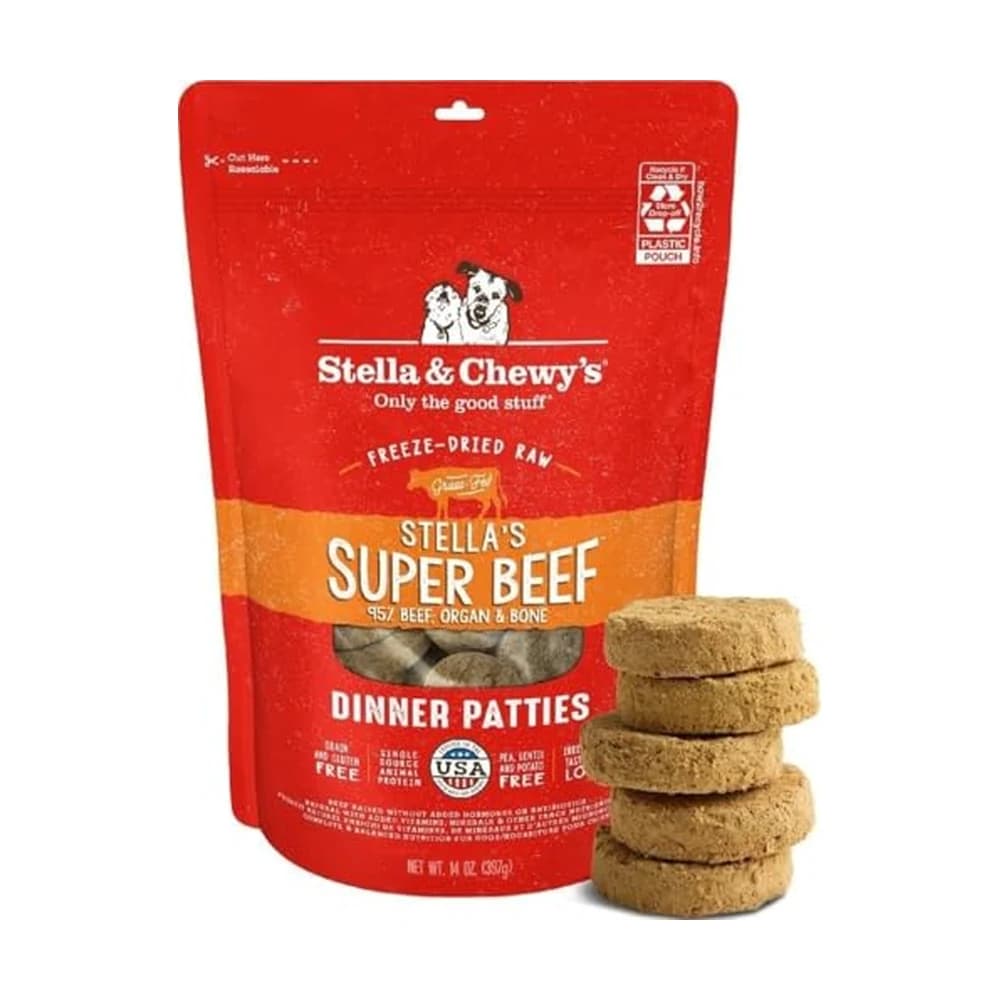
$39.97 4.6 out of 5 stars · 3,940
Senior formulas often already carry joint ingredients — check before you double-dose.
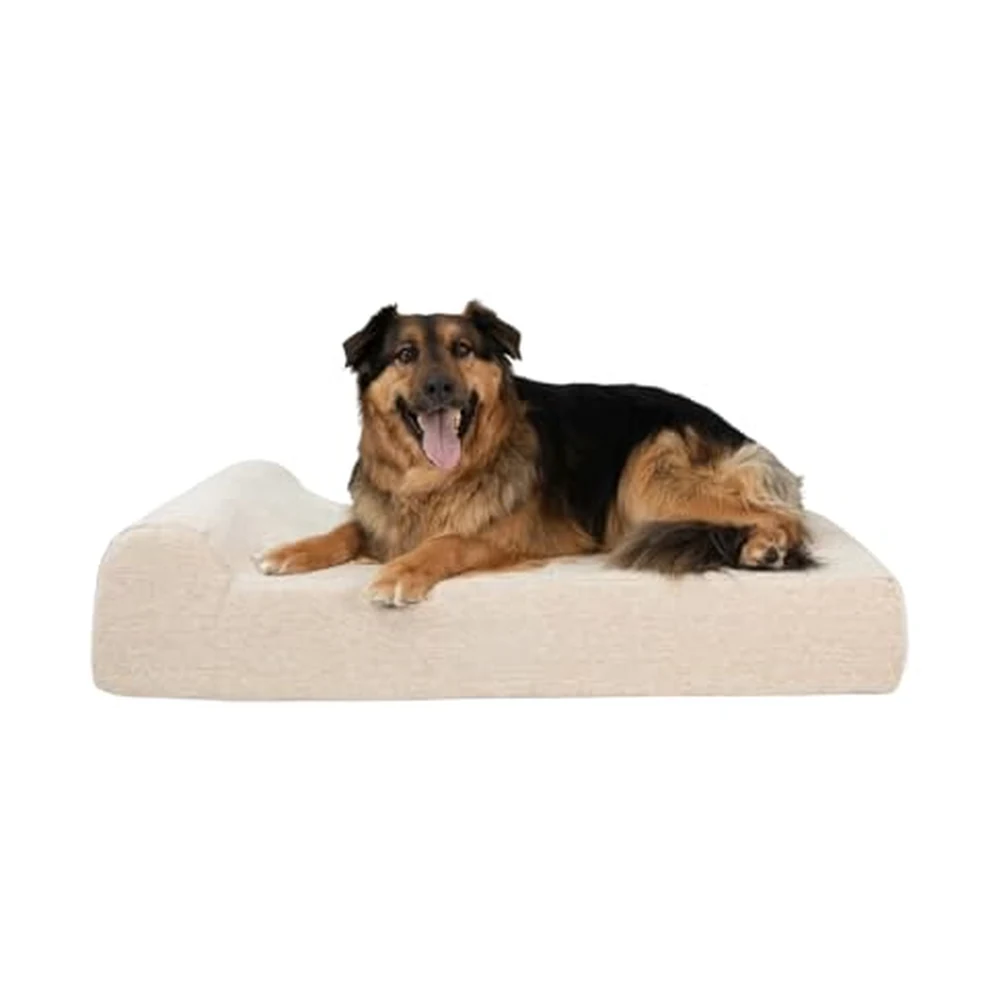
$289.95 4.7 out of 5 stars · 5,902
Support under the dog does work no capsule can, and it works the first night.
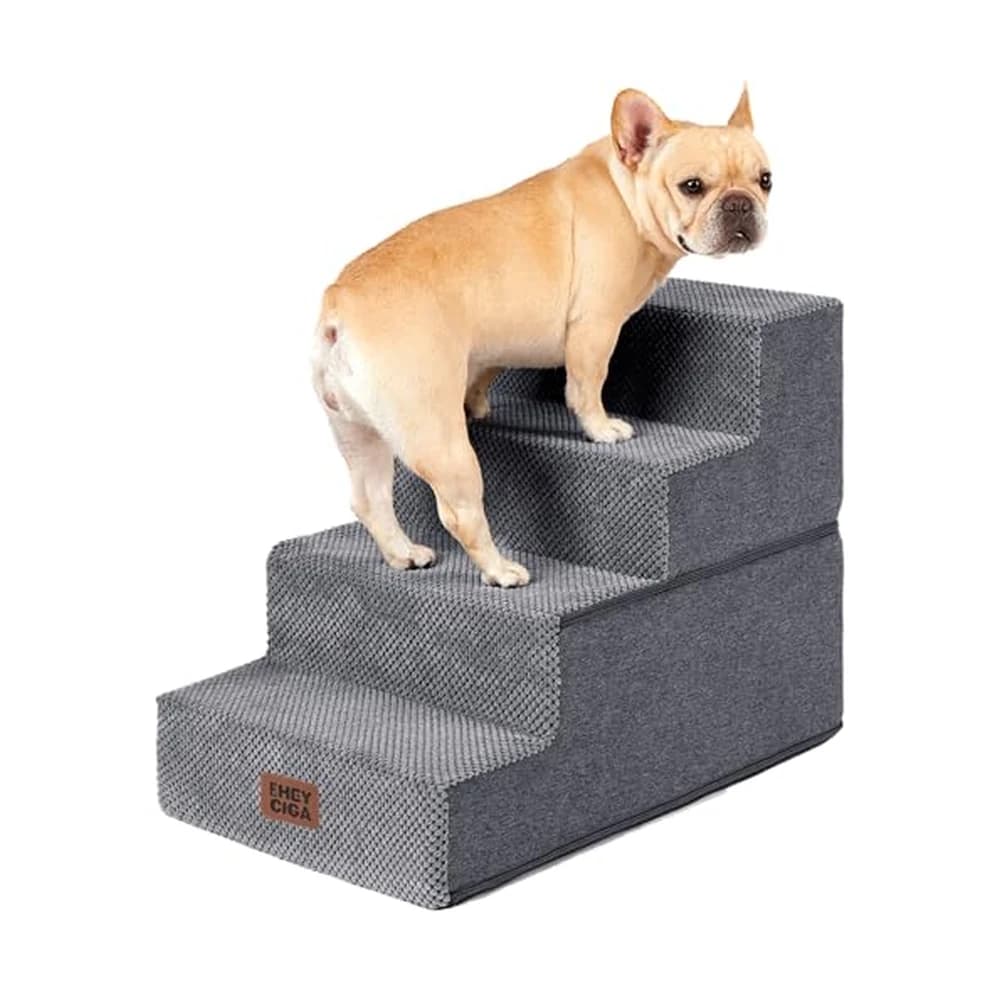
$32.29 4.4 out of 5 stars · 10,918
Removing the jumps is the intervention with the clearest mechanism of the three.