Puppy playpens and dog gates
A pen buys you the middle ground between the crate and the whole house. A gate buys you a room you never have to puppy-proof.
Amazon links earn us a commission; it doesn’t change what we recommend. Researched, not tested — how we research.
Playpen or crate?
Use the crate for sleep and short stretches, and a playpen for the longer awake hours. Humane World for Animals says puppies under six months should not stay in a crate for more than three or four hours at a time. VCA draws the same line: a crate suits owners who do not need to leave a puppy confined for longer than two or three hours, while a puppy left alone for longer needs a room or collapsible pen with a papered area for toileting.
- Pen wins: you are home but busy and want the puppy awake nearby without the run of the house.
- Pen wins: an absence longer than the crate limit, when the puppy needs room for a pad, water and a bed.
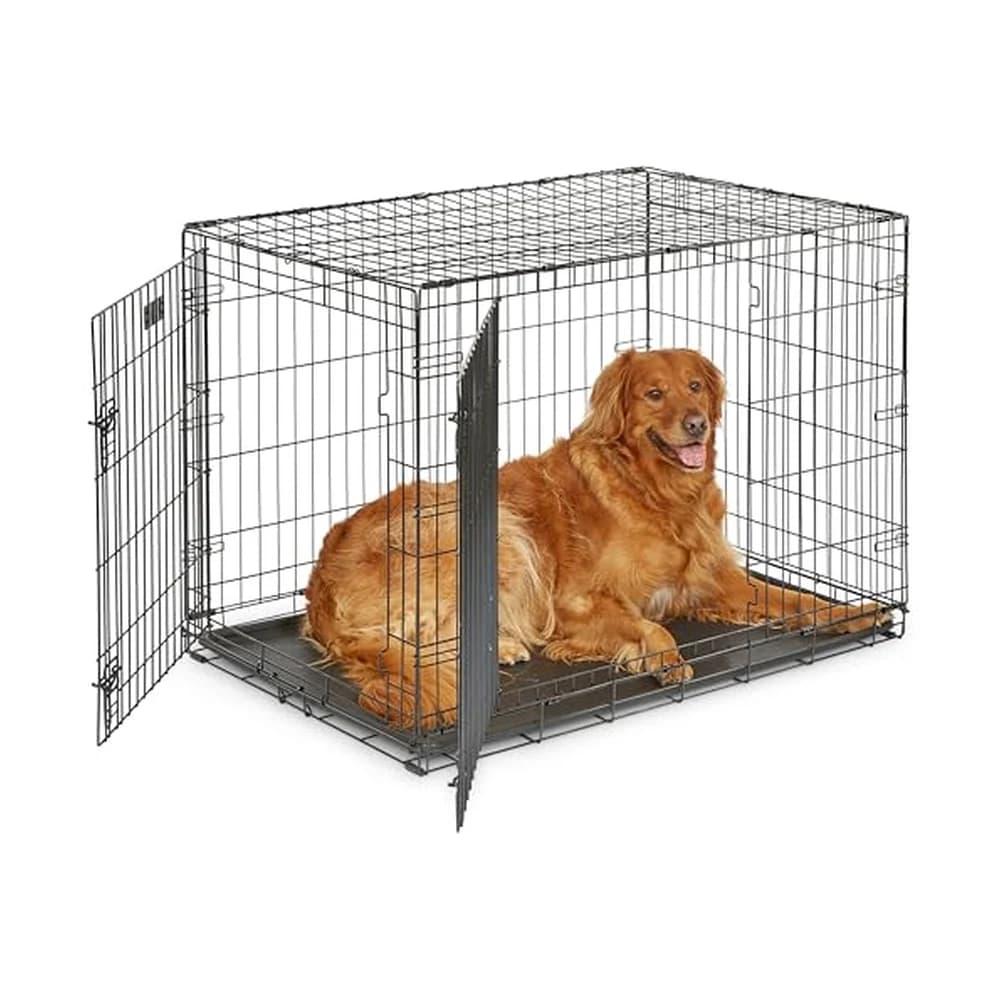
- Pen and crate together: clip the pen to an open crate so the puppy has a bedroom and a floor.
- Crate wins: night-time, short absences, car journeys and vet visits.
- Crate wins: a dog who can already clear the pen — a pen they jump is a false sense of security.
Sources, read 2026-09-26: Humane World for Animals — Crate training 101 · VCA — Puppy behavior and training: dealing with undesirable behavior · VCA — Crate training and confinement for puppies and dogs
Start here
Which one is right for you?
Three different dogs, three different answers. Each one names what it is good at and what it costs you.
A settled young puppy who has not learned to climb
Enough floor space for the hours a crate is too small, at a height a small puppy will not clear. Size up the moment they try.
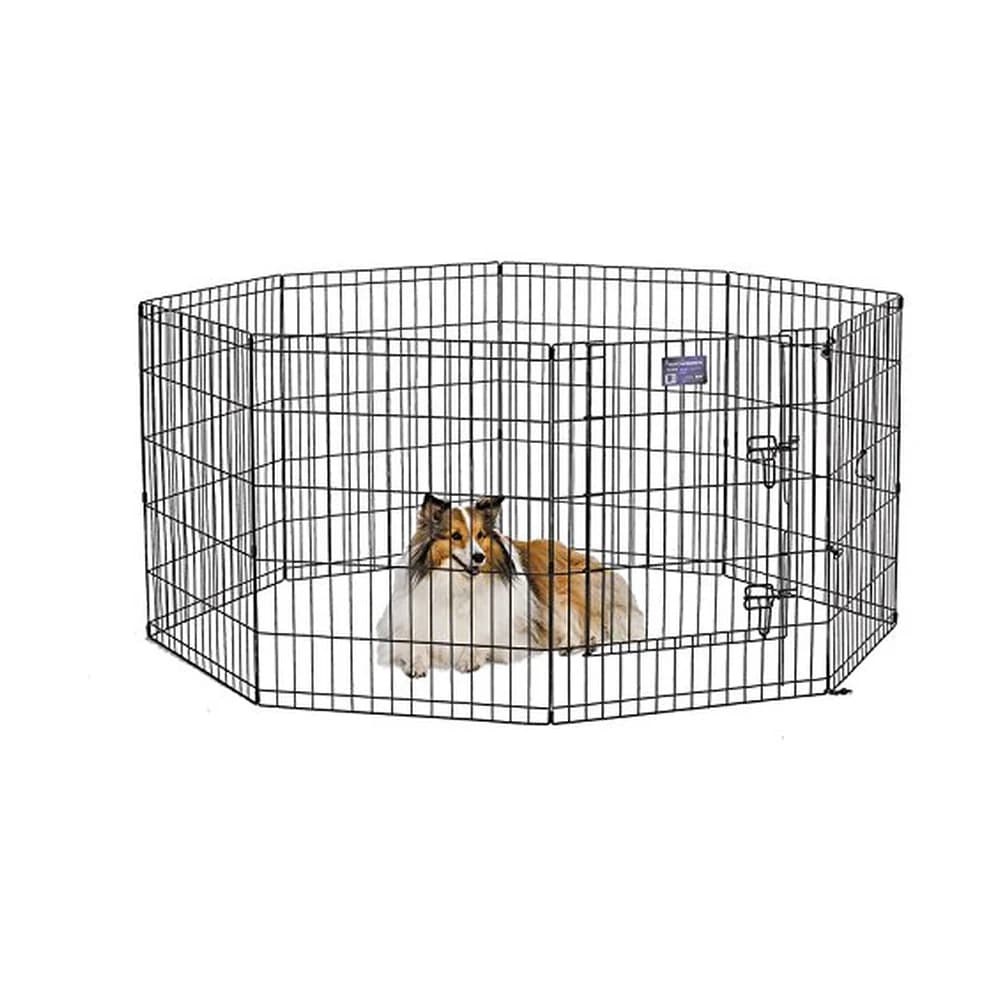
Our pick for this: Amazon Basics Octagonal Pen · $46.56
An athletic adolescent who has already cleared a pen
Once a dog knows they can get over, they will keep doing it. Height is cheaper than retraining.
Our pick for this: VISCOO 40-Inch Playpen · $89.99
You would rather gate a room than build a pen
By adolescence most dogs graduate from a pen to a gated kitchen or hallway, and the gate outlives the pen. Not for the top of a staircase unless it is hardware-mounted.
Our pick for this: Carlson Extra Wide Gate · $39.99
If none of these is your dog: nothing on this shelf is the right answer for every household, and we would rather you bought nothing than the wrong thing. Start from the stage your dog is actually in, or browse the other shelves.
Filter picks6 of 6
Showing 6 of 6 picks — no filters applied
Showing 6 of 6 picks — no filters applied
The pen or gates, feature by feature
The default puppy pen — 16 square feet, a step-through door, and it clips onto a wire crate to make one bigger space
- Material
- E-coated steel
- Skip if
- Your puppy is already jumping 30 inches, or you need a barrier a determined adolescent cannot lean over.
The variant we link: 30-Inch
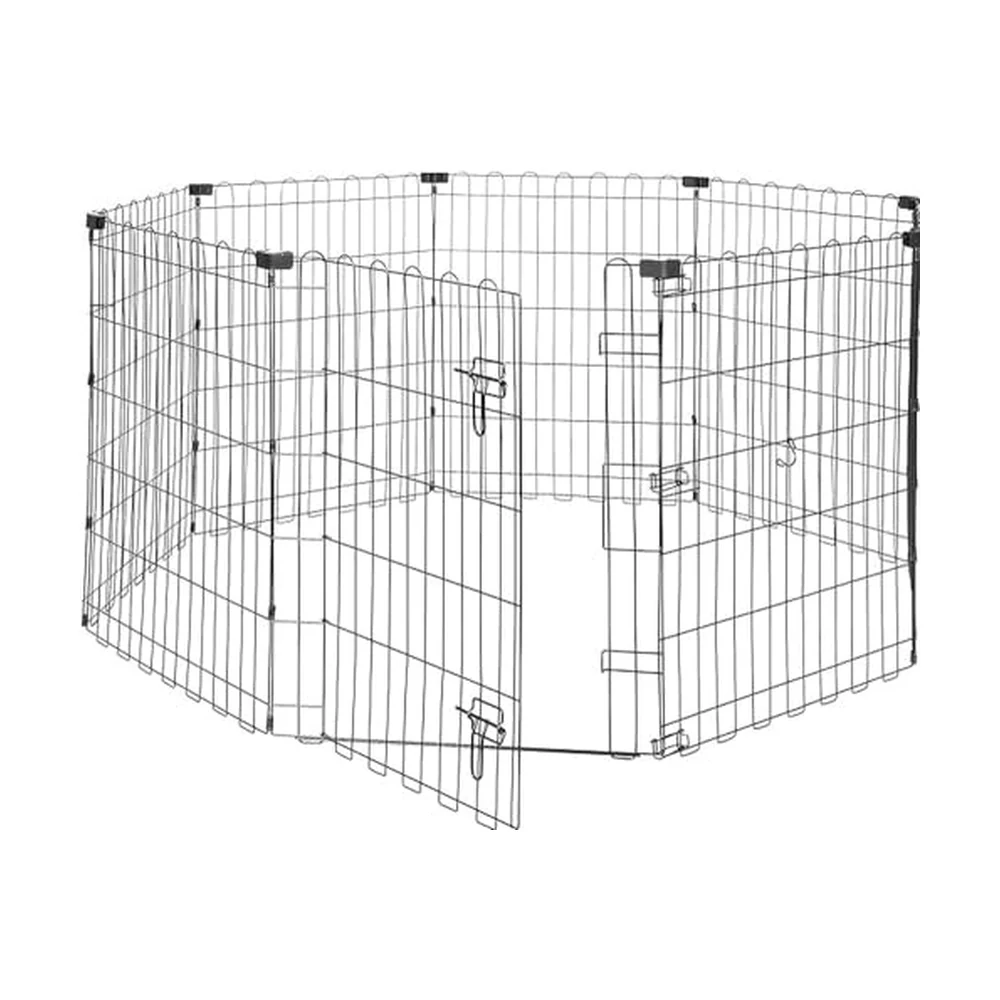
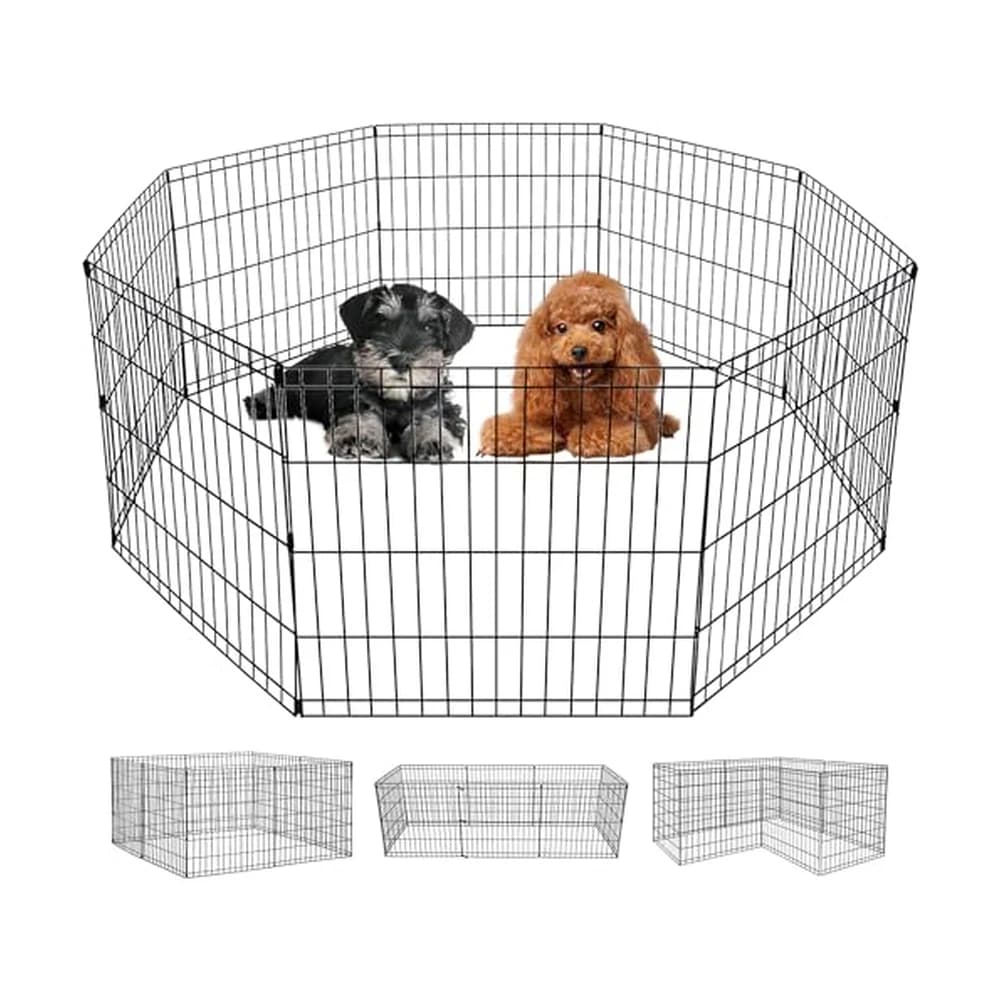
A cheap, reconfigurable second pen — octagon, square or rectangle, or opened flat to block a room off
- Material
- Metal
- Skip if
- You have a bigger dog. Owners are clear this is a small-dog and puppy pen, not a barrier for 50 pounds of adolescent.
The variant we link: 8 Panels · Small · 30 Inches · Black
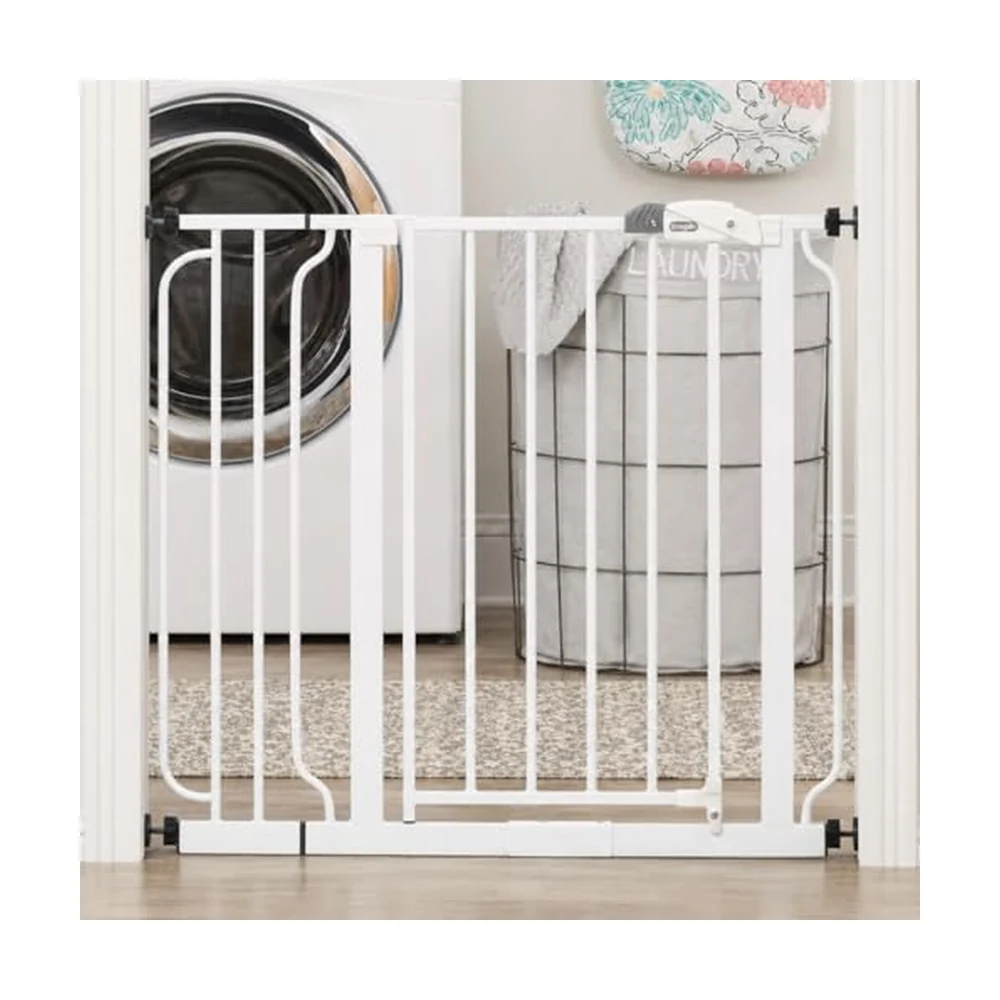
A wide doorway at the bottom of the stairs — it spans 29 to 38.5 inches and stands 30 inches tall
- Material
- Steel, powder-coated white
- Skip if
- You need it at the top of a staircase, or you want a latch you can work one-handed every time.
The variant we link: 29"-38.5"
$39.99 Owner rating 4.4 out of 5 · 51,271 ratings
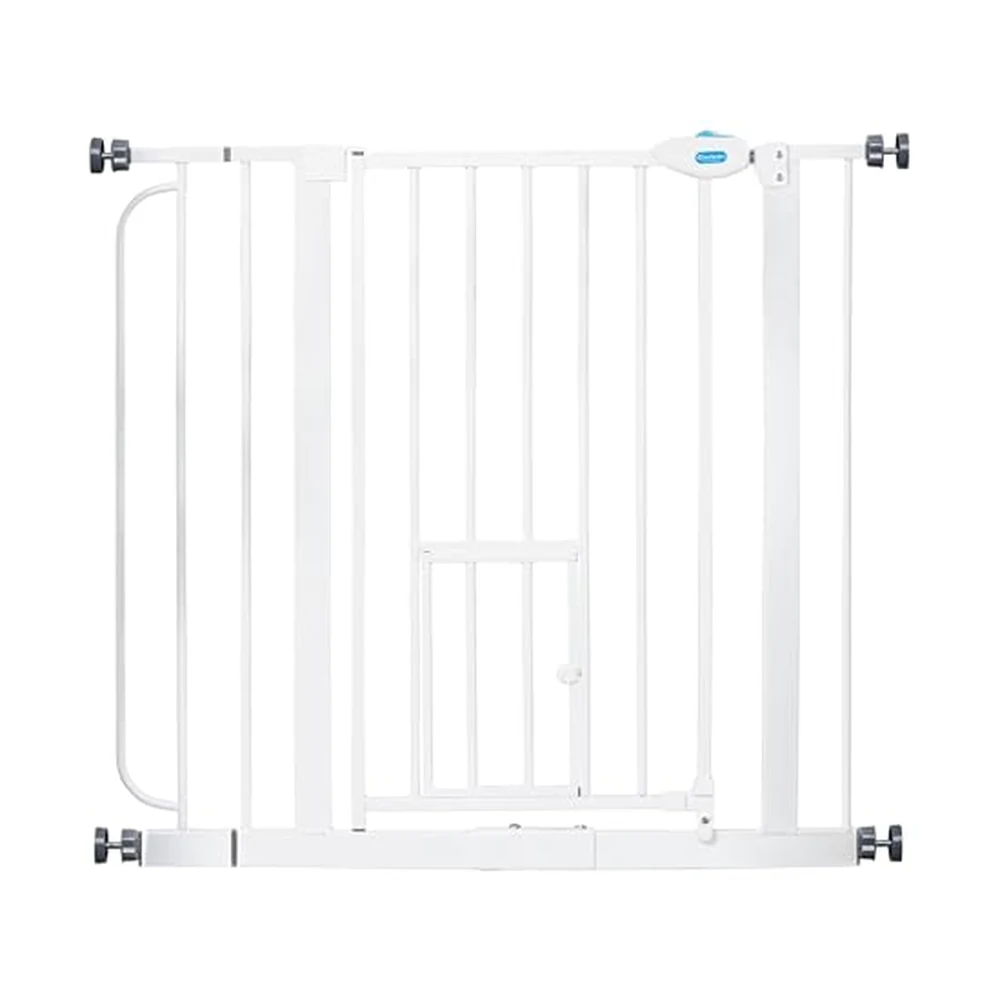
Gating a kitchen or hallway when a cat or small dog still needs to get through — it has a built-in pet door
- Material
- Steel with pressure-mount pads
- Skip if
- The opening is 32 to 34 inches. The listing states this gate does not fit that band, with or without the extension. It has a small-pet door built in; if the gate also has to keep a toddler in or out, choose one without a pet door.
The variant we link: 36.5”
The very first weeks with a small or toy-breed puppy, when 24 inches is still taller than they can think about
- Material
- Not stated
- Skip if
- Your puppy will grow past about 20 pounds. You will be replacing this within two months.
The variant we link: 24" · 8 Panels
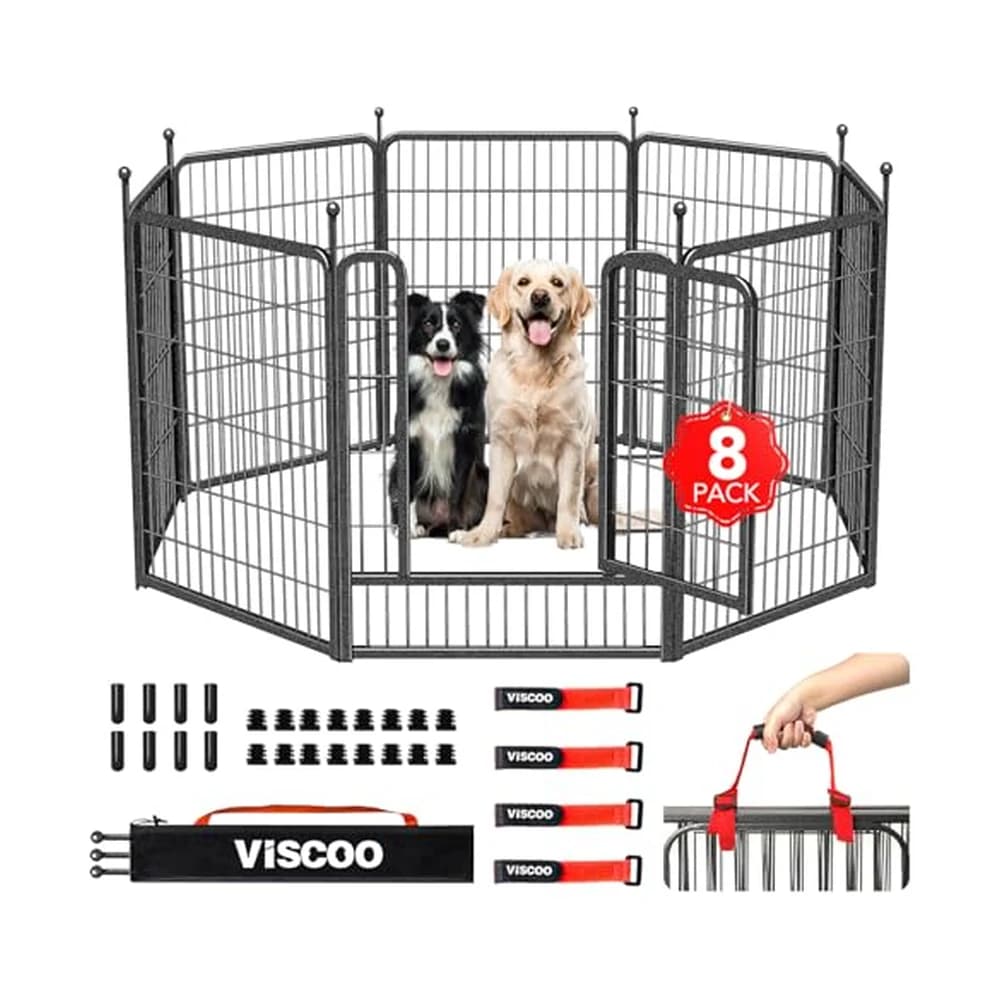
The adolescent who has learned to clear a 30-inch pen — 40 inches high, with a door panel and ball-topped posts
- Material
- Not stated
- Skip if
- You need this indoors on a hard floor. It is an outdoor-shaped pen and owners report the latch being stiff. Rated 4.2 stars on about 900 ratings, just under our usual 4.3 bar.
The variant we link: 8 Panels · 40"
Specs come from manufacturer listings; ratings are Amazon's aggregate rating and count. Prices checked November 1, 2026. As an Amazon Associate we earn from qualifying purchases.
How we mark winners
A ✓ in the table (a “best of these” tag on the phone cards) marks the lowest price, the highest owner rating, the largest stated weight capacity and the longest warranty. Size, dimensions, weight, material and the editorial rows never win — more is not better there. A blank is unknown, never a loss, and nothing wins without at least two known, differing values. Methodology
Why playpens & gates matter at this stage
The first month home has a gap in it. The crate is right for sleep and wrong for the two hours after breakfast; the whole house is right for a grown dog and catastrophic for a twelve-week-old with no bladder control and a taste for baseboards. A pen fills that gap. It gives a puppy floor space to be awake in without giving them access to the stairs, the cables and the shoes.
What changes across the stage is jumping. A 24-inch pen is plenty for a settled ten-week-old and a joke to an athletic six-month-old, and the moment a dog learns they can clear it, they will keep clearing it forever. Sizing up early is cheaper than retraining. Weight matters too: pressure-mounted gates and lightweight pens hold against leaning, not against a running adolescent.
By adolescence most dogs graduate from a pen to a gated room, and that is when the gate outlives the pen — kitchens, hallways, the bottom of the stairs. Two safety notes worth repeating from the manufacturers themselves: pressure-mounted gates are not rated for the top of a staircase, and no pen is a reason to leave a dog unsupervised outdoors.
The thing most owners don’t know
One surprising thing about playpens & gates
Child-safety guidance from the University of Wisconsin-Oshkosh Head Start program states that pressure-mounted gates are not secure enough to prevent falls at the top of stairs, and that hardware-mounted gates should be used there.
Source: Safety using Baby Gates on Stairs - Head Start, University of Wisconsin-Oshkosh
What owners keep saying
The recurring setup is a pen or gated area in whichever room the owner actually sits in, with the crate opened into the pen, so the puppy can settle in sight of people instead of being isolated. Two failures come up again and again: lightweight pens get shoved, tipped or collapsed by a puppy that body-slams the panels, and horizontal wire slats become a ladder, with owners describing pups climbing or vaulting out within days of the pen going up. Owners weigh those panels down, zip-tie or brace them, or move to taller hardware-mounted gates and a puppy-proofed room. Pressure-mounted and mesh or retractable gates are the ones people report being knocked down or chewed through, and the common conclusion is that a pen is for supervised containment while a crate is what an escape-prone puppy gets when nobody is watching.
Owner consensus from threads across r/puppy101, r/greatdanes and r/dogs.
Paraphrased from public discussion, never quoted and never counted into a statistic we did not measure. Owners are not a controlled study — they are the only long-term use data anybody has.
What we didn’t pick
Things that look like they belong on this shelf and are not on it, with the reason.
Pressure-mounted gates at the top of a staircase
Child-safety guidance is explicit that gates which only press against the walls are not secure enough to prevent falls there — hardware-mounted is the answer at the top of stairs, and no pen or pressure gate on this shelf changes that.
A twenty-four inch panel for a dog who has already cleared one
Once a dog learns they can get over a barrier they keep doing it, and no amount of retraining is cheaper than the taller pen. That is why the shelf carries a forty-inch option rather than only the cheap ones.
Pens as outdoor containment
Every maker on this shelf says the same thing in their own instructions: a pen is not a reason to leave a dog unsupervised outdoors. We rank pens for indoor use and say so rather than ranking a taller one for a yard.
How to choose a pen or gate
Height beats panel count, and mounting method decides where a gate can safely go.
Height for the dog they will be in three months
Puppies grow into jumpers. A pen they can clear once becomes a pen they clear forever, so buy the height for the adolescent, not the newborn.
Pressure-mount versus hardware-mount
Every pressure-mounted gate here says in its own instructions never to use it at the top of stairs. For a stair landing you need a hardware-mounted gate, which is a different purchase.
A door you will actually use
You will step through a gate dozens of times a day. One-handed latches and step-through openings decide whether the gate stays up or ends up leaning against a wall.
Reconfigurable panels
Eight-panel pens fold into squares, rectangles and octagons, and can clip onto a crate to extend it. That flexibility is what keeps a pen useful past the first month.
Anchors if it goes outside
Outdoor pens need ground stakes to stay put, and none of them are a substitute for supervision — the manufacturers say so themselves.
Common questions
- Do I need a pen if I already have a crate?
- Most people find they want both for a few months. The crate is for sleep and for genuinely unsupervised time; the pen is for the awake hours when you are home but cooking, working or showering. Some owners clip the pen onto an open crate so the puppy has a bedroom and a floor.
- Can I put a pressure-mounted gate at the top of the stairs?
- No. Every pressure-mounted gate we looked at states this in its own instructions — the mounting relies on tension, and a hard shove can dislodge it. The top of a staircase needs a hardware-mounted gate screwed into the wall.
- How tall should a puppy playpen be?
- For most small and medium puppies, 30 inches is the sensible default and 24 inches only works while they are very young. Athletic breeds and anything with a spring in it will need 40 inches or more, and the honest answer is that a determined climber will beat any pen.
- Is it okay to leave your dog in a playpen?
- For short stretches, yes, but a pen is a management tool rather than a babysitter. AKC advises that someone stay nearby while a dog is in a playpen, especially a puppy, and VCA warns that extended confinement is not healthy because dogs need daily exercise, training and company. A pen set up with a bed, water, toys and a toilet area suits the hours you are home but busy.
- How do I keep a dog playpen from moving?
- Anchor it to the surface it stands on. Indoors, AKC suggests a non-skid pen on smooth floors; outdoors, ground stakes hold a pen in place on grass, dirt or turf. For gates, VCA recommends fastening them to a solid surface such as a door jamb, because freestanding gates are easily knocked over. Lock every panel together, and go taller if the dog is pushing against or climbing the panels.
- What should I put in a puppy playpen?
- A bed, a water bowl, a few safe toys and, if the puppy will be in there long enough to need it, a toilet spot such as a pad away from the bed. VCA notes many pens have room for toys, piddle pads and a bed, and AKC suggests lining the floor with blankets, newspaper or a pen mat you can swap when dirty. AKC also advises avoiding plastic pens until teething is over.
Sources
- Choosing the Right Playpen for Your Dog (AKC) — Pens give a puppy room to move, play, eat and drink; ground stakes outdoors and non-skid pens indoors; avoid plastic pens for teething puppies; someone should stay nearby when a dog is in a pen; floor liners and pen mats
- Crate Training and Confinement for Puppies and Dogs (VCA Animal Hospitals) — Exercise pens can hold toys, piddle pads and a bed and may take a ceiling panel to stop climbing; choose a gate height a dog cannot easily scale; fasten gates to a solid surface because freestanding gates are easily knocked over; extended confinement is not healthy
- Safety Using Baby Gates on Stairs (UW Oshkosh Head Start) — Pressure-mounted gates are not secure enough at the top of stairs; use hardware-mounted gates there
- Crate Training 101 (Humane World for Animals) — Dogs can graduate from a crate to an enclosed area such as a kitchen before getting the run of the house
Gear
Pairs with
Shelves that go with playpens & gates — hand-picked adjacencies, not "customers also bought".
$84.99 Owner rating 4.7 out of 5 · 70,262
A pen holds the awake hours; the crate holds the sleeping ones. Most households end up running both.
$19 Owner rating 4.5 out of 5 · 65,765
A puppy left in a pen with nothing to chew finds something to chew, and it is usually the pen.
$34.95 Owner rating 3.8 out of 5 · 5,130
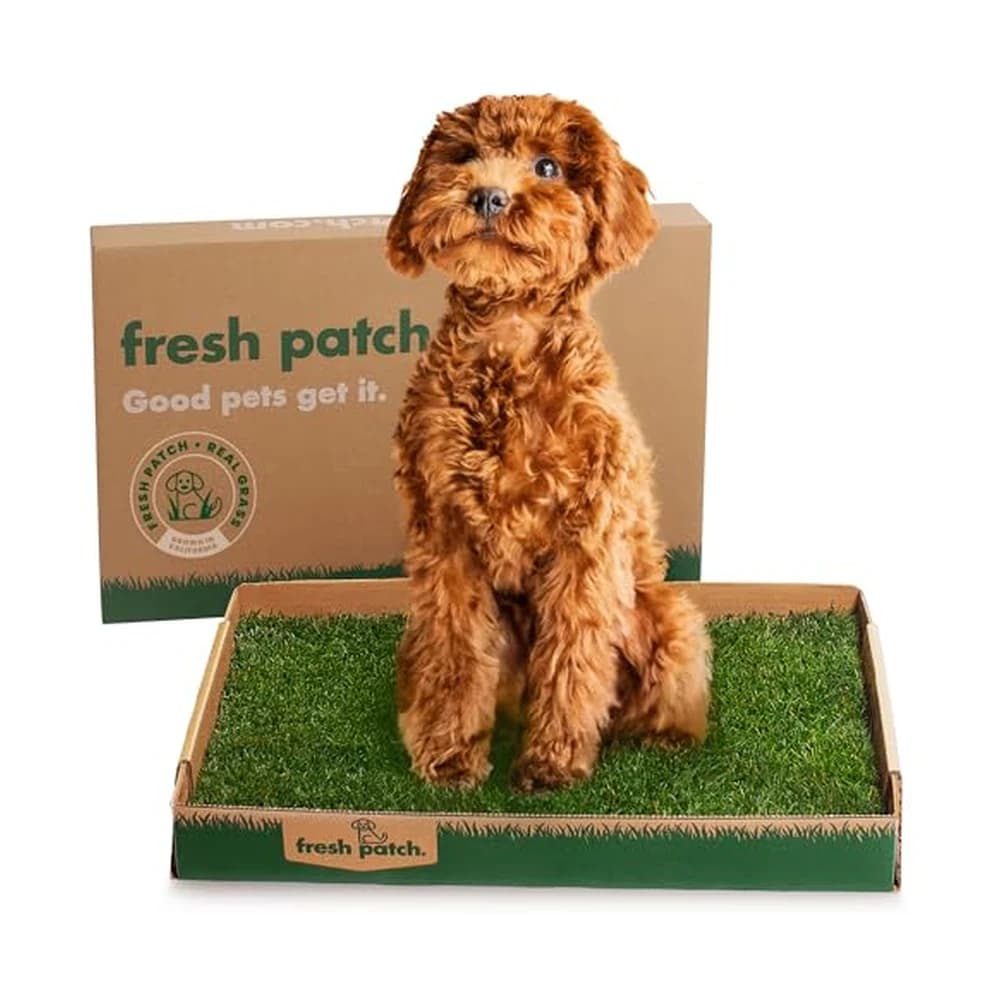
A penned area is where the pads go, so the two get bought in the same week.