We research gear rather than testing it, and some links below are Amazon affiliate links — if you buy through one we may earn a commission, at no extra cost to you. It does not change what we recommend. Full disclosure.
In this article(7 sections)
There is a version of this job that takes an hour and a version that takes a weekend, and the difference is mostly whether you are also tidying. This is the hour version.
Two things are going on. One is removing what can poison or choke a puppy. The other is shrinking the world, so the space you cleared is the only space he can reach. The second makes the first hold, because a house you cleared in August is not a cleared house in October.
The hour, in order:
- The floor, at knee height, in every room he will reach.
- The kitchen: the bin, then the food.
- The bathroom: bags and blister packs up, lids closed.
- The garage, shed and garden: chemicals locked, mulch and plants checked.
- Gates and a pen, so the cleared space is the only space.
Start on the floor, literally
Get down to about knee height and look along the floor of each room. It feels ridiculous and it is the most productive ten minutes of the job: it puts you at the eye line of an animal who investigates with his mouth.
The AVMA's household hazards page lists small items that fall on the floor as a real risk: coins, buttons, batteries, small children's toys, medicine bottles, jewellery, nails and screws, with the warning that surgery may be needed to remove them. Add the things that live in a home with people in it: hair ties, socks, corks, blister packs, water-bottle caps.
Plugged-in electrical cords get their own line on that page: chewing them can cause burns or electrocution. Cord covers and blocking access are the cheap fix.
The kitchen
The bin is the main event. The AVMA notes that garbage within reach can lead to intestinal blockage and to pancreatitis, which is painful and potentially life threatening. A bin with a foot pedal and no latch is not a closed bin as far as a puppy is concerned. Move it inside a cupboard or get one that latches.
Then the food. The AVMA's keep-away list, worth reading in full once: alcohol, avocado, chives, chocolate, coffee and coffee grounds, fatty foods, fruit pits, garlic, grapes and raisins, macadamia nuts, onions, salt and salty snacks, tea, yeast-based dough, and any product containing xylitol.
Xylitol is the one that hides
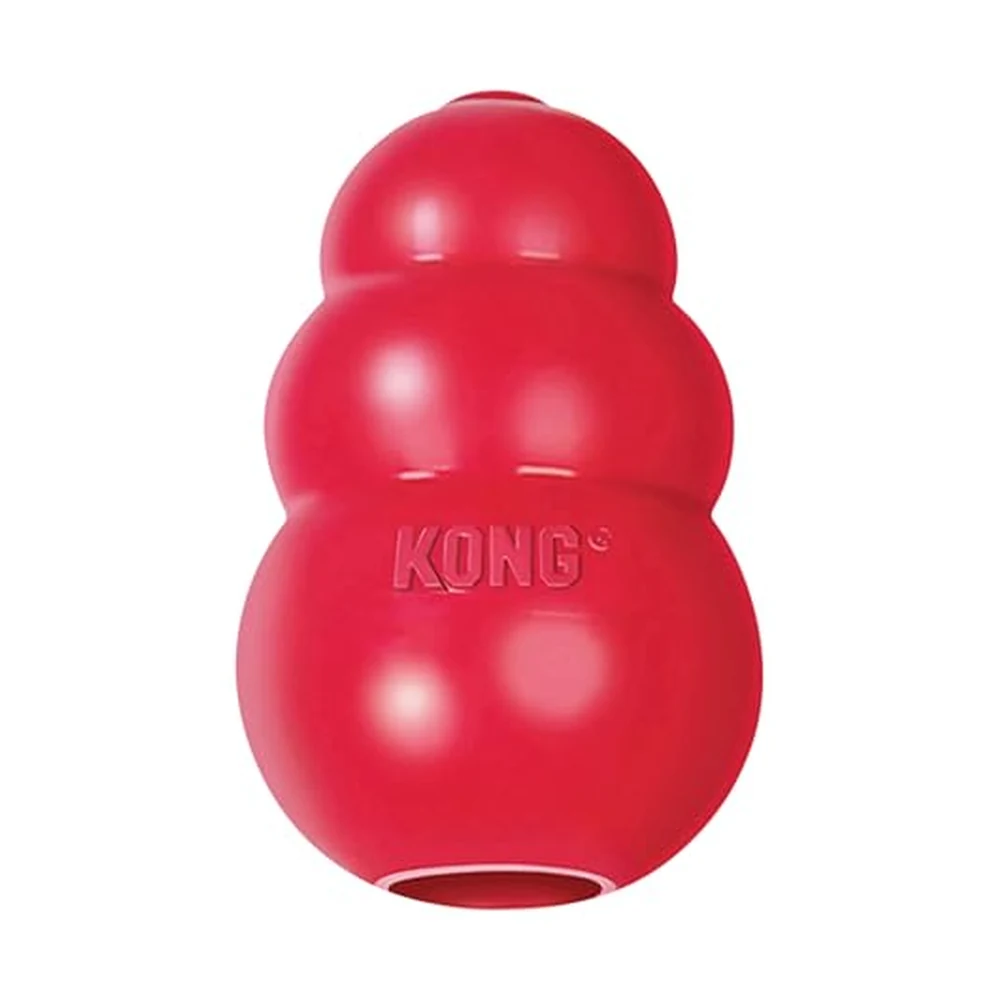
Xylitol is not obvious. It turns up in sugar-free gum, some peanut butters, mints, and a fair few supplements. Read the peanut butter label before it goes into a food toy such as the KONG Classic.
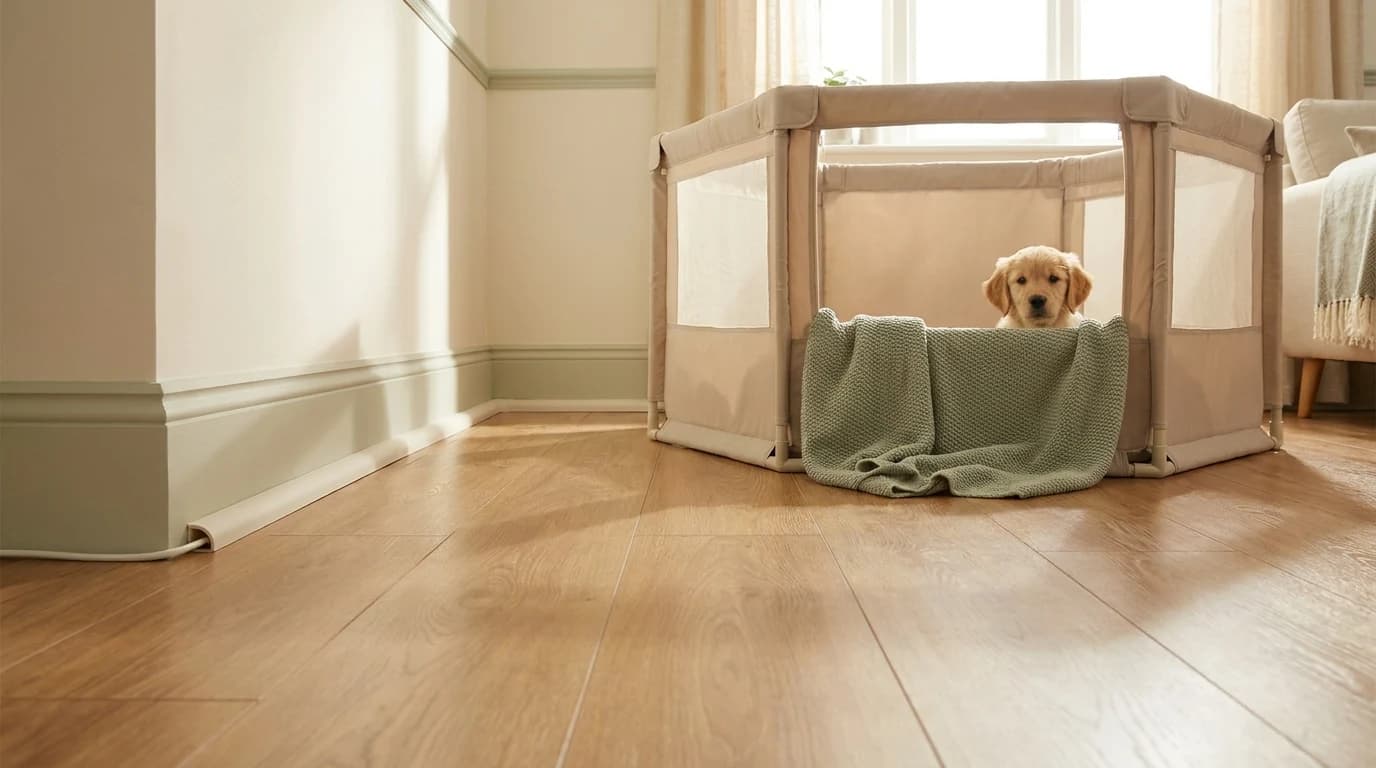
 The knee-height view is the one the puppy has: the doorway, the bin and whatever leans against the wall are what he finds first.
The bathroom
The AVMA is blunt about this room: medications used to treat human conditions are among the top causes of reported pet poisonings in the US. That includes non-prescription things you would not think of as drugs: ibuprofen and aspirin, antihistamines, sleep aids, antidepressants, iron supplements, vitamins and weight-loss supplements.
The failure is the handbag, not the cabinet
The failure is almost never the cabinet. It is the handbag on the floor, the blister pack in a coat pocket, the pill dropped on the tiles at seven in the morning. Bags go up, and pet medications go in the same secure place.
The AVMA also flags medicated skin creams containing fluorouracil as a leading cause of poisoning deaths in dogs, through chewing the container or licking the treated skin: no puppy nose to arm after you have applied a cream. Toilet lids closed; soaps, toothpaste and sunscreen out of reach.
The garage, the shed, the garden
Antifreeze and coolants containing ethylene glycol can be fatal in small quantities. Also on the AVMA's list for this zone: fertilisers, pest and weed killers, ice-melting products, gasoline, paint thinners and mineral spirits. If chemicals go on the lawn, keep the dog off for the manufacturer's stated time; whatever gets on his legs gets licked off.
Cocoa shell mulch is the one people miss: the AVMA notes dogs love to eat it and it can produce signs similar to chocolate poisoning.
The two plant lists
The AVMA names two groups: heart and organ risks, which should leave the house, and stomach-upset risks, which need to be out of reach.
| Move out of the house | Move out of reach |
|---|---|
| Lily of the valley, oleander, yew, foxglove | Cyclamen, amaryllis, chrysanthemums |
| Kalanchoe, sago palms, castor bean | Pothos, English ivy, philodendron, corn plant |
| Azaleas and rhododendrons | Mother-in-law's tongue, hibiscus, hydrangea |
| Tulip and narcissus bulbs | Peace lily, schefflera |
Now shrink the house
One cleared room plus a pen
This is where proofing becomes maintainable: instead of a permanently safe home, one cleared room plus a pen, expanded as the puppy earns it.
Gates and a playpen do most of this, but a gate does not proof the room it encloses. That room still needs the floor sweep, the cables, the bin, the plants and the dropped tablets dealt with.
Rule of thumb: A gate does not proof the room. It shrinks the number of rooms you have to keep proofed to one.
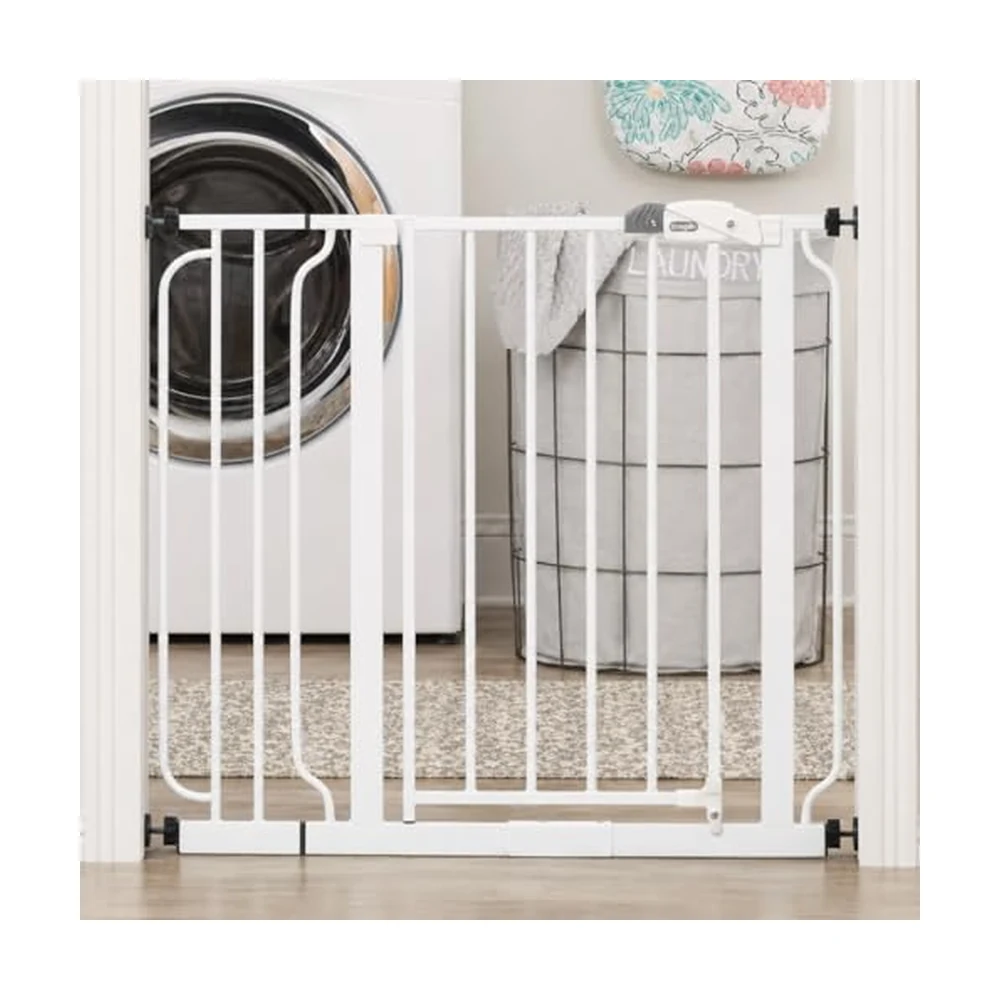
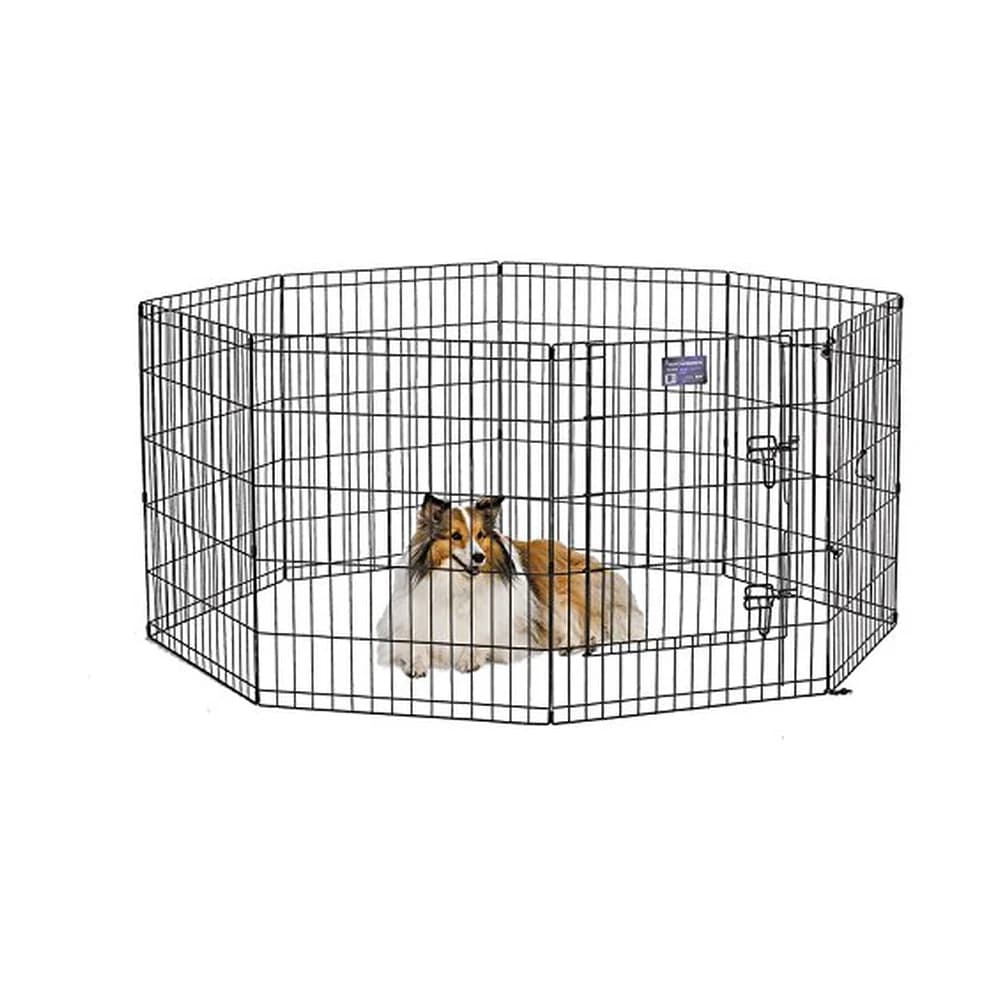
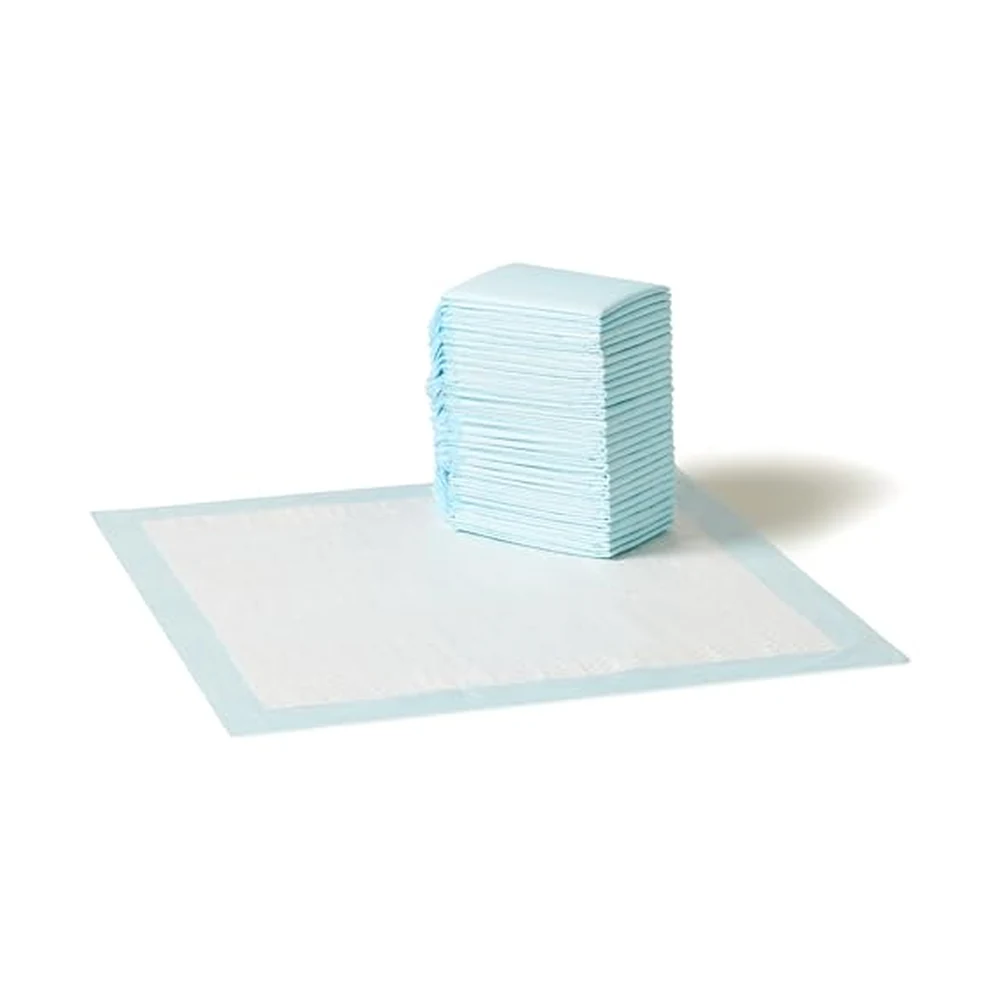
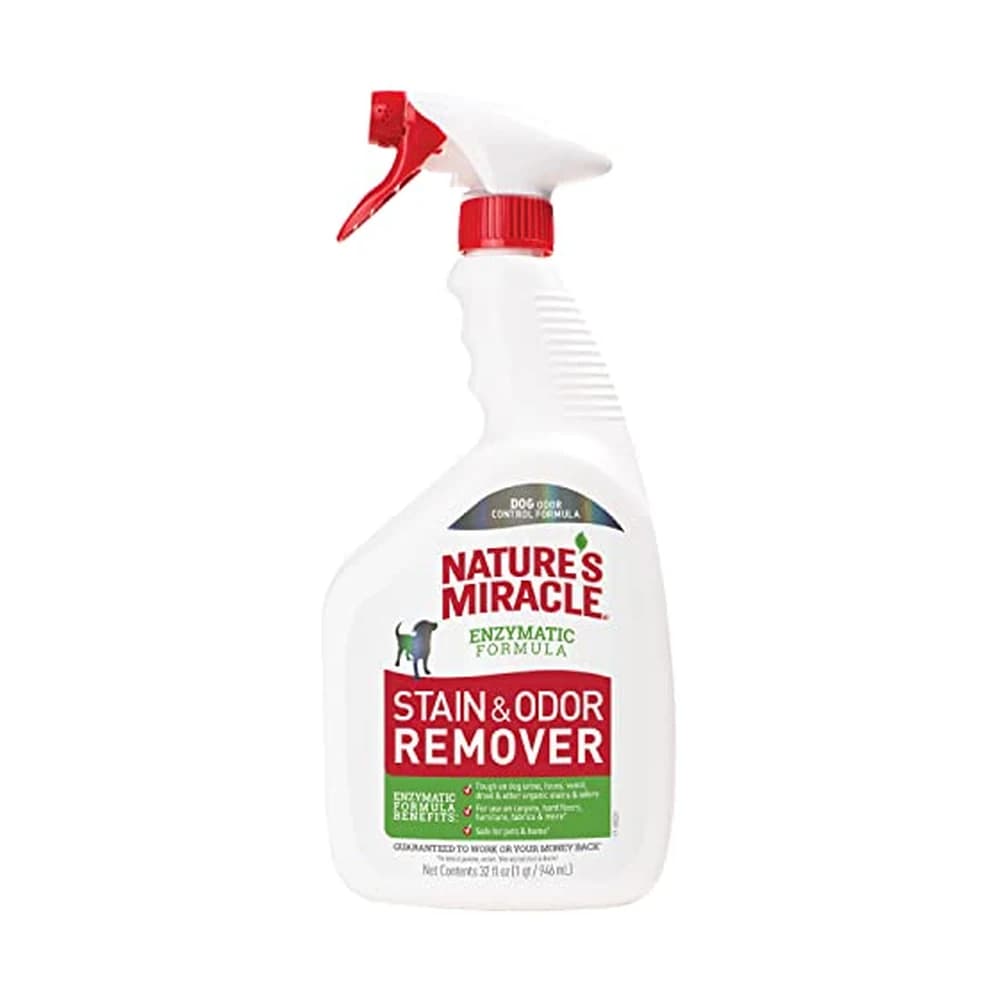
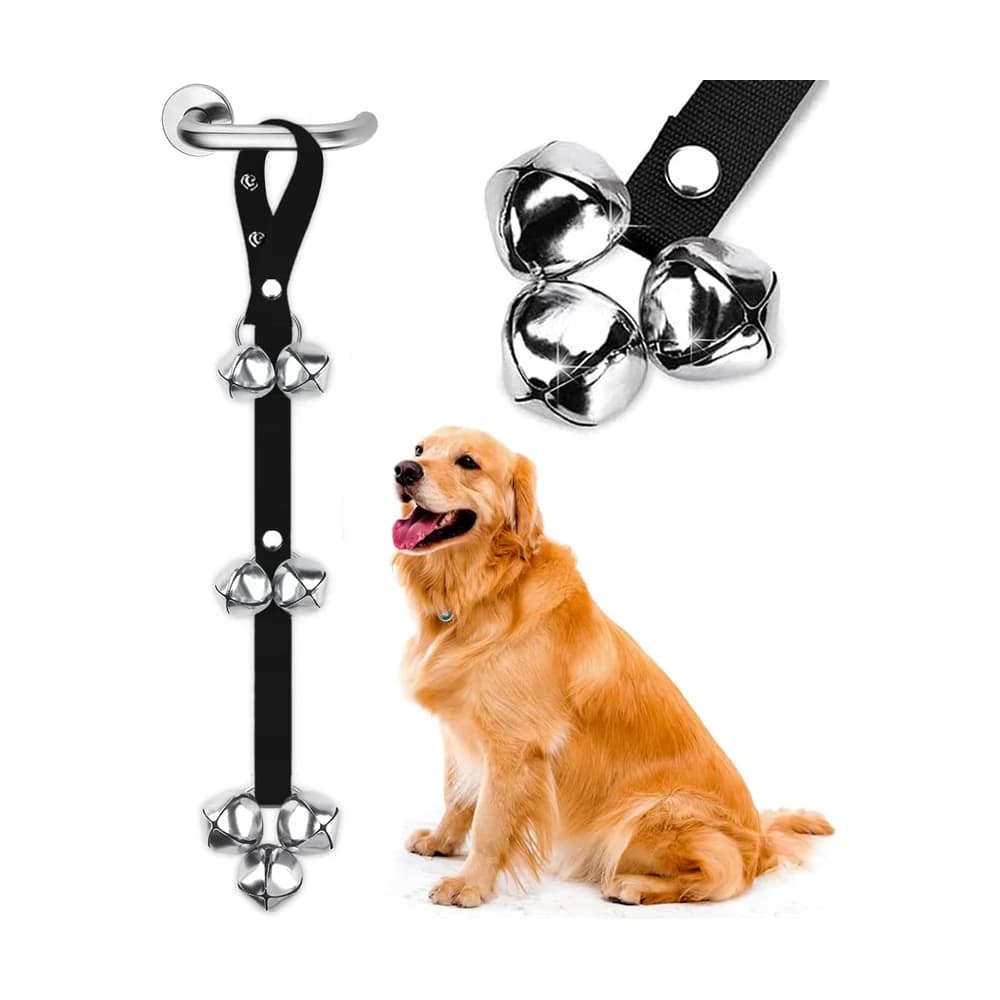
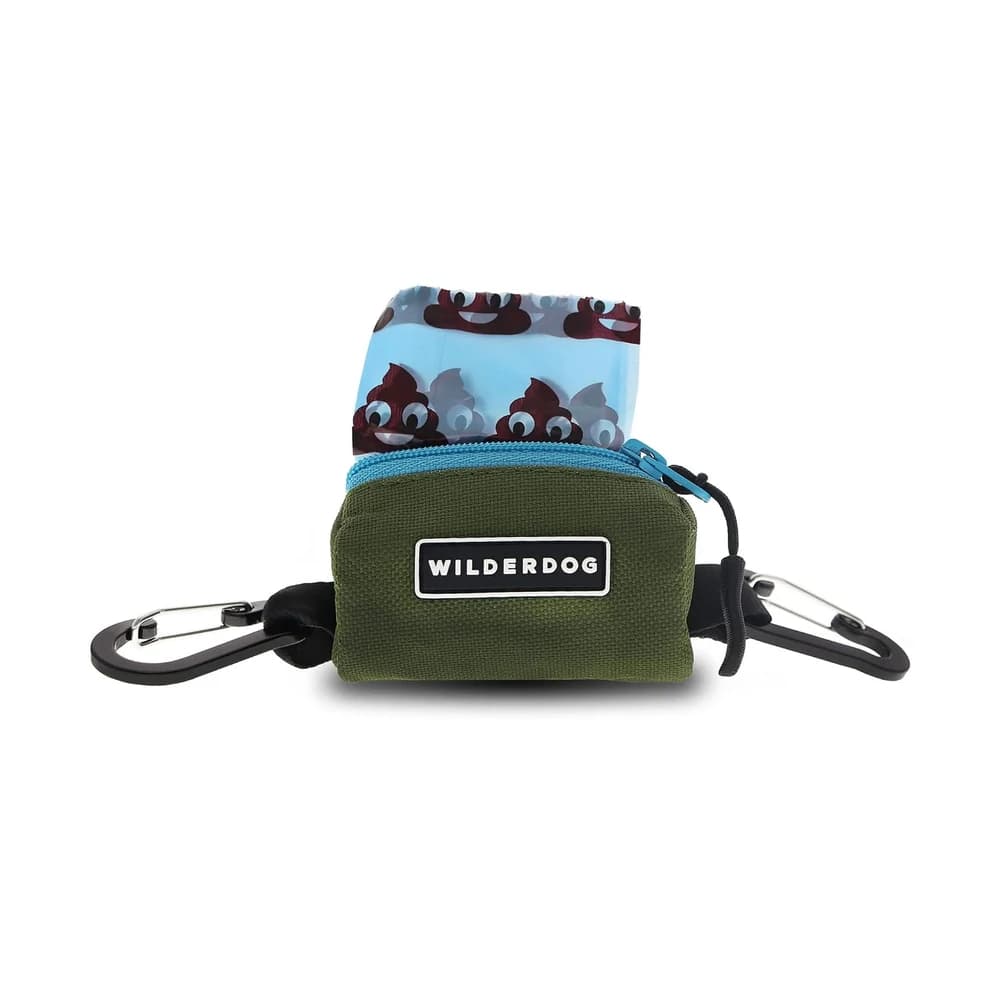
A gate at the kitchen door and one at the foot of the stairs makes the problem manageable; a pressure-mounted walk-through gate like the Regalo Easy Step needs no drilling and comes down when he no longer needs it. A pen gives you somewhere to put the puppy when the doorbell goes or dinner is cooking, which is exactly when supervision fails; the MidWest 30-inch exercise pen is the default here, and it clips onto a wire crate so bed and floor are one space. VCA's note on gating a room applies to a pen too: whatever you shut him into needs an elimination area, so plan for pads and clean-up from the start: a training pad in the far corner and an enzyme cleaner on the counter. Two more small things belong on the first-week list, because they cost almost nothing and you want them from day one: a strap of door bells on the door you will always use, and a bag holder clipped to the leash so the first walk of the day does not begin with a search.
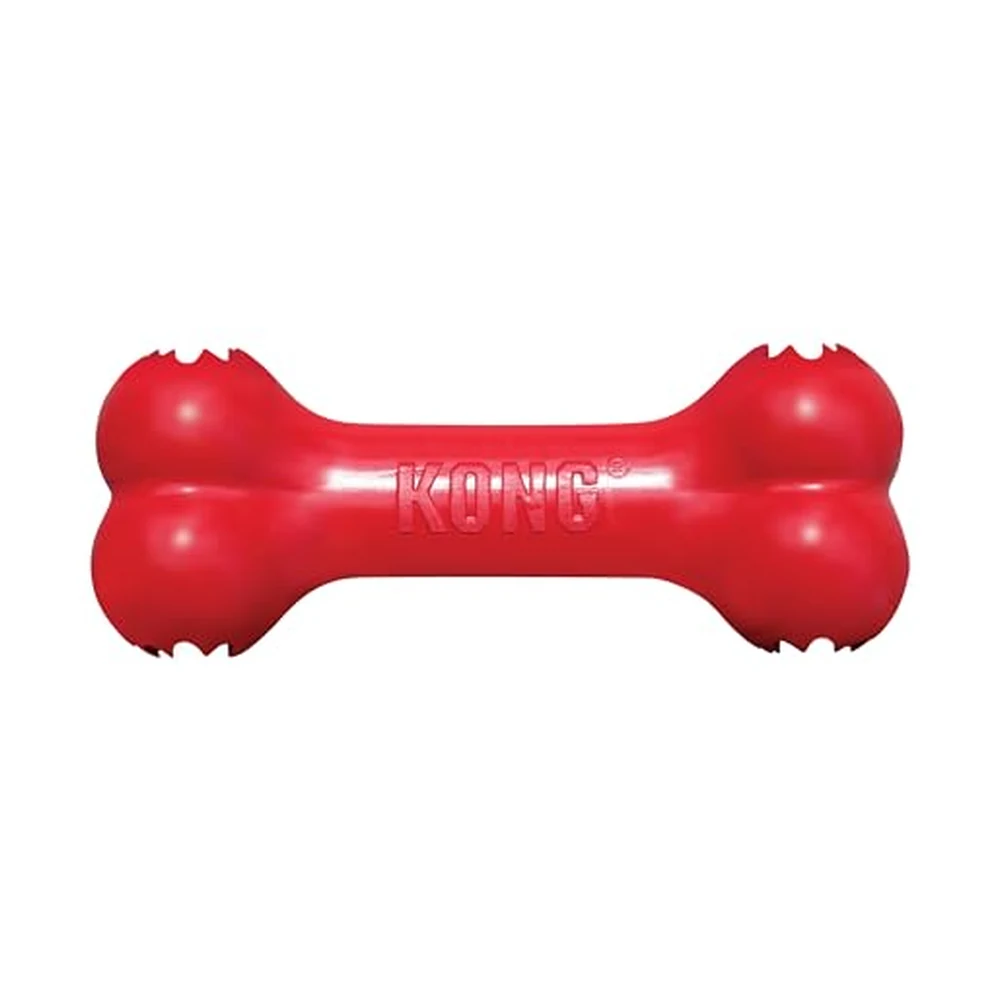
The second half of containment is something legal to chew, because a puppy left with nothing acceptable will find something unacceptable. A rotation of teething and chew toys beside the pen means the answer to what are you chewing is already in the room; most families reach for a stuffable rubber chew such as the KONG Goodie Bone, because filled and frozen it outlasts a puppy's attention span.
Sleep is a safety tool too: the trouble happens in the awake windows, which our puppy sleep schedule shows how to structure.
What actually holds:
- One cleared room and a pen, expanded as he earns it
- A bin that latches, or lives inside a cupboard
- Bags, coats and blister packs up off the floor
- A legal chew already in the room
What people try that doesn't:
- Clearing the whole house once and calling it done
- Trusting a foot-pedal bin
- Keeping a named plant on a low shelf
- Relying on supervision at dinner time
Put the numbers on the fridge before you need them
The AVMA's advice on a suspected poisoning is not to wait. Call your veterinarian, the ASPCA Animal Poison Control Center on 1-888-426-4435, or the Pet Poison Helpline on 1-855-764-7661. A consultation fee may apply. Have breed, age, weight and signs ready, and the container or a piece of the plant.
Before you need it: ASPCA Animal Poison Control 1-888-426-4435. Pet Poison Helpline 1-855-764-7661. Write both somewhere that does not depend on your phone being charged.
What to ask your vet
- What are the most common things you see puppies eat around here?
- Is there anything about this breed or size that makes any of these hazards worse?
- What would you want me to do first, before I call, if he swallows something?
The rest of the arrival week sits on our new puppy stage page.
Key takeaways
What to remember
- Human medications are among the top causes of reported pet poisonings in the US, according to the AVMA. Bags on the floor are the usual route.
- Xylitol, grapes and raisins, chocolate, onions, garlic, macadamia nuts and yeast dough are on the AVMA's keep-away list.
- Small swallowable objects, coins, buttons, batteries, hair ties, cause surgeries. Do the floor pass on your hands and knees.
- Containment does more than tidying. A gated room and a pen mean you are proofing one space instead of a house.
- Save the poison control numbers before you need them: ASPCA Animal Poison Control 1-888-426-4435, Pet Poison Helpline 1-855-764-7661.
Questions people ask
- How long does puppy proofing take?
- An honest first pass is about an hour for a small flat and an afternoon for a house with a garden and a garage. The floor-level sweep is the part people skip and the part that catches the most.
- Which foods are the dangerous ones?
- The AVMA lists alcohol, avocado, chives, chocolate, coffee and grounds, fatty foods, fruit pits, garlic, grapes and raisins, macadamia nuts, onions, salty snacks, tea, yeast dough, and anything containing xylitol. Bins count as food storage as far as a puppy is concerned.
- Are houseplants really a problem?
- Some are. The AVMA names sago palms, lily of the valley, oleander, yew, foxglove, kalanchoe, azaleas and rhododendrons, tulip and narcissus bulbs, castor bean, and a longer list that causes stomach upset including pothos, philodendron, peace lily and English ivy. Move the named ones out of reach rather than trusting the puppy.
- What should I do if my puppy eats something?
- Call immediately rather than waiting for symptoms. Your vet, the ASPCA Animal Poison Control Center on 1-888-426-4435, or the Pet Poison Helpline on 1-855-764-7661. Have the packaging or a piece of the plant in your hand when you call.
- Do I still need gates if the house is cleared?
- Yes, because clearing decays. Gates and a pen mean the puppy is only ever loose in the space you last checked, which is a much easier standard to keep than a whole house being permanently safe.
Gear
Gear for this stage
The products this piece assumes, in the order we would get them. Prices move; check before you buy.
$44.98 4.6 out of 5 stars · 171,771
A wide doorway at the bottom of the stairs — it spans 29 to 38.5 inches and stands 30 inches…
$46.99 4.6 out of 5 stars · 46,189
The default puppy pen — 16 square feet, a step-through door, and it clips onto a wire crate…
$8.99 4.5 out of 5 stars · 222,168
Apartment puppies, unvaccinated puppies and older dogs losing continence — 22-inch pads with…
Nature's Miracle Stain & Odour
$10.79 4.6 out of 5 stars · 23,459
The bottle you keep on the counter all through house training — enzymatic, cheap, and stocked…
$11.96 4.5 out of 5 stars · 17,607
A stuffable chew that survives the teething stage — freeze it filled and it occupies a puppy…
$13.96 4.6 out of 5 stars · 91,774
The stuffed-and-frozen standby — the toy that covers crate time, alone time and the first…
$6.99 4.6 out of 5 stars · 39,834
A new puppy who needs a way to say “out” — seven loud bells on a nylon strap that hangs over…
$9.00 4.4 out of 5 stars · 169
Keeping a roll of bags clipped to the leash instead of stuffed in a pocket — one full…
Sources
- AVMA: Household hazards — The named kitchen, bathroom, garage and plant hazards, the swallowed-object list, electrical cord risk, and the poison control phone numbers.
- American Kennel Club: How Much Do Puppies Sleep? — That puppies usually sleep 18 to 20 hours a day, that naps run 30 minutes to two hours roughly every hour, and that sleep supports nervous system, brain, immune and muscle development.
We research and analyse — specs, manufacturer documentation and large-scale owner feedback. We do not test products on dogs, and we are not your vet.
Next step
Decide between a crate and a playpen
Shrinking the house only works if you contain him in the right thing, and the two solve genuinely different problems.