We research gear rather than testing it, and some links below are Amazon affiliate links — if you buy through one we may earn a commission, at no extra cost to you. It does not change what we recommend. Full disclosure.

Almost everything a dog needs changes with age, and almost nothing about how dog content is organised reflects that. You get articles about food, articles about training, articles about beds. Which one applies to you depends entirely on a variable nobody asks for.
So it is worth knowing what the stages are and who defines them.
The four stages, as veterinarians use them
The reference most US practices work from is the 2019 AAHA Canine Life Stage Guidelines. It sets out four stages plus a terminal one:
| AAHA stage | Begins | Ends |
|---|---|---|
| Puppy | Birth | The end of rapid growth, roughly six to nine months, varying with breed and size |
| Young adult | The end of rapid growth | Physical and social maturity, by three to four years in most dogs |
| Mature adult | The completion of maturation | The last quarter of estimated lifespan, breed and size dependent |
| Senior | The last quarter of estimated lifespan | End of life |
| End of life | The terminal stage | Depends on the specific conditions involved |
Two of those boundaries are tied to growth and lifespan rather than to the calendar, which is why the same number of birthdays means different things for different dogs. AAHA says as much: the spectrum of care within each stage is affected by the age, size, lifestyle, health status and breed of the dog.
Remember: Two of the four boundaries track growth and lifespan, not the calendar.
AAHA is unusually honest about the edges
Three things on that page inoculate you against most of what you will read elsewhere.
- The divisions are arbitrary. Useful, but arbitrary, providing a framework for individualised preventive care rather than a biological truth.
- They phase. In AAHA's words, physiological and behavioral developmental periods do not start and end abruptly, but phase in and out gradually.
- No human years. The guidelines say that for practical purposes, rather than attempt to calculate age equivalents to humans, the task force suggests that life stage be defined both by age and characteristics.
We still built a dog age calculator, because it is the question everyone actually types, but it shows the conversion methods side by side with their caveats and then gives you the stage. Take the stage it returns and open its own page: the six stage pages are the care plan the number is only a pointer to.
Where adolescence went
There is no adolescent stage in that list; adolescence lives inside young adult.
We use adolescence as a stage on this site anyway; it is a consumer framing rather than a clinical one, because it is the phase owners write to us about, and AAHA effectively acknowledges the phenomenon while filing it elsewhere. Its behavior chapter notes that the time period between roughly six months and three years of age can be the most challenging for owners as the dog matures socially and behaviorally, and lists jumping, barking and mouthing as the behaviors that tend to show up then.
That is a stage in every sense that matters to the person holding the lead. If you are in it, our page on adolescent dog regression is the practical version.
 Same house, different chapters: the young dog sits inside what AAHA calls young adult, and the old one is in the last quarter of an expected lifespan.
The six stages we use, and why
The clinical four cover a dog's body. Our six cover an owner's year:
- Before the dog. Choosing, budgeting, preparing. Clinically nothing, practically the stage with most leverage.
- New puppy, roughly eight to sixteen weeks. Sleep, toilet, containment, socialisation, first vet visit.
- Puppy, roughly four to twelve months. Teething, growth, foundations, the food conversation, the neutering conversation.
- Adolescent, roughly one to two years, longer for giant breeds. The behavioral cliff.
- Adult. Maintenance. Weight, teeth, enrichment, prevention.
- Senior. Mobility, comfort, cognition, closer monitoring.
The middle four map onto AAHA's puppy, young adult and mature adult, split where owners feel one; the last matches senior exactly.
What actually changes, stage by stage
Stages predict which of the six needs is under strain.
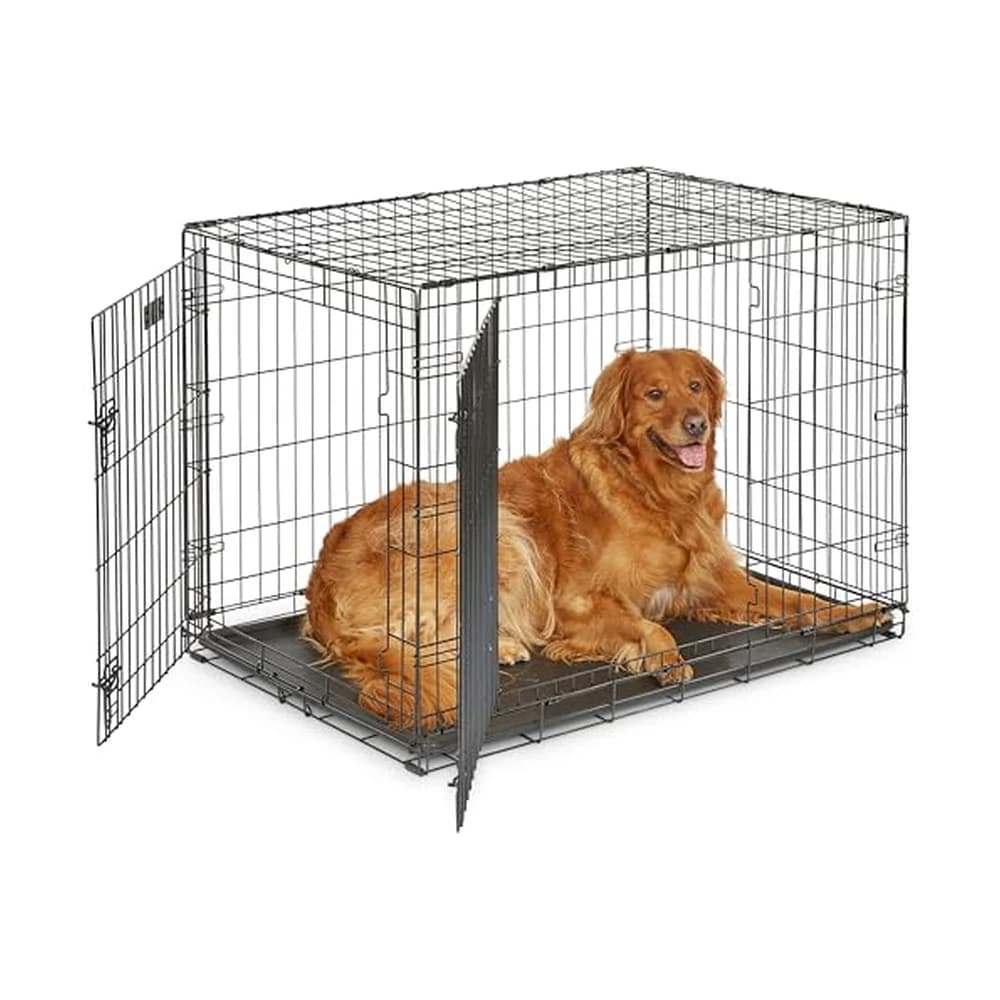
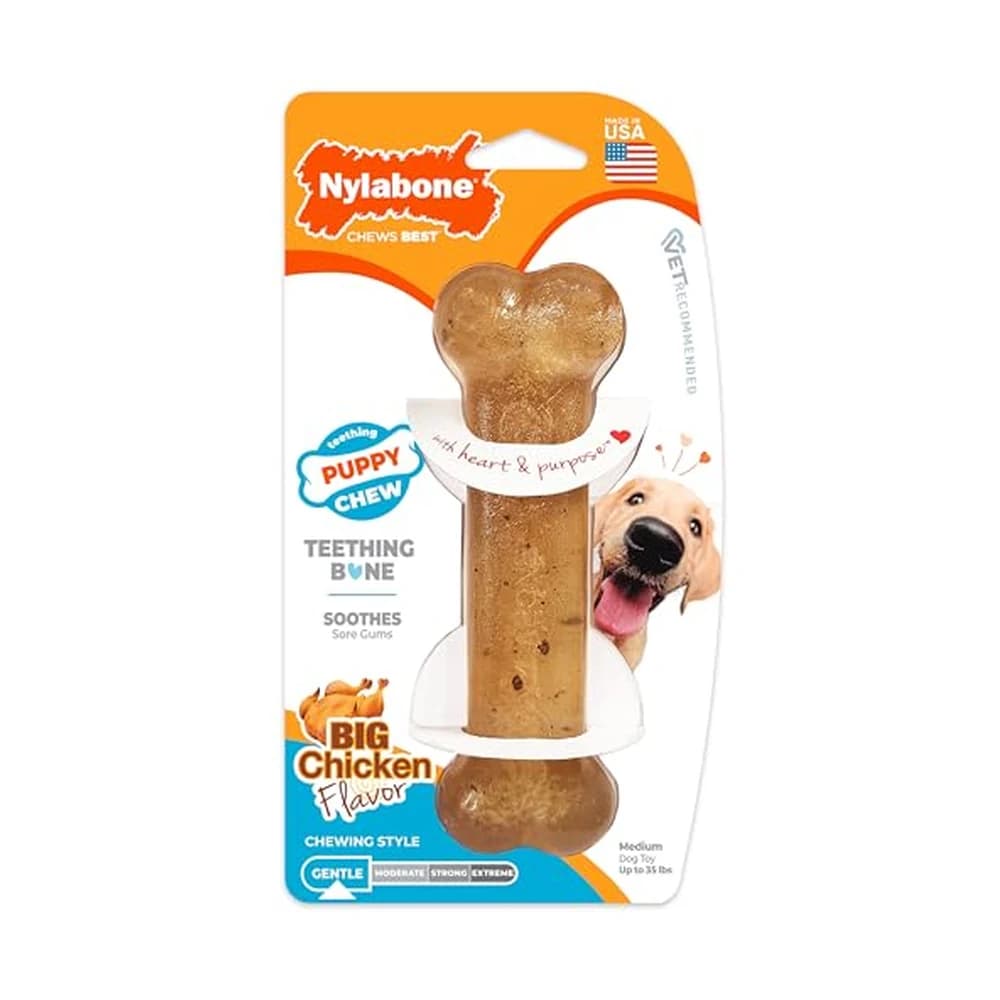
In the puppy stages it is rest and protection. A puppy sleeps most of the day and gets into everything in the rest of it, which is why puppy food, containment and sleep set-up matter more than anything you can teach. The one purchase that spans two of our stages is a crate with a divider: the MidWest iCrate is sized to the adult and walled off for the puppy. Teething belongs here too; the Nylabone puppy teething chew is one the maker states is for baby teeth and gentle chewers only. The food conversation is a size conversation: Royal Canin's large-breed puppy formula exists because a puppy heading for 56 to 100 pounds has a longer growth window.
In adolescence it is movement and training. The dog is physically capable and socially unfinished at the same time, which is why the everyday harness most owners buy in this stage has a front clip; the rabbitgoo no-pull is the budget version for an adolescent who has just discovered pulling.
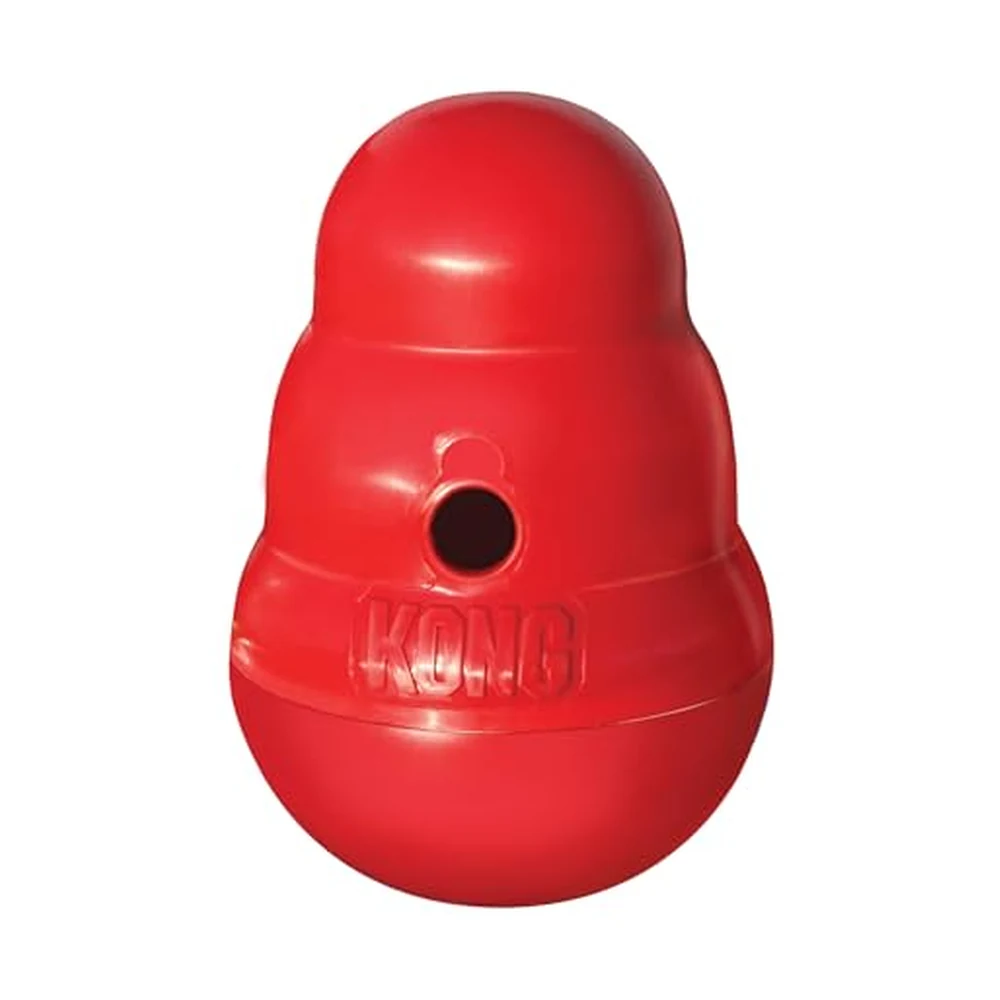
In adulthood it is thinking and nourishment. This is the long, quiet stretch where a good routine and honest weight management do more for a dog's future than any purchase. Enrichment puzzles earn their place at every stage from puppy through senior, because the need for mental work never lapses even when the walks get shorter; a treat-dispensing wobbler works at ten as well as at ten months.
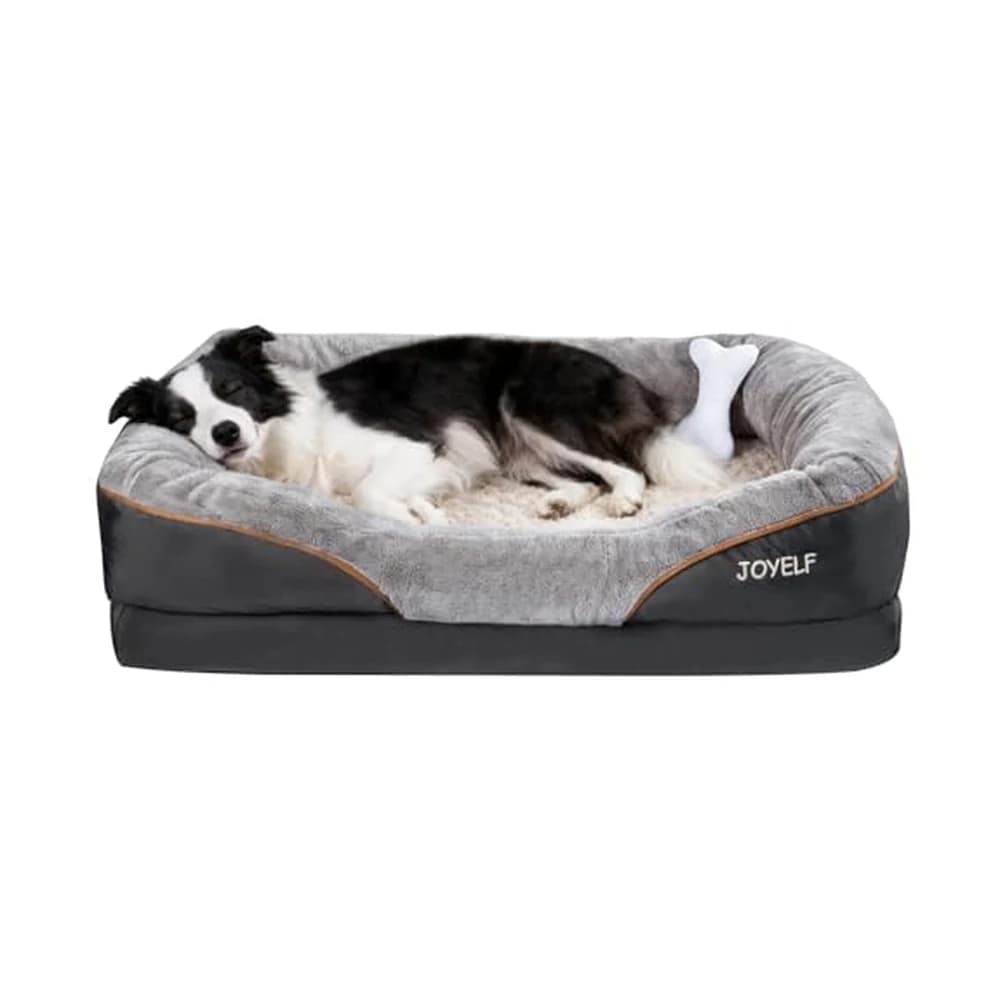
In the senior stage it is movement and rest again. The AVMA's list of what senior pets need includes maintaining mobility, mental stimulation, weight control, and sleeping areas that avoid stairs, and it names orthopedic beds, raised feeders and ramps as comfort measures for arthritic dogs; an open-front memory-foam bed like the JOYELF is what that sentence looks like on the floor. Senior food belongs in the same conversation, with your vet rather than instead of them; for an old dog who has gone off dinner a freeze-dried topper such as Stella & Chewy's is the usual first move.
What a stage predicts, and what it does not
What a stage predicts:
- Which of the six needs is under strain
- Roughly when the next boundary arrives, given breed and adult size
- What to ask at the next appointment
What it does not decide:
- The day anything happens, because stages phase in and out
- A human-years equivalent, which AAHA declines to calculate
- The care within a stage, which depends on age, size, lifestyle, health and breed
Rule of thumb: The number is a pointer. The stage is the care plan.
Read the whole thing as a timeline from our adult stage page and its neighbours, or start with the stage your dog is in now; if you are unsure, the stage finder asks about the dog in front of you rather than about a birthday, the more useful question for a rescue of unknown age.
What to ask your vet
- Which AAHA stage would you put my dog in today, and what does that change about his care plan?
- Given his breed and adult size, when should I expect the next boundary?
- Should this stage change how often we see you?
Ask that first one at every annual visit. The answer moves, and the move is the point.
Key takeaways
What to remember
- AAHA defines four canine life stages plus end of life, and states that the divisions are arbitrary but useful for planning preventive care.
- Puppy ends when rapid growth ends, roughly six to nine months depending on breed and size, not at a fixed birthday.
- There is no clinical adolescent stage. AAHA folds it into young adult, though it does flag six months to three years as the hardest window for owners.
- Senior is the last 25 percent of estimated lifespan, so it arrives earlier in calendar years for larger dogs.
- AAHA declines to convert dog age into human years at all, and says stages phase in and out gradually rather than starting abruptly.
Questions people ask
- How many life stages does a dog have?
- Clinically, four, plus end of life: puppy, young adult, mature adult and senior, per the 2019 AAHA Canine Life Stage Guidelines. We use six on this site because pre-dog planning and adolescence are real phases for owners even though they are not separate clinical categories.
- Is adolescence a real life stage?
- It is a real behavioral phase and not a separate clinical stage. AAHA includes it inside young adult, while noting that the period between roughly six months and three years can be the most challenging for owners as the dog matures socially and behaviorally.
- When does a puppy stop being a puppy?
- AAHA ends the puppy stage at the cessation of rapid growth, roughly six to nine months, varying with breed and size. A giant-breed dog is still growing long after a terrier has finished.
- Why does the same age mean different things for different dogs?
- Because two of the four boundaries are tied to growth and to lifespan, both of which track size. AAHA says the spectrum of care within each stage is affected by age, size, lifestyle, health status and breed.
- Does my dog's stage change what I feed him?
- It can, and it is a vet conversation. Growth, maintenance and senior formulas differ in energy density and digestibility, and the timing of any switch depends on your individual dog rather than on a birthday.
Gear
Gear for this stage
The products this piece assumes, in the order we would get them. Prices move; check before you buy.
$100.99 4.7 out of 5 stars · 80,183
The one crate you buy at eight weeks and still use at eight years — the included divider…
$6.69 4.2 out of 5 stars · 40,408
The teething months specifically — soft nylon made for baby teeth, and it goes in the freezer…
$109.99 4.7 out of 5 stars · 8,900
A puppy whose adult weight will be 56 to 100 lb — controlled calcium and phosphorus through…
$15.98 4.5 out of 5 stars · 194,711
Two leash clips and a top handle at a budget price — the sensible first harness for an…
$17.91 4.5 out of 5 stars · 17,188
Feeding a whole meal as a game — it wobbles and drops kibble as the dog nudges it, and it…
$69.99 4.6 out of 5 stars · 28,761
The mainstream choice — a memory-foam base with three-sided bolsters and an open front the…
$39.97 4.6 out of 5 stars · 3,940
An old dog who has gone off their dinner — crumble a patty over kibble as an aromatic topper,…




Sources
- AAHA 2019 Canine Life Stage Guidelines: Canine Life Stage Definitions — The four AAHA life stages, senior defined as the last 25 percent of estimated lifespan, the refusal to use human-year equivalents, and the statement that stages phase in and out gradually.
- AAHA 2019 Canine Life Stage Guidelines: Behavior — That roughly 6 months to 3 years is the period owners find most challenging, that there is no medical reason to delay puppy classes until the vaccine series is finished if hygiene is managed, and that puppies generally do not outgrow behavior problems.
- AVMA: Senior pets — The AVMA senior age bands by adult weight, the list of care areas that change in senior dogs, the signs of arthritis, and the behavior changes associated with cognitive dysfunction.
We research and analyse — specs, manufacturer documentation and large-scale owner feedback. We do not test products on dogs, and we are not your vet.
Next step
Find the stage your dog is actually in
It asks about the dog in front of you rather than about a birthday, which is the only way to place a rescue of unknown age.