We research gear rather than testing it, and some links below are Amazon affiliate links — if you buy through one we may earn a commission, at no extra cost to you. It does not change what we recommend. Full disclosure.
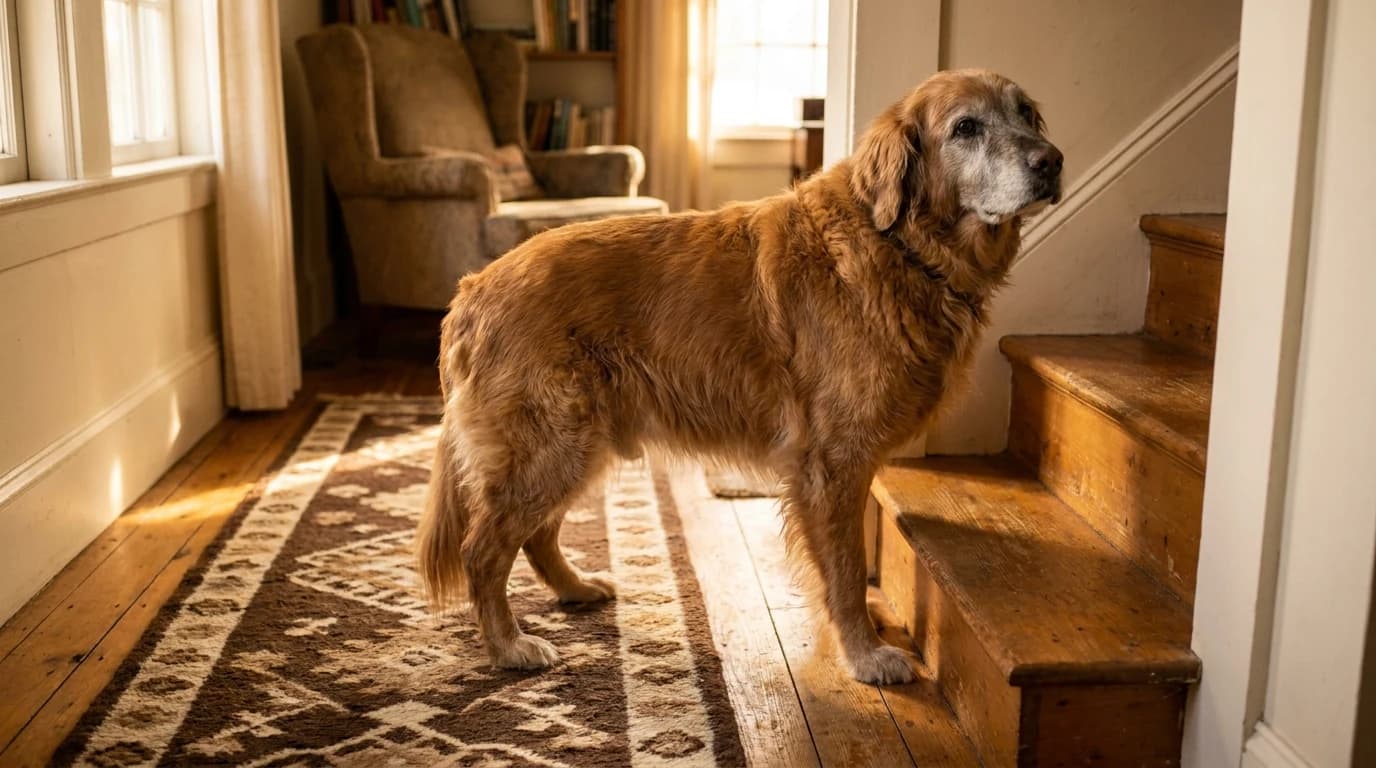
The grey comes in around the muzzle and everyone notices, and it tells you almost nothing. Dogs grey early, late and unevenly, and a white face is not a medical finding.
The signs worth your attention are duller and easier to miss, because they arrive as things your dog quietly stops doing.
Start with what has been dropped
What did your dog do last year that he does not do now?
- The sofa, and the bed
- Jumping into the car
- Taking the stairs at speed instead of one at a time
- Meeting you at the door
- The second half of the walk
The AVMA names a common cause of activity change directly: arthritis. Most of its list of signs is not limping. Favouring a leg, walking stiffly, difficulty sitting down or standing up, sleeping more, resisting being touched or petted, playing less, and showing unusual aggression towards people or other pets.
Look at the last two. From the outside, a painful dog looks like a grumpy dog, which is how arthritis goes unnoticed for a year in a house full of people who love the animal, and why an aging dog who has become snappy deserves a pain assessment before he gets a behavior label.
Rule of thumb: A painful dog looks like a grumpy dog. Snappiness earns a pain assessment before it earns a behavior label.
The way he gets up is the most useful thing you can watch
Not the walk. The transition. Standing up from lying down, on a hard floor, after a long nap, is the moment that shows first and shows most.
Film it on your phone once a month, in the same room, from the same angle. You will not notice the change day to day, and you will absolutely notice it across three clips. It is also the most useful thing you can hand to a vet.
 The stand-up after a nap, on a hard floor, is the moment to film once a month from the same angle.
The cognitive cluster
Physical change is one track. The other is the brain: the AVMA describes cognitive dysfunction, similar to senility in people, as a cause of behavior changes in older dogs.
Its list of common behavior changes in senior pets with cognitive dysfunction:
- Acting disoriented or confused
- Increased wandering
- Changes in sleep patterns
- House soiling
- Increased anxiety
- Increased barking
- Increased reaction to strange or loud sounds
- Increased aggressive or protective behavior
- Less interest in playing
- Repeating the same actions over and over
- Decreased response to voice commands
- Poorer memory and learning ability
It is a cluster, not a checklist, and one item on its own means little. Several items are also signs of something else entirely, which is why the AVMA notes the changes can seem contradictory, such as hearing loss alongside increased sensitivity to sounds.
The same sign, two lists
Several signs sit on both AVMA lists, which is why a vet has to sort them rather than you:
| What you see | On the arthritis list | On the cognitive dysfunction list |
|---|---|---|
| Sleeping more, or a changed sleep pattern | Yes | Yes |
| Less interest in playing | Yes | Yes |
| Unusual aggression or protectiveness | Yes | Yes |
| Difficulty sitting down or standing up | Yes | No |
| Disorientation, wandering, repeating actions | No | Yes |
| House soiling | No | Yes, and of several medical conditions |
House soiling is the one that most often gets mishandled. It reads as a training failure, and it is on both the cognitive list and the medical one.
Remember: House soiling is a phone call, not a retraining project.
Sight, hearing and the quiet compensations
It is normal for dogs to lose some sight and hearing with age. The AVMA notes that a dog with poor eyesight or even blindness can still get around well in familiar surroundings, and advises against rearranging or adding furniture that could become an obstacle.
The same page has a piece of forward planning: teaching hand signals while a dog can still hear makes it far easier to communicate once hearing fades. If your dog is middle-aged and healthy, pair a hand signal with every cue he already knows, this year, while it costs you nothing. Our guide to recall at home works the same way with a visual marker added.
Weight, in either direction
Excess weight in a senior dog is linked by the AVMA to increased risk of arthritis, breathing difficulty, insulin resistance or diabetes, heart disease, high blood pressure, skin problems and cancer. Weight gain is the more common problem in senior dogs.
Sudden weight loss is the more urgent one; the AVMA is direct that it often means something is wrong. Either direction, if it happened quickly, is a call rather than a change of food.
What to do at home while you wait for the appointment
None of this is treatment. It removes the daily friction that makes everything look worse than it is.
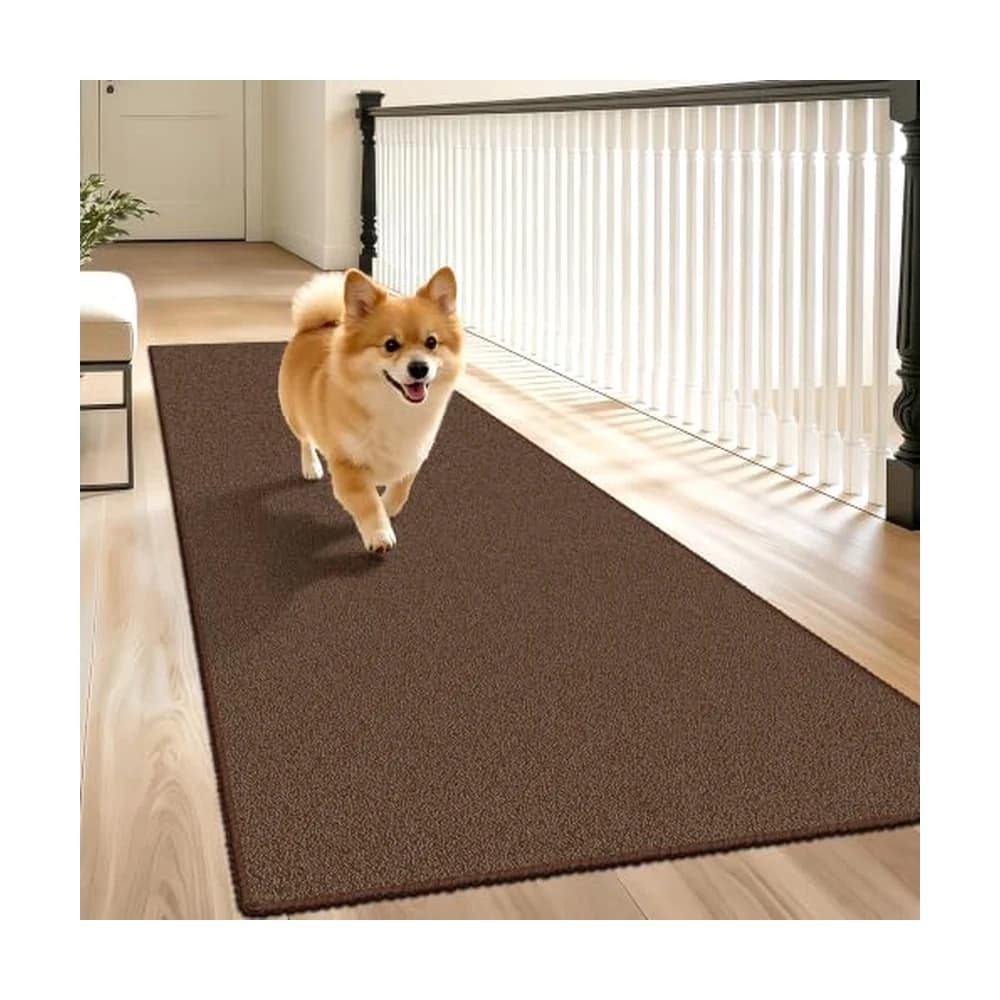
- Traction. Runners along the routes he uses most; a two-by-six such as the TTelephant covers the hallway or the run to the water bowl, where the sliding starts.
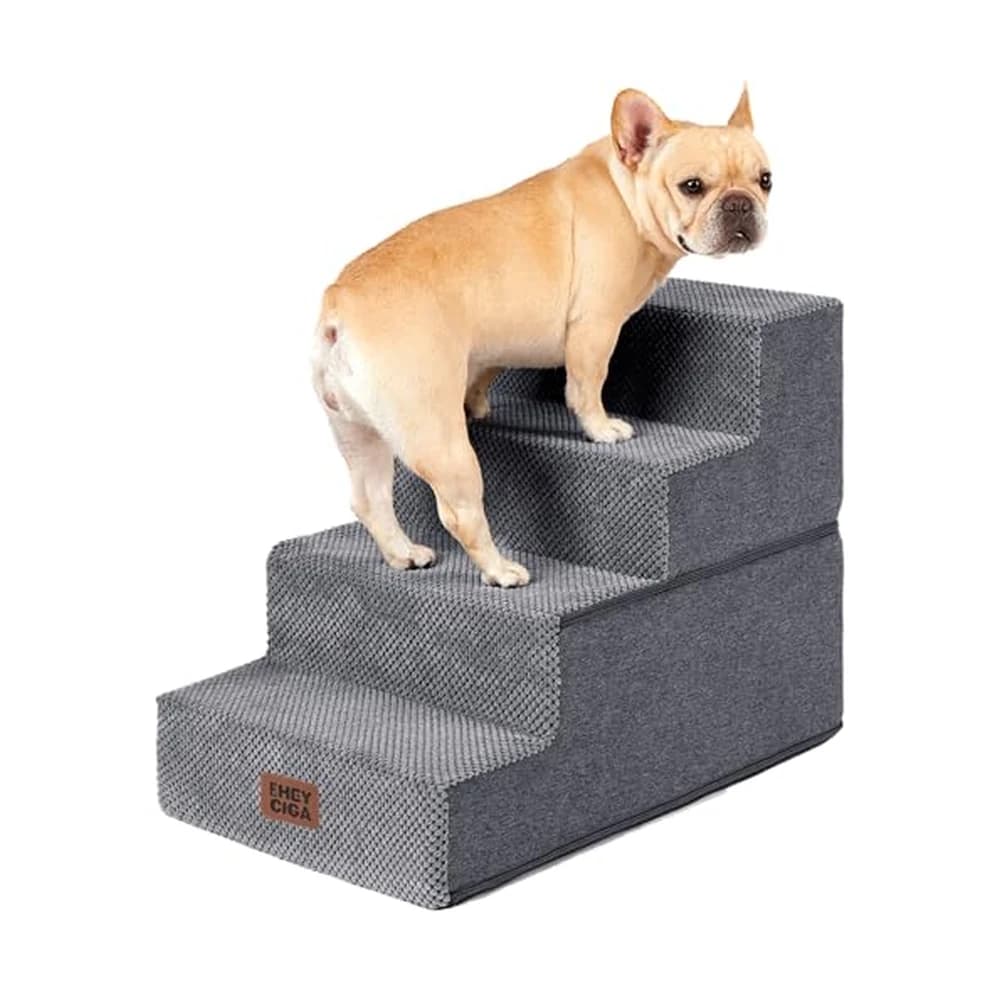
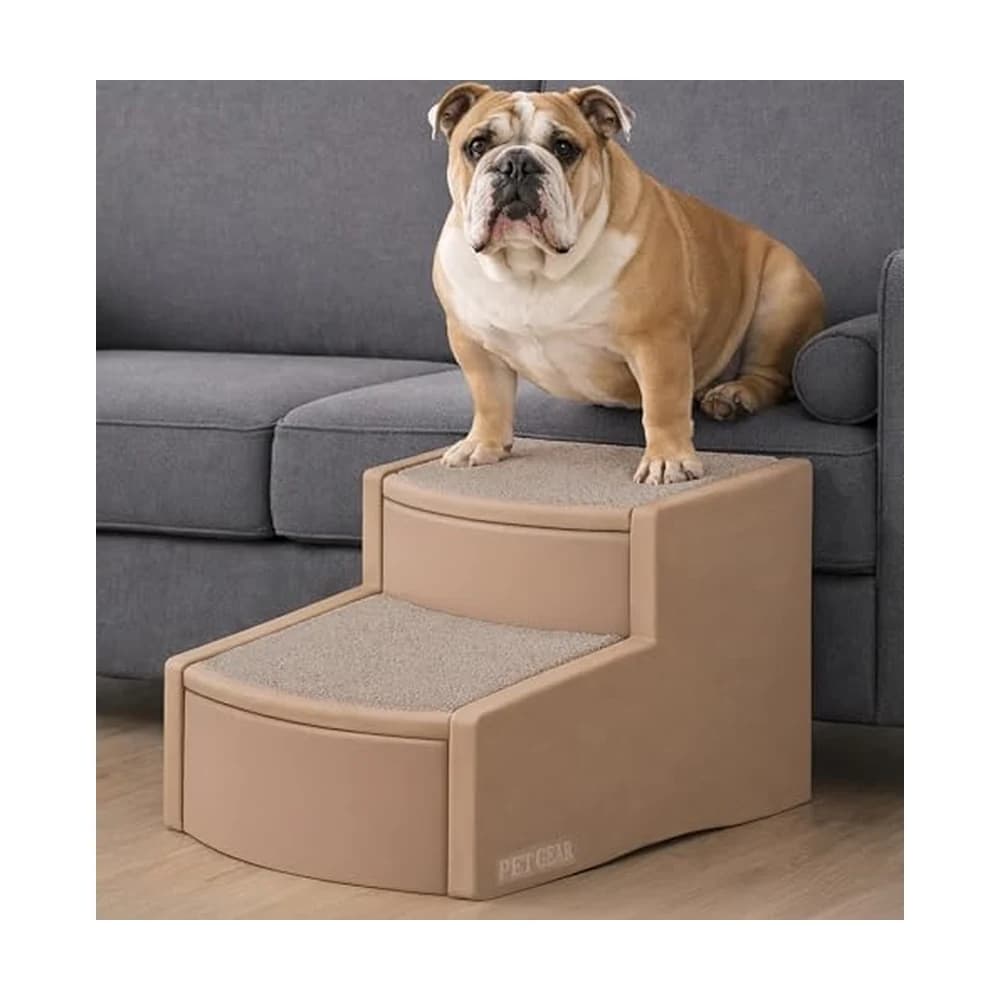
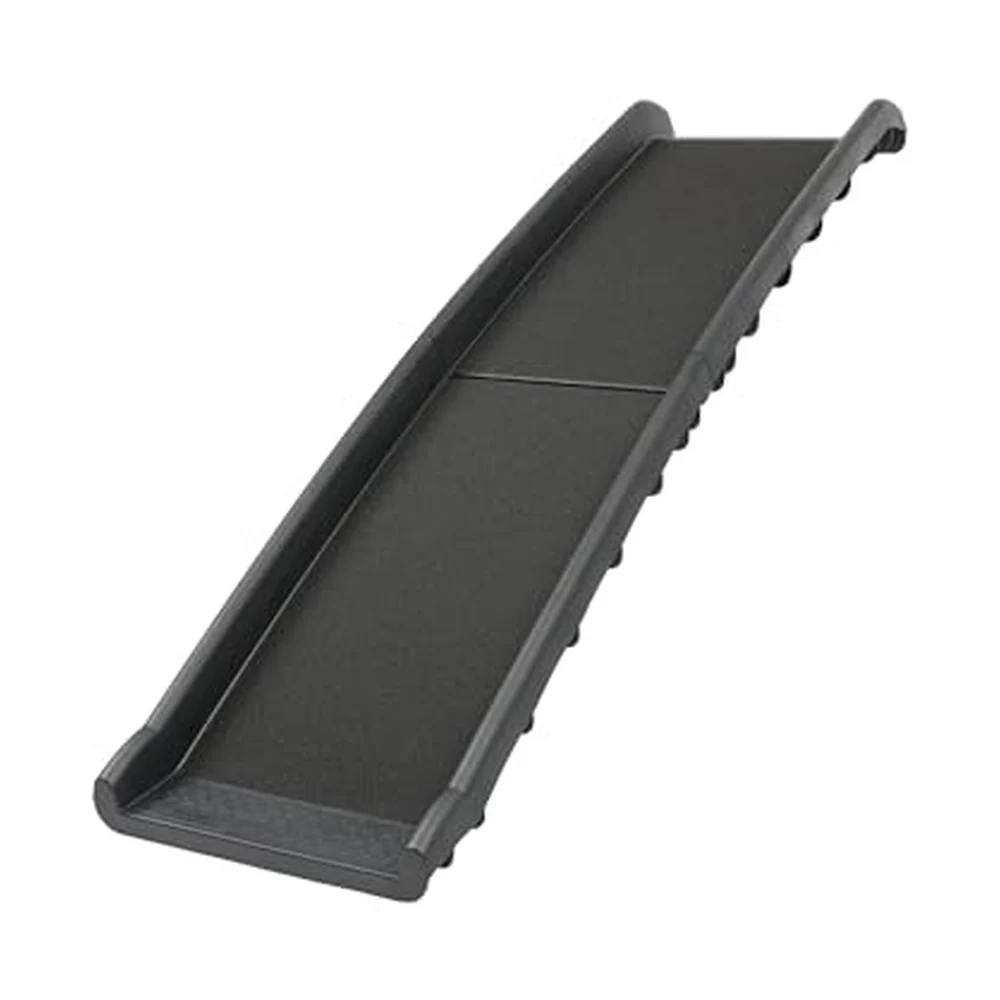
- Access. A ramp or steps for the sofa, the bed and the car, so he is not choosing between a jump and giving up. Foam steps like the EHEYCIGA four-step suit a small dog who has lost confidence rather than strength; a big dog and a low sofa want the Pet Gear Easy Step II, two extra-deep steps at a six-inch rise; the car wants the PetSafe Happy Ride ramp, 62 inches long, folding in half.
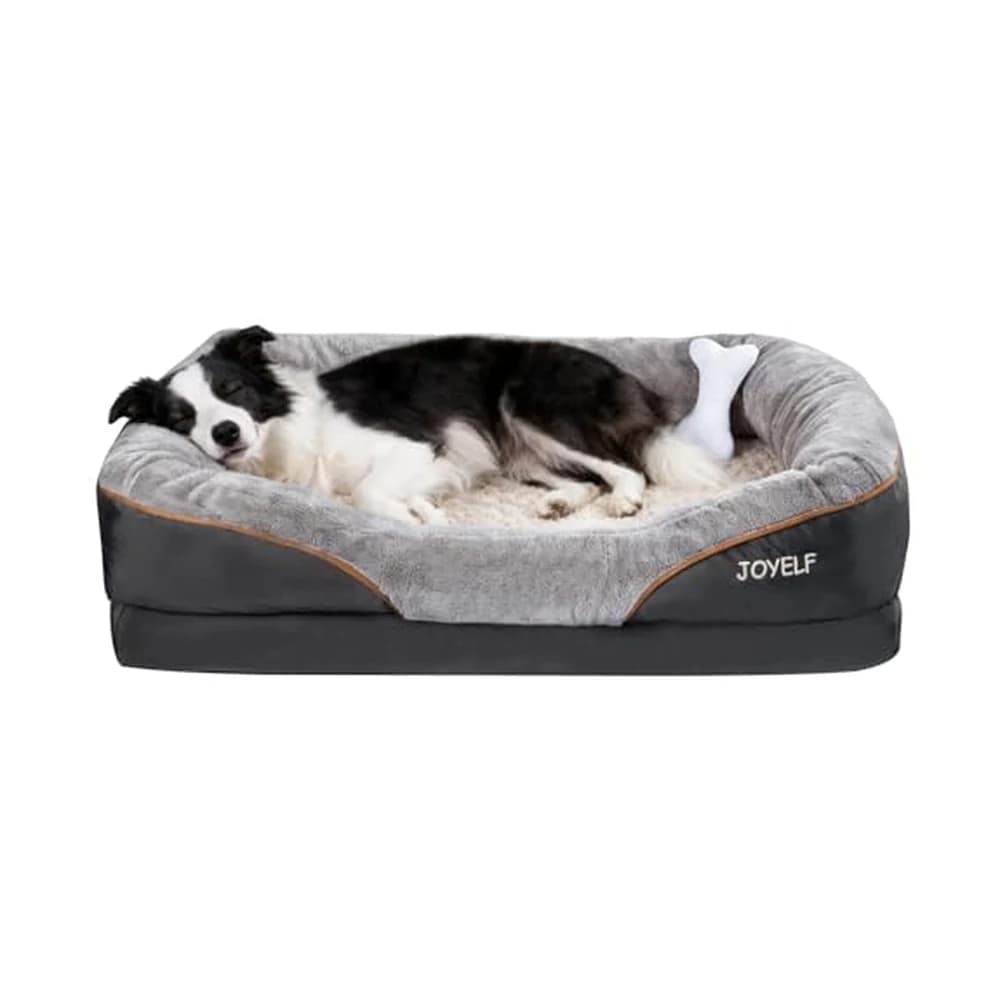
- A better bed. Supportive, with a low side to step over. Our orthopedic bed picks are chosen for this stage; the JOYELF memory-foam bolster has the open front a stiff dog walks onto rather than over.
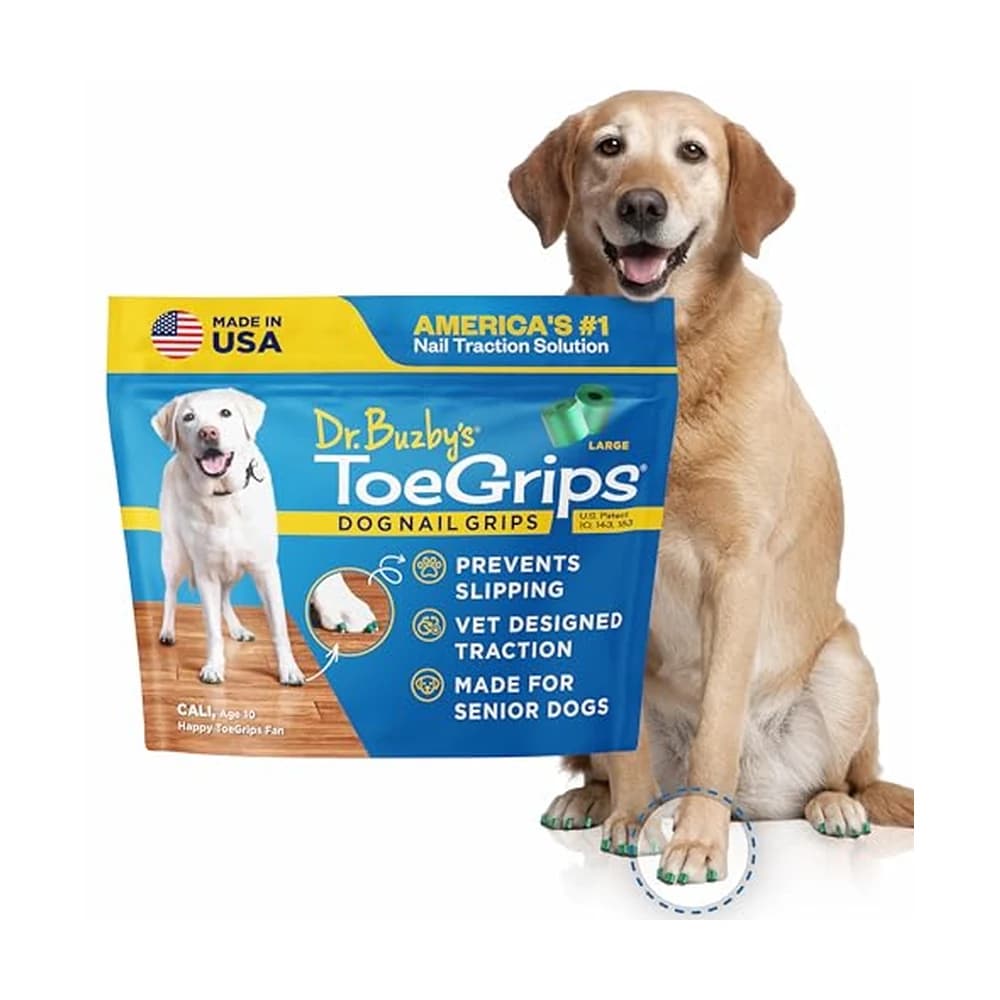
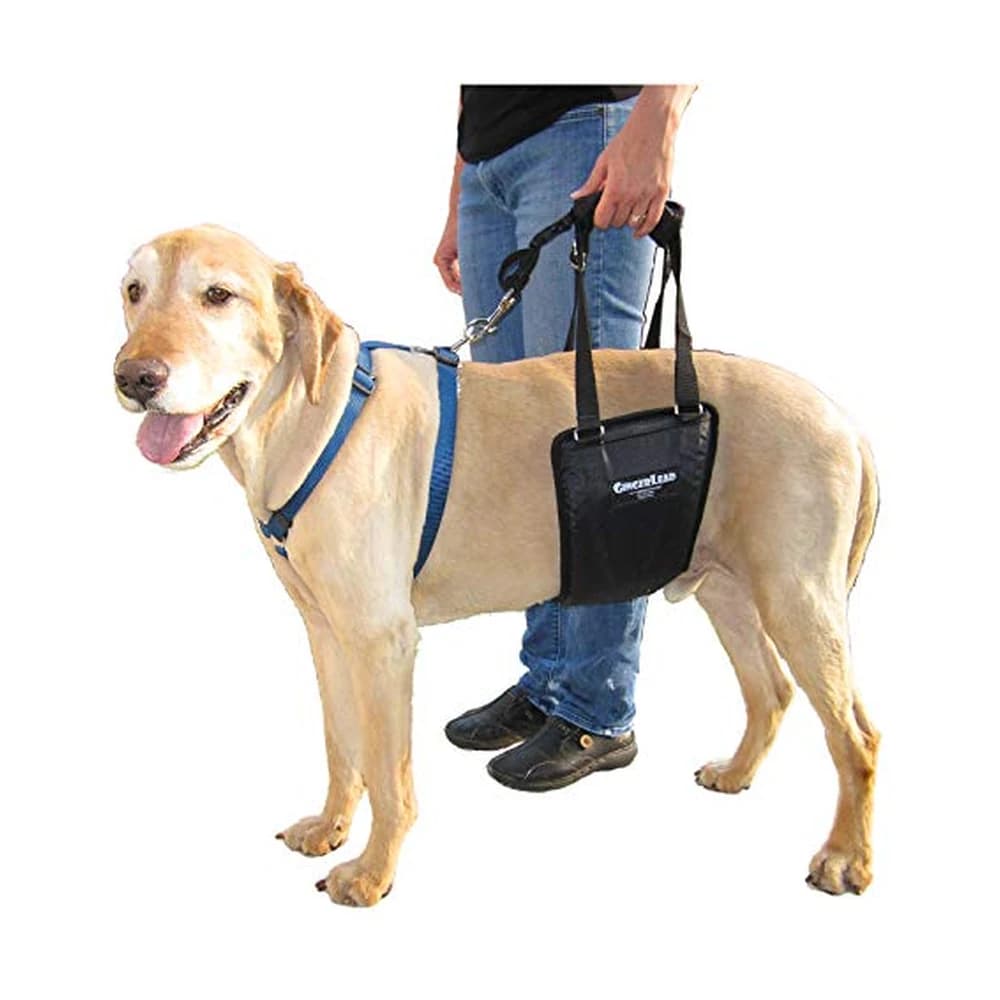
- Support for stairs. A lift or support harness such as the GingerLead sling turns a frightening staircase into a two-of-you job, and toe grips address the floor for a dog who is skating rather than struggling.
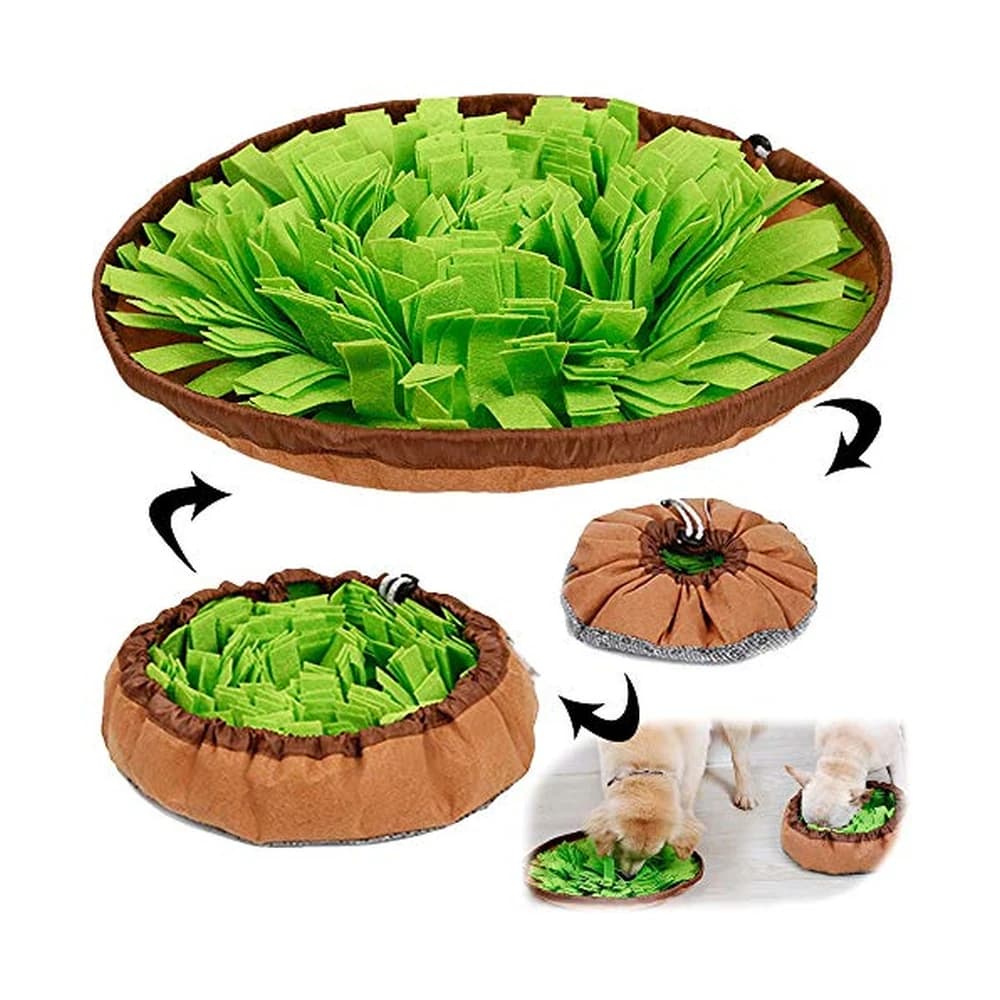
- Keep the brain working. Reduced play is on the cognitive list, so replace lost physical activity with mental work: a food puzzle asks nothing of the joints, and a snuffle mat like the AWOOF can be worked lying down. See brain games for senior dogs.
The AVMA itself names orthopedic beds, raised feeders, and stairs and ramps as changes that help an arthritic dog feel more comfortable: a rare case of gear advice and veterinary advice being the same sentence.
Write it down, then take it in
Keep a dated note on your phone: what you saw, which day, what he was doing.
What helps you see it, and what does not
What actually helps:
- Filming the stand-up once a month, same room, same angle
- Three dated lines a week on your phone
- Asking what he did last year that he does not do now
What tells you almost nothing:
- The grey muzzle
- Ten minutes at the vet, where adrenaline masks everything
- A description reconstructed from memory in the consulting room
What to ask your vet
- Is what I am seeing when he stands up consistent with pain, and can we do a pain assessment?
- Are these behavior changes worth investigating for cognitive dysfunction, or do they point somewhere else?
- Is his weight helping or hurting at this point?
- Given his size and breed, where is he in his expected lifespan?
If you are not sure whether your dog counts as a senior at all, when is a dog a senior covers where the line comes from, and the senior stage page has the rest of the picture.
Key takeaways
What to remember
- The AVMA lists behavior changes as often the first sign of aging, and notes they may come from pain, from failing sight or hearing, from disease, or from cognitive dysfunction.
- Arthritis usually shows up as avoidance before it shows up as limping: no more sofa, no more car, hesitating at the stairs.
- Cognitive dysfunction has a recognisable cluster: disorientation, disrupted sleep, house soiling, increased anxiety, repeating actions, and reduced response to cues.
- Sudden weight change in either direction is a reason to call, not a reason to adjust the food bowl.
- Write down what you see and when. A dated list is far more useful to a vet than an impression.
Questions people ask
- Is slowing down just normal aging?
- Some of it is, and some of it is arthritis or another condition that is treatable. The AVMA notes a common cause of activity change is arthritis and lists avoiding running, jumping, stairs and getting into cars among the signs. It is worth having checked rather than assumed.
- What are the signs of cognitive dysfunction in dogs?
- The AVMA's list includes acting disoriented or confused, increased wandering, changes in sleep patterns, house soiling, increased anxiety, increased vocalisation, repeating the same actions, less interest in playing, decreased response to voice commands, and poorer memory and learning.
- My old dog has started having accidents indoors. Is that behavioral?
- Do not assume so. House soiling appears on the AVMA's cognitive dysfunction list, and it is also a sign of several medical conditions. It is a call to the vet, not a retraining project.
- Should I worry about a grey muzzle?
- No. Greying is cosmetic and not a reliable indicator of anything. What your dog has stopped doing is far more informative than what colour he is going.
- How do I tell pain from stubbornness in an old dog?
- Often you cannot, which is the point. The AVMA lists resisting being touched, unusual aggression, sleeping more and difficulty sitting or standing among arthritis signs, and all of them read as mood from the outside. A pain assessment answers it.
Gear
Gear for this stage
The products this piece assumes, in the order we would get them. Prices move; check before you buy.
$32.29 4.4 out of 5 stars · 10,918
Bedside steps for a small or ageing dog — 18 inches over four soft foam steps, with a…
$89.99 4.4 out of 5 stars · 901
A low sofa and a wide dog — two extra-deep 16-inch-wide steps at a six-inch rise, rated to…
$59.99 4.1 out of 5 stars · 14,952
Getting a stiff dog into an SUV or estate — 62 inches, folding to 31, rated to 150 lb and…
TTelephant Non-Slip Floor Runner
$33.29
The hallway or the run to the water bowl, where an older dog's feet start sliding on hardwood…
$39.99 3.2 out of 5 stars · 3,857
A dog who is strong but sliding — rubber grips on the nail tips give traction on hardwood…
$69.95 4.3 out of 5 stars · 3,798
Taking real weight off weak hind legs — a padded sling with an integrated leash and a cutout…
$69.99 4.6 out of 5 stars · 28,761
The mainstream choice — a memory-foam base with three-sided bolsters and an open front the…
$11.98 4.2 out of 5 stars · 21,757
The cheapest way to tire a dog out with their nose — scatter kibble in the fleece and let…
Sources
- AVMA: Senior pets — The AVMA senior age bands by adult weight, the list of care areas that change in senior dogs, the signs of arthritis, and the behavior changes associated with cognitive dysfunction.
- AAHA 2019 Canine Life Stage Guidelines: Canine Life Stage Definitions — The four AAHA life stages, senior defined as the last 25 percent of estimated lifespan, the refusal to use human-year equivalents, and the statement that stages phase in and out gradually.
- AAHA 2019 Canine Life Stage Guidelines: Behavior — That roughly 6 months to 3 years is the period owners find most challenging, that there is no medical reason to delay puppy classes until the vaccine series is finished if hygiene is managed, and that puppies generally do not outgrow behavior problems.
We research and analyse — specs, manufacturer documentation and large-scale owner feedback. We do not test products on dogs, and we are not your vet.
Next step
Check whether your dog is in the senior band yet
Several of the changes above are worth watching in a nine-year-old and worth an appointment in a fourteen-year-old, and the band is what tells them apart.