In this article(7 sections)
The walks get shorter before anything else changes. An hour becomes forty minutes, then two slow laps of the block, and the dog who used to come home satisfied now comes home bored.
That gap is what these games fill. Something to do with a mind that is still perfectly interested in doing things, in a body that has opinions about stairs.
Why it belongs on the care list
The AVMA puts mental health among its basic considerations for senior pets, alongside increased veterinary care, diet, weight control, parasite control, vaccination, maintaining mobility and adapting the environment. Senior pets can show signs of senility or cognitive dysfunction, and stimulating them through interactions can help keep them mentally active.
It also notes that certain diets, medications and opportunities to interact with the environment can support brain function, and that your veterinarian can recommend which are right for your dog. These games are the opportunities-to-interact part, not a treatment; if you are seeing the cognitive cluster we describe in signs of aging in dogs, they go alongside a vet appointment rather than instead of one.
Set-up rules for an old dog
Four constraints make the games work.
- Floor level. No jumping, no stretching up, no getting on and off furniture.
- Non-slip footing. A rug or a yoga mat. A dog who slips once while playing will be careful for weeks.
- Short. Five to ten minutes. Stop while he is still keen.
- Easy. The reward here is success. A puzzle a stiff, half-deaf old dog cannot solve is a frustration exercise.
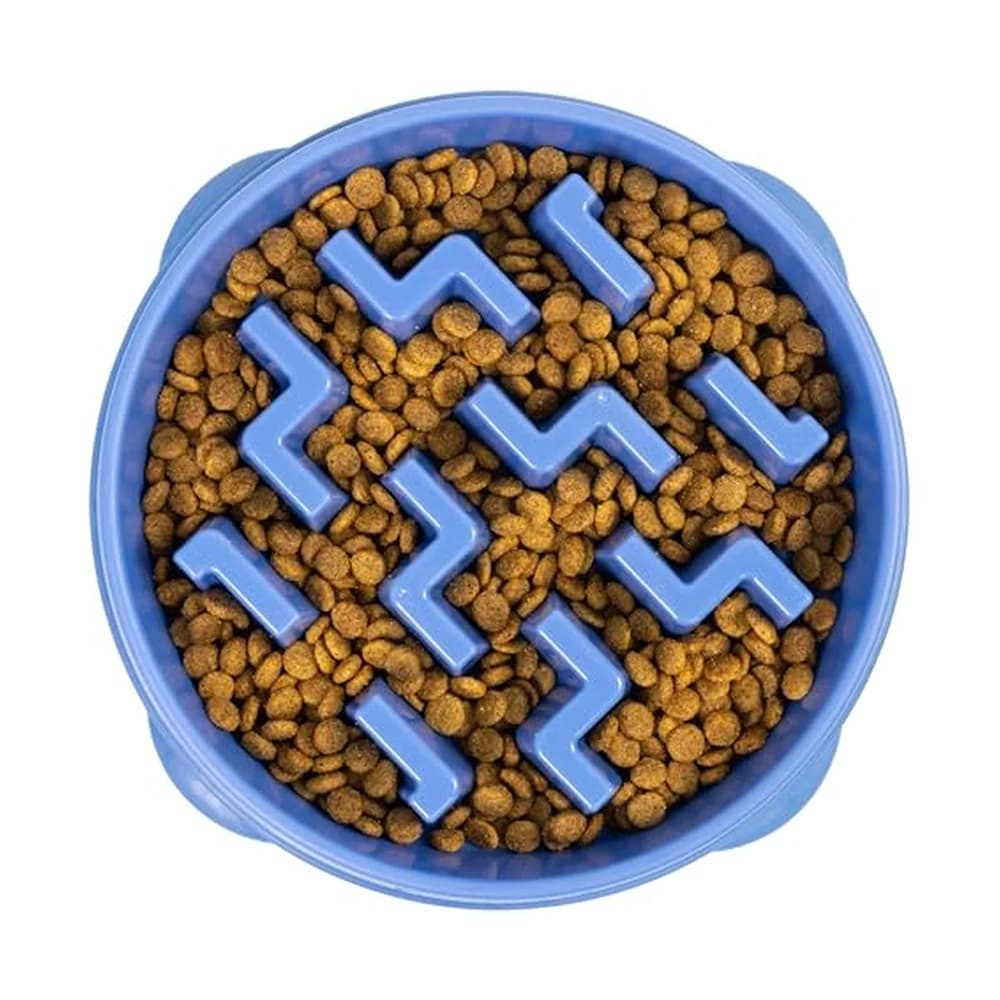
Food comes from the day's ration, not on top of it: the AVMA links excess weight in senior pets to increased risk of arthritis and other conditions. A slow feeder or puzzle bowl turns the actual meal into the activity; this guide assumes something like the Outward Hound Fun Feeder, a maze bowl that stretches a ninety-second meal into several minutes.
Rule of thumb: Five to ten minutes, on a rug, and stop while he is still keen.
Six games that work lying down
- Scatter feeding. A handful of kibble across a short-pile rug, hunted down.
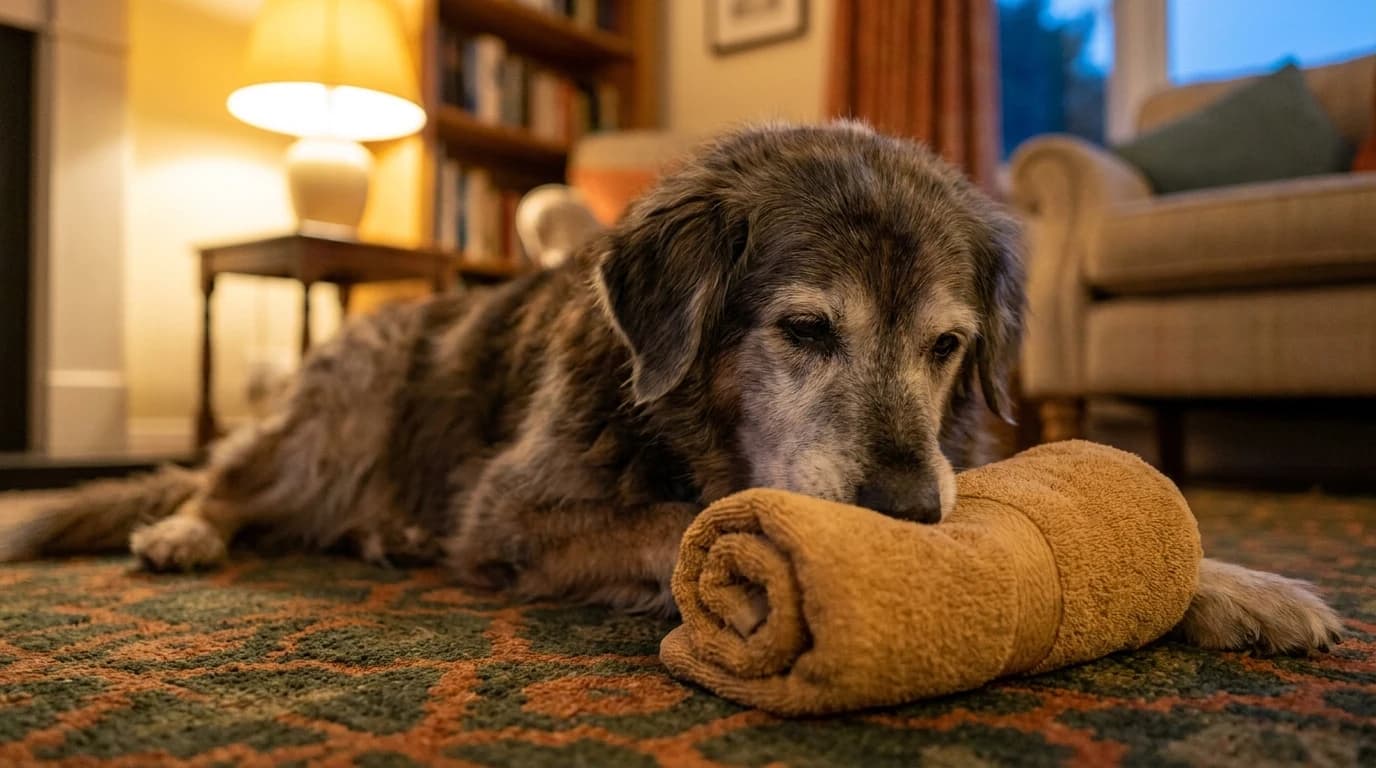
- The towel roll. Food along a flat hand towel, rolled loosely; he unrolls it.
- Muffin tin and tennis balls. Food in some of the cups, balls over the top; he lifts the balls.
- Find it. Show him a treat, place it a metre away behind a chair leg, release; build to out of sight in the same room.
- The box pile. Cardboard boxes and paper on the floor, food underneath; supervise so nothing gets eaten.
- Two-choice shell game. Two upturned cups, food under one; he noses the right one.
 The muffin tin game works with the chin on the floor; use fewer balls for a dog with a soft mouth or missing teeth.
Find it tires dogs out far more than its appearance suggests; the others ask even less of the body:
| Game | What it asks of the body | Suits |
|---|---|---|
| Scatter feeding | Nose and neck only | Any dog |
| Towel roll | Chin on the floor | Stiff, deaf or blind dogs |
| Muffin tin | A nose lift | Soft mouths, with fewer balls |
| Find it | Crossing the room | A dog who still potters |
| Box pile | Nosing under paper | Any dog, supervised |
| Shell game | Almost nothing | Very limited mobility |
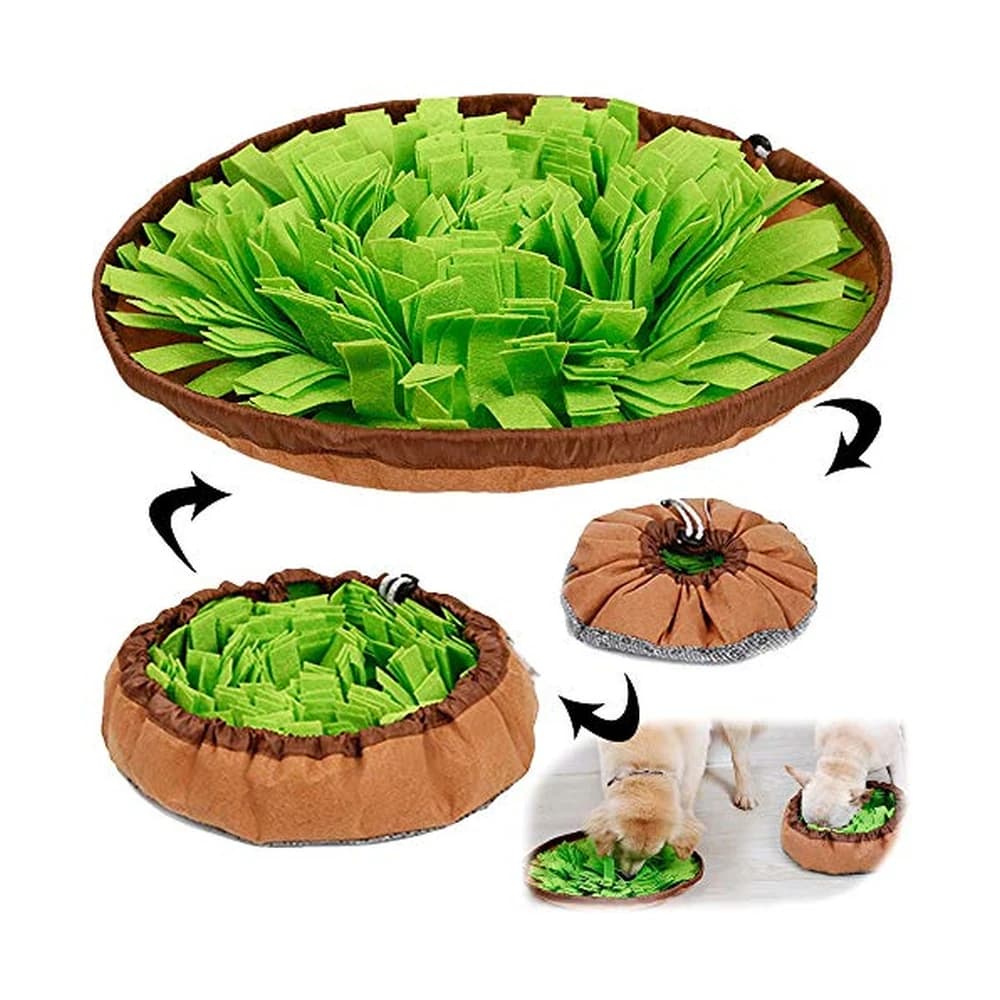
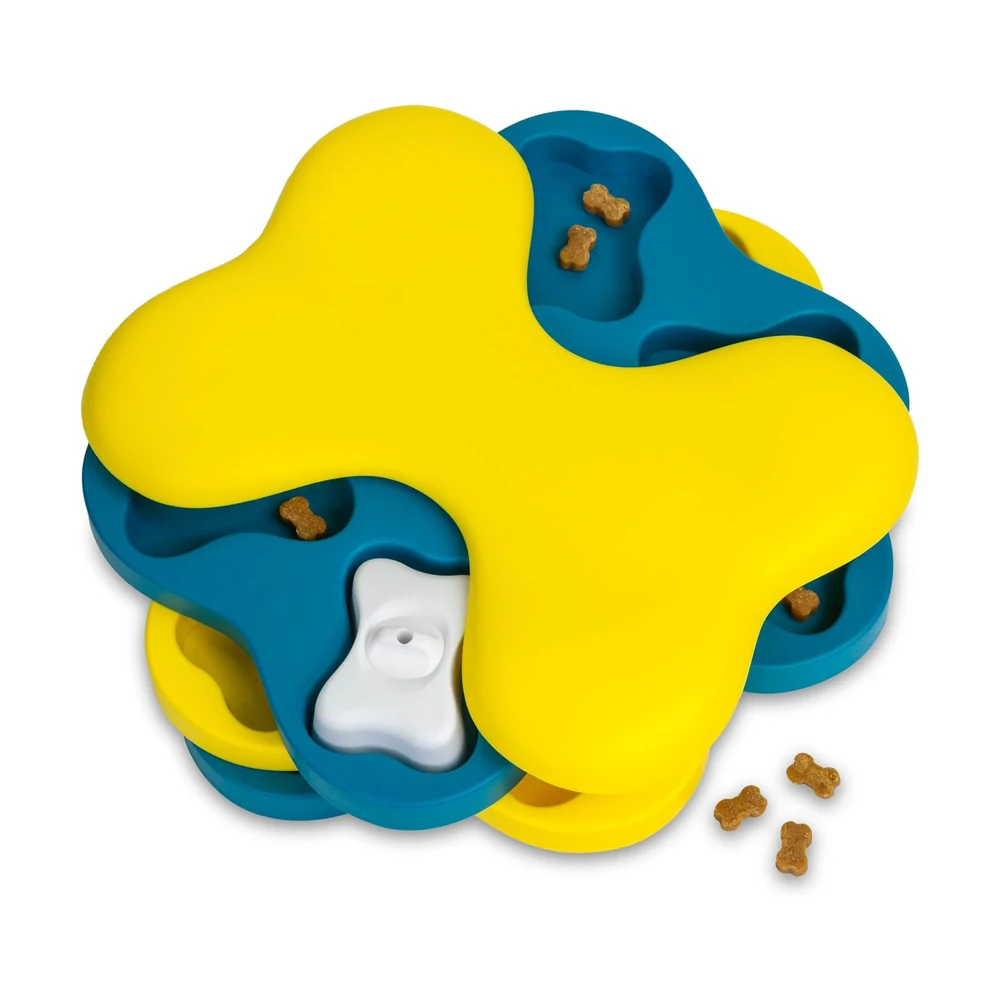
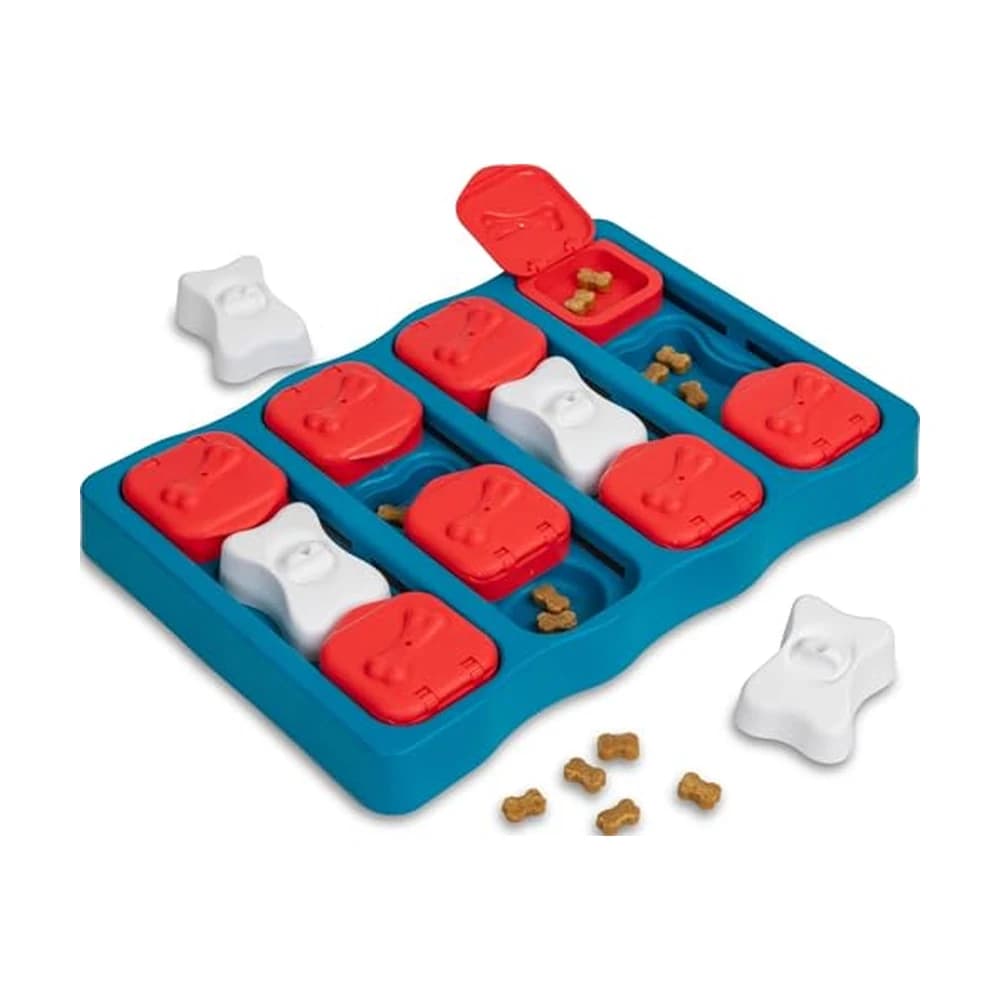
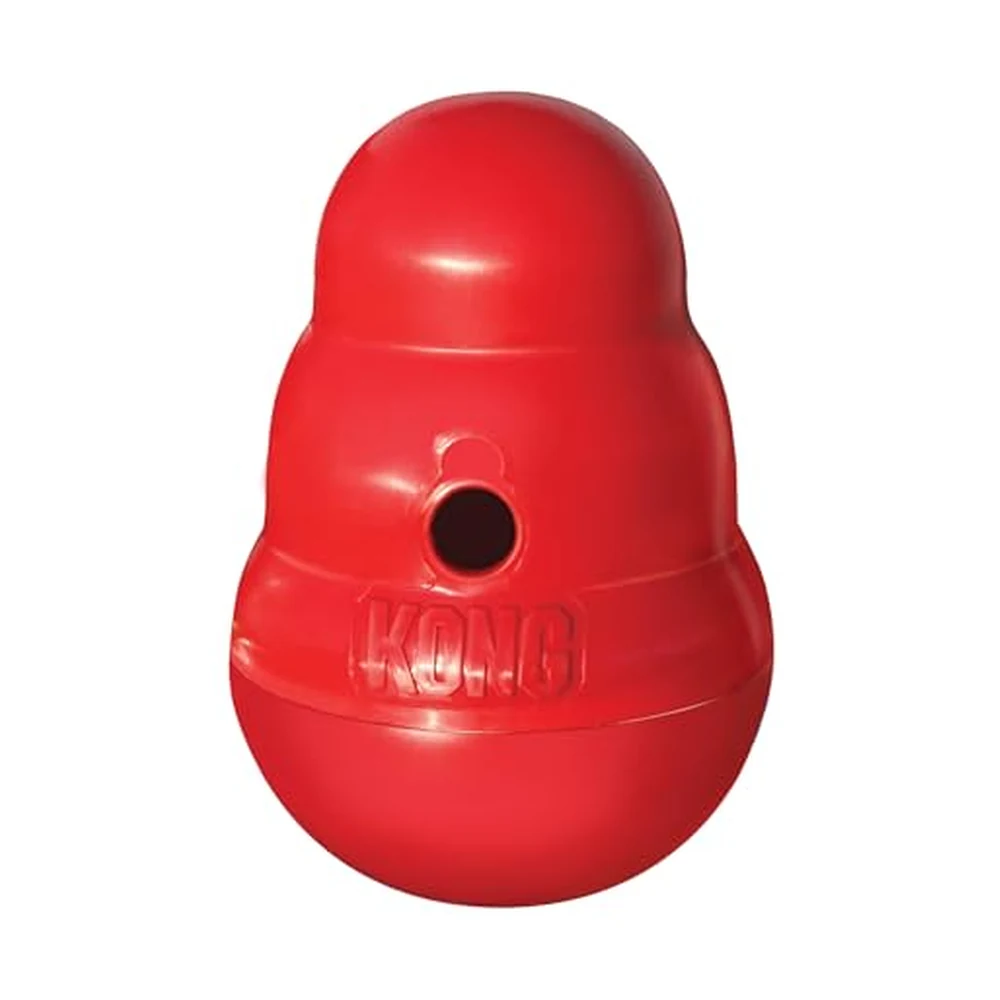
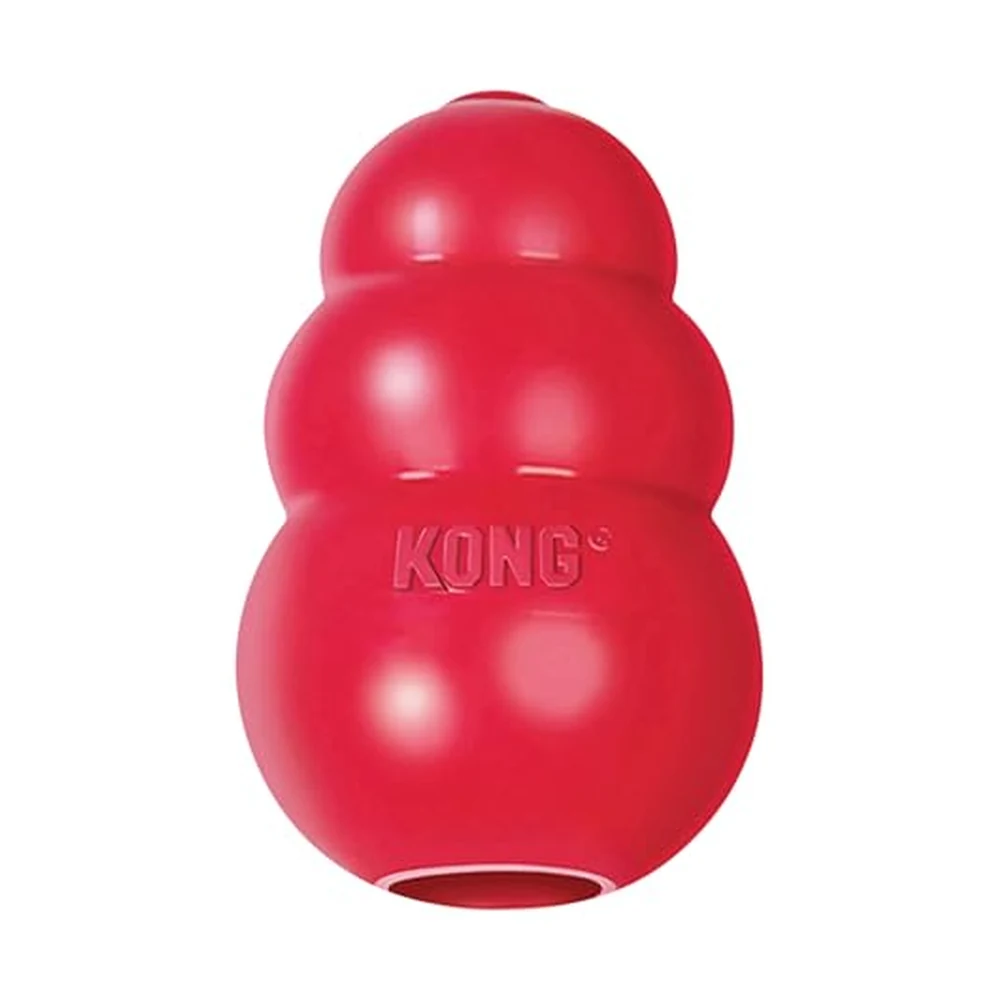
A rotating shelf of enrichment puzzles covers the same ground. This guide assumes a snuffle mat such as the AWOOF as the bought version of scatter feeding, worked lying down; a spinning-layer puzzle like the Nina Ottosson Dog Tornado, since a layer that turns with a nudge suits an old dog better than a paw press; and a Nina Ottosson Dog Brick on its easiest level. The KONG Wobbler turns a meal into a game for a senior who still stands well on a rug, but it is loud on hard floors and the one to skip for poor footing.
Keep training, but change what you train
Old dogs learn, and there is a good reason to continue: the AVMA lists decreased response to voice commands and poorer memory among the changes associated with cognitive dysfunction, so a small, easy training habit gives you a baseline you would otherwise not have.
Two things worth teaching now:
- Hand signals for cues he already knows. The AVMA points out that teaching hand signals earlier makes communication easier as hearing worsens, and that simple gestures for come or stop let you retain control safely without words. Pair a signal with each spoken cue for a few weeks; the mechanics are the same as in recall at home.
- Targeting. Teach him to touch your flat palm with his nose. Nearly free of physical demand, it moves him without pulling and guides a dog whose sight is going.
Keep sessions reward-based. AVSAB recommends only reward-based methods for all dog training, notes that training works best when it teaches the animal what to do, and says the learner must be able to opt out, which for an old dog means the session ends when he walks away.
Read the refusals
If he stops engaging with a game he used to like, that is information.
Less interest in playing is on the AVMA's cognitive dysfunction list and on its arthritis list, alongside sleeping more, difficulty standing up and resisting being touched. Those need different answers and only your vet can tell them apart. A dog who gets stuck in a corner mid-search, or repeats the same action over and over, is also worth mentioning; both are on the same list.
Remember: A refusal is information. Playing less is on both the arthritis list and the cognitive dysfunction list.
What actually helps, and what does not
What actually helps:
- Floor level, on a rug, for five to ten minutes
- Food from the day's ration, not on top of it
- A puzzle set easy enough that he wins
What people try that does not:
- Pushing a dog who has stopped wanting to play
- A puzzle a stiff, half-deaf old dog cannot solve
- Sessions that run on until he gives up
Comfort makes play possible
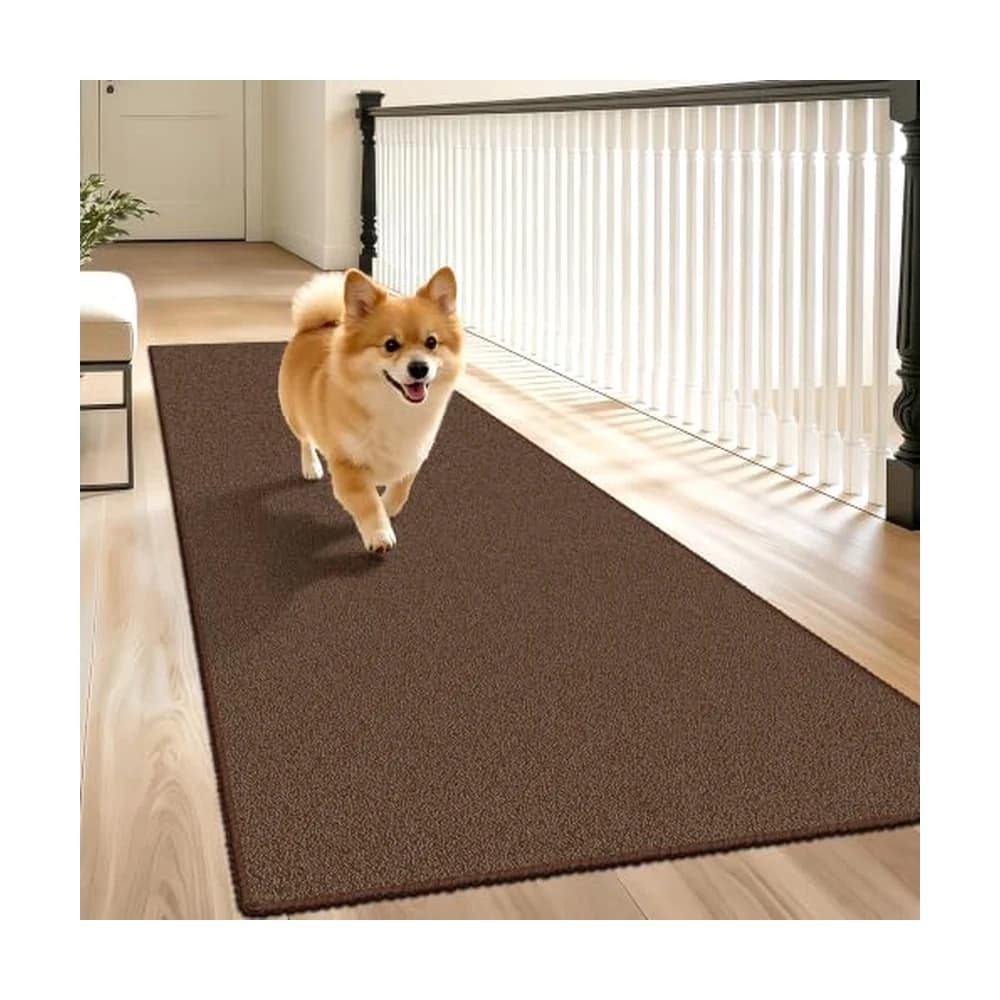
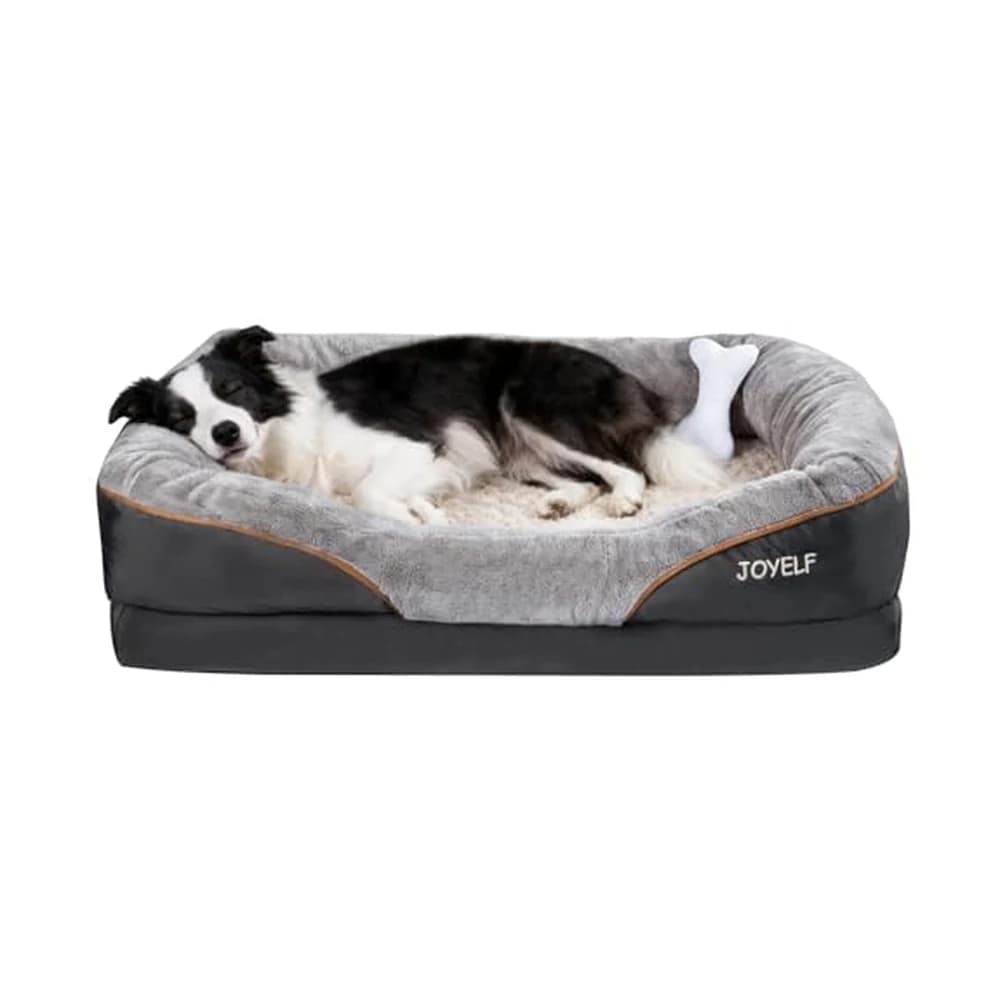
None of this happens if lying down hurts. A supportive orthopedic bed and runners on the slippery routes do more for a senior dog's willingness to engage than any puzzle will. This guide assumes an open-front bed like the JOYELF memory-foam bolster, which he walks onto rather than over, and a two-by-six runner like the TTelephant on the hallway. The rest of the picture is on the senior stage page.
What to ask your vet
- Are any of the changes I am seeing worth screening for cognitive dysfunction?
- Is there a diet or supplement you would recommend for brain support at his age?
- Is he comfortable enough to be doing this, or should we do a pain assessment first?
Key takeaways
What to remember
- Mental work is on the AVMA's list of what senior pets need, alongside mobility and weight control.
- Nose work is the highest value per unit of effort. A dog who cannot walk far can still search a rug for ten minutes.
- Keep it at floor level, on non-slip footing, and in short sessions. Success is the point, not challenge.
- Less interest in playing appears on the AVMA's cognitive dysfunction list, so a sudden refusal to engage is information, not laziness.
- Hand signals learned now pay off later. The AVMA notes teaching them earlier makes communication easier as hearing fades.
Questions people ask
- Do brain games help with canine cognitive dysfunction?
- The AVMA lists mental health among senior care considerations and says stimulating senior pets through interactions can help keep them mentally active. It also notes that certain diets, medications and opportunities to interact with the environment can help support brain function, and that your vet can recommend which are right for your pet. Treat games as part of a plan your vet leads, not as a treatment.
- My old dog has stopped wanting to play. Should I push?
- No. Less interest in playing is on the AVMA's list of behavior changes associated with cognitive dysfunction, and it is also a common sign of pain. Mention it to your vet rather than working around it.
- What if my dog is deaf or losing his sight?
- Scent games are ideal, because they need neither. The AVMA also advises keeping surroundings familiar and avoiding rearranging furniture for a dog with failing eyesight, so play in the room he knows best.
- How long should a session be?
- Five to ten minutes, once or twice a day, ending while he is still keen. An older dog tires mentally as well as physically, and a session that runs long ends on frustration.
- Are food puzzles a problem for a dog on a diet?
- Not if the food comes out of his daily ration rather than on top of it. Weight gain in senior dogs raises the risk of arthritis and several other conditions, so measure the day's food and use part of it for games.
Gear
The gear this guide assumes
Our shelves and product pages, so you can see the options without leaving mid-session. No buy buttons here — this is a training guide.
$11.98 4.2 out of 5 stars · 21,757
The cheapest way to tire a dog out with their nose — scatter kibble in the fleece and let…
$10.35 4.7 out of 5 stars · 72,835
The fast eater — a four-cup maze bowl that stretches a ninety-second meal into several…
$16.95 4.4 out of 5 stars · 10,510
A second puzzle to rotate in — three stacked layers that spin apart, so the dog has to move…
$14.30 4.4 out of 5 stars · 78,207
A first real puzzle — three difficulty levels in one board, so it grows with the dog instead…
$17.91 4.5 out of 5 stars · 17,188
Feeding a whole meal as a game — it wobbles and drops kibble as the dog nudges it, and it…
TTelephant Non-Slip Floor Runner
$33.29
The hallway or the run to the water bowl, where an older dog's feet start sliding on hardwood…
$69.99 4.6 out of 5 stars · 28,761
The mainstream choice — a memory-foam base with three-sided bolsters and an open front the…
Sources
- AVMA: Senior pets — That mental stimulation is part of senior care, the behavior changes associated with cognitive dysfunction, the signs of arthritis, and the advice on familiar surroundings and hand signals for dogs losing sight or hearing.
- AVSAB Position Statement on Humane Dog Training (2021) — That AVSAB recommends only reward-based methods for all dog training, that tools relying on pain or intimidation should not be used, that training is most effective when it teaches the dog what to do, that management and antecedent arrangement belong in every plan, and that the learner must be able to opt out.
- AAHA 2019 Canine Life Stage Guidelines: Canine Life Stage Definitions — The four AAHA life stages, the absence of a clinical adolescent stage, senior defined as the last 25 percent of estimated lifespan, and the statement that stages phase in and out gradually.
We research and analyse — specs, manufacturer documentation and large-scale owner feedback. We do not test products on dogs, and we are not your vet.
Next step
The enrichment and puzzles shelf
Most of the six games need nothing, but a wobbler or a snuffle mat is what keeps them going on the days you have five minutes.
A dog who has thought hard is as settled as a dog who has run hard, and for a senior or a rainy week it is the only version available.