We research gear rather than testing it, and some links below are Amazon affiliate links — if you buy through one we may earn a commission, at no extra cost to you. It does not change what we recommend. Full disclosure.
6 picks compared
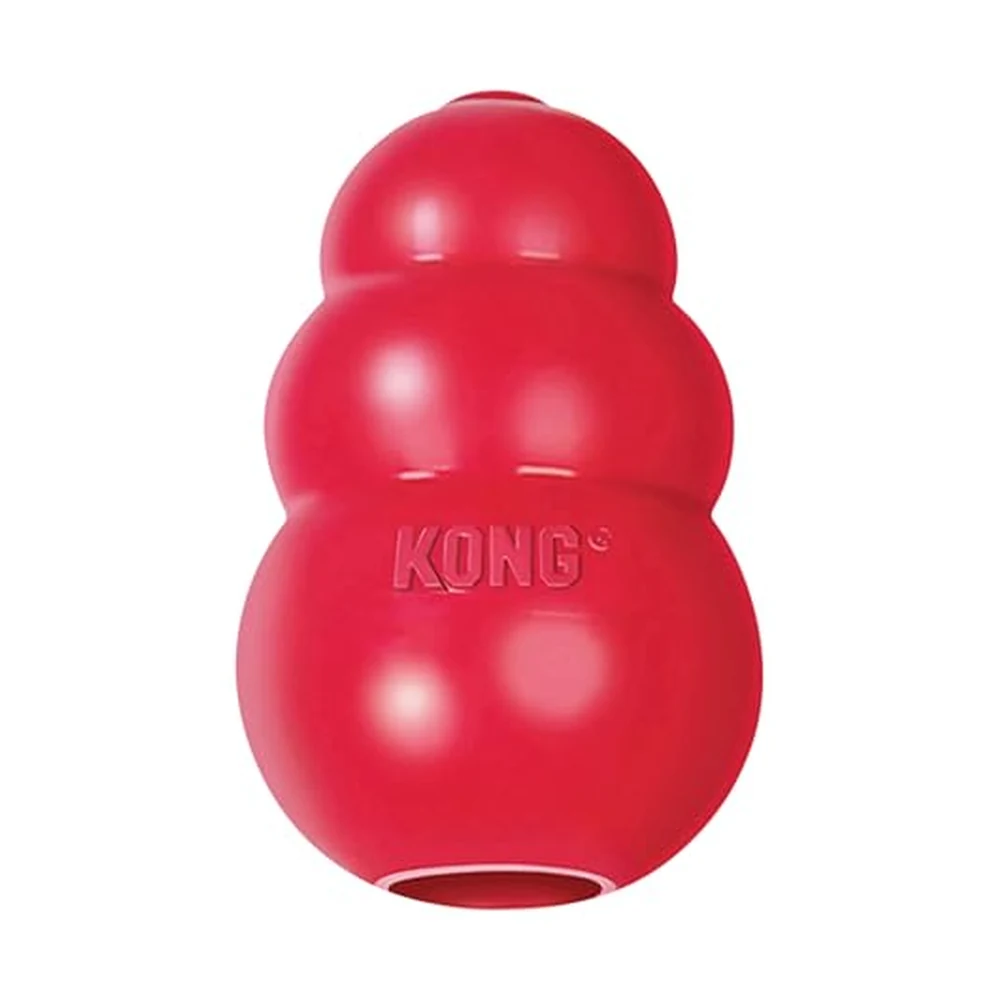
The stuffed-and-frozen standby — the toy that covers crate time, alone time and the first hour of any rainy day
- Skip if
- You want a puzzle with steps to solve. This is a single-chamber toy, not a multi-stage one.
$14.30 4.4 out of 5 stars · 78,207 ratings
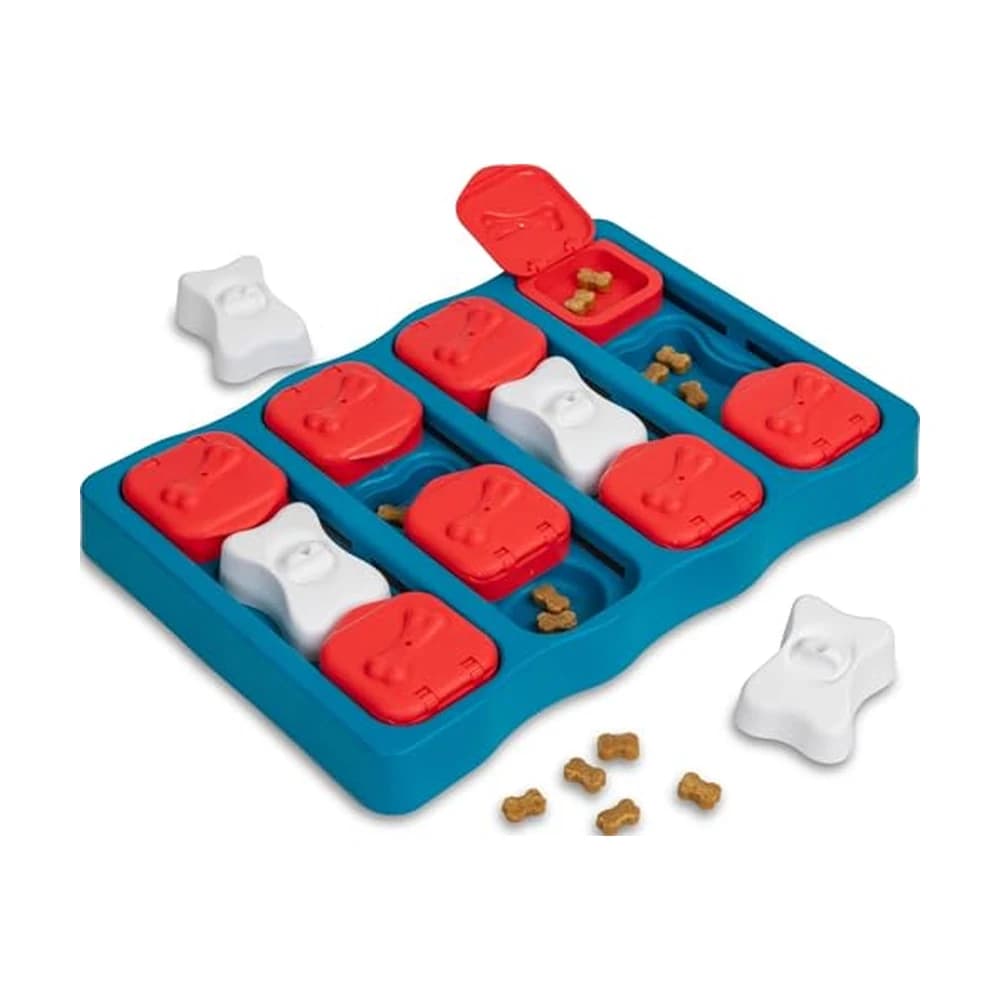
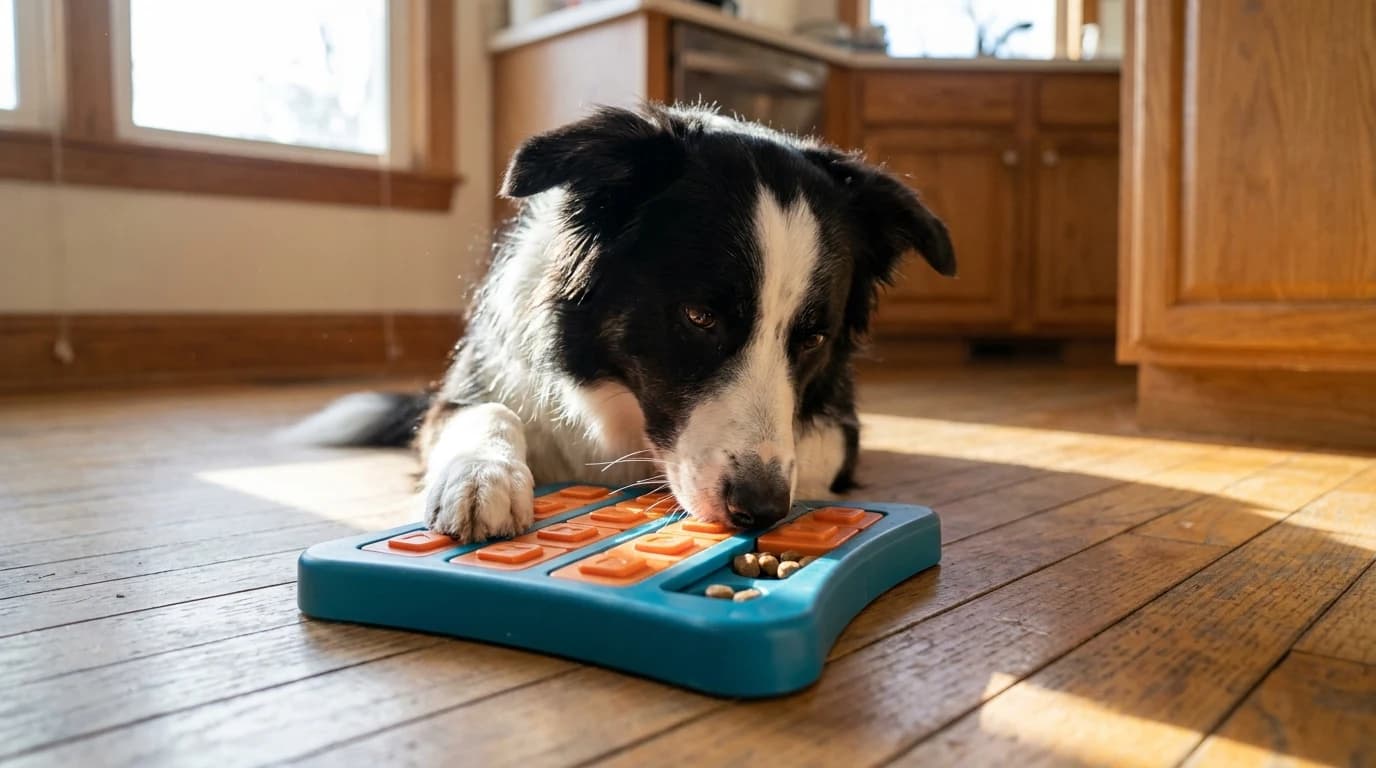
A first real puzzle — three difficulty levels in one board, so it grows with the dog instead of being solved once
- Skip if
- Your dog chews rather than solves. Outward Hound says no toy is indestructible and not to leave a dog alone with a treat puzzle.
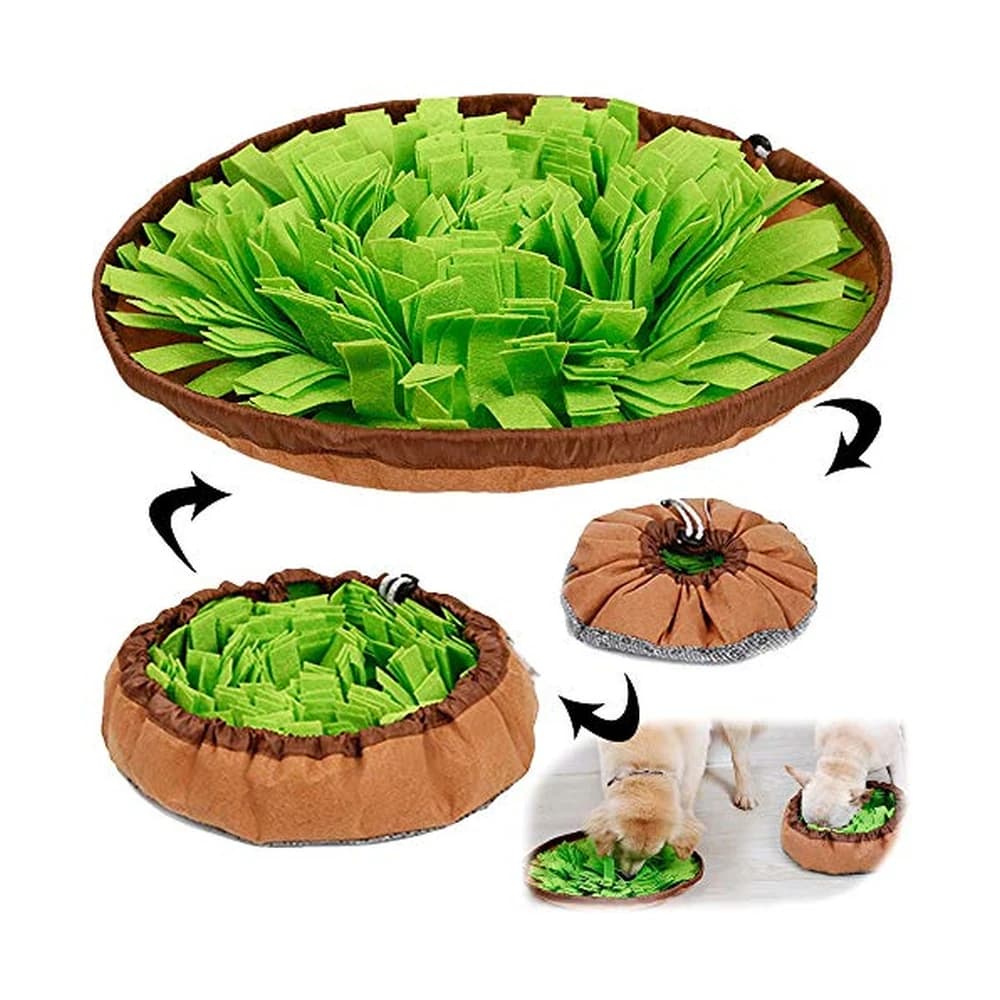
The cheapest way to tire a dog out with their nose — scatter kibble in the fleece and let them forage for it
- Skip if
- Your dog pulls fabric apart. Owners are split on how long the fleece strips survive.
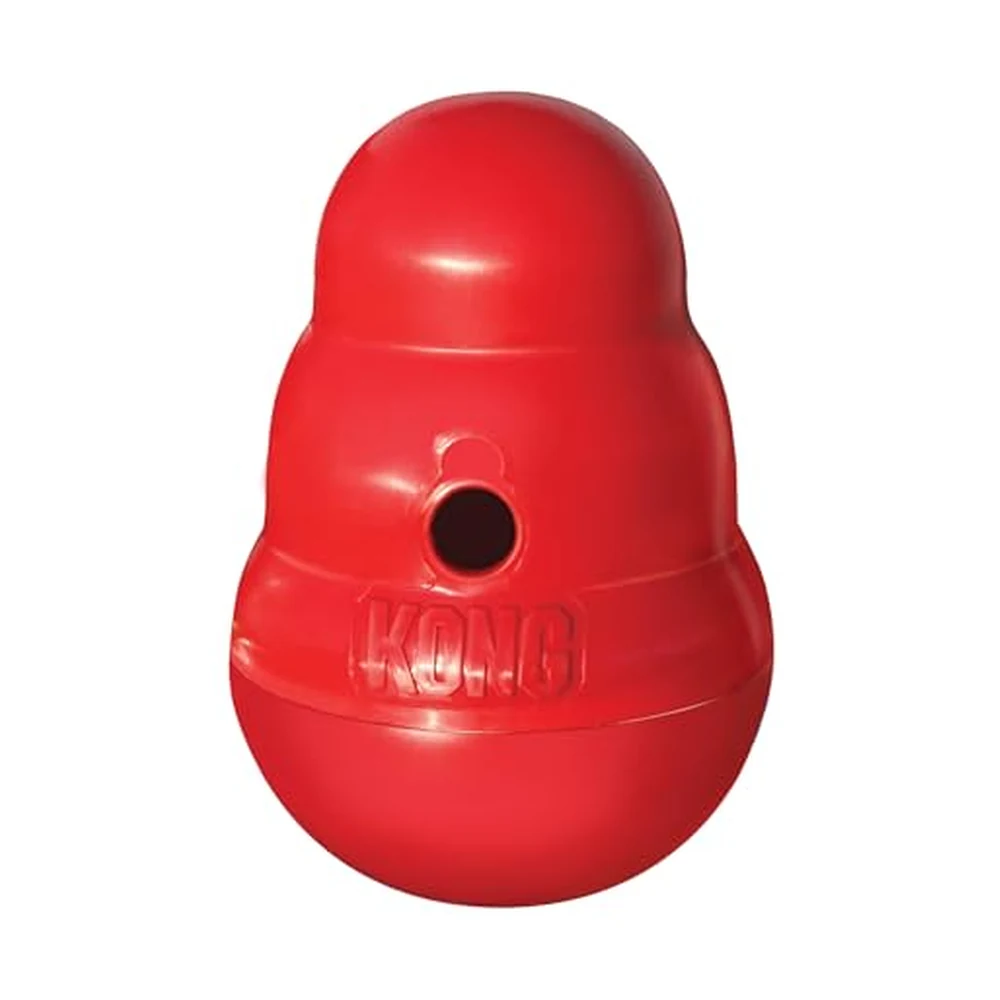
Feeding a whole meal as a game — it wobbles and drops kibble as the dog nudges it, and it unscrews to fill
- Skip if
- You have downstairs neighbours or hate noise. It is loud on hard floors.
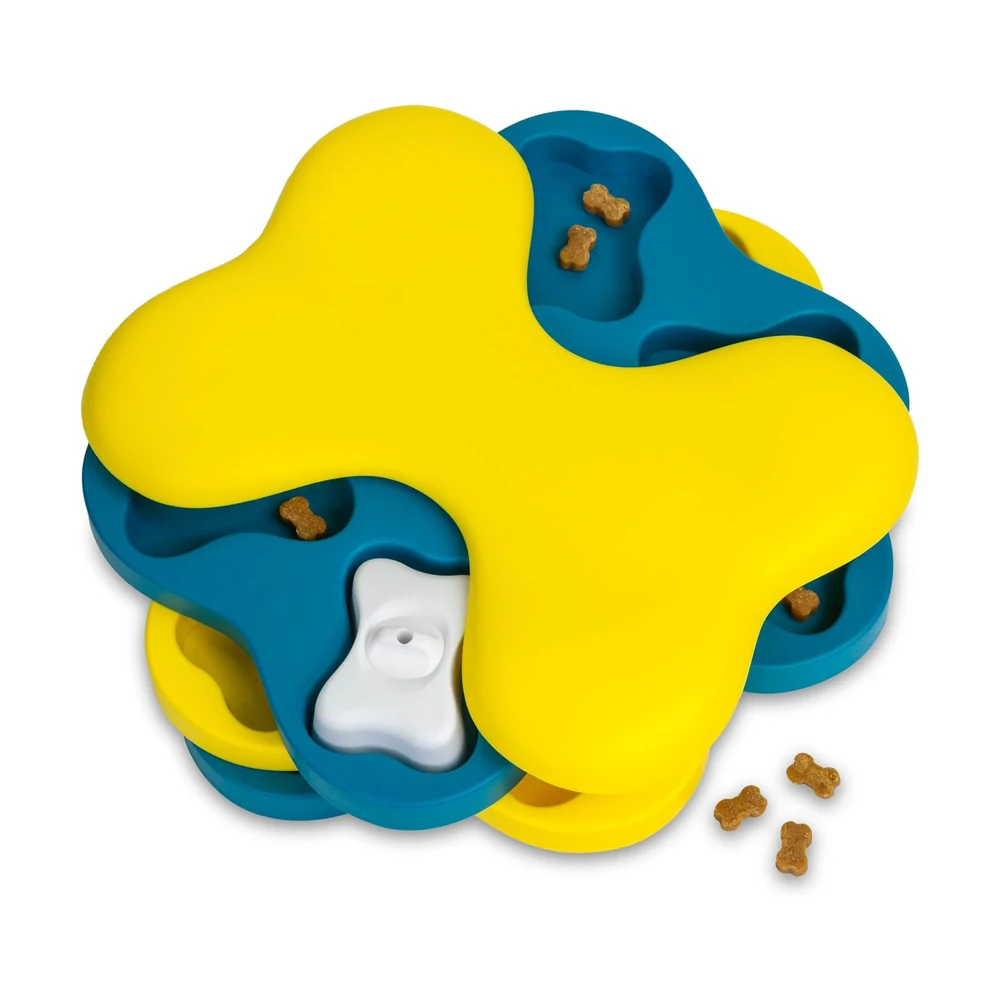
A second puzzle to rotate in — three stacked layers that spin apart, so the dog has to move one to reach the next
- Skip if
- Your dog chews rather than solves. The lift-out bone pieces are loose plastic, so this is a toy you put away after the session.
$16.99 4.6 out of 5 stars · 53,367 ratingsbest rated
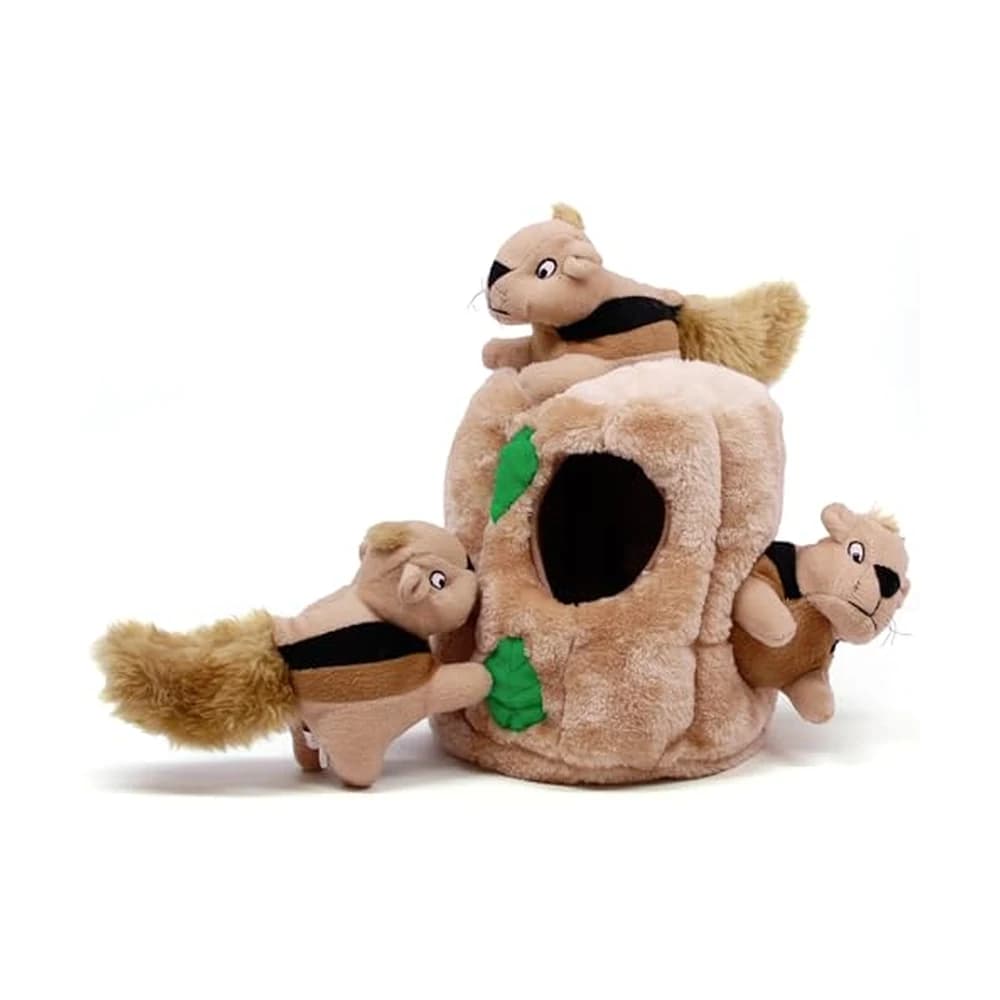
The dog who wants to hunt rather than solve — three squeaky squirrels to pull out of a plush trunk, over and over
- Skip if
- Your dog destroys plush. This is soft, and the squeakers are the hazard once it opens.
Each pick below carries its own specs, and the tags mark the best of these picks on that point. Specs come from manufacturer listings; ratings are the Amazon aggregate rating and count, refreshed periodically — we don't test products.
How winners are decided: ✓ marks the lowest price, the highest owner rating, the largest stated weight capacity and the longest warranty. Rows where more is not better — size, dimensions, weight, material — and the editorial rows get no ✓ at all. A blank is unknown, never a loss, and a row needs at least two known, differing values before anything can win. How the best-of-these tags are decided: the lowest price, the highest owner rating, the largest stated weight capacity and the longest warranty. Points where more is not better — size, dimensions, weight, material — and the editorial notes carry no tag at all. A blank is unknown, never a loss, and a point needs at least two known, differing values before anything can lead. As an Amazon Associate we earn from qualifying purchases. Specs are the manufacturer's claims and owner-reported data — we research and analyse; we don't test products on dogs.
In this article(7 sections)
Most puzzle-toy lists are sorted by price or brand. A dog experiences neither, only whether the food came out and how hard it was. So this guide is a four-rung ladder, from slow-feed bowl to sliding-lid board, with eight picks placed on it and each stage told where to start. It lives in the adult stage, where most dogs spend most of their lives, but the ladder is the same from puppyhood to old age.
The difficulty ladder, rung by rung
Difficulty is the gap between what the toy asks and what the dog can already do, which is why one KONG is a beginner toy stuffed loosely and a serious job frozen solid. Six of the eight picks live on the enrichment and puzzles shelf; the other two are the bottom rungs.
- Level 0, slow feeding. A maze bowl. A normal meal, eaten slower.
- Level 1, sniff and lick. Food hidden in fleece or packed into rubber.
- Level 2, moving dispensers. A weighted toy that drops kibble when nudged.
- Level 3, boards. Lids, sliders and spinning layers, sometimes in sequence.
| Rung | What it asks | Our picks on it |
|---|---|---|
| Level 0 | Eat around obstacles | Outward Hound Fun Feeder |
| Level 1 | Sniff, lick, tug | AWOOF Snuffle Mat, KONG Classic stuffed loosely, Hide-A-Squirrel |
| Level 2 | Nudge, roll, persist | KONG Wobbler, Starmark Bob-A-Lot, KONG Classic frozen |
| Level 3 | Flip, slide, spin, lift, in sequence | Nina Ottosson Dog Brick, Nina Ottosson Dog Tornado |
One honesty note on the top rung. Outward Hound rates its Nina Ottosson range from Level 1 to Level 4 and puts both the Dog Brick and the Dog Tornado at Level 2. That is a maker rating its own products, not a measured standard.
Which rung for which age
Stage decides the starting rung, the session length and the direction. Puppies and adolescents climb. Adults plateau and rotate. Seniors come back down, on purpose.
| Stage | Start at | Session (rule of thumb) | Direction |
|---|---|---|---|
| Puppy | Level 0 to 1 | Five to ten minutes | Climb slowly |
| Adolescent | Level 1 to 2 | Ten to twenty minutes, meals through the toy | Climb to Level 3 once Level 2 is fast |
| Adult | Level 2 to 3 | Ten to twenty minutes | Rotate rather than escalate |
| Senior | Level 1, sometimes 0 | Five to ten minutes, lying down | Descend deliberately |
The session lengths are ours, not a study's. Outward Hound's guide repeats the trade rule that fifteen minutes of mental exercise tires a dog as much as a thirty-minute walk; that is the maker's heuristic, and it argues for short sessions.
 A snuffle mat is the one rung that asks nothing of the joints, which is why seniors go back to it.
Rule of thumb: start one rung below your guess, and end the session while the dog still wants more.
Puppy: the easy win is the whole lesson
A puppy is not learning to solve puzzles. A puppy is learning that trying works. KONG's stuffing guide says exactly this for a new dog: stuff it loosely, with food small enough to fall out, so the first experience is success. KONG also makes a softer Puppy range for dogs of nine months and younger.
Why a puppy gets a slow feeder before a board
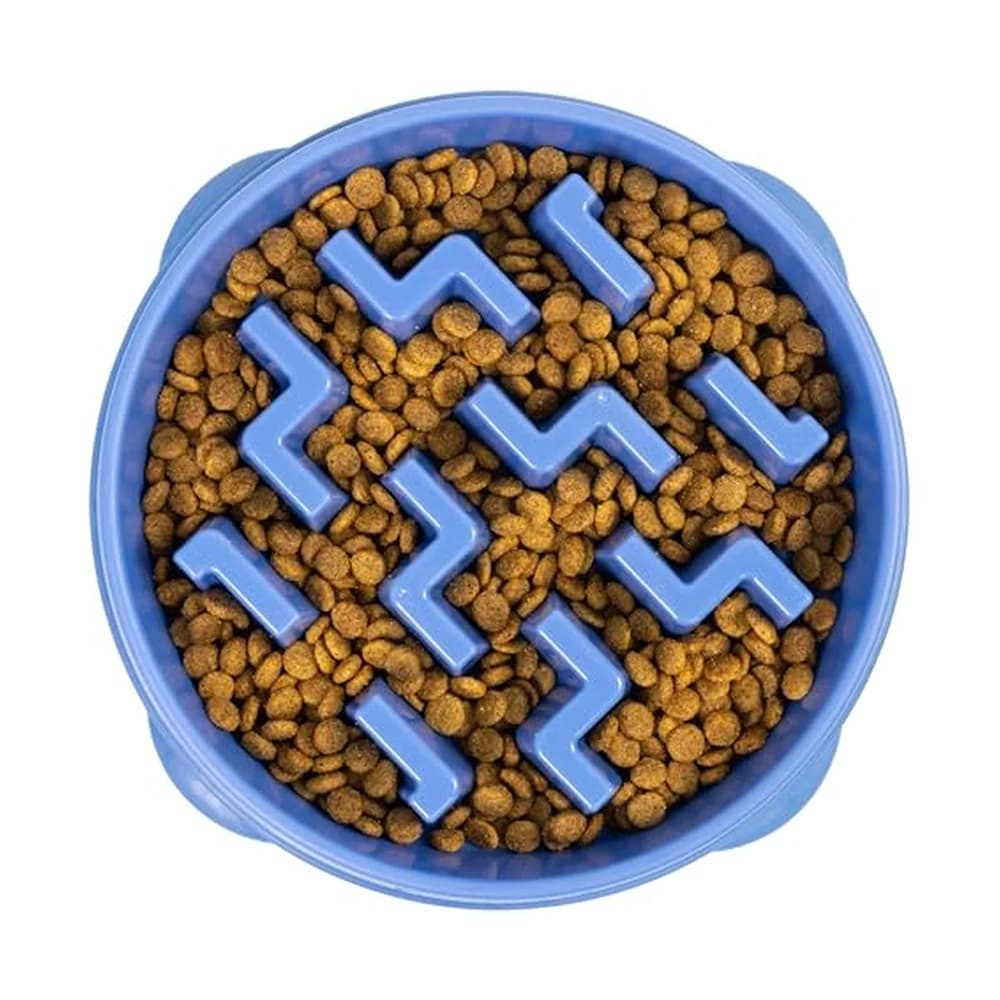
The Outward Hound Fun Feeder is a four-cup maze bowl and the right first rung for a puppy who inhales dinner: the meal takes minutes instead of seconds, and nothing is asked that the puppy can fail. Skip it for a flat-faced puppy; deep channels are hard work for a short muzzle. The Hide-A-Squirrel, three squeaky squirrels to pull out of a plush trunk, is rated beginner by Outward Hound and is a hunting game rather than a mechanical one. It does not survive a chewer.
Adolescent: why this dog needs the harder tier
AAHA's life-stage guidelines say the period from roughly six months to three years can be the most challenging for owners, and list appropriate cognitive engagement alongside exercise needs for a young adult. In plain terms, the walk is not enough.
Feed the meal, not the treat jar
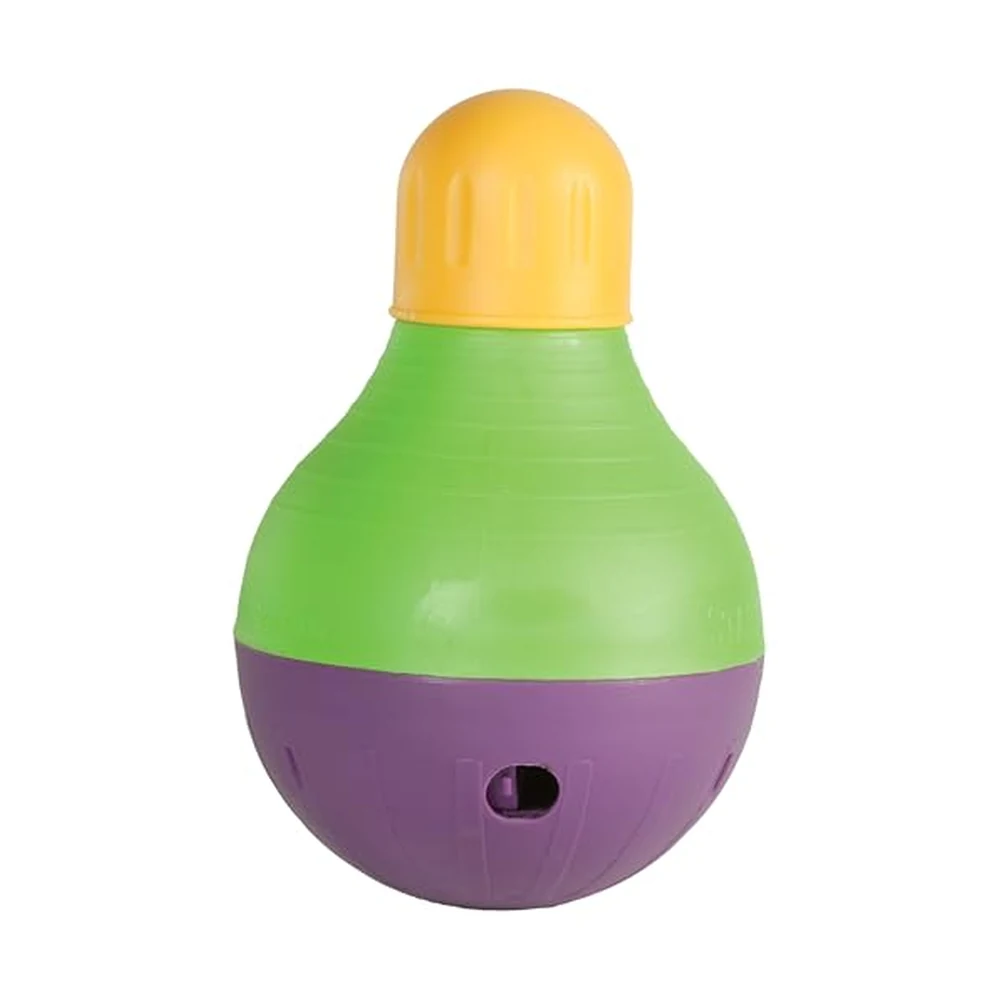
The answer at this age is Level 2, and the reason is calories. The Starmark Bob-A-Lot holds up to three cups, a full meal for many dogs, and both openings adjust so it starts easy and gets harder. The KONG Wobbler does the same job with no learning curve. Both are loud on tile, and neither is chew-proof; Starmark says supervised play only.
When Level 2 is emptied in a couple of minutes, move to the Nina Ottosson Dog Brick: flip lids, sliding blocks and removable bone covers, so it can be set easy on day one and harder a month later. If it has arrived as backsliding, see adolescent regression.
Adult: rotate, do not escalate
An adult who has climbed to Level 3 does not need a Level 4. Novelty keeps a puzzle working, and the cheapest novelty is two mid-tier toys in rotation rather than one board left out until it is furniture. The Nina Ottosson Dog Tornado is the obvious rotation piece: three layers that spin apart over twelve compartments, a different action from the Brick's lids and sliders, and it holds only about half a cup, so it is a session rather than a meal. It is the second board, not the first.
Why the KONG Classic wins the whole ladder
The KONG Classic is our pick because it is the only toy here that moves between rungs on its own. Stuffed loosely it is Level 1. Layered wet and dry and frozen overnight, which KONG's guide says lasts longer, it is a slow Level 2 a dog works at lying down. Natural rubber, dishwasher safe, six sizes. Its one limit is the single chamber: a dog who wants a sequence still needs a board. Buy two, so one is always in the freezer.
Senior: back down the ladder on purpose
The AVMA lists mental health among its basic considerations for senior pets: they can show signs of senility or cognitive dysfunction, and stimulating them through interactions can help keep them mentally active. VCA's behavior guidance says environmental enrichment helps maintain brain health, names puzzle toys as a way to help a pet think, and recommends annual screening for cognitive dysfunction in dogs from seven years of age.
None of that is a treatment. Disorientation, restlessness at night, indoor soiling or new anxiety about sounds, all changes the AVMA associates with cognitive dysfunction, mean a vet visit first and a snuffle mat second.
Sniffing needs no joints
The AWOOF Snuffle Mat is the senior rung. Kibble scattered into fleece turns a meal into ten or fifteen minutes of nose work a stiff dog can do lying down. The maker recommends hand-washing, and owners are split on how long the fleece lasts. Skip the Wobbler and the Bob-A-Lot for an old dog with poor footing; they are made to be chased. Brain games for senior dogs has six more that need no gear at all.
Frustration or fun: reading the dog
The ladder only works if you can tell a dog who is working from a dog who has given up.
What actually helps:
- Put the toy away the moment the dog wins
- Feed meals through it, not extra treats
- Show the dog the food going in the first few times
- Move up only when the current rung is fast and easy
What people try that doesn't:
- Leaving the board out all day until it becomes a chew toy
- Buying the hardest puzzle first because the dog is clever
- Nudging the slider for the dog, which teaches waiting
- Extending a session after the dog walks away
Outward Hound's supervision rule is plain: no bowl, chew toy or puzzle is indestructible, and a dog should not be left alone with one.
Stop sign: barking at it, walking away, or chewing the board instead of solving it means drop a rung, not try harder.
Key takeaways
What to remember
- Puzzle difficulty is a ladder with four rungs: slow feeder, sniff-and-lick, moving dispenser, then sliding-lid boards. Start one rung below your guess.
- Outward Hound rates its Nina Ottosson boards on its own level scale; treat that as the maker's rating, not a measured standard.
- A puppy is learning to keep trying, so the easy win is the whole lesson. An adolescent needs the meal-sized dispensers because the walk alone is not enough.
- An adult dog is better served by rotating two mid-tier toys than by escalating to ever harder boards.
- For a senior, going back down the ladder is deliberate: VCA lists puzzle toys among the enrichment that helps maintain brain health, and sniffing needs no joints.
- Stop the session while the dog is still keen. Barking at the toy, walking away, or chewing the board instead of solving it means the rung is too high.
Questions people ask
- What are the best mental stimulation toys for dogs?
- The ones your dog can solve today with a little effort. A stuffed KONG, a snuffle mat and a wobbling meal dispenser cover most dogs at most ages. Sliding-lid boards such as the Nina Ottosson Dog Brick are a second purchase, once the easier tiers are being won quickly.
- What difficulty level should I start with?
- One rung below your guess. Outward Hound's own guidance for the Nina Ottosson range is to start at Level 1 and move up as the dog learns, and KONG's stuffing guide says to set a new dog up for an easy win with loose stuffing that falls out. A dog who succeeds keeps trying; a dog who fails walks away.
- How long should a puzzle session last?
- Long enough to work, short enough to end on a win. As a rule of thumb, five to ten minutes for a puppy or a senior and ten to twenty for an adolescent or adult, then put the toy away. A stuffed and frozen KONG is the exception, because it is designed to be worked at slowly.
- Are puzzle toys good for senior dogs with cognitive decline?
- VCA lists puzzle toys among the environmental enrichment that helps maintain brain health, and the AVMA says stimulating senior pets through interactions can help keep them mentally active. Neither is a treatment. If your older dog is disoriented, restless at night or soiling indoors, that is a vet visit first and a snuffle mat second.
- Is a snuffle mat a puzzle toy?
- It is the easiest rung of one. Kibble scattered into fleece strips asks nothing but a nose, which is why it works for a puppy who cannot concentrate yet and a senior who cannot stand for long. The maker recommends hand-washing the AWOOF mat, and owners are split on how long the fleece lasts.
Gear
Also worth a look
The products this piece assumes, in the order we would get them. Prices move; check before you buy.
$15.99 4.4 out of 5 stars · 35,035
Turning a whole meal into work — the large chamber holds up to three cups, with adjustable…
$10.35 4.7 out of 5 stars · 72,835
The fast eater — a four-cup maze bowl that stretches a ninety-second meal into several…
Sources
- The Ultimate Guide to Nina Ottosson Dog Puzzles - Outward Hound — The maker's definitions of its Levels 1 to 4, the Dog Brick as a Level 2 intermediate puzzle with three feeding features, the advice to begin at Level 1, the supervision warning, and the maker's fifteen-minutes-equals-a-thirty-minute-walk rule of thumb
- How to Stuff a KONG - KONG Company — Loose stuffing for an easy win with a new dog, that frozen KONGs last longer, and layering wet and dry food to make it harder
- Choosing the Right KONG - KONG Company — The KONG Puppy range for puppies of nine months and younger, and that the Classic comes in six sizes
- Behavior Counseling - Senior Pet Cognitive Dysfunction - VCA Animal Hospitals — The signs of cognitive dysfunction in dogs, the recommendation of annual screening from age seven, and that environmental enrichment including puzzle toys helps maintain brain health
- Senior Pets - American Veterinary Medical Association — That senior pets can show signs of senility or cognitive dysfunction and that stimulating them through interactions can help keep them mentally active, plus the listed behavior changes
- AAHA 2019 Canine Life Stage Guidelines: Behavior — That the period from roughly six months to three years can be the most challenging for owners, that appropriate cognitive engagement belongs in the conversation for young and mature adults, and routine evaluation for cognitive changes in seniors
We research and analyse — specs, manufacturer documentation and large-scale owner feedback. We do not test products on dogs, and we are not your vet.
Next step
KONG Classic Stuffable
It is the pick here because it spans every rung and every stage, and the product page carries the six sizes and the caveats owners report.