We research gear rather than testing it, and some links below are Amazon affiliate links — if you buy through one we may earn a commission, at no extra cost to you. It does not change what we recommend. Full disclosure.
6 picks compared
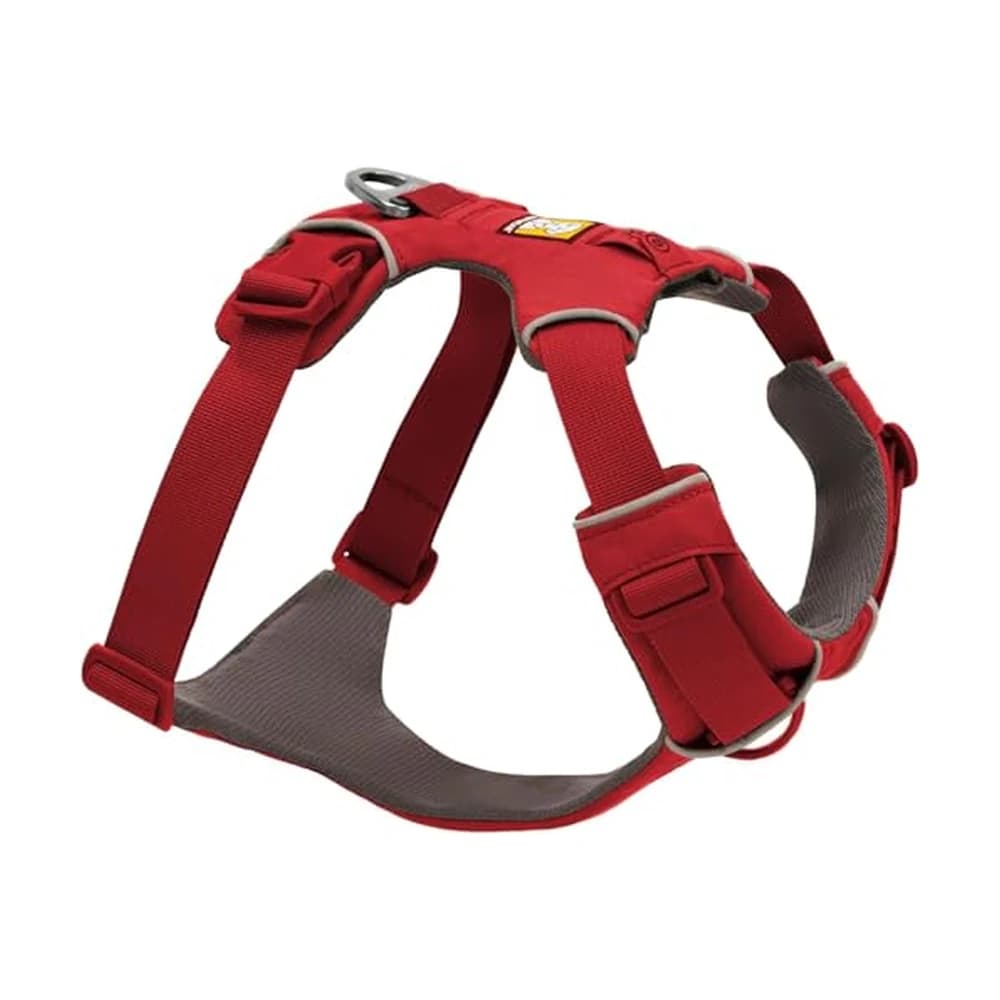
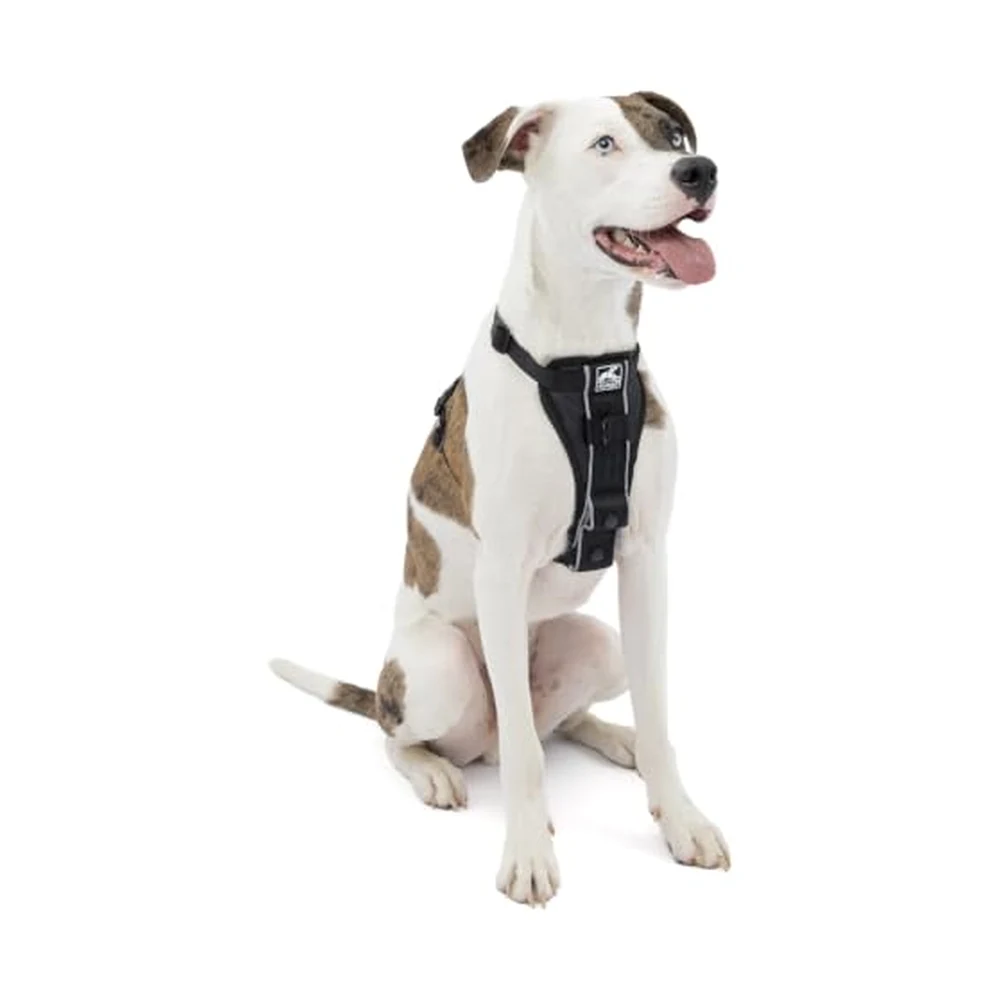
The everyday harness you buy once — two leash points, foam-padded panels and four adjustment points, from XXS to XL
- Skip if
- You need the cheapest option, or your dog only ever wears a harness for a five-minute street walk.
2 Hounds Design Freedom No-Pull Harness
$45.96 4.3 out of 5 stars · 13,345 ratings
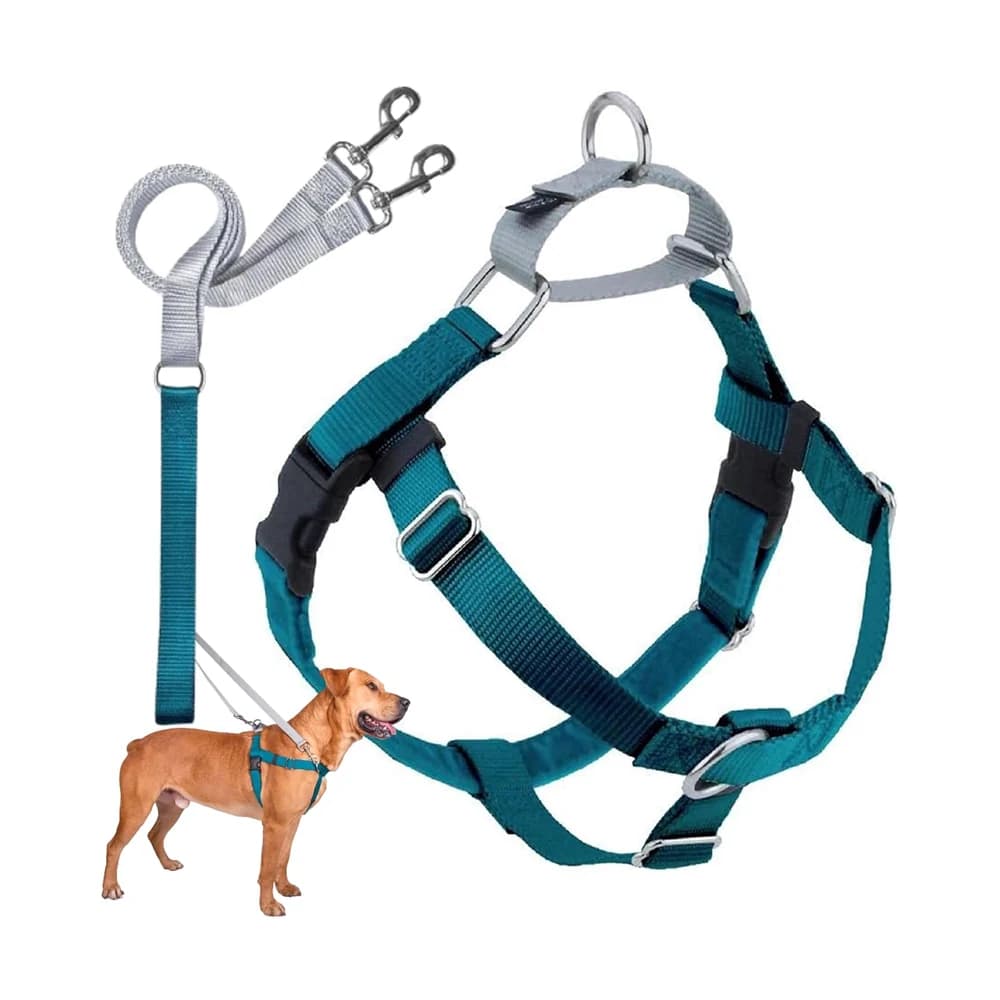
A strong puller you want to redirect rather than restrain — a martingale loop across the back that tightens gently, plus a front ring to steer from
- Skip if
- Your budget tops out well below this. The rabbitgoo gives you the same two clip points for a fraction of the price, with plastic hardware and a shorter life.
Two leash clips and a top handle at a budget price — the sensible first harness for an adolescent who has started pulling
- Skip if
- You want the harness to last for years. Durability is the recurring owner complaint.
$22.99 4.3 out of 5 stars · 48,509 ratings
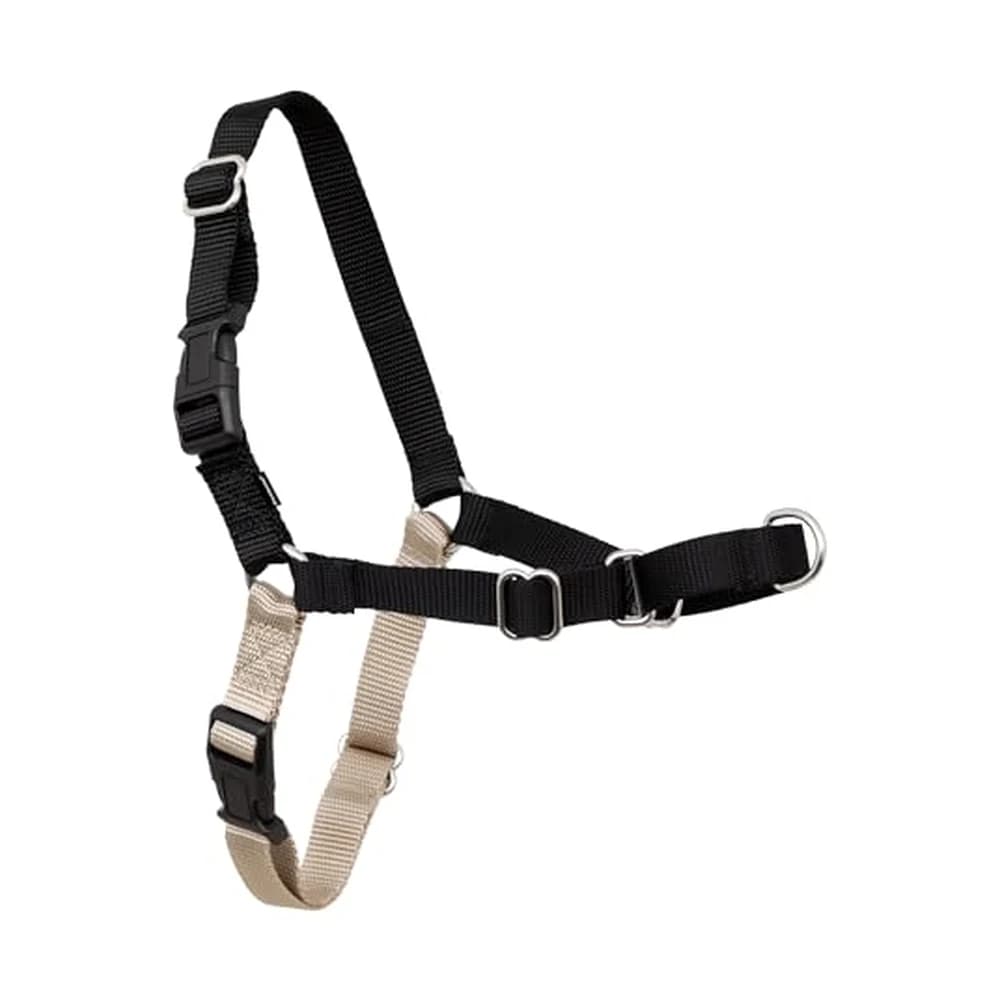
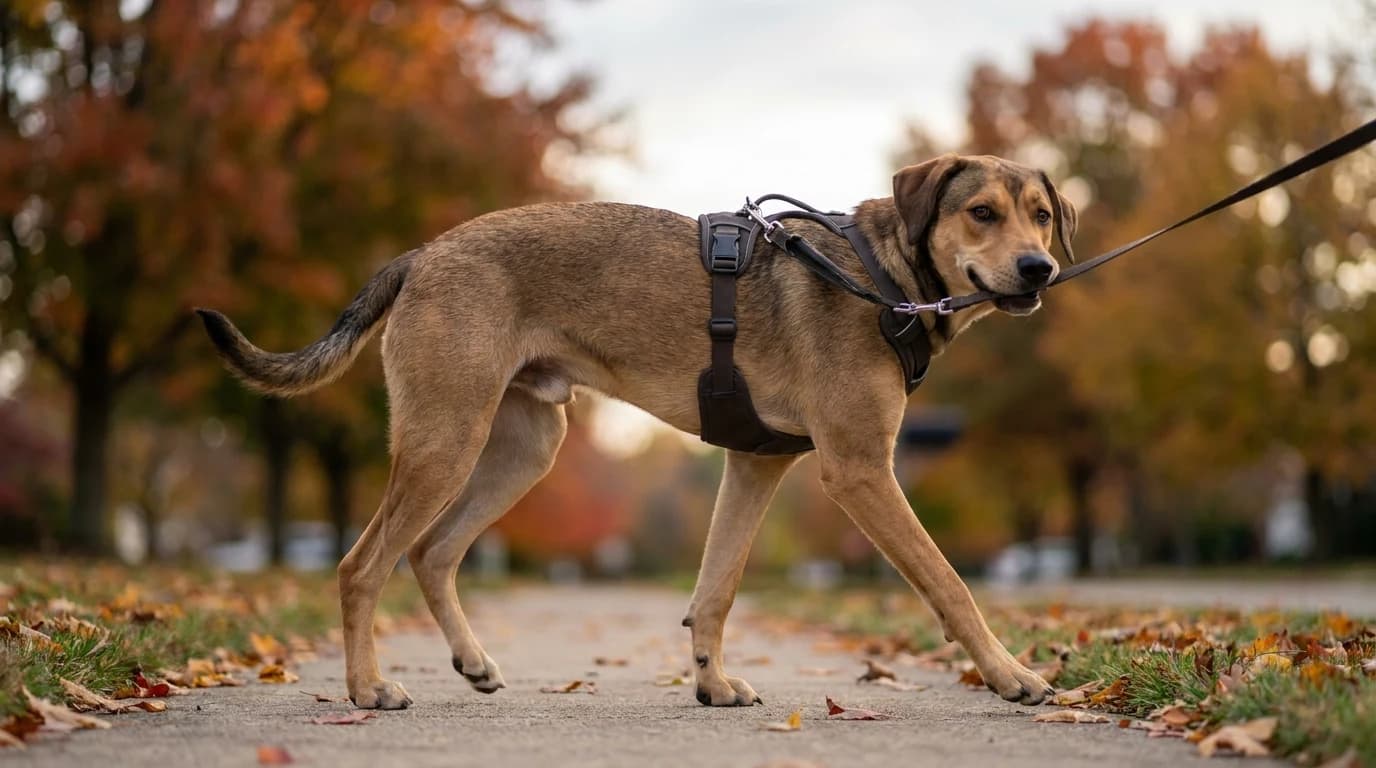
A dog who pulls hard right now — the martingale chest loop tightens gently as they pull and releases when they stop
- Skip if
- You want a harness for hiking or off-lead-adjacent activity. This is a front-clip training harness with no back ring.
$24.95 4.3 out of 5 stars · 7,822 ratings
The dog who walks and rides — a five-point walking harness with a seatbelt tether included in the box
- Skip if
- You need a crash-tested car restraint. The tether is a connector, not a tested safety system.
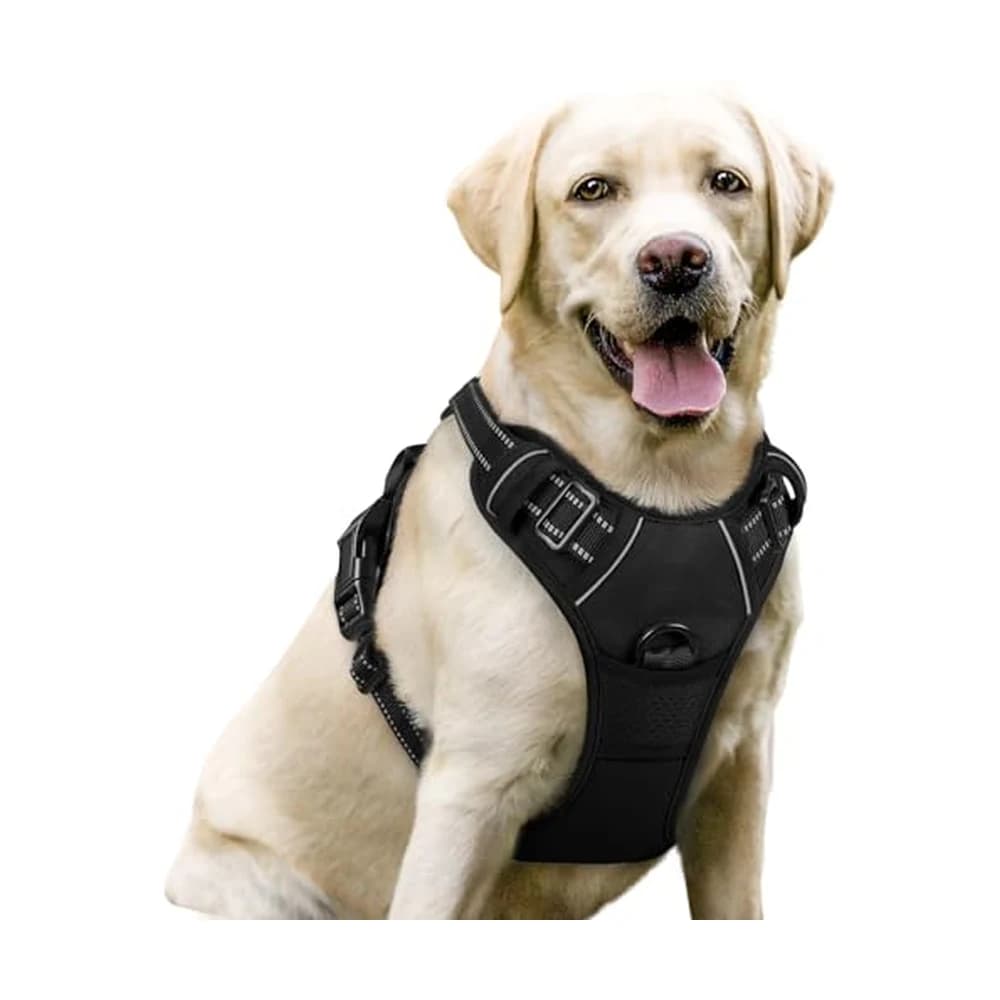
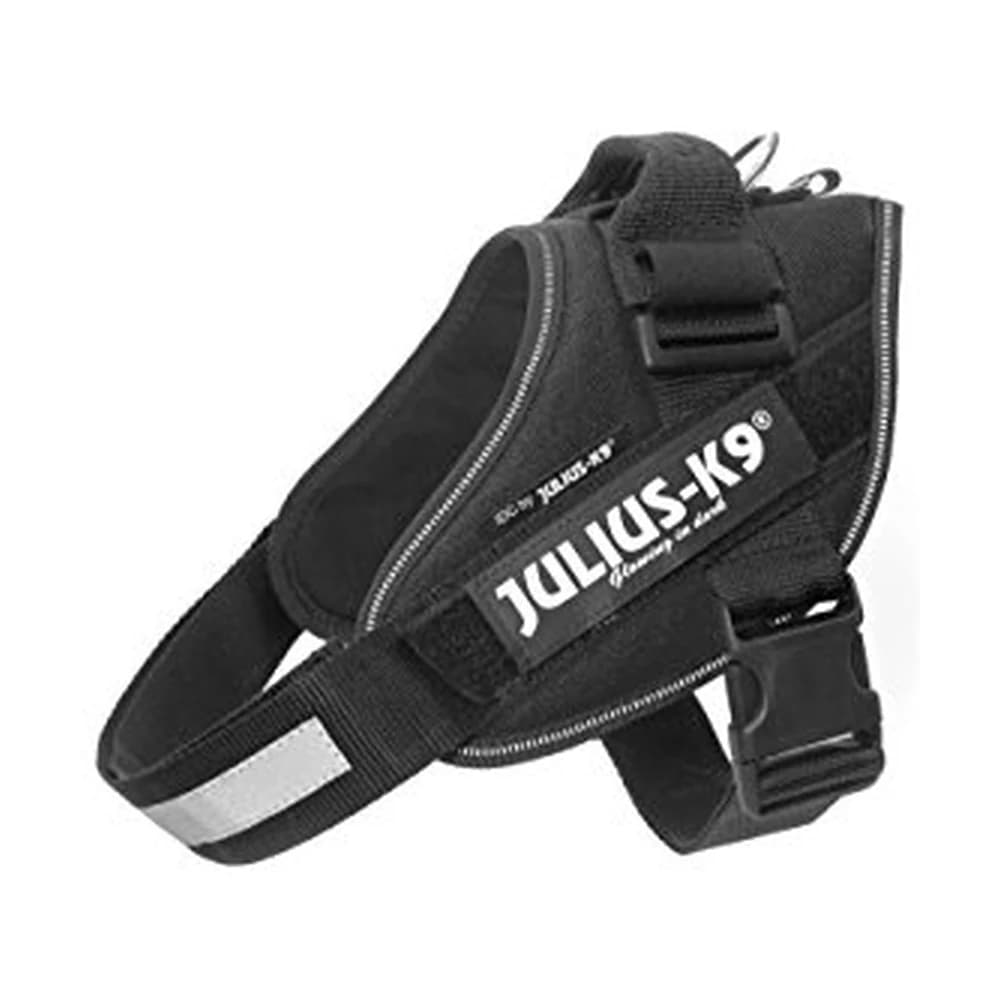
A strong adult dog and a handler who wants a grab handle — a rigid-backed harness with reflective edges and a top D-ring
- Skip if
- Your dog pulls hard. This is a back-clip harness, which gives a puller leverage rather than taking it away.
Each pick below carries its own specs, and the tags mark the best of these picks on that point. Specs come from manufacturer listings; ratings are the Amazon aggregate rating and count, refreshed periodically — we don't test products.
How winners are decided: ✓ marks the lowest price, the highest owner rating, the largest stated weight capacity and the longest warranty. Rows where more is not better — size, dimensions, weight, material — and the editorial rows get no ✓ at all. A blank is unknown, never a loss, and a row needs at least two known, differing values before anything can win. How the best-of-these tags are decided: the lowest price, the highest owner rating, the largest stated weight capacity and the longest warranty. Points where more is not better — size, dimensions, weight, material — and the editorial notes carry no tag at all. A blank is unknown, never a loss, and a point needs at least two known, differing values before anything can lead. As an Amazon Associate we earn from qualifying purchases. Specs are the manufacturer's claims and owner-reported data — we research and analyse; we don't test products on dogs.
In this article(6 sections)
Between the first birthday and the second, a dog who used to trot beside you discovers they are stronger than you expected and the world is more interesting than you are. That is the adolescent stage, and it is when most people search for a no-pull harness. The harness is the right purchase, and only half the answer.
Why pulling peaks in adolescence
AAHA's 2019 Canine Life Stage Guidelines define the young-adult stage as running from the end of rapid growth, at roughly six to nine months, to the completion of physical and social maturation, which most dogs reach by three to four years. The body finishes before the self-control does: adult strength and a brain that has not yet learned a squirrel is not a reason to relocate you. A puppy who walked nicely on a flat collar can start hauling at fourteen months. Our adolescent regression guide covers the behavior side.
Rule of thumb: The harness manages the pulling. The training fixes it. Buy the harness for the months in between.
Front clip, back clip, or both: what each actually does
Where the leash attaches decides what happens when the dog leans in.
| Clip position | What it does when the dog pulls | Which dog it suits |
|---|---|---|
| Back clip | Lets the dog lean in and drive forward; you become the sled | A dog who already walks loose-leash |
| Front clip | Chest pressure turns the shoulders toward you, so pulling costs ground | An adolescent or adult who pulls |
| Both clips | Front for training walks, back for calm ones | Most households; the one to buy if unsure |
| Martingale chest loop | Tightens as the dog pulls, releases when they stop | A hard puller during active training |
Redirection is not restraint
A front clip changes the geometry so a pull rotates the dog sideways, which is unrewarding. That is what makes loose-leash walking teachable: the gear removes the payoff for pulling and you supply the payoff for walking beside you. Skip the second part and the dog learns to pull at an angle.
 The two-finger check: snug enough that a spooked dog cannot back out, loose enough to slide two fingers under any strap.
Getting the fit right before you judge the harness
Most harness complaints describe a harness that does not fit. Ruffwear's measuring guide puts the girth measurement at the widest part of the rib cage, just behind the front legs. PetSafe's fitting page says to adjust the shoulder strap, then the belly strap, then the chest strap, until the harness looks like a sideways T with room for one to two fingers under each strap. Between sizes, both makers say go up.
The 60-second fit check
- Two fingers under every strap; if three fit, tighten.
- Chest strap horizontal from the side, not drooping or riding into the throat.
- Girth strap a couple of inches behind the armpit line.
- Hold the leash firmly and let the dog back away: nothing slips over the head.
- Check the armpits after the first long walk; re-measure after any weight change.
Our harness fit tool walks you through the size call. Ranges below are from the makers' charts or the listing; where neither states a girth, we do not invent one.
| Harness | Stated size range | Girth range (maker chart or listing) | Leash points (listing) |
|---|---|---|---|
| Ruffwear Front Range | XXS to XL | 13-42 in across sizes | Front and back |
| 2 Hounds Design Freedom | XS to XXL | 15-44 in across sizes | Front ring, back martingale loop |
| Julius-K9 IDC Powerharness | Baby 2 to Size 4 | 13-54 in chest | Top ring only |
| rabbitgoo No-Pull | XS to XL | — | Front and back |
| PetSafe Easy Walk | S to XL | 15-49 in across sizes | Front chest loop only |
| Kurgo Tru-Fit Smart | XS to XL | — | Front and back |
Fit first: Two fingers under every strap, chest strap horizontal, girth strap clear of the armpit. Then judge the harness.
The six harnesses, at this age
All six sit on our everyday harness shelf, in the order we would buy them.
Ruffwear Front Range: the one you stop replacing
The Front Range is the pick because it covers the whole stage. Ruffwear's product page describes an aluminum V-ring on the back for everyday walks, a reinforced front clip to redirect dogs that pull, foam-padded construction and four points of adjustment. Chest clip while the pulling is live, back ring once it is not, padding that stops a long walk ending in chafe. It costs two to three times the budget no-pulls and goes on over the head.
2 Hounds Design Freedom: both mechanisms at once
The Freedom carries a martingale loop across the back that tightens gently as the dog pulls and a front ring to steer from, and the double-ended leash in the box connects to both. 2 Hounds state stainless hardware, a velvet-lined chest strap and a chewing replacement warranty. Baxter & Bella's trainers list it on their puppy-products page. It is about twice the Easy Walk, and sized by chest measurement rather than weight.
rabbitgoo No-Pull: the sensible first harness
The rabbitgoo gives you a chest ring, a back ring and a top handle at a fraction of the price, and the listing notes the four adjustment straps leave room for growth. The recurring owner complaint is durability, with plastic buckles at the load points. Buy it for the pulling months; upgrade if your dog is hard on gear.
PetSafe Easy Walk: the immediate fix, with limits
The Easy Walk is different in kind. PetSafe's listing describes a patented martingale loop at the front that applies gradual pressure on the shoulders when the dog pulls, and owners often report a calmer walk on day one. What it is not: there is no back attachment, so it is a training harness rather than an everyday one; it restricts the front end differently from a padded Y-front; fit is fussy; and the chest strap needs watching for armpit rub.
Kurgo Tru-Fit Smart: the walk-and-ride option
The Kurgo pairs a five-point-adjustable harness with a seatbelt tether and a lifetime warranty. Some owners report it shifting, and the tether is a connector, not a crash-tested restraint; for that, see our car travel shelf.
Julius-K9 IDC Powerharness: strong dog, not a puller
The Julius-K9 is a back-clip harness with a broad chest plate and a solid top handle: right for a big adult who already walks well and needs steadying at a curb, wrong for a dog who hauls, because a back clip hands them leverage. It sizes by chest circumference, 13 to 54 inches, so measure.
What to avoid with a dog who drags you
What actually helps:
- A front or dual-clip harness that passes the two-finger check.
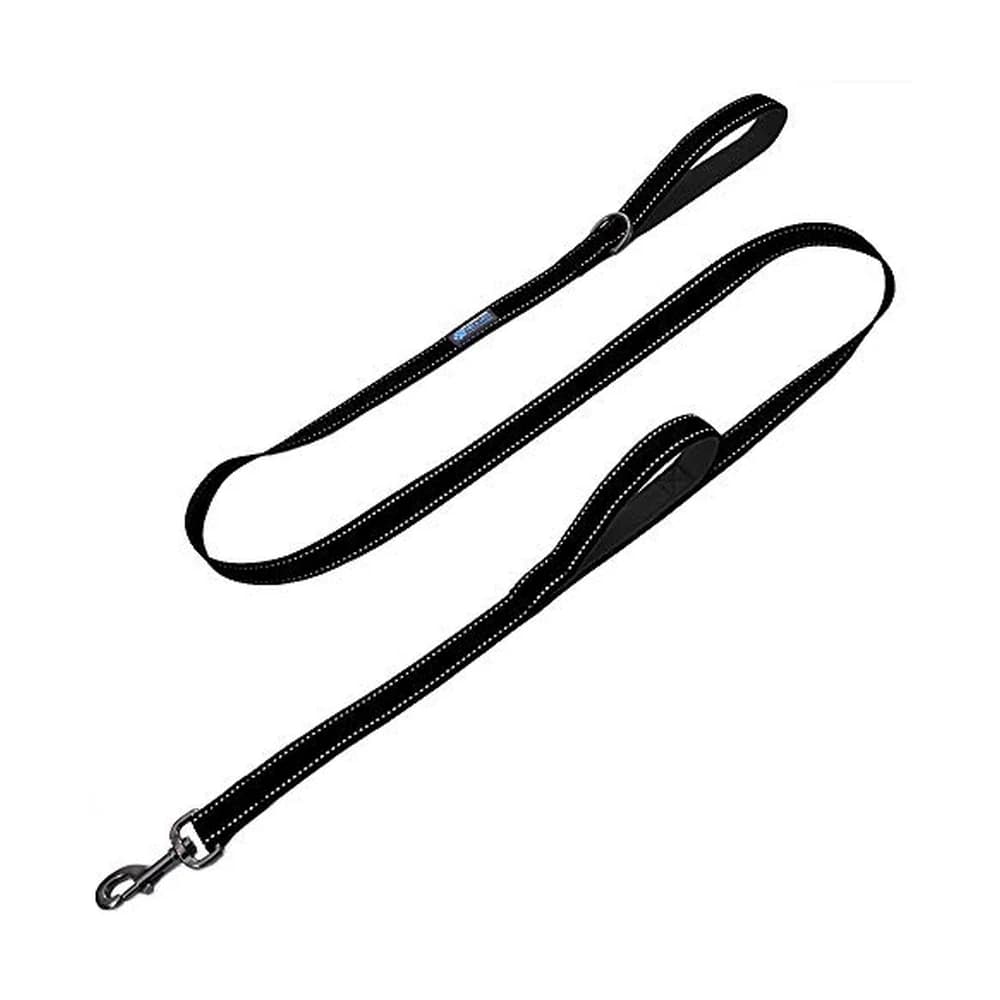
- A fixed-length leash with a second handle near the clip, such as the Max & Neo double-handle leash, for shortening up at a curb.
- Pea-sized treats like Zuke's Mini Naturals, two to three calories apiece, so you can pay for every loose-leash step.
What people try that doesn't:
- A retractable leash: it rewards pulling by paying out line.
- A tightening or prong-style device: it suppresses with discomfort instead of teaching.
- Sizing up so it lasts: a loose harness lets a dog back out at the worst moment.
- Waiting it out: the strength stays; only training changes the habit.
Senior dogs and the shoulder question
Some trainers and rehab vets argue that a strap straight across the front of the chest restricts the shoulder and a Y-shaped front is kinder to gait. One peer-reviewed study complicates that. Lafuente and colleagues, in Veterinary Record, filmed nine dogs on a treadmill and found both harness types reduced shoulder extension compared with no harness. Unexpectedly, extension was 2.6 degrees less at walk and 4.4 degrees less at trot under the non-restrictive design. Nine dogs is a small study: treat a Y-front as a reasonable preference, not a proven medical benefit, and ask your vet if your dog has a shoulder or elbow condition.
The senior years change the handling instead: a padded chest panel, a top handle for slick floors, and a harness an arthritic shoulder can get into without lifting high. A dog who no longer pulls on a walk still needs to come when called off one, which is what our recall guide and those treats are for.
Key takeaways
What to remember
- Pulling spikes in adolescence because adult strength arrives before self-control; AAHA's young-adult stage runs from six to nine months to three or four years.
- A front clip turns a pulling dog's shoulders toward you so the pull costs ground; a back clip lets the dog lean in and drive.
- Fit decides everything: two fingers under every strap, chest strap horizontal, girth strap clear of the armpit, re-checked after any weight change.
- The Ruffwear Front Range covers the whole stage with both clip points and padding; the rabbitgoo is the budget version of the same idea with a durability caveat.
- The PetSafe Easy Walk is front-clip only and works through a tightening chest loop, which makes it a training harness rather than an everyday one.
- Retractable leashes and tightening no-pull devices make an adolescent puller worse; a short-handled leash and a pocket of tiny treats make training possible.
Questions people ask
- Do no-pull harnesses actually stop a dog pulling?
- They reduce the reward for it, which is different from stopping it. A front clip means a forward pull turns the dog sideways instead of gaining ground, so pulling stops paying off. The dog still has to be taught and paid for walking on a loose leash, and the harness is what makes those lessons possible on a real walk.
- Is a front-clip or back-clip harness better for a dog that pulls?
- Front clip while the dog pulls, back clip once they do not. A back clip on a puller gives them a sled harness. A harness with both points, like the Ruffwear Front Range or the rabbitgoo, lets you switch without buying twice.
- What is the best harness for a large dog that pulls?
- A dual-clip harness with padding and enough adjustment to fit a deep chest. The Ruffwear Front Range runs to a 42-inch girth on its chart and the Julius-K9 to 54 inches, but the Julius-K9 is back-clip only, so it suits a strong dog who already walks well rather than one who hauls.
- How tight should a dog harness be?
- Snug enough that you can slide two fingers under any strap but not three. The chest strap should sit horizontal when you look from the side, and the girth strap should sit a couple of inches behind the armpit so it cannot rub. If the dog can back out of it when you hold the leash firmly, it is too loose.
- Are no-pull harnesses bad for a dog's shoulders?
- The evidence is thinner than the debate suggests. A small Veterinary Record study of nine dogs found both restrictive and non-restrictive harnesses reduced shoulder extension compared with no harness, and the non-restrictive design reduced it slightly more. Treat Y-front designs as a reasonable preference, watch for armpit rub with any chest strap, and ask your vet if your dog has a shoulder or elbow condition.
Gear
Also worth a look
The products this piece assumes, in the order we would get them. Prices move; check before you buy.
$16.99 4.7 out of 5 stars · 8,989
The first leash — a six-foot walking length plus a traffic handle 18 inches from the clip,…
$14.94 4.6 out of 5 stars · 18,587
The everyday training treat — small, soft and low enough in calories to reward fifty times in…

Sources
- 2019 AAHA Canine Life Stage Guidelines (PDF) - AAHA — The young-adult definition: from the end of rapid growth at about six to nine months to completion of physical and social maturation, which most dogs reach by three to four years
- The Size is Right: How to Measure for Your Dog's Gear - Ruffwear — Where to measure girth (widest part of the rib cage, behind the front legs), the harness size chart from 13-17 inches at XXS to 36-42 at XL, and sizing up when between sizes
- Front Range Dog Harness - Ruffwear — The aluminum V-ring on the back, the reinforced front clip at the chest, foam-padded construction, four points of adjustment, and the L/XL girth range of 32-42 inches
- How to Fit the Easy Walk Harness - PetSafe — Fitting order (shoulder strap, belly strap, then chest strap), the sideways-T check, and the one-to-two-fingers rule
- Easy Walk Harness, No Pull Dog Harness - PetSafe — The patented martingale loop applying gradual pressure on the shoulders, the front chest attachment, and the size chart from Small at 15-21 inches to Extra Large at 32-49 inches
- Effects of restrictive and non-restrictive harnesses on shoulder extension in dogs at walk and trot - Lafuente, Provis and Schmalz, Veterinary Record (Europe PMC) — The nine-dog treadmill study: both harness types reduced shoulder extension versus no harness, and extension was 2.6 degrees less at walk and 4.4 degrees less at trot under the non-restrictive harness
- Baxter & Bella: Puppy Products — That the online puppy school's trainers list these products on their own recommended-products page.
We research and analyse — specs, manufacturer documentation and large-scale owner feedback. We do not test products on dogs, and we are not your vet.
Next step
Ruffwear Front Range Harness
It is the pick here, and the product page carries the size chart, both clip points and the caveats owners report.