We research gear rather than testing it, and some links below are Amazon affiliate links — if you buy through one we may earn a commission, at no extra cost to you. It does not change what we recommend. Full disclosure.
5 picks compared
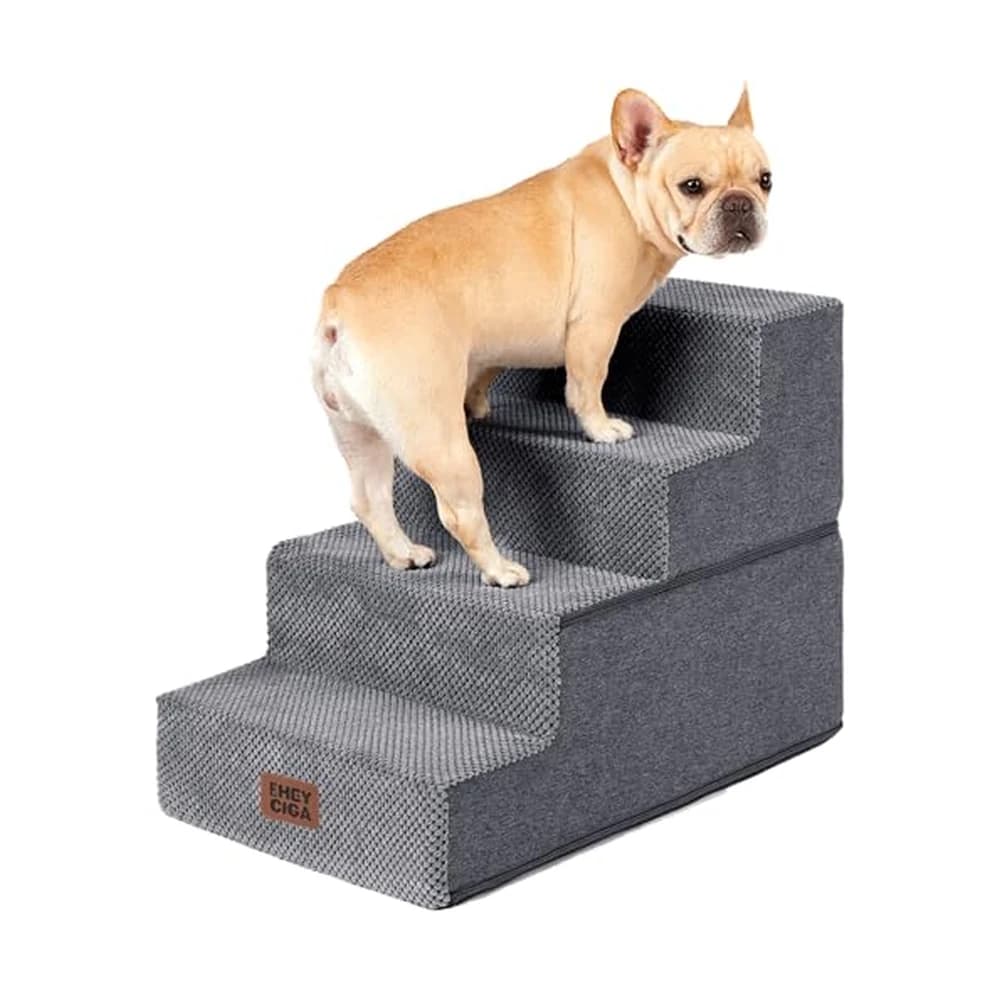
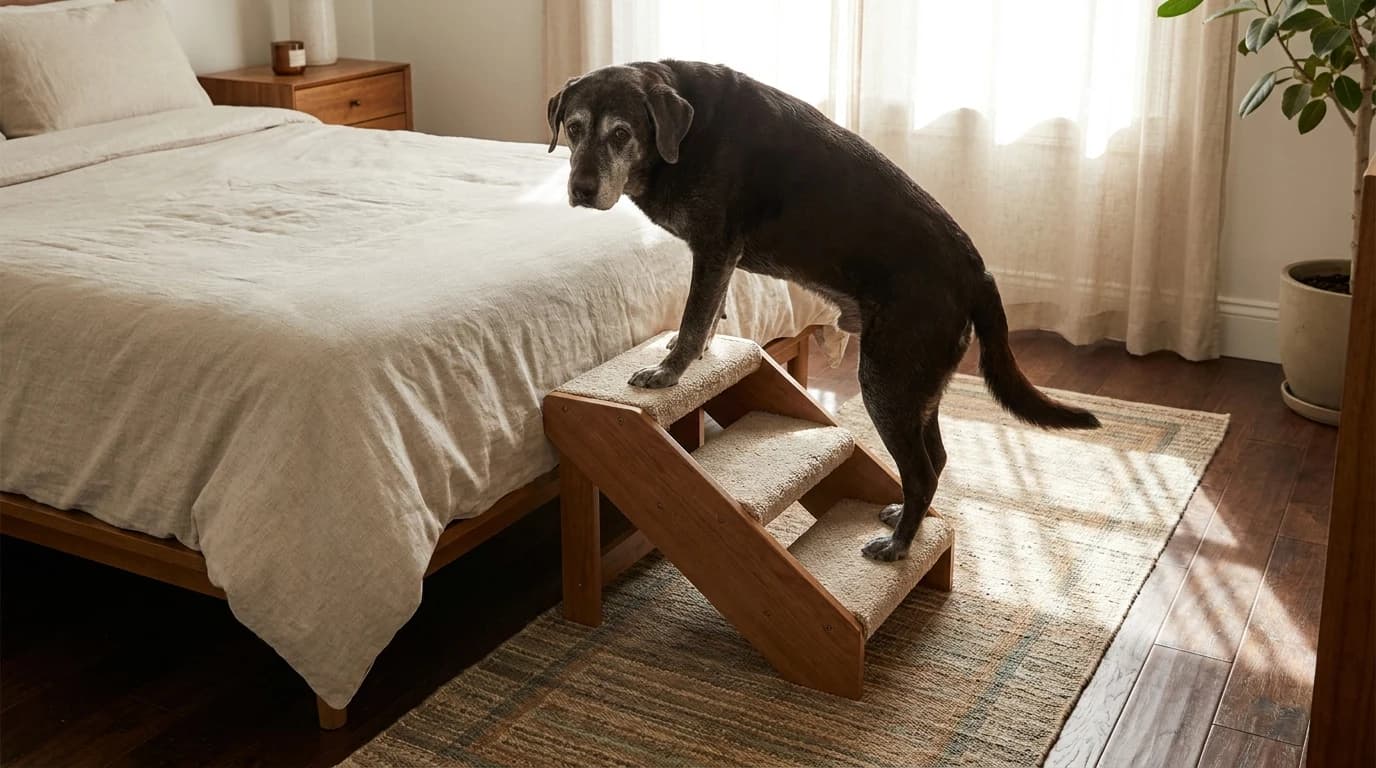
Bedside steps for a small or ageing dog — 18 inches over four soft foam steps, with a washable cover
- Skip if
- Your dog is over about 35 lb. That is the stated support limit, and foam steps flex under weight.
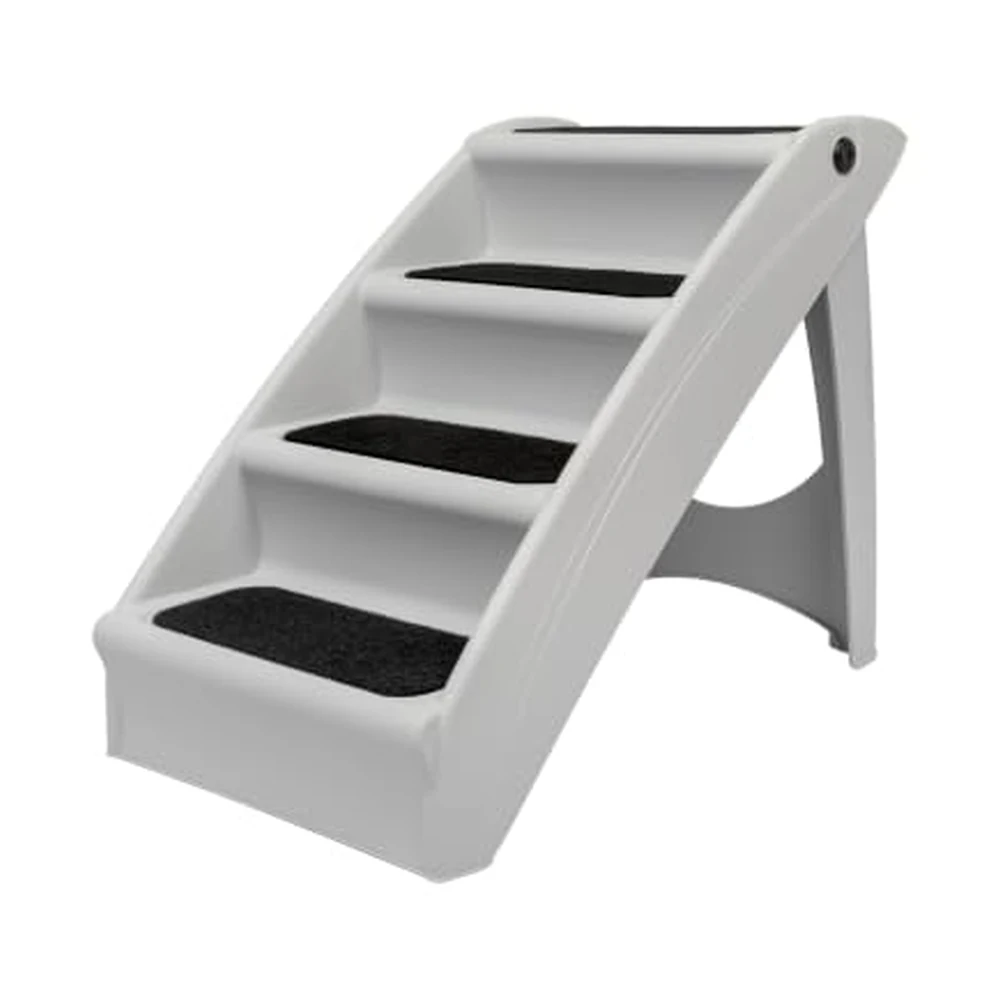
A bigger dog who needs steps rather than a ramp — 25 inches tall with wide carpeted treads and side rails
- Skip if
- Your floors are polished hardwood. Owners report them sliding on slick surfaces.
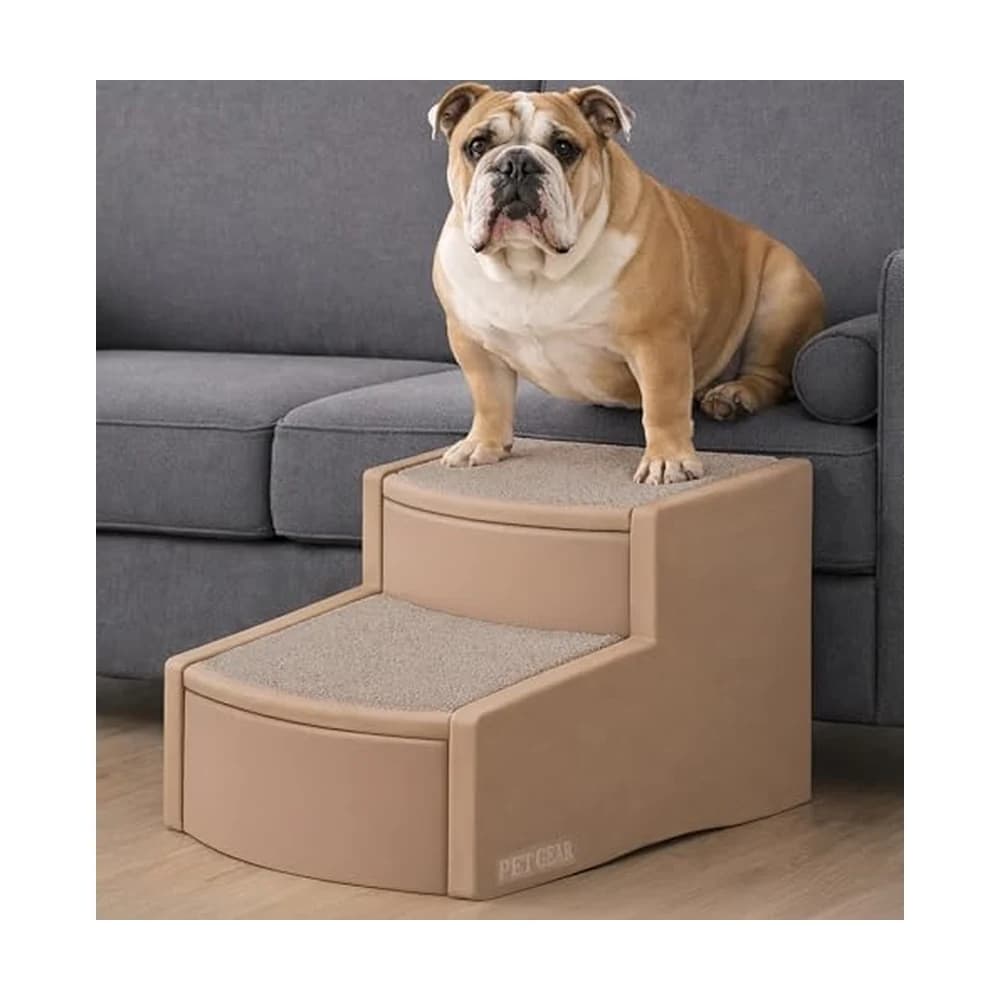
A low sofa and a wide dog — two extra-deep 16-inch-wide steps at a six-inch rise, rated to 200 lb
- Skip if
- You need to reach a tall bed. At 16 inches total, this is a sofa-height product.
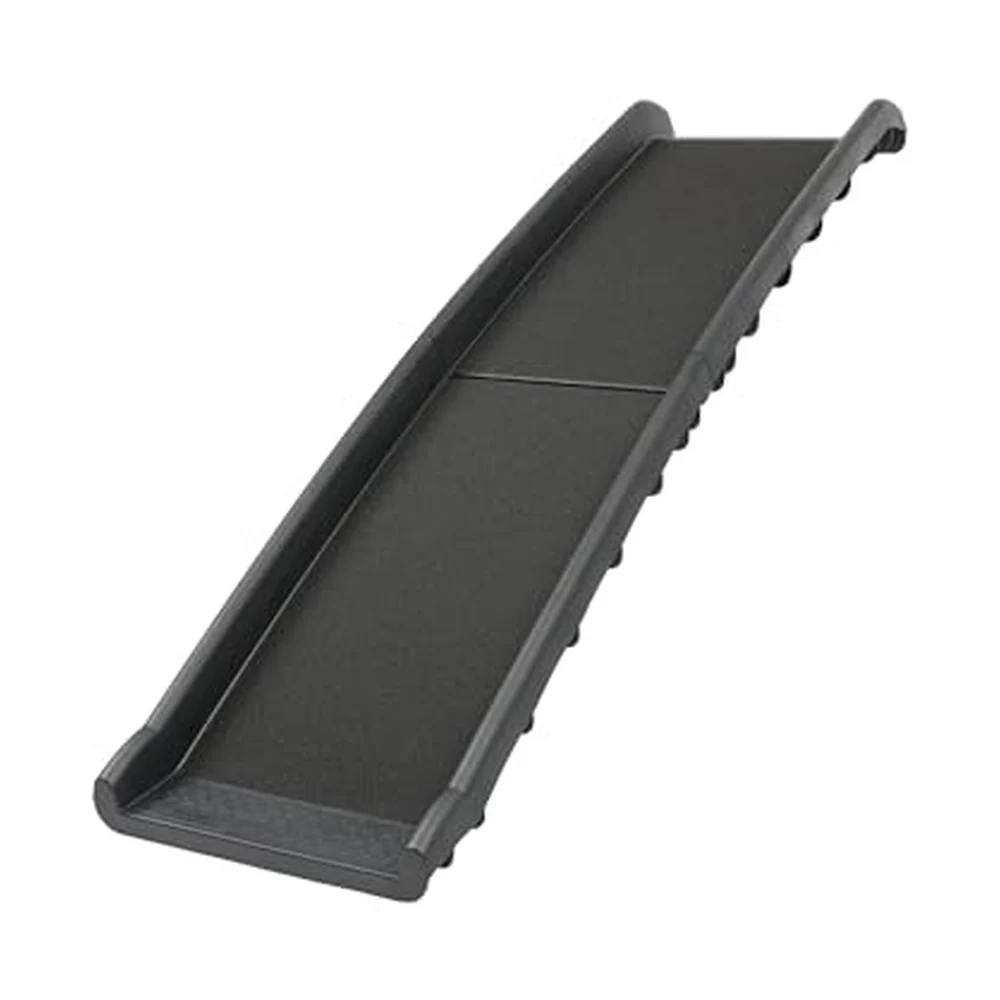
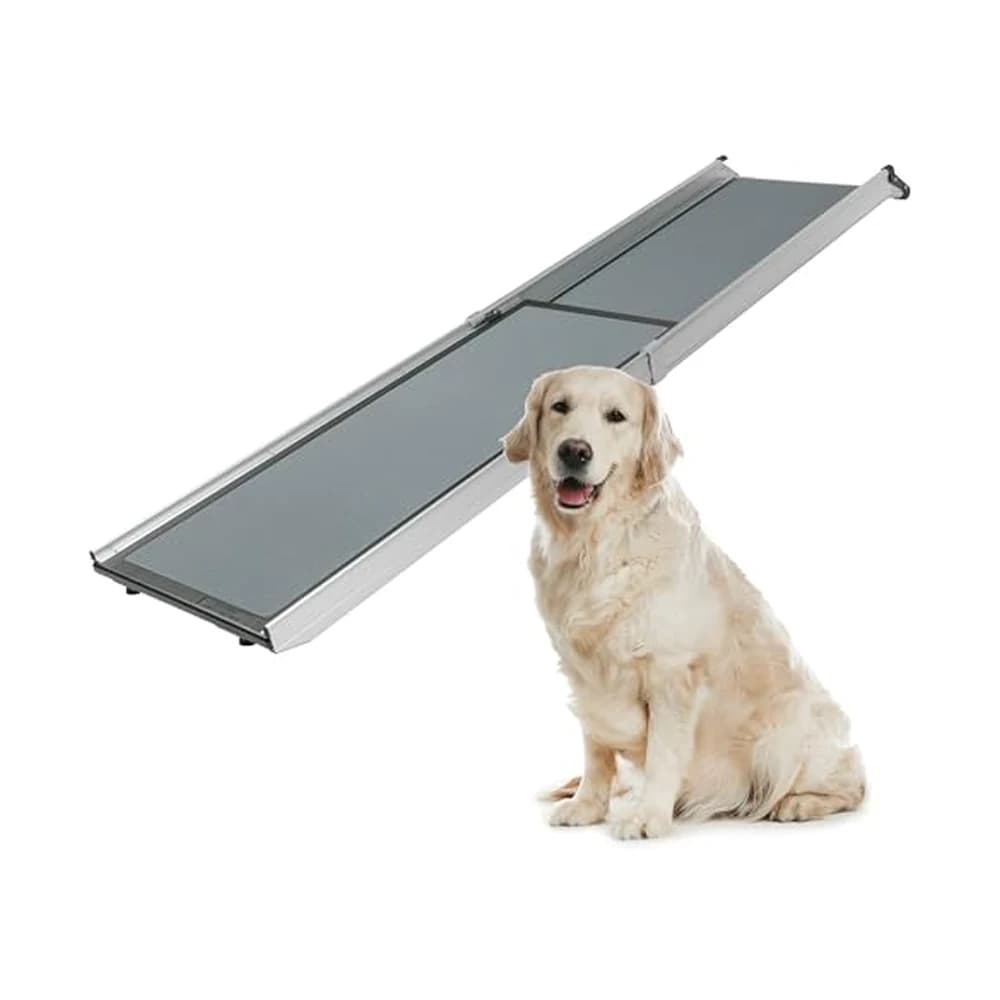
Getting a stiff dog into an SUV or estate — 62 inches, folding to 31, rated to 150 lb and weighing only ten
- Skip if
- Your dog is broad or nervous. Several owners find it too narrow for larger dogs.
A tall truck or SUV and a big dog — it extends to 87 inches for a gentler slope, with a 300 lb rating
- Skip if
- You have a low car. The extra length and weight buy you nothing on a hatchback.
Each pick below carries its own specs, and the tags mark the best of these picks on that point. Specs come from manufacturer listings; ratings are the Amazon aggregate rating and count, refreshed periodically — we don't test products.
How winners are decided: ✓ marks the lowest price, the highest owner rating, the largest stated weight capacity and the longest warranty. Rows where more is not better — size, dimensions, weight, material — and the editorial rows get no ✓ at all. A blank is unknown, never a loss, and a row needs at least two known, differing values before anything can win. How the best-of-these tags are decided: the lowest price, the highest owner rating, the largest stated weight capacity and the longest warranty. Points where more is not better — size, dimensions, weight, material — and the editorial notes carry no tag at all. A blank is unknown, never a loss, and a point needs at least two known, differing values before anything can lead. As an Amazon Associate we earn from qualifying purchases. Specs are the manufacturer's claims and owner-reported data — we research and analyse; we don't test products on dogs.
In this article(6 sections)
Ramp or stairs is usually framed as a preference. At this age it is a joint question: where the wear is decides which shape your dog can use without pain, and only then do bed height, car height and floor space matter. Written for the senior stage, with the post-surgery adult as the second reader.
Ramp or stairs: let the joint decide
Steps ask a dog to push off the hind legs going up and catch itself on the front legs coming down. A ramp asks for neither; it trades the lift for a longer walk on an incline, with no jolt of a landing.
Cornell's Riney Canine Health Center lists difficulty with stairs and jumping onto couches among the first signs of osteoarthritis, and its home-care advice is plain: non-slip rugs, and ramps onto beds, couches and cars. The AVMA's senior-pets page names pet stairs and ramps among the home changes that help.
| Where the trouble is | What it looks like | Pick |
|---|---|---|
| Hips or stifles | Hesitates before jumping up, bunny-hops, sits sideways | Ramp, because there is no push-off |
| Elbows or shoulders | Flinches jumping down, short strides in front | Wide, deep steps; a ramp loads the front end descending |
| Spine or neck | Tender along the back | Ramp at the gentlest slope you can fit |
| Post-surgery adult | No jumping, per the vet | Ramp if a hind leg was repaired |
| Nervous, still strong | Refuses narrow things, fine on a staircase | Steps; a narrow incline is what nervous dogs refuse |
If there is no diagnosis yet and your dog has started refusing the sofa, book the vet first; a ramp is a comfort aid, not a treatment.
Width, then grip, then slope
Refusal is the common failure, not collapse. A dog refuses because the surface feels narrow, slippery or steep, in that order, which is why PetSafe's ramp listings lead with treads, side rails and rubber feet.
Rule of thumb: A dog judges a ramp on width and grip before length. Buy the widest one your space allows.
Incline math for a tailgate
A ramp's angle is fixed by the height it climbs and its length. Our rule of thumb, not a veterinary figure, is a length at least two and a half times the height, a slope of about twenty-two degrees or gentler. Against the two PetSafe car ramps, using the lengths their pages state:
| Load height | 62-inch folding ramp | 87-inch telescoping ramp, extended |
|---|---|---|
| 24 inches (typical SUV cargo floor) | About 21 degrees, right at the rule | About 15 degrees, easy |
| 30 inches (tall SUV, small pickup) | About 26 degrees, steep for a stiff dog | About 19 degrees, still gentle |
| 36 inches (full-size truck bed) | Too steep at this length | About 23 degrees, workable |
Measure your own cargo floor with the tailgate open. That table is the whole case for the PetSafe Telescoping Ramp: it is longer, not sturdier, and length turns a 30-inch tailgate into a walk. PetSafe states it extends from 47 to 87 inches, weighs 18 pounds and is rated to 300 pounds. The Happy Ride folding ramp is 62 inches, folds to 31, weighs 10 pounds and is rated to 150 pounds per the maker; the weight is why it comes out of the trunk every time. Owners of broad dogs call both narrow.
 A 62-inch ramp at a 24-inch cargo floor sits right at the two-and-a-half-times rule; a taller vehicle needs the telescoping length.
Bed and sofa height: match the number
Measure from the floor to the top of the compressed mattress or cushion and buy the set that lands an inch or two below that. A set taller than the bed leaves a step down at the top, which is the drop you were trying to remove.
| Your furniture height | Pick | Stated height and rating |
|---|---|---|
| Up to 16 inches (low sofa) | Pet Gear Easy Step II | 16 inches over two extra-deep steps, 200 pounds |
| 17 to 19 inches (most beds) | EHEYCIGA 4-Step Foam Stairs | 18 inches over four foam steps, 35 pounds stated |
| 20 to 26 inches (tall bed) | PetSafe CozyUp Folding Steps | 25 inches over three carpeted steps, 200 pounds per PetSafe |
Why foam wins the bedside
The EHEYCIGA set is the pick because of what happens on the bad night: a dog who missteps on foam lands on foam, and one fall onto a plastic edge can make a dog refuse forever. The listing states 18 inches over four steps, a support board inside the foam and a removable washable cover, which matters where accidents happen. EHEYCIGA state support up to 35 pounds and sell three, four and five-step versions. The limits: some owners report dogs slipping on the cover, and the foam takes a day or two to expand. Push the set hard against the bed so it cannot creep.
Why a big dog gets the CozyUp
Over 35 pounds the foam flexes, and the PetSafe CozyUp takes over: 25 inches tall, replaceable fabric treads, side rails, non-skid feet and a fold-flat frame, which PetSafe's page gives as 28 by 18 inches and rates to 200 pounds. Owners' two complaints are sliding on hardwood and narrow treads. A rubber mat fixes the first; for the second, a broad dog with a low sofa is better served by the Pet Gear Easy Step II, whose extra-wide, extra-deep steps let a big dog stand squarely. Its limit is height: 16 inches reaches a sofa, not a bed.
Traction is half the product
Everything in the ramps and stairs category sits on a floor, and on hardwood the floor is often the real problem; Cornell lists rugs ahead of ramps.
What actually helps:
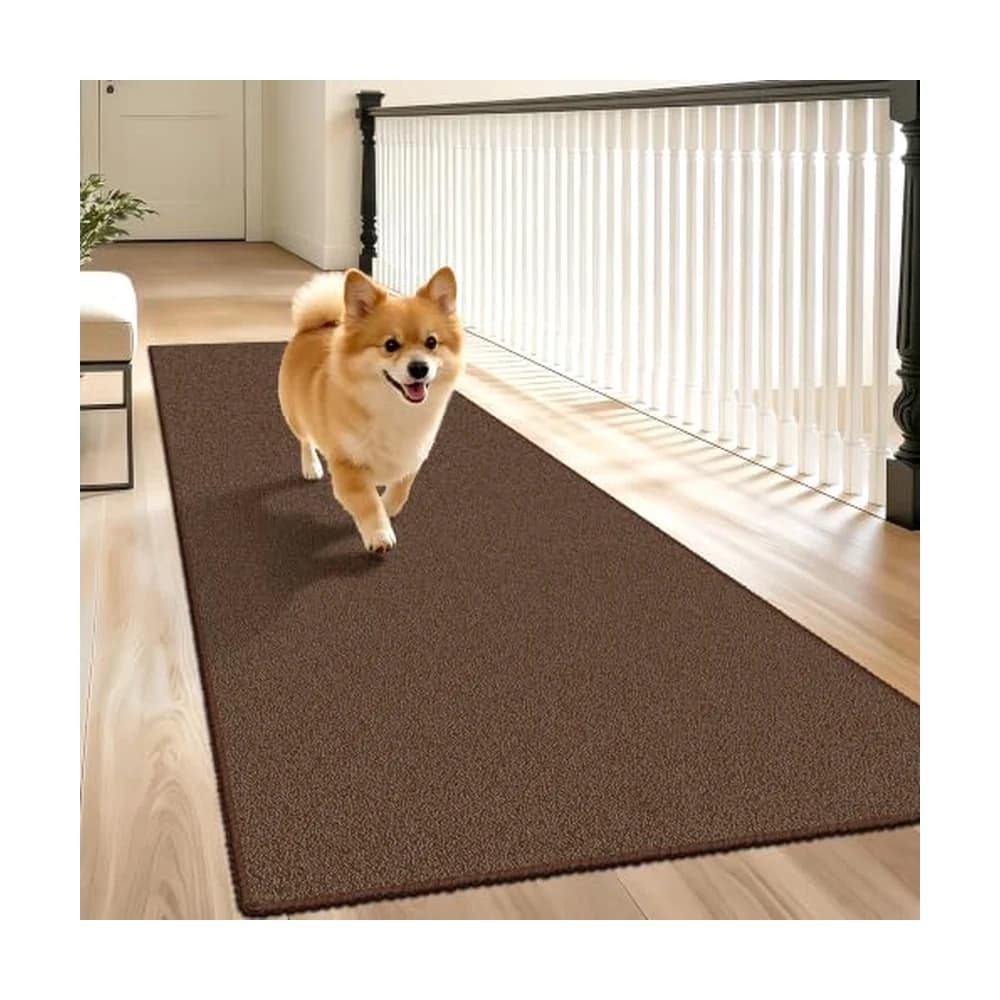
- A runner along the route to the bed, the door and the water bowl, such as the TTelephant runner, which the maker lists at 8 mm thick so it clears a door swing
- A rubber mat under any step set on a slick floor
- Steps pushed tight against the furniture, with no gap at the top
- Nails and paw fur kept short
What people try that doesn't:
- A bath mat that stops two feet short of the bed
- Carrying a 70-pound dog up and down every night
- Lifting a heavy dog into the car by the armpits
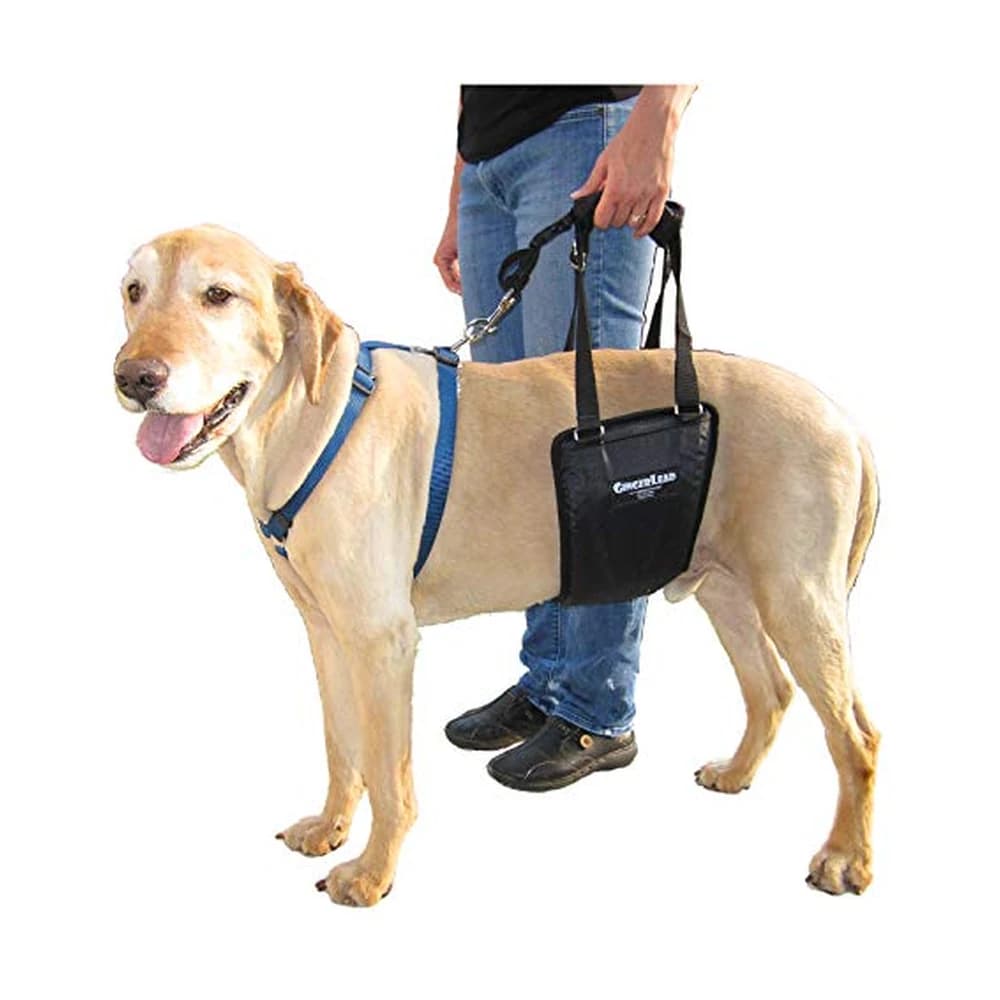
A dog who is genuinely weak behind needs a hand on the first trips up a ramp. The GingerLead rear support sling is built for that: a padded pad with a cutout and an integrated leash, so you steer and support one-handed without stooping. It is sized by weight and sex, so measure. The lift harnesses and mobility shelf covers the rest.
The training step nobody budgets for
A ramp introduced in a wet parking lot on vet day will be refused. The order that works:
- Lay it flat on the living-room floor and feed the dog for walking across it until it is boring.
- Raise one end a few inches and repeat.
- Move it to the sofa, then the bed, then the car, treats at the top.
- Keep a hand on the harness for the first ten car trips.
Ten minutes a day for a week is the usual price.
Remember: Flat first, then a few inches, then the furniture. A dog that has slipped once does not forget it.
When to buy
AAHA's 2019 guidelines define senior as the last quarter of a dog's estimated lifespan and set no age in years; the AVMA gives the same rule by weight band, which our dog age calculator applies (When is a dog a senior? explains why).
Buy at the first hesitation, not the first fall. The AVMA and Cornell both list avoiding jumping, stairs and cars among the earliest arthritis signs, and a ramp that arrives while the dog can still jump gets trained calmly. Pair it with our orthopedic bed guide, and if the change seems to be more than the joints, signs of aging in dogs covers what else to watch.
Key takeaways
What to remember
- Ramp or stairs depends on the joint: a ramp removes the push-off that hurts hips and stifles, while wide, deep steps suit a dog whose front end hurts on the way down.
- Our rule of thumb for a ramp is a length at least two and a half times the height it climbs, which puts a 62-inch ramp at the limit on a 24-inch SUV floor and too steep on a 30-inch tailgate.
- Indoor steps are sold by total height; measure floor to compressed mattress top and buy the set that lands an inch or two below it.
- Foam is the right bedside material for a small dog because a misstep lands on foam, but EHEYCIGA state a 35-pound limit, so bigger dogs need the PetSafe CozyUp.
- Cornell's first home-care item for osteoarthritis is non-slip rugs, ahead of ramps; a runner along the dog's route is the cheapest fix in this guide.
- Train the ramp flat on the floor for a week before it goes near a car; one slip creates a refusal that takes far longer to undo.
Questions people ask
- Is a ramp or stairs better for a senior dog?
- It depends on which joint hurts. A ramp needs no push-off, so it suits weak or arthritic hips and stifles and a dog recovering from hind-leg surgery. Wide, deep steps suit a dog whose elbows or shoulders hurt on the way down, and a nervous dog who refuses narrow inclines. If your dog has a diagnosis, ask the vet which case you are in.
- How long should a dog ramp be for a car?
- Measure from the ground to the cargo floor with the tailgate open, then aim for a ramp at least two and a half times that height, which is our rule of thumb rather than a veterinary figure. PetSafe's 62-inch folding ramp is at that limit on a 24-inch SUV floor. For a 30-inch tailgate or a truck bed, the telescoping ramp that extends to 87 inches keeps the slope gentle.
- How tall should dog stairs be for a bed?
- Measure from the floor to the top of the mattress with the bedding compressed, and buy a set that lands an inch or two below that. The roster runs from 16 inches (Pet Gear Easy Step II) through 18 inches (EHEYCIGA foam) to 25 inches (PetSafe CozyUp). A set taller than the bed leaves a step down at the top, which is the drop you were trying to remove.
- How do I get my old dog to use a ramp?
- Start with the ramp flat on the living-room floor and reward the dog for walking across it until it is boring, over several days. Raise one end a few inches and repeat, then move it to the sofa, the bed and finally the car. Keep a hand on the harness for the first car trips, and never lure a frightened dog onto a raised ramp.
- When should I buy a ramp for my dog?
- At the first hesitation, not the first fall. The AVMA and Cornell both list avoiding jumping, stairs and cars among the earliest signs of arthritis, and a ramp that arrives while the dog can still jump gets trained calmly. If your dog has suddenly stopped jumping, that is also a vet visit, because pain is the usual reason.
Gear
Also worth a look
The products this piece assumes, in the order we would get them. Prices move; check before you buy.
$69.95 4.3 out of 5 stars · 3,798
Taking real weight off weak hind legs — a padded sling with an integrated leash and a cutout…
TTelephant Non-Slip Floor Runner
$33.29
The hallway or the run to the water bowl, where an older dog's feet start sliding on hardwood…
Sources
- Osteoarthritis - Riney Canine Health Center, Cornell University College of Veterinary Medicine — Difficulty with stairs and jumping on couches as early signs, and the recommendation of non-slip rugs and ramps to get on beds, couches or cars
- AVMA: Senior pets — Senior as the last 25 percent of estimated lifespan by weight band, avoiding jumping, stairs and cars as an arthritis sign, and pet stairs and ramps among helpful home changes
- AAHA 2019 Canine Life Stage Guidelines: Canine Life Stage Definitions — Senior defined as the last 25 percent of estimated lifespan, with no inclusive ages proposed for mature adult or senior
- Happy Ride Folding Dog Ramp - PetSafe — 62-inch length folding to 31, 10-pound weight, 150-pound rating, high-traction treads, side rails and rubber feet
- Happy Ride Extra Long Telescoping Dog Ramp - PetSafe — 47 to 87-inch extension, 18-pound weight and 300-pound rating
- CozyUp Folding Pet Steps - PetSafe — 25-inch size measuring 28 by 18 by 25 inches, rated to 200 pounds, replaceable fabric treads, side rails and non-skid feet
We research and analyse — specs, manufacturer documentation and large-scale owner feedback. We do not test products on dogs, and we are not your vet.
Next step
EHEYCIGA 4-Step Foam Stairs
It is our bedside pick for a dog under 35 pounds, and the product page carries the three, four and five-step heights and the caveats owners report.