We research gear rather than testing it, and some links below are Amazon affiliate links — if you buy through one we may earn a commission, at no extra cost to you. It does not change what we recommend. Full disclosure.

In this article(7 sections)
Most owners find out their dog is a senior from a form at the vet's office. A box gets ticked, someone mentions senior bloodwork, and nobody explains where the line came from. It matters, because the answer changes what you buy, how often you visit, and what you watch for.
The short version: there is no birthday. The framework most US practices use declines to give one, on purpose.
Senior is a share of a lifespan, not an age
The 2019 AAHA Canine Life Stage Guidelines set out four stages: puppy, young adult, mature adult, and senior. Senior is defined as running "from the last 25% of estimated lifespan through end-of-life." That is a fraction, not a number, and it moves with the dog.
AAHA explains why it stops there. Because variation between dogs increases toward the later years, the guidelines say, inclusive age estimates are not proposed for mature adults or seniors. They also decline to convert any of it into human years, suggesting instead that life stage be defined by both age and characteristics.
And they add the line worth taping to the fridge: physiological and behavioral developmental periods do not start and end abruptly, but phase in and out gradually. Your dog does not become a senior overnight. The way he gets up off the floor changes over a season, and you notice it in retrospect.
Rule of thumb: Senior is the last quarter of an expected lifespan, not a count of candles, so the bigger the dog, the sooner it arrives.
The numbers the AVMA publishes now
A fraction is honest but hard to act on, so the AVMA translates it. Its senior pets page says dogs have no universal age of seniority because of their range in size, points at the AAHA last-quarter definition, and then gives averages drawn from American Kennel Club lifespan data:
| Adult weight | AVMA senior band |
|---|---|
| Small or toy breeds, under 20 pounds | eight to eleven years |
| Medium breeds, 20 to 50 pounds | eight to ten years |
| Large breeds, 50 to 90 pounds | eight to nine years |
| Giant breeds, over 90 pounds | six to seven years |
A Great Dane and a Jack Russell born the same week are not in the same chapter of life, and by seven the Dane may be two years into a stage the terrier will not reach for another two.
 Born the same week, these two are not in the same chapter of life: the AVMA bands put a giant breed into the senior stage years before a small dog.
About the number you have probably read
Search for this question and you will mostly be told small dogs are senior at seven and large dogs at five or six. That has a real source. UC Davis's School of Veterinary Medicine writes that the AVMA considers small dogs senior beginning at seven years of age, whereas larger breeds are considered senior at five or six.
Both things are true at once: that is a genuine citation, and the AVMA's own current page no longer frames it that way. The bands above are what it publishes today. We point this out rather than quietly picking one because it tells you how to hold all of these figures: they are estimates that get revised. The durable part is the shape. Bigger dogs get there first, and the line is drawn from expected lifespan rather than from a candle count.
If you want to see the arithmetic for your own dog, our dog age calculator shows the common conversion methods side by side along with the AAHA stage, and says plainly which ones are guesses.
What actually changes at this stage
Not much, and then everything, in that order. The AVMA's own list of what senior pets need is a good map:
- More frequent veterinary exams
- Changes to diet, and closer weight control
- Parasite prevention that accounts for a less robust immune system
- A vaccination plan revisited with your vet
- Deliberate effort to maintain mobility
- Mental stimulation, which in practice means puzzles and food toys
- Changes to the home, such as sleeping areas that avoid stairs
Notice how much of that is furniture rather than medicine. The AVMA specifically names orthopedic pet beds, raised feeding platforms, and pet stairs and ramps as changes that help an arthritic dog feel more comfortable. That is the whole senior gear thesis in one sentence, and why our senior stage page is organised around comfort and access rather than treatment.
What the stage changes, and what it leaves alone
What the stage changes:
- How often you visit, with twice-yearly exams becoming the norm
- What you watch, with weight, mobility and comfort becoming the job
- What the house asks of him, in beds, gaps and floors
What it does not change:
- Who he is, because age is not a disease
- How he feels on a good day, which the stage does not get to decide
- Whether the nine-year-old who still acts like a puppy is doing anything wrong
The three things to change first
In order of how much they tend to matter:
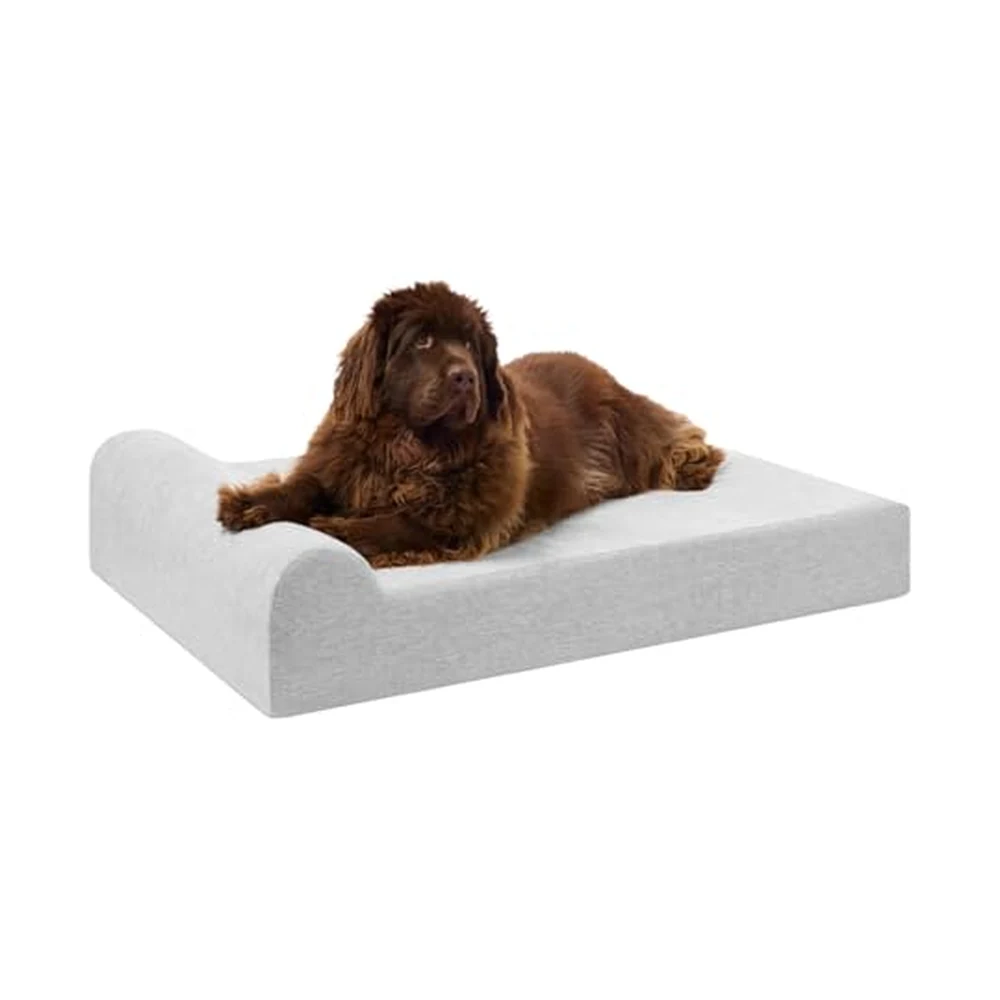
- The bed. A thin bed on a hard floor is the thing a stiff dog has to negotiate a dozen times a day. A supportive orthopedic bed with a low entry side is the highest-leverage change most senior dogs get; a memory-foam bolster bed such as the JOYELF has an open front a dog with weak hindquarters walks onto rather than over, and for the dog in the giant-breed row the Barker Beds XL is sized by its maker for 75 to 120 pounds. Our comparison of orthopedic beds for senior dogs sets out how the five we researched differ.
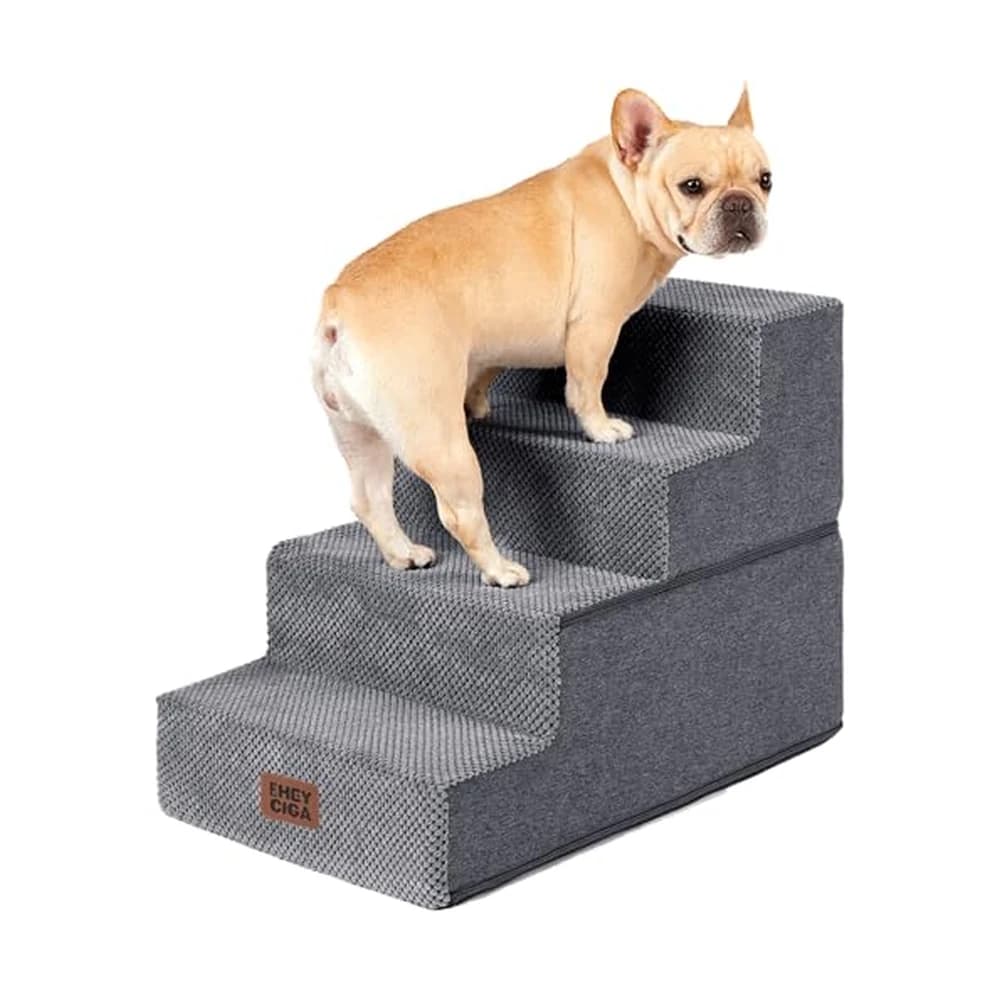
- The gaps he used to jump. Sofa, bed, car boot. A ramp or set of steps removes the repeated impact and the moment where he decides whether to risk it. Beside the bed, foam steps like the EHEYCIGA four-step give a small dog 18 inches of soft landing; for the car, the PetSafe Happy Ride ramp is 62 inches long and folds in half, which is why it actually gets used.
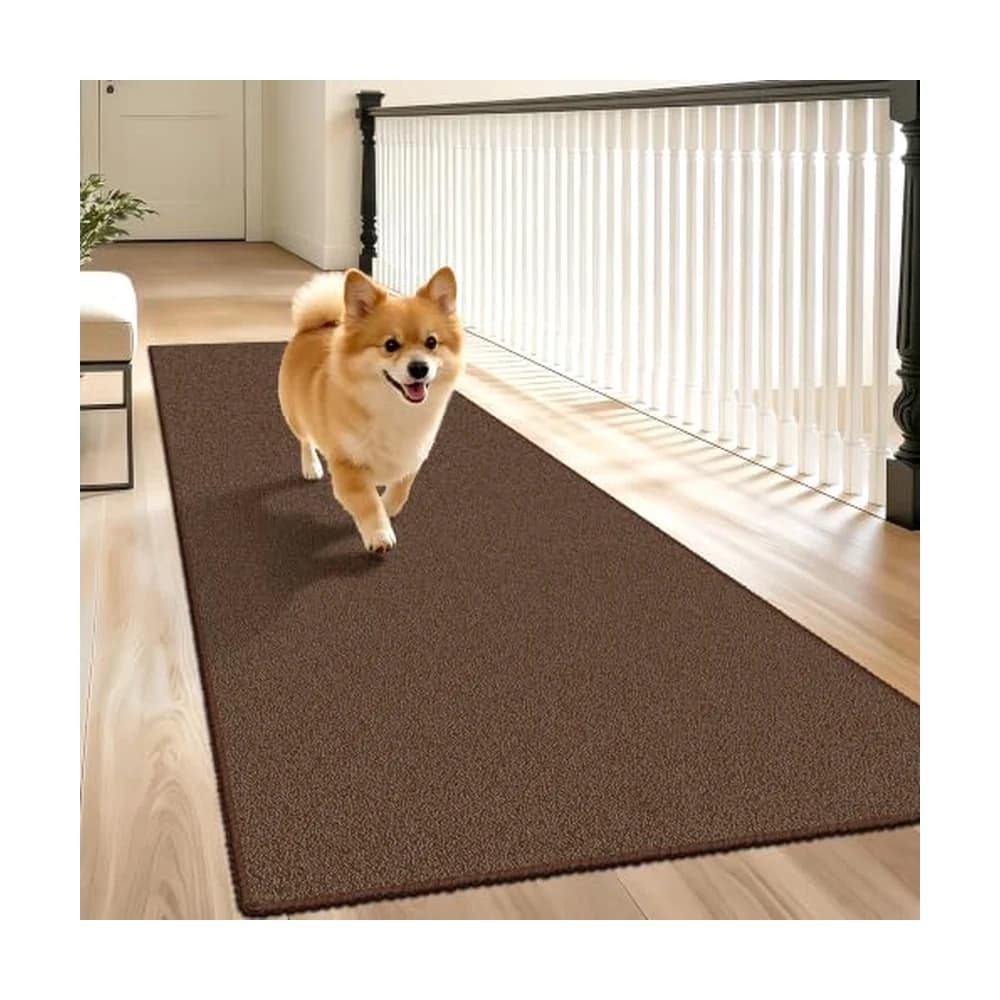
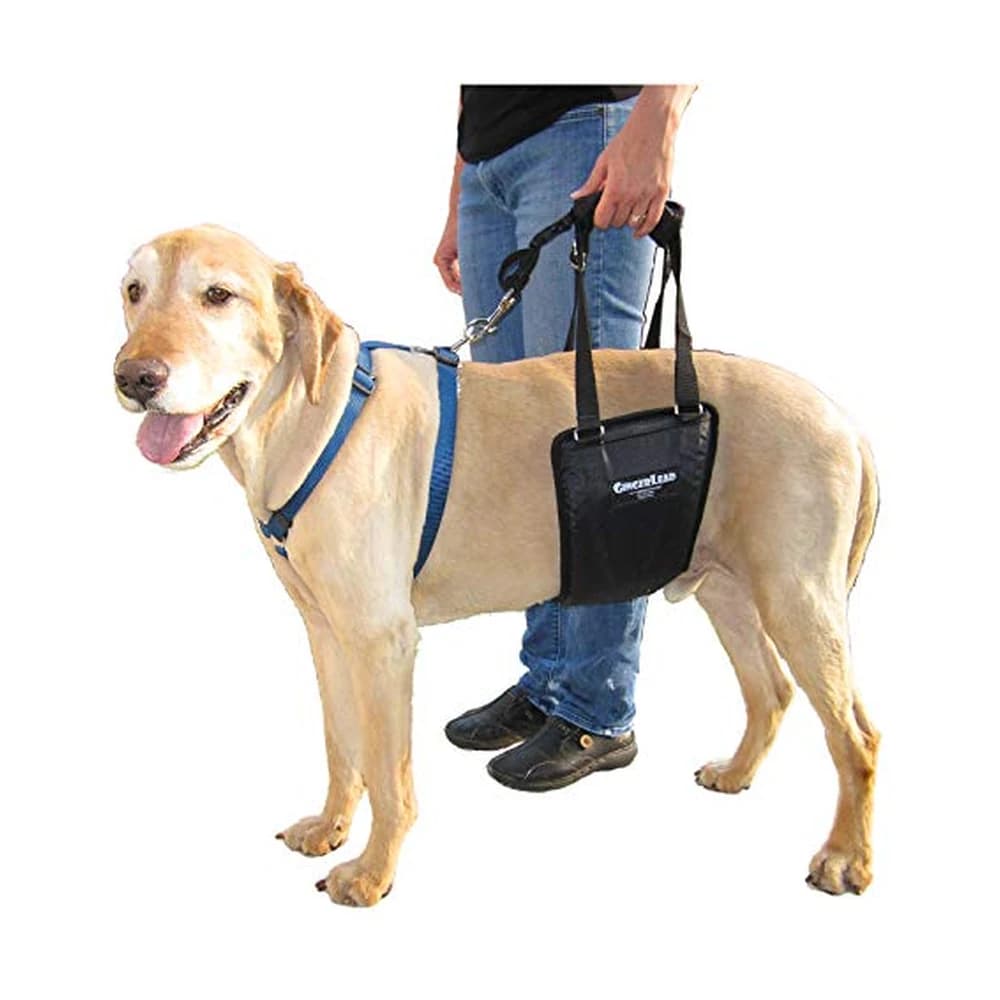
- Traction. Hard floors get harder to trust when the back end is weaker. A runner such as the TTelephant two-by-six on the routes he takes most, toe grips for the dog himself where a runner cannot reach, and a support harness such as the GingerLead sling when stairs become a two-person job. A dog who has stopped trusting the hallway is often read as a dog who has stopped wanting to come when called.
Remember: Do the floor before the medicine cabinet. None of this treats anything; it removes the daily friction so that whatever your vet does treat has a better chance to show.
Then watch, and write it down
The stage boundary is mostly a prompt to pay a different kind of attention. Our guide to the signs of aging in dogs covers what to look for and what is easy to misread, and brain games for senior dogs covers the mental half, which the AVMA lists alongside the physical.
What to ask your vet
- Based on his breed and size, where do you think he is in his expected lifespan?
- Should we move to twice-yearly exams now, and what should a senior exam include for him?
- Is what I am seeing when he stands up worth a pain assessment?
- Is his current weight helping or hurting his joints?
- Are any of the behavior changes I have noticed worth investigating rather than filing under old age?
That last one matters. Behavior changes can be the first sign of aging, and the AVMA notes they may come from pain, from failing sight or hearing, from a specific disease, or from cognitive dysfunction. Those have different answers, and only one of them is nothing to do.
Key takeaways
What to remember
- Senior is a fraction of a lifespan, not a birthday. AAHA defines it as the last 25 percent of estimated lifespan through end of life.
- AAHA deliberately publishes no fixed senior age, because variation between dogs increases in the later years.
- The AVMA's current senior pets page gives ranges by adult weight: eight to eleven, eight to ten, eight to nine, and six to seven years for giant breeds.
- The widely repeated line that small dogs are senior at seven and large dogs at five or six is an older set of thresholds. The shape holds, the numbers have moved.
- The stage changes what you do, not what your dog is. Twice yearly exams, weight, mobility and comfort become the job.
Questions people ask
- Is there an exact age when my dog becomes a senior?
- No. AAHA defines senior as the last 25 percent of estimated lifespan, which depends on breed and size, and states that developmental periods phase in and out gradually rather than starting abruptly. Your vet estimates the line for your individual dog.
- Why do big dogs become senior earlier?
- Larger dogs tend to have shorter lifespans than smaller ones, so the last quarter of that lifespan arrives sooner in calendar years. The AVMA puts giant breeds over 90 pounds at six to seven years and small dogs under 20 pounds at eight to eleven.
- Should I switch to senior food the day my dog turns senior?
- That is a conversation with your vet, not a calendar event. The AVMA notes senior dogs often need food that is more easily digested and different in energy density, but weight, dental health and any medical condition drive the actual choice.
- My dog is nine and acts like a puppy. Is he still a senior?
- Probably yes, by the lifespan definition, and that is fine. Age is not a disease. The stage is a prompt for earlier screening and small comfort changes, not a verdict on how your dog feels.
- How often should a senior dog see the vet?
- The AVMA recommends senior pets see a veterinarian twice a year or more so problems are found early. Ask your vet what that visit should include for your dog's size and history.
Gear
Gear for this stage
The products this piece assumes, in the order we would get them. Prices move; check before you buy.
$69.99 4.6 out of 5 stars · 28,761
The mainstream choice — a memory-foam base with three-sided bolsters and an open front the…
$339.95 4.7 out of 5 stars · 5,902
A 75 to 120 pound senior, the dog most likely to have worn through two cheaper beds already.
$32.29 4.4 out of 5 stars · 10,918
Bedside steps for a small or ageing dog — 18 inches over four soft foam steps, with a…
$59.99 4.1 out of 5 stars · 14,952
Getting a stiff dog into an SUV or estate — 62 inches, folding to 31, rated to 150 lb and…
TTelephant Non-Slip Floor Runner
$33.29
The hallway or the run to the water bowl, where an older dog's feet start sliding on hardwood…
$39.99 3.2 out of 5 stars · 3,857
A dog who is strong but sliding — rubber grips on the nail tips give traction on hardwood…
$69.95 4.3 out of 5 stars · 3,798
Taking real weight off weak hind legs — a padded sling with an integrated leash and a cutout…




Sources
- AAHA 2019 Canine Life Stage Guidelines: Canine Life Stage Definitions — The four AAHA life stages, senior defined as the last 25 percent of estimated lifespan, the refusal to use human-year equivalents, and the statement that stages phase in and out gradually.
- AVMA: Senior pets — The AVMA senior age bands by adult weight, the list of care areas that change in senior dogs, the signs of arthritis, and the behavior changes associated with cognitive dysfunction.
- UC Davis School of Veterinary Medicine: Calculating Your Dog's Age — The origin of the multiply-by-seven idea, the 16 ln(dog age) + 31 epigenetic formula from 104 Labrador Retrievers, the 15/9/5 staged estimate, and the older AVMA senior thresholds of 7 and 5 to 6 years.
We research and analyse — specs, manufacturer documentation and large-scale owner feedback. We do not test products on dogs, and we are not your vet.
Next step
Check your own dog against the AVMA bands
The bands on this page are per size and per weight, and the calculator applies them to your dog rather than to the average one.