In this article(7 sections)
Potty training is not really training. It is a logistics problem with a small amount of training in it. The dog already knows how. Your job is to be standing in the right place at the right moment often enough that the right place becomes the habit.
Which means the schedule matters more than the technique.
The schedule is a list of events, not times
Clock-based timetables fall apart the first day something runs late. Trigger-based ones survive, because the triggers happen whether or not you are organized.
Take him out:
- The second he wakes. Every nap, not just the morning. Puppies sleep 18 to 20 hours a day in naps of roughly 30 minutes to two hours, so this is the trigger that fires most often.
- After every meal. Within about ten minutes.
- After a drink.
- After play. Excitement moves things along.
- After any excitement. Visitors, the mail, a game with the children.
- Before you confine him, and immediately after you let him out.
- Every hour or so in between, while he is awake.
- Last thing at night, and at least once during it for a young puppy.
Six or seven awake cycles a day, each bracketed by a trip outside. That is the whole system, and why a 600-count pack of Earth Rated bags is not excessive: this guide assumes eight to twelve trips a day for weeks.
You will see the advice that a puppy can hold it for one hour per month of age. It is a trainer's rule of thumb, not a finding from a study, and we flag that because this subject is full of confident numbers with nothing behind them.
Rule of thumb: One hour per month of age is a starting point, not a rule. Shorten it the moment you get an accident.
Giving him a way to ask
The schedule is you predicting. A bell is him telling you. Hang a strap of door bells at nose height on the door you always use, ring it yourself every single time you open it, and most puppies make the connection inside a fortnight. Baxter & Bella's trainers keep the same bells on their puppy-products list. The catch is the part nobody mentions: you have to answer every ring while he is learning it, and a fair number of dogs then ring it because going outside is fun. That is a better problem than a dog with no way to tell you, and it is the reason the bell belongs next to the schedule rather than instead of it.
What to do outside
The two-second rule is the part people get wrong.
- Same door, same patch of ground, every time. Boring is the point.
- Stand still and quiet. You are furniture until something happens.
- The instant he finishes, food. Not when he comes back in. Not from the doorway. Within about two seconds, delivered where he is standing.
- Then play, or a short walk. So that finishing predicts the fun part rather than ending it.
- Once he is reliably going, name it quietly while he is in the act, so it is useful later at a highway rest stop.
The food has to be soft enough to swallow instantly. This guide assumes something like Wellness Soft Puppy Bites by the back door; owners specifically mention them for house training.
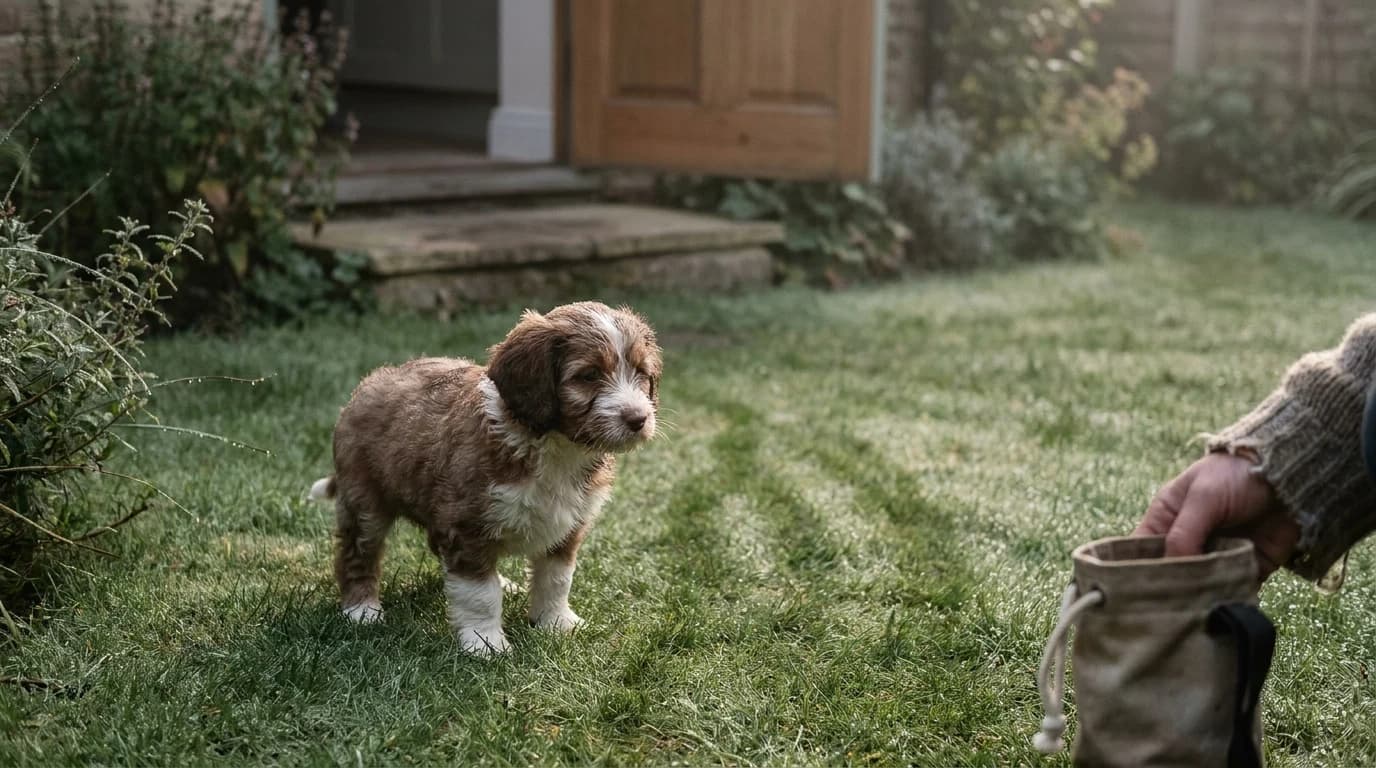
 Same door, same patch of grass, every time. The sniffing is your cue to stand still and say nothing.
If nothing happens in three or four minutes, go back inside, pen or crate for ten minutes, and try again. A puppy who has not been out does not roam the house.
This is exactly the mechanism AVSAB describes for training generally: teach the animal what to do rather than punish, and arrange the environment so the right response is the easy one. AVSAB names housetraining specifically as an issue managed by arranging the environment and reinforcing desirable responses.
Supervision is the other half
Every indoor accident teaches your puppy that indoors works, so the aim is fewer opportunities, not more catches.
That means the puppy is in one of three states at all times: outside, actively watched, or contained.
| State | What it looks like | What makes it possible |
|---|---|---|
| Outside | Same door, same patch, you standing still | Bags and soft treats in your pockets |
| Actively watched | Eyes on, not merely the same room | A shut door, or a house line to step on |
| Contained | A pen or crate with no far corner | Gates and a playpen, a crate sized to him |
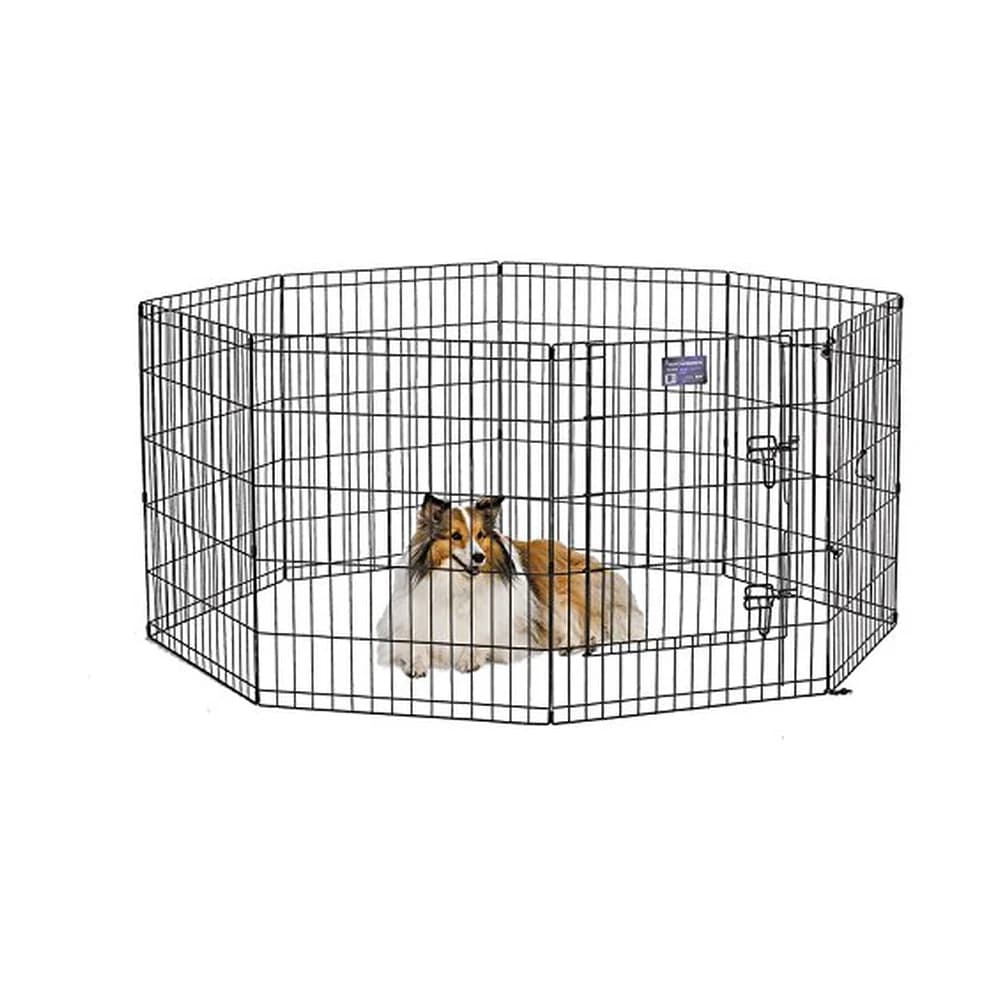
A MidWest exercise pen gives him a floor he cannot leave while you cook. A crate sized so he can stand, turn and lie flat but not walk to a far corner uses his own instinct not to soil his bed. Crate work is a project in itself, covered in crate training a puppy.
When outside is not an option
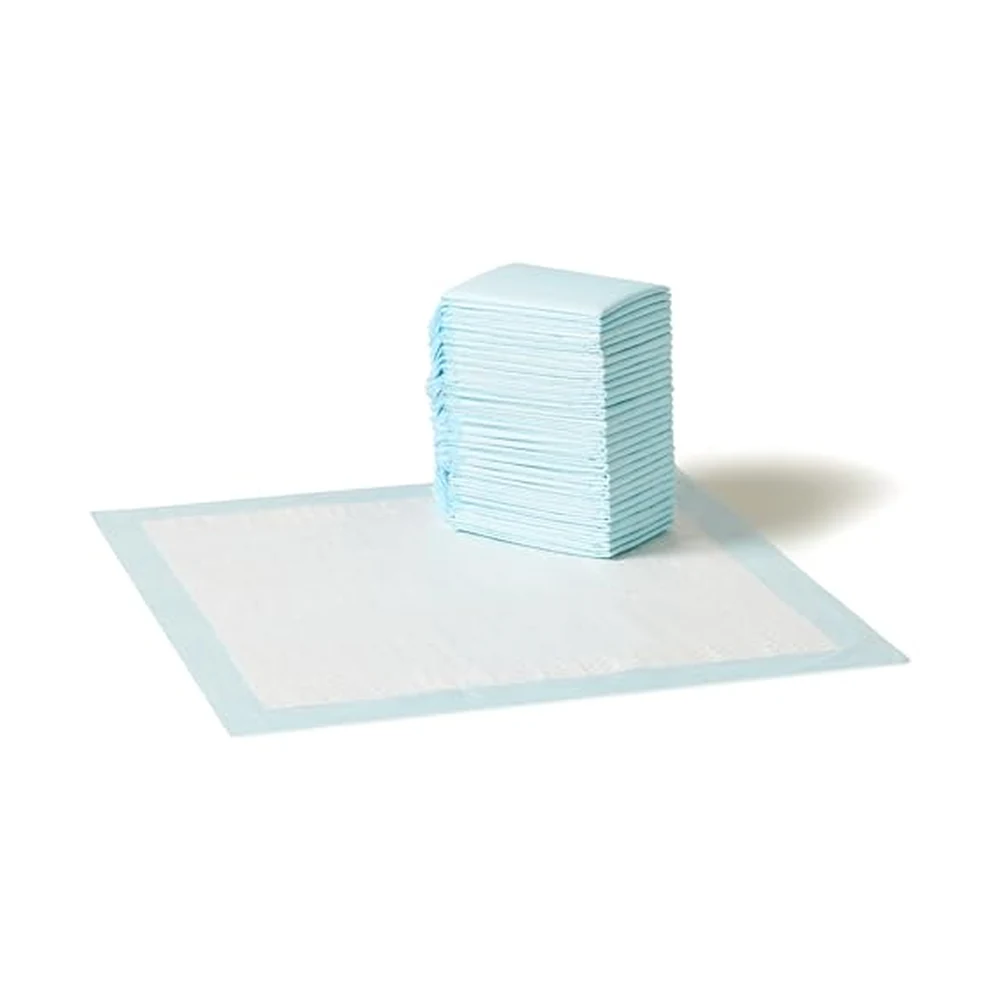
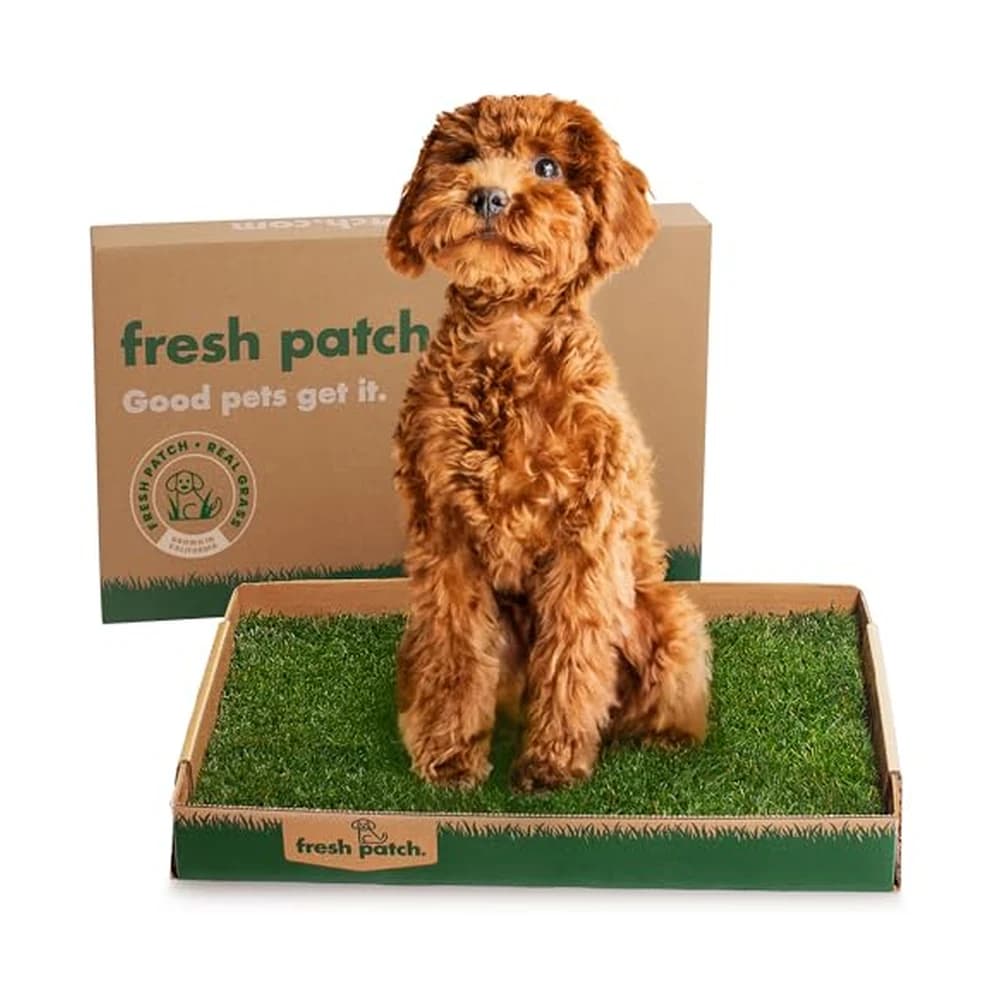
For apartments, high floors, or the weeks before your vet clears outdoor access, pads, holders and bells buy you a workable indoor target. Amazon Basics training pads are the plain version, bordered on all four sides because puppies aim badly; a Fresh Patch is real grass, the scent you will eventually move him to. Either is a real cost, because you eventually retrain to outdoors, so use them for a reason, not by default.
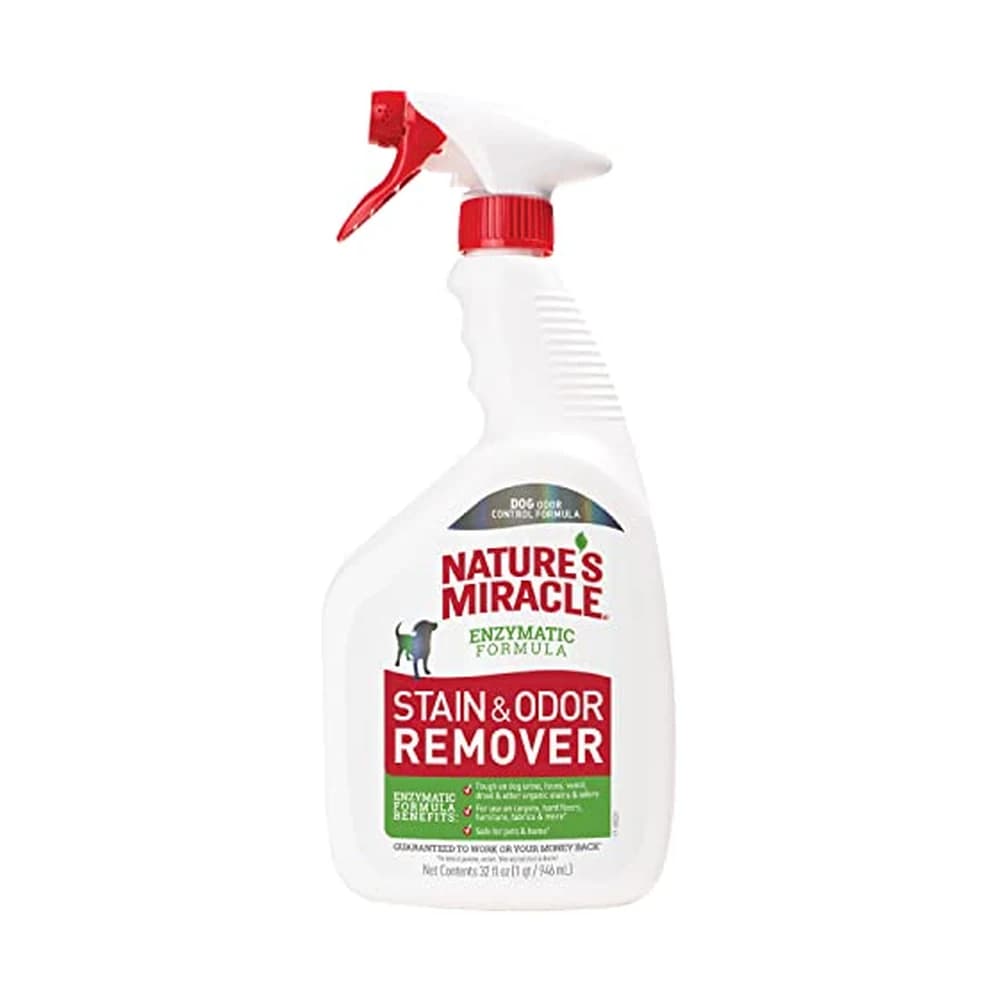
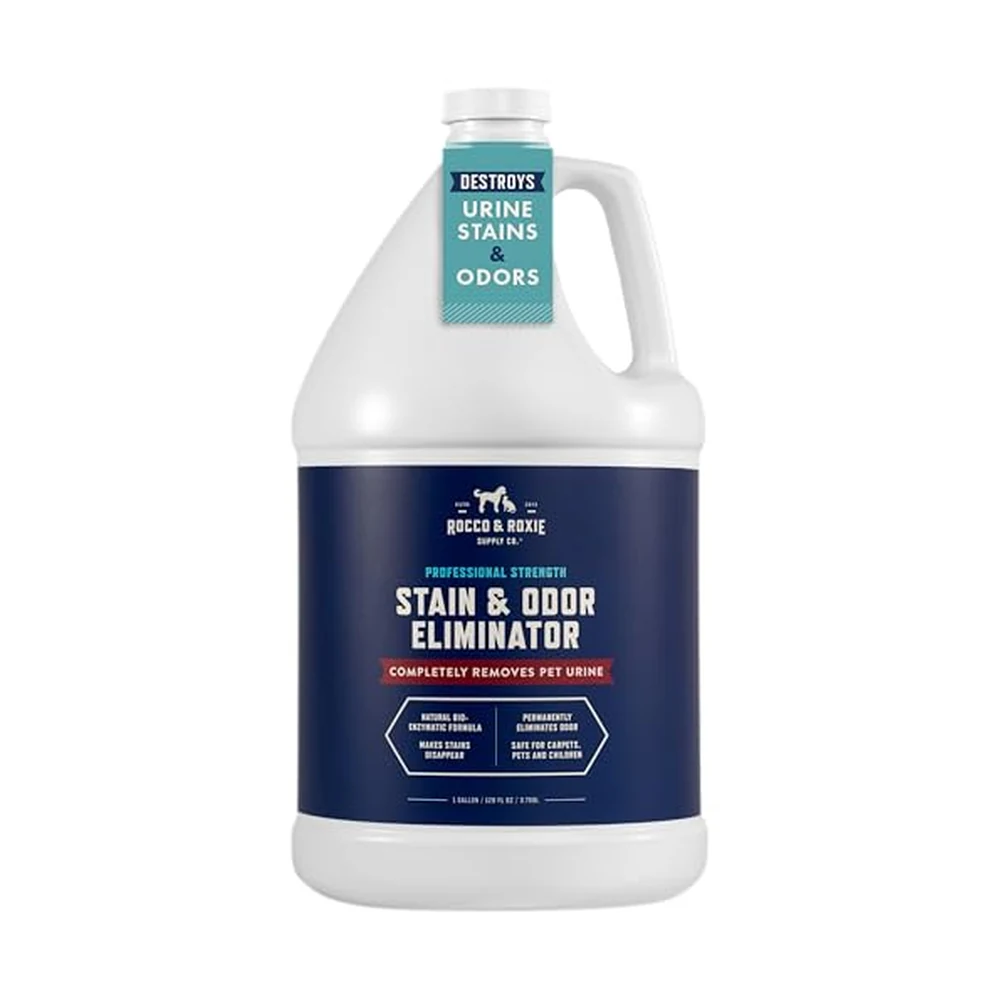
And clean up with an enzymatic cleaner. Ordinary household cleaner leaves a scent marker that reads as an invitation. Nature's Miracle is the bottle for the counter; for carpet, where urine reaches the backing, a gallon of Rocco & Roxie lets you saturate rather than dab.
When you catch him in the act
Interrupt, do not scold. A cheerful noise, straight outside, let him finish there, and pay him for it.
Never punish an accident, before or after. AVSAB's position is unambiguous: only reward-based training methods for all dog training, with methods relying on force, pain or emotional discomfort excluded. There is also a practical reason. A punished puppy does not learn to go outside. He learns not to go in front of you, which means behind the sofa, and you have swapped a visible problem for a hidden one.
What actually helps:
- A cheerful interruption and a fast trip to the usual spot.
- Paying the finish outside, even after an indoor start.
- Enzyme cleaner, and one more trip on the schedule.
What people try that doesn't:
- Scolding, or any punishment after the fact.
- Praise from the doorway instead of food where he is standing.
- Household cleaner, which leaves the invitation in place.
Remember: A puddle you did not see happen is yours, not his. Clean it, shrink the free area, and tighten the schedule.
Nights
Most eight- to twelve-week-old puppies need one or two trips overnight. Keep them dark, silent and short, so they stay toilet trips rather than social events. Keep fresh water available. You will read that the bowl should come up at a set hour; we will not print that as a rule, because a warm, unwell or simply thirsty puppy needs to drink, and unusual thirst is a question for your vet rather than a reason to ration. Keep the crate beside your bed while the nights are broken, and expect the interval to stretch on its own over a few weeks.
Regression
Reliable for a fortnight and then accidents again usually means one of three things: more freedom than he has earned, a changed routine, or a physical cause. Shrink the free area back, restore the schedule, and if it does not resolve quickly, call your vet. Sudden loss of house training is a recognized medical sign, not only a training one.
Everything else about these weeks is on the new puppy stage page.
What to ask your vet
- How long between toilet breaks is reasonable for his age and size?
- When is he cleared to toilet in public places around here?
- He was clean and now he is not. Should we rule out a urinary infection?
Key takeaways
What to remember
- The schedule is triggered by events, not by the clock: after waking, after eating, after drinking, after play, and before confinement.
- Reward within about two seconds of finishing, outside, with food. Praise from the back door is too late and too far away.
- An accident indoors is a supervision failure, not a moral one. AVSAB's guidance is to arrange the environment and reinforce the behavior you want.
- Never punish an accident. It teaches a puppy to go where you are not, which is behind the sofa.
- The one hour per month of age idea is a trainer's rule of thumb and a reasonable starting point, not a research finding. Your puppy sets the real interval.
Questions people ask
- How often should I take a puppy out?
- After every wake-up, meal, drink and play session, plus roughly hourly in between while he is awake. Many trainers use one hour per month of age as a starting point for how long a puppy can hold it. Treat that as a rule of thumb rather than a rule, and shorten it whenever you get an accident.
- Should I use puppy pads?
- They help if you live several floors up, have a puppy who is not yet allowed outside, or need overnight insurance. They do add a step, since you eventually retrain to grass. If you can get outside easily, going straight to outdoors is simpler.
- My puppy goes outside and then again inside five minutes later. Why?
- He probably did not finish. Puppies empty in instalments. Stay out a few minutes past the first success, and reward the second one too.
- How long does potty training take?
- It varies enormously, and any specific number of days you read is invention. Most families see a clear drop in accidents within a few weeks and occasional lapses for months. Consistency in the routine matters more than time.
- He was clean for a week and now he is having accidents again. What happened?
- Look for a change in routine, a bigger free area, or a physical cause. Sudden regression is worth a word with your vet to rule out a urinary infection or another medical reason before treating it as training.
Gear
The gear this guide assumes
Our shelves and product pages, so you can see the options without leaving mid-session. No buy buttons here — this is a training guide.
Nature's Miracle Stain & Odour
$10.79 4.6 out of 5 stars · 23,459
The bottle you keep on the counter all through house training — enzymatic, cheap, and stocked…
$59.97 4.4 out of 5 stars · 125,742
Soaking a carpet properly — a gallon is what a real accident needs, and it carries the Carpet…
$25.99 4.8 out of 5 stars · 245,627
The outdoor half of house training — you will be outside eight to twelve times a day, and…
$8.99 4.5 out of 5 stars · 222,168
Apartment puppies, unvaccinated puppies and older dogs losing continence — 22-inch pads with…
$34.95 3.9 out of 5 stars · 9,010
An apartment puppy under 15 pounds, or a senior who can no longer wait for the elevator, who…
$9.99 4.6 out of 5 stars · 50,763
The first months of training — soft enough for baby teeth, with lamb and salmon and added DHA…
$46.99 4.6 out of 5 stars · 46,189
The default puppy pen — 16 square feet, a step-through door, and it clips onto a wire crate…
$9.00 4.4 out of 5 stars · 169
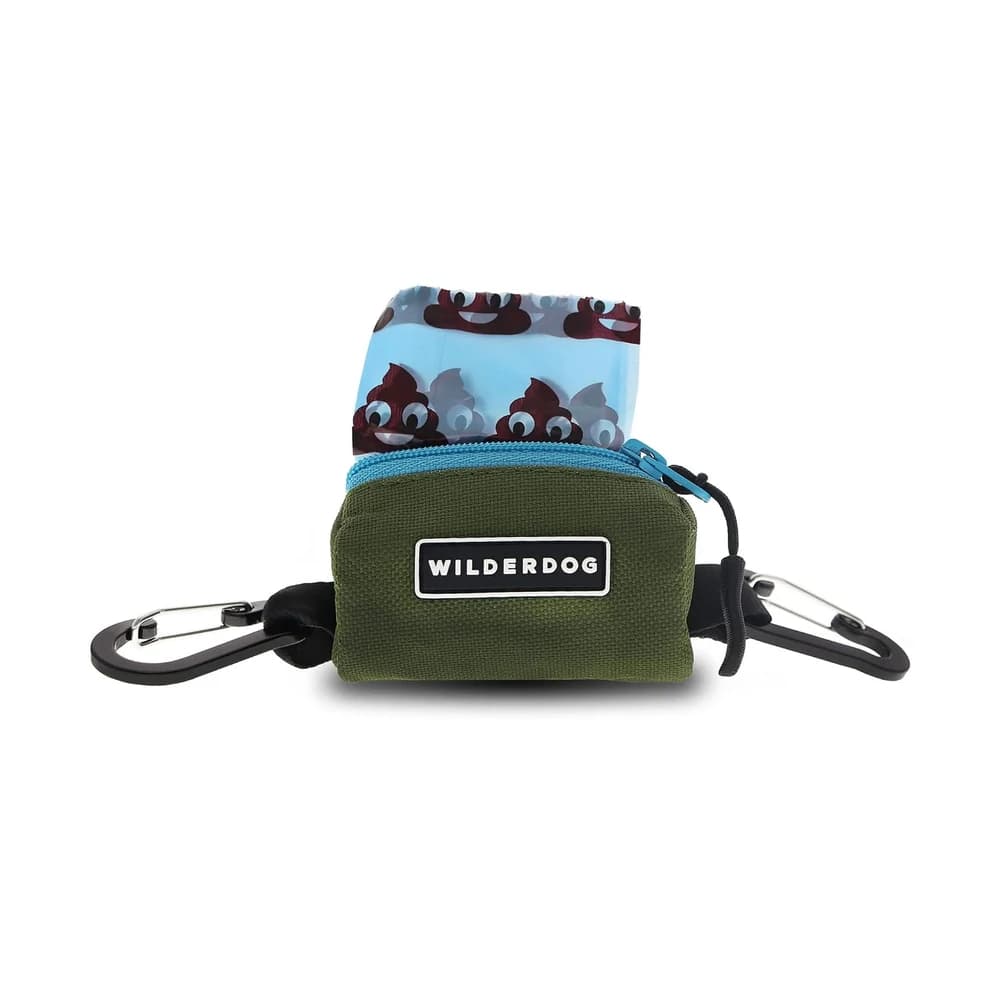
Keeping a roll of bags clipped to the leash instead of stuffed in a pocket — one full…


Sources
- AVSAB Position Statement on Humane Dog Training (2021) — That AVSAB recommends only reward-based methods for all dog training, that tools relying on pain or intimidation should not be used, that training is most effective when it teaches the dog what to do, that management and antecedent arrangement belong in every plan, and that the learner must be able to opt out.
- American Kennel Club: How Much Do Puppies Sleep? — That puppies sleep 18 to 20 hours a day in naps of 30 minutes to two hours, and that active time should be followed by quiet time.
- Baxter & Bella: Puppy Products — That the online puppy school's trainers list these products on their own recommended-products page.
We research and analyse — specs, manufacturer documentation and large-scale owner feedback. We do not test products on dogs, and we are not your vet.
Next step
The potty training shelf
An enzyme cleaner is the one purchase that changes the outcome here, because a spot he can still smell is a spot he will use again.
Two products do most of the work here: something absorbent for the accidents you expect, and an enzyme cleaner for the ones you did not.