We research gear rather than testing it, and some links below are Amazon affiliate links — if you buy through one we may earn a commission, at no extra cost to you. It does not change what we recommend. Full disclosure.
5 picks compared
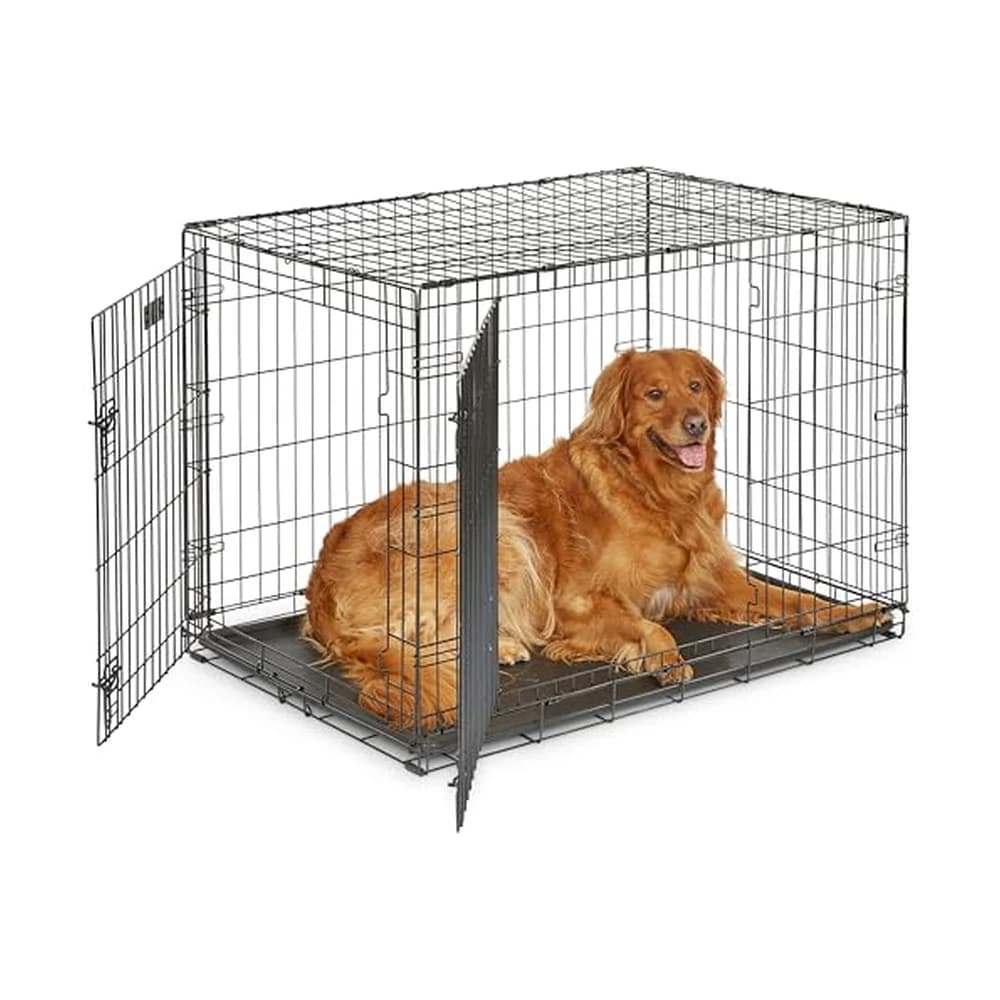
The one crate you buy at eight weeks and still use at eight years — the included divider grows with the dog
- Skip if
- You need something for airline cargo, or a determined escape artist has already bent a wire crate.
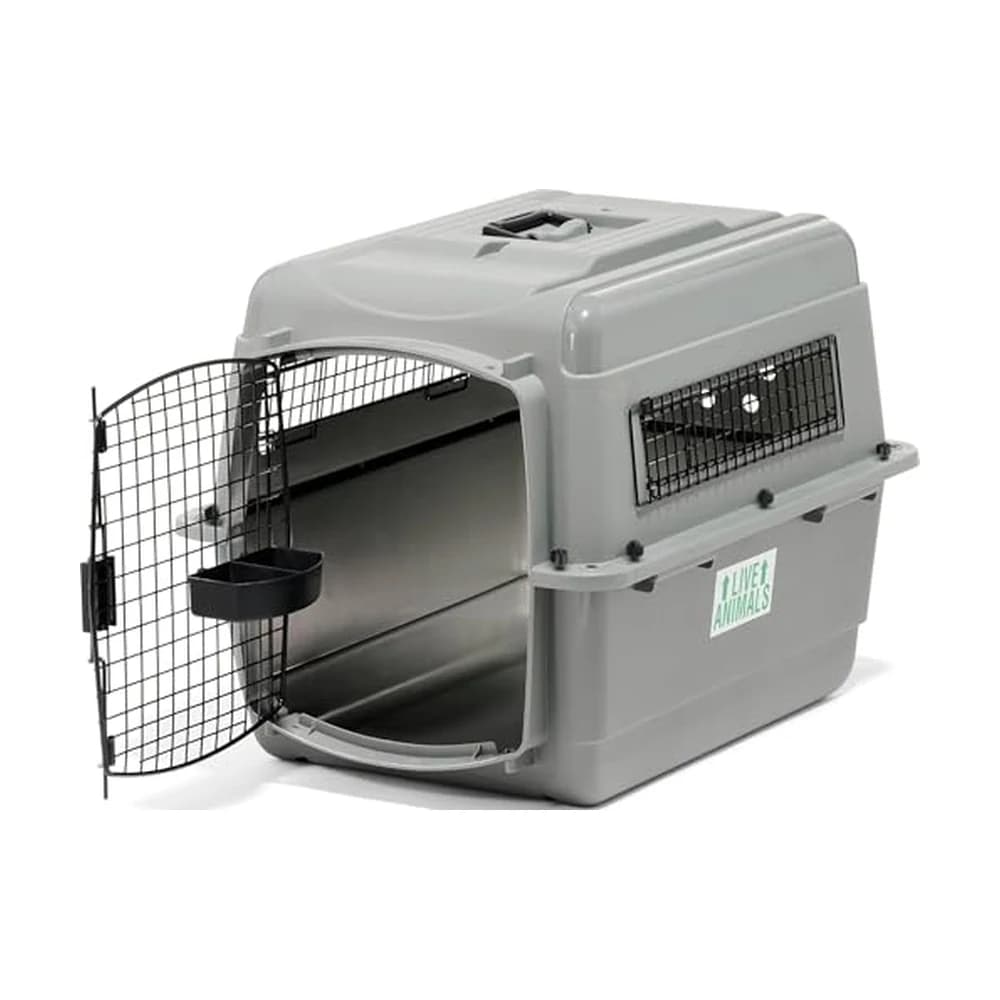
A puppy who has a flight in their future — the rigid kennel airlines accept for cargo, bought early enough to get used to it
- Skip if
- Your crate never leaves the house. A wire crate with a divider is cheaper and easier to live with.
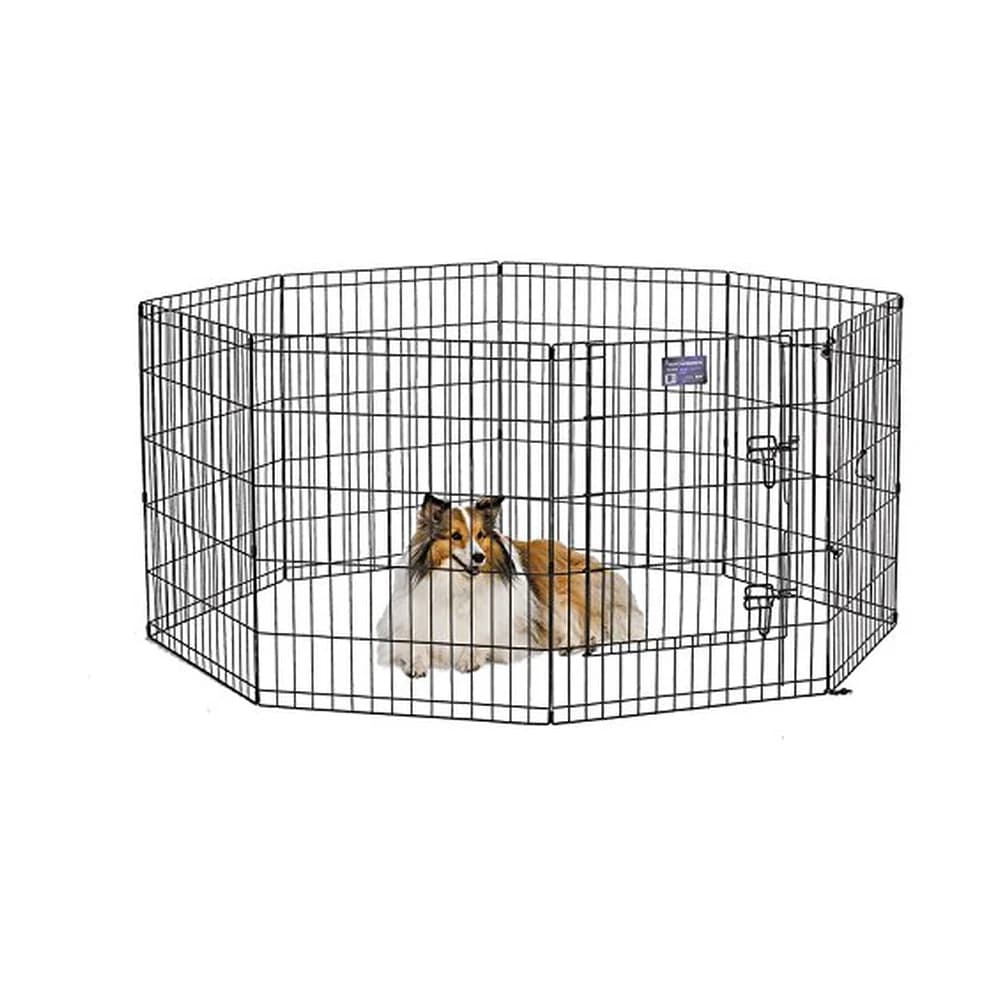
The default puppy pen — 16 square feet, a step-through door, and it clips onto a wire crate to make one bigger space
- Skip if
- Your puppy is already jumping 30 inches, or you need a barrier a determined adolescent cannot lean over.
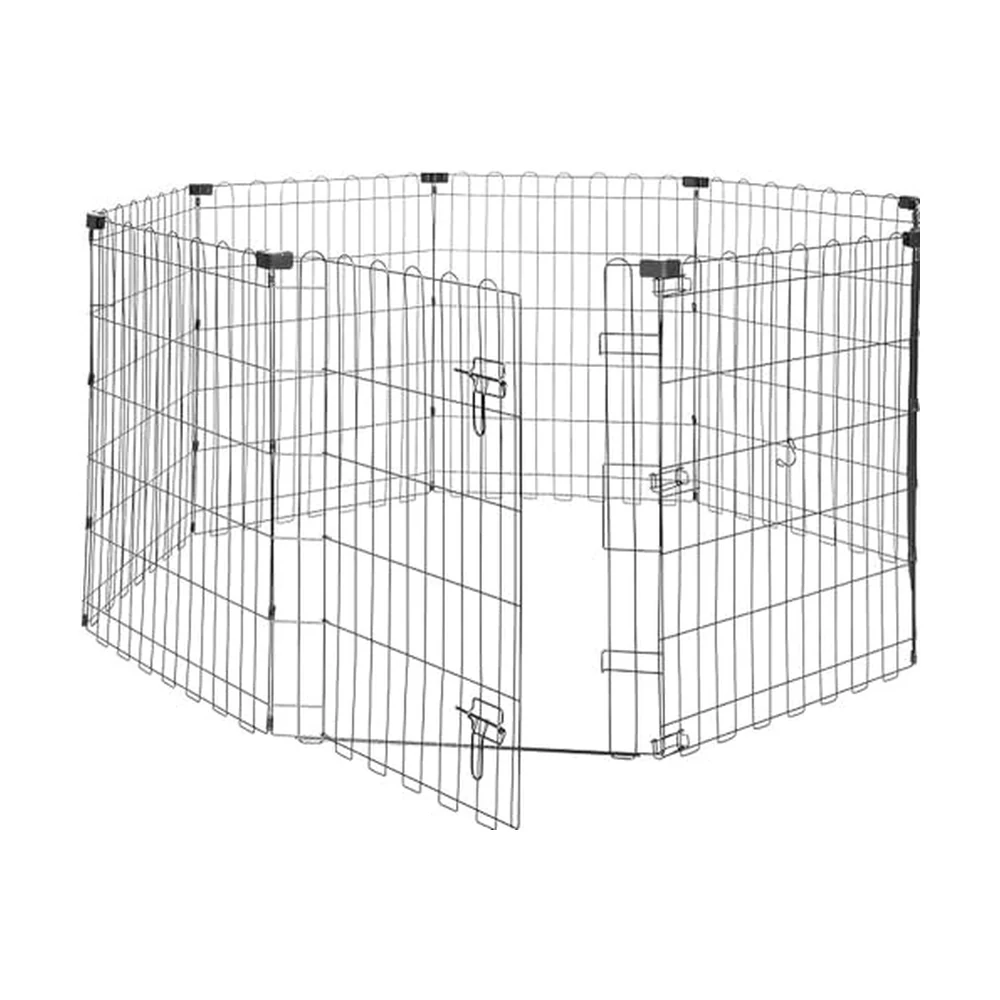
A cheap, reconfigurable second pen — octagon, square or rectangle, or opened flat to block a room off
- Skip if
- You have a bigger dog. Owners are clear this is a small-dog and puppy pen, not a barrier for 50 pounds of adolescent.
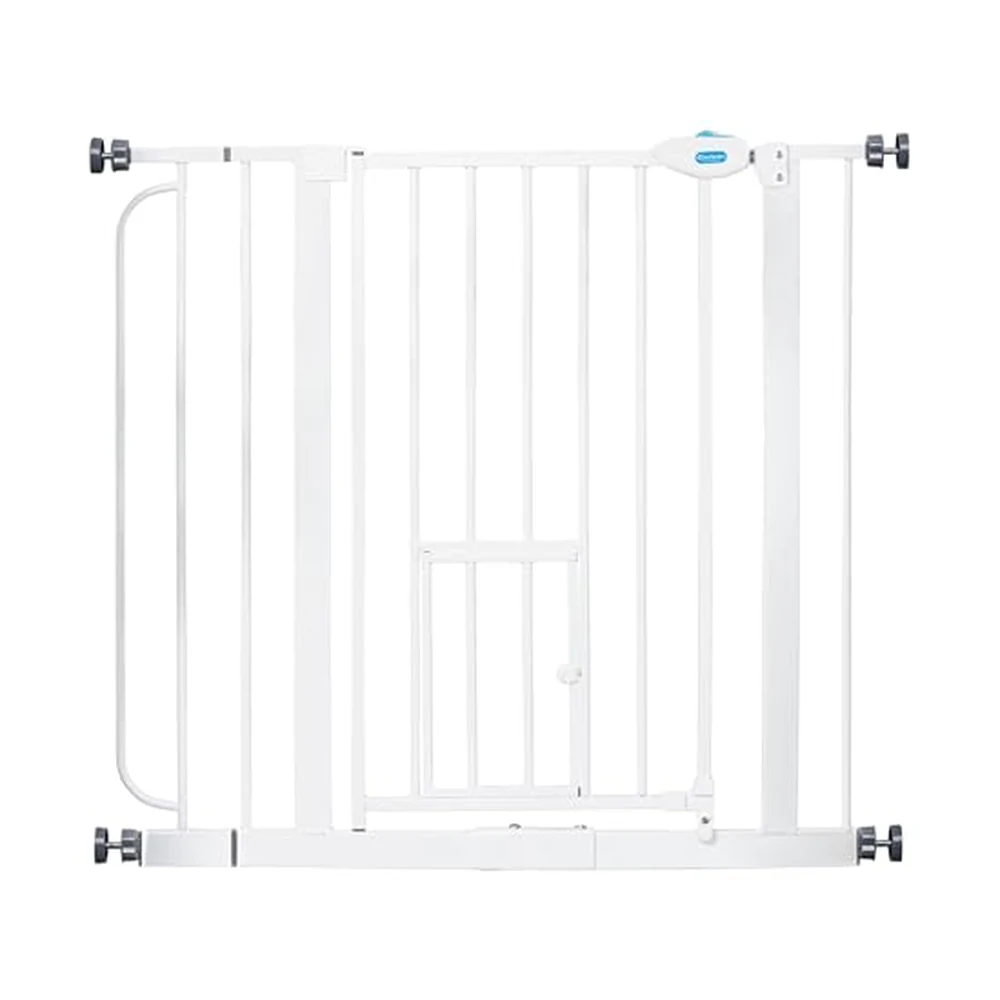
Gating a kitchen or hallway when a cat or small dog still needs to get through — it has a built-in pet door
- Skip if
- The opening is 32 to 34 inches. The listing states this gate does not fit that band, with or without the extension.
Each pick below carries its own specs, and the tags mark the best of these picks on that point. Specs come from manufacturer listings; ratings are the Amazon aggregate rating and count, refreshed periodically — we don't test products.
How winners are decided: ✓ marks the lowest price, the highest owner rating, the largest stated weight capacity and the longest warranty. Rows where more is not better — size, dimensions, weight, material — and the editorial rows get no ✓ at all. A blank is unknown, never a loss, and a row needs at least two known, differing values before anything can win. How the best-of-these tags are decided: the lowest price, the highest owner rating, the largest stated weight capacity and the longest warranty. Points where more is not better — size, dimensions, weight, material — and the editorial notes carry no tag at all. A blank is unknown, never a loss, and a point needs at least two known, differing values before anything can lead. As an Amazon Associate we earn from qualifying purchases. Specs are the manufacturer's claims and owner-reported data — we research and analyse; we don't test products on dogs.
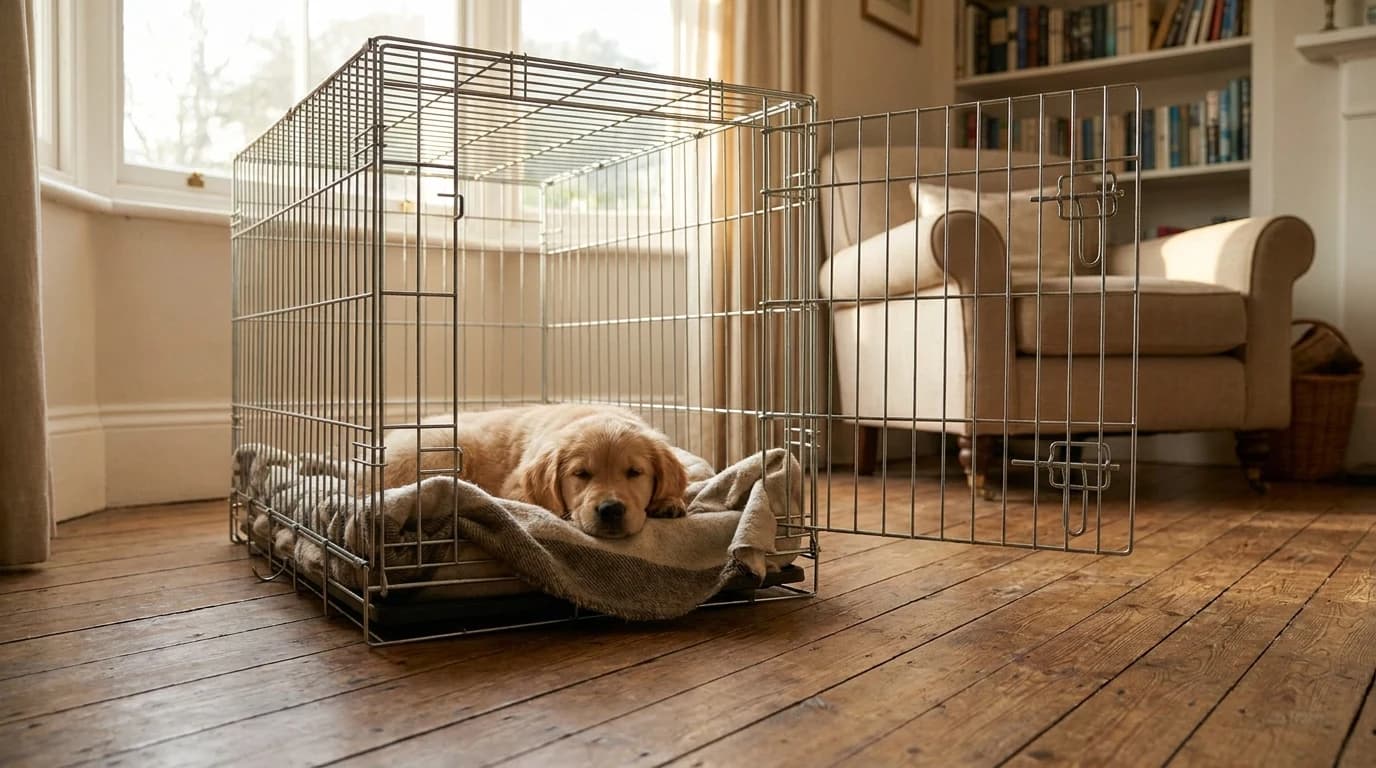
Here is the thing nobody tells you in the shop: the crate you are buying is not for the puppy in front of you. It is for the dog that puppy becomes, some time in the next year, and you are going to make it temporarily smaller until then. Almost every sizing mistake we see comes from buying for the animal currently in the car.
This is the new puppy stage — homecoming week through about sixteen weeks — and the crate is the single piece of gear the whole first month runs through: sleep, house-training, and the beginnings of being alone. We research gear rather than testing it, and we say so.
Size it by expected adult weight, then shrink it
MidWest, whose iCrate is the crate most American puppies grow up in, publishes the method on its own site. For a puppy, its instruction is explicit — buy the crate according to their expected adult size and use the divider panel to make it the right size while they grow.
- Measure your dog's length from the tip of the nose to the base of the tail and add a few inches.
- Measure height from the top of the head to the ground, standing, and add a few inches.
- Choose the crate that lets the dog stand, turn around and lie down comfortably — neither restrictive nor excessively spacious.
- For a puppy, size that for the adult dog, then set the divider for the puppy you have today.
Rule of thumb: Buy for the adult, divide for the puppy. A crate sized to an adult Labrador is a bathroom with a bedroom attached for an eight-week-old; a crate with a divider is a correctly sized den that grows about once a month.
The bands, and where they come from
MidWest publishes an adult-weight band for every one of its eight crate lengths, on the size chart printed on its own sizing page, alongside a breed reference for each. Both columns below are the manufacturer's; neither is ours.
| Crate length | Adult-weight band MidWest states | MidWest's breed examples |
|---|---|---|
| 18 in | 1-6 lb | toy breeds (see the note below) |
| 22 in | 7-11 lb | toy breeds (see the note below) |
| 24 in | 12-20 lb | Chihuahua, Boston Terrier, Fox Terrier, Border Terrier |
| 30 in | 21-40 lb | French Bulldog, Dachshund, Miniature Schnauzer, Welsh Terrier |
| 36 in | 41-70 lb | Beagle, Bulldog, Cocker Spaniel, Whippet, Welsh Corgi |
| 42 in | 71-90 lb | Labrador Retriever, Golden Retriever, Boxer, Australian Shepherd |
| 48 in | 91-110 lb | German Shepherd, Doberman, Rottweiler, Siberian Husky, Akita |
| 54 in | 110+ lb | Great Dane, Mastiff, Irish Wolfhound, St. Bernard |
Two honest notes on that table. The breed examples we transcribed for the two smallest sizes — Brussels Griffon, Yorkshire Terrier, Maltese, Papillon — are listed across both the 18 and 22-inch rows on MidWest's chart rather than split between them, so we have not guessed which breed belongs to which; the weight bands are per size and settle it anyway.
Fit note: The folding iCrate line stops at 48 inches, so the 54 is a different model and not the crate with the divider panel most of this page is about.
When to go up a size
MidWest's own caveat is printed on that chart: depending on gender and possible mixed ancestry, your dog may need a home larger or smaller than listed. Three cases where the answer is the bigger crate:
- Your dog will be near 90 pounds — the 42-inch listing itself says to size up to the 48.
- You land between two sizes — take the larger crate and set the divider tighter.
- A mixed-breed puppy of unknown parentage — ask your rescue or vet to help identify the likely breeds, then size for the adult.
Our crate size tool walks the same logic if you would rather answer three questions than read a table.
The five picks
 The divider panel is the whole trick: one adult-sized crate, made puppy-sized for now.
MidWest 42-inch Double Door iCrate — best overall
The default for a reason. The listing states 42.88 x 28.75 x 30.38 inches, a band of 71-90 lb, a divider panel so the crate grows with the dog, a leak-proof tray, rubber feet and tool-free assembly, plus slide-bolt latches with a paw block. Owner feedback is enormous and mostly about assembly being easy and the divider working well for training; the recurring complaints are bent wires over time and a side door that does not always latch cleanly.
Two doors are worth the small premium in a real room, because you rarely get to choose which side of the crate the wall is on.
Petmate Sky Kennel 28-inch — if flying is in the plan
A hard-sided kennel that the listing says meets IATA requirements for live animal transport and most airline cargo specifications, with 360-degree ventilation, tie-down strap holes, live-animal stickers and a water cup included. Interior dimensions are 24.25 x 18.25 x 19.5 inches for pets around 20-30 lb. Buy this only if travel is actually happening — as a household crate it is darker and much harder to clean than wire, and owner feedback repeatedly flags the latch as stiff.
MidWest 30-inch Exercise Pen — daytime space, not a crate
Eight 24 x 30-inch panels making 16 square feet, which can stand alone, attach to a crate to extend it, or configure as a gate. This is the piece people wish they had bought first. A crate is for sleeping and for short settled stretches; a pen is where a puppy is safely awake while you cook. Owner feedback divides on sturdiness, which is a fair reflection of what a determined climber can do to it — the listing itself suggests a mesh top for pets that jump or climb.
Amazon Basics 30-inch Playpen — the value pen
Effectively the same idea at a slightly lower price: eight panels, thumb clips, two locking slide-bolt latches, ground anchors, and configurable as an octagon, square or rectangle. The listing specifies dogs up to 20 inches tall. Owners consistently describe it as easy to move and fine for containing puppies, and just as consistently note it is not strong enough for bigger dogs.
Carlson Extra Wide Walk-Through Gate — room-level containment
For openings 29-36.5 inches with the included extension, 30 inches tall, pressure mounted with no drilling, and with a small pet door so a cat can pass through while the puppy cannot. Read the fit note carefully: the listing states it does not fit openings between 32 and 34 inches. Gates and pens live together in the playpens and gates category; crates live in puppy crates.
What goes inside, and what does not
A crate that is correctly sized is only useful if the puppy likes being in it, and that is a training question rather than a shopping one — we walk it slowly in crate training a puppy. Bedding is not automatic: many puppies shred it, and a soaked bed defeats the sizing logic that makes house-training work.
What actually helps:
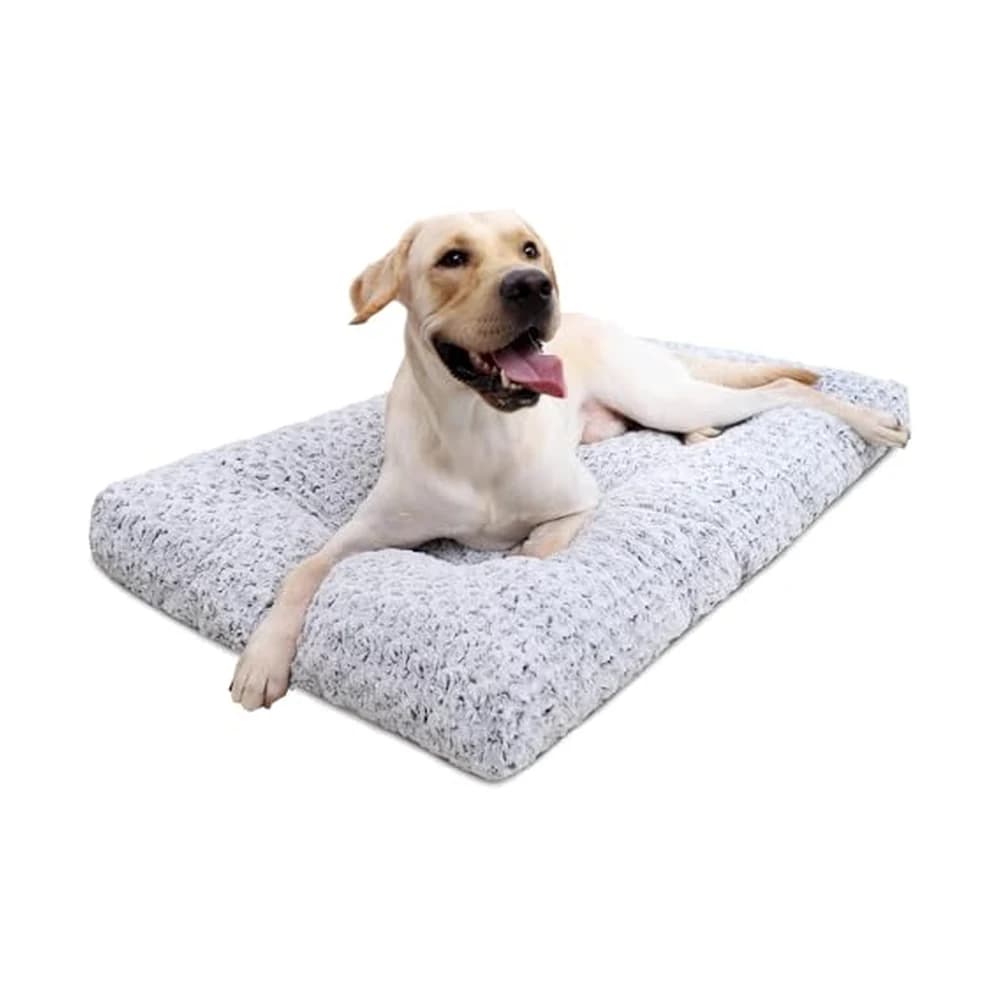
- A pad you can strip and wash whole, like the KSIIA crate bed, sized to the crate floor rather than to the dog
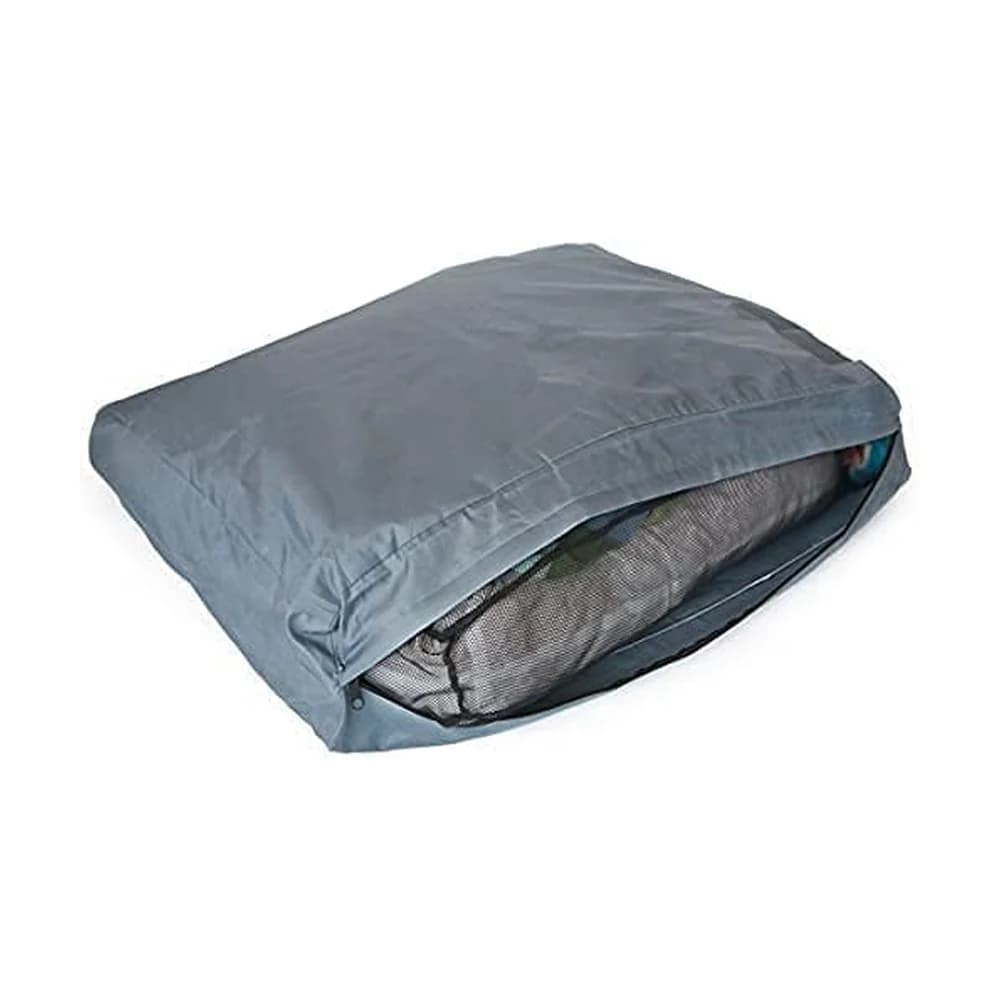
- A zippered Molly Mutt waterproof liner under it during the accident weeks, so a 3 a.m. mistake is laundry rather than a new bed
- Training pads in the pen's far corner, never in the crate — the crate works because there is nowhere to go
What people try that doesn't:
- A plush bed a teething puppy opens at the seams in a week
- A crate bought for the puppy in the car, replaced within the year
- The crate as a punishment, when its entire value depends on the puppy choosing to go in
Key takeaways
What to remember
- Size the crate to your puppy's expected adult weight and use the divider panel to make it smaller now. MidWest publishes this instruction itself.
- The rule is stand, turn around and lie down comfortably - not roomy, and not tight.
- Measure nose to base of tail and add a few inches; measure standing height to the ground and add a few inches.
- MidWest publishes an adult-weight band for all eight of its crate lengths, from 1-6 lb at 18 inches to 110+ lb at 54 inches, and a breed reference alongside it.
- A crate is for sleeping and settling. An exercise pen is for daytime, and most owners wish they had bought one sooner.
- For a mixed-breed puppy of unknown parentage, ask your rescue or vet what the likely adult size is before choosing.
Questions people ask
- What size crate does an 8-week-old puppy need?
- The size their adult body will need, with the divider panel set to give them just enough room to stand, turn around and lie down today. MidWest's own guidance is to choose by expected adult size and move the divider out as the puppy grows, which is why one crate can last a dog's lifetime.
- Is a crate that is too big actually a problem?
- Yes, for house-training. A puppy with spare room will use one end as a bathroom and sleep at the other, which is exactly the habit crate training is meant to prevent. That is what the divider panel is for.
- Wire crate or plastic airline kennel?
- Wire for daily life: better ventilation and visibility, a removable tray, and it folds flat. A hard-sided kennel like the Petmate Sky Kennel is for air travel, where the listing states it meets IATA requirements and most airline cargo specifications. Buying the travel kennel as a household crate makes cleaning harder for no gain.
- Do I need a crate and a playpen?
- Most people end up with both. The crate handles night-time and short settled periods; the pen gives a puppy a safe place to be awake and busy while you cannot watch them. A pen can also attach to a crate to extend it.
- How long can a puppy stay in a crate?
- Far less time than most owners expect, and it changes week by week as bladder control develops. Treat the crate as a place your puppy chooses to rest rather than a place to store them, and build up the time gradually with training rather than by the clock.
Gear
Also worth a look
The products this piece assumes, in the order we would get them. Prices move; check before you buy.
$20.00 4.4 out of 5 stars · 136
The layer between a puppy and their bedding — strip it, wash it, and the crate does not…
$19.99
The crate pad you can strip and wash whole, sized to a mid-size crate floor.
$8.99 4.5 out of 5 stars · 222,168
Apartment puppies, unvaccinated puppies and older dogs losing continence — 22-inch pads with…

Sources
- What Size Crate Should I Get? - MidWest Homes for Pets — The measuring method, the stand/turn/lie-down rule, buying for expected adult size, and using the divider panel as the puppy grows
- MidWest crate size chart (eight sizes, weight bands and breeds) - MidWest Homes for Pets — The adult-weight band and breed examples for each of the eight crate lengths, transcribed from the chart published on the sizing page
- Dog Crate Size / Breed Reference chart (PDF) - MidWest Homes for Pets — The breed examples for each crate length, and the manufacturer's caveat about gender and mixed ancestry
- iCrate Dog Crate product page - MidWest Homes for Pets — That the iCrate is sold in seven sizes from 18 to 48 inches and includes a divider panel
- Midwest 42-Inch Double Door iCrate listing - Amazon — The 71-90 lb band, the stated dimensions, and the manufacturer's advice to size up to 48 inches for dogs near 90 lb
We research and analyse — specs, manufacturer documentation and large-scale owner feedback. We do not test products on dogs, and we are not your vet.
Next step
MidWest iCrate Double Door
It is our pick here, and the product page carries the size chart, the divider details and the stated weight band.