We research gear rather than testing it, and some links below are Amazon affiliate links — if you buy through one we may earn a commission, at no extra cost to you. It does not change what we recommend. Full disclosure.
2 picks compared
$44.88 4.2 out of 5 stars · 55,674 ratings
Storms and fireworks — constant gentle pressure, drug-free, with a money-back guarantee if it does nothing
- Skip if
- Your dog panics when alone. Separation anxiety needs a behaviour plan, not a garment.
An event you can see coming — a car journey, a vet visit, a firework night — given 30 to 60 minutes ahead
- Skip if
- Your dog is on medication. Melatonin and valerian interact — clear it with your vet first.
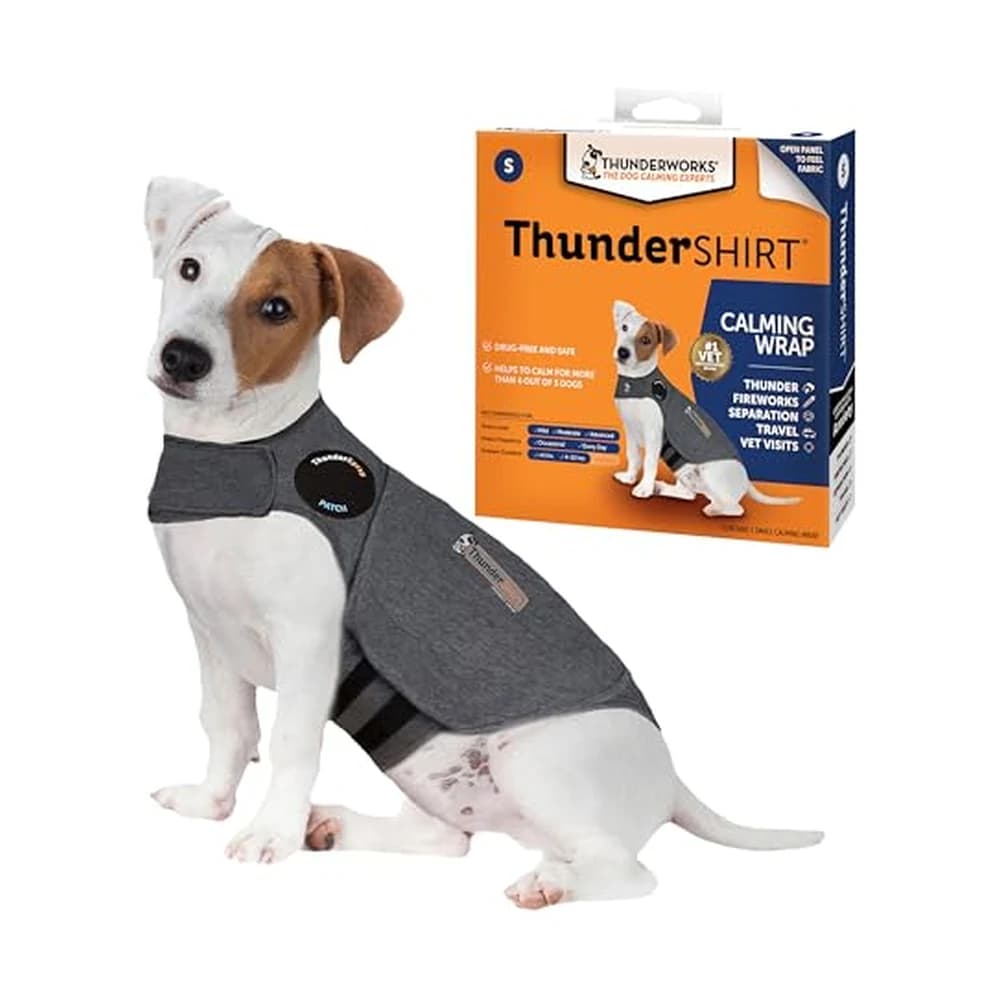
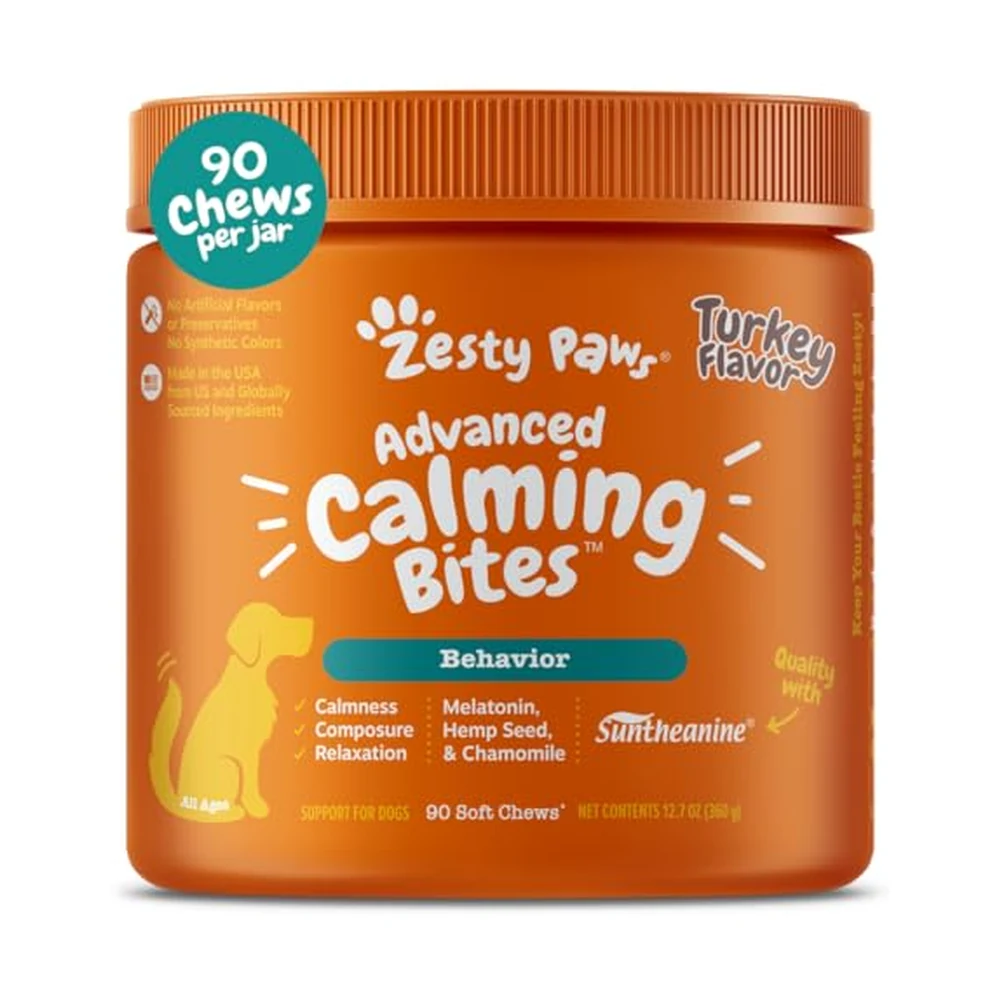
Each pick below carries its own specs, and the tags mark the best of these picks on that point. Specs come from manufacturer listings; ratings are the Amazon aggregate rating and count, refreshed periodically — we don't test products.
How winners are decided: ✓ marks the lowest price, the highest owner rating, the largest stated weight capacity and the longest warranty. Rows where more is not better — size, dimensions, weight, material — and the editorial rows get no ✓ at all. A blank is unknown, never a loss, and a row needs at least two known, differing values before anything can win. How the best-of-these tags are decided: the lowest price, the highest owner rating, the largest stated weight capacity and the longest warranty. Points where more is not better — size, dimensions, weight, material — and the editorial notes carry no tag at all. A blank is unknown, never a loss, and a point needs at least two known, differing values before anything can lead. As an Amazon Associate we earn from qualifying purchases. Specs are the manufacturer's claims and owner-reported data — we research and analyse; we don't test products on dogs.
In this article(7 sections)
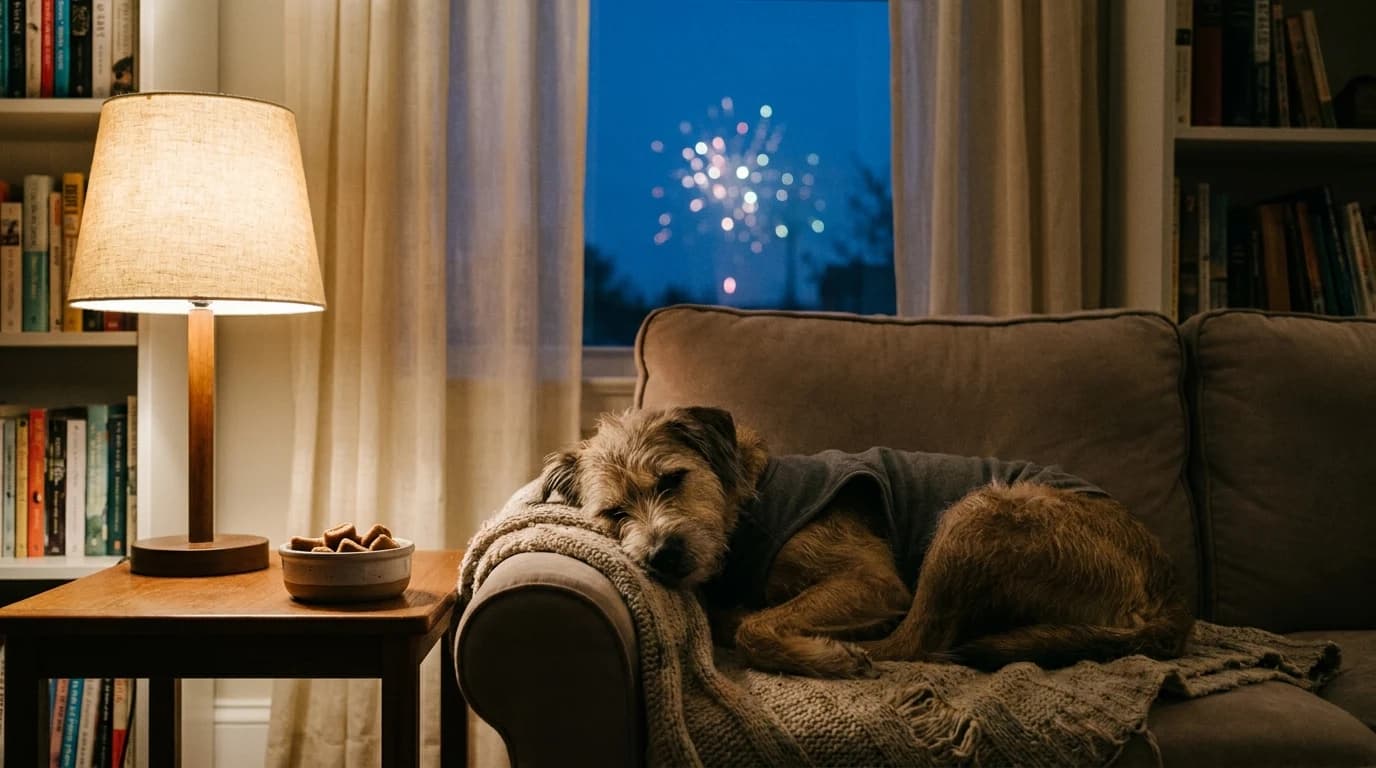
A firework night leaves most owners holding one of two things: a snug vest or a bag of calming chews. They work in different ways, suit different dogs and ages, and neither treats a phobia. This compares the ThunderShirt with Zesty Paws Advanced Calming Chews, and follows the choice from the adolescent stage to the senior years.
The short verdict, in three questions
- Can you see the trigger coming? A chew needs lead time; a vest goes on in a minute.
- Is your dog on any medication? A multi-ingredient chew needs the vet's sign-off; a vest does not.
- Is the fear new in an older dog? Then neither product is the first step; the vet is.
For most dogs the ThunderShirt is the better first buy: it is drug-free, reusable, works at short notice, and has one randomised study behind it. The chew suits a predictable date, or a dog who will not wear anything.
| ThunderShirt | Zesty Paws Advanced Calming Chews | |
|---|---|---|
| How it works | Constant, gentle pressure around the torso, per the maker | Oral supplement: Suntheanine L-theanine, ashwagandha, valerian root, L-tryptophan and passionflower; the title adds melatonin |
| Published evidence | One randomised study of the vest, small effects | Early studies on L-theanine, none we could find on this chew |
| Notice needed | Minutes | Given ahead of the event, per the label |
| Medication questions | None, it is a garment | Ask the vet: several actives |
| After the event | Wash it and keep it | Used up |
What the pressure-vest evidence says
The best-known trial is King and colleagues (2014). As appraised in a 2018 Veterinary Evidence knowledge summary, it took 90 dogs diagnosed with separation anxiety or generalised anxiety and split them into three groups: no vest, a snug ThunderShirt, and the same vest fitted loosely. After time alone, heart rate fell over time in the snug-vest dogs while it rose in the others, and fewer of them fixed on the door.
The same summary is candid about limits. Observers were not blinded, the dogs had not worn vests before, and across the four studies it appraised most positive behaviour results were subjective. Its bottom line: pressure vests may have small but beneficial effects, and owners should not expect full relief.
Rule of thumb: The vest's evidence is small, real and drug-free. Expect a calmer dog, not a fearless one.
ThunderShirt's own figure, that 89 per cent of surveyed owners reported improvement, is an owner survey, not a controlled result. Read it as encouraging.
What the calming-chew evidence says
VCA Animal Hospitals' page on complementary behaviour treatments, written by three board-certified veterinary behaviourists, is the clearest summary. Initial studies suggest L-theanine may have a calming effect. Melatonin may help with sleep problems and with fears such as thunderstorms and fireworks. L-tryptophan, a building block of serotonin, may reduce anxiety. Every one of those is a "may". The same page says products on their own are rarely effective without behaviour modification, and advises asking your vet before using any non-prescription product.
The Zesty Paws chew stacks several of these with ashwagandha, valerian and passionflower, which that page does not assess. More ingredients make a chew harder to judge and more likely to raise medication questions. Owner reviews reflect it: some dogs settle and sleep, others show no change, and some dogs refuse the taste.
What each is good for:
- The vest: a storm that arrives with no warning, a dog already on medication, repeated use all season
- The chew: a date you can plan around, a dog who will not tolerate a garment, a vet who has cleared the ingredients
Adolescent: build the calm before the season
Adolescence is when many dogs meet their first real fireworks season, and it is often a bumpy stage anyway; our guide to adolescent regression covers why. The job now is to make the calm tools familiar before they are needed.
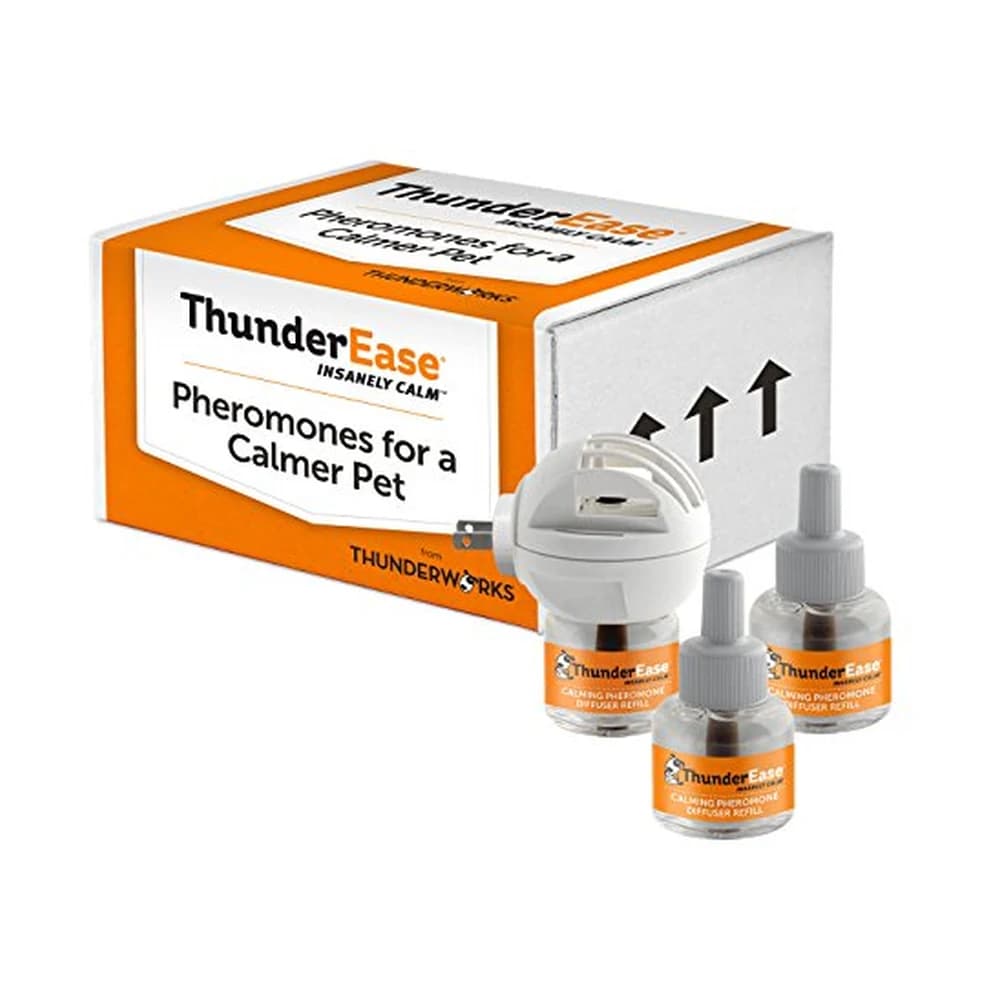
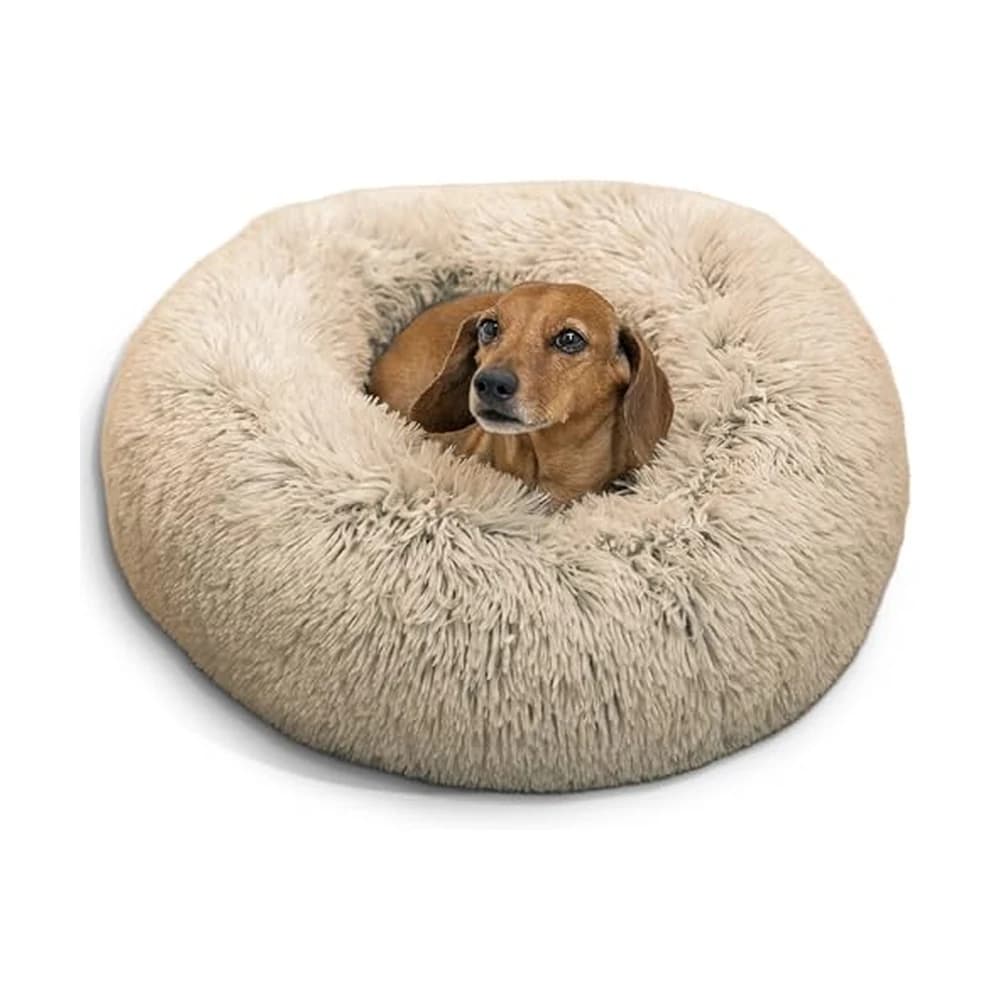
Put the vest on during quiet evenings, with dinner or a chew, so it means nothing scary. Give the dog a den: a covered crate or the Best Friends donut bed in the room it already hides in, which suits dogs who cope by burrowing. VCA's behaviourists note that pheromone products, the ThunderEase diffuser included, are generally considered safe and do not interact with medications, so a plug-in in that room is a low-risk addition.
 Introduce the vest and the den on quiet nights, so neither is tied to the noise when the season starts.
Adult: plan for the dates you know
An adult dog's triggers are usually known and seasonal. Put the dates in the calendar, then:
What helps:
- The vest on before the first bang, not in the middle of the panic
- A chew given ahead of the event, at the label dose, if the vet has approved it
- The den ready, curtains shut, and a radio or television on
- Staying calm and nearby, which costs nothing
What doesn't:
- Doubling the chew because the first one did nothing
- Dragging a dog out of its hiding place to "face it"
- Buying a third product instead of calling the vet when the fear is getting worse
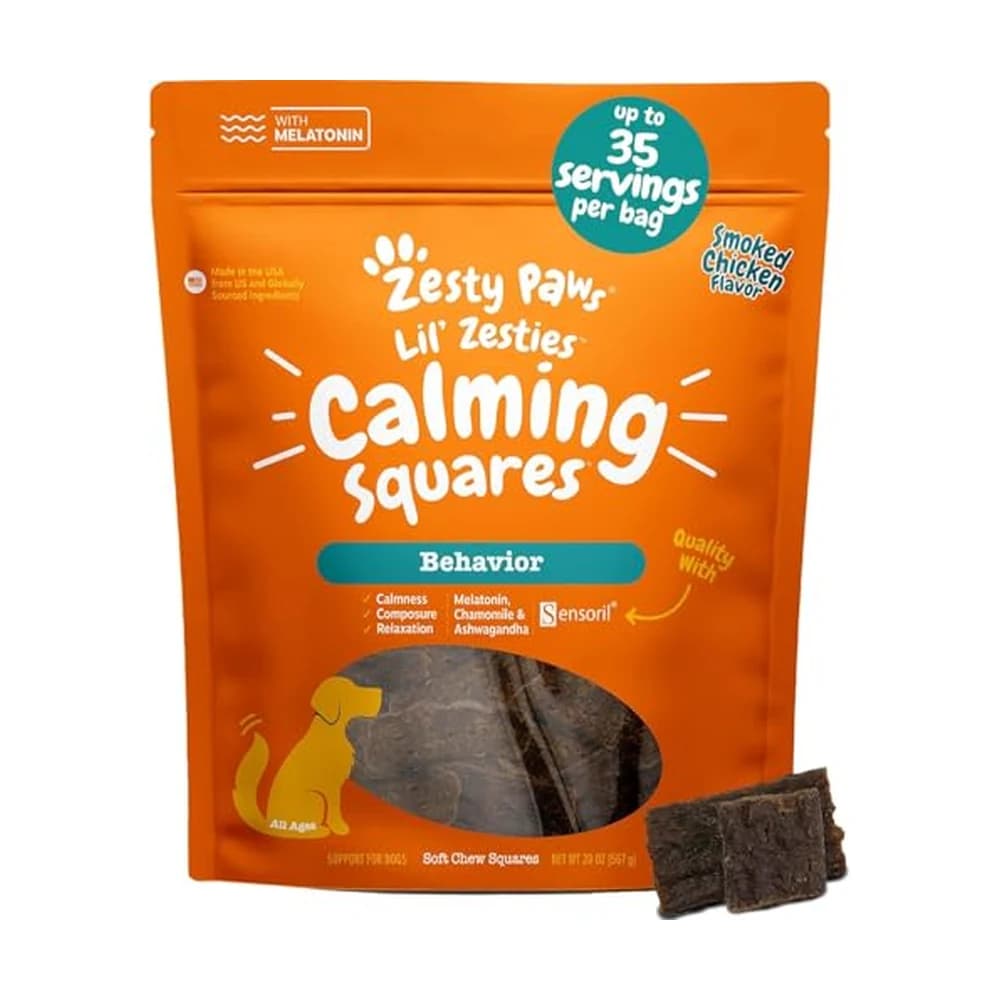
For a lower-cost trial of a chew, the Zesty Paws Calming Chews (10 oz) are built around Sensoril ashwagandha instead. Owners report the familiar split, including some digestive upset.
Senior: new fear is a vet question first
This is the stage where the choice matters most. A 2018 study from the University of Lincoln (Lopes Fagundes and colleagues) compared noise-sensitive dogs with and without musculoskeletal pain. The dogs in pain started being afraid of noise much later in life, at around six and a half years on average against under three for the others, and their fear spread further, to the place the noise happened and in some cases to refusing the car. It was a small, preliminary study of 20 behaviour-clinic cases, but the authors' advice is direct: assess noise-sensitive dogs for pain.
So a senior who has suddenly started trembling at storms needs the vet before any calming product. If the cause is sore joints, our joint supplements by age guide and signs of aging in dogs are the next reads, and pain relief may do more for the fear than any vest.
Remember: Late-onset noise fear can be pain. See the vet before you buy anything to calm it.
Two more senior points. Older dogs are more often on medication, which makes a drug-free vest the easier default and a multi-ingredient chew a vet conversation. And fit the vest gently: a stiff dog may not like being wrapped at first, so go slowly.
When neither is enough
Both products are for situational stress. Daily, disruptive fear, or panic when left alone, needs a veterinarian and ideally a behaviourist, and there are prescription options. In May 2026 the FDA approved Tessie (tasipimidine oral solution) for noise aversion and separation anxiety in dogs, prescription-only because a vet needs to diagnose the problem first. Ask whether it or another option fits your dog.
The rest of our calming aids shelf covers the diffuser, the bed and the chews in detail, and the stage view is on the adult stage page.
Key takeaways
What to remember
- The ThunderShirt is the better first buy for most dogs: drug-free, reusable and usable at a minute's notice.
- The best-known vest trial found heart rate fell over time in dogs wearing a snug vest, but a 2018 evidence summary calls the effects small and the behaviour results mostly subjective.
- Veterinary behaviourists writing for VCA say L-theanine and melatonin may help, and that products on their own are rarely effective without behaviour work.
- A multi-ingredient calming chew needs lead time and a vet check if your dog takes any medication; the vest needs neither.
- In a 2018 University of Lincoln study, dogs whose noise fear came with musculoskeletal pain started being afraid later in life, so new fear in a senior is a vet visit first.
- Daily, disruptive fear needs a vet and a behaviourist; prescription options exist, including a drug the FDA approved in May 2026.
Questions people ask
- Does the ThunderShirt actually work?
- For some dogs, modestly. In the best-known trial, heart rate fell over time in anxious dogs wearing a snug ThunderShirt while it rose in the comparison groups. A 2018 evidence summary concluded pressure vests may have small but beneficial effects, so expect a calmer dog rather than a fearless one.
- Are calming chews or a ThunderShirt better for fireworks?
- The vest is the easier default because it needs no lead time and raises no medication questions. A calming chew can help on a date you can plan for, given ahead at the label dose once your vet has approved the ingredients. Many owners use both with a quiet den, which is fine as long as the vet knows.
- Are calming chews safe for dogs?
- Ask your vet first, especially if your dog takes any medication. Chews like Zesty Paws Advanced combine several actives, including L-theanine, valerian and, per the title, melatonin, and veterinary behaviourists advise checking non-prescription products with a vet. Some owners report digestive upset.
- Why is my senior dog suddenly scared of thunder?
- Pain is one possible reason. A 2018 University of Lincoln study found that noise-sensitive dogs with musculoskeletal pain started being fearful later in life and their fear spread more widely, and the authors advise assessing such dogs for pain. Book a vet visit before buying a calming product.
- What if my dog's anxiety is severe?
- Daily, disruptive fear or panic when left alone is a job for your vet and ideally a veterinary behaviourist, not an over-the-counter product. Prescription options exist; in May 2026 the FDA approved Tessie (tasipimidine) for noise aversion and separation anxiety in dogs. Your vet can say whether it or another option fits.
Gear
Also worth a look
The products this piece assumes, in the order we would get them. Prices move; check before you buy.
ThunderEase Pheromone Diffuser
$69.99 3.5 out of 5 stars · 5,408
Whole-house background stress — a plug-in pheromone analogue for a dog unsettled by change,…
Best Friends Calming Donut Bed
$33.80 4.6 out of 5 stars · 72,082
A dog who burrows and curls — a deep round bed with 360-degree bolsters, and the whole thing…
$16.97 4.2 out of 5 stars · 2,650
An adolescent or adult dog whose stress is situational (fireworks, car rides, guests) and…
Sources
- Buckley (2018), Are Pressure Vests Beneficial at Reducing Stress in Anxious and Fearful Dogs? Veterinary Evidence knowledge summary — Appraisal of King et al. (2014): 90 dogs with separation anxiety or generalised anxiety in snug-vest, loose-vest and no-vest groups, heart-rate and door-orientation results, unblinded observers; four studies appraised, mostly subjective positive results, and the small-but-beneficial bottom line
- Behavior Counseling - Complementary Treatments - VCA Animal Hospitals — Board-certified behaviourists on L-theanine, melatonin and L-tryptophan, pheromone products such as ThunderEase being generally safe with no drug interactions, products alone rarely being effective, and checking non-prescription products with a vet
- Lopes Fagundes et al. (2018), Noise Sensitivities in Dogs: An Exploration of Signs in Dogs with and without Musculoskeletal Pain, Frontiers in Veterinary Science — 20 behaviour-clinic cases; later onset of noise fear in dogs with pain (about six and a half years against under three), wider generalisation including car avoidance, and the advice to assess noise-sensitive dogs for pain
- FDA Approves First Drug to Treat Noise Aversion and Separation Anxiety in Dogs - U.S. Food and Drug Administration — Tessie (tasipimidine oral solution), approved May 2026 for noise aversion and separation anxiety in dogs, prescription-only
- ThunderShirt for Dogs Calming Vest - Amazon listing — Constant gentle pressure on the torso, machine washable, and the 89 per cent owner-survey claim
- Zesty Paws Advanced Calming Chews for Dogs - Amazon listing — Suntheanine L-theanine, ashwagandha, valerian root, L-tryptophan and passionflower, with melatonin named in the title
We research and analyse — specs, manufacturer documentation and large-scale owner feedback. We do not test products on dogs, and we are not your vet.
Next step
ThunderShirt Calming Vest
It is the drug-free first buy for most scared dogs, and the product page covers sizing and the caveats owners report.