Some links below are Amazon affiliate links — if you buy through one we may earn a commission, at no extra cost to you. It does not change what we recommend. Full disclosure. Researched, not tested — how we research.
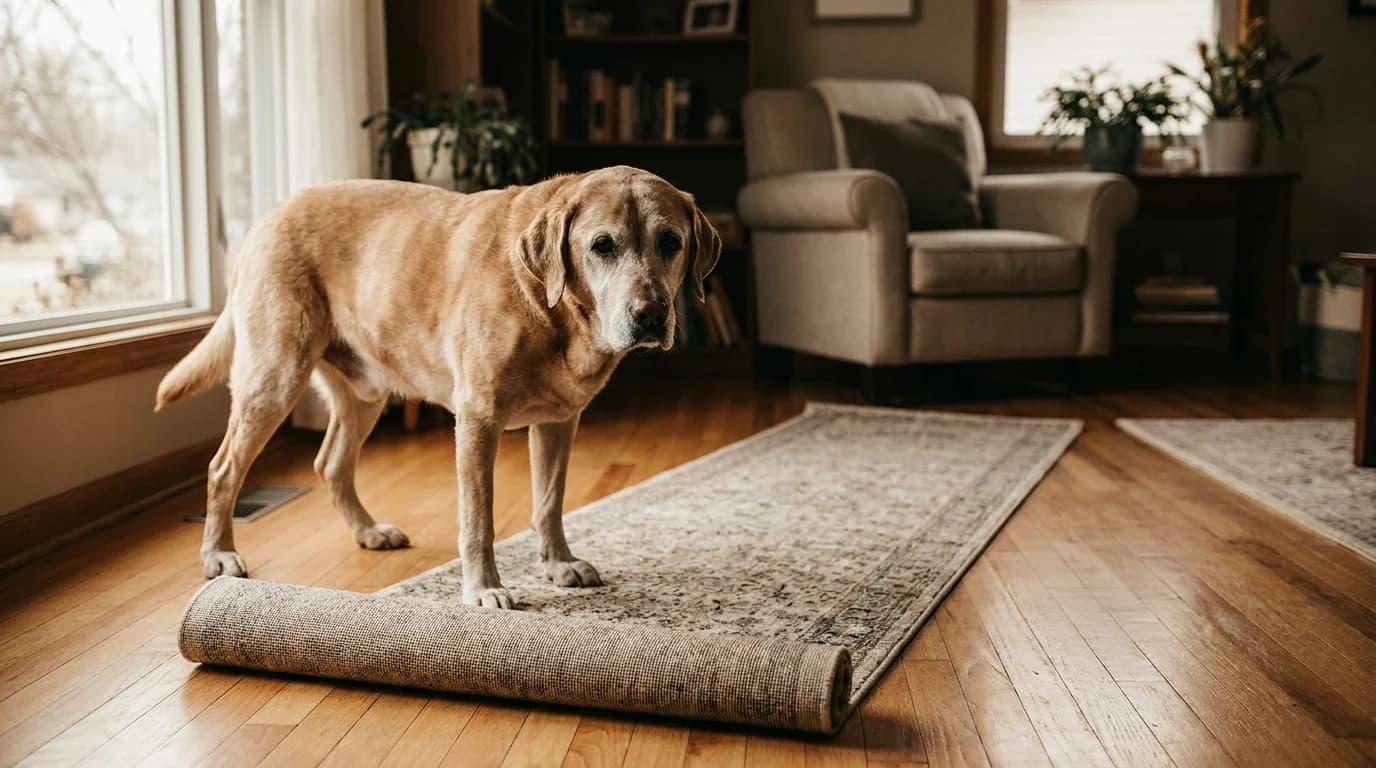
Most senior dogs who start slipping on hardwood or tile need the floor or the foot changed, not a gadget: trim the nails and the fur between the pads, put runners on the routes she actually walks, then add grips, steps or a sling if that is not enough. But slipping that arrives suddenly, or comes with dragging feet or wobbling, is a vet question before it is a flooring one. This belongs to the senior stage, and the order below runs cheapest and least intrusive first.
Why an old dog starts slipping
A dog's traction comes from two places: the pads and the nails. Dr. Buzby's ToeGrips, a veterinarian-developed product, puts the problem in one line on its product page: dogs use their toenails for traction, but hard nails cannot grip slippery floors. On carpet or grass that never mattered. On a polished floor, with an older dog, it starts to.
Age adds three things on top:
- Weaker hindquarters. Cornell's Riney Canine Health Center lists muscle wasting, difficulty getting up and a change in gait among the signs of osteoarthritis.
- Longer nails. A dog who walks less on rough ground wears them down less.
- Fur over the pads. ToeGrips' FAQ says long hair around the pads acts like a slipper, whatever else you do.
| What you see | Likely contributor | First thing to try |
|---|---|---|
| Feet splay on the turn into the kitchen | Floor and nails | Trim nails, lay a runner on the turn |
| Slides while trying to stand up | Hind weakness | Runner by the bed, then a vet check |
| Hair visibly covers the pads | Fur acting like a slipper | Trim or have a groomer trim it |
| Scuffs the tops of the back feet | Possibly neurological | Vet first, flooring second |
When slipping is a vet sign, not a floor problem
Some slipping is the floor. Some is the dog telling you something. VCA Animal Hospitals' page on degenerative myelopathy lists early signs that are easy to mistake for clumsiness on a slick floor:
- Hind paws that knuckle or turn under, especially when turning.
- Hindquarters that sway while standing still.
- Falling over easily when nudged from the side.
- Back feet that scrape the ground, sometimes leaving the tops of the feet bare and sore.
VCA also notes that early degenerative myelopathy resembles arthritis, and names spinal injuries and several other conditions that can look similar. Only an examination tells them apart. Pain matters too: Cornell lists lameness, reluctance to walk and difficulty with stairs or jumping among the signs of osteoarthritis, and those are treatable.
Rule of thumb: Film the slip. AAHA's senior care guidelines say owners' videos of a dog moving at home help vets spot early joint and nerve problems.
Sudden slipping, slipping on one side, or slipping with any sign on that list goes to your vet before you buy anything.
Fix one: nails and the fur between the pads
This is the free fix, and it comes first because every other fix works better on top of it. Dr. Buzby advises trimming nails at least monthly, and ToeGrips' FAQ says overlong nails interfere with how its grips work. Trimming any long hair around the pads and toes, the same FAQ says, reduces slipping with or without grips. It suggests a groomer may be safest, so you do not nick the dog.
 Short nails and trimmed pad fur are the free fix, and every grip product works better on top of them.
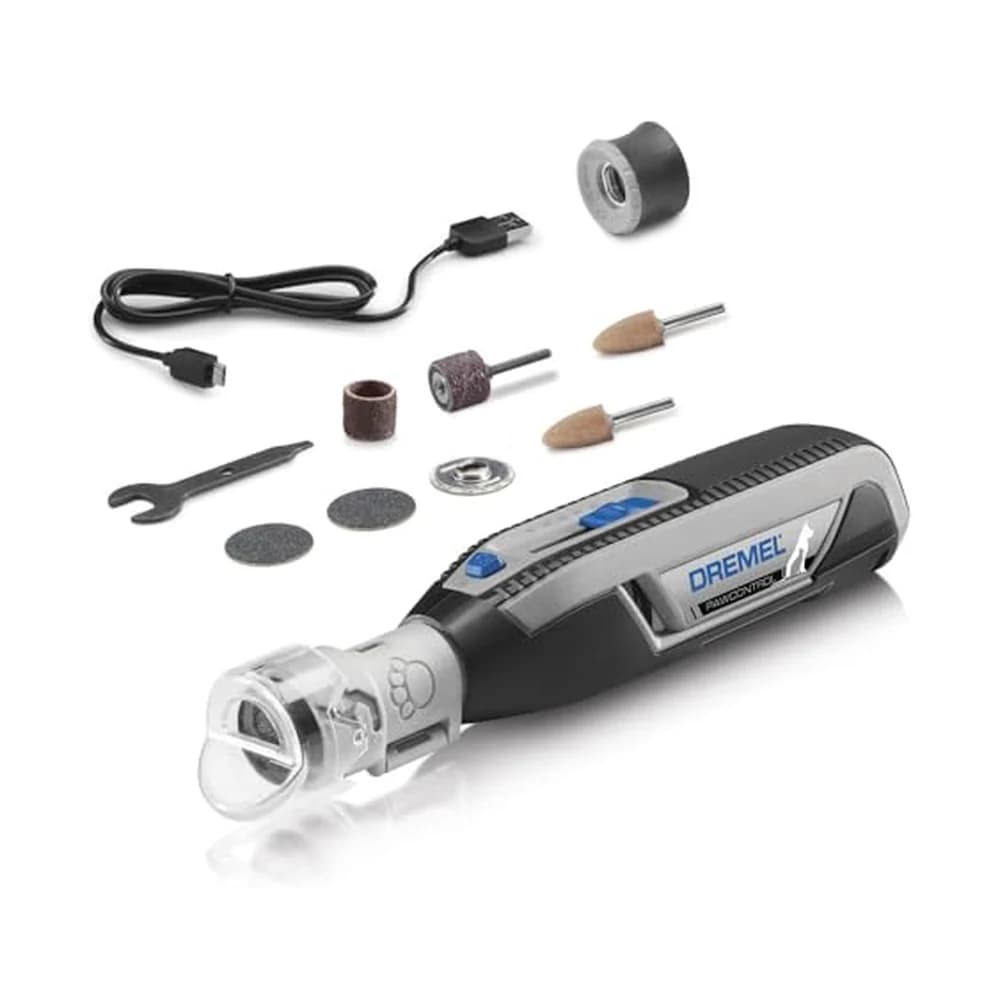
For a dog who hates clippers, a grinder takes nail off gradually. The Dremel PawControl is the one on our grooming and nails shelf built around a paw guide; introduce it switched off first.
Fix two: rugs and runners on the routes she uses
Cornell's osteoarthritis guidance lists non-slip rugs and ramps among the lifestyle changes for arthritic dogs. The trick is to cover the routes, not the room. Watch where she walks for a day: bed to water bowl, bed to back door, and the corner where she turns.
What works:
- Runners that cover the whole route, including the turn.
- Rugs with a rubber or silicone backing that stays put.
- A mat where she stands up from her bed.
What people try that does not:
- A loose bath mat that skids on its own.
- A runner that stops a step short of the corner.
- One rug in the middle of a slippery room.
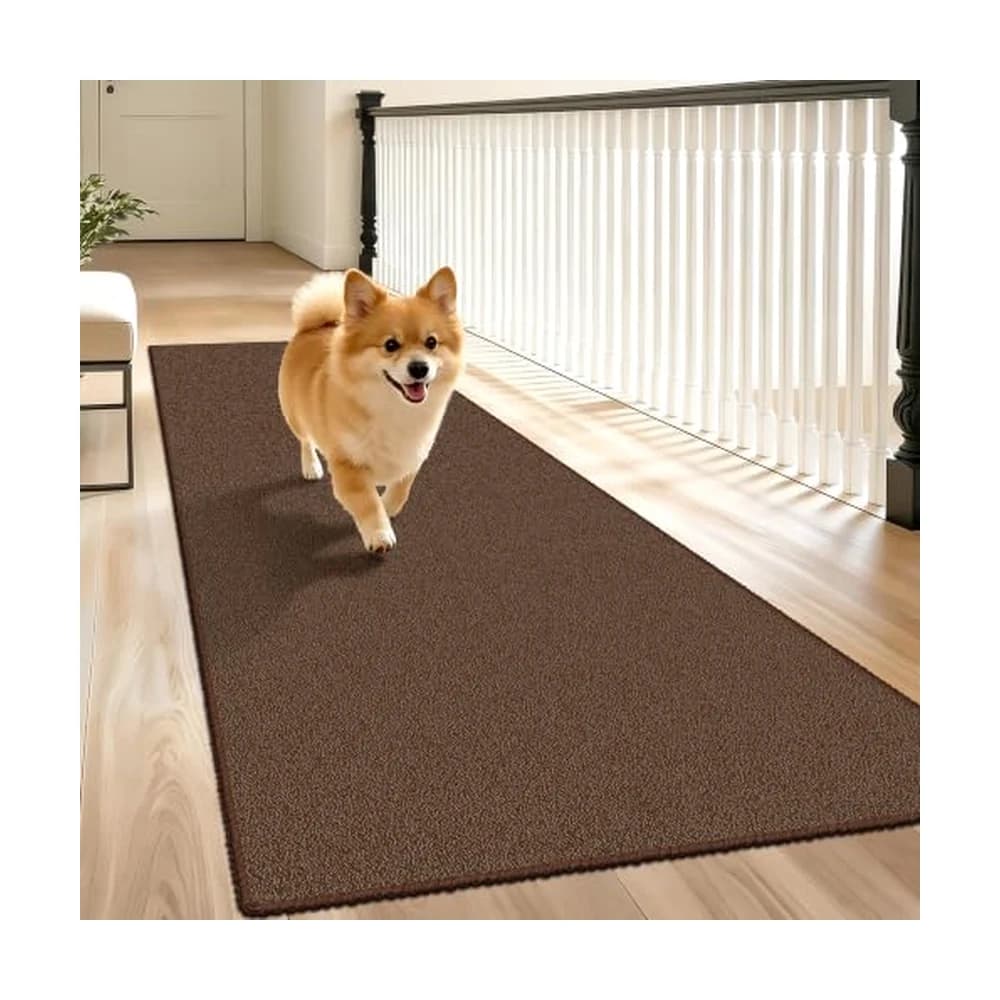
A washable runner such as the TTelephant non-slip runner earns its place because the dog who has started slipping is often the same dog having accidents.
Fix three: grips on the dog, and their tradeoffs
If runners cannot cover enough floor, put the traction on the dog. Each option has a catch.
| Option | How it grips | The catch |
|---|---|---|
| ToeGrips | Rubber sleeves on the nail tips | Sized by nail; a set lasts one to three months, per the maker |
| Boots | Rubber sole under the whole paw | Many dogs will not tolerate them; check for rubbing |
| Grip socks | Rubberised pattern on fabric | A sock that twists puts the grip on top of the foot |
| Paw wax | A coating on the pads | We could find no measurement of how much grip it adds |
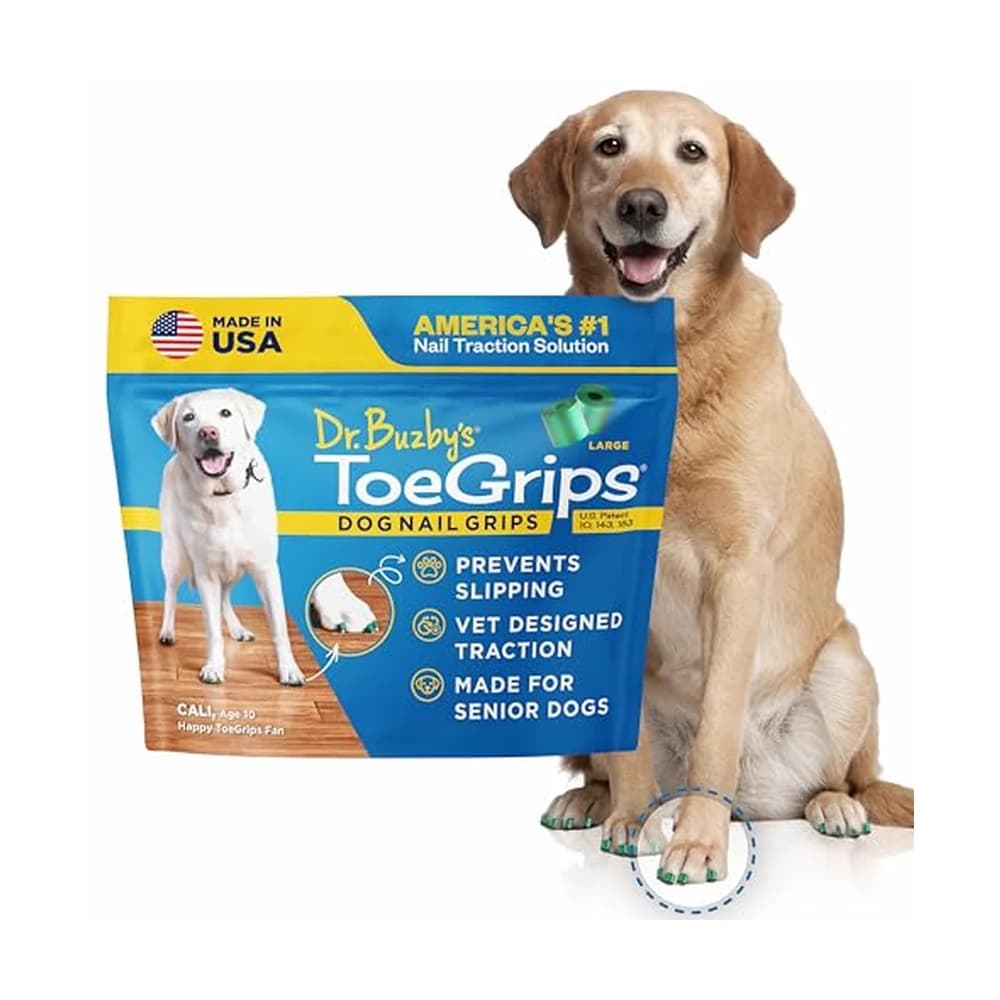
Dr. Buzby's ToeGrips are the most specific fix. The FAQ says they are sized by nail circumference, work best when the nails meet the ground as the dog walks, and are meant for slipping senior and arthritic dogs: walkers, not runners. It puts their life at one to three months, two on average, with wear depending on size, surface and gait.
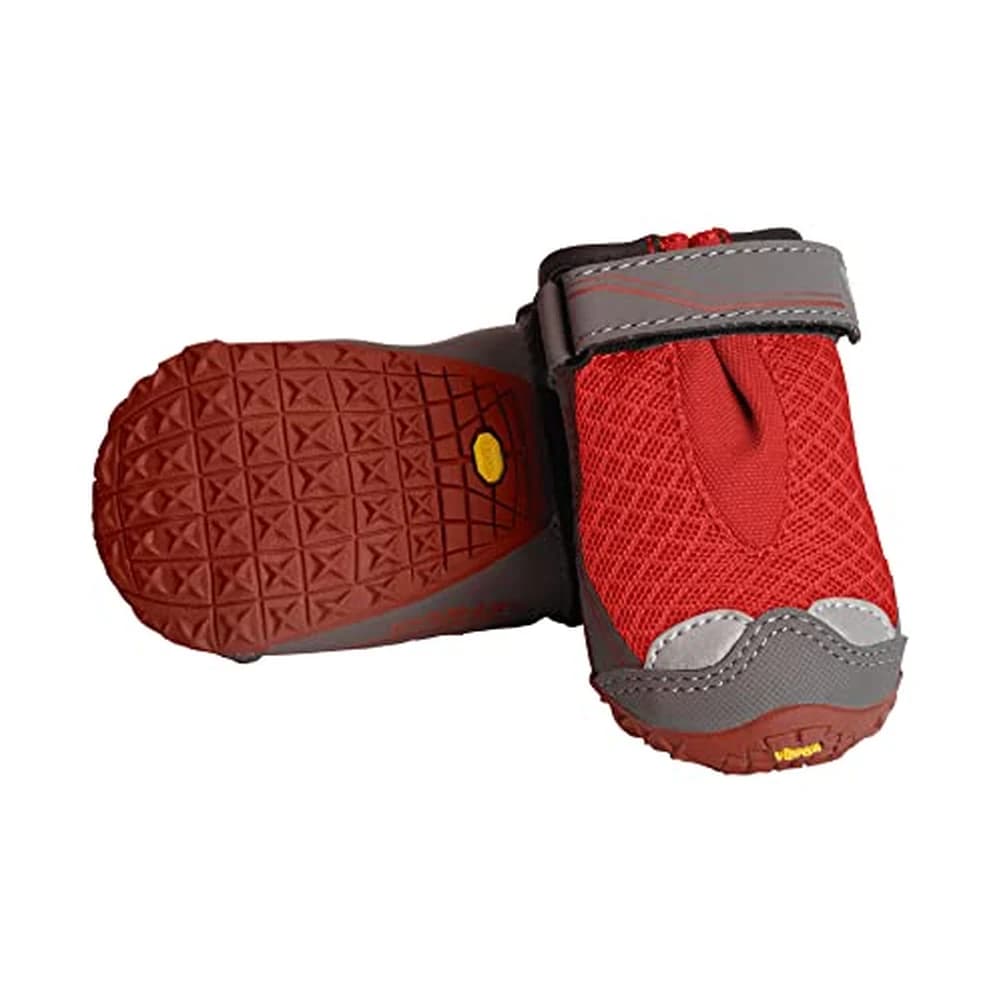
Ruffwear Grip Trex boots cover the whole paw and are sold in pairs, so front and back can be different sizes. Introduce them gradually and check the skin after each use.
Fix four: steps and ramps where she jumps down
A lot of slips happen at the landing, not mid-floor: off the sofa, off the bed, out of the car. AVMA's senior pet advice mentions changes such as new sleeping areas away from stairs. Steps stop the jump.
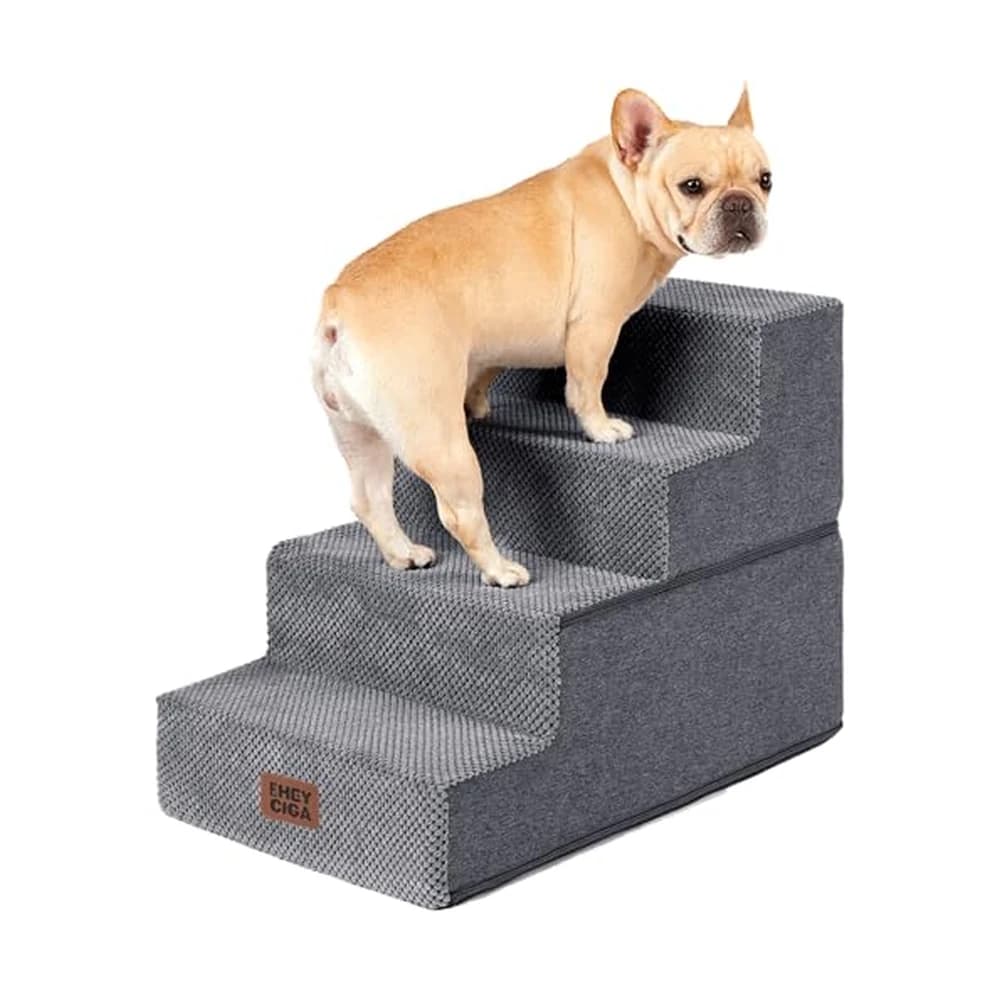
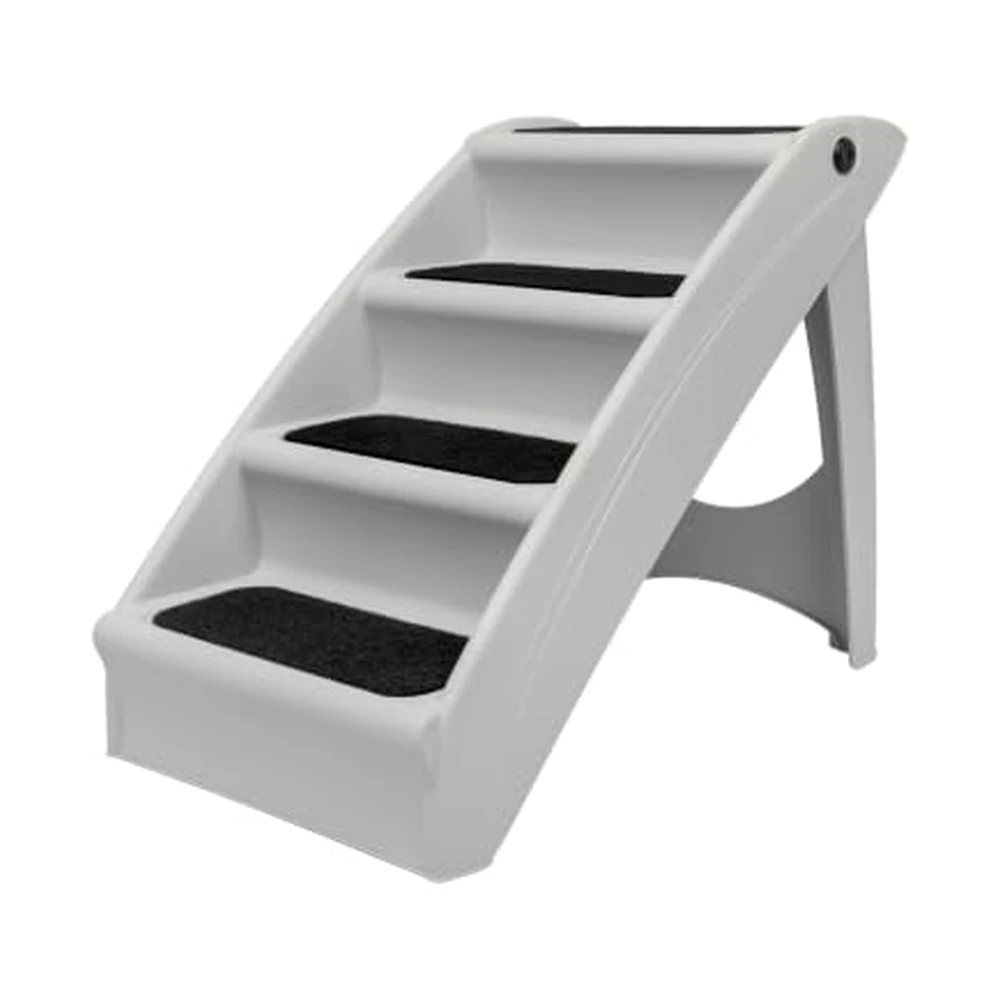
For a small dog and a bed, foam EHEYCIGA stairs are a soft landing if she misses one. For a bigger dog, PetSafe states its 25-inch CozyUp steps support up to 200 lb; on hardwood, put a rubber mat under them. The ramps and stairs shelf has the car ramps.
Fix five: a lift harness for the bad days
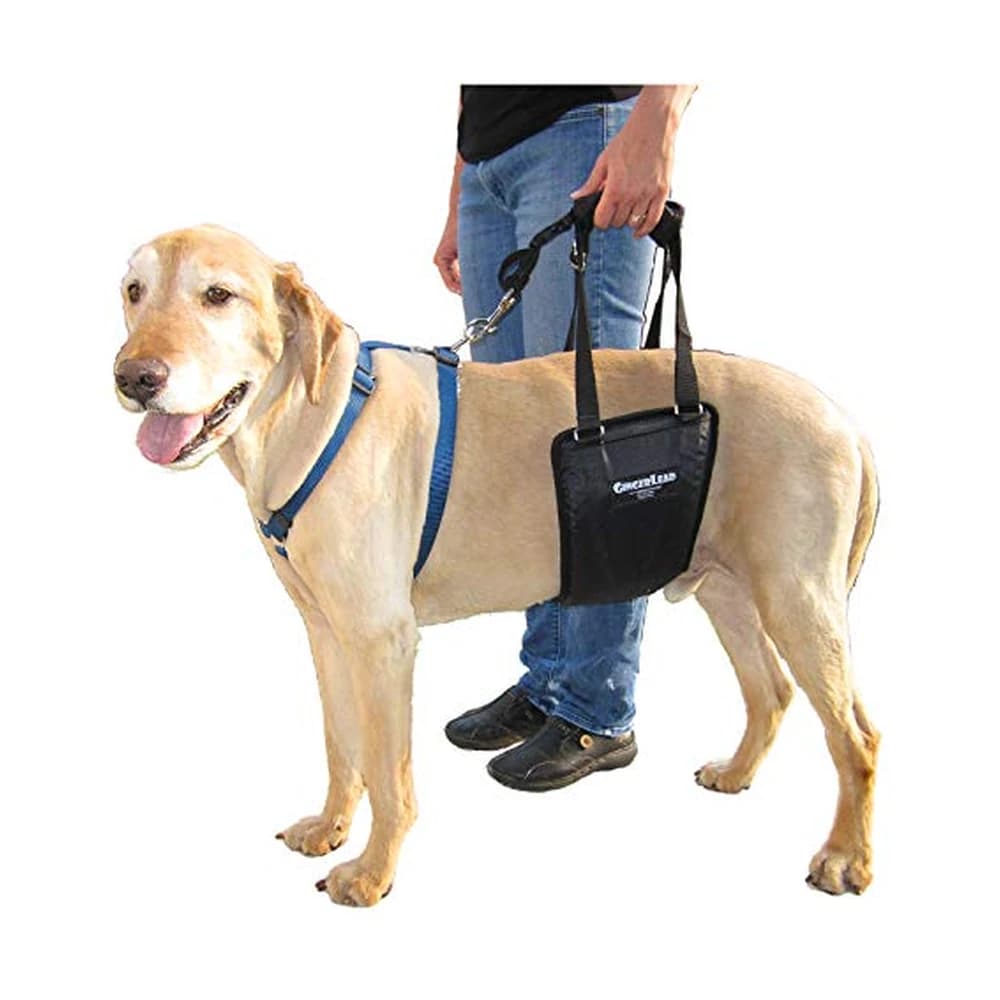
When the back legs are the problem, a rear sling lets you take some of her weight across the slippery stretch. The GingerLead rear support sling lists a padded 5.5-inch support pad with a cutout for male dogs, an integrated leash and a handle that adjusts from 38 to 60 inches in the medium-large size. The rest of the lift harness and mobility shelf is there if your dog needs different support.
Rule of thumb: Change the floor first, the feet second, and the jumps third. Reach for the sling when she needs you, not the floor.
What to ask your vet
- Is this joints, muscle, nerves, or more than one?
- Would pain relief change how she walks on the floor?
- Is she at a healthy weight for her joints?
- Would a rehabilitation or physiotherapy referral help her hindquarters?
Tools for this
- Care-Path Finder
Answer what you can see and check which care page fits. Sudden slipping goes to your vet.
Key takeaways
What to remember
- Dogs use their nails for traction, and hard nails cannot grip a polished floor, so the problem often appears when an older dog meets hardwood or tile.
- Trim nails and the long fur around the pads first. The ToeGrips FAQ says pad fur acts like a slipper whatever else you do.
- Cover the routes she walks, including the turns, with runners that stay put. Cornell lists non-slip rugs among the lifestyle changes for arthritic dogs.
- Every grip product has a catch: nail grips wear out in one to three months per the maker, boots need tolerating, and socks can twist.
- Knuckling, swaying, scuffed back feet or sudden slipping are signs VCA links to spinal disease, so they go to a vet before any purchase.
- Film her slipping at home. AAHA's senior guidelines say owners' videos help vets spot early joint and nerve problems.
Questions people ask
- Why has my old dog suddenly started slipping on the floor?
- Often it is a mix of weaker hind legs, longer nails and fur over the pads meeting a slick surface. But sudden slipping can also be a sign of pain or a spinal problem, and VCA notes early degenerative myelopathy can look like arthritis. If it appeared suddenly or seems to be getting worse, see your vet.
- Do ToeGrips actually work?
- They work for some dogs and not others. The maker says they suit slipping senior and arthritic dogs who walk rather than run, need correct sizing by nail, and last one to three months. Owners are split, and many report them coming off, so try runners and nail trims alongside them.
- Are dog socks or boots better for hardwood floors?
- Boots with rubber soles give more grip but many dogs will not tolerate them and some owners report rubbing. Grip socks are easier to put on but can twist so the grippy side ends up on top. Whichever you try, introduce it slowly and check the skin.
- Does paw wax stop a dog slipping?
- Paw wax coats the pads, and some owners use it for indoor grip. We could not find any measurement of how much traction it adds on a polished floor, so treat it as something to try alongside nail trims and runners rather than instead of them.
- When is slipping a sign of something serious?
- When it comes with knuckling of the back paws, swaying while standing, falling over easily, scraped tops of the feet, or reluctance to get up or use stairs. VCA and Cornell list these among the signs of spinal disease and arthritis. Book a vet visit and bring a video.
Gear
Gear for this stage
The products this piece assumes, in the order we would get them. Prices move; check before you buy.
$39.99 Owner rating 3.2 out of 5 · 3,857
A dog who is strong but sliding
$49.99 Owner rating 4.2 out of 5 · 2,376
Traction plus protection — Vibram outsoles that grip slick tile as well as hot pavement
$69.95 Owner rating 4.3 out of 5 · 3,798
Taking real weight off weak hind legs
$63.99 Owner rating 4.5 out of 5 · 913
Nervous owners and nervous dogs
$37.99 Owner rating 4.4 out of 5 · 10,918
Bedside steps for a small or ageing dog
$59.99 Owner rating 4.2 out of 5 · 17,135
A bigger dog who needs steps rather than a ramp
Sources
- Dr. Buzby's ToeGrips: Frequently Asked Questions — That ToeGrips are sized by nail circumference, work best when nails contact the ground in stride, suit slipping senior and arthritic dogs that walk rather than run, last one to three months with two on average, that Dr. Buzby advises trimming nails at least monthly and that overlong nails interfere, and that long hair around the pads acts like a slipper and trimming it reduces slipping.
- Dr. Buzby's ToeGrips product page — The manufacturer's statement that dogs use their toenails for traction but hard nails cannot grip slippery floors.
- VCA Animal Hospitals: Degenerative Myelopathy in Dogs — The early signs of degenerative myelopathy (knuckling, swaying, falling when pushed, scraping hind feet, difficulty rising), that early signs resemble osteoarthritis, and the other conditions that can look similar.
- Cornell University College of Veterinary Medicine, Riney Canine Health Center: Osteoarthritis — Muscle wasting, gait change, reluctance to walk and difficulty with stairs and getting up as signs of osteoarthritis, obesity as a contributor, physical rehabilitation as a treatment, and non-slip rugs and ramps as lifestyle changes.
- AAHA 2023 Senior Care Guidelines for Dogs and Cats: Evaluating the Healthy Senior Pet — That owners' videos of a pet moving at home help detect early neuropathic or musculoskeletal disease.
- AVMA: Caring for senior cats and dogs — That senior pets may need environment changes such as new sleeping areas to avoid stairs.
- PetSafe: CozyUp Folding Pet Steps — The manufacturer's statement that the 25-inch size supports pets up to 200 lb.
- GingerLead K9 Sling Hind Leg Support, M/LG - Amazon listing — The listed 5.5-inch support pad and 38 to 60 inch adjustment for the medium-large size, the cutout and the integrated leash.
Not veterinary advice — for anything medical, ask your vet.
Next step
Check the other changes that travel with slipping
Slipping rarely arrives alone, and the rest of the ageing checklist helps you tell your vet the whole story in one visit.