Some links below are Amazon affiliate links — if you buy through one we may earn a commission, at no extra cost to you. It does not change what we recommend. Full disclosure. Researched, not tested — how we research.
In this article(6 sections)
Adopting a senior dog starts with a practical question: can your home and daily routine meet this particular dog's needs? Arrange a veterinary handover, prepare a quiet resting area, and find out what the rescue already knows. An older dog may be active, reserved, affectionate or medically complex; the label alone cannot tell you which. Our senior stage guide explains the wider care picture. Here, the focus is the move into your home.
Before saying yes: ask about the actual dog
AAHA defines a senior dog as being in the final quarter of an estimated lifespan, rather than reaching one universal birthday. Ask the rescue how the age was established and whether it is an estimate. More useful than an exact age is knowing what daily care currently involves.
Request the complete medical record, not just a summary saying the dog is healthy. If records are missing, write that down for the vet rather than filling in the gaps yourself. Ask the current caregiver:
- What food, medicines and supplements does the dog receive?
- What help is needed with walks, stairs and toileting?
- What happens when the dog is left alone?
- Has the dog lived with children, cats or other dogs?
- What follow-up care is already planned?
Ask for examples behind broad descriptions such as friendly or housetrained. A foster home's observations can help you judge the fit, while kennel behavior may not predict behavior in a different setting. Agree on a contact for questions after adoption and read the rescue's support and return arrangements before signing.
Prepare one comfortable route through the house
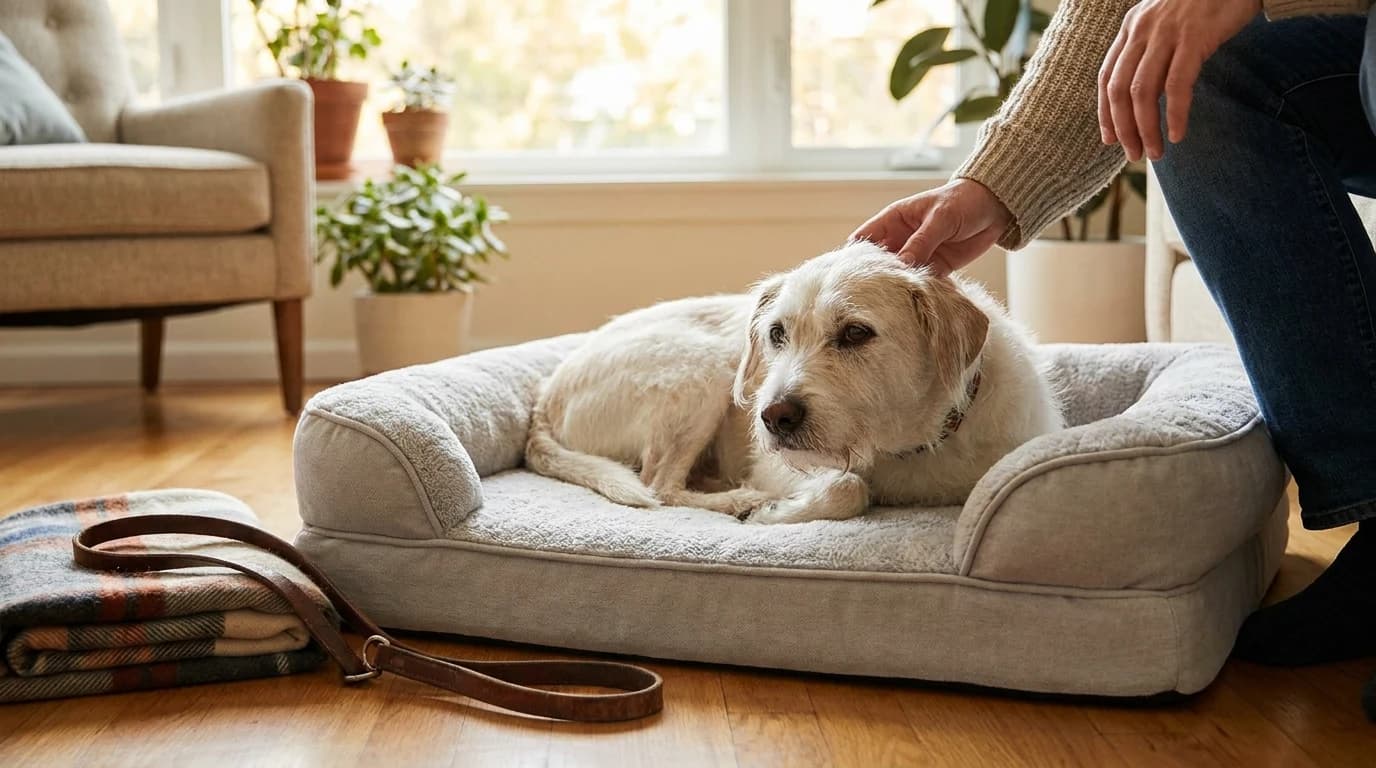
Start with a reachable bed, drinking water and an easy route to the toilet area. Close off unnecessary stairs and clear narrow passages. Walk the route yourself: a polished floor between a good bed and the back door still creates a difficult journey.
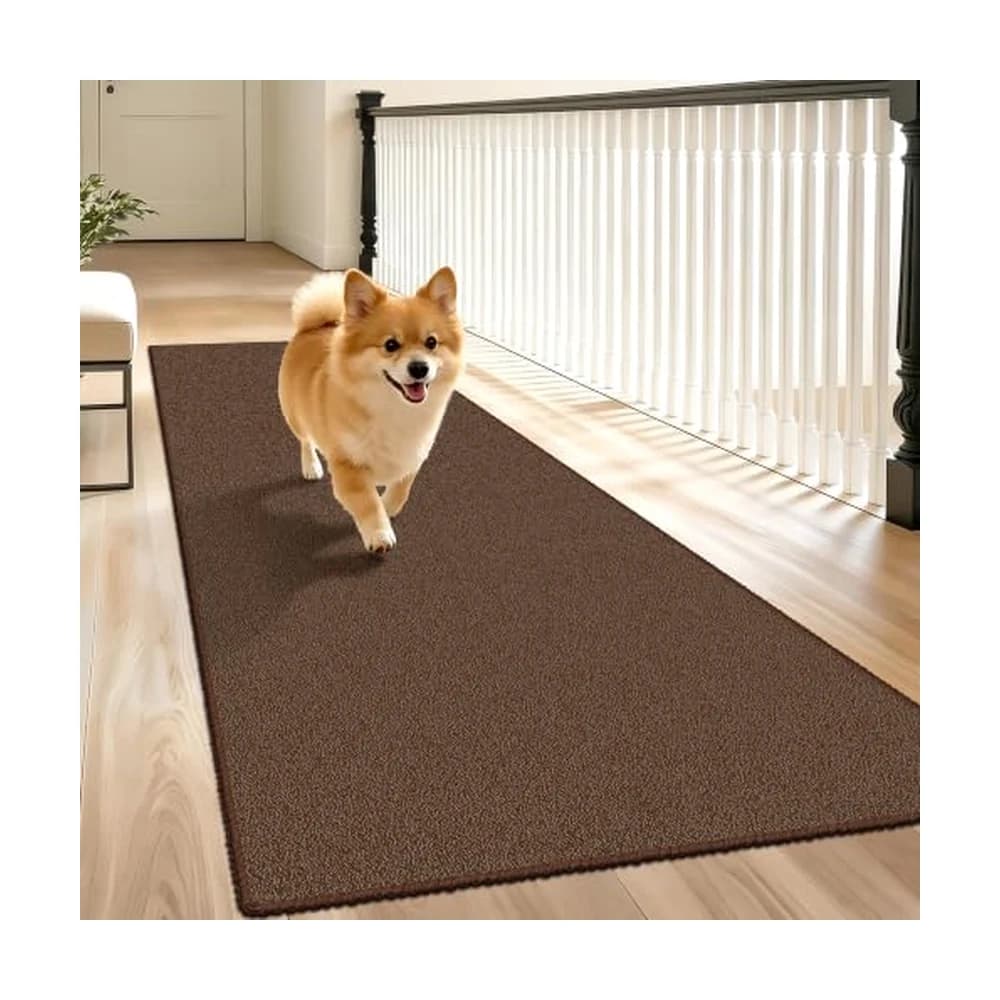
Cornell's osteoarthritis guidance includes non-slip rugs and ramps among environmental adaptations. That does not mean every senior dog has arthritis. Ask your vet about stiffness or difficulty moving, and use the slippery-floor guide to plan traction without treating a rug as medical care.
| Home task | Option to consider | Check before using |
|---|---|---|
| Resting at floor level | Supportive bed | Usable sleeping area and easy entry |
| Crossing smooth floors | Flat runner | Edges stay flat and backing stays put |
| Reaching furniture | Ramp or steps | Dog can manage the route comfortably |
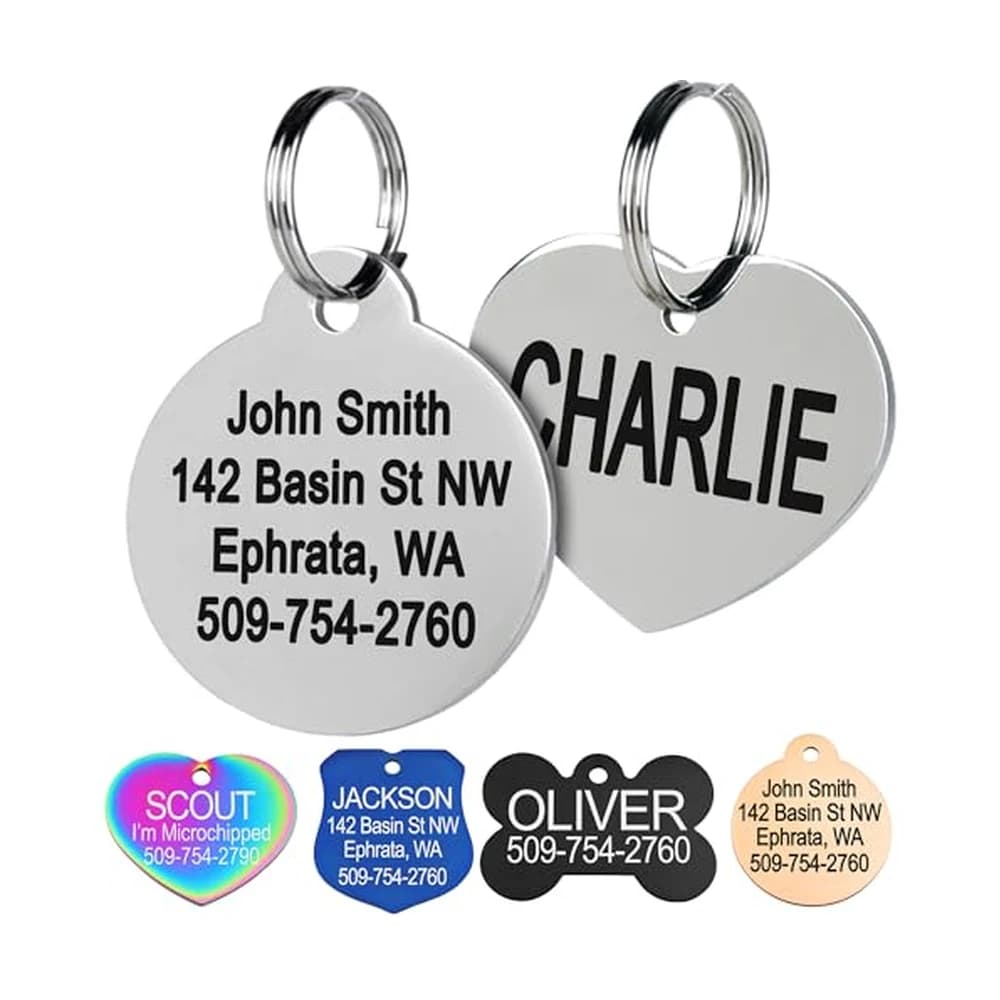
| Going outside | Identification tag | Current contact details and secure attachment |
The JOYELF bolster bed and K9 Ballistics ripstop orthopedic bed are alternatives on our orthopedic beds shelf, not two purchases every adopter needs. Choose by the dog's resting position and available floor space.
A TTelephant runner can cover part of a route. EHEYCIGA foam stairs are another optional access aid; floor-level rest may be simpler. Supervise first use and avoid encouraging a painful climb.
Settle in through three flexible phases
Use phases as a planning framework, not a countdown. Move forward when the dog is comfortable with the current routine, and simplify again if a new experience overwhelms them. Old Dog Haven’s welcoming guidance recommends patience with the new routine and limiting visitors. An elaborate welcome party can wait.
- Arrival: show the rest area, water and toilet route; keep handling and visitors modest.
- Predictability: repeat familiar meals, toilet opportunities and rest arrangements; learn the dog's signals.
- Gradual expansion: introduce one manageable outing or household change at a time.
There is no promised day when a dog becomes settled. A dog may explore eagerly while still struggling when left alone. Another may rest for long stretches without wanting visitors. Neither observation is a complete assessment of adjustment or health.
Planning rule: Repeat what is comfortable before adding something new. These phases describe a process, not a deadline.
Keep household expectations consistent. Decide where the dog sleeps and how family members approach the resting space. If you already have animals, ask the rescue for an introduction plan and provide separate resting and feeding areas. Supervision matters more than hoping that an older dog will automatically be easygoing.
Build a vet baseline from records and observations
Contact your veterinary practice around the adoption handover to arrange an initial appointment and discuss timing. Known illness, interrupted medication or concerning symptoms require advice sooner; a settling plan must never delay medical care.
AAHA's senior-care guidance emphasizes history, including food, movement, toileting and every medicine or supplement. It also notes that home videos can help clinicians assess mobility. Bring the rescue's records and a short video of ordinary movement, without asking the dog to perform a difficult jump.
 Bring existing records so the veterinary team can decide what needs checking and what has already been done.
AAHA recommends a senior medical workup once or twice yearly. Its diagnostic table lists blood count, chemistry and urinalysis at six-to-twelve-month intervals, with annual thyroid and blood-pressure recommendations. These are clinical guidelines, not a shopping list every adopter must order immediately. Your vet decides what fits the dog's history and current findings.
Bring a simple note of what you have observed at home:
- Appetite, drinking and toilet patterns.
- Getting up, walking and negotiating the home.
- Sleep and willingness to interact.
- Any change since the handover.
Describe the observation rather than diagnosing it: hesitates at the back step is more useful than definitely has arthritis. Ask what changes warrant a call, how prescriptions will be renewed, and when follow-up is due.
Plan costs without assuming older means cheaper
A senior adoption can involve little immediate treatment or substantial ongoing care. The adoption fee alone cannot predict that difference. Existing dental problems, prescribed diets, medicines and travel to appointments can change both the financial and practical commitment.
Ask for local estimates and separate costs you know from costs you cannot yet predict. Our dog cost planner helps organize a working budget; replace defaults with your own quotes rather than treating them as a senior-care forecast.
| Budget part | Question to ask |
|---|---|
| Handover | What care and supplies does the adoption include? |
| Routine | What will appointments, food and prescriptions cost here? |
| Planned treatment | What has the vet recommended, and when? |
| Contingency | How would I manage an unexpected bill or urgent journey? |
If considering insurance, read the actual age eligibility, waiting periods and pre-existing-condition rules before relying on reimbursement. Ask the rescue whether support is available and get its scope in writing. Check the arrangement carefully if the placement is permanent fostering rather than adoption: medical responsibility can differ.
Budget rule: Price the care this dog needs. Age alone does not establish either a low starting bill or a high recurring bill.
Make ordinary days comfortable and interesting
Begin with activities the dog already enjoys and ask the vet about suitable exercise if mobility is uncertain. Give the dog choices about approaching people and resting. Avoid interpreting reluctance as stubbornness when discomfort, unfamiliar surroundings or sensory changes might be involved.
What helps:
- Reward a simple behavior the dog offers comfortably.
- Offer an easy activity and watch whether it is enjoyable.
- Finish before enthusiasm turns into frustration.
What adds pressure:
- Testing every skill immediately after arrival.
- Making the dog climb to earn a reward.
- Assuming a new toy replaces companionship or medical care.
The KONG Wobbler is an optional food activity if nudging it is comfortable and compatible with the dog's diet. Easier enrichment may suit another dog. Fit a GoTags identification tag with current details before outings, and confirm the microchip handover with the rescue.
Choose the next step from what you have learned: change a difficult home route, ask the vet about an observation, or repeat a calm routine. Successful adoption is an ongoing match between the dog's needs and the care you can provide, not completion of a first-month checklist.
Tools for this
- Dog Cost Planner
Plan routine costs and a separate veterinary reserve before adoption.
- Dog Age Calculator
Compare age and size estimates without treating them as a health diagnosis.
- Dog Name Generator
Renaming an adopted dog? Find a name with a meaning, and read how the AKC says to teach a new one.
Key takeaways
What to remember
- Ask for complete records and specific observations before deciding whether the dog fits your household.
- Make rest, water and the toilet route accessible before arrival.
- Use arrival, predictability and gradual expansion as flexible phases, not deadlines.
- Bring records, home observations and ordinary movement videos to the vet.
- Estimate costs from this dog’s care plan and your local providers.
- Treat gear as optional support for a need, not a substitute for veterinary care.
Questions people ask
- How long does a senior rescue dog take to settle?
- There is no guaranteed timeline. Repeat a manageable routine and introduce changes as the dog becomes comfortable; ask the rescue or a qualified behavior professional for help when adjustment is difficult.
- When should a newly adopted senior dog see a vet?
- Contact your practice around the adoption handover and ask when the initial appointment should happen. Known illness, interrupted medication or concerning symptoms need advice sooner than an ordinary settling visit.
- What tests does a senior dog need?
- AAHA lists regular blood count, chemistry and urinalysis among senior screening recommendations. Your vet decides which tests are appropriate now after reviewing existing records, history and examination findings.
- Is adopting a senior dog more expensive?
- The cost varies with the individual dog and the care already provided. Obtain estimates for routine visits, prescriptions and any planned treatment, and prepare for unexpected expenses rather than assuming a universal senior-dog budget.
- Does senior mean a dog has arthritis?
- No. Cornell notes that osteoarthritis can occur at any age; age alone does not diagnose it. Ask your vet about stiffness, altered movement or difficulty with the home route.
Gear
Gear for this stage
The products this piece assumes, in the order we would get them. Prices move; check before you buy.
$59.49 Owner rating 4.6 out of 5 · 29,037
The mainstream choice — a memory-foam base with three-sided bolsters and an open front the dog can walk straight onto.
$230 Owner rating 4.1 out of 5 · 501
A big dog who is hard on beds
TTelephant Non-Slip Floor Runner
$29.59 Owner rating 4.6 out of 5 · 119
The hallway or the run to the water bowl
$32.29 Owner rating 4.4 out of 5 · 11,453
Bedside steps for a small or ageing dog
$8.95 Owner rating 4.7 out of 5 · 105,343
The first thing you put on a puppy
$17.96 Owner rating 4.5 out of 5 · 17,267
Feeding a whole meal as a game





Sources
- AAHA 2023 Senior Care Guidelines for Dogs and Cats: Evaluating the Healthy Senior Pet — The emphasis on a thorough history including every medicine, supplement and oil because of interactions, owners' videos of the pet moving at home, and the recommendation of a medical workup once or twice a year.
- AAHA 2023 Senior Care Guidelines, Table 1: Diagnostic Tests and Recommended Frequencies for Senior Dogs and Cats (PDF) — Blood count, chemistry and urinalysis every six to twelve months, with annual canine thyroid and blood-pressure recommendations; individual clinical decisions take precedence.
- Cornell University College of Veterinary Medicine, Riney Canine Health Center: Osteoarthritis — That osteoarthritis commonly affects dogs and that non-slip rugs and ramps are recommended lifestyle changes.
- AAHA: Defining the Senior Patient — Senior dogs as the last quarter of estimated lifespan, with no universal age.
- Old Dog Haven: Welcoming a New Old Dog to Your Home — Practical settling guidance: modest visitors, patience with routine, and letting the dog choose interaction; no medical or unsupervised-introduction guidance adopted.
Not veterinary advice — for anything medical, ask your vet.
Next step
Build a care budget with local estimates
Separate routine care, planned treatment and contingency using quotes for your own dog.