In this article(8 sections)
An adult dog who goes indoors is rarely a puppy who never learned. More often the habit broke in a shelter kennel, a move or a new routine, and the Merck Veterinary Manual calls house training an older dog "more a matter of fine-tuning" than starting over. The catch: marking, excitement urination, separation distress and a medical leak all look like "accidents", and none of them is fixed by a schedule. This guide is for the adult stage, and it works for most rescues.
Which problem are you actually looking at?
Shelter handouts list the other causes last. We put them first, because no routine helps a dog who leaks in its sleep. The patterns below come from Merck, the ASPCA and PAWS; the arrangement is ours, and it is a sorting aid, not a diagnosis.
| What you see | Likely pattern | What changes in the fix |
|---|---|---|
| Full puddles or stools on the floor, mostly when nobody is watching | Incomplete or lapsed house training | The routine in this guide |
| Small amounts on upright surfaces: door frames, furniture, a new bag | Urine marking | Thorough cleaning and supervision, plus advice from your vet or a qualified trainer |
| A dribble at greetings, in play or when scolded, with ears back or a crouch | Excitement or submissive urination | Calm, low-key greetings; never startle or scold |
| Soiling only when left alone, with howling, drooling or damage | Separation-related distress | Help with being alone, not more house training |
| Wet bedding after sleep, and the dog seems unaware | Possible incontinence | A vet visit before any training |
| Accidents during storms or fireworks | Fear | Professional help with the fear |
Two tie-breakers from the ASPCA: a dog who soils while you are in the room is unlikely to have separation anxiety, and a dog who seems unaware it has leaked points to incontinence, which has medical causes.
Rule of thumb: Read the accident before you change the routine. A leak during sleep goes to the vet, not into a training plan.
Why do trained adult dogs start going indoors?
PAWS notes that many shelter dogs were house trained before, but soiled their kennels for lack of trips outside, which weakens the habit. Oregon Humane adds the part new owners miss: you do not know the dog's signal yet, and it may be nothing more than sniffing or staring at you.
Both guides also note that smells from other pets in a new home can prompt some early marking. And both give the same instruction: for the first few weeks, assume the dog is not house trained and start from scratch. If it was trained before, PAWS says retraining should progress quickly.
The routine: trips, rewards and one spot
Oregon Humane suggests going out at the same times every day, and roughly every hour while you are home for the first few weeks. Merck adds trips 15 to 30 minutes after eating and straight after play or waking.
| Moment | What to do | Source |
|---|---|---|
| On waking | Straight out, on leash, to the same spot | Oregon Humane, Merck |
| After each meal | Out again within 15 to 30 minutes | Merck |
| After play or a nap | Out again | Merck |
| While you are home | A short trip about hourly, first few weeks | Oregon Humane |
| Coming home, and before bed | Out to the spot before anything else | Oregon Humane, PAWS |
Each trip runs the same way:
- Walk the dog on leash to one spot near the door.
- Say a cue word, such as "go potty", while it goes.
- Reward the moment it finishes, outside, not back in the house.
- Walk or play only after it has gone.
- If nothing happens, go back in under supervision for ten minutes, then try again.
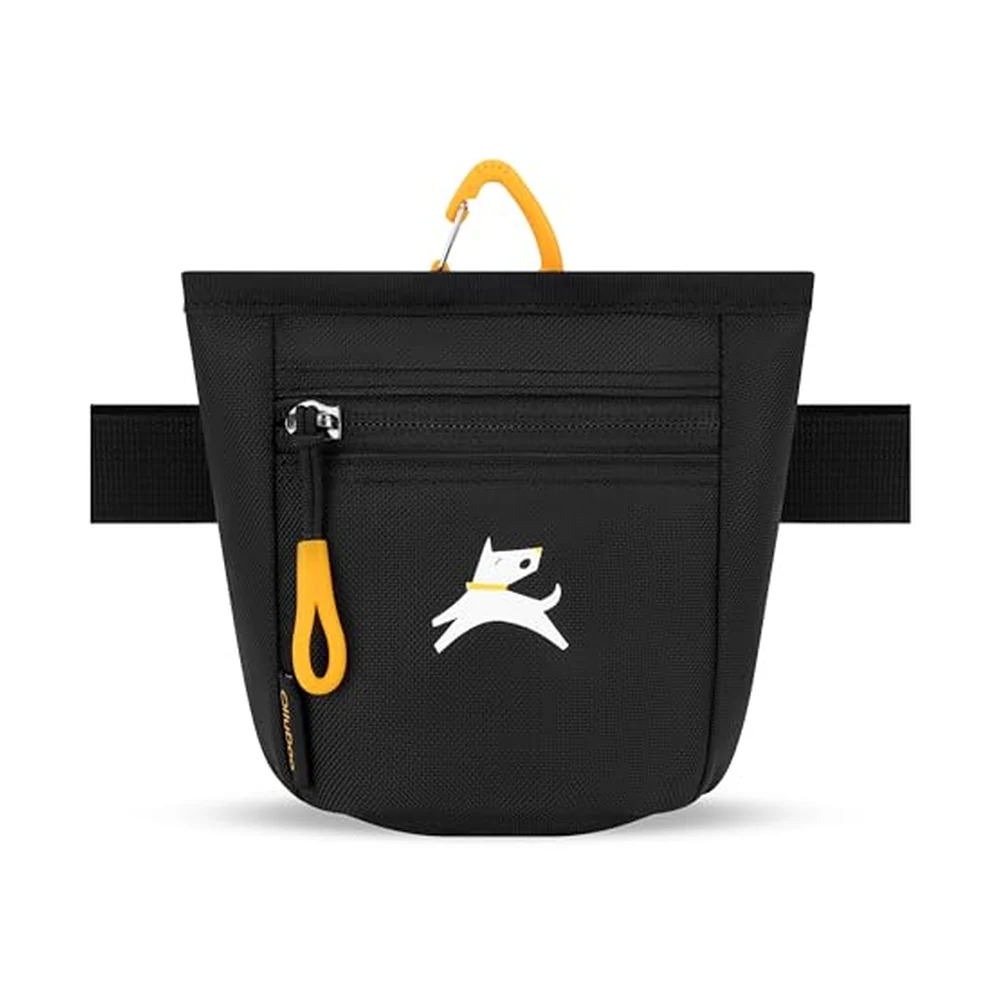
Both shelters stress step three: reward immediately, outdoors, or the dog never learns that outside is the point. A treat bag on your belt, such as the OllyDog Goodie Treat Bag, beats a jar by the back door. Small soft treats like Zuke's Mini Naturals work if your dog tolerates them; count them in the day's food.
Supervise or confine, never neither
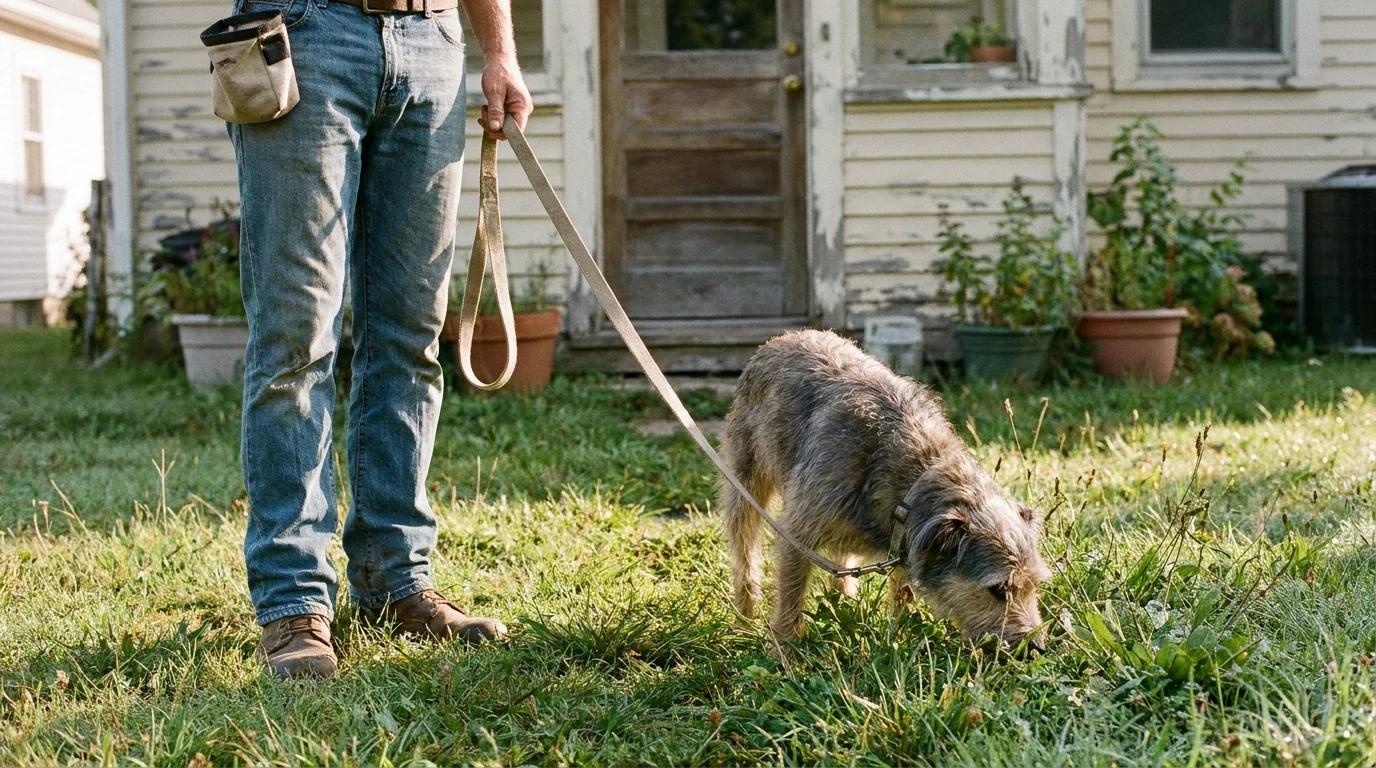
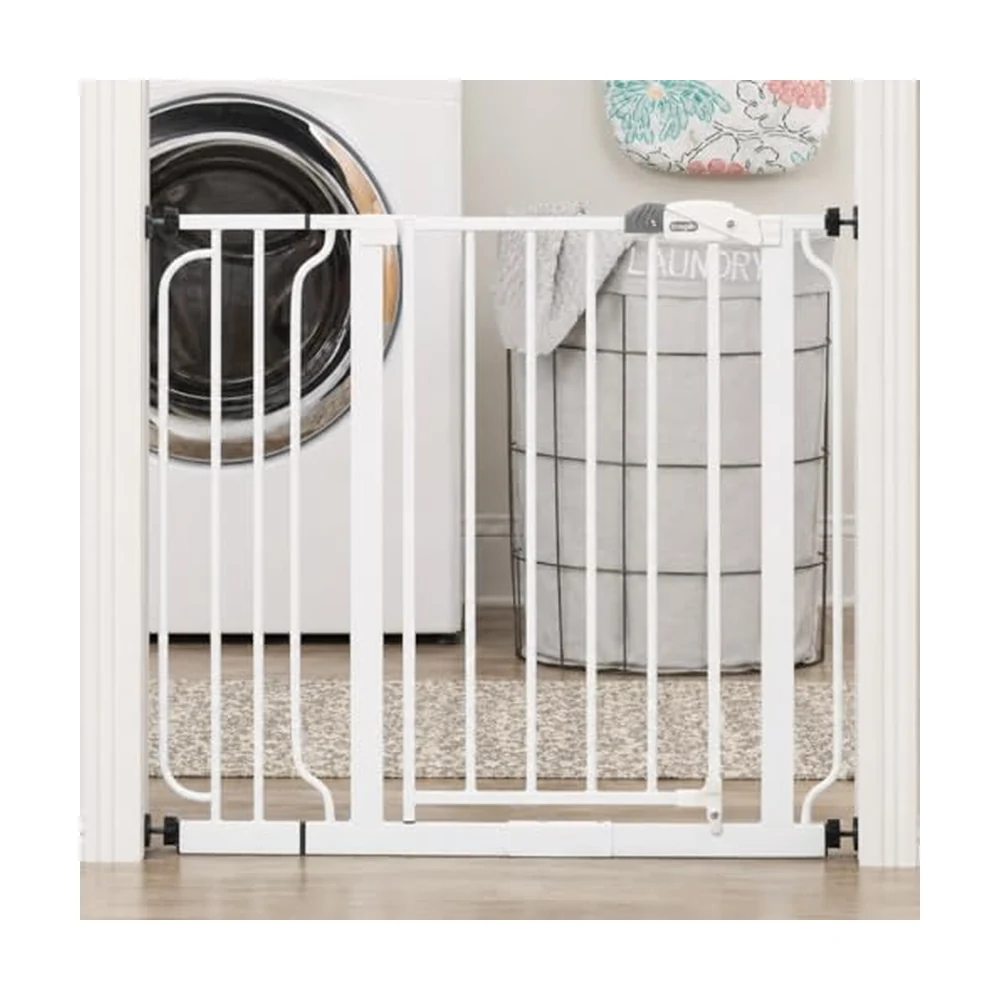
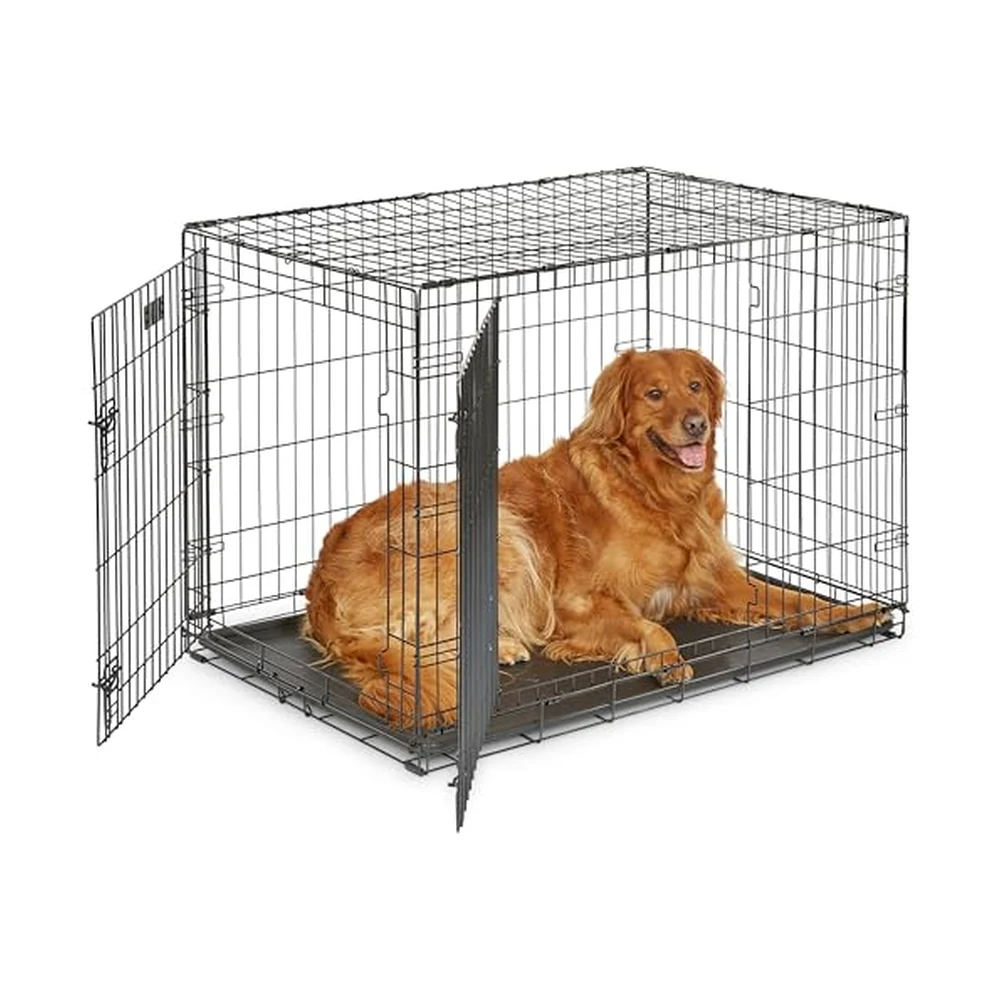
PAWS is blunt: indoors, the dog should be watched at all times, tethered to you on a six-foot leash or kept in your room with baby gates. When you cannot watch, confine it to a space just big enough to stand, lie down and turn around, small enough that it will not want to soil there.
 A gated kitchen keeps a new dog in sight without a crate, which suits adults that have never been crated.
What works:
- A walk-through gate across the room you are in, like the Regalo Easy Step Gate.
- A leash tether to your belt while you work or cook.
- A crate the dog already accepts, such as the MidWest iCrate Double Door, sized so it can stand, lie down and turn around.
What backfires:
- Free run of the house in week one.
- A confinement area big enough to hold a toilet corner.
- Forcing confinement on a dog that shows distress when left alone; that is the separation row in the table above.
Never crated? Build up slowly; our crate-training guide is written for puppies, but the slow build-up is what matters. When you see sniffing or circling, go out at once.
What to do in the moment of an accident
Caught in the act: interrupt without scaring, go straight to the spot, reward if it finishes there. Found later: just clean it. PAWS explains that dogs do not connect punishment to an earlier accident, and punishment teaches them to avoid eliminating in front of you, which makes the leashed trips harder.
Never: rub a nose in it, scold, or march the dog back to the spot. If the dog crouches or dribbles when you approach, Merck's advice is not to startle it at all.
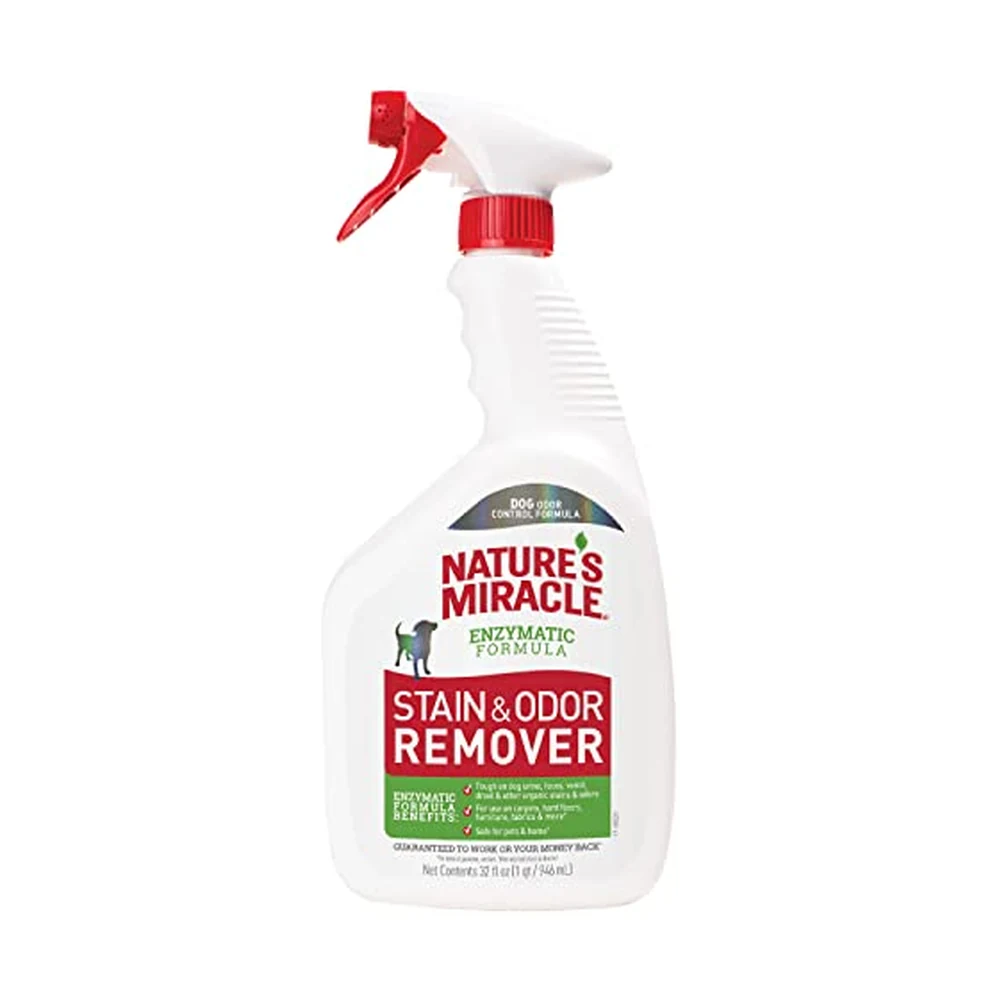
Cleaning matters as much as rewards. Dogs return to spots that smell of urine or feces, so Oregon Humane recommends an enzymatic cleaner; Nature's Miracle Stain and Odor Remover is the one on our potty training shelf. PAWS adds a useful trick: put the soiled paper towel at the outdoor spot so the smell marks the right place.
The dog that learned on pads or pavement
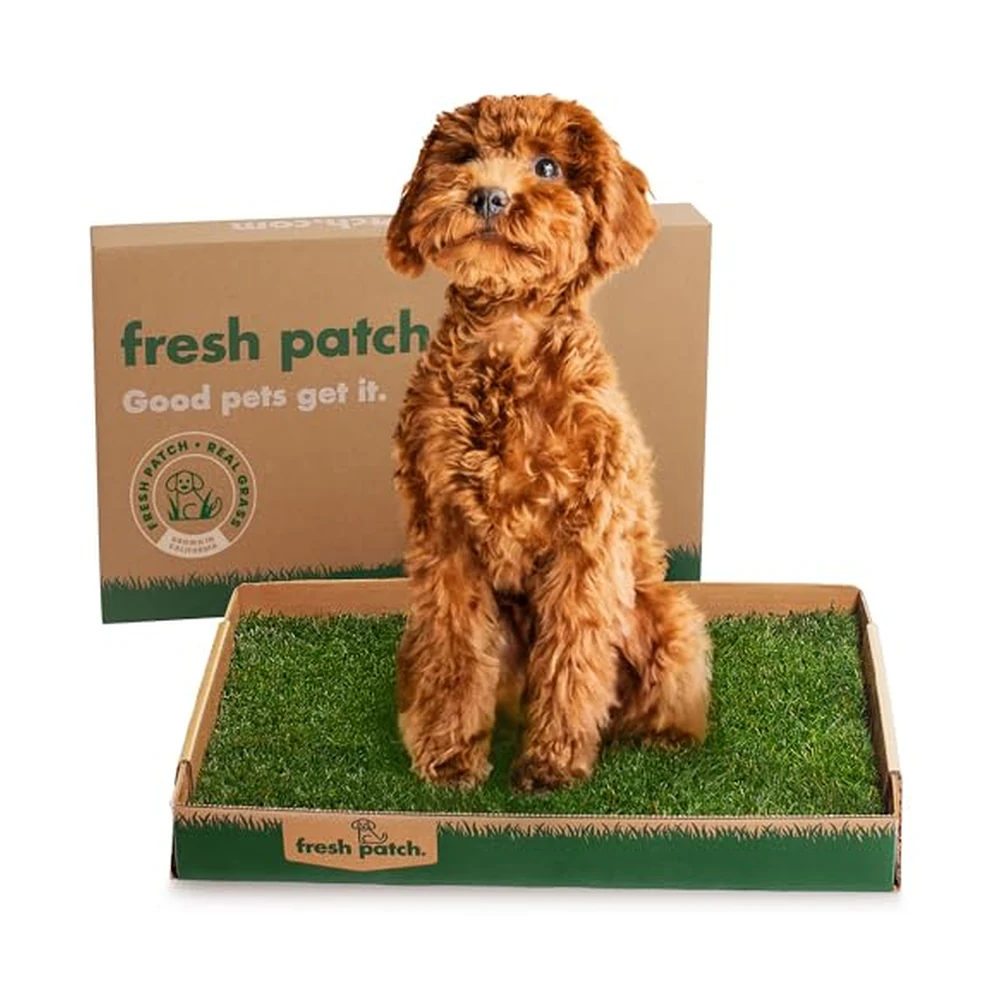
Merck splits house training into two jobs: building a preference for a surface or place, and teaching the dog to hold it until it gets there. A dog from a kennel run or a pad-trained home may hold fine and simply prefer the wrong surface. Humane World for Animals notes that indoor options such as pads can make outdoor training take longer, and that dogs not allowed outside as puppies may need more breaks.
Make the new surface smell right
Our suggestion, building on the PAWS towel trick: take the dog's familiar scent outside rather than fighting it. Put a used towel at the grass spot, keep trips short and boring until it goes, and reward hard when it does. Once outdoor trips are reliable, remove indoor pads so there is one right answer.
Teach the dog to ask
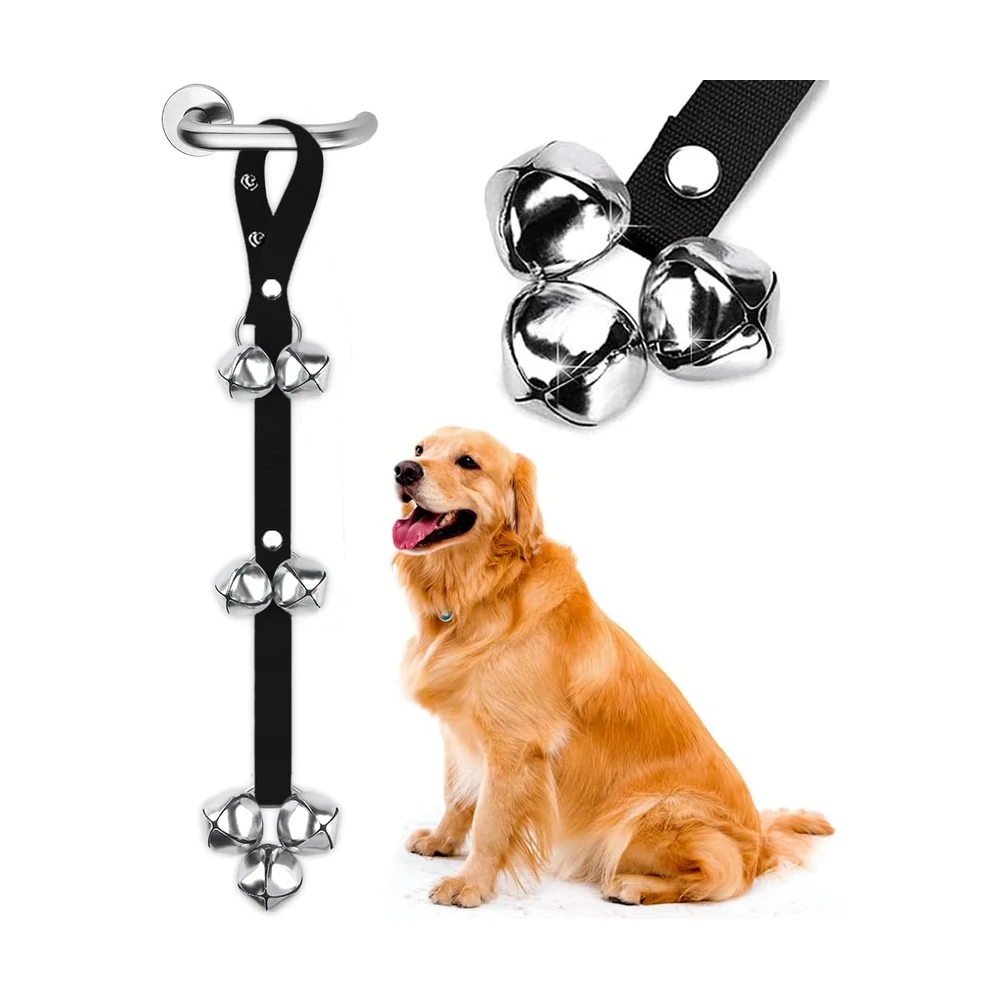
Humane World suggests training a signal, such as ringing a bell at the door: reward the ring, then the outdoor potty. Hanging BLUETREE Dog Doorbells on the handle gives the dog a signal you cannot miss, which solves Oregon Humane's quiet-stare problem.
When it is not a training problem
Talk to your vet first, rather than after a month of trying, if you see any of these:
- Leaking while asleep, or the dog seems unaware it has soiled.
- Accidents in a dog that was reliable for months, especially an older one. Our guide to dementia signs covers house soiling in senior dogs.
- Soiling only when alone, with other signs of distress.
- Accidents that continue after weeks of the routine done consistently.
The ASPCA lists urinary tract infection, age-related sphincter weakness, hormone-related problems after spaying, bladder stones, diabetes, kidney disease and Cushing's disease among the causes of incontinence. No schedule fixes a medical leak.
Key takeaways
What to remember
- Many adult dogs were house trained once and lost the habit in a kennel, a move or a new routine.
- Small amounts on upright surfaces, dribbles at greetings, soiling only when alone and leaks during sleep are different problems from incomplete training.
- Take the dog out on leash to one spot after waking, meals, play and naps, and reward it outside the moment it finishes.
- Indoors the dog is either watched, tethered, gated in your room or confined to a small space.
- Never punish an accident; clean it with an enzymatic cleaner so the smell does not draw the dog back.
- A dog that leaks while asleep or seems unaware it has soiled needs a vet before any training.
Questions people ask
- Can you house train an older dog?
- Yes. The Merck Veterinary Manual describes house training an older dog as mostly fine-tuning its behavior and its choice of surface or place. Shelters advise treating a newly adopted adult as untrained for the first few weeks, and say a dog trained before usually relearns quickly.
- How often should I take an adult dog out while house training?
- Oregon Humane suggests set times every day plus roughly hourly trips while you are home during the first few weeks. Merck adds trips within 15 to 30 minutes of eating and right after play or waking. Stretch the gaps only once accidents have stopped.
- Why is my house-trained dog suddenly peeing in the house?
- A sudden change in a reliable dog points away from training. Possible causes include medical problems such as a urinary tract infection, marking, distress when left alone, or fear. Start with a vet visit, especially if the dog seems unaware it has leaked.
- Should I use pee pads for an adult dog?
- Only if you plan to keep an indoor option. Humane World for Animals notes that indoor options such as pads can make outdoor training take longer. If the goal is outdoors, phase pads out once outdoor trips are reliable.
- Is it marking or a house training problem?
- Marking is usually small amounts of urine on upright surfaces such as door frames or furniture, often with a raised leg. Full puddles on the floor when nobody is watching point to incomplete house training. Merck notes that neutered males and females can mark too.
Gear
The gear this guide assumes
Our shelves and product pages, so you can see the options without leaving mid-session. No buy buttons here — this is a training guide.
Nature's Miracle Stain & Odour
$10.79 Owner rating 4.6 out of 5 · 23,883
The bottle you keep on the counter all through house training
$19.95 Owner rating 4.6 out of 5 · 2,279
Getting a reward out in under a second, which is the only thing a treat pouch is actually for.
Owner rating 4.6 out of 5 · 16,053
The everyday training treat — small
$6.99 Owner rating 4.6 out of 5 · 39,977
A new puppy who needs a way to say “out”
$44.98 Owner rating 4.4 out of 5 · 175,093
A wide doorway at the bottom of the stairs
$84.99 Owner rating 4.7 out of 5 · 70,262
The one crate you buy at eight weeks and still use at eight years

Sources
- Behavior Problems in Dogs (elimination section) — Merck Veterinary Manual, pet owner version — Definitions of incomplete house training, marking, excitement and submissive urination; surface preference; trips 15 to 30 minutes after eating and after play or waking; house training an older dog as fine-tuning; never startling a dog with submissive urination.
- Re-Housetraining Your Adult Dog — PAWS — Shelter time weakening house training, assuming the dog is untrained for the first weeks, tethering with a six-foot leash or baby gates, the size of a confinement area, no punishment after the fact, and placing soiled towels at the outdoor spot.
- Re-Housetraining Your Adult Dog — Oregon Humane — Learning the dog's bathroom signal, roughly hourly trips for the first weeks, immediate outdoor rewards, the ten-minute retry, and using an enzymatic cleaner.
- Separation Anxiety — ASPCA — Soiling only when alone versus in the owner's presence, incontinence signs, and the medical causes of incontinence to rule out with a vet.
- How to potty train your dog or puppy — Humane World for Animals — Indoor pads lengthening outdoor training, dogs kept indoors as puppies needing more breaks, and teaching a bell signal.
Not veterinary advice — for anything medical, ask your vet.
Next step
Cleaners, bells and bags on the potty training shelf
An enzymatic cleaner is the one purchase every guide on adult house training agrees on.
Two products do most of the work here: something absorbent for the accidents you expect, and an enzyme cleaner for the ones you did not.