In this article(7 sections)
A rough guide from the American Kennel Club runs about an hour for each month of age: one hour for a puppy under ten weeks, working up to a ceiling of six to eight hours past six months. Treat that as a bladder number, not a coping number. A puppy that has never practised being alone can struggle after minutes, whatever its age, so the plan below starts with a new puppy at seconds and builds from there.
The hours, by age
| Age | AKC guide for time alone |
|---|---|
| Under ten weeks | About one hour |
| Ten to twelve weeks | About two hours |
| Three months | About three hours |
| Four months | About four hours |
| Five months | About five hours |
| Six months | About six hours |
| Over six months | Six to eight hours at most |
The AKC frames this around how long a puppy can hold its bladder, and notes that even adult dogs should not be left much past six to eight hours without a bathroom break. To see how that plays out hour by hour, read the puppy potty training schedule.
Why the hours are not the whole answer
Reputable sources give different ceilings, and none of them is describing the same limit.
| Source | Upper limit they give | What they say about building up |
|---|---|---|
| AKC | Six to eight hours for dogs over six months | Take time off first, then work up to a crate stay of an hour or more |
| PDSA (UK vets) | Four hours routinely, too long for a very active young puppy | Step away, reward calm, repeat and gradually increase time |
| Dogs Trust | No more than four hours | Build up very gradually, and shorten the time if worry shows |
| RVC and Dogs Trust trial | No hour figure | Gradual build-up and calm departures, tested in a small trial |
Our reconciliation: a puppy's real limit today is the shorter of two clocks. The bladder clock is the AKC chart: how long it can hold on. The confidence clock is how long it can cope, and that starts at seconds whatever its age. No source gives a coping age, so we do not either.
How to teach a puppy to be alone
Every source starts the same way: practise while you are still at home.
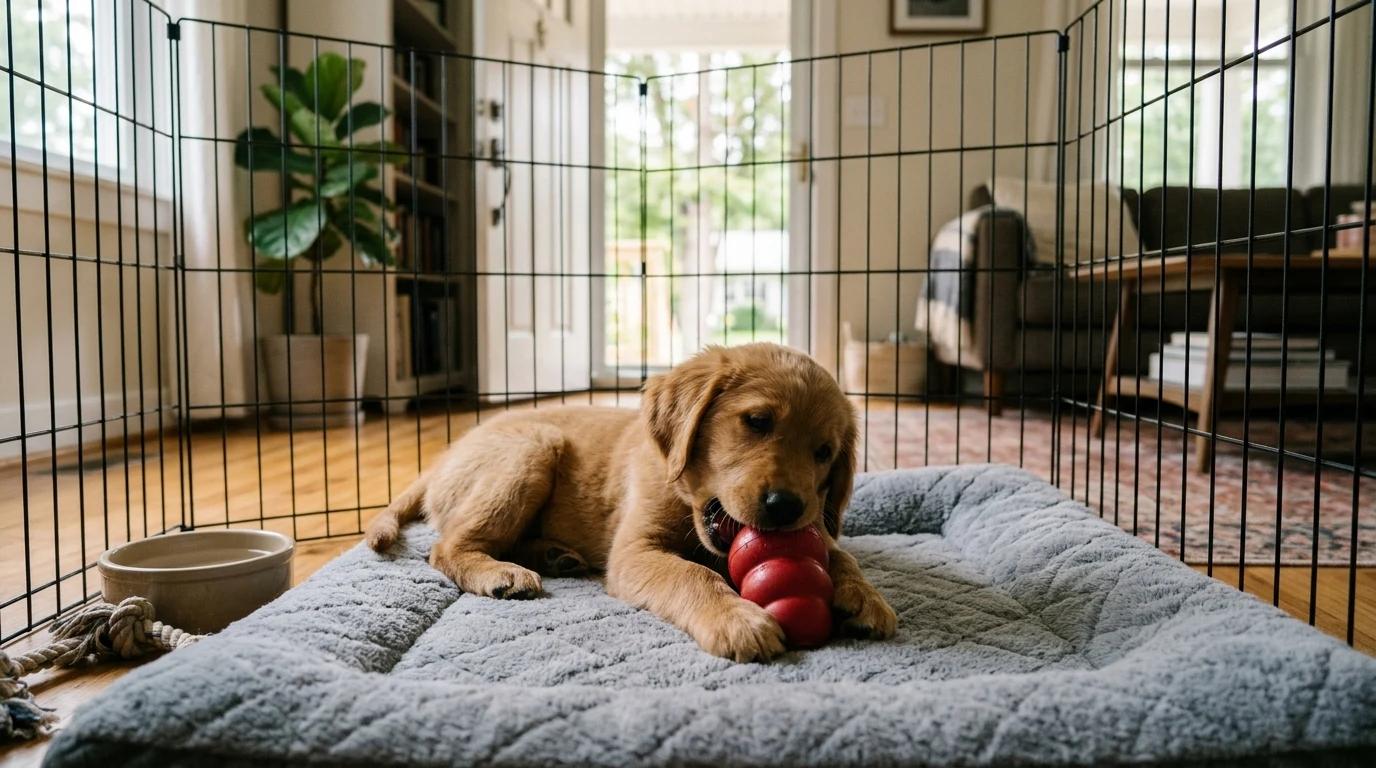
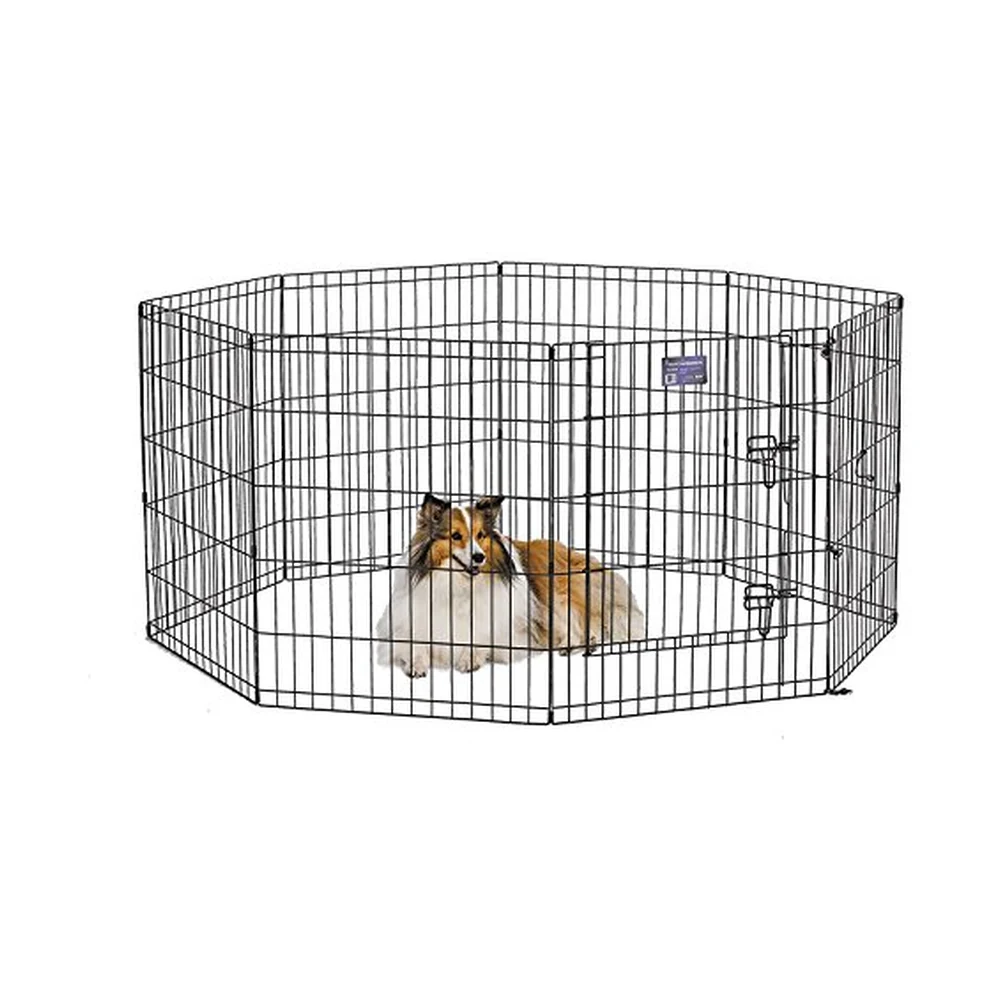
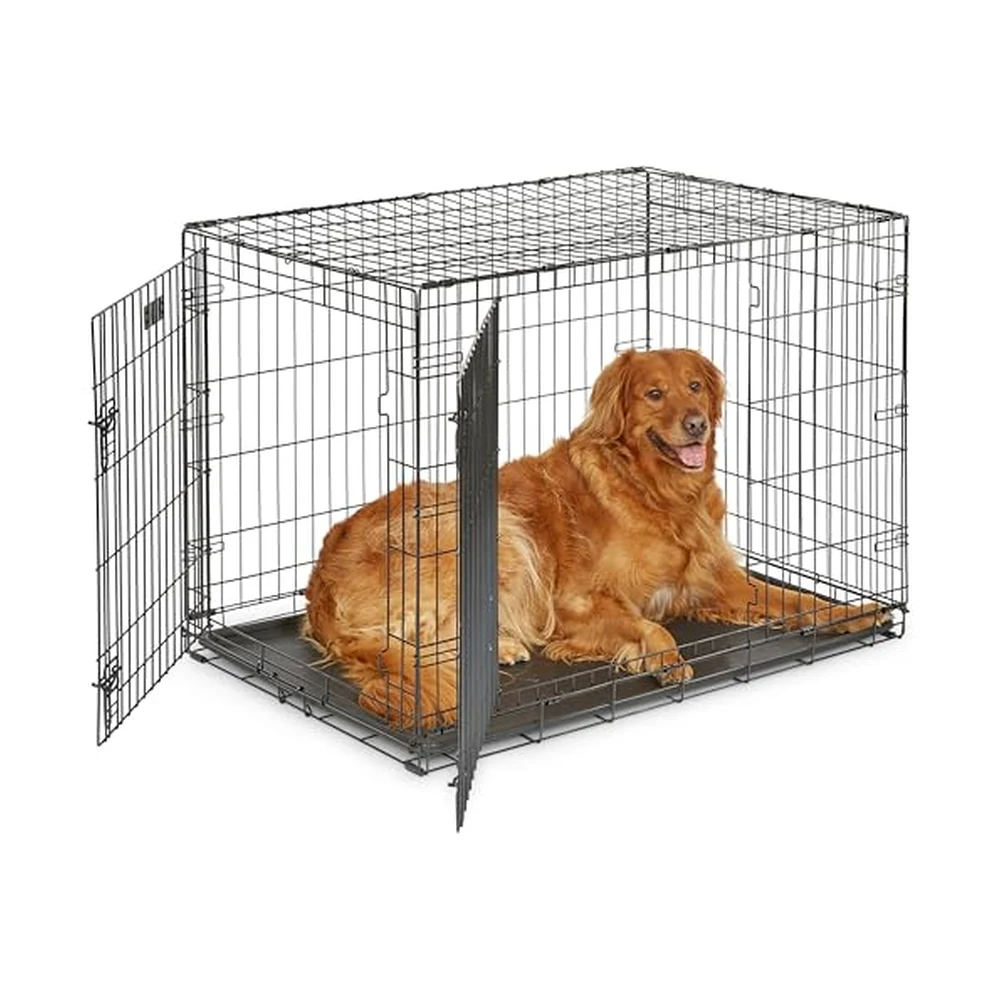
- Make a safe zone. The AKC suggests a crate or exercise pen, positioned so it is a relaxing place and never a punishment. A MidWest exercise pen or a crate both work, and meals can be served inside. See crate training a puppy.
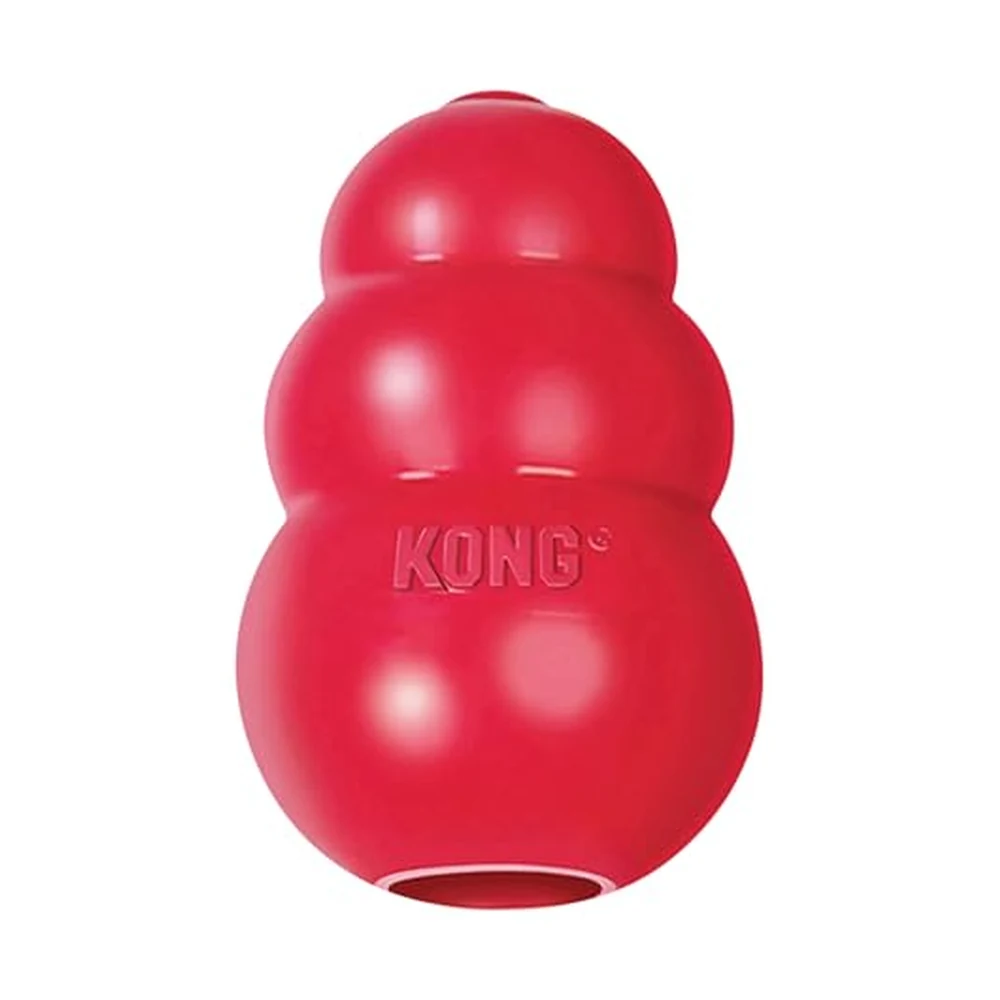
- Add a bed and a food toy. Dogs Trust recommends a comfy bed or den, so use a bed the puppy already rests on and a stuffable Kong, which releases food slowly.
- Teach settling while you are busy. Dogs Trust advises rewarding settling rather than giving attention when the puppy follows you. The guide on how to teach a dog to settle covers it.
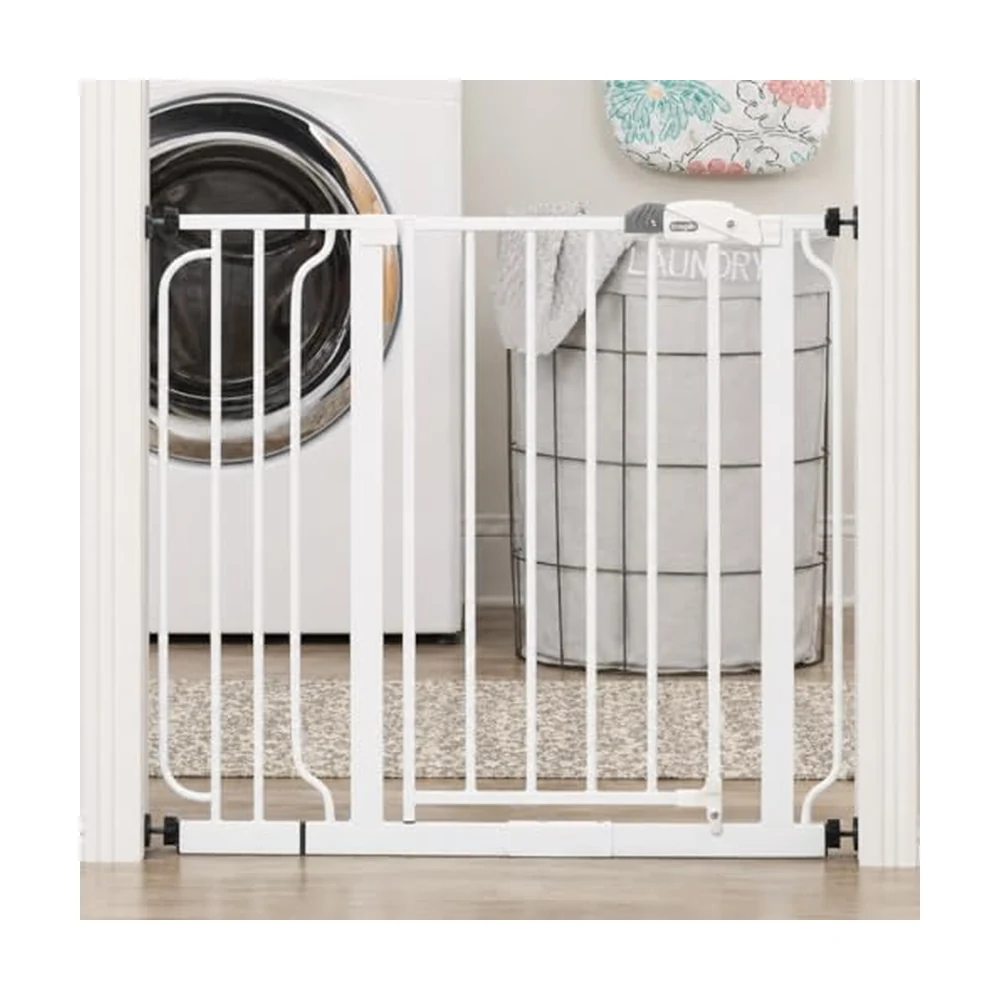
- Put a gate in a doorway. A walk-through baby gate lets you introduce time apart while you are still in the house.
- Walk a short distance away. PDSA's method: if the puppy is calm, walk back and reward it, then leave the room briefly. Reward calm and quiet with small training treats.
- Repeat, then try a short trip out. PDSA mentions a short shopping trip once time at home goes well. Give the treat on your return, only once the puppy is calm.
 Alone time starts with stepping into the next room, not with leaving the house.
The one rule every source shares: lengthen the time only while the puppy stays calm, and shorten it if it shows worry. No source gives a per-step increment such as five minutes a day, so ignore any article that does.
The shelf of playpens and gates has the options if you are choosing equipment.
What to do every time you leave
Dogs Trust and the AKC agree on a short routine:
- Walk first, so the puppy has burned energy and been to the toilet.
- Leave water, plus a long-lasting treat or toy.
- Do not make a fuss leaving or returning, and never tell the puppy off.
- When the puppy first arrives, take some time off if you can, as the AKC advises, so it gets used to the home before alone-time starts.
The RVC study backs the calm approach. Its authors cite earlier findings that puppies were more likely to develop separation-related behaviour if owners fussed over them or punished them around departures and reunions. Puppies whose owners were advised on calm departures spent more time resting quietly when alone.
Radio on or off? The sources disagree
Dogs Trust says leaving the TV or radio on may help. The RVC trial found the opposite: puppies showed more passive signs of anxiety, and less eating and playing, when a TV or radio was left on than when it was switched off.
Our read: it was one small trial with thirty-four new puppy owners, so the question is not settled. Do not rely on background sound to cover for training, and if you use it, film your puppy both ways and compare.
Is your puppy coping? Film it
In the RVC study, one owner thought the puppy slept the whole time they were away. The video showed it pacing, howling and whining for the entire absence. Owners often cannot tell, so set up a phone and watch.
PDSA lists the signs of separation anxiety: barking and whining, destructive chewing, attempts to escape, toileting in the house, and pacing.
| Coping | Not coping |
|---|---|
| Resting or sleeping quietly | Barking, whining or howling |
| Eating or playing with the food toy | Ignoring food it would normally take |
| Settled when you return | Pacing, panting or attempts to escape |
Workdays and when to get help
The AKC suggests arranging for someone to let the puppy out once or twice a day after you return to work, and to come home for lunch or hire someone to do it. A neighbour or dog walker fits that need. Put your hours into the potty training planner to see where a break is needed. Remember PDSA's point: four hours would generally be too long for a very active, young puppy.
If worry is already a problem, see a vet first, since pain and medical causes can contribute, then an accredited behaviourist. Do not punish accidents or chewing. Our ThunderShirt vs calming chews comparison explains why those products are not a substitute for that help. The RSPCA puts it simply: never leave a dog alone long enough for it to become distressed. Before the first alone-time begins, the first week with a new puppy plan helps, and the puppy stage guide covers what comes next.
Not veterinary advice: this guide is researched from the sources listed, not tested, and does not replace your vet's advice.
Tools for this
- Puppy Potty Schedule Maker
Put in your work hours and see where someone has to let him out at his age.
- Puppy Schedule Planner
Plan the day around naps and meals so the time alone falls when he would sleep anyway.
Key takeaways
What to remember
- The AKC age chart is a bladder guide: about an hour per month of age, from one hour under ten weeks to six to eight hours at most.
- PDSA and Dogs Trust put the routine ceiling at four hours, and PDSA says that is too long for a very active young puppy.
- A puppy's real limit is the shorter of two clocks: how long it can hold its bladder and how long it can cope alone.
- Start by stepping away while you are home, then leave the room, then try a short trip out, lengthening only while the puppy stays calm.
- Whether a TV or radio helps is disputed: Dogs Trust says it may, but one small RVC trial found more anxiety signs with it on.
- Film your puppy: owners often believe a puppy slept while the video shows pacing and howling.
Questions people ask
- How long can an 8-week-old puppy be left alone?
- The AKC guide says a puppy under ten weeks can typically hold its bladder for about an hour. That is a bladder limit only. Confidence alone starts at seconds, so begin with short practice while you are home.
- Can I leave my puppy alone while I work full time?
- Not for the whole day. The AKC suggests arranging for someone to let the puppy out once or twice a day, or coming home at lunch. PDSA and Dogs Trust both put the routine ceiling at four hours, so a dog walker or neighbour is needed.
- Should I leave the TV or radio on for my puppy?
- The sources disagree. Dogs Trust says it may help, but one small Royal Veterinary College trial found more passive signs of anxiety and less eating and playing with a TV or radio on. It is not settled, so film your puppy both ways and compare.
- How do I know if my puppy is stressed when left alone?
- PDSA lists barking and whining, destructive chewing, escape attempts, toileting indoors and pacing. Owners often misjudge it: in the RVC study one owner thought the puppy slept, but the video showed pacing and howling. Film it.
- Is it okay to let my puppy cry it out when I leave?
- The RSPCA says never leave a dog alone long enough to become distressed. Dogs Trust advises shortening the time if anxiety shows and not telling the dog off. Step back to shorter absences and build up again.
Gear
The gear this guide assumes
Our shelves and product pages, so you can see the options without leaving mid-session. No buy buttons here — this is a training guide.
$30.39 Owner rating 4.6 out of 5 · 46,346
The default puppy pen — 16 square feet, a step-through door
$44.98 Owner rating 4.4 out of 5 · 175,093
A wide doorway at the bottom of the stairs
$84.99 Owner rating 4.7 out of 5 · 70,262
The one crate you buy at eight weeks and still use at eight years
$13.96 Owner rating 4.6 out of 5 · 93,737
The stuffed-and-frozen standby
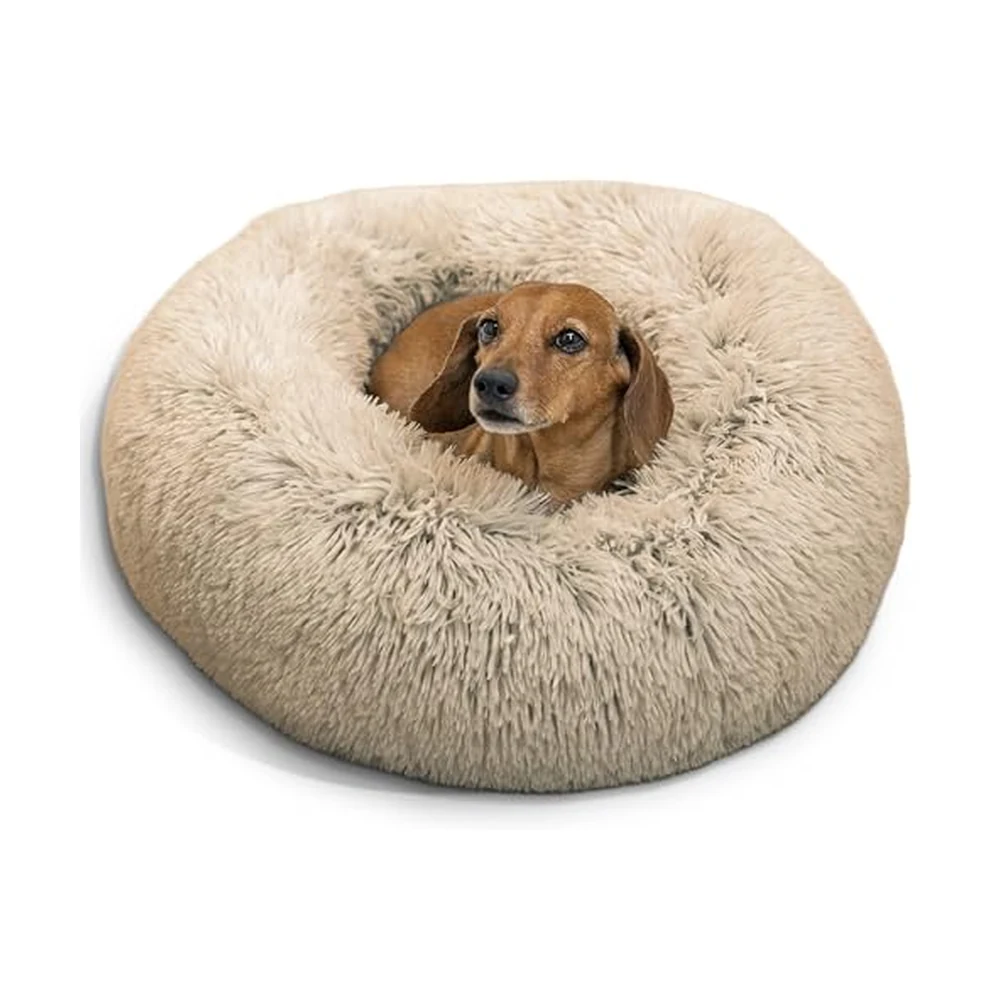
Best Friends Calming Donut Bed
$34.99 Owner rating 4.6 out of 5 · 73,239
A dog who burrows and curls — a deep round bed with 360-degree bolsters
Owner rating 4.6 out of 5 · 16,053
The everyday training treat — small

Sources
- AKC, How Long Can You Leave a Puppy Alone? — Age chart, bladder framing, time off work and crate or pen set-up.
- PDSA, Home alone: preventing separation anxiety — Four-hour ceiling, step-away method and signs of separation anxiety.
- PDSA, How to help your dog be comfortable with time alone — Practising at home before a short trip out, and rewarding calm on return.
- Dogs Trust, Helping your dog get used to spending time alone — Gradual build-up, baby gates, before-leaving routine and the TV or radio view.
- Royal Veterinary College, new study on easing puppy separation stress — Trial of calm departures and gradual habituation, the TV or radio finding and the film-it example.
- RSPCA, The right company for dogs — Never leaving a dog alone long enough to become distressed.
Not veterinary advice — for anything medical, ask your vet.
Next step
MidWest exercise pen
A pen gives the puppy a safe zone you can step away from, the first step every source here starts with.