Some links below are Amazon affiliate links — if you buy through one we may earn a commission, at no extra cost to you. It does not change what we recommend. Full disclosure. Researched, not tested — how we research.
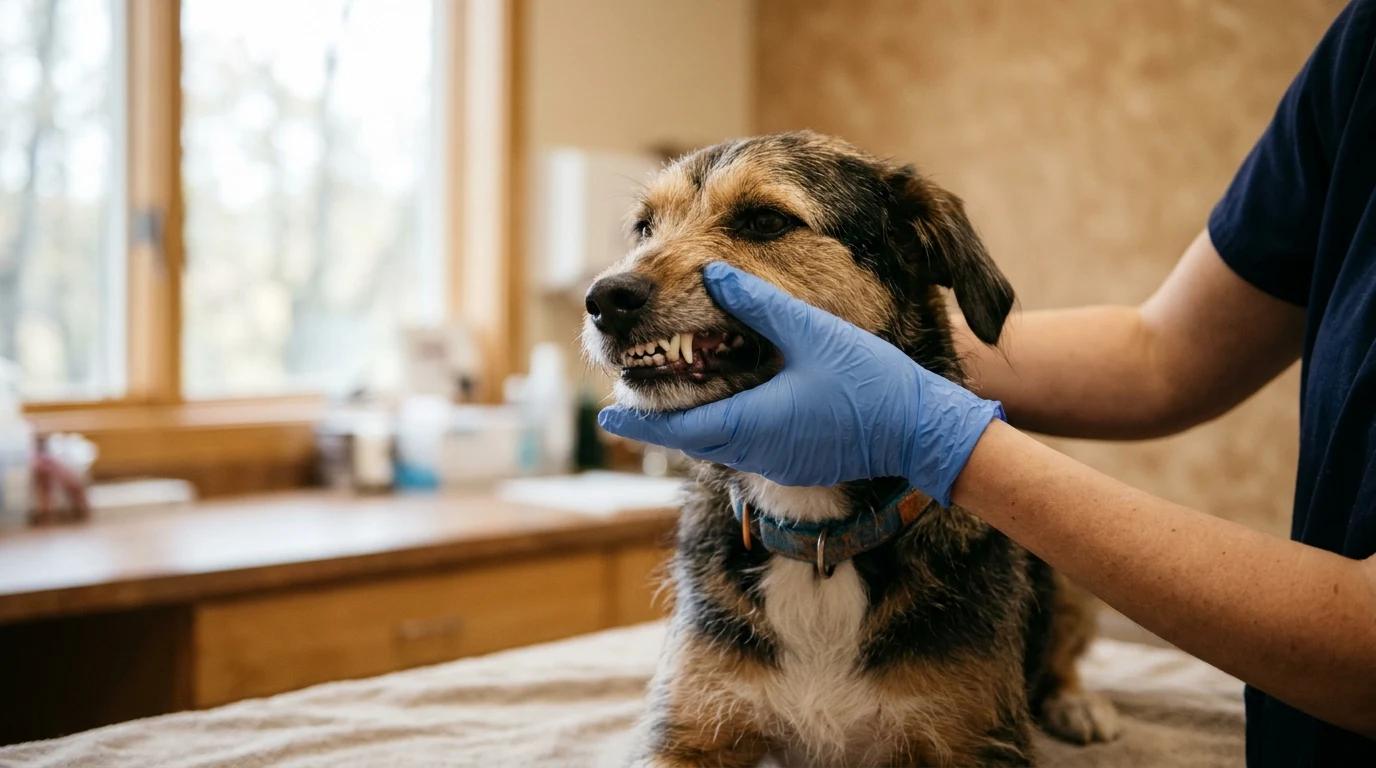
Teeth can pin a puppy's age to within weeks. After about seven months, every clue you can read at home, from tooth wear to eye haze to grey hair, widens the answer to years. That is the whole method: find which side of the cliff your dog is on, then write the estimate as a range.
The seven-month cliff
Puppy teeth erupt on a schedule, so they work like a calendar. Adult teeth stop changing once the full set is in, and from then on you are reading wear, which varies with breed and dental health as well as age.
Our reading: The sources below agree on one pattern. Eruption gives weeks until the permanent set is complete, and every later clue gives a span of years. Treat the seven-month mark as the point where "how old" becomes "about how old".
Reading a puppy's teeth
The Merck Veterinary Manual says most dogs have 28 deciduous teeth and 42 permanent teeth, and gives this timeline:
- Deciduous teeth begin to erupt at 3 to 5 weeks of age.
- Permanent teeth usually begin to appear at around 4 to 5 months.
- All permanent teeth are present by 7 months.
Even so, Merck calls age determination in young animals "only somewhat accurate". Disease can delay or prevent eruption, and tiny breeds and dogs with an underbite or overbite are harder to read (Vetstreet).
The 8 to 16 week gray area
Before 8 weeks, which teeth have come in gives "a pretty good idea" of age, according to veterinary pediatrics specialist Dr. Margret Casal, quoted by Vetstreet. Then comes a stretch where, in her words, nothing really happens overtly for those two months. The first grown-up teeth start around 16 to 18 weeks. In between, she says, a vet looks at the overall state of the puppy and judges whether it is close to teething or has just finished its baby teeth.
A research paper in the journal Animals adds a caution: there is no standardized method in the literature for dogs under four months old, and published references vary considerably. Age matters here partly for paperwork, because some countries set rabies-vaccination age rules for travel.
If the teeth say your dog is under about seven months, /ages/puppy lays out what that stage involves, and our puppy teething timeline covers the comfort side without repeating month tables here.
After seven months: wear, not eruption
For most large adult dogs with normal teeth and jaws, Merck says veterinarians can examine wear patterns and give an estimate of age. Small and toy breeds are harder. Vetstreet adds that vets weigh gingivitis, decay, wear and discoloration, but genetics matter too: some breeds have more tooth problems, so teeth can look older than the dog.
The gap: We found no source that publishes an accuracy figure for estimating an adult dog's age from tooth wear. Vets do it, and Merck says it can be done, but nobody we found says how many years off a typical estimate is. Treat any "plus or minus one year" claim as unsupported.
Eyes: haze versus cataract
The American College of Veterinary Ophthalmologists says most age-related eye changes become evident on examination around 5 to 6 years of age, while many dogs show no symptoms until after 10. The most common change is nuclear sclerosis, also called lenticular sclerosis, which costs near focus.
VCA Animal Hospitals describes it as a bluish, transparent haze in middle-aged to senior dogs. Cataracts are different: white, opaque and vision-reducing. So a hazy blue look says "middle-aged or older", not a number, and a white one calls for a vet visit rather than an age guess.
The grey muzzle problem
 Grey on the muzzle is a weak clue: it can reflect stress as much as age.
A grey muzzle feels like the obvious clue, and it is the least dependable. A study of 400 dogs aged 1 to 4 (King et al., 2016, reported by dvm360) found a significant association between anxiety and impulsivity and premature muzzle greying. Older dogs and female dogs had more grey, but the association held regardless of age and sex. It is an association, not proof that anxiety causes grey fur. For a rescue with a rough start, grey can be a stress history rather than a birthday count.
DNA clocks: real science, one breed
A UC San Diego team published an epigenetic clock in Cell Systems in 2020, built from methylation patterns in blood samples from 105 Labrador retrievers. Their stated next steps were testing other breeds and checking whether saliva samples work. That makes it a research method built on one breed, not a validated owner test. We found no published validation of consumer DNA age tests, so we name none.
The clues, ranked
| Clue | Where it works | How tight | What throws it off | Source |
|---|---|---|---|---|
| Tooth eruption | Birth to about 7 months | Weeks | Disease, tiny breeds, bite problems | Merck, Vetstreet |
| Tooth wear | Adult years | Rough, years; no published accuracy | Breed, chewing, dental disease | Merck, Vetstreet |
| Lens haze | From about 5 to 6 years | "Middle-aged or older" | Cataracts look different | ACVO, VCA |
| Grey muzzle | Any age | Unreliable | Anxiety and impulsivity in young dogs | dvm360 |
| DNA methylation clock | Research only | Unknown for owners | Built on one breed | UC San Diego |
Write it as a range
Put the estimate down as a span, such as "about 4 to 7 years", and keep the evidence beside it: which teeth, which eye findings. Your vet sets the number; this is how to understand it and ask better questions.
The range changes real decisions:
- Food stage. A dog whose teeth say puppy needs growth food, such as Hill's Science Diet Puppy. If the range reaches the senior end, compare options on our senior dog food shelf, including Hill's Science Diet Senior 7+ wet and Purina Pro Plan Senior 7+ wet.
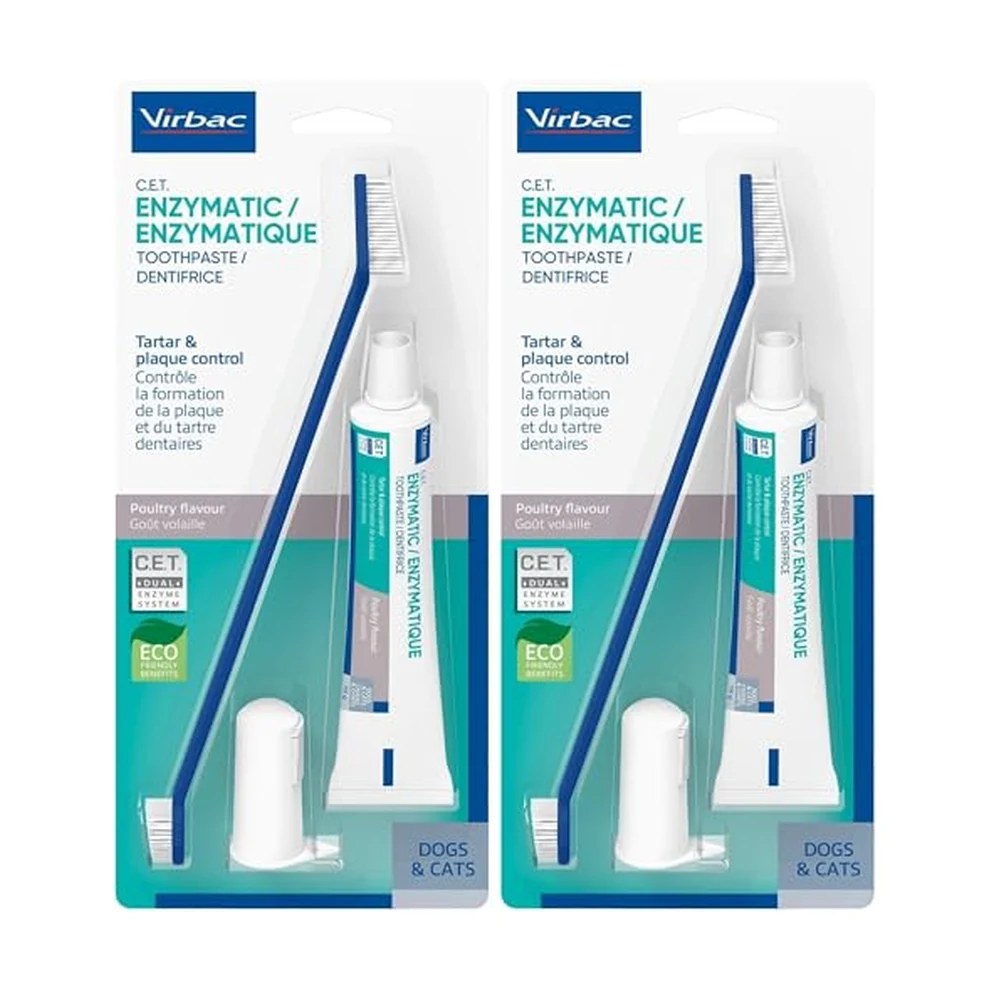
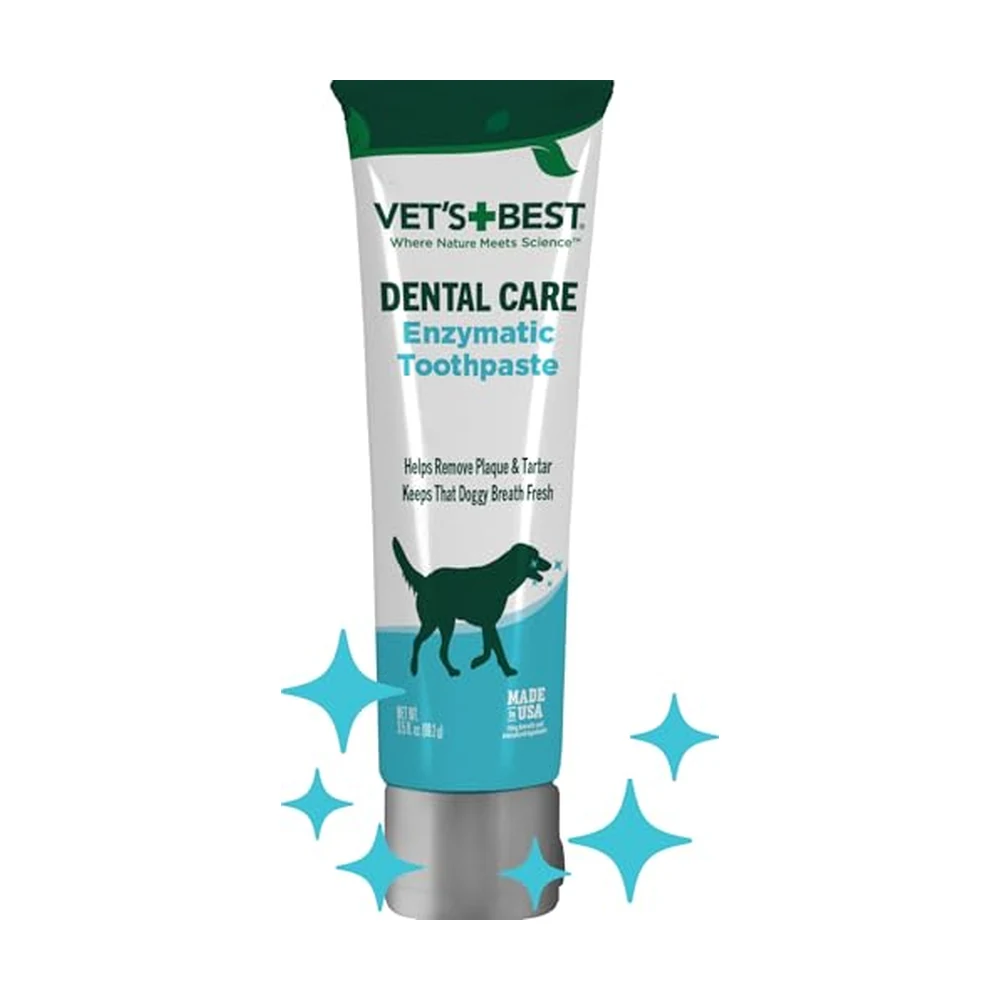
- Dental routine. You just looked at the teeth, so start the habit now. Our dental care shelf includes the Virbac C.E.T. oral hygiene kit, Vet's Best enzymatic dental gel and WHIMZEES dental chews. See also VOHC-approved products by age.
- Screening schedule. Ask your vet when the older end of your range should trigger senior checks. /ages/adult and /ages/senior show what each stage involves.
Once you have a range, place it with the dog age calculator or the stage finder. For the boundaries themselves, read when a dog counts as a senior and dog life stages explained. If you are bringing home an older dog, see adopting a senior dog and signs of aging in dogs.
Tools for this
- Dog Age Calculator
Once you have an estimated range, place it by size to see which life stage it points to.
Key takeaways
What to remember
- Teeth are a calendar until about seven months, then a rough wear gauge.
- Eye haze suggests middle-aged or older, not a specific age.
- A grey muzzle is unreliable, since anxious young dogs can grey early.
- No source we found gives an accuracy figure for adult tooth-wear estimates.
- Write the age as a range and let your vet set the number.
Questions people ask
- Can a vet tell exactly how old my dog is?
- No. Teeth give a tight answer for puppies, but for adults a vet reads wear, eyes and overall condition and gives an estimate. Small and toy breeds are harder, and we found no published accuracy figure for adult estimates.
- Does a grey muzzle mean my dog is old?
- Not reliably. A study of dogs aged one to four found premature muzzle greying associated with anxiety and impulsivity. It is an association, not a cause.
- Is a cloudy eye a sign of age or cataracts?
- A bluish transparent haze is typical of lenticular sclerosis in middle-aged to senior dogs, while cataracts are white and opaque. Only a vet can tell them apart, so have any cloudy eye checked.
- Are DNA age tests accurate?
- The published epigenetic clock was built on Labrador retrievers, and its authors listed other breeds and saliva samples as next steps. We found no validation of consumer tests.
- Why does an estimated age matter?
- It guides food stage, when to start senior screening, and rabies-vaccination age rules that apply to travel. Your vet sets the number.
Gear
Gear for this stage
The products this piece assumes, in the order we would get them. Prices move; check before you buy.
$26.38 Owner rating 4.6 out of 5 · 6,290
Starting properly — a dual-enzyme poultry toothpaste with both a fingerbrush and a long-handled brush in the box.
$9.53 Owner rating 4.5 out of 5 · 31,311
A dog who will not accept a brush yet
WHIMZEES Brushzees Dental Chews
$15.82 Owner rating 4.6 out of 5 · 2,776
A medium dog who needs a daily chew that also cleans
$50.99 Owner rating 4.8 out of 5 · 3,192
A small or medium puppy, on a dry food whose growth claim is backed by AAFCO feeding tests.
Hill's Science Diet Adult 7+ Wet
$44.28 Owner rating 4.6 out of 5 · 3,655
A senior whose vet is happy with a complete adult food
$37.68 Owner rating 4.5 out of 5 · 1,768
A senior whose vet is happy with a complete adult food





Sources
- Dental Development of Dogs — Merck Veterinary Manual — Tooth counts, eruption timeline and wear-based age estimates
- How Vets Determine a Puppy or Kitten's Age — Vetstreet — The 8 to 16 week gray area and limits of teeth after 6 to 7 months
- Age estimation in puppies — Lorászkó et al., Animals 2022 — No standard method under four months; why age matters for rabies rules
- Signs of Age-Related Change in the Eye — ACVO — When eye changes appear and nuclear sclerosis
- Lenticular Sclerosis in Dogs — VCA Animal Hospitals — Haze versus cataract
- Anxiety and impulsivity linked to premature graying in young dogs — dvm360 — Muzzle greying is unreliable in young anxious dogs
- How old is your dog in human years? — UC San Diego — Epigenetic clock built on 105 Labradors
Not veterinary advice — for anything medical, ask your vet.
Next step
Place your dog's estimated age
Turn your estimated range into a human-age comparison and a life stage.