The Years
Adult
Your next chapter
The longest stage, and the one nobody plans for.
Your dog is who they are going to be. This is the stretch that makes up most of a dog's life and gets the least written about it, because nothing dramatic is happening — which is exactly the risk. Weight creeps, teeth quietly deteriorate, enrichment stops being planned, and the small habits you keep now decide what the senior years look like.
Approximate. AAHA gives no fixed ages: it defines life stages by development, not by birthdays, and publishes no inclusive ages at all for mature adult or senior. These windows are ours, built so you can find the right page. A dog a month either side of a line is the same dog.
Start here
Start with these three
The first three steps of this stage's plan, in the order they usually happen.
- Give it weeks before you decide who this dog is
- Assume nothing about house-training and start from the beginning
- Teach being alone before you need it
Nothing here is a test, and none of it has a deadline attached. If this dog is new to you: the first month with an adopted adult has the rest of it, and the questions worth asking your vet are further down the page.
You are here if…
- Your dog is predictable, and you had genuinely stopped noticing that
- Training has become maintenance rather than a project
- You have not thought about your dog's weight in a while
- The same walk happens most days because it works
- Somebody at the vet mentioned the word dental
- Your dog is starting to prefer the sofa to the third lap of the park, and it is not obviously age yet
The numbers to know
Rules of thumb, not diagnoses — your vet knows your dog.
What is changing
Slowly, quietly, and that is the point.
The body. Metabolism settles and calorie needs usually drop below what a growing or adolescent dog burned, while the meal size in your head stays the same. Weight arrives in ounces. Dental disease develops over years without a single dramatic day, and it is one of the most common problems found at adult check-ups. Joints are doing fine, which is precisely when the habits that protect them — a sane weight, regular moderate exercise, nails kept short — are worth building.
The brain. Adult dogs are perfectly capable of learning and are chronically under-stimulated. A dog with a settled routine and nothing to solve finds their own projects, and those projects are usually barking, digging, or following you to the bathroom. Boredom in an adult dog looks like a personality problem and is not one.
The behaviour. Whatever is here now is likely to persist without intervention. That cuts both ways: a solid recall stays solid if you keep paying for it, and a small anxiety left alone tends to widen. This is a good stage to teach something entirely new — a scent game, a trick chain — because a dog who is still learning stays flexible into old age.
Ask your vet what a yearly check should include for a dog this age, and when to start a baseline blood panel.
The six needs, this stage
What changes, and the one thing worth getting for it.
Nourish
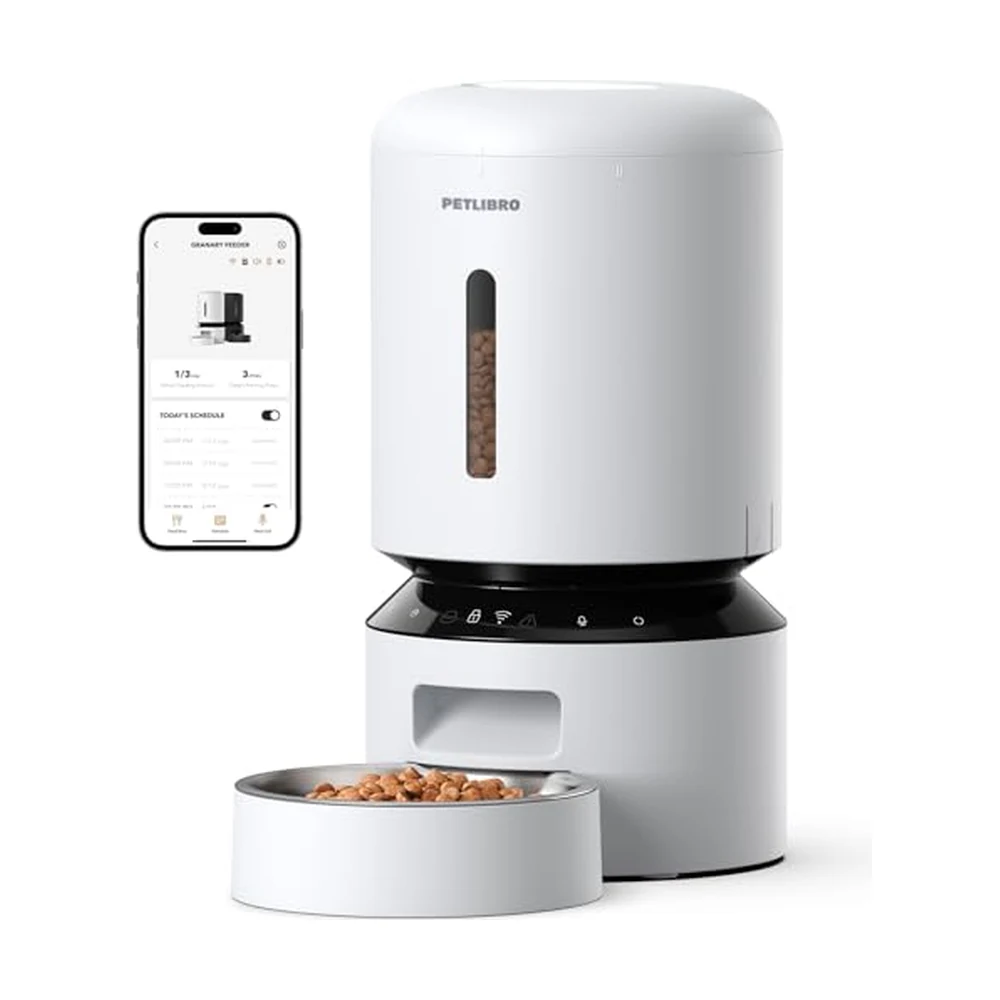
An automatic feeder, if mealtimes fall while you are out
Keeps the clock when your day cannot. Measured portions on a schedule, and the feeding record shows you what actually went out. It cannot notice a dog who has stopped eating; that is still your job.
Why nourish changes now +Why nourish changes now −
The single most valuable habit of this whole stage is measuring meals and checking weight monthly. Adult calorie needs are lower than most owners assume, and treats, chews and the crust from a sandwich add up faster than food does. Run your hands over the ribs: you should feel them with light pressure and see a waist from above. Teeth are the other quiet job — daily brushing is the gold standard, dental chews are the realistic fallback, and your vet is the person to ask what your dog's mouth actually needs and when a professional clean is due.
Rest
A second bed in the main room
Dogs rest better near their people. Two adequate beds beat one excellent one nobody is next to.
Why rest changes now +Why rest changes now −
Adult dogs sleep a lot and mostly sort it out themselves, so the job here is quality rather than quantity. A bed big enough to lie fully stretched, in a spot that is not in a doorway, does more than an expensive one in the wrong place. For a large dog, or one who runs hard, a supportive bed now is not premature — the same bed that is a luxury at four is the thing that keeps a stiff nine-year-old sleeping through the night. If your dog has started choosing the hard floor over their bed, that is information worth mentioning at the next check-up.
Move
A long line for sniffing walks
Twenty minutes of free sniffing on a long line in a field does more for an adult dog than an hour of heel work.
Why move changes now +Why move changes now −
Consistency beats intensity. A dog who walks properly most days stays sound; a dog who does nothing all week and then does a mountain on Saturday is the one who limps on Sunday. Vary the surfaces and the routes — different ground works different muscles, and different routes are most of the mental stimulation a walk provides. Watch the heat: dogs cool themselves badly, and a fit adult will keep going well past the point they should have stopped. Keep nails short, because long nails change how a dog stands and that changes what their joints do.
Think
Two or three rotating puzzle feeders
Rotation is the trick. Three puzzles used in turn behave like nine.
Why think changes now +Why think changes now −
This is the need most often quietly dropped. The routine works, so nothing new gets introduced, and a clever adult dog with an empty afternoon invents something. Rotate puzzles rather than buying more of them; teach a new trick every few months for no reason at all; hide food around a room and let them find it. A short piece of scent work usually does more for a bored adult dog than extra pavement does. It also pays forward: dogs who keep learning through adulthood tend to hold on to more of it when they are old, and a dog who already knows a nose game has something to do when their legs stop being reliable.
Train
A long line for recall maintenance
A few sessions a year on the long line keeps recall honest without ever letting it fail loose.
Why train changes now +Why train changes now −
Maintenance, plus one new thing. Recall in particular decays if it is never paid — a dog who has come back a thousand times for nothing eventually stops. Keep rewarding it occasionally and unpredictably, which is the pattern that holds up best. Then teach something genuinely new every few months: a scent game, a chin rest for grooming, going to a mat, a trick chain. It keeps the dog flexible, keeps you practising your timing, and gives a settled adult dog a project. This is also the easiest life stage in which to fix a small, long-tolerated problem, because nothing else is on fire.
Protect
A cooling mat for the hot months
Cheap, and genuinely used. Put it where the dog already chooses to lie.
Why protect changes now +Why protect changes now −
Prevention, on a calendar. Annual check-ups are the mechanism by which slow problems get caught while they are still cheap, and the dental conversation is the one most often deferred. Parasite prevention is seasonal and regional and changes if you move or travel — ask rather than repeating last year's product. Heat is the acute risk of this stage: dogs cool badly, and heavy, dark or flat-faced dogs are worse at it. Keep the microchip registration current, keep a photo of your dog that would actually work on a poster, and know where the emergency hospital is before you need it at midnight.
Slow Feeders & Bowls, 6 picks side by side
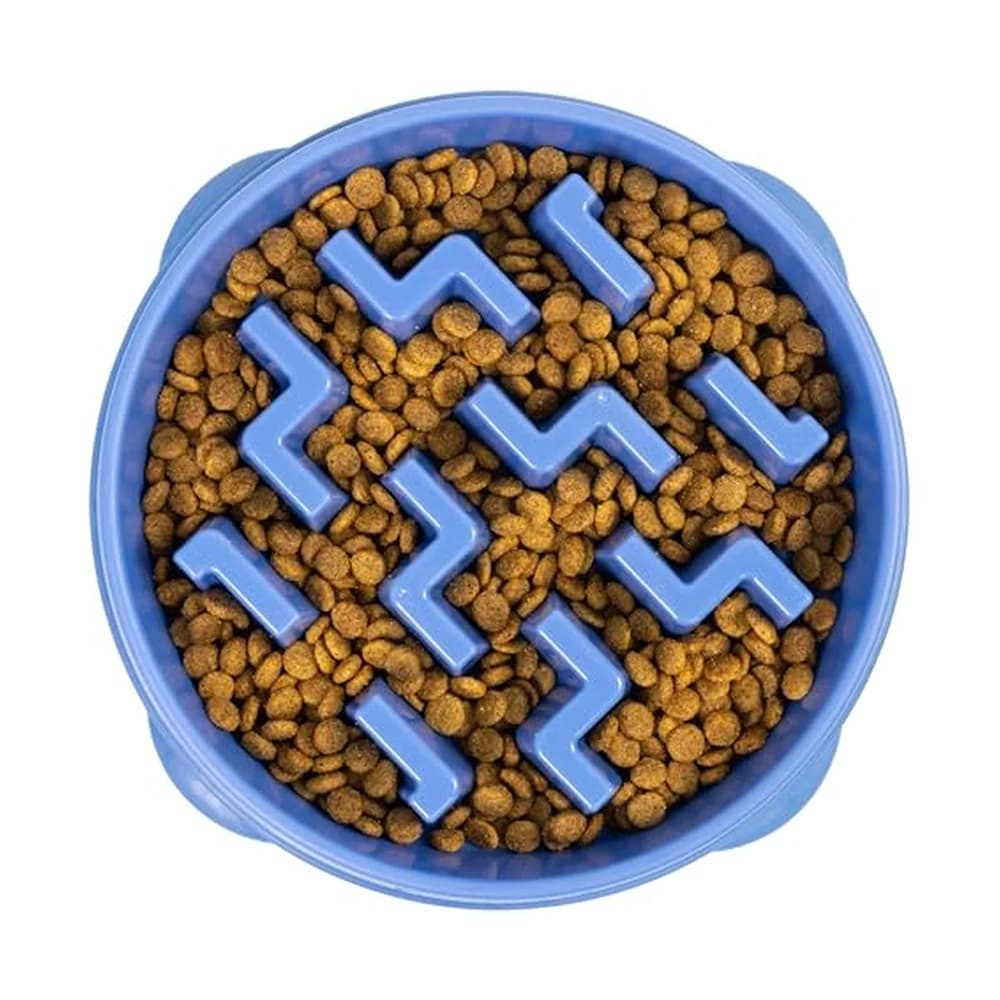
The fast eater — a four-cup maze bowl that stretches a ninety-second meal into several minutes, for about ten dollars
- Size
- Not stated
- Material
- BPA/PVC/Phthalate-free plastic
- Colour
- Not stated
- Dimensions (H × W × D)
- Not stated
- Weight
- Not stated
- Skip if
- You have a flat-faced breed. Deep maze channels are hard work for a short muzzle.
- Automatic feeder
PETLIBRO Granary 5L Wi-Fi Automatic Feeder
$89.99 4.1 out of 5 stars · 10,246 ratings
An adult dog whose mealtimes fall while you are at work, or a senior on smaller, more frequent meals that a person cannot always be home to serve
- Size
- 5L-with WiFi
- Material
- Not stated
- Colour
- White
- Dimensions (H × W × D)
- 11.0 in × 7.5 in × 7.5 in
- Weight
- 4.41 lb
- Skip if
- Your dog eats a large or irregular kibble (owners report jams), your Wi-Fi is unreliable, or the puppy is still young enough that every meal is also a potty-timing cue you want to see.
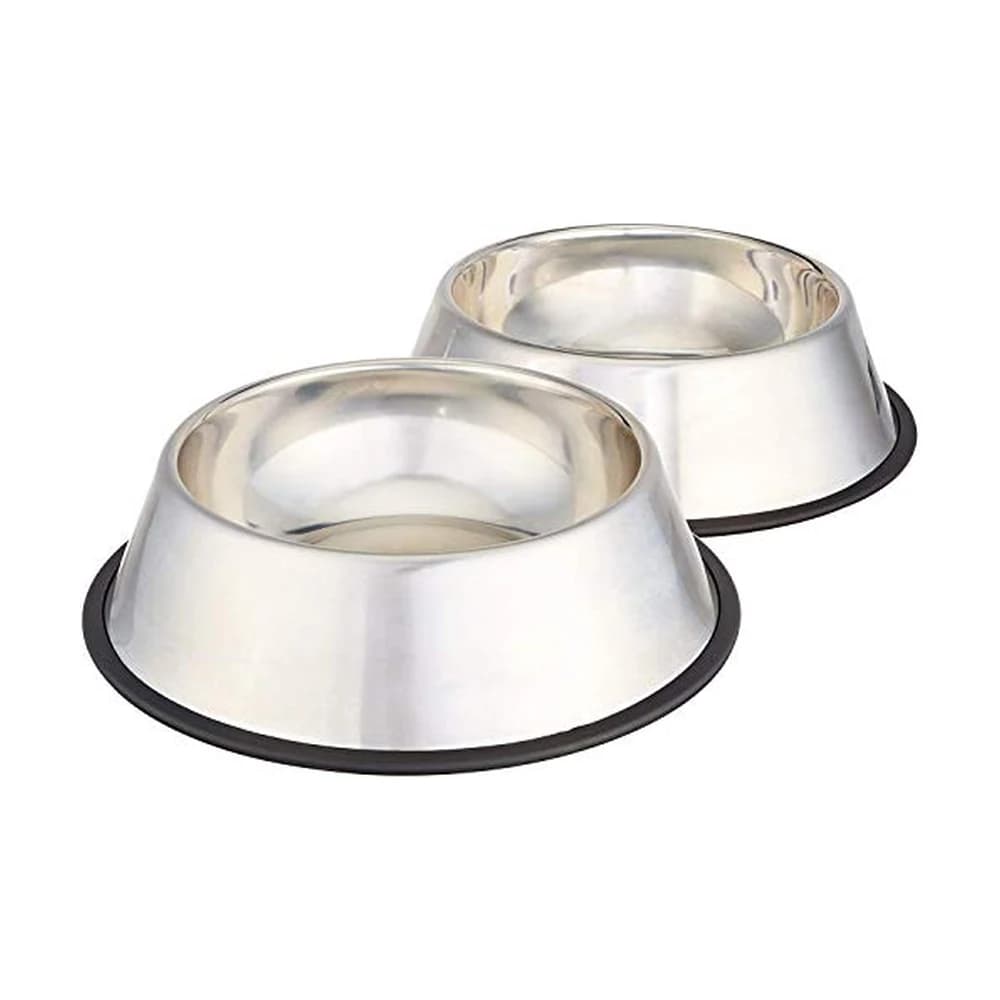
The everyday water and food bowls — stainless, dishwasher safe, non-skid base, two in the box
- Size
- Not stated
- Material
- Stainless steel
- Colour
- Not stated
- Dimensions (H × W × D)
- Not stated
- Weight
- Not stated
- Skip if
- Your dog needs slowing down at meals. These are plain bowls with no maze.
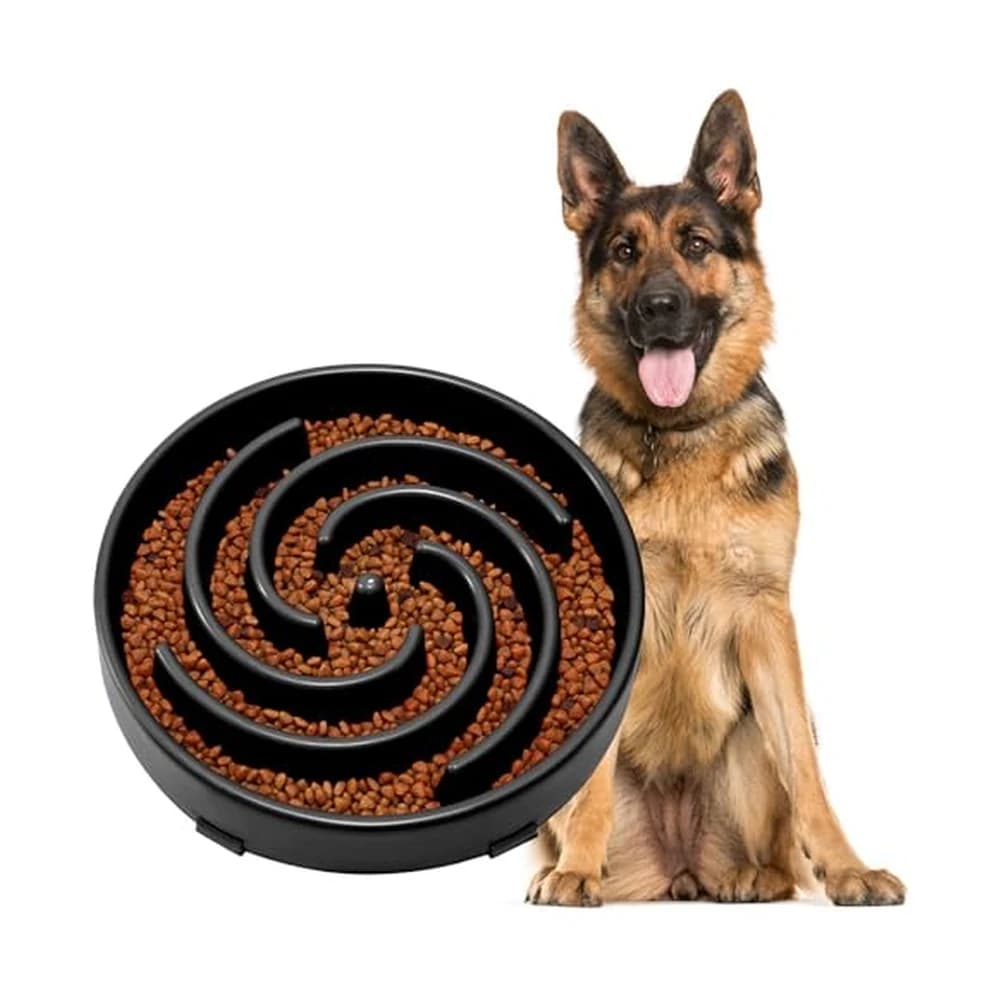
A slightly gentler maze — a spiral pattern that slows a dog down without frustrating them, with a silicone anti-slip ring
- Size
- Not stated
- Material
- Food-grade PP plastic
- Colour
- Not stated
- Dimensions (H × W × D)
- Not stated
- Weight
- Not stated
- Skip if
- You have a giant-breed dog. Owners report it being too small for the largest breeds.
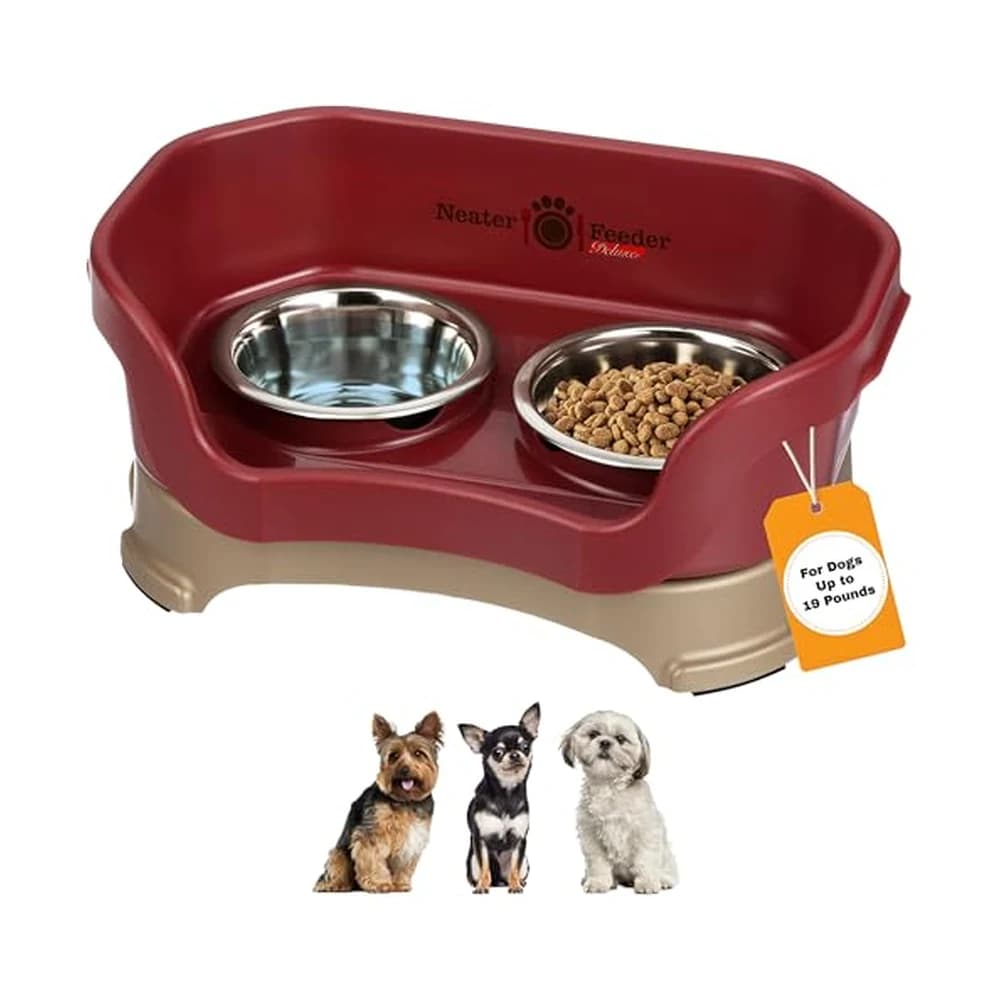
The messy eater and the arthritic neck — raised stainless bowls in a frame that catches spilled food and drains spilled water
- Size
- Not stated
- Material
- Plastic frame + stainless steel bowls
- Colour
- Not stated
- Dimensions (H × W × D)
- Not stated
- Weight
- Not stated
- Skip if
- You have a large deep-chested dog. Raised feeding and bloat risk is a live debate — ask your vet first.
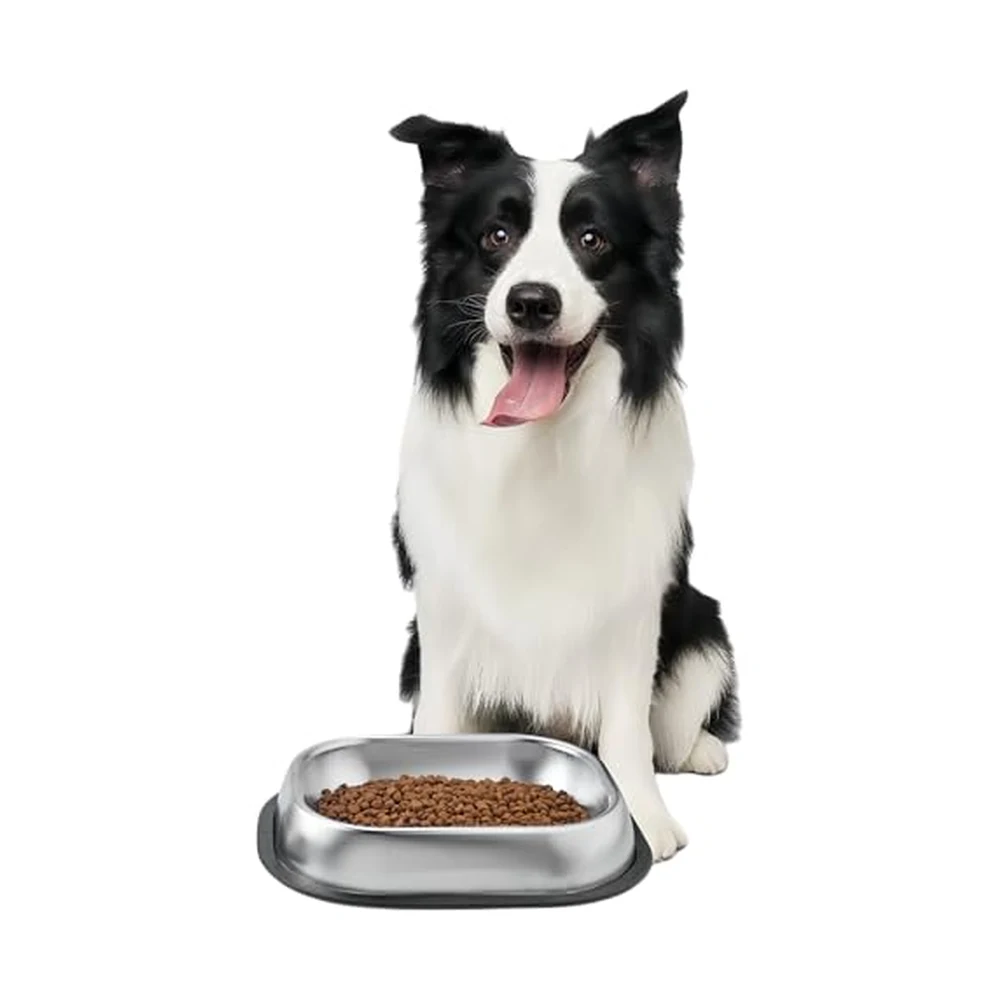
A puppy meeting their first bowl, and a small older dog whose neck no longer wants to reach down into a well
- Size
- 1 Bowl 8.2 inch
- Material
- Not stated
- Colour
- Not stated
- Dimensions (H × W × D)
- 1.0 in × 9.0 in × 9.0 in
- Weight
- 0.62 lb
- Skip if
- You have a large-breed dog — the maker sizes this for small and medium animals, and a big dog will push it around.
Each pick below carries its own specs, and the tags mark the best of these picks on that point. Specs come from manufacturer listings; ratings are the Amazon aggregate rating and count, refreshed periodically — we don't test products.
How winners are decided: ✓ marks the lowest price, the highest owner rating, the largest stated weight capacity and the longest warranty. Rows where more is not better — size, dimensions, weight, material — and the editorial rows get no ✓ at all. A blank is unknown, never a loss, and a row needs at least two known, differing values before anything can win. How the best-of-these tags are decided: the lowest price, the highest owner rating, the largest stated weight capacity and the longest warranty. Points where more is not better — size, dimensions, weight, material — and the editorial notes carry no tag at all. A blank is unknown, never a loss, and a point needs at least two known, differing values before anything can lead. As an Amazon Associate we earn from qualifying purchases. Specs are the manufacturer's claims and owner-reported data — we research and analyse; we don't test products on dogs.
If this dog is new to you: the first month with an adopted adult
A grown dog who has just arrived is not a large puppy. They have an adult's strength, an adult's attention span and, often, a history you will never fully know - and they may never have been taught the things people assume a grown dog knows. So this is the right page, and this is the order that usually works. Nothing here is a deadline.
- Costs nothing
Give it weeks before you decide who this dog is
A dog in a new house is not showing you their personality yet; they are showing you a dog in a new house. Keep the first weeks small and repetitive - same route, same rooms, same people - and let the dog get boring before you start introducing things. Most of what people rehome a dog for in the first fortnight resolves on its own.
- Costs nothing
Assume nothing about house-training and start from the beginning
Take them out on the same schedule you would give a puppy - on waking, after eating, after play - and reward outside within two seconds. An adult who toilets indoors is usually a dog who was never taught where, or who has not worked out how to ask in this house. Treat a sudden change in an established pattern as a health question first.
- Costs nothing
Teach being alone before you need it
Start with short absences while the dog is awake and settled, and build them up rather than testing the ceiling on your first day back at work. This is the single most common gap in a newly adopted adult and the one that gets discovered at the worst possible moment.
- Worth buying
Fit the equipment to this dog, properly
An adult arriving with an adult's strength needs kit that fits on day one rather than kit that will do. Measure the chest girth and the neck and read them off the maker's own chart - the harness sizer does that - and check the fit again on the dog when it arrives.
- Costs nothing
Build recall from zero, on a long line
Do not assume a name means anything yet. Pay it every single time to start with, at short distances, somewhere boring, and keep the long line on until the answer is boring too. A recall taught properly now is the thing that lets the rest of this dog's life be off-lead.
- Worth buying
Give a settled adult something to solve
Adult dogs are perfectly capable of learning and are chronically under-stimulated, and a newly arrived one has a great deal of nothing to do. Scent games and rotated puzzles do more for a dog in a new house than extra pavement does, and they are also how a nervous dog learns your rooms are safe.
- Ask your vet
Get a baseline while everything is still normal
An adopted adult usually arrives with an incomplete history, which makes the first check-up worth more than a routine one.
Ask your vet what a yearly check should include for a dog this age, when to start a baseline blood panel, whether the dental needs attention now, and which parasite prevention suits where you live. Ask about weight too - it is the number most often missed on a dog who looks fine.
Work through the training pages in that order rather than the puppy ones. The advice is the same shape; the dog it is written for is not.
This stage is done when
Adult milestones
- An annual check-up booked, attended, and the dental question actually asked
- Weight recorded at least twice this year and the ribs are findable under a thin layer
- Teeth brushed most days, or a dental routine your vet has signed off
- Nails short enough that they do not touch the floor when the dog stands
- One new skill or game taught this year, for no practical reason
- Two or three walking routes in rotation, at least one of them mostly sniffing
- Parasite prevention reviewed for where you actually live and travel now
- Microchip registration and your phone number confirmed current
- A hot-weather plan: shade, timing, water, and somewhere cool to lie
- You know what your vet considers the right age to start baseline senior bloodwork for this dog
Off by default. Turn it on and the ticks are stored in this browser only. They are not sent to us, we cannot read them, there is no account and there is nothing to sign up for. Clearing your browser data, or switching it off again, deletes them. If your browser blocks site storage the page still works, it just will not remember.
Untick this for a blank sheet to put on the fridge, whatever is ticked on screen.
Take these to the vet
Questions to ask
- Ask your vet at every visit whether your dog's weight and body condition are where they should be, because gradual gain is the change nobody at home can see.
- Ask your vet to look at your dog's teeth and gums and to tell you plainly whether a professional clean is due, rather than waiting for bad breath to become obvious.
- Ask your vet about any lump you find, including one that has not changed. Finding it early is the whole advantage of weekly grooming.
- Ask your vet if your dog is drinking noticeably more, urinating more, or losing weight without a diet change. Those three together are worth a same-week appointment.
- Ask your vet when this dog should have a baseline blood panel, because a normal result now is what makes an abnormal result later meaningful.
- Ask your vet about heat risk for your dog's build, and what early heat stress looks like in a dog who will not stop on their own.
We research; we are not your vet and we do not examine your dog. Anything here that touches health is a question to ask, not an answer to act on. Take it with you — a written list is easier than remembering in the room.
Train at home, this stage
- How to Teach Recall at Home, Step by StepRecall is a paid behavior, built indoors first, then on a long line. Never call a dog to something he will not enjoy.
- Loose Leash Walking: A Plan That Actually HoldsPulling is rewarded by the walk itself. Fix it by changing what pulling produces, not by making pulling hurt.
- Brain Games for Senior Dogs (Low Impact)When the walks get shorter, the mental work matters more. Nose games and food puzzles a stiff old dog can do lying down.
Learn more
- Dog Life Stages Explained (And Who Decides)Four clinical stages, six practical ones. What AAHA actually defines, where adolescence fits, and why the stage changes what your dog needs.
- When Is a Dog a Senior? What Vets Actually SayThere is no senior birthday. The veterinary framework uses a share of expected lifespan, and the number most articles repeat is out of date.
Is one of these your evening?
Sources
- AAHA 2019 Canine Life Stage Guidelines - definitions — That mature adult runs from the completion of maturation until the last 25% of estimated lifespan, and that AAHA proposes no inclusive ages for it.
- AVMA senior thresholds, as published by AKC — The older AVMA restatement (small dogs about seven, larger breeds five to six). The stage boundary itself uses the AVMA's current weight bands, cited below.
- Dog Aging Project — Ongoing longitudinal research into canine aging, cited as a place to follow rather than a source of numbers.
We are not your vet, and this site does not diagnose anything. Everything medical here ends with the question to ask at your next appointment, because the person who has examined your dog knows things a website cannot. If something has changed suddenly, call them rather than reading on.